
In my twelve years as an exercise physiologist, I have noticed a recurring pattern in how people view physical activity: they almost exclusively treat it as an aesthetic or metabolic pursuit. Clients come into my lab looking to drop body fat, improve their resting blood pressure, or prepare for a 10K road race. Yet, the most profound biological transformation is occurring far above the collarbone.
Early in my doctoral work in kinesiology at the University of Michigan, I spent countless hours looking at neuromuscular adaptations and how mechanical strain translates into cellular signals. The human brain is not a static machine; it possesses neuroplasticity—the remarkable capacity to physically rewire, forge novel synaptic pathways, and regenerate key structures in response to physical work.
Whenever I lace up my shoes for an early morning trail run through technical terrain, my focus is not merely on aerobic output or caloric burn. I am actively thinking about cerebral perfusion, the surge of neurotrophic factors, and the acute cognitive sharpness that follows a strenuous training bout. Movement is preventative medicine for cognitive architecture. When we exercise, we are reshaping our cognitive capacity, reinforcing neural connectivity, and building measurable cognitive reserve that shields us as we age.
Fitness and brain health are tightly linked through neuroplasticity, where regular exercise fosters the development of new neural connections. Engaging in cardiovascular activities boosts blood flow to the brain, enhancing cognitive flexibility and resilience. Strength training stimulates the production of brain-derived neurotrophic factor (BDNF), promoting memory retention and learning adaptability. Moreover, incorporating mind-body practices like yoga can improve focus and reduce stress. Keep exploring to uncover more strategies for optimizing your cognitive function through fitness.
KEY TAKEAWAYS
- Regular exercise increases brain-derived neurotrophic factor (BDNF), promoting neuroplasticity and supporting new neural connections critical for cognitive function.
- Engaging in both physical and cognitive exercises synergistically enhances mental agility and reinforces existing neural pathways, improving overall brain health.
- Nutrient-dense foods and proper hydration are essential for optimizing brain function, supporting memory, learning, and cognitive flexibility.
- Outdoor activities and social engagement through fitness routines foster emotional well-being, which is linked to improved cognitive performance.
- Setting realistic fitness goals and maintaining hydration can enhance motivation and commitment, further supporting cognitive resilience and brain health.
UNDERSTANDING NEUROPLASTICITY: THE KEY TO BRAIN HEALTH
While many people associate fitness solely with physical health, understanding neuroplasticity reveals its profound impact on brain health.
Neuroplasticity mechanisms demonstrate how your brain adapts to new experiences, forming new neural connections throughout your life. This adaptability is essential for enhancing cognitive flexibility—the ability to switch between thinking about different concepts or to think about multiple concepts simultaneously.
Engaging in mentally stimulating activities not only sharpens your mind but also promotes these neuroplastic changes, allowing you to respond more effectively to challenges and adapt to new situations.
The interplay between physical fitness and neuroplasticity further supports cognitive resilience, helping you maintain mental clarity and emotional well-being.
By grasping these concepts, you empower yourself to take charge of your brain health, liberating your mind from the constraints of aging and cognitive decline.
Embracing neuroplasticity equips you with the tools to cultivate a vibrant, adaptable brain.
How Regular Exercise Enhances Neuroplasticity
Exercise also promotes neurogenesis, the process through which new neurons are formed. Physical activity increases brain-derived neurotrophic factor, or BDNF, a key protein in neurogenesis, as well as plasticity in the connections between brain cells. BDNF, along with many other factors that are sensitive to exercise, helps the part of the hippocampus where stem cells live to produce additional neurons.
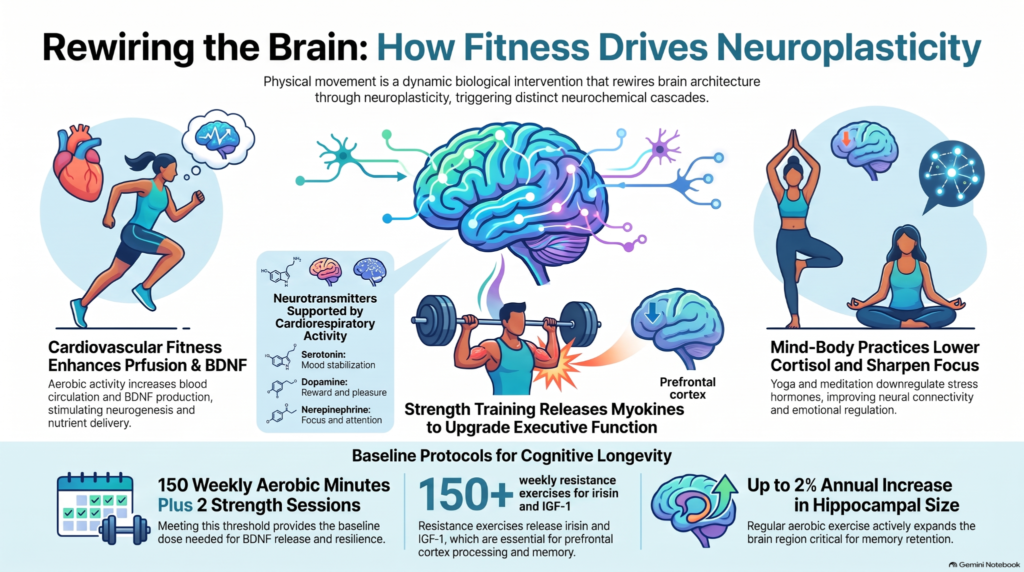
Regular exercise plays a crucial role in enhancing neuroplasticity, as it stimulates the release of brain-derived neurotrophic factor (BDNF), a protein essential for the growth and survival of neurons. Engaging in various exercise types—like aerobic workouts, strength training, and flexibility routines—promotes this BDNF production, leading to improved brain function.
Physical activity not only boosts your physical health but also sharpens mental agility, allowing you to adapt and learn more effectively.
Moreover, incorporating cognitive exercises, such as puzzles or memory games, alongside fitness routines can further amplify neuroplastic changes. These brain workouts create a synergistic effect, fostering new connections and reinforcing existing ones.
Why Cardiovascular Fitness Matters for Your Brain?
Regular exercise is known to have an impact on most physiological systems, and has been shown to improve cardiovascular health, bone mineral density, and provide a decreased risk for cancer, stroke and diabetes. More recently, epidemiological evidence has accumulated to suggest that physical activity may provide health-protective benefits for the nervous system, including improvements in several neurological diseases. In addition to these neuroprotective effects, exciting new evidence has emerged indicating that regular physical activity and exercise can increase brain plasticity (i.e. the capacity to reorganize connections in the brain), which is a process believed to be instrumental in the formation of memories and learning. These neuroplastic benefits of exercise are not only important for cognitive function, but may also extend to the neuromotor system to facilitate motor skill learning.
Cardiovascular fitness plays an important role in enhancing blood flow to your brain, which is essential for ideal cognitive function.
Increased circulation not only delivers essential nutrients but also boosts the release of neurotransmitters, supporting mood regulation and mental clarity.
Enhanced Blood Flow
When you engage in cardiovascular exercise, your body increases blood flow, delivering essential nutrients and oxygen to the brain.
This enhanced blood circulation is fundamental for cognitive enhancement, as it directly impacts your brain’s health and efficiency.
Here are three key benefits of improved blood flow:
- Nutrient Delivery: Increased circulation guarantees your brain receives essential nutrients, such as glucose and amino acids, important for energy production and cognitive function.
- Waste Removal: Enhanced blood flow aids in the removal of metabolic waste, preventing potential neurotoxicity and promoting brain health.
- Neuroplasticity Support: Improved blood circulation fosters an environment where neuroplasticity can thrive, allowing your brain to adapt and grow.
Neurotransmitter Release Boost
Enhanced blood flow not only supplies essential nutrients and removes waste but also greatly influences neurotransmitter release, which is critical for peak brain function. When you engage in cardiovascular fitness, you promote neurotransmitter balance, enhancing mood regulation and cognitive clarity. This dynamic interplay supports neuroplasticity—the brain’s ability to adapt and reorganize itself.
| Neurotransmitter | Function |
| Serotonin | Mood stabilization |
| Dopamine | Reward and pleasure |
| Norepinephrine | Focus and attention |
| GABA | Anxiety regulation |
Prioritizing cardiovascular fitness can amplify these neurotransmitter activities, ultimately leading to improved cognitive performance and emotional resilience. Your brain thrives on this synergy, reinforcing the importance of regular physical activity for mental health.
What Strength Training Can Do for Your Brain Health
Strength training offers significant benefits for brain health that are often overlooked. Engaging in regular strength training not only builds muscle but also promotes cognitive improvement through various mechanisms.
Here are three key strength training benefits for your brain health:
- Increased Neurogenesis: Strength training stimulates the production of brain-derived neurotrophic factor (BDNF), which supports the growth of new neurons and enhances overall brain function.
- Enhanced Mood Regulation: Resistance training can reduce symptoms of anxiety and depression, thanks to increased endorphin levels, leading to improved mental clarity and focus.
- Improved Memory and Learning: Resistance training can reduce symptoms of anxiety and depression, providing fitness reduces anxiety scientific evidence that regular physical activity may support emotional well-being, improve mental clarity, and enhance focus.
Incorporating strength training into your routine can be a powerful strategy for optimizing your brain health and achieving lasting cognitive improvement.
Don’t underestimate the profound impact it can have on your mind.

YOGA AND MEDITATION: ENHANCING COGNITIVE FUNCTION THROUGH MIND-BODY PRACTICES
Whenever I review biometric data from wearable fitness trackers, whether from participants in clinical trials or my own endurance and resistance sessions, I look beyond simple heart rate zones. I track recovery metrics and heart rate variability because they offer a real-time window into autonomic nervous system tone and central fatigue. While aerobic conditioning delivers substantial benefits for vascular health and hippocampal perfusion, resistance training triggers an entirely distinct neurobiological cascade.
Heavy compound movements and functional strength training force the brain to recruit high-threshold motor units and orchestrate rapid sensorimotor feedback loops. In clinical and athletic populations alike, contracting skeletal muscle against resistance releases myokines like irisin and elevates circulating IGF-1, biochemical messengers that cross the blood-brain barrier to reinforce executive function, working memory, and prefrontal cortex processing. This is where the outdated dichotomy between “mind” and “muscle” collapses.
You cannot execute a heavy squat, clean, or functional kettlebell circuit with passive attention. It requires intense mental discipline, neuromuscular coordination, and acute focus. Strength training is an active neurological intervention that systematically upgrades the structural pathways your brain relies on to solve complex problems and withstand psychological stress.
As you explore mind-body practices, you’ll find that yoga and meditation play an indispensable role in enhancing cognitive function. These practices incorporate mindfulness techniques that foster mental clarity and focus enhancement.
Research shows that regular engagement in yoga and meditation can lead to considerable cognitive benefits, including improved brain connectivity and emotional regulation.
Breathing exercises during these practices help reduce stress, which is vital for maintaining ideal cognitive health. By lowering cortisol levels, you create a more conducive environment for learning and memory retention.
Additionally, the structured nature of yoga poses encourages heightened awareness, sharpening your ability to concentrate on tasks at hand.
As you commit to these practices, you’ll likely notice a greater sense of calm and an improved capacity to manage emotions.
Ultimately, integrating yoga and meditation into your routine can greatly enhance your cognitive function, allowing you to thrive in both personal and professional endeavors.
Nutrition’s Role in Fitness and Brain Health
Exercise also releases dopamine, serotonin and endorphins — three “feel-good” hormones that double as neurotransmitters, or chemical messengers between your nerve cells.
Nutrition plays a critical role in both fitness and cognitive performance. Eating nutrient-dense foods can enhance your physical capabilities while also supporting brain health.
Staying properly hydrated is essential for maintaining peak cognitive function. Additionally, certain supplements may offer benefits for brain function, making it crucial to evaluate how your dietary choices impact your overall well-being.
Nutrient-Dense Foods Matter
While physical activity is essential for overall fitness, the role of nutrient-dense foods in supporting both fitness and brain health can’t be overstated. Incorporating post workout meals rich in protein, healthy fats, and essential nutrients can support muscle recovery while providing the brain with the nutrients it needs for optimal cognitive function. A balanced diet rich in these foods enhances your cognitive function and physical performance.
Consider these key aspects:
- Micronutrient Importance: Vitamins and minerals support brain health, aiding in memory and learning.
- Omega 3 Sources: Fatty fish and flaxseeds are crucial for brain development and reducing inflammation.
- Antioxidants Impact: Berries and dark chocolate protect brain cells from oxidative stress.
Incorporating brain-boosting snacks and understanding nutrient timing through effective meal planning can strengthen the gut-brain connection.
Hydration’s Impact on Cognition
Making informed food choices is only part of the equation when it comes to enhancing cognitive function and physical performance; hydration plays an equally significant role.
Adequate hydration is essential for peak brain activity, as even mild dehydration can impair cognitive performance. Studies show that staying hydrated can improve attention, memory, and overall mental clarity.
To boost your cognitive function, consider effective hydration strategies like drinking water consistently throughout the day and consuming hydrating foods such as fruits and vegetables.
Remember, your brain relies on proper hydration to function at its best. Prioritize hydration alongside your nutrition to release your fullest potential in both mental and physical domains.
Embrace the freedom that comes with being well-hydrated and alert.
Supplements for Brain Function
Supplements can play a pivotal role in enhancing brain function, particularly when integrated into a well-rounded fitness regimen.
By incorporating brain boosting supplements, you can support cognitive enhancers that improve focus, memory, and overall mental agility.
Consider these three key supplements:
- Omega-3 Fatty Acids: Known for their role in neuroprotection and promoting synaptic plasticity, these essential fats are vital for ideal brain health.
- Bacopa Monnieri: This herb has demonstrated potential in improving memory and cognitive processing speed, making it a powerful addition.
- Rhodiola Rosea: An adaptogen, it helps combat fatigue and boosts mental performance under stress.
Together, these supplements can synergize with your fitness routine, fostering both brain health and cognitive function in a balanced, empowering way.
Practical Tips for Integrating Fitness Into Your Brain Health Routine
To enhance your brain health effectively, integrating fitness into your routine is crucial. Start by establishing structured fitness routines that include a mix of aerobic and strength training exercises. Engaging in outdoor activities not only boosts your mood but also provides fresh stimuli for your brain, making exercise a beneficial self care activity for supporting both mental and physical well-being.
Incorporate brain exercises and cognitive games into your routine to stimulate mental agility and creativity. Don’t underestimate the power of social engagement; join group classes or fitness clubs to foster connections that can enhance emotional well-being.
Additionally, practice mindful movement techniques, such as yoga or Tai Chi, to improve focus and reduce stress. Set realistic goals to track your progress and maintain motivation. Finally, guarantee workout variety to keep things interesting and challenge different muscle groups and cognitive functions.

RELATED STUDIES ABOUT FITNESS AND BRAIN HEALTH NEUROPLASTICITY
Incorporating fitness into your routine can greatly boost your brain health through neuroplasticity. Studies show that regular aerobic exercise can increase the size of the hippocampus, the brain region essential for memory, by up to 2% annually. By prioritizing both cardiovascular and strength training, along with mind-body practices like yoga, you not only enhance cognitive function but also foster resilience against age-related decline. Start integrating these practices today, and you’ll be investing in a sharper, healthier brain tomorrow.
The pregnant brain: A narrative review of neuroplasticity and adaptation for motherhood
This narrative review synthesizes clinical and neuroimaging evidence regarding the profound endocrine, structural, and functional neuroplastic adaptations that occur across human pregnancy and the postpartum period, examining their evolutionary utility for maternal caregiving alongside their implications for cognitive functioning and perinatal psychiatric vulnerability.
Conceptual Framework & Endocrine Drivers
- The Maternal Neuroplastic Transition: Pregnancy and the postpartum period constitute a critical neurodevelopmental window (matrescence) characterized by massive physiological and neural remodeling. Rather than representing degenerative decline, these changes reflect an evolutionary specialization designed to facilitate maternal-infant bonding, heighten sensory attunement to offspring distress signals, and ensure infant survival.
- Endocrine Cascades as Neuroplastic Drivers: During gestation, placental secretion drives dramatic surges in circulating steroid and peptide hormones. Progesterone levels increase 20-fold and estradiol surges 200- to 300-fold relative to non-pregnant baselines. Concurrently, elevated oxytocin and prolactin coordinate parturition, lactation, and social affiliation circuits.
- Mechanisms of Action: Estradiol and progesterone function as primary neuromodulators, regulating aromatase pathways, neurogenesis, dendritic spine turnover, and glial architecture in regions mediating emotion, memory, and stress regulation. The abrupt withdrawal of sex steroids immediately postpartum, coupled with sustained prolactin elevations during lactation, destabilizes neural homeostasis and represents a critical biological vulnerability window for mood dysregulation.
Structural Neuroanatomy: The U-Shaped Trajectory and Regional Remodeling
- Dynamic U-Shaped Volumetric Trajectory: Longitudinal neuroimaging demonstrates that global gray matter volume (GMV) and cortical thickness follow a dynamic U-shaped pattern. GMV systematically declines during late pregnancy, followed by partial structural regeneration and volumetric rebound across the first 3 to 6 months postpartum.
- Persistent Pruning vs. Long-Term Protection: Certain cortical GMV reductions persist for up to two years postpartum, reflecting enduring synaptic pruning and specialized neural circuit consolidation rather than permanent functional deficit. Parity may also confer long-term neuroprotective benefits against age-related cognitive decline and hippocampal neurodegeneration in later life.
- Hippocampal Remodeling: Modulated by sex steroid fluctuations, the hippocampus undergoes transient volumetric reductions in late pregnancy with early postpartum regeneration, reflecting a reallocation of neural resources toward caregiving-essential priorities.
- Amygdala Plasticity: Undergoes marked structural reorganization during the initial 6 weeks postpartum. Early postpartum volumetric reduction and fine-tuning correlate with heightened maternal sensitivity, reduced emotional reactivity to neutral stimuli, and positive caregiving behaviors.
- Prefrontal Cortex (PFC) Restructuring: The PFC—critical for executive functioning, social cognition, and decision-making—exhibits widespread GMV pruning during the immediate postpartum period, followed by volumetric increases between 3 and 6 months postpartum.
Functional Neuroimaging & Neural Circuit Specialization
- Reward Circuitry Activation to Infant Cues: When mothers view or hear their own infant relative to unfamiliar infants, fMRI studies reveal selective hyperactivation across maternal-infant reward networks, including the anterior cingulate cortex (ACC), insula, orbitofrontal gyrus, inferior frontal gyrus, and striatum. This dopamine- and oxytocin-driven response reinforces caregiving motivation.
- Facial Empathy Networks: Mothers show distinct neural recruitment in the right superior temporal gyrus and empathic mirror systems when observing infant distress faces.
- Functional Connectivity Reconfiguration: Resting-state and task-based cognitive networks undergo extensive cross-network reorganization to adapt to the cognitive demands of multitasking and vigilance.
- Neural Substrates of Emotional Regulation: Successful downregulation of negative affect during pregnancy is mediated by increased recruitment of the left middle frontal gyrus. Conversely, aberrant amygdala hyperactivation during cognitive reappraisal correlates with reduced regulation efficacy and elevated depressive symptom severity. In postpartum depression (PPD), blunted amygdala reactivity to infant distress cues is linked to caregiving detachment and intrusive parenting.
Cognitive Reorganization & The “Baby Brain” Phenomenon
- Subjective Impairment vs. Objective Testing: Pregnant and postpartum women frequently report forgetfulness, distractibility, and mental fog (“baby brain” or “momnesia”). However, standardized neuropsychological assessments reveal largely intact cognitive baselines, indicating that subjective complaints stem from adaptive resource reallocation rather than generalized cognitive decline.
- Etiology of Cognitive Fog: Driven by multi-system exhaustion, including chronic sleep fragmentation (particularly severe in the third trimester and first postpartum month), biological stress, and the heavy mental load of anticipatory household and childcare labor.
- Clinical Boundary Marker: While mild perceived memory lapses represent normal adaptive prioritization, marked executive dysfunction, severe processing speed decrements, and verbal memory deficits serve as clinical warning signs for severe postpartum mood disorders or postpartum psychosis.
Perinatal Mental Health: Epidemiology, Risk Factors, and Biological Pathways
- Epidemiological Prevalence: Perinatal mood disorders represent a major global public health challenge. Systematic review data estimate global perinatal depression at 26.3% (28.5% antenatal; 27.6% postnatal), while perinatal anxiety impacts up to 15% to 21% of women. Postpartum psychosis is a rare (0.1–0.2%) medical emergency occurring within the first postpartum week requiring urgent psychiatric intervention.
- Multifactorial Risk Architecture:
- Psychiatric Predisposition: Personal or family psychiatric history is a primary predictor; premenstrual syndrome (PMS) represents a major vulnerability marker (odds ratio [OR] = 2.20), reflecting underlying sensitivity to neurosteroid withdrawal.
- Psychosocial Stressors: Chronic marital strain, unsupportive partners, low socioeconomic status, unwanted pregnancy, and exposure to interpersonal violence (OR = 2.07) significantly elevate risk.
- Biological & Neuroimmune Mechanisms: Precipitous postpartum drops in estradiol, progesterone, and the GABAergic neurosteroid allopregnanolone trigger mood destabilization in vulnerable women. Subclinical thyroiditis, HPA-axis hyperreactivity, and systemic inflammatory cytokine upregulation contribute to neuroinflammation and PPD onset.
- Sleep Fragmentation: Disrupted nocturnal sleep directly destabilizes emotional regulation; preserving a consolidated 4- to 5-hour window of nighttime sleep is a vital clinical preventative measure.
Clinical Guidelines & Policy Recommendations
- Perinatal Psychoeducation: Clinicians must proactively educate expectant parents on normal structural neuroplasticity, reframing “baby brain” and gray matter reorganization as adaptive maternal specializations rather than pathology.
- Standardized Mental Health Screening: Universal screening using validated tools (e.g., Edinburgh Postnatal Depression Scale [EPDS], PHQ-9, GAD-7) should occur routinely throughout pregnancy and continue for at least one full year postpartum.
- Evidence-Based Non-Pharmacological Interventions: First-line interventions include Cognitive Behavioral Therapy (CBT) and Interpersonal Psychotherapy (IPT), with IPT demonstrating particular efficacy for addressing perinatal identity and relational transitions.
- Prescribed Physical Activity: Guidelines recommend at least 150 minutes of moderate-intensity aerobic exercise per week (or 350MET-min/week, such as 80 minutes/week of moderate exercise) across pregnancy and postpartum to stimulate neurotrophic factors and reduce depressive symptoms.
- Partner & Community Social Infrastructure: Healthcare policies must fund peer-support groups, postpartum home visitation models, and partner-inclusive education to mitigate isolation and bolster emotional and instrumental support.
- Dismantling the “Postpartum Cliff”: Health systems must abandon the restrictive, single 6-week postnatal check-up model, restructuring policy to provide continuous, long-term maternal follow-up that matches the multi-year trajectory of neurobiological adaptation.
| REFERENCE: Aneta Worska, Beata Jóźwiak, Julia Ciążyńska, Janusz Maciaszek, Ida Laudańska-Krzemińska, The pregnant brain: A narrative review of neuroplasticity and adaptation for motherhood, Behavioural Brain Research, Volume 506, 2026, 116133, ISSN 0166-4328, https://doi.org/10.1016/j.bbr.2026.116133. (https://www.sciencedirect.com/science/article/pii/S0166432826001099) |
Associations between fitness components and brain health in young adults: A cognitive and brain volume MRI study exploring sex differences. The YoungFit study
This cross-sectional investigation from the YoungFit study examines the relationships between four distinct physical fitness components (cardiorespiratory fitness, muscular strength, flexibility, and balance), neuropsychological cognitive performance, and regional brain volumes in emerging adults, while assessing sex moderation and testing whether macroscopic brain volumes mediate the fitness-cognition relationship.
Conceptual Framework & Rationale
- Life-Course Brain Health & Emerging Adulthood: Lifestyle factors, particularly physical activity and fitness, are established neuroprotective elements across childhood and older age. Emerging adulthood (ages 18–25) represents a critical life-course window wherein lifestyle behaviors, metabolic profiles, and neural maturation trajectories consolidate, potentially setting lifelong trajectories for cognitive reserve and dementia prevention.
- The Multidimensional Fitness Model: Most exercise neuroscience research focuses exclusively on cardiorespiratory fitness (CRF), driven by animal models showing aerobic upregulation of neurotrophins (e.g., BDNF, IGF-1), angiogenesis, and hippocampal neurogenesis. However, physical fitness is multidimensional; non-aerobic components—including muscular strength, flexibility, and balance—may engage distinct neuromuscular, sensorimotor, and neurovascular pathways.
- Biological Sex Moderation & Structural Mediation: Emerging adulthood is characterized by continuing sex-differentiated cortical maturation and hormonal modulation of vascular/neurotrophic plasticity. Furthermore, while macroscopic brain volume is frequently hypothesized to mediate the link between fitness and cognitive processing, empirical evidence in healthy young adults remains scarce and contradictory.
- Core Objectives:
- Evaluate associations of four simultaneously modeled fitness components (CRF, grip strength, sit-and-reach flexibility, dynamic balance) with a comprehensive cognitive battery and regional MRI brain volumes.
- Test formal moderation by sex at birth on fitness-cognition and fitness-brain associations.
- Determine whether regional brain volumes mediate observed fitness-cognition relationships.
Methodology & Experimental Architecture
- Participants: Ninety-four healthy university students (mean age 21.62.1 years; 45 females [47.9%], 49 males [52.1%]) from Barcelona, Spain, screened to exclude neurological, neurodevelopmental, or psychiatric disorders, psychotropic medication use, and substance abuse.
- Comprehensive Physical Fitness Assessment:
- Cardiorespiratory Fitness: Estimated maximal oxygen consumption (VO2max) derived from the Single-Stage treadmill jogging test with continuous beat-to-beat heart rate telemetry.
- Muscular Strength: Bilateral manual grip strength assessed via digital dynamometry (mean of highest attempts per hand).
- Flexibility: Modified Sit-and-Reach test measuring maximal reach distance (cm) relative to baseline.
- Balance: Y-Balance test measuring dynamic reach excursions across three vector directions (normalized to leg length).
- Neuropsychological Assessment: Administered across four primary domains and multiple subdomains, standardized into z-score composites:
- Attention-Speed: Direct Digit Span, Trail Making Test Part A (TMT-A), WAIS-III Symbol Search, and WAIS-III Digit-Symbol Coding.
- Executive Function: Stroop Color-Word interference (inhibition), Backward Digit Span (working memory), TMT Part B minus A (cognitive flexibility), and phonemic/semantic verbal fluency.
- Memory: Rey Auditory Verbal Learning Test (RAVLT total learning and delayed recall) and Rey-Osterrieth Complex Figure (ROCF delay accuracy).
- Visuospatial Function: ROCF copy score.
- MRI Acquisition & Automated Parcellation:
- T1-weighted 3D MPRAGE sequences acquired on a 3T Siemens Prisma Fit scanner.
- Automated multi-atlas brain segmentation executed via MRICloud software using large deformation diffeomorphic metric mapping to extract total intracranial volume (ICV), ventricles, and regional white matter/gray matter volumes across eight bilateral regions of interest (ROIs): frontal lobe, dorsolateral prefrontal cortex (DLPFC), parietal lobe, temporal lobe, cingulate cortex, precuneus, and hippocampus.
- Statistical Modeling:
- Multiple linear regression models entered all four physical fitness components simultaneously to isolate unique variance, adjusting for age, sex, and estimated intelligence (WAIS-III Vocabulary subtest; with ICV added for brain volume models).
- Sex moderation was tested using omnibus partial F-tests on interaction blocks followed by simple slope evaluations.
- Mediation analysis was executed using the PROCESS macro (5,000 bootstrap resamples) for pathways where the independent fitness variable was significantly linked to both the candidate brain mediator and cognitive outcome.
Key Empirical Findings
- Overall Sample Associations:
- Cognitive Processing Speed: In the total sample, higher CRF was significantly associated with superior cognitive processing speed (B=0.058,=0.372,p=0.037). Strength, flexibility, and balance showed no significant associations with cognitive domains in unstratified models.
- Cingulate Cortex Volume: Higher CRF was significantly associated with a smaller cingulate cortex volume (B=-0.287,=-0.247,p=0.022). No other fitness component associated with regional brain volumes across the whole cohort.
- Sex-Stratified Patterns:
- Males: Higher flexibility was significantly associated with faster processing speed (=0.533,p<0.001) and a higher composite attention-speed score (=0.471,p=0.003). Physical fitness showed no significant associations with regional brain volumes in males.
- Females: Higher CRF was linked to better processing speed (=0.501,p=0.002) and better verbal memory (=0.391,p=0.009). Handgrip strength was positively associated with visual memory (=0.351,p=0.020) and total memory composite (=0.376,p=0.008). Balance was positively linked to the attention-speed composite (=0.344,p=0.042) and larger hippocampal volume (=0.272,p=0.027), but inversely associated with visual memory (=-0.393,p=0.020). Conversely, higher flexibility in females was associated with slower processing speed (=-0.427,p=0.010) and smaller hippocampal volume (=-0.306,p=0.019).
- Sex Moderation Effects (Formal Interaction Testing):
- Omnibus interaction tests were non-significant for all regional brain volumes (p0.247), indicating that physical fitness associations with macrostructural brain volumes did not significantly differ between sexes.
- Omnibus moderation was significant for cognitive attention-speed (F=3.89,p=0.006) and processing speed (F=5.04,p=0.001).
- Significant sex flexibility interactions drove these effects (both p<0.001). Simple slopes confirmed divergent directions: flexibility positively predicted attention-speed (b=0.219,p=0.001) and processing speed (b=0.240,p<0.001) in males, but negatively predicted processing speed in females (b=-0.372,p=0.001).
- Absence of Structural Brain Mediation:
- Macrostructural brain volumes did not mediate any fitness-cognition associations.
- For example, the indirect path of cingulate cortex volume mediating CRF and processing speed spanned zero in the total sample (path $ab = -0.005, 95\%\text{ CI } [-0.026, 0.015]$). In females, hippocampal volume failed to mediate associations between flexibility or balance and cognitive outcomes.
Theoretical & Biological Interpretations
- Cognitive Vulnerability & Sensitivity of Processing Speed: Processing speed emerged as the cognitive domain most sensitive to CRF in healthy young adults. The authors suggest that basic mental processing efficiency is highly responsive to aerobic fitness-induced vascularization and cerebral perfusion, whereas higher-order executive and memory domains may exhibit ceiling effects in high-functioning university cohorts.
- The “Apparent Thinning” Neurodevelopmental Hypothesis: Rather than reflecting neural atrophy, the inverse relationship between CRF and cingulate cortex volume aligns with normative adolescent/young-adult neurodevelopment. In early adulthood, cortical maturation involves targeted synaptic pruning and increased intracortical myelination, which alters tissue contrast on T1-weighted MRI (producing “apparent cortical thinning” or volumetric reduction indicative of advanced specialization).
- Divergent Flexibility Phenotypes Across Biological Sex: The opposing flexibility-speed relationship between sexes is hypothesized to reflect distinct underlying physiological phenotypes. In males, higher sit-and-reach flexibility may index reduced musculo-tendinous and central arterial stiffness (promoting favorable systemic hemodynamics). In females, high flexibility frequently correlates with generalized ligamentous laxity and joint hypermobility, which are clinically linked to subclinical orthostatic intolerance, autonomic dysregulation, and fatigue that may slow psychomotor processing.
- Beyond Macroscopic Volumetry: The failure of macrostructural brain volumes to mediate fitness-cognition links suggests that cognitive enhancements from physical fitness in young adulthood operate via mechanisms not captured by gross volumetric MRI, such as tissue viscoelasticity, microstructural white matter tract integrity, resting-state functional network segregation, or cerebral autoregulation.
Methodological Limitations
- Cross-Sectional Architecture: The observational design prevents causal determinations regarding whether physical fitness directly alters cognition and brain morphology.
- Sample Homogeneity & High Fitness Baseline: Participants were university students who exhibited above-average baseline CRF, limiting generalizability to sedentary, clinically impaired, or socio-demographically diverse young adult populations.
- Neuroimaging ROI Aggregation: The cingulate cortex was parcellated as a single aggregate ROI, preventing functional differentiation between anterior cognitive-control nodes and posterior default-mode regions.
- Uncontrolled Biological Covariates: The study did not control for female menstrual cycle phase or oral contraceptive use, and formal familywise error corrections were omitted in primary regressions due to the exploratory nature of the study, elevating potential Type I error risk.
| REFERENCE: Neus Camins-Vila, Adrià Bermudo-Gallaguet, Samira Rostami, Rosalia Dacosta-Aguayo, Judit Escarré-Grifell, Blai Ferrer-Uris, Albert Busquets, Louis Bherer, Maria Mataró, Associations between fitness components and brain health in young adults: A cognitive and brain volume MRI study exploring sex differences. The YoungFit study, Physiology & Behavior, Volume 314, 2026, 115351, ISSN 0031-9384, https://doi.org/10.1016/j.physbeh.2026.115351. (https://www.sciencedirect.com/science/article/pii/S0031938426001356) |
Harnessing Neuroplasticity to Promote Brain Health in Aging Adults: Protocol for the MOVE-Cog Intervention Study
This protocol paper outlines the design and methodology of the MOVE-Cog study, an open-label, 8-week interventional trial designed to investigate the neurobiological mechanisms—specifically neuroplasticity, cardiorespiratory fitness, vascular endothelial function, and genetics—that drive cognitive improvements following aerobic exercise in sedentary older adults, comparing supervised in-person and home-based remote delivery models.
Conceptual Framework & Rationale
- Demographic Shift and Cognitive Aging: Over the next 30 years, individuals aged 65 and older are projected to represent roughly 30% of the global population (~2 billion people). Because age-related cognitive decline significantly impairs functional independence and quality of life, and pharmacological strategies for healthy aging remain limited, identifying scalable lifestyle interventions is a major public health priority.
- The Response Heterogeneity Problem: While aerobic exercise has been repeatedly linked to cognitive enhancements, the magnitude of cognitive benefit varies widely across individuals. The specific physiological, neuroplastic, and genetic drivers explaining why some individuals achieve robust cognitive gains while others experience minimal change remain poorly characterized.
- Exercise Adherence Barriers: Adherence to supervised, clinic-based exercise regimens is often low among older adults due to logistical, mobility, and transportation barriers. The integration of home-based telehealth and remote assessment technologies provides a potential solution to enhance accessibility and compliance, an approach made especially urgent by the COVID-19 pandemic.
- Core Objectives:
- Quantify exercise-induced cognitive gains (particularly executive functions) after 8 weeks (150 minutes/week) of moderate-to-vigorous aerobic exercise.
- Measure neuroplasticity adaptations and cardiorespiratory fitness (CRF) changes.
- Evaluate associations between neuroplasticity indices, CRF, and cognitive gains.
- Determine whether baseline endothelial biomarkers (BDNF, VEGF) and genetic polymorphisms (APOE 4 allele, BDNF Val66Met) moderate neuroplastic and cognitive outcomes.
- Assess the feasibility, adherence, and technology compliance of an entirely remote, home-based delivery model compared to an in-person protocol.
Methodology & Trial Architecture
- Study Design: An open-label, 2-month (8-week) interventional trial comprising 30 total contact sessions: 1 screening/enrollment session, 3 baseline/pretest assessment sessions, 24 aerobic exercise sessions (3 sessions/week 60 minutes), and 3 post-intervention evaluation sessions.
- Delivery Options:
- Option A (In-Person): Supervised facility-based exercise conducted at the University of Miami Wellness Center between February 2019 and March 2020.
- Option B (Remote / Telehealth): Fully remote, home-based delivery supervised in real time via secure video conferencing (Zoom for Healthcare) conducted between August 2020 and April 2021.
- Participants & Screening:
- Enrolled 75 sedentary, cognitively healthy older adults (n=41 in-person; n=34 remote) from 254 screened candidates.
- Inclusion Criteria: Age 55 years, sedentary lifestyle (low physical activity category on the International Physical Activity Questionnaire–Short Form [IPAQ-SF]), cognitively unimpaired (Montreal Cognitive Assessment [MoCA] 24), and primary English proficiency. Remote participants also required basic digital/computer literacy.
- Exclusion Criteria: Uncontrolled hypertension or diabetes, medical contraindications to exercise, or contraindications to non-invasive brain stimulation.
- The Exercise Interventions:
- In-Person Protocol: 60-minute sessions (5-minute warm-up, 50 minutes of target aerobic training, 5-minute cool-down) using participant-selected equipment (treadmill, elliptical, stationary bicycle, or recumbent bike) supervised continuously by licensed physical therapists.
- Remote Protocol: 60-minute sessions led by physical therapists over Zoom. Participants with home equipment followed the stationary protocol; participants without equipment engaged in a structured bodyweight exercise regimen formatted as moderate-to-high intensity interval training (five 10-minute blocks, each consisting of four 2-minute cycles of 1-minute exercise A, 1-minute exercise B, and 20-second rest, followed by a 1-minute water break).
- Progressive Heart Rate Intensity: Prescribed via the Karvonen formula (with adjustments for -blockers) and monitored every 5 minutes alongside Borg Rating of Perceived Exertion (RPE):
- Weeks 1–4: Moderate intensity (54%–65% heart rate reserve; RPE 11–13 “somewhat hard”).
- Weeks 5–8: Vigorous intensity (65%–89% heart rate reserve; RPE 13–15 “hard”).
Measurement Architecture & Adaptations for Telehealth
- Neuroplasticity Assessments:
- In-Person (TMS-iTBS): Transcranial magnetic stimulation applied over the dominant primary motor cortex. Baseline motor evoked potentials (MEPs) were captured using electromyography (EMG) on the first dorsal interosseous muscle, followed by intermittent theta-burst stimulation (iTBS; 600 pulses). Long-term potentiation (LTP)-like plasticity was indexed by the percentage change in MEP amplitude at 5, 10, 20, and 30 minutes post-iTBS.
- Remote (tACS-EEG): The Starstim-Home hybrid headset (Neuroelectrics) was mailed in a comprehensive study kit and administered via remote neurophysiological monitoring. Transcranial alternating current stimulation (tACS; 3 minutes, 40–60 Hz, 1–2 mA) targeted motor and prefrontal cortices, with continuous EEG recordings capturing the magnitude and duration of post-stimulation gamma power changes as a surrogate index of cortical plasticity.
- Cognitive Battery:
- Both cohorts completed the Repeatable Battery for the Assessment of Neuropsychological Status (RBANS; immediate/delayed memory, visuospatial, language, attention), Digit Span (WAIS-IV), Trail Making Test Part B (cognitive flexibility), and Delis-Kaplan Executive Function System (D-KEFS) Verbal Fluency.
- The in-person cohort completed the physical Stroop Color and Word Test; the remote cohort completed a standardized web-based battery via TestMyBrain.org (Digit Symbol Matching, Simple Reaction Time, Choice Reaction Time, and the Gradual Onset Continuous Performance Test).
- Cardiorespiratory & Functional Mobility Testing:
- In-Person: Cardiorespiratory fitness evaluated via the Incremental Shuttle Walking Test (ISWT; predicting VO2peak); gait, balance, and cognitive-motor dual-task interference evaluated using wearable multi-sensor accelerometers (Mobility Lab APDM) during the Timed Up-and-Go (TUG) and 90-second hallway walking.
- Remote: CRF assessed via the submaximal 1-Minute Sit-to-Stand Test (1-STS) with continuous wireless Polar ECG and ActiGraph GT9X Link tracking to capture heart rate recovery and heart rate variability (HRV); functional mobility assessed using home-measured TUG single- and dual-task paradigms over Zoom.
- Biological, Behavioral, and Feasibility Outcomes:
- Serum Biomarkers (In-Person Only): Venous blood draws quantified circulating BDNF, VEGF, and high-sensitivity C-reactive protein (hs-CRP), alongside DNA genotyping for the APOE 4 allele and BDNF Val66Met polymorphism.
- Continuous Behavioral Telemetry: Both cohorts completed questionnaires on exercise self-efficacy, barriers, sleep (Pittsburgh Sleep Quality Index), depression (Geriatric Depression Scale-30), and the Barcelona Brain Health Initiative index. The remote cohort wore ActiGraph GT9X monitors on the waist 24/7 to objectively quantify daily activity bouts, wear compliance (12 hours/day), and actigraphy-derived sleep efficiency.
- Feasibility & Compliance: Tracked recruitment milestones, session adherence ($\ge 80\%$ target), time-in-target heart rate zone, technology usability ratings, and exit interviews.
Analytical Framework & Statistical Power
- Sample Size & Statistical Power: A target sample of 80 participants (accounting for 20% anticipated attrition) was determined to provide 80% statistical power (=.05, two-sided) to detect a Cohen’s d of 0.36 for executive function gains, a correlation of r=0.34 between neuroplasticity shifts and cognitive gains, and an R2 increase of 0.11 for genetic moderation.
- Statistical Modeling:
- Within-subject changes in overall and domain-specific cognitive performance will be analyzed using paired t-tests.
- Linear mixed-effects repeated-measures models will evaluate changes in neuroplasticity (MEP potentiation or spectral EEG gamma power) and cardiorespiratory outcomes, adjusting for non-time-varying covariates including age, sex, education, and race/ethnicity.
- Effect modification by biological factors will be assessed by introducing interaction terms (time genotype [APOE 4, BDNF Val66Met] and time baseline trophic factor concentrations) into multivariable mixed models.
Significance & Translational Value
- Mechanistic Deconstruction: By running parallel, multi-system assays linking non-invasive cortical plasticity metrics directly to cardiorespiratory shifts and genetic risk profiles, the protocol provides an experimental framework to disentangle the biological sources of cognitive response heterogeneity to exercise in older age.
- Methodological Blueprint for Remote Clinical Neurophysiology: The study operationalizes a fully decentralized protocol for complex neurophysiological research—demonstrating how home kits, remotely supervised neuromodulation (tACS-EEG), and submaximal functional tests can replace laboratory visits without sacrificing scientific rigor.
- Pathway to Precision Prescription: Findings from this study design are intended to establish objective physiological and genetic parameters that clinicians and physical therapists can use to construct personalized, dose-controlled exercise prescriptions to preserve cognitive health and promote healthy longevity.
| REFERENCE: Danylo F Cabral, Carrie A Hinchman, Christina Nunez, Jordyn Rice, David A Loewenstein, Lawrence P Cahalin, Tatjana Rundek, Alvaro Pascual-Leone, Joyce Gomes-Osman, Harnessing Neuroplasticity to Promote Brain Health in Aging Adults: Protocol for the MOVE-Cog Intervention Study, JMIR Research Protocols, Volume 10, Issue 11, 2021,, ISSN 1929-0748, https://doi.org/10.2196/33589. (https://www.sciencedirect.com/science/article/pii/S1929074821001384) |
CONCLUSION
Looking across the breadth of exercise science literature—from trials evaluating motor cortex excitability in young cohorts to remote neuroplasticity interventions in aging adults—the overarching takeaway is that your brain reflects how you move your body. When people ask me what the “optimal” protocol looks like, I remind them that neuroplasticity does not demand extreme marathons or excessive training volumes. It responds to consistency, targeted intensity, and physical variety.
The minimum effective dose is remarkably accessible: hitting around 150 minutes of weekly moderate aerobic work, combined with two focused resistance training sessions, creates an ideal chemical environment of BDNF and synaptic resilience. As someone who balances research with trail running, strength sessions, and functional training, I treat physical exercise as an indispensable part of my cognitive hygiene.
Every bout of exercise you complete is an intentional investment in neurogenesis, structural integrity, and mental clarity. You do not have to wait decades to see the protective dividends of this work; you will feel the surge in focus, mood stability, and processing speed the moment you finish your next session. Physical movement remains the most potent, evidence-based tool available to future-proof your brain.