

When I’m out on the trails on a Saturday morning, camera in hand, I’m often struck by how much hiking mirrors the process of building confidence in our kids. You don’t just find yourself at the summit; you get there through a series of deliberate, sometimes difficult steps, navigating uneven terrain and trusting your own feet to carry you forward. In my work as a life coach, I see so many parents who are understandably anxious about their children’s self-esteem. We want to protect them from every scraped knee and bruised ego, but the behavioral science is clear: authentic self-assurance isn’t something we can hand to our children, it’s something they must forge through experience.
The beauty of the activities we’re discussing today from the messy creativity of arts and crafts to the structured challenge of team sports is that they provide a “safe sandbox” for risk-taking. When a child mixes colors on a canvas or attempts a new position on the soccer field, they aren’t just “playing”; they are gathering data about their own competence.
They are learning that even if a project doesn’t turn out perfectly or a game is lost, they are still capable, resilient, and supported. As we dive into these fun ways to build confidence, I want you to remember that our role isn’t to be the “fixers” who eliminate all obstacles. Instead, we are the coaches and cheerleaders who provide the environment where our kids feel brave enough to try, fail, and try again until they succeed.
Building confidence in kids can be a fun adventure! Engage them in creative arts and crafts, where they can express themselves and feel accomplished. Join team sports to teach teamwork and problem-solving, or let them explore public speaking opportunities for self-expression. Outdoor adventures, like hiking, promote resilience and curiosity, while music and dance classes foster creativity and friendships. Consider volunteering together, which enhances empathy and connection. Cooking and baking can also build confidence through hands-on experiences. There’s a world of enjoyable activities out there that can boost their self-esteem—discover more inspiring ideas that can transform their confidence journey!
KEY TAKEAWAYS
- Engage kids in creative arts and crafts to boost self-expression and a sense of achievement through hands-on projects and collaborative efforts.
- Encourage participation in team sports to develop teamwork, problem-solving skills, and strong relationships through shared challenges and experiences.
- Provide public speaking opportunities to help kids express their thoughts, reduce anxiety, and gain confidence through practice and constructive feedback.
- Organize outdoor adventures like hiking and scavenger hunts to promote exploration, teamwork, and resilience while connecting with nature.
- Involve children in cooking and baking to teach responsibility, creativity, and the joy of sharing family traditions through food.
CREATIVE ARTS AND CRAFTS
Creative arts and crafts can be a fantastic way to boost your child’s confidence and self-expression. When you encourage them to explore various painting techniques, you’re opening doors to creativity. Let them mix colors, splash paint, or even try abstract art—it’s all about their unique vision.
DIY projects are another exciting avenue; think of building birdhouses or designing personalized tote bags. These hands-on experiences foster a sense of achievement.
Incorporating sensory activities into your crafts can heighten their enjoyment. Try using textured materials for sculpture creation or creating seasonal crafts that celebrate holidays. Nature collages, made from leaves and flowers, not only connect them to the outdoors but also nurture their imaginative skills.
Consider upcycling crafts, transforming old items into fresh masterpieces. This approach not only sparks creativity but also teaches resourcefulness. You can also explore art therapy techniques, allowing your child to express feelings and thoughts through various mediums, which gently introduces the idea of self care as they learn to understand and manage their emotions in a healthy way.
Collaborative murals can be a fun family project, too. Invite your child to contribute their ideas, fostering teamwork and collective pride in the final product.
And don’t forget about local craft fairs! These events can inspire your child, as they see others’ creativity while gaining confidence in their ability to share their work.
Team Sports and Games
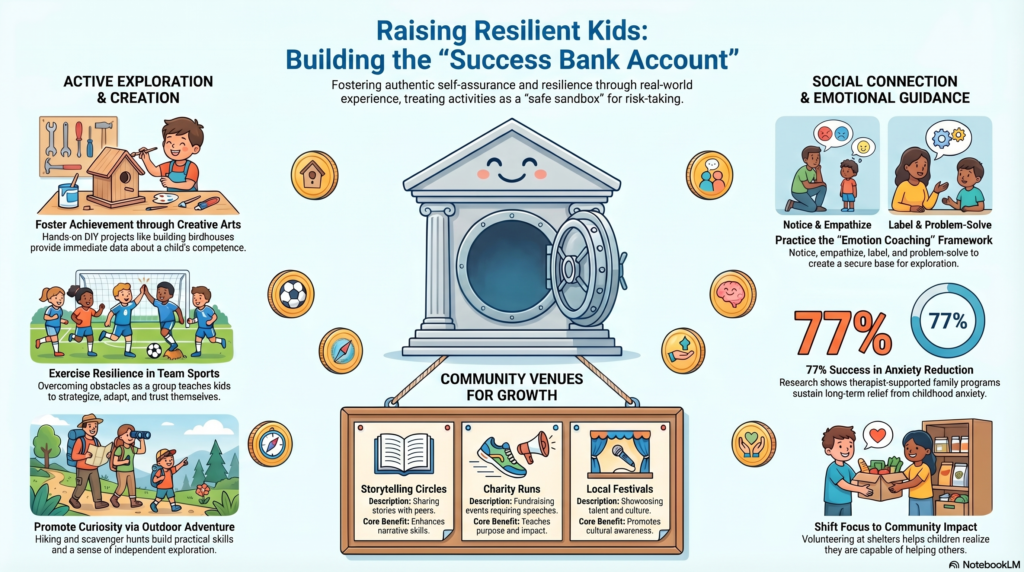
From a behavioral science perspective, confidence is essentially a “success bank account.” Every time a child completes a task like successfully following a recipe while baking or finally mastering a dance routine they make a deposit into that account. This is why I’m such a massive advocate for the hands-on activities mentioned in this guide. Whether it’s the fine motor skills and creative decision-making involved in DIY projects or the complex social navigation required in team sports, these aren’t just hobbies; they are foundational building blocks for a healthy identity.
In my youth empowerment work, I’ve seen firsthand how a child’s posture changes when they realize they have something valuable to contribute. This is particularly evident in community service and volunteering. When a child helps out at a food bank or animal shelter, the focus shifts from “Am I good enough?” to “I am capable of helping others”. This external focus is a powerful antidote to the internal anxiety that often plagues developing minds.
Similarly, public speaking opportunities, while often the most intimidating, offer a high-reward environment for growth. By practicing in supportive “storytelling circles” or neighborhood events, kids learn that their voice has power and that “jitters” are just energy that can be transformed into impact. The key takeaway here is that confidence is a muscle; it only grows when it is exercised against the resistance of a real challenge. By encouraging our kids to step into these various arenas, we are giving them the tools to build a sense of self that is grounded in reality, not just empty praise.
Team sports and games can be a fantastic way for kids to learn the value of teamwork and cooperation.
As they face challenges together, they not only build essential skills but also strengthen their bonds with teammates. Pay attention to what your kids do well and enjoy. Make sure they have chances to develop these things.
Watching them overcome obstacles as a group can boost their confidence and teach them the importance of supporting one another.
Benefits of Teamwork
In the world of youth sports and games, the benefits of teamwork extend far beyond the playing field. When you engage in team activities, you’re not just playing a game; you’re participating in collaborative projects that foster crucial life skills. These experiences encourage group problem solving and help you develop shared goals with your teammates.
Trust building is essential, and as you work together, you create an environment of mutual support. This camaraderie helps you learn conflict resolution skills, teaching you how to navigate disagreements constructively.
You’ll also find that leadership skills naturally emerge as you take turns guiding your team, creating accountability partnerships along the way. Through communication exercises, you’ll discover the power of expressing your ideas and listening to others.
Just imagine the impact of role playing scenarios, where you practice real-life situations in a safe space, empowering everyone to contribute. All of this not only boosts your confidence but also equips you for future challenges.
Embracing teamwork in sports isn’t just about winning; it’s about growing as a person and building a strong foundation for your future.
Overcoming Challenges Together
Facing challenges together in team sports and games can be a transformative experience. When you and your child engage in these activities, you’re not just playing; you’re building essential life skills. It’s natural to want to protect your child from failure, but trial and error is how kids learn, and falling short on a goal helps kids find out that it’s not fatal.
Here are three ways team sports foster confidence through overcoming challenges:
- Enhancing Problem Solving Skills: When faced with obstacles during a game, kids learn to strategize and adapt. They’ll discover that thinking on their feet can lead to success.
- Encouraging Risk Taking Experiences: Taking risks in a supportive environment can be exhilarating, and these moments play a key role in building confidence as kids discover their abilities and learn to trust themselves. Whether it’s attempting a new position or trying a challenging move, these experiences help kids realize their potential beyond what they thought possible.
- Fostering Team Support: The bonds formed in team sports teach children the value of collaboration. Cheering each other on through failures and victories instills a sense of belonging and boosts self-esteem.
Public Speaking Opportunities
Public speaking can feel intimidating, but it’s a powerful way to build your child’s confidence. School presentations and community events offer great opportunities for them to express their thoughts and ideas in a supportive environment. Make it clear to your children (or to your students) that you love and care for them even when they make mistakes or poor decisions, and avoid harshly criticizing or shaming them.
School Presentations
Confidence often blossoms in the spotlight of school presentations, where kids have the chance to share their ideas and express themselves. Public speaking is a wonderful opportunity to develop essential presentation skills and boost self-esteem. By focusing on audience engagement, they can learn how to connect with listeners, making their message resonate.
Here are three effective strategies to help your child shine:
- Practice Sessions: Encourage them to rehearse their presentation multiple times. Familiarity builds confidence and helps reduce anxiety.
- Visual Aids: Teach them the power of using visual aids. These can enhance understanding and keep the audience’s attention, making their points more impactful.
- Constructive Feedback: After practice, provide helpful feedback. Discuss body language and storytelling techniques to guarantee they’re conveying their message clearly and confidently.
With these tools, your child can transform presentation jitters into confidence boosters.
COMMUNITY EVENTS
Community events offer fantastic opportunities for kids to practice their public speaking skills in a supportive environment. Engaging in these activities not only builds confidence but also helps them connect with their community. From local festivals to talent shows, there’s something for everyone that encourages kids to express themselves.
Here’s a quick overview of some community events that can boost your child’s public speaking skills:
| Event Type | Description | Benefits |
| Community Fairs | Fun gatherings with various activities | Networking and creativity |
| Storytelling Circles | Sharing stories with peers | Enhances narrative skills |
| Charity Runs | Fundraising events requiring speeches | Teaches purpose and impact |
| Local Festivals | Celebrations showcasing culture and talent | Promotes cultural awareness |
Participating in art exhibitions or neighborhood clean-ups also provides chances for kids to speak up about their projects. Encourage your child to join family picnics and sports tournaments where they can present ideas or cheer for teammates. These experiences help them learn the joys of communication while making lasting memories!
Outdoor Adventures
Outdoor adventures can be a powerful way for kids to build confidence while exploring the world around them. Engaging with nature not only fosters a sense of freedom but also encourages kids to tackle challenges head-on.
Whether they’re climbing rocks or maneuvering through an obstacle course, every experience contributes to their self-esteem and resilience.
Here are three exciting outdoor activities to reflect on:
- Hiking Adventures: Take your kids on a scenic hike where they can immerse themselves in nature exploration. The thrill of reaching the summit or discovering a hidden waterfall boosts their confidence while teaching them about perseverance.
- Outdoor Scavenger Hunts: Create a scavenger hunt in your local park or backyard. This fun activity cultivates curiosity and teamwork as kids search for various items. They’ll learn to observe wildlife, appreciate their surroundings, and celebrate small victories together.
- Camping Experiences: Plan a camping trip that encourages kids to take part in setting up tents, cooking meals, and exploring the wilderness. These experiences not only build practical skills but also instill a sense of independence and responsibility.
Music and Dance Classes
Music and dance classes create vibrant opportunities for kids to express themselves while developing essential skills. These classes offer a safe space for children to explore their creativity, enhancing their confidence through self-expression. When kids engage in musical improvisation, they learn to trust their instincts and embrace spontaneity. This process encourages them to take risks and step outside their comfort zones, which is vital for building self-esteem.
Dance choreography presents another fantastic avenue for confidence building. As kids learn new routines, they not only develop physical coordination but also a sense of accomplishment. Mastering a new dance move or routine can be incredibly empowering. The joy of performing in front of peers or family can further boost their self-assurance, making them feel like stars on stage.
Participating in music and dance classes fosters teamwork and camaraderie, and the rhythm and movement themselves can become a joyful self care activity that helps kids release stress while building confidence. Kids often work together in groups, supporting each other as they learn and grow. This sense of community can help them form lasting friendships, allowing them to feel more connected and secure.
Moreover, these classes teach discipline and commitment. The process of practicing regularly to improve skills cultivates a strong work ethic, which is invaluable as kids navigate other areas of their lives.
Through music and dance, children not only have fun but also develop a sense of identity and purpose. So, consider enrolling your child in a class—it’s a delightful way for them to shine and grow!
Volunteering and Community Service
Through volunteering and community service, kids can develop a profound sense of purpose and belonging. Engaging in these activities not only helps others but also boosts their confidence as they see the positive impact of their efforts.
Here are three fantastic ways your child can get involved:
- Animal Shelters & Food Banks: Helping out at local animal shelters or food banks teaches compassion and responsibility. Kids can assist with feeding animals or organizing food drives, giving them a chance to see how their contributions make a difference.
- Elderly Homes & Literacy Programs: Visiting elderly homes or participating in literacy programs helps kids build empathy and communication skills. Reading to seniors or tutoring peers fosters connections and encourages them to express themselves.
- Environmental Cleanups & Fundraising Events: Organizing or participating in environmental cleanups or fundraising events allows kids to take action for causes they care about. Whether it’s cleaning up a local park or raising money for disaster relief, they’ll learn teamwork and leadership.
Volunteering in these various avenues—like mentoring programs, youth camps, and cultural festivals—enables children to explore their interests while connecting with their community.
By discovering their passions and making a difference, they’ll not only gain confidence but also create lasting memories and friendships.
Cooking and Baking Together
Cooking and baking together can be a delightful way to bond with your child while building their confidence in the kitchen. As you start this culinary journey, encourage them to plunge into recipe exploration. Start with simple dishes, allowing for kitchen experiments where they can mix flavors and try out new flavor combinations. This hands-on experience not only teaches essential cooking techniques but also fosters creativity.
Engage your child in meal planning, discussing what ingredients to use and where to source them. This teaches them about ingredient sourcing, giving them a sense of ownership over their creations. As they measure, mix, and bake, they’ll discover the fascinating baking science behind their favorite treats, enhancing their understanding of how different elements interact.
Don’t forget about the joy of creative plating! Encourage your child to present their dishes beautifully, turning a simple meal into a feast for the eyes. You can also share family traditions and culinary history, connecting them to the recipes you’re making. This not only enriches their experience but also helps them feel part of something bigger.
Whether you’re whipping up a family favorite or trying a new dish, cooking and baking together is a fantastic way to build confidence. As they see their creations come to life, your child will learn that they can tackle challenges, experiment, and enjoy the delicious results of their hard work.

RELATED STUDIES ABOUT BUILDING CONFIDENCE IN KIDS
By encouraging your kids to participate in these fun activities, you’re not just building their confidence; you’re setting them up for a lifetime of success. Whether they’re painting a masterpiece or scoring the winning goal, each experience helps them shine brighter than a thousand suns. Remember, the goal is to create joyful memories while they learn to believe in themselves. So immerse yourselves together, and watch as their self-esteem soars to incredible heights!
Tuning in to Kids: Theoretical basis, program description, and factors impacting effectiveness
Program Overview
Tuning in to Kids (TIK) is an evidence-based, emotion-focused parenting program designed to enhance parents’ emotion socialization skills. It aims to improve parent-child relationships and children’s emotional, social, and behavioral functioning. The program is structured, manualized, and delivered in multiple formats (group, individual, online) across diverse cultural and clinical settings worldwide.
- Theoretical Foundation
TIK integrates several key theories:
- Emotion Socialization Theory: Emphasizes how parents’ responses to emotions shape children’s emotional competence.
- Meta-Emotion Philosophy (MEP): Focuses on parents’ beliefs about emotions, which influence their parenting style (emotion-coaching vs. emotion-dismissing).
- Emotion Regulation Theories: Incorporates bottom-up (sensory/body-based) and top-down (cognitive) strategies to help parents regulate their own and their children’s emotions.
- Attachment Theory & Emotion-Focused Therapy: Highlights the role of secure attachment and co-regulation in emotional development.
- Mindfulness: Helps parents stay present and non-judgmental during emotional interactions.
- Core Intervention Model
TIK targets four key processes to drive change:
- Increasing awareness of MEP – helping parents recognize how their beliefs about emotions affect parenting.
- Developing parents’ emotion regulation skills – teaching strategies to manage emotional arousal.
- Reducing unsupportive (dismissive) responses and increasing supportive (emotion-coaching) parenting.
- Teaching the 5-step emotion-coaching framework:
- Notice the child’s emotion.
- See it as an opportunity for connection/guidance.
- Empathize and validate.
- Help the child label the emotion.
- Problem-solve or set limits if needed.
- Delivery Methods & Adaptability
TIK is delivered in 6–8 sessions via:
- Group formats (community/clinical settings)
- One-to-one sessions
- Online self-paced modules (TIKOL)
Programs are tailored for different age groups (toddlers, children, adolescents) and specific populations (e.g., fathers, culturally diverse communities).
- Factors Influencing Effectiveness – A Socioecological Model
TIK’s success is shaped by multiple interacting factors:
- Child Factors: Age, temperament, neurodiversity, mental/physical health.
- Parent Factors: Readiness for change, emotion regulation, attachment style, mental health, beliefs about emotions.
- Family Factors: Structure, co-parenting dynamics, social support, stressors.
- Program Factors: Delivery format, cultural adaptation, accessibility.
- Facilitator Factors: Competence, cultural responsiveness, ability to model emotion coaching.
- Organizational Factors: Resources, training, supervision, workload.
- Cultural/Social/Political Factors: Societal views on emotions, gender norms, funding for parenting programs, cultural acceptance of emotion-focused approaches.
- Evidence & Global Reach
- TIK has a strong evidence base demonstrating effectiveness in improving parent emotion socialization, reducing child behavior problems, and enhancing emotional competence. It has been implemented and researched in multiple countries (Australia, Norway, Germany, Iran, Hong Kong, USA, etc.) and adapted for diverse cultural contexts, with materials translated into 15 languages.
Conclusion
TIK is a theoretically grounded, flexible, and empirically supported parenting intervention that addresses emotion socialization as a pathway to improving child and family wellbeing. Its effectiveness is influenced by a complex interplay of individual, relational, organizational, and societal factors. Future research should continue to explore how these factors interact to optimize program implementation and outcomes across different populations and settings.
| REFERENCE: Sophie S. Havighurst, Christina C. Ambrosi, Ann E. Harley, Christiane E. Kehoe, Tuning in to Kids: Theoretical basis, program description, and factors impacting effectiveness, Journal of Applied Developmental Psychology, Volume 98, 2025, 101797, ISSN 0193-3973, https://doi.org/10.1016/j.appdev.2025.101797. (https://www.sciencedirect.com/science/article/pii/S0193397325000449) |
Treating child anxiety using family-based internet delivered cognitive behavior therapy with brief therapist guidance: A randomized controlled trial”
Study Objective
This randomized controlled trial (RCT) evaluated the efficacy of Cool Kids Online, a family-based, therapist-supported internet-delivered cognitive behavioral therapy (iCBT) program for children aged 7–12 years with diagnosed anxiety disorders.
Methodology
- Design: Two-arm RCT comparing immediate iCBT treatment (n=47) with a 10-week waitlist control (n=48).
- Intervention: Cool Kids Online—an 8-lesson, parent-led online CBT program adapted from an evidence-based face-to-face program. Parents received brief weekly therapist phone support (~15 min per call).
- Outcomes: Assessed at baseline, post-treatment (week 11), and 6-month follow-up. Primary outcome: remission of primary anxiety diagnosis. Secondary outcomes: anxiety symptoms, interference, depression, and externalizing symptoms.
- Analysis: Intention-to-treat with multiple imputation for missing data.
Key Findings
- Diagnostic Remission:
- Post-treatment: 63% of iCBT group no longer met criteria for primary anxiety diagnosis vs. 28% in waitlist (p<0.001).
- 54% of iCBT group were free of all anxiety diagnoses vs. 19% in waitlist (p<0.001).
- Symptom Reduction:
- Parents in iCBT reported significantly greater reductions in child anxiety symptoms and interference than waitlist (medium-to-large effect sizes).
- Child-reported anxiety symptoms did not differ significantly between groups, though within-group improvements were observed.
- Maintenance: Gains were sustained at 6-month follow-up, with 77% free of primary diagnosis and 67% free of all anxiety diagnoses.
- Comorbid Symptoms: No significant changes in depression or externalizing symptoms were observed, likely due to low baseline levels and exclusion of severe behavioral disorders.
- Adverse Events: Minimal deterioration (<7%) in both groups; 13% of waitlist children reported increased anxiety interference.
- Engagement & Satisfaction:
- 83% of families completed all 8 lessons.
- High satisfaction: 92% of parents found the program helpful; 97% would recommend it.
Strengths
- Randomized design with blinded diagnostic assessments.
- Inclusion of 6-month follow-up and evaluation of deterioration effects.
- High treatment completion and adherence to protocol.
- Integration of brief, regular therapist support likely enhanced engagement and outcomes.
Limitations
- Waitlist control (no active comparator).
- Sample lacked diversity (highly educated, predominantly English-speaking, mostly female caregivers).
- Uncontrolled maintenance phase.
- Low baseline depression/externalizing symptoms limited ability to assess impact on comorbidities.
Implications
- Cool Kids Online is an effective, accessible, and scalable iCBT intervention for childhood anxiety, with outcomes comparable to face-to-face CBT.
- Brief therapist support appears to improve completion and efficacy.
- The program offers a cost-efficient alternative to traditional therapy, potentially reducing barriers to care.
Future Research
- Compare iCBT to face-to-face CBT or community care.
- Optimize therapist support (frequency, format, content).
- Evaluate cost-effectiveness and efficacy in more diverse, disadvantaged populations.
Conclusion: This study provides strong evidence that therapist-supported, family-based iCBT is an effective treatment for childhood anxiety, with high remission rates, sustained benefits, and strong family acceptance. It represents a promising step toward increasing access to evidence-based mental health care for children.
| REFERENCE: Lauren F. McLellan, Samantha Woon, Jennifer L. Hudson, Heidi J. Lyneham, Eyal Karin, Ronald M. Rapee, Treating child anxiety using family-based internet delivered cognitive behavior therapy with brief therapist guidance: A randomized controlled trial, Journal of Anxiety Disorders, Volume 101, 2024, 102802, ISSN 0887-6185, https://doi.org/10.1016/j.janxdis.2023.102802. (https://www.sciencedirect.com/science/article/pii/S0887618523001408) |
Speakapp-Kids! Virtual Reality Training To Reduce Fear Of Public Speaking In Children – A Proof Of Concept
Objective
This study investigated whether a virtual reality (VR) application, SpeakApp-Kids!, could reduce public speaking anxiety in children aged 9–12. The research aimed to determine if repeated, brief exposures to a virtual audience during speech practice could:
- Lower children’s state anxiety during practice sessions.
- Reduce anxiety during an actual classroom presentation.
- Decrease general public speaking anxiety over time.
Method
- Participants: 89 Dutch primary school children (grades 4–6), divided into:
- VR Group (n=40): Used SpeakApp-Kids! for three practice sessions.
- Control Group (n=49): Prepared speeches at home as usual.
- Intervention: The VR group practiced speeches in front of a 360° video of a real classroom audience (attentive or inattentive) using a smartphone VR headset. Each session included two 4-minute speech trials.
- Measures:
- State Anxiety: Assessed via self-report scales measuring nervousness, heart rate, and sweaty hands.
- General Public Speaking Anxiety: Measured using a revised 33-item questionnaire.
- Social Anxiety: Evaluated as an exploratory factor.
- Procedure: Anxiety levels were measured before, during, and after practice sessions and the final presentation. Follow-up assessments occurred one week post-presentation.
Key Findings
- Reduced State Anxiety During Practice:
Children in the VR group showed a significant decrease in nervousness and heart rate from the first to the second practice session. No further reduction occurred in the third session.
- Lower Anxiety During Actual Presentation:
The VR group reported significantly lower state anxiety during the classroom presentation compared to the control group.
- Decreased General Public Speaking Anxiety:
Both groups showed reduced general anxiety after the presentation, but the reduction was significantly greater in the VR group.
- Correlation with Social Anxiety:
Higher general public speaking anxiety was positively correlated with higher social anxiety, supporting the link between the two constructs.
Limitations
- Non-Randomized Design: Classes were assigned to conditions rather than individual children, potentially introducing teacher or task-related confounds.
- Self-Report Data: Anxiety was measured retrospectively via questionnaires rather than with physiological measures or real-time assessment.
- Uncontrolled Practice Variables: Differences in home practice habits between groups could not be reliably measured or controlled.
- Passive Virtual Audience: The VR audience was pre-recorded and non-responsive, which may limit realism and long-term engagement.
Conclusions
- SpeakApp-Kids! is an effective, low-cost tool for reducing public speaking anxiety in children.
- Two short VR practice sessions were sufficient to reduce both state and general anxiety.
- The tool has significant potential for early intervention and prevention of public speaking anxiety, possibly averting more severe anxiety later in life.
- Future versions could enhance effectiveness by incorporating responsive, interactive audiences and exploring long-term outcomes.
Implications
- Educational Use: VR can be integrated into curricula to help students develop presentation skills and confidence in a low-risk environment.
- Clinical Potential: The app could be adapted for therapeutic use in treating social anxiety disorders in youth.
- Research Directions: Future studies should employ randomized designs, include physiological measures, and explore the effects of adaptive, interactive VR audiences.
Overall, this proof-of-concept study demonstrates that VR-based exposure training is a promising, scalable approach to mitigating public speaking anxiety in children, with benefits extending to real-world speaking situations.
| REFERENCE: Robin E. Sülter, Paul E. Ketelaar, Wolf-Gero Lange, SpeakApp-Kids! Virtual reality training to reduce fear of public speaking in children – A proof of concept, Computers & Education, Volume 178, 2022, 104384, ISSN 0360-1315, https://doi.org/10.1016/j.compedu.2021.104384. (https://www.sciencedirect.com/science/article/pii/S036013152100261X) |
CONCLUSION
As we wrap up this exploration of confidence-building activities, I’m reminded of the “Tuning in to Kids” philosophy, which emphasizes that our response to a child’s emotions is just as important as the activities they participate in. Building confidence isn’t just about the “wins”; it’s about how we validate their feelings during the “losses”. When a child feels seen and understood, even when they’re frustrated by a difficult art project or nervous about a school presentation, it creates the secure base they need to keep exploring.
I encourage you to view these activities not as a checklist of chores, but as a series of invitations to connect with your child. Whether you are camping under the stars, experimenting with flavors in the kitchen, or upcycling old items into something new, you are creating a shared history of competence and joy. These memories act as a psychological anchor for your child as they grow and face the bigger, more complex challenges of adulthood.
My hope is that you’ll take one or two of these ideas and start today. Don’t wait for the “perfect” moment or for your child to feel 100% ready, confidence is built in the doing, not the waiting. Keep showing up, keep encouraging that sense of curiosity, and keep modeling what it looks like to be authentically yourself. Their self-esteem has the potential to soar to incredible heights, and you have the front-row seat to watch them shine. Let’s get out there and start building.