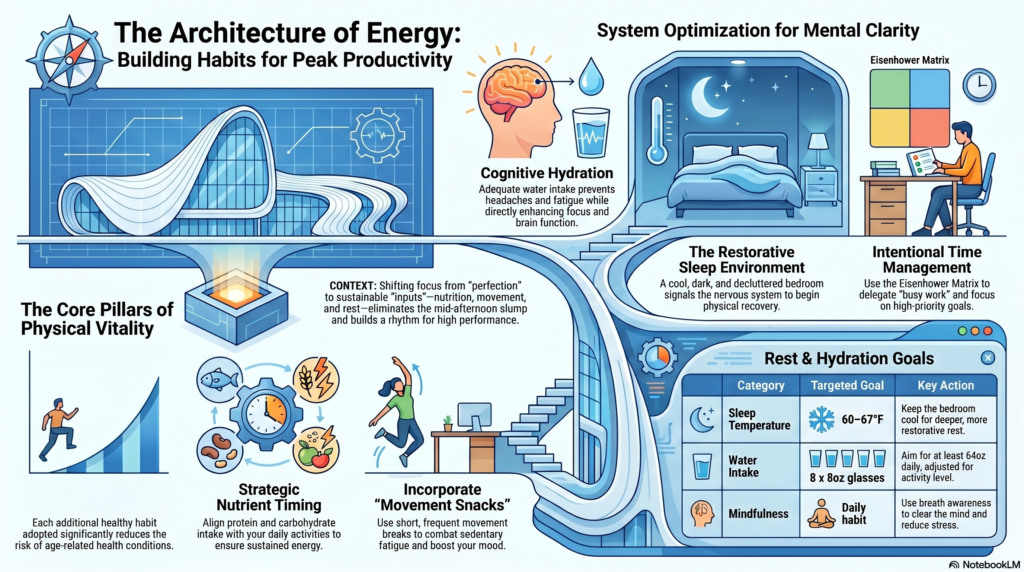
As a lifestyle educator, I’ve often observed that people approach “health” as if it’s a destination they’ll eventually reach if they just work hard enough. But the truth is much simpler: your life is essentially the sum of your daily repetitions. When we talk about healthy lifestyle habits that improve energy and productivity, we aren’t just talking about a checklist of chores; we are talking about the architecture of your day. I always tell my students that if you want to change your output, your focus at work, your mood at home, your physical vitality, you have to look at your inputs: balanced nutrition, movement, and restorative rest.
It’s easy to feel overwhelmed by the sheer volume of wellness advice out there. We see influencers suggesting 12-step morning routines and restrictive diets that feel more like a full-time job than a lifestyle. However, my background in public health has taught me that the most effective habits are the ones that are almost invisible because they are so well-integrated into your life.
For instance, simply choosing to stay hydrated or opting for a nutrient-dense snack instead of a sugary one can be the difference between a mid-afternoon slump and a productive finish to your workday. The goal isn’t perfection; it’s about creating a sustainable rhythm that empowers you to live freely and energetically.
To boost your energy and productivity, start by prioritizing balanced nutrition, regular exercise, and quality sleep. Fuel your body with nutrient-rich meals and stay hydrated. Incorporate movement into your day, whether it’s a brisk walk or a fun group workout. Establish a consistent sleep schedule and create a calming bedroom environment for restful nights. Additionally, practice mindfulness to clear your mind and enhance focus. Effective time management will help you prioritize tasks and reduce stress. By adopting these habits, you’ll naturally feel more energized and engaged—there’s so much more to explore about enhancing your well-being!
KEY TAKEAWAYS
- Balanced nutrition through meal planning and nutrient timing boosts energy and sustains focus throughout the day.
- Regular physical activity, including varied exercises, increases energy levels and combats fatigue from sedentary habits.
- Consistent sleep schedules enhance sleep quality, leading to improved daytime energy and productivity.
- Staying hydrated supports cognitive performance and mental clarity, essential for maintaining productivity.
- Mindfulness practices, like meditation and breath awareness, foster emotional regulation and enhance overall mental clarity.
BALANCED NUTRITION
When it comes to balanced nutrition, many people find it challenging to navigate the overwhelming amount of information available. You’re not alone in feeling this way, but remember that achieving a balanced diet can empower you to live freely and energetically.
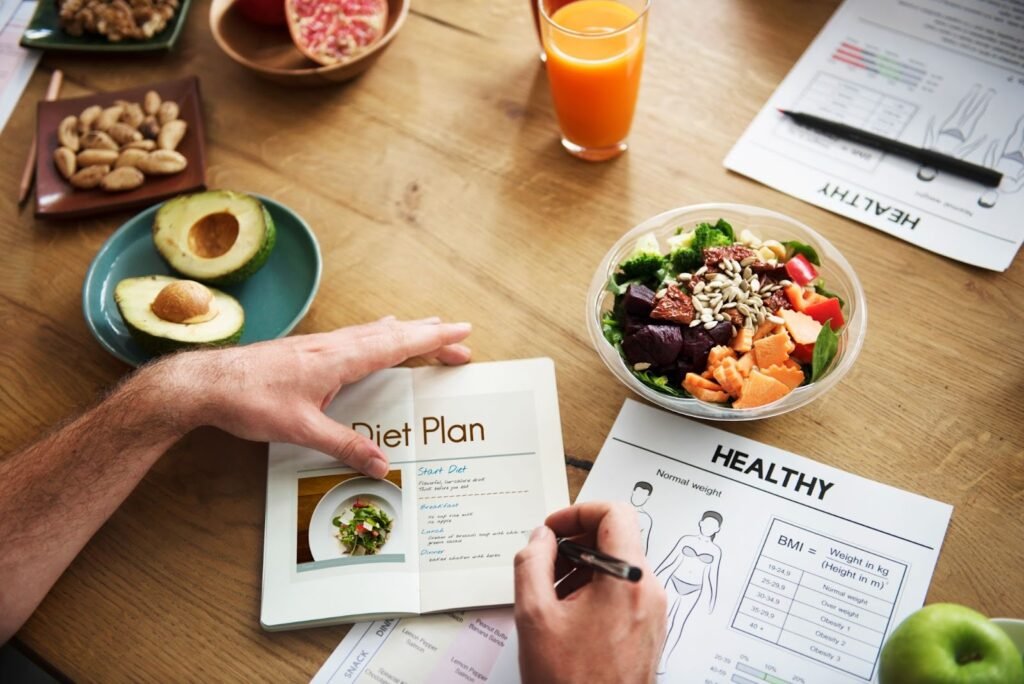
Start by embracing meal planning as a tool to simplify your choices, as this mindful approach supports healthy holistic living by ensuring your body receives balanced nourishment that fuels both physical energy and mental clarity. Planning your meals in advance allows you to make conscious decisions about what you eat, ensuring you incorporate a variety of nutrients that fuel your body.
Consider the concept of nutrient timing, too. It’s not just what you eat, but when you eat that can make a difference. By aligning your meals with your daily activities, you’ll provide your body with the energy it needs when it matters most.
For instance, consuming a mix of proteins and carbohydrates before a busy day can equip you with sustained energy, while a light, nutrient-rich snack in the afternoon can help keep your focus sharp.
Regular Physical Activity
Regular physical activity is essential for maintaining a healthy lifestyle and boosting your overall well-being. Embracing a routine that includes cardio workouts, strength training, and flexibility exercises can transform how you feel daily.
It’s not just about hitting the gym; think about integrating outdoor activities and active hobbies into your life. Whether it’s hiking, biking, or dancing, these enjoyable pursuits can elevate your mood and energy levels.
Consider joining a group fitness class or seeking personal training to keep you motivated. The camaraderie found in group settings can inspire you to push your limits and achieve your fitness goals.
Remember, variety is key! Mixing different types of exercise keeps things fresh and exciting. Incorporate movement breaks throughout your day to combat the fatigue that comes from long hours of sitting. Even a quick walk or stretch can recharge your mind and body.
Finding what works for you is vital. Listen to your body, and don’t be afraid to experiment with different activities. The freedom to choose how you move not only empowers you but also helps cultivate a lifelong love for fitness.
Quality Sleep Habits
Getting quality sleep is essential for your overall well-being, and establishing a consistent sleep schedule is a great place to start. Adopting new, healthier habits may protect you from serious health problems like obesity and diabetes. New habits, like healthy eating and regular physical activity, may also help you manage your weight and have more energy. After a while, if you stick with these changes, they may become part of your daily routine.
By optimizing your bedroom environment and incorporating pre-sleep relaxation techniques, you can create the perfect setting for restorative rest.
Let’s explore how these habits can transform your nights and energize your days.
Sleep Schedule Consistency
Establishing a consistent sleep schedule can greatly enhance your overall well-being. When you stick to a regular bedtime and wake-up time, you help regulate your sleep cycle and align your body’s circadian rhythms. This consistency not only improves the quality of your sleep but also boosts your energy levels throughout the day.
You might wonder why this matters. A well-timed sleep schedule allows your body to anticipate when it’s time to wind down and when to rise, making it easier to fall asleep and wake up refreshed. Think of it as giving yourself the freedom to feel vibrant and focused. By committing to this routine, you reduce the chances of insomnia and daytime fatigue.
It’s important to note that even small changes can make a difference. If you usually go to bed at midnight and wake up at 8 AM, try gradually shifting those times. Aim for a consistent schedule, even on weekends.
This way, you’ll set yourself up for success, leading to enhanced productivity and a greater sense of freedom to pursue your passions. So, take charge and embrace the power of a consistent sleep schedule!
Bedroom Environment Optimization
Creating a peaceful bedroom environment can greatly impact your sleep quality. By optimizing your space, you can enhance your rest and boost your energy levels. Here are four key strategies to reflect on:
- Ambient Lighting: Use soft, warm lights to create a calming atmosphere. Avoid harsh, bright lights before bedtime to signal your body it’s time to wind down.
- Air Quality: Guarantee good ventilation and contemplate using an air purifier. Fresh air promotes better sleep and keeps your mind clear.
- Decluttering Strategies: Clear away unnecessary items. A tidy space fosters tranquility and allows your mind to relax, reducing distractions.
- Temperature Control: Keep your bedroom cool, ideally between 60-67°F. This range promotes deeper sleep and enhances comfort throughout the night.
Pre-Sleep Relaxation Techniques
Incorporating just a few pre-sleep relaxation techniques can greatly enhance your ability to unwind and prepare for a restful night, turning your evening routine into a meaningful self care activity that supports both mental calm and physical recovery.
Start by practicing breath awareness. This simple yet powerful technique helps center your mind and calm your body. Lie comfortably in bed, close your eyes, and focus on your breathing. Inhale deeply through your nose, allowing your belly to rise, then exhale slowly through your mouth. Repeat this for a few minutes, letting go of the day’s stress.
Next, try progressive relaxation. This technique involves systematically tensing and relaxing each muscle group, promoting deep relaxation.
Begin at your toes, tense the muscles for a few seconds, then release. Work your way up through your legs, abdomen, arms, and finally your face. This method not only relieves physical tension but also signals your mind that it’s time to unwind.

HYDRATION IMPORTANCE
In my personal time, I’ve found that the discipline I apply in my woodworking shop, where every cut must be precise and intentional, applies perfectly to habit formation. You wouldn’t rush a delicate piece of furniture, and you shouldn’t rush your body’s adaptation to new routines. For example, when it comes to physical activity, we often think it has to be a grueling hour at the gym. But I’m a huge advocate for “movement snacks” and active hobbies. I personally love spending time outdoors; whether it’s a brisk walk or a weekend hike, that connection to the environment does wonders for mental clarity.
One area I’m particularly passionate about is the intersection of our environment and our biology, specifically regarding sleep and mindfulness. We live in a world designed to keep us stimulated and “on” at all hours. Establishing a consistent sleep schedule and optimizing your bedroom environment, keeping it cool, dark, and decluttered, is an act of self-respect.
I’ve found that practicing breath awareness or progressive muscle relaxation before bed isn’t just a relaxation technique; it’s a signal to your nervous system that the day’s work is done and it’s time for physical recovery. Similarly, time management isn’t just about squeezing more tasks into an hour; it’s about intentional living. Using tools like the Eisenhower Matrix allows you to delegate or drop the “busy work” so you can focus on what truly matters to your long-term goals.
Staying properly hydrated is essential for your overall well-being, impacting everything from your energy levels to your brain function.
When you drink enough water, you’ll notice improved focus and clarity, helping you tackle daily challenges with ease. Stretching before getting out of bed wakes up the body, improves circulation, and promotes relaxation, helping to set the day’s tone. While you’re still lying in bed, move the covers aside, then flex and release your lower limbs several times. Bend your knees and lift your legs into the air. With your legs still elevated, flex your feet up and down and rotate them side to side. Next, sit up and slowly look left and then right. Roll your shoulders several times. Flex your wrists up and down, and open and close your hands repeatedly.
Optimal Water Intake
Adequate hydration is essential for your overall well-being, and many people underestimate just how much water their bodies need. Staying properly hydrated enhances your energy levels, boosts productivity, and helps you feel your best.
Here are some hydration tips to help you optimize your water consumption:
- Set a Daily Goal: Aim for at least eight 8-ounce glasses of water a day, adjusting based on your activity level and climate.
- Carry a Water Bottle: Keep a reusable water bottle with you. It’ll serve as a constant reminder to drink throughout the day.
- Infuse Your Water: Spice things up by adding fruits, herbs, or even veggies to your water. This not only enhances flavor but also makes hydration more enjoyable.
- Monitor Your Intake: Use apps or simple reminders to track your water consumption. Knowing how much you drink can motivate you to stay on target.
Hydration and Brain Function
While you might focus on physical health, don’t overlook how hydration plays an essential role in your brain function. Staying well-hydrated impacts your cognitive performance, enhancing mental clarity and fluid balance. When you’re dehydrated, you may experience symptoms like fatigue, headache, and difficulty concentrating. This can greatly hinder your productivity, making it crucial to prioritize your water intake.
Here are some hydration strategies to help you maintain ideal brain hydration:
| Water Sources | Hydration Tips | Dehydration Symptoms |
| Fresh fruits | Carry a water bottle | Headaches |
| Vegetables | Set reminders to drink | Fatigue |
| Herbal teas | Flavor water with fruits | Dizziness |
| Infused waters | Drink before meals | Poor concentration |
| Coconut water | Track your intake | Dry mouth |
Integrating these hydration tips into your daily routine can boost your cognitive performance and keep your brain in peak condition. Remember, the freedom to think clearly and work efficiently starts with a simple glass of water. So, make hydration a priority and enjoy the benefits it brings!
Mindfulness and Meditation
Embracing mindfulness and meditation can transform your mental landscape, fostering a deeper connection to the present moment. When you cultivate these practices, you’ll experience significant benefits that enhance your emotional regulation and mental clarity.
You’ll find that with just a few minutes a day, you can elevate your focus and reduce stress. Making new habits can be a challenge. It’s especially hard to change everything all at once. It’s easier to set small, realistic, achievable goals. This helps create a sense of confidence and encourage further habit goals that you can build upon. For example, if you want to form good exercise habits, start by taking short walks, most days of the week. Once you have formed your habit, you can work up to more intense activity, or walking more frequently.
Here are four effective mindfulness techniques to get you started:
- Breath Awareness: Focus on your breath. Notice each inhale and exhale. This simple act grounds you in the present moment, helping to clear your mind.
- Body Scan: Lie down comfortably and mentally scan your body from head to toe. Pay attention to any areas of tension and consciously relax those muscles. This promotes stress reduction and a sense of peace.
- Guided Imagery: Visualize a serene place. Picture the sights, sounds, and sensations. This technique not only fosters relaxation but also enhances your creativity and focus.
- Mindful Eating: Savor each bite of your meals. Pay attention to flavors and textures, allowing yourself to fully enjoy the experience. This fosters a connection to your body and can improve your overall relationship with food.
Incorporating these practices into your daily routine can enhance your sense of freedom and well-being.
With consistent effort, you’ll notice a shift in your energy levels and productivity, empowering you to navigate each day with clarity and purpose.
Time Management Techniques
Effectively managing your time can dramatically enhance your productivity and reduce stress in your life, especially when you begin to reflect on what does intentional living mean and how making conscious choices about your priorities can align your daily actions with your long-term goals. You have the power to take control of your day by implementing simple yet impactful time management techniques.
Start by embracing task prioritization strategies. Identify what’s urgent versus what’s important. Use tools like the Eisenhower Matrix to categorize your tasks, ensuring you focus on what truly matters. This way, you can tackle high-priority items first, leaving less essential tasks for later.
Next, consider employing effective delegation methods. You don’t have to do it all alone. Assess your workload and identify tasks that others can handle. Entrusting responsibilities to teammates or even family members not only lightens your load but also fosters collaboration and support.
Remember, delegation isn’t a sign of weakness; it’s a strategic move towards greater efficiency.
As you refine your time management skills, be adaptable. Life’s unpredictable, and circumstances may require you to shift priorities. Stay flexible and willing to adjust your plans without losing sight of your goals.
You’ll discover that managing your time effectively not only elevates your productivity but also grants you the freedom to enjoy your life more fully.
Limiting Screen Time
As you work on managing your time better, it’s just as important to reflect on how screen time fits into your daily routine. Limiting screen time can dramatically enhance your mental clarity and productivity. A digital detox might sound intimidating, but setting tech boundaries is essential for your well-being.
Here are some simple steps to help you limit your screen time effectively:
- Create Device-Free Zones: Designate areas in your home where screens aren’t allowed. This encourages face-to-face interaction and helps you unwind without distractions.
- Schedule Screen Breaks: Incorporate regular breaks into your day. Step away from your devices every hour to reduce eye strain and combat the effects of blue light exposure.
- Limit Social Media Use: It’s easy to get lost in endless scrolling. Set specific times for checking social media to avoid mindless browsing that drains your energy.
- Use Productivity Apps Wisely: While some apps can help manage your time, be cautious not to overwhelm yourself with notifications. Choose a few that genuinely enhance your focus techniques.

RELATED STUDIES ABOUT HEALTHY LIFESTYLE HABITS
Incorporating healthy lifestyle habits can truly transform your energy and productivity. Remember, “you are what you eat”—so nourish your body with balanced nutrition and stay active. Prioritize quality sleep and hydration, practice mindfulness, and manage your time wisely. By limiting screen time, you’ll find yourself more focused and energized. Embrace these changes, and you’ll not only boost your productivity but also enhance your overall well-being. You’ve got this!
Healthy Lifestyle Habits, Educational Attainment, And The Risk Of 45 Age-Related Health And Mortality Outcomes In The Uk: A Prospective Cohort Study
Objective
This study aimed to investigate the associations between healthy lifestyle habits and educational attainment (EA) with the risk of 45 age-related health conditions and mortality outcomes. It also examined whether the benefits of a healthy lifestyle vary by EA level and to what extent lifestyle mediates the relationship between EA and health outcomes.
Key Findings
- Healthy Lifestyle Habits
- Only 12.4% of participants maintained all five healthy habits (healthy diet, adequate physical activity, non-smoking, moderate alcohol consumption, and optimal sleep).
- A higher healthy lifestyle score was associated with a reduced risk of 34 out of 45 health conditions, including cardiovascular diseases, cancers, neurological disorders, digestive diseases, and respiratory conditions.
- Each additional healthy habit was linked to:
- 11% lower risk of CVD
- 7% lower risk of all cancers
- 21% lower risk of all-cause mortality
- Non-smoking had the strongest protective effect across most outcomes.
- Educational Attainment (EA)
- Higher EA was associated with a lower risk of 25 health and mortality outcomes in both observational and genetic analyses.
- Individuals with higher EA were more likely to adopt healthy habits (except physical activity).
- EA was not significantly associated with CVD mortality after full adjustment.
- Interaction Between Lifestyle and EA
- The protective effect of a healthy lifestyle was stronger in individuals with lower EA for outcomes such as mortality, CVD, certain cancers, and respiratory diseases.
- Lifestyle habits mediated a substantial proportion of the EA–health association:
- 41.4% for all-cause mortality
- 27.9% for all cancers
- 27.7% for COPD
- Unexpected Associations
- Healthy lifestyle and higher EA were linked to a slightly higher risk of melanoma and prostate cancer.
- Smoking was associated with a lower risk of Parkinson’s disease, melanoma, and prostate cancer, consistent with prior evidence.
Conclusions
- Adopting a healthier lifestyle and achieving higher education are both strongly associated with reduced risks of a wide range of age-related diseases and mortality.
- Higher EA appears to promote healthier lifestyle choices, which in turn explain a significant part of its protective effect on health.
- Individuals with lower education benefit more from lifestyle improvements, suggesting targeted lifestyle interventions could help reduce health inequalities.
Limitations
- Lifestyle data were self-reported, which may introduce measurement bias.
- The UK Biobank cohort is generally healthier than the general population.
- Most participants were White, limiting generalizability to other ethnic groups.
Implications
Public health strategies should:
- Promote lifestyle modification, especially among less-educated populations.
- Integrate education and health policy to address socioeconomic disparities in health outcomes.
- Develop condition-specific lifestyle guidelines beyond traditional CVD and cancer prevention.
Key Message
A healthy lifestyle significantly reduces the risk of most age-related diseases, and its benefits are even greater for those with lower educational attainment. Education and lifestyle are interconnected drivers of healthy aging, with lifestyle mediating a large part of education’s health benefits.
| REFERENCE: Yu Huang, Shuo Wang, Le Tian, Xueli Zhang, Shunming Liu, Zhuoting Zhu, Wei Wang, Danli Shi, Mingguang He, Xianwen Shang, Healthy lifestyle habits, educational attainment, and the risk of 45 age-related health and mortality outcomes in the UK: A prospective cohort study, The Journal of nutrition, health and aging, Volume 29, Issue 5, 2025, 100525, ISSN 1279-7707, https://doi.org/10.1016/j.jnha.2025.100525. (https://www.sciencedirect.com/science/article/pii/S127977072500048X) |
Epigenetic Effects of Healthy Foods and Lifestyle Habits from the Southern European Atlantic Diet Pattern: A Narrative Review
Objective
To review the health benefits of the Southern European Atlantic Diet (SEAD) and explore how its components—foods, physical activity, psychological well-being, and environmental sustainability—may influence health and aging through epigenetic mechanisms.
Key Findings
- Overview of the SEAD
- The SEAD is a traditional dietary pattern from the Atlantic regions of Southern Europe (Galicia, Northern Portugal, and surrounding areas), characterized by:
- High consumption of fish, seafood, whole grains, potatoes, legumes, fruits, vegetables (especially Brassicas), dairy (especially cheese), and olive oil.
- Moderate consumption of meat (especially pork and beef from local breeds), wine, and nuts (especially chestnuts).
- Emphasis on home cooking, family meals, daily physical activity, and seasonal/local foods.
- The SEAD is associated with high life expectancy and low rates of cardiovascular disease (CVD) in these regions.
- Health Benefits of the SEAD
- Cardiometabolic Health: Adherence to SEAD is linked to lower risks of myocardial infarction, reduced inflammation markers (e.g., C-reactive protein), improved lipid profiles, lower blood pressure, and better insulin sensitivity.
- Microbiota & Nutrition: SEAD promotes a healthy gut microbiome (e.g., higher Bifidobacterium spp.) and improves breast milk quality (higher iron and PUFA content).
- Longevity: Higher adherence to SEAD is associated with lower all-cause mortality in older adults.
- Sustainability: SEAD has a lower carbon and water footprint compared to other Western diets, due to its emphasis on local, seasonal, and minimally processed foods.
- Epigenetic Mechanisms
- Nutritional Epigenetics: Bioactive compounds in SEAD foods (e.g., glucosinolates, omega-3 fatty acids, polyphenols, vitamins) can modify epigenetic markers such as DNA methylation, histone modifications, and non-coding RNA expression.
- Exercise: Regular physical activity—integral to the SEAD lifestyle—induces beneficial epigenetic changes that reduce inflammation and improve metabolic health.
- Psychological Well-being: The SEAD’s emphasis on family meals and a stress-free environment may reduce epigenetic changes linked to mental health disorders.
- Reduced Environmental Toxins: By promoting local, low-pollution food systems, SEAD may reduce exposure to endocrine-disrupting chemicals (EDCs) that cause harmful epigenetic alterations.
- SEAD as an “Epigenetic Diet”
- The review proposes that the SEAD functions as an “epigenetic diet”—a dietary pattern capable of modulating the epigenome to promote healthy aging, delay age-related diseases, and extend lifespan.
- This effect is achieved through the synergistic combination of nutrient-dense foods, active lifestyle, mental well-being, and environmental sustainability.
Conclusions
- The SEAD is a holistic, sustainable dietary pattern with demonstrated benefits for cardiovascular, metabolic, and mental health, as well as longevity.
- Its positive health effects are mediated partly through epigenetic mechanisms, influencing gene expression without altering DNA sequence.
- The SEAD model supports healthy aging and may serve as a blueprint for public health strategies aimed at reducing chronic disease burden through diet and lifestyle.
Limitations & Future Directions
- Most evidence is observational; more randomized controlled trials (like the GALIAT study) are needed.
- Existing adherence scores for SEAD need updating to better reflect its full dietary and lifestyle components.
- Further research should explore the specific epigenetic pathways activated by SEAD components and their long-term impact on aging and disease prevention.
Key Takeaway
The Southern European Atlantic Diet represents more than just a nutritional pattern—it is a lifestyle framework that integrates food, activity, community, and sustainability to promote health at the molecular level through epigenetic regulation. Its adoption could offer a viable, culturally rooted strategy for enhancing public health and longevity.
| REFERENCE: Paula M Lorenzo, Andrea G Izquierdo, Gemma Rodriguez-Carnero, Antía Fernández-Pombo, Alba Iglesias, Marcos C Carreira, Cristina Tejera, Diego Bellido, Miguel A Martinez-Olmos, Rosaura Leis, Felipe F Casanueva, Ana B Crujeiras, Epigenetic Effects of Healthy Foods and Lifestyle Habits from the Southern European Atlantic Diet Pattern: A Narrative Review, Advances in Nutrition, Volume 13, Issue 5, 2022, Pages 1725-1747, ISSN 2161-8313, https://doi.org/10.1093/advances/nmac038. (https://www.sciencedirect.com/science/article/pii/S2161831323000364) |
2070p Assessment Of Healthy Lifestyle Habits In Breast Cancer Patients
Objective
To evaluate adherence to healthy lifestyle habits—specifically physical activity, sleep hygiene, and weight management—among breast cancer patients across different stages of disease and treatment.
Key Findings
- Patient Groups
Patients were divided into three groups:
- Group 1: Metastatic breast cancer patients
- Group 2: Early-stage patients undergoing chemotherapy
- Group 3: Early-stage patients in follow-up (>1 year post-chemotherapy)
- Physical Activity
- Moderate Physical Activity (MPA ≥150 min/week):
- Group 1: 65%
- Group 2: 88%
- Group 3: 89%
- Vigorous Physical Activity (≥75 min/week): Notably low across all groups (4%–20%).
- Conclusion: Breast cancer patients are not sedentary and engage in moderate activity more than the general population, but vigorous activity remains insufficient.
- Sleep and Sedentary Behavior
- Good Sleep Hygiene (7–9 hours/night): Variable, with Groups 2 and 3 showing shorter median sleep durations (6.7 and 6.5 hours).
- Sedentary Behavior (<10 hours/day): High adherence across all groups (90%–100%).
- Overweight and Obesity
- Overweight (BMI 25–30):
- Group 1: 21%
- Group 2: 15%
- Group 3: 20%
- Obesity (BMI ≥30):
- Group 1: 20%
- Group 2: 5%
- Group 3: 17%
- Conclusion: Rates of overweight and obesity are highest in metastatic patients and long-term survivors.
Conclusions
- Despite higher levels of moderate physical activity, vigorous activity is critically low among breast cancer patients.
- Sleep hygiene needs improvement, particularly in early-stage and metastatic patients.
- Overweight and obesity remain significant concerns, especially in metastatic and survivor populations.
- Tailored lifestyle interventions are essential to improve sleep, increase vigorous activity, and manage weight in breast cancer patients, which may enhance quality of life and potentially survival outcomes.
Clinical Implications
- Integrate lifestyle monitoring into routine oncology care.
- Develop targeted programs to promote vigorous exercise, healthy sleep, and weight management.
- Prioritize metastatic patients and long-term survivors for lifestyle support, given their higher risk of obesity and suboptimal sleep patterns.
Key Message: While breast cancer patients are generally active, significant gaps remain in vigorous exercise, sleep quality, and weight management. Addressing these through structured lifestyle interventions could improve patient outcomes and quality of life across all stages of breast cancer.
| REFERENCE: J.C. Sanchez, B. Cantos, M. Mendez Garcia, B. Nunez Garcia, M. Blanco Clemente, C. Parejo, M. Campos, B. Rodriguez Morilla, P.F. Almaida Pagan, S.C. González González, C. Traseira Puchol, M. Martinez Cutillas, R. Aguado, Y. Garitaonaindía Díaz, A. González Sánchez, D.I. Ruiz de Domingo, M.M. Sánchez del Corral, I. Redondo, M. Torrente, M. Provencio Pulla, 2070P Assessment of healthy lifestyle habits in breast cancer patients, Annals of Oncology, Volume 34, Supplement 2, 2023, Page S1091, ISSN 0923-7534, https://doi.org/10.1016/j.annonc.2023.09.852. (https://www.sciencedirect.com/science/article/pii/S0923753423016885) |
CONCLUSION
As we wrap up this exploration of energy-boosting habits, I want to leave you with a thought I often share at my wellness workshops: the best routine is the one you actually do. It is far better to have a “good enough” routine that you follow 80% of the time than a “perfect” one you abandon after three days. Scientific evidence consistently shows that even small, incremental changes, like adding more fresh fruits to your diet or taking short walks most days. have a massive cumulative effect on reducing the risk of age-related diseases and improving overall longevity.
I’ve seen firsthand how limiting screen time and practicing mindful eating can transform a person’s relationship with themselves and their environment. By setting tech boundaries and making conscious choices about how you nourish your body and mind, you are taking charge of your own narrative.
Remember, you are a holistic system; your physical health, mental clarity, and emotional well-being are all deeply interconnected. So, start small. Maybe tonight you try a pre-sleep relaxation technique, or tomorrow you carry a reusable water bottle to stay hydrated. These tiny shifts are the building blocks of a vibrant, productive life. You have the power to build a lifestyle that supports your highest potential, I’m here to tell you that it’s not only possible, it’s well within your reach.