

Your clothing choices can dramatically shape your confidence and self-esteem. When you wear outfits that fit well and reflect your personal style, you often feel more empowered and ready to take on the world. On the other hand, ill-fitting or uncomfortable clothes can undermine your self-image. Colors also play a psychological role; bold shades can uplift your mood, while softer tones may evoke calmness. Ultimately, understanding how your wardrobe impacts your feelings can lead to more confident self-expression. Stay tuned to discover practical tips for elevating your style and boosting your inner strength even further.
KEY TAKEAWAYS
- Clothing choices significantly influence mood and confidence, with tailored outfits promoting feelings of authority and readiness.
- Colors in clothing impact emotional responses, where bold hues boost confidence while softer tones can instill calmness.
- First impressions are strongly affected by outfits, as clothing communicates professionalism and self-assurance before any conversation begins.
- Well-fitted and comfortable clothing enhances body image, fostering a positive self-perception and reducing insecurities.
- Thoughtful wardrobe choices and accessories allow for personal expression, further boosting self-esteem and confidence in various settings.
THE PSYCHOLOGY OF FASHION
When you slip on a favorite shirt or a pair of well-fitting shoes, you mightn’t realize how deeply those choices can impact your mood and confidence. This is where fashion psychology comes into play. The clothes you wear don’t just cover your body; they also communicate messages about your identity and emotions. This is where fashion psychology comes into play, as the clothes you wear don’t just cover your body but actively influence your mood, confidence, and sense of identity.
Every piece of clothing carries symbolism, reflecting your values, aspirations, and even your state of mind. Imagine putting on that tailored blazer before a big meeting. Instantly, you feel a surge of authority, a sense of readiness to conquer challenges.
Conversely, think about the days you reach for sweatpants and a comfy tee. While there’s comfort in that choice, it can also lead to a more relaxed mindset—sometimes even a lack of motivation. The clothing symbolism here is profound; each outfit can encourage or hinder your confidence.
Understanding this connection helps you take charge of your self-presentation. You’re not merely dressing for the day; you’re curating an identity that aligns with your aspirations.
Clothing and First Impressions
When you step into a room, your clothing often speaks before you do, shaping how others perceive you instantly. When it comes to effects on the self, US psychologists showed that employees in formal attire felt more competent, while those in casual clothing felt more friendly. Although it’s a contentious area (some findings have failed to replicate), there’s even evidence that what we wear can shape how we think – for instance, more formal clothing appears to encourage people to see the bigger picture and to eat more healthily – an effect that the social psychologists Hajo Adam and Adam Galinsky called ‘enclothed cognition’. Briefly put, clothes have a symbolic meaning that can cause a shift in mindset – it could be a lucky shirt, a hat or a power suit, and when you put it on, it puts you in a certain frame of mind.
The right outfit can convey professionalism and confidence, while a mismatched style might undermine your message.
Understanding this connection can help you make choices that not only reflect who you’re but also elevate how you’re viewed by others.
Impact on Perception
Clothing has a profound ability to shape perceptions, transforming how others view us in mere moments. Your wardrobe choices carry weight, often reflecting deeper fashion associations and cultural influences. When you step out in an outfit, you’re not just making a choice; you’re engaging in social signaling that communicates your identity expression.
Think about how your clothing can evoke emotional connections. A favorite jacket might remind you of significant moments in your life, while a trendy ensemble could be seen as a reflection of your style evolution. Each piece you wear holds clothing symbolism that speaks volumes before you even say a word.
Moreover, your aesthetic appeal plays an essential role in trend perception. When you embrace styles that resonate with you, you project confidence, allowing others to perceive you as authentic and self-assured. You’re not merely following trends; you’re curating an image that aligns with your values and aspirations.
Recognizing the impact of your clothing can empower you to make choices that resonate with your true self, enhancing how others perceive you and ultimately boosting your self-esteem.
Style and Professionalism
Your outfit can dramatically influence first impressions, especially in professional settings where style often intertwines with perceptions of competence and authority. When you choose business attire that aligns with established dress codes and fashion norms, you signal your understanding of professionalism and adapt to the expectations of your environment.
Your wardrobe choices can either elevate your professional appearance or undermine it, depending on how well they reflect your role and the message you want to convey.
Impression management is essential; the right outfit coordination can enhance your confidence and help you navigate various situations with ease. Clothing versatility allows you to adapt to changing trends without losing your personal style, making it easier to express your individuality while still adhering to professional standards.
As style evolution continues, you might find that what was once deemed appropriate evolves, and adapting to these changes can set you apart.
Ultimately, selecting the right outfit is about balancing authenticity with professionalism. By embracing your unique style while considering how it aligns with the expectations of your field, you empower yourself to make a lasting impression and foster a sense of confidence in your professional journey.
Dressing for Success
Dressing for success isn’t just about looking good; it’s a powerful way to boost your confidence and influence how others perceive you. Your fashion choices can speak volumes before you even say a word. Embracing professional attire, whether it’s tailored suits or stylish business casual, can greatly enhance your image transformation.
When you coordinate your outfits thoughtfully, you communicate that you take yourself seriously, which can elevate others’ perceptions of you. Power dressing isn’t just a trend; it’s a strategy for personal branding. By incorporating wardrobe essentials that reflect your unique style evolution, you create a signature look that resonates with your values and aspirations.
Understanding the dress code of your workplace is vital, as it helps you navigate the fine line between expressing individuality and adhering to expectations. When you choose your outfits with intention, you harness the power of outfit coordination to portray confidence and professionalism.
This isn’t just about following rules; it’s about crafting a narrative that aligns with who you’re and where you want to go. Remember, every piece of clothing you wear contributes to your overall image, so make each choice count.
Ultimately, dressing for success allows you to step into your power, freeing you to express your authentic self while commanding respect in any environment. Embrace the transformative potential of your wardrobe; it’s not just fabric; it’s a pathway to confidence and self-esteem.
Comfort Vs. Style
When you choose an outfit, you often face the challenge of balancing comfort with style.
It’s tempting to follow the latest trends, but if you’re not comfortable, your confidence can take a hit. Fashion is often perceived as a superficial interest, but its impact extends far deeper than fabric or fit. Fashion is a psychological mechanism with meaningful effects on self-esteem, identity, and social interactions. Clothing is both an aesthetic and expressive tool that is selected by individuals not only for its appearance but also to convey one’s values (Rajamani, 2024). For many, one’s own appearance reflects social status and ambition. In doing so, individuals leverage fashion as a means of both compliance and rebellion, as well as self-protection and self-promotion. Recent research in fashion psychology has explored the complex relationships between clothing, emotion, cognition, and performance. Fashion is not simply about clothing, but it’s also about presenting oneself to society with intention and identity (Regis University, 2021).
Understanding how these choices affect your body image is key to finding that perfect harmony between feeling good and looking good.
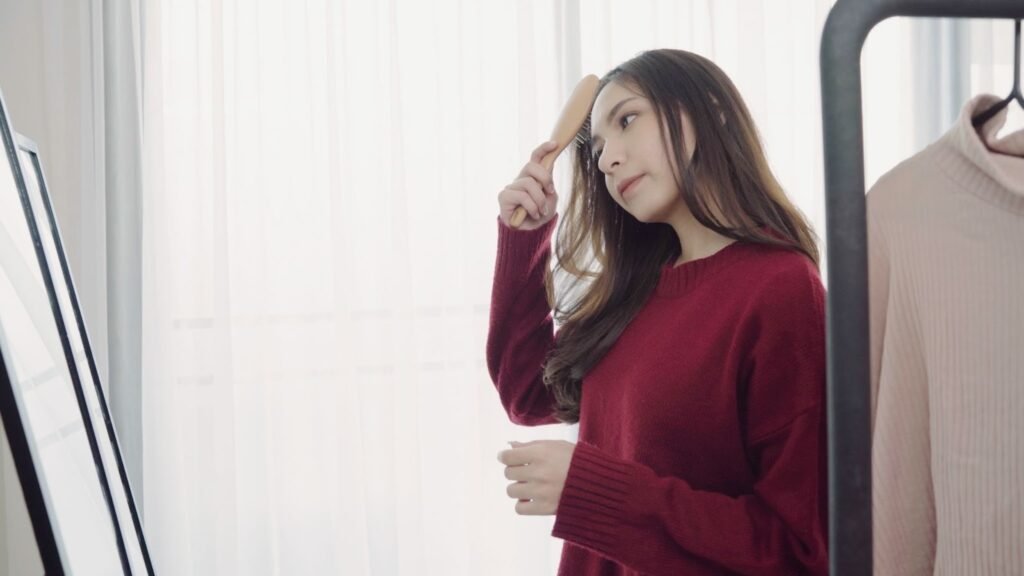
PRIORITIZING PERSONAL COMFORT
Finding a balance between comfort and style often feels like walking a tightrope. You want to express yourself through fashion, yet you crave the ease that comes with personal comfort.
Prioritizing comfort starts with thoughtful fabric selection; choose breathable materials that allow your skin to feel free. Outfit layering can enhance your casual wear, offering versatility while ensuring you’re always comfortable in varying temperatures.
Emotional connections to your wardrobe matter, too. When you wear clothes that feel good, your confidence naturally elevates.
Think about the fit importance: garments that fit well make you feel at ease and highlight your unique shape. Just like selecting seasonal fabrics that resonate with you, consider texture variety to keep your outfits engaging without sacrificing comfort.
Wardrobe organization plays an essential role here. Create a space where your favorite comfortable pieces are easily accessible, encouraging you to make sustainable choices that align with your values.
Ultimately, embracing personal expression in your style should never come at the cost of feeling your best, as choosing what feels good to wear can become a meaningful self care activity that supports both comfort and confidence. When comfort reigns, you radiate confidence, allowing your true self to shine through.
Balancing Fashion Trends
Steering through the ever-changing landscape of fashion trends can feel overwhelming, especially when you’re torn between comfort and style. Embracing sustainable fashion allows you to prioritize both values by choosing wardrobe essentials that offer fashion versatility without compromising comfort.
Vintage styles, for example, often use softer fabrics that not only feel good but also make a statement, connecting you with cultural influences from the past.
To balance comfort and style, consider creating a minimalist wardrobe focused on quality over quantity. This approach enables you to invest in timeless pieces that adapt to seasonal trends while remaining comfortable.
Don’t forget the power of accessorizing; the right accessories can elevate even the simplest outfits into something extraordinary, allowing you to express your unique personality.
When selecting fabric choices, opt for breathable materials that enhance your comfort while still looking chic.
Impact on Body Image
Studies show that the clothes you choose can greatly impact your body image and overall confidence. When you prioritize comfort over style, you may feel more at ease in your own skin, fostering a positive self-image perception and reinforcing self care through clothing choices that respect and support your body.
Embracing body positivity means recognizing that your body shape deserves to be celebrated, not hidden. Fashion choices play an essential role in this journey. A well-fitted outfit can enhance your natural silhouette, while a lack of attention to clothing fit may lead to discomfort and insecurity.
By exploring wardrobe variety and experimenting with outfit coordination, you can find styles that resonate with your personal expression. Cultural influences can also shape how you view your body and the clothes you wear.
As you evolve in your style, remember that it’s okay to prioritize comfort. This balance between comfort and style can lead to a more authentic self, allowing you to embrace your unique beauty.
Ultimately, your clothing should empower you, reflecting your journey towards self-acceptance and confidence. Prioritize what feels good, and you’ll find that your body image improves, enhancing your overall well-being.
Color Psychology in Clothing
Your choice of clothing color can greatly influence your mood and confidence, often in ways you mightn’t even realize. Colors carry powerful associations that evoke emotional responses, shaping how you feel about yourself and how others perceive you. For instance, wearing bold reds can ignite feelings of passion and energy, while soft blues might instill calmness and serenity. Recognizing these color associations allows you to harness their vibrancy effects for mood enhancement.
Cultural significance also plays a role in how colors impact your self-esteem. In Western cultures, black often represents sophistication, while in some Eastern traditions, it can symbolize mourning. Understanding these nuances enriches your personal preferences and guides you in choosing clothing that resonates with your identity and the message you want to convey.
Seasonal influences can further dictate color choices. Bright, lively hues in spring might uplift your spirits, while deeper, warmer tones in fall can evoke a sense of comfort. Experimenting with various color combinations can also enhance your overall look and how you feel in your outfit.
Ultimately, the colors you wear can be a form of self-expression, reflecting your mood and personality. By consciously selecting colors that resonate with you, you can elevate your confidence and embrace your individuality.
Personal Style and Identity
Embracing your personal style is more than just a fashion choice; it’s a powerful reflection of your identity. Your wardrobe serves as a canvas for self-expression, allowing you to showcase who you’re through expressive attire. Each piece you choose tells a story, influenced by cultural backgrounds, aesthetic preferences, and your unique journey.
This wardrobe diversity enables you to communicate with the world, crafting a personal brand that resonates with your values and beliefs. Researchers have explored the nuances of dressing for success. Joseph K. Kim et al. (2023) investigated the combination between conformity and personal uniqueness in a paper entitled “Wearing Your Worth at Work. Among other discoveries, they found that daily dress aesthetics and uniqueness in the workplace improved state self-esteem, defined as “the degree to which one perceives they are valued and accepted by others in their immediate or near-future situation,” leading to more goal progress and less social avoidance. Although they found similar effects for dress conformity, they were limited to days with frequent interaction.
As you navigate your style evolution, you’ll notice how your fashion choices shift, mirroring changes in your life, perspectives, and aspirations. Clothing symbolism plays a fundamental role in this process; what you wear can evoke feelings of empowerment or vulnerability, depending on how well it aligns with your identity reflection.
When you don pieces that resonate with your true self, you radiate confidence, inviting others to see the authentic you.
Tips for Boosting Confidence Through Clothing
Choosing the right outfit can greatly impact how you feel about yourself. When you dress with intention and style, you can open up a world of confidence boosters. Here are some tips to help you boost your self-esteem through clothing:
- Embrace Wardrobe Versatility: Invest in pieces that can shift effortlessly between various dressing occasions. A well-tailored blazer, for example, can elevate both casual and formal outfits.
- Mind Your Fabric Choices: Select fabrics that feel good against your skin and suit the season. Breathable materials for summer and cozy fabrics for winter can enhance your comfort, leading to greater confidence.
- Accessorize Wisely: Accessories can make or break an outfit. Choose statement pieces that reflect your self-expression styles. Whether it’s a bold necklace or a chic belt, the right accessory can elevate your look.
- Stay Updated with Seasonal Trends: While it’s important to maintain your unique style, incorporating current trends can refresh your wardrobe. It adds an element of excitement and shows that you’re in tune with the world around you.
RELATED STUDIES ABOUT HOW CLOTHES AFFECT CONFIDENCE
In a world where first impressions can open doors, the clothes you wear become your silent ambassadors. By choosing outfits that resonate with your personality and make you feel confident, you’re not just dressing — you’re empowering yourself. Remember, every time you slip into something that reflects your style, you’re crafting a narrative of self-worth. So, embrace your wardrobe as a canvas, painting your unique story with each choice, and watch your confidence flourish.
Examining How Factors Consumers’ Buying Intention Of Secondhand Clothes Via Theory Of Planned Behavior And Stimulus Organism Response Model
Study Objective: This research investigated the factors influencing consumers’ buying intention of secondhand clothes (SHC) in Vietnam. It integrated two theoretical frameworks—the Theory of Planned Behavior (TPB) and the Stimulus Organism Response (SOR) model—to create a comprehensive understanding of consumer behavior in the context of sustainable fashion.
Methodology:
- Design: Cross-sectional survey.
- Sample: 286 Vietnamese consumers (primarily students, aged 18-24) interested in SHC.
- Model: The SOR model was used to frame how external stimuli (eWOM, Price) affect internal psychological states (the organism, represented by TPB constructs: Attitude, Subjective Norm, Perceived Behavioral Control), leading to a behavioral response (Intention to Buy SHC).
- Analysis: Partial Least Squares (PLS) structural equation modeling.
Key Findings:
All 11 proposed hypotheses were supported, confirming the effectiveness of the integrated model.
- TPB Constructs Drive Intention: All three TPB constructs significantly and positively influenced the intention to buy SHC:
- Attitude (AT) had the strongest effect.
- Subjective Norm (SN) and Perceived Behavioral Control (PBC) also had significant positive impacts.
- External Stimuli (S) Shape Psychological States (O):
- Electronic Word-of-Mouth (eWOM): Positively influenced all three TPB constructs (AT, SN, PBC) and had a direct positive effect on purchase intention.
- Price: Positively influenced all three TPB constructs (AT, SN, PBC) and had the strongest direct positive effect on purchase intention among all factors.
Conclusions:
- The study successfully demonstrates that an integrated TPB-SOR model is effective for explaining SHC purchase intentions.
- Consumers’ decision to buy SHC is driven by a combination of internal beliefs (positive attitude, social pressure, and perceived ease) and external cues (online reviews and affordability).
- Price is the most powerful direct driver of SHC purchase intention in the Vietnamese context, followed by the influence of eWOM.
Implications:
- For Managers/Retailers:
- Marketing & Communication: Develop campaigns that highlight the affordability, value, and style of SHC. Actively encourage and manage positive online reviews and social media discussions (eWOM) to build credibility and social proof.
- Community Building: Foster a community around sustainable fashion through events, collaborations with influencers, and social initiatives to strengthen Subjective Norms.
- User Experience: Improve the accessibility and shopping experience (online and offline) to enhance Perceived Behavioral Control.
- For Theory: The study provides a novel integrated TPB-SOR framework for the SHC domain and validates the role of eWOM and price as key stimuli within this framework. It contributes validated measurement scales for future research.
Strengths & Limitations:
- Strengths: Integrates two robust theoretical models; provides practical insights for marketers; validates measurement scales.
- Limitations: Cross-sectional design limits causal inference; sample is heavily skewed toward young students, limiting generalizability; focuses only on two stimuli (eWOM, Price), excluding other potential factors like environmental concern or nostalgia.
Overall Significance: This research offers a validated, holistic model for understanding SHC consumption. It highlights that to promote sustainable fashion, strategies must simultaneously address economic appeal (price), social influence (eWOM, norms), and individual perceptions (attitude, control).
| REFERENCE: Dam Tri Cuong, Examining how factors consumers’ buying intention of secondhand clothes via theory of planned behavior and stimulus organism response model, Journal of Open Innovation: Technology, Market, and Complexity, Volume 10, Issue 4, 2024, 100393, ISSN 2199-8531, https://doi.org/10.1016/j.joitmc.2024.100393. (https://www.sciencedirect.com/science/article/pii/S2199853124001872) |
Experimental Analysis On Thermodynamic Performance Of Clothes Drying Process Under Different Fabric Dynamic Motion Regimes In Domestic Tumble Dryers
Study Objective: This study aimed to bridge a critical research gap by systematically investigating how distinct fabric motion patterns within a tumble dryer drum impact thermodynamic performance. It sought to quantify and compare the energy and exergy efficiency of drying under three specific regimes (rolling, falling, centrifuging) to identify the optimal motion for minimizing energy consumption and irreversibility.
Methodology:
- Design: Experimental study on a modified Haier vented tumble dryer.
- Key Modification: The dryer was equipped with a transparent door and a precise DC motor to observe and control fabric motion.
- Intervention: Three fabric motion regimes were induced by controlling drum rotation speed:
- Rolling: 30 rpm
- Falling: 45 rpm
- Centrifuging: 60 rpm
- Sample: 3 kg of standardized cotton pillowcases.
- Analysis: Comprehensive energy analysis (First Law of Thermodynamics) and exergy analysis (Second Law of Thermodynamics) were conducted. Key performance indicators included drying/dryer efficiency, Energy Utilization Ratio (EUR), exergy efficiency, and improvement potential.
- Data Collection: Fabric motion was tracked via high-speed camera and image processing. Temperature, humidity, airflow, mass loss, and power consumption were monitored throughout the drying cycles.
Key Findings:
- Motion Regime Characteristics:
- Falling Regime (45 rpm): Fabrics detach and cascade freely, maximizing dispersion and fabric-air contact area.
- Rolling Regime (30 rpm): Fabrics tumble but remain concentrated in the lower drum section.
- Centrifuging Regime (60 rpm): Fabrics adhere to the drum wall, creating a compact layer and a central “wind tunnel” for airflow.
- Drying Performance:
- The falling regime was most efficient, drying the load in 45.4 min using 2.3 kWh.
- The centrifuging regime was least efficient, taking 281.8 min and consuming 12.0 kWh.
- Energy Analysis Results:
- Falling regime achieved the highest average dryer efficiency (53.1%), drying efficiency (68.3%), and Energy Utilization Ratio (EUR: 74.2%).
- Centrifuging regime performed worst (avg. dryer efficiency: 10.0%, avg. EUR: 13.6%).
- Exergy Analysis Results:
- Falling regime had the highest exergy efficiency for the drying process (avg. 64.3%), indicating the most effective conversion of supplied energy into useful work (moisture evaporation).
- Paradoxically, the centrifuging regime had the highest exergy efficiency for the drying chamber (avg. 58.5%), which signifies that most inlet exergy was wasted—exiting with the outlet air without performing useful evaporation.
- Improvement Potential:
- The centrifuging regime had the largest exergy improvement potential (1751.8 kJ/h), highlighting it as the most inefficient process with the greatest opportunity for optimization.
Conclusions:
- Fabric motion is a critical determinant of tumble dryer thermodynamic performance, independent of other operational parameters.
- The falling regime (complete fabric dispersion) is optimal, maximizing heat and mass transfer, achieving the shortest drying time, and yielding the highest energy and exergy efficiencies.
- The centrifuging regime (fabric adhesion) is highly inefficient, wasting energy due to poor fabric-air contact and should be minimized or strategically modified in dryer operation.
Implications:
- For Appliance Design & Manufacturing: Dryer control algorithms should be optimized to maintain the falling regime for as long as possible during the drying cycle. Features like periodic drum reversal could be implemented to break up fabric clumping in high-speed phases.
- For Sustainability: Promoting the falling regime can significantly reduce household energy consumption and carbon footprint from clothes drying.
- For Future Research: Studies should explore integrating the high-efficiency falling regime with advanced technologies like heat pump dryers, and investigate motion effects on delicate, non-cotton fabrics.
Overall Significance: This study provides a scientific, quantitative foundation for optimizing tumble dryer performance through intelligent motion control, offering clear pathways to enhance energy efficiency and sustainability in a common but energy-intensive household appliance.
| REFERENCE: Xinchen Yu, Hui Chen, Yingwen Liu, Experimental analysis on thermodynamic performance of clothes drying process under different fabric dynamic motion regimes in domestic tumble dryers, Thermal Science and Engineering Progress, Volume 69, 2026, 104386, ISSN 2451-9049, https://doi.org/10.1016/j.tsep.2025.104386. (https://www.sciencedirect.com/science/article/pii/S2451904925011771) |
Individual Identities And Behaviors Shape The Microbial Community Lurking On Clothes
Study Purpose: To investigate the diversity and composition of microbial communities (prokaryotes and fungi), particularly potential pathogens, on different types of clothing, and to determine the key factors—such as individual identity (age, gender) and personal behaviors—that shape these communities.
Key Findings:
- Microbial Diversity by Clothing Type:
- Prokaryotes: Men’s socks harbored the lowest diversity of bacteria.
- Fungi: Children’s suits harbored the highest diversity of fungi compared to T-shirts and underwear.
- Potential Pathogens: Children’s suits had the least diverse fungal pathogens. No significant difference was found in the richness of potential bacterial pathogens across clothing types.
- Dominant Microbes and Pathogens:
- The most abundant bacterial phyla across all clothing were Firmicutes, Proteobacteria, and Actinobacteria. At the genus level, Staphylococcus was predominant.
- The fungal community was dominated by Basidiomycota and Ascomycota, with Malassezia as the most abundant genus.
- The predominant potential bacterial pathogens identified were Staphylococcus hominis, S. epidermidis, and Acinetobacter junii.
- The predominant potential fungal pathogens belonged to the Malassezia genus (e.g., M. globosa, M. restricta).
- Primary Influencing Factors:
- Clothing type was the most dominant factor shaping the microbial communities.
- Individual Identity: Volunteer age significantly affected both bacterial and fungal communities (e.g., older age correlated with higher abundance of certain potential pathogens like Staphylococcus hominis).
- Personal Behaviors: Key behaviors significantly influencing microbial structure included:
- Time since last bath (strongly shaped potential pathogenic communities).
- Time spent in sunlight (affected fungal communities).
- Time worn, time in air-conditioned rooms, and sports activity also played roles.
- Microbial Interactions & Health Implications:
- The prokaryotic-fungal network for children’s suits was the most complex and interconnected, suggesting a potentially healthier, more stable microbial state, supported by lower pathogen diversity and fewer reported illnesses among child volunteers.
- In contrast, the network for underwear contained keystone taxa (e.g., Kocuria palustris) linked to potential pathogens (e.g., Malassezia furfur), suggesting a higher risk for microbial dysbiosis and potential disease transmission related to genital and gut areas.
- Importance of Laundry Hygiene:
- The study detected potential pathogens even in unworn control samples washed with non-antibacterial detergent.
- This highlights the critical role of laundry hygiene practices (e.g., using antibacterial/antifungal detergents) in reducing pathogen load and preventing potential disease transmission from clothing.
Conclusion:
This study demonstrates that the microbiome on our clothes is a complex ecosystem significantly shaped by who we are (age/gender) and what we do (hygiene and lifestyle behaviors). The findings underscore that clothing acts as a reservoir and potential transfer vector for microbes, including pathogens. Maintaining good personal hygiene and implementing proper laundry practices are essential for mitigating health risks associated with clothing-borne microbes. The research provides a foundation for developing improved hygiene strategies to promote public health.
| REFERENCE: Zhi-Zi Zhou, Yu-Ling Zheng, Ritika Grover, Shweta Malik, Bhaveshkumar Patel, Vanita Srinivasan, Long-Jun Ding, Yong-Guan Zhu, Individual identities and behaviors shape the microbial community lurking on clothes, Total Environment Microbiology, Volume 1, Issue 3, 2025, 100024, ISSN 3050-6417, https://doi.org/10.1016/j.temicr.2025.100024. (https://www.sciencedirect.com/science/article/pii/S3050641725000242) |