

Social media can deeply affect your mental health and self-image, especially in the fashion world. It often presents idealized beauty standards that distort your perception, leading to feelings of inadequacy and anxiety. You might find yourself comparing your worth based on likes and comments, which can be overwhelming. Yet, it’s vital to remember that fashion can empower you. Embracing your unique style fosters self-acceptance and authenticity. Instead of chasing fleeting trends, explore your individuality and seek supportive communities. Understanding these dynamics can help you reshape your relationship with fashion and find balance in a digital age filled with pressures.
KEY TAKEAWAYS
- Social media shapes perceptions of self-image, leading to comparison traps and struggles with self-worth in the fashion industry.
- Idealized beauty standards promoted online distort body image and contribute to anxiety and dissatisfaction regarding appearance.
- Filtered realities on social media blur the lines between authenticity and fantasy, impacting self-esteem and personal expression.
- Body positivity movements encourage embracing diverse representations, fostering self-acceptance and redefining traditional beauty standards.
- Personal style serves as a tool for empowerment, enhancing creativity and reinforcing individual identity amidst societal pressures.
THE INFLUENCE OF SOCIAL MEDIA
As social media platforms continue to shape our lives, it’s important to recognize their profound impact on mental health, particularly within the domain of fashion. You might find yourself caught in a whirlwind of curated lifestyles, where influencers craft a virtual identity that seems unattainable. This constant stream of perfect images can lead to an authenticity challenge, making you question your own self-expression limits.
Digital comparison becomes a daily struggle, as you scroll through feeds filled with meticulously curated outfits and lifestyle moments, often measuring your worth against engagement metrics. The quest for social validation can turn into an image obsession, where likes and comments dictate your self-esteem. You may feel pressure to conform to trends that don’t resonate with your true self, risking your individuality for fleeting approval.
The influencer culture thrives on this cycle, creating an online community that can feel supportive yet simultaneously suffocating. You might find solace in connecting with others, but it’s important to remember that what you see online is often a polished facade.
This digital landscape poses a unique challenge to mental health, as the pursuit of perfection can cloud your sense of self. It’s significant to navigate these waters with caution, recognizing when social media serves as a tool for inspiration rather than a measure of your worth.
Idealized Beauty Standards
You might find yourself scrolling through social media, surrounded by images that showcase an often unattainable version of beauty. Despite the drawbacks of the fashion industry, there are still ways the industry can change for the better. If the people of this industry were more inclusive of “all shapes and sizes” and didn’t force specific measurements on models, it would reduce the need to try and be smaller than your body naturally wants to be. Designers can be more inclusive by making several different sample sizes instead of only one and including people of all shapes and sizes to walk down the runway showcasing their designs. In general, messaging about beauty can change to whatever body shape you attain from eating healthily and exercising a proper amount is the best build for you. This would also help the general population because young boys and girls would see healthy-looking people in magazines instead of this unattainable body type. It is imperative for cultural ideas to change in favor of natural beauty.
These filtered realities can distort your perception of body image, making you question your own worth and appearance.
It’s essential to recognize how these idealized standards shape not just fashion trends, but also our mental well-being.
Social Media Influence
Social media’s pervasive reach shapes our perceptions of beauty, often setting unattainable standards that can distort self-image and mental well-being. You might find yourself caught in the comparison trap, scrolling through curated feeds filled with flawless images and perfect lifestyles. The clothes we choose can impact our self-esteem and our overall mood for the day. The clothes that align with us for the day will make us more confident and secure. In contrast, if we feel like the attire, we chose doesn’t fit with the environment that we’re in, it can cause feelings of discomfort and lead to questioning whether or not we fit in.
This influencer culture thrives on social validation, pushing you to chase idealized aesthetics that feel increasingly out of reach. In this era of aesthetic overload, online authenticity can seem like a rare gem, overshadowed by trend cycles that dictate what’s “in” and what’s not.
The pressure to conform can stifle your self-expression, leaving you feeling inadequate and overwhelmed. Fortunately, you can find solace in virtual communities that celebrate individuality and diversity, reminding you that beauty comes in many forms.
Taking a digital detox can be liberating, allowing you to reconnect with your true self beyond the screens. It’s crucial to remember that you’re more than a number of likes or followers.
Embrace your unique qualities and challenge the unrealistic ideals that pervade social media. By fostering genuine connections and prioritizing mental health, you reclaim the narrative around beauty and self-worth, paving the way for a more authentic existence.
Body Image Perception
The relentless pursuit of idealized beauty standards can warp your perception of body image, leading to dissatisfaction and anxiety. You might find yourself caught in a cycle of comparison, where cultural influences dictate what’s deemed beautiful and desirable.
It’s vital to recognize that your self-acceptance journey is uniquely yours, shaped by individual stories rather than societal expectations. America has long struggled addressing conversations around properly addressing conversations about mental health. Now that fashion is starting to enter the conversation, some small implications could happen. Fashion is one of the most universal things people consume. While it might seem superficial, fashion is a powerful medium for addressing mental health issues
Embracing body positivity involves seeking out diverse representations that celebrate all forms and sizes. By engaging with supportive communities, you can cultivate emotional connections that foster authenticity expression.
These spaces encourage you to share your personal narratives, helping to dismantle the unrealistic ideals that often dominate fashion.
Fashion inclusivity is significant in redefining beauty standards, allowing you to see yourself reflected in various styles and representations. When you embrace your individuality, you contribute to a broader movement that values authenticity over conformity.
Filtered Realities Impact
Filtered realities, often shaped by social media and advertising, can create a distorted lens through which beauty is perceived. You might find yourself caught in a cycle of online comparisons, where curated identities and digital facades dominate the landscape.
Each scroll through your feed exposes you to an overwhelming saturation of idealized images, pushing aesthetic pressures to new heights. This constant visual storytelling can blur the lines between reality and fantasy, leaving you questioning your own worth.
As you navigate this world, it’s crucial to recognize the concept of filtered authenticity. These images, while enchanting, often don’t reflect real life. They can inadvertently lead to self-esteem fluctuations, as you measure your worth against unattainable standards.
You deserve freedom from these constraints, to embrace your unique beauty without the weight of societal expectations. Instead of succumbing to these filtered realities, consider celebrating your individuality.
Share your unfiltered moments, and connect with others who value authenticity over perfection. By fostering a community that prioritizes genuine self-expression, you can reclaim your sense of self and redefine beauty on your own terms.
Fashion Trends and Self-Image
You probably notice how social media shapes your fashion choices and, in turn, your self-image.
As trends shift rapidly, it can be overwhelming to measure your worth against ever-changing ideals.
Understanding this connection can help you navigate your self-perception in a healthier way.
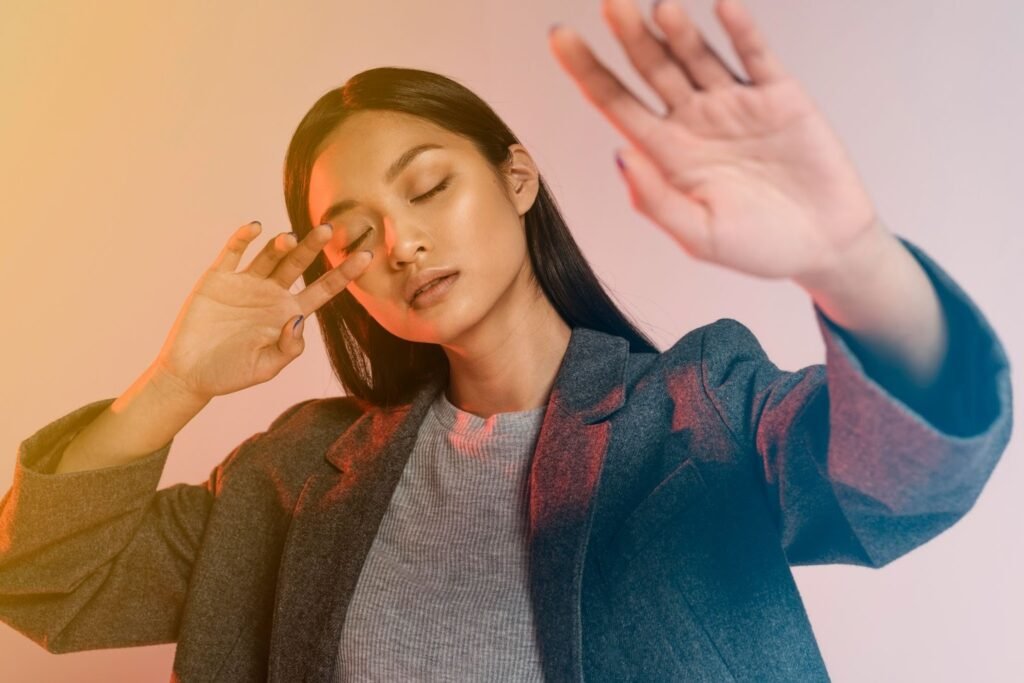
SOCIAL MEDIA INFLUENCES CHOICES
Social media’s pervasive influence shapes not just fashion trends but also how individuals perceive their self-image. You might find yourself scrolling through endless feeds, where the latest styles and influencers dictate what’s “in.” This consumer culture can create a disconnect between your true self and the curated identities you see online.
As you navigate this landscape, you may engage in identity exploration, questioning what resonates with your authentic self versus what merely seeks online validation. The allure of digital authenticity often clashes with aesthetic fatigue, leaving you feeling overwhelmed by the constant changes in trends.
While fashion accessibility has expanded choices, it can paradoxically limit your self-expression freedom if you feel pressured to conform. In this virtual community, it’s crucial to seek out voices that promote trend sustainability and mental wellness, rather than just fleeting fads.
Ultimately, the choices you make in fashion should reflect who you’re and not just what trends dictate. You may notice that your choices reflect more than trends—they reveal values, moods, and intentions, highlighting the mindset behind personal style and how it influences your overall confidence and self-expression. Embrace your individuality, and remember that your style can be a powerful tool for self-expression, connecting you authentically to the world around you.
Body Image Perception Shifts
Amid the ever-changing landscape of fashion trends, body image perceptions are in constant flux. You might find yourself caught between the allure of current styles and your own self-acceptance journey. With social media amplifying diverse representations, it’s crucial to recognize how these shifts impact your self-image.
Consider the following imagery that reflects this evolving mindset:
- A runway showcasing models of all sizes and backgrounds, celebrating individuality.
- Influencers sharing unfiltered moments, revealing the realness behind the glamour.
- Fashion magazines featuring diverse beauty in their spreads, challenging traditional standards.
- Your friends embracing their unique shapes, inspiring you to love your own body.
These elements contribute to a broader understanding of body positivity, pushing you to redefine beauty on your terms. The rise of diverse representations encourages you to embrace your authentic self, reminding you that fashion isn’t just about trends; it’s about expression.
As you navigate your self-acceptance journey, lean into the freedom that comes from understanding that your worth isn’t dictated by fleeting fashions but by your own unique narrative. Embrace the shifts, and let them guide you toward a healthier relationship with your body.
The Pressure to Conform
The pressure to conform in the fashion world can feel overwhelming, often leaving individuals grappling with their self-identity. You might find yourself caught in a whirlwind of fashion norms and societal expectations, where self-expression barriers seem insurmountable.
It’s all too easy to succumb to conformity pressures, especially when peer influence and cultural pressures surround you daily. Watching influencers flaunt their latest looks can amplify your individuality struggles, making you question your style authenticity.
You may feel compelled to adhere to fleeting trends, convinced that social validation hinges on your ability to keep up. Yet, this pursuit often leads to a disconnect from your true self, as you chase after styles that don’t resonate with who you are.
The constant comparison can be exhausting, with the weight of societal expectations pressing heavily on your shoulders. When every outfit becomes a reflection of your worth, it’s no wonder you might feel lost in the chaos of it all.
In this landscape of ever-changing trends, recognizing the toll of conformity pressures is essential. You deserve the freedom to express yourself authentically, without the need for validation from others.
Remember, fashion should be a celebration of individuality, not a battleground for approval. By challenging the norms and embracing your unique style, you can break free from the constraints of conformity and find joy in your self-expression.
Your fashion journey is yours alone, and it’s time to reclaim it.
Empowerment Through Personal Style
When you embrace your personal style, you reveal a powerful tool for self-empowerment that transcends the superficiality often associated with fashion. Your unique fashion identity becomes a canvas for personal expression, allowing you to showcase who you truly are.
As you navigate the vibrant world of style, you gain confidence and a sense of freedom that can fuel your creativity and self-acceptance.
By engaging in outfit experimentation, you not only rejuvenate your wardrobe but also discover new aspects of your personality, gaining deeper insight into how clothes affect confidence and influence the way you carry yourself each day. Consider how colors can impact your mood and perception; color psychology plays a significant role in how you feel when you wear specific hues.
Allow yourself to adapt trends that resonate with your values and cultural influences, making fashion a reflection of your journey.
Here are a few ways to harness empowerment through personal style:
- Curate a wardrobe that speaks to your individuality and passions.
- Experiment boldly with outfits that challenge norms and reflect your inner self.
- Incorporate colors that uplift your spirit and resonate with your emotions.
- Celebrate cultural influences that shape your identity and inspire your fashion choices.
When you embrace these elements, you not only cultivate style confidence but also reinforce your identity.
Fashion becomes a creativity outlet, a domain where you can express your thoughts, feelings, and beliefs unapologetically.
Mental Health Awareness Initiatives
In today’s fast-paced world, mental health awareness initiatives are crucial in fostering understanding and support within communities. You might notice the growing presence of mental health campaigns, especially on social media platforms. These campaigns aim to destigmatize mental health issues, creating a safe space where individuals can share their experiences and seek help without fear of judgment.
Online support is a powerful tool in these initiatives. Through platforms like Instagram, Twitter, and TikTok, you can find communities that resonate with your struggles. These spaces not only promote awareness but also encourage open dialogue about mental health. When you engage with these communities, you discover that you’re not alone; many people share similar experiences, fostering a sense of belonging and understanding.
Moreover, mental health campaigns often feature influencers and celebrities who openly discuss their mental health journeys. This visibility is crucial; it shows that mental health challenges affect everyone, regardless of status or success. These relatable figures help break down barriers and encourage you to seek help when needed.
As you navigate the complexities of mental health, remember that these initiatives are designed to empower you. They offer resources, support, and the assurance that it’s okay to not be okay.
Finding Balance in Fashion
Fashion can be a powerful tool for self-expression, but finding balance in how you engage with it is essential for your mental well-being. It’s easy to get swept away by trends or overwhelmed by the pressure to continuously evolve your style. Embracing your unique identity through fashion should feel empowering, not burdensome, and approaching the way you dress each day as a self care activity can help shift your mindset from pressure to personal nourishment.
To cultivate a healthy relationship with fashion, consider the following:
- Wardrobe essentials: Focus on a few versatile pieces that reflect your personal style and can be adapted to different occasions.
- Sustainable fashion: Prioritize brands that align with your values, promoting mindful consumption and reducing waste.
- Cultural influences: Celebrate your background and experiences by incorporating elements that resonate with your identity, enhancing your self-acceptance.
- Creative confidence: Allow yourself to experiment without judgment; fashion is a journey of self-discovery.
Striking this balance involves a mindful approach to what you wear and how it makes you feel. Seek fashion accessibility that doesn’t compromise your emotional well-being. Your style evolution should be a reflection of who you are, not a reaction to external pressures.
Engage with fashion in a way that fosters joy and creativity, allowing you to express yourself freely. Ultimately, finding balance in fashion means embracing your individuality while making choices that nurture your mental health.

RELATED STUDIES ABOUT FASHION AND MENTAL HEALTH
In the whirlwind of social media, maneuvering through fashion can feel like walking a tightrope—one misstep and you risk falling into self-doubt. Yet, by embracing your unique style, you can reclaim your identity and foster mental well-being. Remember, it’s not about fitting into the mold of idealized beauty but about celebrating your individuality. As you find your balance, let fashion be a canvas for self-expression, transforming pressure into empowerment and paving the way for a healthier mindset.
The Impact of Fashion Clothing Involvement and Self-Objectification on Women’s Mental Health: A Cross-Sectional Study Among Brazilian Women
Study Background:
Brazilian women face significant sociocultural pressures regarding appearance, contributing to high rates of body dissatisfaction, self-objectification, and risky health behaviors such as disordered eating and cosmetic surgery. Despite the popularity of fashion and image consulting services in Brazil, little research has examined how fashion clothing involvement relates to mental health in this context.
Objective:
This study aimed to investigate the associations between fashion clothing involvement and key mental health outcomes—self-objectification, body shame, disordered eating attitudes, acceptance of cosmetic surgery, and self-esteem—among Brazilian women. It also explored whether self-objectification confounds these relationships.
Methodology:
A cross-sectional online survey was conducted with 710 Brazilian women (mean age = 34.2 years). Validated measures were used to assess fashion clothing involvement, self-objectification (via self-surveillance), body shame, disordered eating attitudes, acceptance of cosmetic surgery, and self-esteem. The Fashion Clothing Involvement Scale was translated and adapted for Brazilian Portuguese. Hierarchical regression analyses tested confounding effects.
Key Findings:
- Fashion clothing involvement was significantly correlated with:
- Higher self-objectification (medium effect)
- Higher acceptance of cosmetic surgery (small effect)
- Higher self-esteem (small effect)
- After controlling for self-objectification:
- The positive association between fashion involvement and self-esteem strengthened
- Fashion involvement became associated with lower body shame and fewer disordered eating attitudes (small effects)
- The relationship between fashion involvement and acceptance of cosmetic surgery became non-significant, suggesting full confounding
- Self-objectification emerged as a key confounder: it was strongly associated with all negative outcomes and partially or fully explained the negative links previously attributed to fashion involvement.
Implications:
- Theoretical: Challenges the assumption that fashion clothing involvement is inherently harmful. Suggests that self-objectification, not clothing itself, may drive negative body image and health risks.
- Practical: Image consulting and fashion-based interventions could support positive mental health if they reduce self-objectification and promote adaptive, expressive clothing practices rather than appearance monitoring.
- Research: Highlights the need for longitudinal studies and validated measures in Brazilian Portuguese. Future work should explore positive body image outcomes and include diverse, underrepresented populations.
Conclusion:
Fashion clothing involvement is not uniformly detrimental to women’s mental health. Its effects depend heavily on the presence of self-objectification. When disentangled from self-surveillance, fashion engagement may offer benefits such as enhanced self-esteem and reduced body shame. These findings call for a more nuanced, culturally grounded approach to studying appearance-related practices and mental health in Brazil and beyond.
| REFERENCE: Debora Blaso, Nicole Paraskeva, Paul White, Helena Lewis-Smith, The impact of fashion clothing involvement and self-objectification on women’s mental health: A cross-sectional study among Brazilian women, Body Image, Volume 55, 2025, 101955, ISSN 1740-1445, https://doi.org/10.1016/j.bodyim.2025.101955. (https://www.sciencedirect.com/science/article/pii/S1740144525001068) |
A Letter to My Younger Self: Understanding Talented Athletes’ Experiences of and Future Recommendations for Seeking Help for Mental Health Difficulties
Background:
Athletes are exposed to unique stressors—intense training demands, performance pressure, injury, deselection—that place them at elevated risk for mental health difficulties. Despite this, many athletes do not seek help due to stigma, low mental health literacy, and inadequate support systems. While research has focused on elite athletes, less attention has been paid to talented athletes—those on the pathway to elite performance—for whom early intervention is critical.
Objective:
This study explored talented athletes’ experiences of seeking help for mental health difficulties and their perceptions of available psychological support. It also aimed to generate recommendations for improving mental health provision in talent development environments.
Methodology:
A two-phase qualitative design was used. In Phase 1, 16 talented UK-based athletes (11 female; M age =25.27) wrote reflective “letters to their younger selves” about their mental health help-seeking experiences. Data were analyzed using reflexive thematic analysis. A composite letter was then developed to represent shared experiences. In Phase 2, nine of the original participants took part in member reflection interviews to respond to and extend the findings.
Key Findings – Five Themes:
- Athletes bottle up feelings to protect themselves – Fear of appearing weak, deselection, or being viewed as “difficult” led athletes to suppress emotions.
- Inability to recognize signs of mental ill-health – Low mental health literacy meant athletes often normalized distress and delayed help-seeking.
- Sport psychology support has improved but remains insufficient – Access was limited, reactive, and poorly integrated. Many athletes had no access to clinical psychologists.
- Athletes are individuals and should be treated as such – Practitioners often failed to consider personal circumstances, including neurodivergence (e.g., autism, ADHD), leading to unmet needs.
- Sporting environments need cultural competency – Stigma and performance-focused cultures undermined well-being. Verbal support for mental health was often contradicted by actions (e.g., deselection after disclosure).
Member Reflection Insights:
Participants endorsed the composite letter as an authentic and emotionally resonant tool. They called for:
- Proactive, compulsory mental health support (e.g., regular check-ins, integrated psychological services)
- In-house clinical psychologists rather than reliance on external referrals
- Better understanding of neurodiversity among coaches and support staff
- Transparency in selection and funding decisions to reduce fear of disclosure
- Consistency between organizational messaging and action
Recommendations:
- For Sporting Organizations: Embed mental health support into daily training environments; employ clinical psychologists within multidisciplinary teams; implement routine mental health screening; fund anti-stigma and mental health literacy programs.
- For Practitioners: Adopt a person-centered approach; receive training on neurodiversity; work within competencies and refer appropriately.
- For Education and Accreditation: Integrate composite letter into sport psychology training (e.g., BPS, BASES) and UKSI educational programs to enhance mental health literacy and empathy.
Conclusion:
This study provides novel, athlete-driven insights into the mental health help-seeking experiences of talented athletes. It highlights the gap between policy and practice and offers concrete, actionable recommendations for creating psychologically safe, supportive, and inclusive sporting environments. The composite letter developed here serves as both a research output and a practical resource for education and intervention.
| REFERENCE: Ella McLoughlin, Rachel Arnold, A letter to my younger self: Understanding talented athletes’ experiences of and future recommendations for seeking help for mental health difficulties, Psychology of Sport and Exercise, Volume 82, 2026, 103017, ISSN 1469-0292, https://doi.org/10.1016/j.psychsport.2025.103017. (https://www.sciencedirect.com/science/article/pii/S146902922500216X) |
Mental Health in Sport: Opportunities for the Future of Recreational and Elite Sport Psychology
Background:
Mental health is now a central concern in sport psychology, yet the field’s engagement with it is relatively recent. As societal expectations and policy initiatives outpace the evidence base, sport psychology faces critical challenges in delivering meaningful, scalable, and sustainable mental health outcomes across all levels of sport.
Objective:
This paper identifies four interconnected challenges and opportunities for advancing mental health research and practice in sport psychology. It proposes a forward-looking agenda applicable to both recreational and elite sport contexts.
Key Challenges and Opportunities:
- From Problem-Oriented to Solution-Oriented Research
- Challenge: The field has focused heavily on identifying causes and correlates of mental ill-health, producing descriptive evidence that is ill-suited to guide policy or intervention.
- Opportunity: Shift to solution-oriented research—experimental and quasi-experimental designs that test causal hypotheses about what works, for whom, why, and at what cost. This approach directly informs funding, policy, and practice.
- Example: Evaluating whether subsidised sport participation improves mental health, rather than simply comparing participants to non-participants.
- From Individual-Level Intervention to Systems-Level Change
- Challenge: Most interventions target individual behaviour change (e.g., mindfulness, mental health literacy), placing responsibility on athletes rather than transforming the environments that shape their mental health.
- Opportunity: Adopt a systems approach that targets organisational policies, structures, and cultures. This includes testing policy settings (e.g., removing scorekeeping for children), embedding mental health into accreditation, and using big data to monitor system-level outcomes.
- Examples: Australian Mental Health Guidelines for Community Sport; IOC mental health screening tools; NBA mandate for licensed mental health staff.
- A Nimble and Responsive Research Agenda
- Challenge: Research lags behind rapid societal and policy change. Many system-level reforms (e.g., national referral networks, wellbeing managers) remain unevaluated.
- Opportunity: Embrace diverse, pragmatic research designs—natural experiments, realist evaluations, process evaluations, economic analyses, and developmental evaluations. Prioritise relevance to decision-makers over methodological purity.
- Call to Action: Strengthen the scientist-practitioner model, embed researchers in implementation contexts, and value practice-relevant outputs (e.g., policy briefs, implementation frameworks).
- Conceptual Clarity of Key Constructs
- Challenge: Terms like psychological safety, mental fitness, thriving, and resilience are used inconsistently, often borrowed from other fields without contextual adaptation. This undermines measurement, intervention design, and policy development.
- Opportunity: Develop sport-specific conceptualisations and validated measures. Resist ad hoc adaptations; prioritise theoretical rigour to enable coherent research and practice.
- Example: Psychological safety is variously defined as interpersonal risk-taking, absence of harm, or a multifaceted IOC construct—each implying different interventions and outcomes.
Recommendations:
- Prioritise solution-oriented research that tests interventions and policies in real-world settings, using designs that balance rigour with feasibility.
- Invest in systems-level approaches that shift responsibility from individuals to organisations and embed mental health into the fabric of sport.
- Accelerate research translation by adopting nimble methodologies, embedding researchers in practice, and valuing diverse outputs.
- Establish conceptual consensus on core mental health-related constructs through interdisciplinary collaboration and sport-specific validation.
- Tailor implementation models to context—scalable, low-cost models for community sport; integrated, resourced models for elite and professional systems.
Conclusion:
Sport psychology stands at a formative moment. To realise its potential as a discipline that protects and promotes mental health, the field must evolve deliberately—embracing complexity, prioritising relevance, and embedding science within practice and policy. The four challenges outlined are deeply entwined; progress in one area will catalyse progress in others. A discipline-wide commitment to conceptual clarity, rigorous and relevant research, and meaningful integration across science, policy, and practice is essential to deliver better mental health outcomes for all sport participants.
| REFERENCE: Stewart A. Vella, Simon Rice, Mental health in sport: Opportunities for the future of recreational and elite sport psychology, Psychology of Sport and Exercise, Volume 83, 2026, 103021, ISSN 1469-0292, https://doi.org/10.1016/j.psychsport.2025.103021. (https://www.sciencedirect.com/science/article/pii/S1469029225002201) |