

To boost your hiking stamina and prevent injuries, start by building a consistent training routine that blends hiking and cross-training. Focus on proper nutrition, keeping hydration in check during your hikes. Choose the right gear, especially well-fitting footwear, to enhance comfort and safety. Always warm up and stretch effectively before hitting the trails. Listen to your body and don’t hesitate to take breaks or adjust your pace when needed. Gradually increase the difficulty of your hikes for better endurance. Keep these tips in mind, and you’ll soon be ready for the next level of hiking challenges ahead.
KEY TAKEAWAYS
- Build a consistent training routine by mixing hiking with cross-training and gradually increasing distance and elevation.
- Prioritize proper nutrition with balanced meals and high-energy snacks before, during, and after hikes for sustained energy.
- Stay hydrated by drinking water regularly and packing electrolyte-rich drinks for longer treks to prevent dehydration.
- Select appropriate footwear and layered clothing to ensure comfort, stability, and weather protection on various terrains.
- Warm up with dynamic stretches, listen to your body, and take breaks to prevent injuries and manage fatigue during hikes.
BUILD A CONSISTENT TRAINING ROUTINE
Building a consistent training routine is essential for any hiker looking to tackle more challenging trails. It not only boosts your stamina but also helps prevent injuries, giving you the freedom to explore the great outdoors.
To start, incorporate a mix of hiking and cross training activities into your weekly schedule. This approach keeps your workouts varied and engaging, preventing boredom and burnout. Keeping your workouts varied and engaging not only prevents boredom and burnout but also highlights the long-term benefits of recreation, such as improved endurance, mental refreshment, and sustained motivation for hiking.
Aim for at least three days of hiking each week, gradually increasing your distance and elevation gain. On alternate days, engage in cross training activities like cycling, swimming, or yoga. These activities enhance your overall fitness without overloading your joints. They also improve your endurance and flexibility, both vital for hiking.
Strength training is another key component of your routine. Focus on exercises that target your legs, core, and back, as these muscles are vital for hiking.
Squats, lunges, and planks will build strength and stability, allowing you to handle steep terrains with ease. Incorporate resistance bands or weights to add intensity and maximize your gains.
Focus on Proper Nutrition
Nutrition plays an essential role in your hiking performance and recovery. To truly enjoy the freedom of the great outdoors, you need to fuel your body properly. Start by focusing on macronutrient balance—carbohydrates, proteins, and fats all play crucial roles in energy production and muscle repair.
Prior to your hike, don’t skip out on pre-hike snacks. Opt for energy boosting foods like bananas, energy bars, or trail mix to kickstart your adventure.
During your hike, keep in mind the importance of nutrient timing. Consuming small bites of high-energy snacks can help maintain your stamina and keep fatigue at bay.
After your hike, prioritize post-hike recovery to aid muscle repair. Incorporate protein-rich foods, like yogurt or lean meats, along with carbohydrates to replenish glycogen stores.
Meal planning is key for sustaining energy levels throughout your hiking excursions. Prepare balanced meals that include a good mix of macronutrients.
Consider digestion considerations as well; foods that are easy to digest will help you avoid discomfort on the trail. Don’t forget about electrolyte replenishment, especially after long hikes. Incorporate fruits, nuts, or electrolyte drinks to restore what you’ve lost through sweat.
Incorporating these nutrition strategies into your hiking routine not only enhances your performance but also allows you to enjoy the journey without feeling drained.
Stay Hydrated During Hikes
Staying hydrated during your hikes is essential for maintaining energy and focus. A backpack packed with snacks, water, a rain jacket, a layer or two should the weather change, a simple first aid kit, and maybe a headlamp in case you don’t finish as soon as you expected.
Dehydration can sneak up on you, leading to fatigue, dizziness, and even more serious issues.
Importance of Hydration
Hydration is crucial for your overall well-being while hiking, as it directly affects your energy levels and performance. When you’re well-hydrated, you’ll experience better endurance, improved concentration, and enhanced mood—key factors that allow you to enjoy the freedom of the great outdoors. The hydration benefits extend beyond mere thirst quenching; they help regulate your body temperature and support essential functions.
To guarantee you stay hydrated during your hikes, consider these hydration tips: Start your trek well-hydrated, drinking water before you even set off. Carry a reliable water bottle or hydration pack and aim to drink regularly, even if you don’t feel thirsty. A good rule of thumb is to consume about half a liter of water for every hour of moderate activity.
Pack electrolyte-rich drinks or snacks for longer hikes to replenish lost minerals. Don’t forget to account for the terrain and weather—hot days and steep trails may require more hydration than cooler, flatter paths.
Signs of Dehydration
Recognizing the signs of dehydration can make a significant difference in your hiking experience. If you ignore those thirst signals, you might face dehydration symptoms like dizziness, dry mouth, or even confusion. These aren’t just minor annoyances; they can seriously hinder your physical performance and lead to mental fatigue, making your adventure less enjoyable.
To maintain your electrolyte balance, pay close attention to how your body feels. If you start to experience headaches or fatigue, it’s time to implement hydration strategies—sip water regularly, even before you feel thirsty.
Don’t fall for hydration myths; water alone mightn’t suffice during long hikes. Consider beverages with electrolytes to replenish what you lose through sweat.
Recovery tips include rehydrating with a mix of water and electrolyte-rich drinks after your hike. This not only aids recovery but also prepares you for your next adventure.
Stay aware of your body’s signals, and don’t hesitate to take breaks to hydrate. By recognizing these signs early, you can enjoy the freedom of the trail without the burdens of dehydration. Happy hiking!
Choose the Right Gear
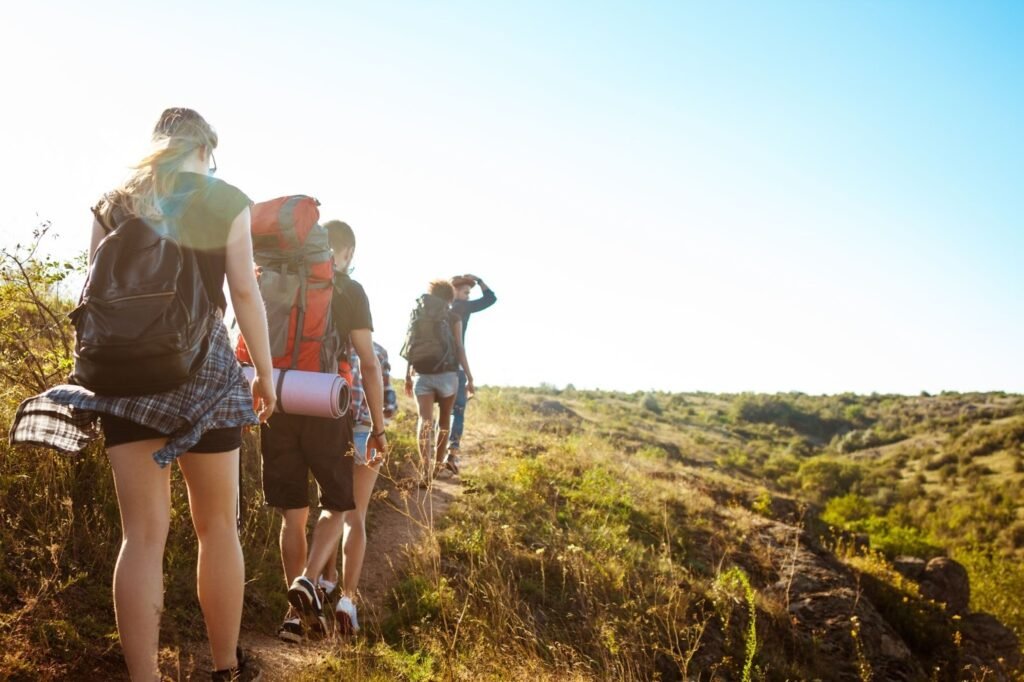
Choosing the right gear is vital for a successful hike, so you should pay attention to your footwear, clothing, and accessories. If you are going to the backcountry, know how to be self sufficient in case you encounter an unexpected hazard or an emergency occurs.
Proper shoes can make all the difference in comfort and safety, while layering your clothes helps you adapt to changing weather conditions.
Don’t forget those essential accessories that can enhance your experience and keep you prepared for whatever nature throws your way!
FOOTWEAR SELECTION IMPORTANCE
Selecting the right footwear is vital for a successful hiking experience. The right shoe fit guarantees comfort, allowing you to focus on the beauty around you instead of blisters or discomfort.
Look for shoes that match the terrain compatibility of your chosen trails; whether you’re trekking rocky paths or smooth forest floors, your footwear should adapt accordingly.
Consider material durability to confirm your shoes withstand the rigors of the hike while providing necessary arch support for long distances.
Don’t forget climate considerations—breathable materials are essential for warm weather, while insulated options are best for colder conditions. Proper weight distribution in your footwear will help you maintain balance and stability, reducing fatigue as you explore.
Ankle protection is another significant factor, especially on uneven terrain. Shoes that provide this support will help prevent injuries and give you the freedom to navigate challenging trails confidently.
Layered Clothing Strategy
When it comes to tackling the great outdoors, a layered clothing strategy is vital for staying comfortable and adapting to changing weather conditions. By choosing the right clothing materials, you can enhance your experience while hiking.
Start with a moisture-wicking base layer that manages sweat and keeps your skin dry. This layer should have good fabric breathability to guarantee you don’t overheat.
Next, add an insulation layer that retains warmth without adding bulk. Fleece or down jackets work well for this, providing the necessary temperature regulation as you ascend or descend.
Don’t forget about your outer layer; a waterproof and windproof shell is essential for weather adaptability, protecting you from the elements while allowing moisture to escape.
Using effective layering techniques, you can make comfort adjustments on the go. As you hike, you may find you need to shed or add layers based on your activity level and the weather.
By mastering the art of layering, you’ll not only enhance your freedom on the trail but also reduce the risk of injuries associated with being too hot or too cold.
Essential Hiking Accessories
Having the right clothing layers is just part of a successful hiking trip; the accessories you bring along can greatly enhance your experience. Contact a local hiking organization or call a ranger station in the area where you want to hike. Rangers typically have up-to-date trail conditions and are skilled at suggesting hikes for all skill levels.
Start with a sturdy hiking backpack to comfortably carry your essentials. It should fit well and distribute weight evenly, allowing you to roam freely on the trails.
Trekking poles are another fantastic accessory that can improve stability and reduce strain on your knees, especially during downhill hikes.
Don’t forget navigational tools, like a compass or GPS device, to keep you on track and explore new paths confidently.
Weather protection is vital—pack a lightweight, waterproof jacket to shield you from unexpected rain, and consider a sun hat for those bright days.
Insect repellent will help you avoid pesky bugs while you enjoy nature’s beauty.
Stay hydrated with a hydration system, ensuring you sip water regularly to maintain your stamina.
Finally, include a first aid kit and emergency supplies in your backpack; being prepared for the unexpected can make all the difference.
With these essential hiking accessories, you’re set for an adventurous and safe experience in the great outdoors!
Warm-Up and Stretch Effectively
A solid warm-up and effective stretching routine can set the tone for a successful hike. Before you hit the trails, taking time for warm-up routines and stretching turns preparation into a meaningful self care activity that supports mobility, reduces injury risk, and sets a positive tone for your hike.
Start with dynamic stretches, which are perfect for activating your muscles and improving joint mobility. Think leg swings, arm circles, and torso twists—these movements boost blood flow and prepare your body for the challenges ahead.
Incorporate flexibility exercises into your warm-up. These can help lengthen your muscles and improve your overall range of motion. A few minutes spent on hip openers and lunges can make a significant difference in how your body feels on the trail.
Don’t forget the importance of muscle activation; targeting specific muscle groups will make certain you’re ready for uphill climbs and uneven terrain.
After your hike, cooldown techniques are just as essential. Gradually lower your heart rate with gentle movements, followed by static stretches that focus on the muscles you’ve worked the hardest.
Spend a few moments on each stretch, holding them for 20-30 seconds to enhance flexibility and prevent stiffness.
Listen to Your Body
Listening to your body is essential for a safe and enjoyable hiking experience. Developing body awareness enables you to tune into what your body is telling you. As you hike, pay close attention to any pain signals that arise. Ignoring these signals can lead to injuries that could sideline you and diminish your freedom on the trails.
Before you hit the trail, take a moment to assess how you feel physically. Are you fatigued? Is a specific muscle or joint feeling tense? These signs are your body’s way of communicating its limits.
During your hike, remember to check in with yourself regularly. If you start experiencing discomfort, don’t hesitate to adjust your pace or take a break.
Embrace the idea that it’s okay to listen to your body and honor its needs, treating rest, hydration, and recovery as an essential part of self care rather than a setback. Pushing through pain might seem like a badge of honor, but it can lead to long-term issues that keep you from enjoying future hikes.
Instead, take a moment to stretch, hydrate, or even turn back if necessary.
Gradually Increase Difficulty
When you’re ready to tackle more challenging hikes, it’s important to ramp up the difficulty gradually. This approach not only helps you build stamina but also greatly reduces the risk of injuries.
Start by selecting shorter trails with gentle inclines and gradually introduce trail variations. As you gain confidence and strength, you can begin to explore routes with more elevation challenges.
Take note of your progress and remember that each hike doesn’t have to be a strenuous workout. Mix in easier hikes to give your body time to recover. Incorporating variety not only keeps things fresh but also helps your body adapt to different terrains and conditions.
Aim for trails with moderate elevation to start; they’ll test your limits without overwhelming you. As you grow more comfortable, seek out steeper paths and more technical trails. This progression will prepare you for those breathtaking summit hikes you dream of tackling one day.
Don’t forget to factor in the distance too—longer hikes can be a challenge if you jump in too quickly.

RELATED STUDIES ABOUT HIKING TIPS
So, if you want to conquer those mountains without turning into a human pretzel, it’s time to ditch the couch and embrace these tips! You don’t need to run a marathon to enjoy nature, but a little training won’t hurt. Remember, hiking’s not just a leisurely stroll – it’s an adventure! So gear up, hydrate, and listen to your body. After all, the only thing you should be tripping over is your own sense of adventure! Happy hiking!
A Qualitative Study Exploring Inactive Older Adults’ Experiences In A Group-Based Hiking Program
Study Objective:
This qualitative study aimed to understand the experiences, satisfaction, and perceived benefits of a structured group hiking program among older adults who were not meeting physical activity (PA) guidelines. The research sought to identify factors that influenced their engagement and enjoyment to inform future PA interventions for this growing demographic.
Methodology:
- Participants: 10 inactive older women (average age 66.9) who self-reported less than 150 minutes of moderate-to-vigorous PA per week.
- Program: An 8-week, twice-weekly, 60-minute group hiking program led by trained kinesiology students. Trails were rated “easy to moderate,” and groups were paced to accommodate different fitness levels.
- Data Collection: Semi-structured interviews were conducted post-program and analyzed using reflexive thematic analysis.
- Analysis: Thematic analysis identified key patterns in participants’ experiences and perceived benefits.
Key Findings:
Four major themes emerged:
- High Satisfaction: Participants reported overwhelming satisfaction (average 4.8/5) with the program. They valued trying something new, the supportive leaders, and the group setting, though some desired more trail variety.
- Physical Improvements: Participants noticed measurable gains in aerobic fitness, strength, and endurance. They used personal markers (e.g., reduced breathlessness, increased distance) to track progress, which boosted confidence and motivation.
- Mental and Emotional Benefits of Nature: Hiking outdoors provided calming, relaxing, and connecting experiences. Nature served as a positive distraction, enhancing mental well-being and making the activity more enjoyable.
- Social Support and Accountability: The group format was crucial. Participants appreciated the social bonds, peer encouragement, and sense of accountability that kept them committed to attending regularly.
Conclusions and Implications:
- Group-based hiking is a feasible, safe, and highly acceptable form of PA for inactive older adults.
- The combination of nature exposure, social interaction, and structured leadership contributed to high satisfaction and perceived physical and mental benefits.
- Programs should consider incorporating variety in trails and teaching self-monitoring techniques (e.g., goal setting, landmarks) to sustain engagement.
- Future research should include more diverse samples (e.g., men, older age groups, varied ethnicities) to generalize findings.
Significance:
As older adults represent a rapidly growing population with low PA engagement, hiking programs offer a promising, enjoyable strategy to increase PA participation, improve health outcomes, and foster social connectedness in natural settings.
| REFERENCE: IA Lesser, A Wurz, C Nienhuis, A qualitative study exploring inactive older adults’ experiences in a group-based hiking program, Wellbeing, Space and Society, Volume 7, 2024, 100207, ISSN 2666-5581, https://doi.org/10.1016/j.wss.2024.100207. (https://www.sciencedirect.com/science/article/pii/S2666558124000253) |
Enhancing Outdoor Recreational Experience: A Methodology for Assessing Peri-Urban Greenway Suitability Based on Hiker Physical Activity Levels and Motivations
Study Objective:
This study developed and tested an innovative methodology to assess the suitability of greenway trails for different hiker profiles, integrating both physical activity levels and personal motivations. The goal was to create a scalable tool for personalized trail recommendations and sustainable greenway management.
Methodology:
- Hiker Profiles: Nine hypothetical profiles were created by combining three physical activity levels (inactive, active, very active) with three primary motivations (nature appreciation, cultural heritage, physical activity).
- Greenway Analysis: The 34 km “Green Ring” greenway in Tarragona, Spain, was divided into 10 sections. Four key indicators were evaluated using GIS and fieldwork:
- Comfort (e.g., benches, shade)
- Difficulty (e.g., slope, terrain, orientation)
- Naturalness (e.g., vegetation, noise, attractions)
- Culturalness (e.g., heritage sites, monuments)
- Data Processing: Sub-indicators were normalized and weighted using expert input (Analytic Hierarchy Process). Custom algorithms (A, B, C) were designed to score each indicator based on its relevance to each hiker profile, prioritizing low, median, or high values as appropriate.
- Output Metric: The Potential Suitability Value (PSV) was calculated for each trail section and profile, categorized from “very low” to “very high” suitability.
Key Findings:
- Variable Suitability: Suitability varied significantly across profiles and trail sections.
- Most Suitable Profile: Inactive hikers motivated by nature appreciation (P1) found the highest suitability due to low trail difficulty and high naturalness.
- Least Suitable Profile: Very active hikers motivated by physical activity (P9) found low suitability because the greenway lacked sufficient physical challenge.
- Trail Characteristics: Sections with balanced natural, cultural, and comfort elements scored highest overall. Coastal and river sections scored lower in difficulty and cultural value.
Conclusions and Implications:
- The methodology is scalable and replicable for other trails and regions, offering a framework for personalized outdoor recreation planning.
- It bridges user-centered design with sustainable land management, enhancing recreational satisfaction, public health outcomes, and cultural ecosystem services.
- Practical Applications:
- Personalized Recommendations: Can power digital trail recommendation systems.
- Management Decisions: Helps identify trail sections needing improvement (e.g., adding challenges, comfort amenities).
- Inclusive Planning: Supports designing trails that cater to diverse abilities and interests.
Limitations & Future Directions:
- Profiles are based on hypothetical categories; validation with real user feedback is needed.
- The model focuses on hikers; adaptation is required for cyclists, runners, or urban trails.
- Temporal factors (e.g., seasonal noise, crowding) were not incorporated.
Significance:
This study provides a data-driven, holistic approach to greenway assessment that moves beyond traditional difficulty ratings. By aligning trail features with user motivations and capabilities, it promotes more engaging, satisfying, and health-promoting outdoor experiences while supporting the sustainable management of peri-urban natural resources.
| REFERENCE: Aitor Àvila Callau, Yolanda Pérez-Albert, Estela Inés Farías-Torbidoni, Sebastià Mas-Alòs, Joan Alberich González, Manel González Peris, Enhancing outdoor recreational experience: A methodology for assessing peri-urban greenway suitability based on hiker physical activity levels and motivations, Journal of Outdoor Recreation and Tourism, Volume 50, 2025, 100893, ISSN 2213-0780, https://doi.org/10.1016/j.jort.2025.100893. (https://www.sciencedirect.com/science/article/pii/S2213078025000398) |
Influence Of Digital Technologies On Hikers’ Spatial Behaviour And Perception
Objective:
This conceptual paper explores how digital technologies—particularly smartphones and hiking apps—affect hikers’ spatial behavior, decision-making, and perception of nature. It argues for the use of qualitative methods, specifically “Go-Alongs” (walking interviews), to gain deeper insights into how hikers use digital tools before, during, and after hikes.
Key Findings from Literature Review:
- Hiking popularity surged during the COVID-19 pandemic, especially among younger and less experienced groups who frequently use digital tools for planning and navigation.
- Digital technologies lower entry barriers to hiking by simplifying route planning and navigation, but they also create tension with core hiking motives such as nature immersion and disconnecting from technology.
- While digital tools enhance safety and accessibility, they may lead to over-reliance on GPS, reduced traditional wayfinding skills, and potential environmental impacts.
- Existing research is largely quantitative, showing high digital affinity among hikers, but lacks qualitative depth regarding how and why hikers use digital tools in real-world contexts.
Proposed Methodology: “Go-Alongs”
- The study proposes using “Go-Alongs”—a hybrid method combining interviews, observation, and GPS tracking—to collect rich, contextual data during actual hikes.
- Benefits include:
- Naturalistic setting promotes authentic responses.
- Direct observation of navigation behavior and tool use.
- Ability to link verbal data to specific locations via GPS.
- Triangulation of audio transcripts, GPS tracks, and field notes.
Research Focus Areas:
- Route planning: How digital tools influence route selection and customization.
- Navigation behavior: How hikers integrate digital and analog wayfinding.
- Reflection and sharing: How digital tools are used post-hike for sharing and reflection.
- Perception of nature: How device use affects connection to the environment.
Management Implications:
- App developers could design features that minimize screen time (e.g., “minimalist mode”) or support offline navigation.
- Trail managers and clubs (e.g., Deutsche Alpenverein) can use insights to educate hikers on responsible digital use and promote traditional navigation skills.
- Tourism marketers can better align digital offerings with hiker preferences and behaviors.
Conclusion:
The paper advocates for “Go-Alongs” as a valuable qualitative method to understand the nuanced relationship between hikers and digital technologies. By capturing real-time behaviors and perceptions, this approach can inform both academic research and practical management strategies to enhance hiking experiences while preserving the core values of the activity.
| REFERENCE: Julian Dietze, Influence of digital technologies on hikers’ spatial behaviour and perception, Journal of Outdoor Recreation and Tourism, Volume 50, 2025, 100897, ISSN 2213-0780, https://doi.org/10.1016/j.jort.2025.100897. (https://www.sciencedirect.com/science/article/pii/S221307802500043X) |