
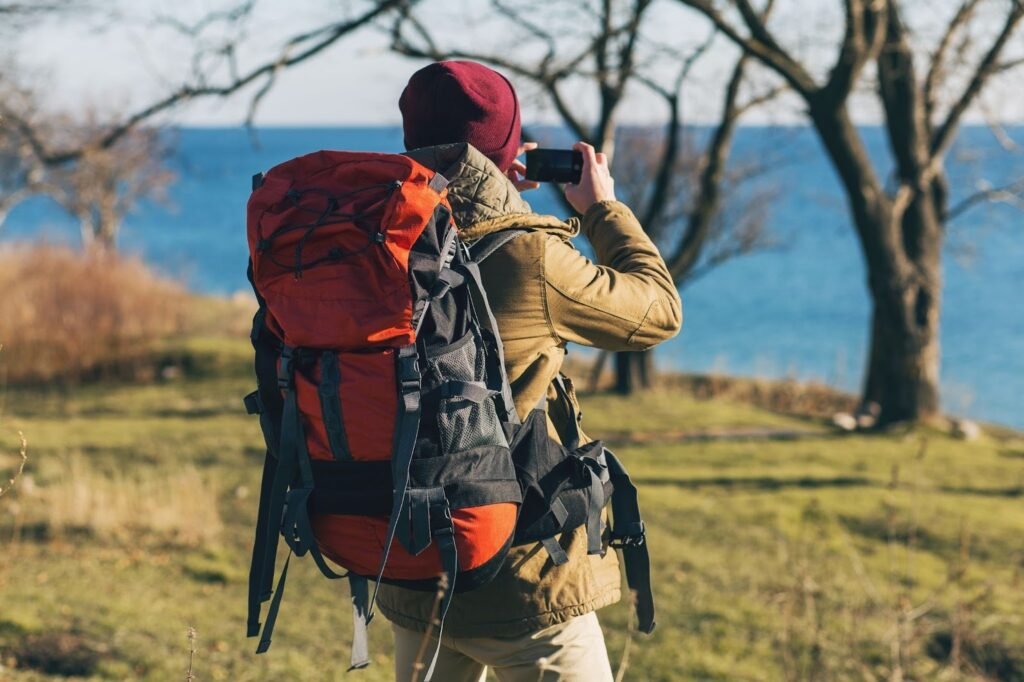
When you hike, your travel backpack should be packed with essentials to guarantee safety and enjoyment. Start with hydration solutions like a water bladder and portable filters. For navigation, carry a map and a compass, alongside a GPS device. A well-stocked first aid kit is crucial for unexpected injuries. Don’t forget weather protection gear, such as a waterproof jacket and sunblock. Pack energy-boosting snacks like trail mix and energy bars, plus layers of clothing to adapt to temperature changes. Finally, include emergency gear like a whistle and flashlight to enhance safety. There’s more to take into account, so keep exploring!
KEY TAKEAWAYS
- Always carry hydration solutions like water bladders and portable filters to ensure you stay hydrated throughout your hike.
- Essential navigation tools include a compass, GPS device, and maps for reliable route planning and orientation.
- Pack a well-stocked first aid kit with supplies for wound care, pain relief, and emergency items to handle injuries.
- Layer your clothing with moisture-wicking base layers, insulating mid-layers, and weather-resistant outer layers for comfort in varying conditions.
- Include emergency gear like a whistle, reflective blanket, flashlight, and a multi-tool to enhance safety during unexpected situations.
HYDRATION SOLUTIONS
When you’re hitting the trails, staying hydrated is essential for both your performance and enjoyment. You might be tempted to grab a bottle of water, but there are smarter options that can enhance your hiking experience. Hydration bladders, for instance, are a fantastic choice. They fit snugly in your backpack and allow you to sip water hands-free, so you can keep your focus on the path ahead.
Plus, many hydration bladders come with insulated hoses, guaranteeing your water stays cool even on the hottest days. Your backpack is arguably the most important piece of backpacking gear you’ll invest in. Select a backpacking pack(Opens in a new window) with a comfortable suspension system that distributes weight evenly across your body. For a weekend trip, a 40-50L pack often suffices, while longer trips might require a 55-65L pack for additional food, clothing and gear. Consider features like quick-access pockets, hydration compatibility and attachment points for trekking poles or sleeping pads.
However, what happens when you run out of water? That’s where water filtration comes into play. Portable water filters or purification systems enable you to refill your hydration bladder from streams or lakes. This not only saves weight in your pack but also guarantees you always have access to clean drinking water.
Just be certain to choose a filter that’s lightweight and easy to use, as you don’t want to waste time fiddling with complicated gear in the great outdoors.
Remember to regularly check your hydration levels. Dehydration can sneak up on you, especially during strenuous hikes. Take a sip from your hydration bladder every 15 minutes or so, and be mindful of how you’re feeling.
With the right hydration solutions, you can confidently tackle any trail and immerse yourself in nature’s beauty without worrying about running dry.
Navigation Tools
Having the right navigation tools can make or break your hiking experience. When you’re out there in nature, it’s crucial to know where you’re going, especially if you’re chasing that feeling of freedom. Let’s explore the must-have navigation tools, focusing on compass usage and GPS devices. A compass, combined with map-reading knowledge, is a vital tool if you become disoriented in the backcountry. Many smartphones, GPS devices and watches include electronic compasses, but it’s wise to also carry a standard baseplate compass because it weighs next to nothing and does not rely on batteries, making it an indispensable backup. Note: A compass equipped with a sighting mirror can also be used to flash sunlight to a helicopter or rescuer during an emergency.
A compass is a classic tool that never goes out of style. Mastering compass usage can provide you with confidence and a sense of direction, even in unfamiliar territory—especially if you’re exploring new trails often listed among the best places to solo travel for adventure seekers. Pair it with a detailed map, and you’re set for a true adventure. On the other hand, GPS devices have revolutionized hiking. They offer real-time tracking and can pinpoint your location with remarkable accuracy. But remember, technology can fail, so it’s wise to carry both tools.
Here’s a quick comparison to help you choose:
| Tool | Advantages |
| Compass | Reliable, no batteries needed |
| GPS Device | Real-time tracking, user-friendly |
| Map | Great for visualizing the terrain |
| Smartphone App | Convenient, often includes offline maps |
With these tools in your backpack, you’ll navigate the trails with ease. Just remember to familiarize yourself with both the compass and your GPS device before hitting the trail. The freedom of the great outdoors awaits you, and with the right navigation tools, you can explore with confidence!
First Aid Kit
When heading out on a hike, a well-stocked first aid kit is a must-have for your backpack.
You’ll want to include essential supplies like bandages and antiseptics, plus some injury prevention tips to keep you safe on the trail.
Let’s go over what you should pack and how to avoid common hiking-related injuries.
Essential Supplies Checklist
A well-stocked first aid kit is a must-have for any hiking adventure. When you hit the trails, your outdoor safety is paramount, and having the right supplies at hand can make all the difference.
Start with the basics: adhesive bandages in various sizes for cuts and scrapes, gauze pads, and adhesive tape for larger wounds. Don’t forget antiseptic wipes or ointment to keep infections at bay.
Next, include pain relievers like ibuprofen or acetaminophen for those unexpected aches and pains. A pair of scissors and tweezers can be invaluable for removing splinters or cutting tape.
If you’re prone to allergies, pack antihistamines or any personal medications you might need.
Consider adding a triangular bandage for slings or wrapping injuries. A thermal blanket can help with shock or hypothermia, while a CPR face shield is essential for emergency situations.
Injury Prevention Tips
Packing a well-stocked first aid kit is just the first step in ensuring your safety on the trails. A good kit should include band-aids, antiseptic wipes, gauze, and pain relievers, allowing you to handle minor injuries swiftly.
However, prevention is key. To minimize your risk of injury, make sure you incorporate stretching exercises into your routine before hitting the trail. These exercises warm up your muscles, increase flexibility, and prepare your body for the journey ahead.
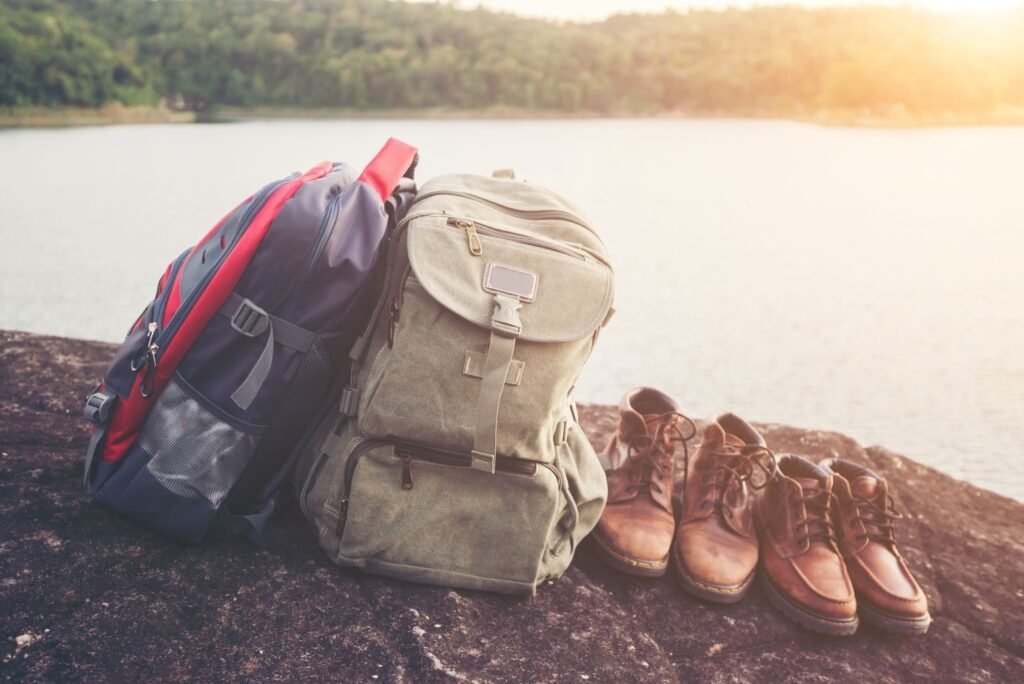
Equally important is wearing proper footwear. Invest in high-quality hiking boots that provide adequate support and cushioning. This can greatly reduce the chances of blisters and ankle injuries, letting you focus on enjoying your hike.
Remember to break in your boots before starting on longer treks to avoid discomfort.
Additionally, listen to your body. If you feel any pain or discomfort, take a break, assess the situation, and adjust your pace as needed.
WEATHER PROTECTION
Rain can turn a beautiful hike into a soggy ordeal if you’re not prepared. To stay comfortable and keep your spirits high, packing the right weather protection gear is crucial. Start with quality rain gear. A lightweight, waterproof jacket can shield you from unexpected downpours without weighing you down. Look for breathable materials that allow moisture to escape, helping you stay dry from both rain and sweat.
Don’t forget waterproof pants; they can make a huge difference on those wet trails.
But it’s not just rain you need to worry about. Sun protection is equally important when you’re out in the open. A wide-brimmed hat can help shield your face and neck from harmful UV rays. Pair that with UV-blocking sunglasses to protect your eyes, and you’ll enjoy your trek under the sun.
Also, consider applying a broad-spectrum sunscreen on exposed skin to prevent sunburn, even on cloudy days.
Packing a lightweight poncho can also be a good idea; it doubles as a quick shelter if you need to take a break or wait out a storm.
Remember, being comfortable in varying weather conditions enhances your hiking experience. You’re out there to explore, not to be bogged down by the elements. So, invest in good rain gear and sun protection, and you’ll be ready for whatever Mother Nature throws your way.
Embrace the freedom of hiking, knowing you’re prepared for whatever comes next!
Food and Snacks
When you’re out on the trails, keeping your energy up is just as important as staying dry and protected from the elements. To fuel your adventure, pack a variety of food and snacks that are both portable and nutritious.
Start with energy bars—they’re compact, delicious, and provide a quick energy boost when you need it most. Look for bars that have a good balance of carbohydrates and protein to keep you going strong.
Trail mix is another fantastic option. You can customize it to your liking, mixing nuts, seeds, dried fruits, and even a few chocolate pieces for a sweet treat.
Protein snacks like beef jerky or turkey jerky options are great for satisfying your hunger while also offering a protein punch. They’re lightweight and won’t spoil on your journey.
Consider bringing dehydrated meals for those longer hikes. These meals are easy to prepare—just add hot water, and you’ve got a filling dish ready to enjoy.
Don’t forget fruit snacks; they provide a revitalizing burst of flavor and energy. Nut butter packets are perfect for a quick pick-me-up—spread it on some whole-grain crackers or eat it straight from the packet. Packing and portioning snacks in advance is especially helpful when coordinating hikes with friends or coworkers, as thoughtful preparation often becomes part of broader large group travel ideas for organized outdoor adventures.
Clothing Layers
Layering your clothing is vital for a comfortable hiking experience, especially as temperatures fluctuate throughout the day. By adopting a smart layering system, you can achieve ideal temperature regulation and moisture management, turning preparation itself into a meaningful self care activity that supports both your physical comfort and overall hiking experience.
Start with a moisture-wicking base layer that sits close to your skin. This layer pulls sweat away from your body, keeping you dry and preventing chills during cooler stretches of your hike. Look for materials like merino wool or synthetic fabrics designed for performance.
Next, add an insulating mid-layer, like a fleece or down jacket. This piece traps warmth while remaining breathable, guaranteeing you don’t overheat as you trek. If you’re hiking in colder weather, consider a thicker insulation to keep the chill at bay.
Finally, finish with a weather-resistant outer layer. A lightweight, packable rain jacket or windbreaker can shield you from unexpected elements without adding bulk. This layer is essential for protecting you from wind and rain, keeping your core temperature stable.
As you hike, remember that you can easily adjust your layers. If you start to feel too warm, peel off the mid-layer and tie it around your waist.
This flexibility gives you the freedom to adapt to changing conditions. By mastering the art of layering, you’ll guarantee a more enjoyable and comfortable experience on any hiking adventure.
Emergency Gear
Having the right emergency gear can make all the difference during a hike, and it’s something you should always prioritize. When you’re out in the wilderness, unexpected situations can arise, and having the right tools can keep you safe and sound.
First up, an emergency whistle is a must-have. It’s lightweight and can easily fit in your pocket or attach to your pack. If you find yourself lost or in distress, blowing a whistle can alert nearby hikers or rescuers much more effectively than shouting. Remember, three sharp blasts is the universal distress signal, so practice using it before you hit the trail.
Another essential item is a reflective blanket, also known as a space blanket. This compact gear can help you retain body heat in case of an emergency, making it invaluable if you’re stuck overnight or in adverse weather.
Plus, its reflective surface can signal for help, doubling as a signaling device if you need to attract attention. A small pack is the primary piece of gear for day hiking. You have several options for shorter hikes, from a simple bottle sling that frees your hands to a small daypack for snacks and your phone. For a longer outing, consider a 10- to 20-liter daypack that can hold those snacks and phone as well as extra layers, a first-aid kit and more. Learn more about choosing a daypack.
Don’t forget to include a small first-aid kit, a multi-tool, and a flashlight in your emergency gear. These items can assist you in handling minor injuries, making repairs, or steering through low-light situations.
RELATED STUDIES ABOUT HIKING TRAVEL BACKPACK
As you lace up your boots and venture into the wilderness, remember that your backpack is more than just a bag; it’s your lifeline to adventure. Each essential you pack symbolizes your readiness to embrace the unknown. Hydration keeps your spirit flowing, while navigation tools chart your path through uncharted territories. With every layer of clothing and bite of food, you’re weaving a tapestry of resilience. Equip yourself wisely, and let the journey transform you into the explorer you’re meant to be.
When You Walk The Trail, You Start To Fantasize About Food, Right? Teleologies And Understandings Of Hikers’ Meal Practices While Hiking In Arctic Sweden
Study Objective:
This study explores how long-distance mountain hikers in Arctic Sweden make sense of their meal practices. It addresses a specific challenge for tourism destinations: hikers typically import all their own food, alienating local food producers from the market. The research asks how hikers understand and negotiate their meals on the trail, and what this reveals about the organization of meal practices within the broader context of hiking.
Methodology:
- Theoretical Framework: Social Practice Theory (Theodore Schatzki), focusing on how practices are organized through teleoaffective structures (normative ends, projects, and feelings), understandings, and material arrangements.
- Setting: Kungsleden trail, Arctic Sweden.
- Data Collection: Semi-structured interviews (n=12) with hikers undertaking medium-to-long-distance hikes; supplemented by ethnographic observations and autoethnographic data from the author hiking the entire trail.
- Analysis: Reflexive Thematic Analysis.
Key Findings:
The analysis generated two central themes reflecting how hikers negotiate the eating event, which correspond to two distinct teleological ends embedded in the practice.
- Theme 1: Food Consumption Motivation (The End of “Energizing the Body”)
- Meals are framed as utilitarian and efficient. Food is primarily fuel to sustain physical exertion and prevent energy deficit.
- Hikers often eat despite a lack of appetite, experience aversion and sensory-specific satiety due to repetition, and prioritize weight and energy density over taste.
- This end normalizes asceticism and discomfort as acceptable feelings within the practice. The meal is reduced to a physiological necessity.
- Theme 2: The Acceptable Setting (The End of “Having an Enjoyable Experience”)
- Meals are framed as hedonic and rewarding. Food is valued for its taste, freshness, and texture variety.
- Hikers engage in projects to organize “proper” meals (e.g., carrying fresh food, home-dried meals, buying hamburgers at trailheads).
- Materiality is critical: An acceptable meal setting requires access to water, shelter from wind, and few mosquitos. Sublime views elevate utilitarian meals to extraordinary experiences.
- The social dimension is ambivalent: Some hikers seek solitude and avoid social meals; others extend breaks significantly to engage with fellow hikers. This is negotiated against the overall goal of the hike.
Synthesis:
The two ends—energizing and enjoying—exist in tension but are not mutually exclusive. A meal organized as “efficient fuel” can still be experienced as profoundly enjoyable if consumed in a beautiful setting or after physical exhaustion. This demonstrates that context (both immediate and temporal) determines meal evaluation, not the intrinsic qualities of the food alone.
Conclusions:
- There is no single “good” tourist meal for hikers. Meal satisfaction is contextually negotiated against both situated project ends (e.g., this meal) and overarching practice ends (e.g., completing the trail).
- Hikers’ meal practices are distinct from both habitual eating and conventional tourism dining. They are shaped by the unique constraints (weight, spoilage, repetition) and affordances (landscape, exhaustion, social encounters) of the trail.
- The practice-theoretical lens reveals that aversion, repetition, and asceticism are not failures but are normatively embedded in the practice of long-distance hiking.
Managerial Implications:
- For destination managers and mountain station operators: Do not attempt to define a “good meal” a priori. Instead, understand the teleological drivers of hikers visiting the area.
- Practical strategies:
- Offer fresh, texturally contrasting foods (crunchy, greasy, cold) that break the monotony of rehydrated meals.
- Provide reliable amenities: guaranteed water access, wind shelters, and mosquito management.
- Recognize that social hikers and solitude-seeking hikers require different meal environments; both are legitimate.
- Local food entrepreneurs should market products that align with hikers’ cravings (high energy, familiar formats, easy preparation) rather than assuming a desire for gastronomic exploration.
Limitations & Future Research:
- The sample is limited to through-hikers on Kungsleden; findings may not apply to day hikers or shorter trails.
- The study does not include sensory evaluation of food in situ. Future research should combine practice theory with sensory science to better understand how hikers perceive taste and texture under physical exertion.
Overall Significance:
This study provides a novel, theory-driven account of a neglected tourism context. It demonstrates that food import by tourists is not merely a logistical preference but a deeply structured social practice. Understanding the teleological organization of hikers’ meals is a prerequisite for re-connecting local food systems with this growing and economically significant visitor group.
| REFERENCE: Joachim Sundqvist, When you walk the trail, you start to fantasize about food, right? Teleologies and understandings of hikers’ meal practices while hiking in Arctic Sweden, Journal of Outdoor Recreation and Tourism, Volume 42, 2023, 100592, ISSN 2213-0780, https://doi.org/10.1016/j.jort.2022.100592. (https://www.sciencedirect.com/science/article/pii/S2213078022001141) |
Travel Patterns, Pretravel Preparation, And Travel-Associated Morbidity In Travelers With Diabetes In Taiwan
Study Objective:
This study explores the experiences of talented athletes (those on the talent pathway, not yet elite) in seeking help for mental health difficulties and their perceptions of available psychological services. It addresses a critical gap: while much research focuses on elite athletes, early intervention during the talent development stage is essential for preventing career derailment and protecting long-term well-being.
Methodology:
- Design: Two-phase, multi-method qualitative study.
- Theoretical Framing: Ontological relativism; epistemological constructionism.
- Phase 1: 16 talented UK athletes (11 female, 5 male; Mage = 25.27) wrote a “letter to their younger self” reflecting on their mental health help-seeking experiences.
- Analysis: Reflexive thematic analysis.
- Phase 2: A composite letter integrating the five generated themes was developed. Nine of the original athletes participated in member reflection interviews to critique, extend, and validate the findings.
- Rigor: Worthiness of topic, sensitivity to context, rich rigor (critical friend, reflexive journaling), meaningful coherence.
Key Findings (Five Themes):
- Athletes have a tendency to bottle up feelings as a way to protect themselves.
- Fear of appearing weak, being deselected, or losing funding.
- “Game face” culture discourages vulnerability.
- Unable to identify signs and symptoms of mental ill-health.
- Low mental health literacy; athletes normalize distress as part of competition.
- “I didn’t know what depression was.”
- Availability of sport psychology support has improved, but it is still insufficient.
- Support is reactive, not proactive; sessions are too infrequent.
- No athlete had access to a clinical psychologist within their sporting environment.
- Athletes are individual and should be treated as such.
- Practitioners lack understanding of neurodivergence (e.g., autism, ADHD) and how it interacts with elite training demands.
- Athletes’ personal lives (e.g., family stress) are often ignored.
- The sporting environment should attempt to develop cultural competency.
- Stigma persists despite well-meaning campaigns.
- There is a disconnect between verbal encouragement to seek help and actual consequences (e.g., deselection, coach hostility).
Member Reflection Insights (Phase 2 Extensions):
- Proactive support works: One athlete described weekly well-being monitoring; low scores triggered an immediate check-in from her manager. This normalized help and prevented escalation.
- Clinical gap: Athletes expressed a strong need for in-house clinical psychologists. External referrals are often not pursued due to stigma, cost, and lack of context awareness.
- Financial barriers: Private psychological support is unaffordable for most talented athletes; they rely on parents or discounted rates.
- Neurodiversity: Athletes reported that sensory overload, routine changes, and organizational demands were misunderstood by coaches and support staff, leading to panic attacks and loss of enjoyment.
Composite Letter:
The study produced a powerful composite letter representing the collective voice of talented athletes. This letter is intended as a practical resource for education, coach training, and sport psychology accreditation pathways (e.g., BPS, BASES, UKSI).
Recommendations:
- Proactive, Embedded Support:
- Implement compulsory, regular well-being check-ins.
- Integrate psychological services into daily training environments, not as an external, crisis-only referral.
- Access to Clinical Expertise:
- Employ in-house clinical psychologists within high-performance settings.
- Sport psychologists should be trained to recognize when referral is needed and maintain strong referral networks.
- Neurodiversity Training:
- Practitioners and coaches must be educated on neurodivergent needs (sensory, cognitive, organizational).
- Environmental adaptations can support both well-being and performance.
- Cultural Change:
- Align words with action: anti-stigma campaigns are meaningless if help-seeking leads to deselection.
- Increase transparency in funding and team selection policies.
- Financial Support:
- Fund mental health services for talented athletes, mirroring investment in physical health support (e.g., physiotherapy).
Conclusions:
- Talented athletes face systemic barriers to mental health help-seeking, including stigma, low literacy, insufficient support, and a lack of individualized, neurodiversity-informed care.
- Early intervention is both economically and ethically imperative.
- The composite letter serves as an accessible, emotionally resonant tool to bridge the gap between research and practice.
Overall Significance:
This study provides novel, athlete-driven insights into the underexplored population of talented athletes. It moves beyond general recommendations to specify what meaningful, context-sensitive support looks like from the athlete’s perspective. The findings have direct implications for sporting organizations, national governing bodies, and practitioner training pathways.
| REFERENCE: Yi-Chen Lee, Yi-Hsuan Lee, Chia-Wen Lu, Kuo-Chin Huang, Travel patterns, pretravel preparation, and travel-associated morbidity in travelers with diabetes in Taiwan, Travel Medicine and Infectious Disease, Volume 64, 2025, 102828, ISSN 1477-8939, https://doi.org/10.1016/j.tmaid.2025.102828. (https://www.sciencedirect.com/science/article/pii/S1477893925000341) |
Hiker On Trail: Information Practices In The Wild. A Mixed Methods Approach To Investigate Real-Time Mobile Technology Use By Long-Distance Backpackers
Study Objective:
This study investigates the real-time information practices and mobile digital technology use of long-distance backpackers undertaking the TGO Challenge, a two-week coast-to-coast trek across the Scottish Highlands. It addresses a significant gap: while mobile technology (GPS, satellite communicators, smartwatches) is increasingly ubiquitous in outdoor recreation, there is little empirical, in-context evidence on how and why backpackers actually use these technologies, and what implications this has for their experience, safety, and serious leisure practices.
Methodology:
- Design: A mixed-methods “Research in the Wild” (RITW) approach, combining off-site and on-site data collection to maximize ecological validity.
- Phase 1 (Off-site): Online survey of the broader TGO community (n=116) to establish demographics, technology attitudes, and baseline usage patterns.
- Phase 2 (On-site/In-the-wild): In-depth field study with 8 participants (7 recruited + 1 researcher-participant) during the actual TGO Challenge.
- Pre- and post-Challenge interviews (semi-structured).
- Daily video-logs (vlogs): Participants recorded 1–2 minutes each morning/evening using a screen-recording app to narrate route plans and reflections.
- GPS tracking via Garmin inReach satellite devices.
- Smartwatch data (MiFit) for step and heart rate.
- Mobile browsing/search history logs (bespoke redaction tool).
- Analysis: Reflexive thematic analysis of interviews and vlogs; triangulation of quantitative and qualitative data streams.
Key Findings (Methodological & Empirical):
- Technology Use is Pervasive but Tension-Laden:
- Participants valued technology for navigation, weather checking, safety (satellite messaging), and communication.
- However, there were persistent tensions between technological utility and the “purity” of the wilderness experience. Some participants viewed devices as intrusive or antithetical to the ethos of self-reliant backpacking.
- In-the-Wild Methods Reveal What Labs Cannot:
- The RITW approach captured real-time frustrations, workarounds, and situational adaptations not observable in controlled settings (e.g., battery anxiety, forgetting to charge devices, software incompatibility with VPNs, difficulty syncing data without cellular coverage).
- Vlogs provided rich, temporally anchored narratives of decision-making, contingency, and emotional states (e.g., exhaustion, satisfaction, worry).
- Participant Burden and Compliance Challenges:
- The daily vlog task was often forgotten or deferred due to fatigue, adverse weather, or lack of routine integration. This confirms that even “light-touch” data collection methods impose real cognitive and physical load in extreme environments.
- Semi-automated data collection (smartwatch syncing, browser history) largely failed due to third-party software unreliability, Bluetooth power-saving habits, and poor connectivity. The conscious, effortful methods (vlogs, interviews) ultimately provided the most complete and usable data.
- Researcher Positionality as Both Asset and Risk:
- The inclusion of a researcher-participant (P08), an experienced backpacker, facilitated trust, empathetic interviewing, and insider access to the community.
- It also risked role confusion and influenced participant experience. Reflexive acknowledgment of positionality was essential to maintain transparency.
- Participant Motivations and Feedback:
- Participants joined the study due to genuine interest in technology and a desire to contribute to community knowledge.
- Despite frustrations, many expressed positive attitudes toward the devices post-trip (e.g., appreciation for inReach reliability, sleep tracking insights).
- Key suggestions for future studies: simpler setup, better onboarding, reduced daily task load, and more robust automated tools.
Conclusions:
- Long-distance backpackers engage with mobile digital technology in complex, context-dependent, and sometimes contradictory ways. Technology is neither wholly rejected nor uncritically embraced; it is negotiated against the values of self-sufficiency, risk, and experiential authenticity.
- RITW mixed-methods research is feasible and valuable in extreme outdoor settings, but it requires redundancy, flexibility, and tolerance for data loss. Researchers must balance ecological validity with data reliability.
- Vlogs are a powerful tool for capturing situated, longitudinal information behavior, but participant burden must be minimized through design integration and familiarization.
Methodological Recommendations:
- For future RITW studies:
- Pilot all technologies in the actual field environment, not just the lab.
- Avoid over-reliance on third-party cloud services for critical data streams.
- Provide clear, laminated, pocket-sized quick-reference guides (this study did, and participants valued them).
- Consider in-field support (e.g., remote check-ins) without compromising ecological validity.
- Recruit more diverse samples (only 1 of 8 participants was female).
Empirical Contributions:
- This study provides one of the first multi-participant, in-situ empirical accounts of mobile technology use in long-distance backpacking.
- It contributes to serious leisure information behavior literature by operationalizing Hektor’s model in a novel, physically demanding context.
- It demonstrates the practical trade-offs and actualities of conducting RITW research, an underreported but critical aspect of HCI and information science methodology.
Overall Significance:
This research advances both theory and method in the study of information practices in outdoor recreation. It moves beyond speculative or auto-ethnographic accounts to deliver transferable insights for HCI practitioners, outdoor equipment designers, land managers, and future researchers. The findings underscore that technology is not separate from the wilderness experience—it is now embedded within it, and our research methods must evolve accordingly.
| REFERENCE: Perla Innocenti, Ed Hyatt, Morgan Harvey, Hiker on trail: Information practices in the wild. A mixed methods approach to investigate real-time mobile technology use by long-distance backpackers, Library & Information Science Research, Volume 44, Issue 4, 2022, 101200, ISSN 0740-8188,https://doi.org/10.1016/j.lisr.2022.101200. (https://www.sciencedirect.com/science/article/pii/S0740818822000639) |