
To achieve a luxury-level clean at home, start with decluttering your spaces. Regularly assess your belongings and follow a one-in, one-out rule to maintain balance. Invest in high-quality, eco-friendly cleaning supplies, including microfiber cloths and all-purpose cleaners. Establish a daily cleaning routine that targets high-traffic areas, focusing on one zone at a time. Master dusting techniques using HEPA filter vacuums and dust from top to bottom. Enhance your home’s ambiance with luxurious scents from natural cleaning products. These straightforward strategies will elevate your cleaning game; there’s more to discover to refine your approach further.
KEY TAKEAWAYS
- Implement a daily cleaning routine that includes quick tidy-ups and deeper cleaning tasks to maintain a consistently luxurious environment.
- Utilize high-quality cleaning supplies, focusing on eco-friendly and effective options like microfiber cloths and all-purpose cleaners for superior results.
- Designate specific cleaning zones, prioritizing high-traffic areas like kitchens and living rooms to elevate overall home cleanliness.
- Incorporate luxurious scents through high-quality fragrances and scented cleaning products to create a personalized and inviting atmosphere.
- Adopt a minimalist mindset by regularly decluttering, thereby enhancing space and promoting effortless maintenance throughout your home.
DECLUTTER FOR A FRESH START
At the beginning of each season, taking the time to declutter can set the tone for a fresh, inviting space. Embracing a minimalist mindset allows you to create an environment that feels open and free. Seasonal decluttering isn’t just about tidying up; it’s an opportunity to reassess what truly matters in your life and your home.
Start by dedicating a day or a weekend to tackle one room at a time. Focus on areas that tend to gather clutter, such as closets, drawers, and shelves. As you sort through your belongings, ask yourself if each item serves a purpose or brings you joy. If it doesn’t, consider donating or recycling it. This process not only lightens your load but also opens up space for items that genuinely enhance your life.
Be strategic in your approach. Create four categories: keep, donate, recycle, and trash. This method streamlines your decision-making process and keeps you focused.
Once you’ve decided what to keep, make certain that everything has a designated spot. This reduces the likelihood of clutter accumulating again and reinforces your commitment to a minimalist lifestyle.
Invest in Quality Cleaning Supplies
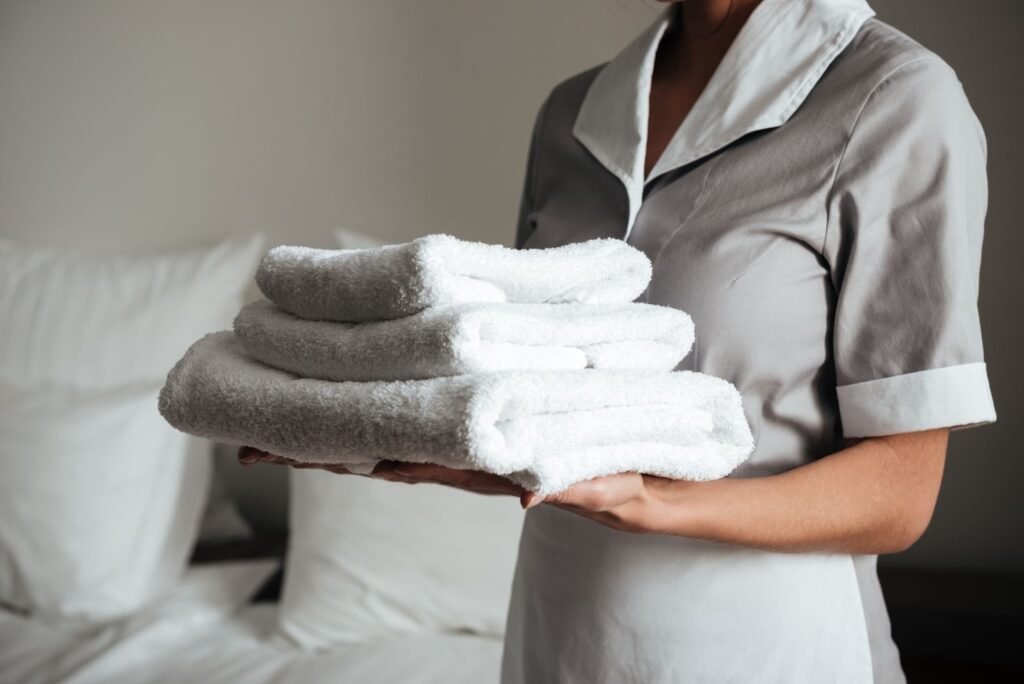
Once you’ve decluttered your space, it’s time to elevate your cleaning routine. Investing in quality cleaning supplies is essential for achieving that luxury-level clean you desire. Hotel housekeeping is about presenting a clean, sanitary, and welcoming environment at your hotel, putting your brand’s best foot forward at all times. Nevermind fancy amenities or attractions, you need to ensure your guests feel comfortable first and foremost. Housekeeping in a hotel essentially comes down to being an invisible task. If a guest never raises a complaint about the condition of their room or their service, then you’ve got your housekeeping right. In a way, housekeeping is about making a guest feel like they’re checking into a room that’s being stayed in for the very first time – it’s ‘their’ room.
Not only do high-quality products make your cleaning more effective, but they also promote a healthier environment. Opt for eco-friendly options that are safe for both your family and the planet.
Here are four essential items to take into account:
- Microfiber Cloths: These are perfect for dusting and wiping surfaces without scratching. They capture dirt and allergens effectively, making your cleaning tasks easier.
- All-Purpose Cleaner: Look for a multi-purpose product that tackles various surfaces, from countertops to appliances. This saves time and space while ensuring cleanliness.
- Natural Disinfectant: Choose a disinfecting solution made from plant-based ingredients. This will keep your home sanitized without the harsh chemicals found in conventional cleaners.
- Quality Scrub Brushes: Invest in durable scrub brushes that can handle tough stains and grime. Opt for ones with ergonomic handles for comfort during use.
Establish a Daily Cleaning Routine
Creating a daily cleaning routine is essential for maintaining that luxury-level clean you desire. A well-structured routine helps you manage your time effectively while ensuring every corner of your home receives attention. Start by breaking your cleaning tasks into manageable segments, dedicating specific times each day to tackle them. This method not only promotes efficiency but also keeps your cleaning motivation high.
Begin your day with a quick tidy-up; make your bed, put away clutter, and wipe down surfaces in the kitchen and bathroom. These small actions set a positive tone for the day and encourage a habit of cleanliness.
In the afternoon, allocate time for deeper cleaning tasks, like vacuuming or mopping floors. If you can, do this while listening to music or a podcast to keep your spirits elevated and transform cleaning into an enjoyable act of self care.
As you develop your routine, consider using a checklist to track your daily tasks. This can enhance your time management skills by helping you visualize what needs to be done. You’ll find satisfaction in checking off items, reinforcing your cleaning motivation to maintain a pristine environment.
Focus on High-Traffic Areas
With your daily cleaning routine in place, it’s time to prioritize high-traffic areas that require extra attention.
These spaces not only accumulate dirt and grime quickly, but they also set the tone for your home. Focusing on entryway etiquette and hallway hygiene can elevate your living space to a luxury-level clean.
Here are four essential areas to concentrate on:
- Entryway: This is the first impression visitors have of your home. Regularly clean the floor, wipe down surfaces, and organize shoes and bags to maintain an inviting atmosphere.
- Hallways: These often-overlooked spaces deserve attention. Vacuum or sweep to remove dust and debris, and consider using a damp cloth to wipe baseboards and light switches, ensuring a polished look.
- Living Room: As a gathering spot, your living room sees a lot of foot traffic. Dust surfaces, fluff pillows, and vacuum thoroughly, paying special attention to corners and under furniture.
- Kitchen: This high-traffic area requires daily upkeep. Wipe down countertops, clean the floor, and organize items to avoid clutter, contributing to both hygiene and a sense of freedom in your cooking space.
Master the Art of Dusting
Dusting may seem like a simple chore, but mastering the art of it can greatly enhance your home’s cleanliness and aesthetic appeal. Effective dusting techniques not only improve air quality but also preserve the beauty of your furnishings. To achieve a luxury-level clean, it’s vital to choose the right dusting tools and employ effective dusting strategies.
Using microfiber cloths is one of the best dusting methods. They trap dust particles effectively without scattering them. Additionally, consider using a vacuum with a HEPA filter for larger dust surfaces. Regular dusting frequency is important; aiming for at least once a week can keep dust at bay.
Here’s a quick guide to help you streamline your dusting routine:
| Dusting Surfaces | Recommended Tools |
| Hard surfaces (tables, shelves) | Microfiber cloth, duster |
| Electronics (TVs, monitors) | Anti-static cloth |
| Textiles (curtains, upholstery) | Vacuum with brush attachment |
When implementing your dusting methods, start from the top and work your way down to make sure debris falls to lower surfaces. Pay special attention to neglected areas, like ceiling fans and baseboards, as they can accumulate dust quickly. By refining your dusting techniques and establishing a consistent routine, you’ll create a space that not only looks clean but feels luxurious. Embrace the freedom of a dust-free home!
Enhance With Luxurious Scents
To elevate your cleaning routine, choose high-quality fragrances that resonate with luxury and sophistication.
Incorporating scented cleaning products not only enhances your space but also creates an inviting atmosphere.
With the right scents, you can transform your home into a sanctuary that feels both fresh and opulent.
CHOOSE HIGH-QUALITY FRAGRANCES
Your home’s ambiance can be remarkably elevated with the right high-quality fragrances. By choosing scents that resonate with you, you can create an inviting atmosphere that embodies luxury. To achieve this, consider the following:
- Fragrance Layering: Start with a base scent like sandalwood or vanilla, then add lighter notes such as citrus or floral. This technique allows for a personalized aroma that evolves over time.
- Natural Ingredients: Opt for fragrances made from essential oils or natural compounds. These not only smell divine but are often less irritating and more aligned with a luxurious lifestyle.
- Scent Memory: Choose fragrances that evoke positive memories or feelings. For instance, a fresh linen scent can remind you of peaceful mornings, enhancing your home’s tranquility.
- Diffusion Variety: Use different diffusion methods—candles, diffusers, or potpourri—to create a layered scent experience throughout your home. This keeps the ambiance fresh and engaging.
Use Scented Cleaning Products
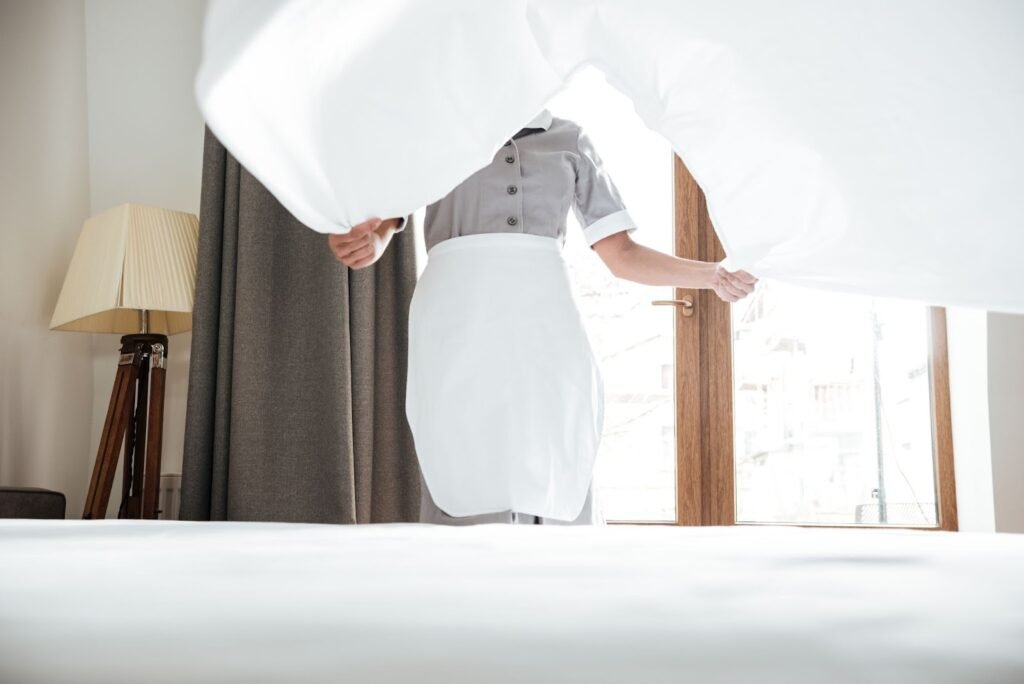
Elevating your home’s cleanliness can be as simple as incorporating scented cleaning products into your routine. These products not only cleanse but also infuse your space with delightful aromas, creating an inviting atmosphere reminiscent of luxury hotels. Choose cleaners that feature essential oils, as they offer natural fragrances while ensuring effective sanitization.
When you clean with scented products, you engage your senses, making the chore feel less tedious. Imagine wiping down surfaces with a lemon-scented all-purpose cleaner or mopping your floors with a rejuvenating eucalyptus blend—simple yet effective self care ideas that elevate both your space and your mood. The uplifting scents can invigorate your mood and transform your cleaning experience.
To enhance the effect, consider lighting scented candles in complementary fragrances as you clean. This dual approach not only masks any unpleasant odors but also envelops your home in a cohesive, luxurious scent profile.
Invest in high-quality scented products that align with your personal style and preferences. They’ll elevate your cleaning routine and leave your home smelling divine.
Organize for Effortless Maintenance
To maintain a luxury-level clean, you need to organize your space effectively. Implementing housekeeping software and all-in-one management systems can change the way you manage your hotel operations, enhancing both efficiency and productivity. Housekeeping software allows you to streamline your tasks by automating processes such as scheduling, assigning duties, and tracking room status in real-time. This means housekeepers can quickly identify which rooms need immediate attention, which ones are ready for guests, and which have special requirements.
Start by decluttering regularly, designating specific cleaning zones, and simplifying your storage solutions.
These steps not only streamline your cleaning routine but also create an effortlessly elegant environment.
Declutter Regularly
A clutter-free environment not only enhances the aesthetic appeal of your home but also simplifies daily upkeep. Adopting a minimalist mindset can transform your space and your routine.
By decluttering regularly, you can turn organizing your space into a calming self care activity that supports both mental clarity and a more luxurious home environment.
To achieve this, consider implementing these four strategies:
- Seasonal Decluttering: Set aside time each season to reassess your belongings. Donate or discard items you no longer need, ensuring you only keep what adds value to your life.
- One-In, One-Out Rule: For every new item you bring into your home, remove one. This helps maintain balance and prevents accumulation.
- Designate Specific Spaces: Assign specific locations for your belongings. When everything has its place, it’s easier to keep things organized.
- Regularly Review Spaces: Periodically check areas that tend to gather clutter, like countertops or drawers. A quick assessment can help you stay on top of the mess.
Designate Cleaning Zones
Creating designated cleaning zones within your home streamlines maintenance and enhances efficiency. By implementing a zone strategy, you can set specific areas for cleaning, making your tasks more manageable and less overwhelming.
Start by identifying your cleaning priorities—focus on high-traffic areas like the kitchen, living room, and bathrooms. Hotel housekeeping is a hotel department charged with cleaning, tidying and organising the hotel. It is responsible for maintaining the aesthetics of the property and creating a safer, more welcoming environment for guests.
Next, break down each zone into smaller tasks. For instance, in the kitchen, designate areas for countertops, appliances, and floors. This approach allows you to tackle one section at a time, promoting a thorough clean without feeling burdened. You’ll find that concentrating on one zone enhances your productivity and guarantees you don’t miss any details.
Consider assigning specific days for each zone. For example, you might clean the kitchen on Mondays, the living room on Wednesdays, and the bathrooms on Fridays. This routine not only simplifies your cleaning schedule but also helps maintain a luxury-level clean throughout your home.
Simplify Storage Solutions
Streamlining your storage solutions is essential for effortless maintenance and a pristine living environment.
By implementing smart organization techniques, you can reclaim your space and enjoy a more luxurious atmosphere.
Here are four effective strategies to simplify your storage:
- Vertical Storage: Maximize wall space with shelves or hooks to keep items off the floor. This not only creates a sense of openness but also makes cleaning easier.
- Under Bed Solutions: Utilize the often-overlooked space beneath your bed. Storage bins or drawers can house seasonal clothing, shoes, or extra linens, keeping your bedroom clutter-free and tidy.
- Multipurpose Furniture: Invest in furniture that serves multiple functions, such as ottomans with storage compartments or coffee tables with hidden shelves. This reduces the need for additional furniture while enhancing your space’s utility.
- Creative Containers: Use stylish baskets, bins, or decorative boxes to organize smaller items. Choose containers that complement your decor, making them both functional and visually appealing.

RELATED STUDIES ABOUT HOUSEKEEPING TIPS HOTEL
By incorporating these housekeeping tips, you can transform your home into a luxurious sanctuary. Imagine walking into a space that feels as fresh and inviting as a five-star hotel—wouldn’t that be a dream? With a commitment to decluttering, quality supplies, and a consistent routine, you’ll not only achieve a pristine environment but also make maintenance effortless. Elevate your cleaning game and enjoy the serenity of a beautifully organized home that reflects your personal style and sophistication.
Futuristic Hospitality Conceptualized: Dash – Decentralized Autonomous And Smart Hotel System
Overview
This study introduces DASH, a fully autonomous smart hotel system designed specifically for the budget accommodation segment. Unlike existing approaches that merely supplement traditional hotel operations with technology, DASH proposes complete end-to-end automation through the strategic integration of Blockchain, Internet of Things (IoT), Robotics, and Artificial Intelligence. The system operates on a pay-per-use model that tracks individual amenity and utility consumption, charging guests only for what they actually use.
Key Contributions
- First fully autonomous hotel architecture operating with minimal human intervention
- Pay-per-use implementation for all resources including electricity, water, lockers, showers, and recreational facilities
- Decentralized, transparent operations enabled by blockchain smart contracts on Ethereum
- Micro-service architecture ensuring scalability, rapid fault detection, and frictionless updates
System Architecture
- DASH operates on a four-layer infrastructure:
- Layer 1: IoT sensors, actuators, and service robots (cleaning, delivery)
- Layer 2: Gateways with Network Functions Virtualization (NFV) for encrypted data transmission
- Layer 3: Fog servers with Software-Defined Networking (SDN) for localized, low-latency processing
- Layer 4: Cloud computing and blockchain for smart contracts, analytics, and permanent record-keeping
The system employs Zigbee protocol for IoT communication and utilizes Ethereum payment channels (Raiden Network) to process micro-transactions with minimal fees.
Key Features
- Guest Experience:
- Mobile-first decentralized application (Dapp) for booking, access control, and payments
- Cryptographic user identification via NFC and Bluetooth
- Capsule pods with smart metering for electricity consumption
- Shared washrooms with metered showers and sensor-controlled faucets
- On-premise service booking without prior reservation
- Temporary guest profiles with time-limited access
- Operational Efficiency:
- Predictive maintenance through continuous sensor monitoring
- Automated cleaning schedules using robotic systems (iRobot, Maidbot Rosie)
- AI/ML-driven dynamic pricing based on demand and local events
- Optimized energy consumption via occupancy sensors
- Video surveillance with automated anomaly detection
- Sustainability:
- Consumption-based billing incentivizes responsible resource use
- Reduced electricity and water waste through intelligent automation
- Elimination of fixed charges for unused amenities
Findings
- Operational Cost Reduction: Workforce costs are significantly decreased through robotic deployment and automated processes, while optimized resource consumption lowers utility expenses.
- Transparency and Trust: Blockchain’s immutable ledger ensures accurate billing and eliminates disputes. Smart contracts automate transactions, reducing human error and fraud risk.
- Customer Affordability: The pay-per-use model makes budget accommodations more economical by eliminating cross-subsidization of unused services.
- Scalability: Micro-service architecture and fog computing enable seamless expansion and technology updates without system disruption.
- Staff Transition: The system redefines staff roles from manual operations to guest-centric services, supported by comprehensive training programs.
Limitations
- Internet dependency: Continuous connectivity required for blockchain and cloud interactions
- Blockchain vulnerabilities: Susceptibility to 51% attacks and latency in smart contract execution
- IoT reliability: Potential system-wide impacts from undetected sensor malfunctions
- AI constraints: Performance dependent on training data quality and diversity
- Payment restrictions: Currently limited to Ethereum tokens
- Capital intensity: Significant upfront investment in IT infrastructure
Conclusion and Future Direction
DASH represents a paradigm shift in hospitality technology, demonstrating that complete hotel automation is not merely feasible but operationally advantageous. The system successfully integrates decentralized governance, intelligent resource management, and autonomous service delivery within an economically accessible framework.
Future research should focus on:
- Practical deployment and real-world prototyping
- Integration with permissioned blockchains (Hyperledger suite)
- Expanded payment options beyond cryptocurrencies
- Enhanced facilities and service portfolios
DASH moves beyond incremental technological adoption—it reimagines the hotel itself as a unified, intelligent system. For the budget hospitality segment, this offers a viable pathway to differentiate through innovation while maintaining cost leadership.
| REFERENCE: Swati Aggarwal, Anshul Mittal, Futuristic hospitality conceptualized: DASH – Decentralized Autonomous and Smart Hotel system, Journal of Open Innovation: Technology, Market, and Complexity, Volume 10, Issue 1, 2024, 100223, ISSN 2199-8531, https://doi.org/10.1016/j.joitmc.2024.100223. (https://www.sciencedirect.com/science/article/pii/S2199853124000179) |
Does Hotel Employees’ Mental Health Matter? Assessment of Its Antecedents and Coping Behavior
Background and Research Objectives
The mental health of hotel employees has become a pressing concern in the post-pandemic hospitality industry, where over 80% of workers report increased stress and only 10% have access to mental health training. Despite growing awareness, significant gaps remain in understanding how specific work-related stressors impact distinct dimensions of mental health and how these psychological states influence coping behaviors. This study addresses these gaps by treating mental health as a multidimensional construct—comprising depression, nervousness, and loss of peace of mind—rather than a single indicator. Grounded in the Transactional Theory of Stress and Coping, the research examines eight work stressors across three categories, three mental health outcomes, and three coping strategies, while also comparing differences between junior versus senior employees and front-of-house versus back-of-house staff.
Methodology
The study surveyed 756 hotel employees across 45 four- and five-star hotels in mainland China, including both domestic and international luxury brands. Data were analyzed using structural equation modeling and multi-group analysis. All measurement items were validated through expert review and back-translation to ensure cultural and contextual appropriateness.
Key Findings
Counterintuitive Stressor Effects
Three stressors traditionally viewed as negative demonstrated significant protective effects on mental health. Job responsibility reduced depression, nervousness, and loss of peace of mind. Job complexity reduced depression and loss of peace of mind. Teamwork reduced all three mental health problems. These findings suggest that certain work demands function as challenge stressors or eustress, perceived as opportunities for achievement, growth, and contribution rather than threats. This is particularly pronounced in the Chinese cultural context, where collective well-being and dedication to organizational success shape stress appraisal processes.
- Primary Mental Health Threats
- The most damaging stressors were superiors’ negative behavior, job insecurity, and pressure to respond to electronic messages, each significantly increasing all three mental health problems. Role ambiguity and role overload also demonstrated consistent positive effects on depression, nervousness, and loss of peace of mind.
- Mental Health and Coping Linkages
- Distinct mental health domains were associated with different coping patterns. Depression was strongly linked to emotion-focused coping and reduced self-solving coping. Nervousness was associated with emotion-focused coping. Loss of peace of mind prompted all three coping strategies, including adaptive problem-solving approaches. These findings challenge universal models of coping and demonstrate that coping behaviors are context-dependent and contingent on specific psychological states.
- Organizational Role Differences
- Junior employees benefited more from job responsibility as a protective factor but exhibited distress in response to job complexity. Those experiencing depression strongly rejected self-solving coping strategies. Senior employees were more vulnerable to role ambiguity and role overload. Notably, role overload reduced mental health problems in junior staff, suggesting it is perceived as a developmental challenge rather than a hindrance.
- Front-of-house employees showed greater resilience to workload increases, likely buffered by tips, social interaction, and flow states during busy periods. However, they were more affected by role overload, job insecurity, and superiors’ behavior. Back-of-house employees suffered more from job responsibility and role ambiguity, reflecting the blurring boundaries between front and back operations, and were more affected by pressure to respond to electronic messages outside working hours.
Theoretical Implications
This research advances occupational health psychology and hospitality management theory in five ways. First, it challenges the longstanding assumption that all work stressors negatively impact mental health, demonstrating that some function as eustress and require reconceptualization in stress theory. Second, it expands existing frameworks by identifying and validating emerging stressors—supervisor behavior and digital communication demands—that are particularly salient in contemporary hospitality environments. Third, it provides empirical validation for a multidimensional conceptualization of mental health, enabling precise identification of how specific stressors affect distinct psychological domains. Fourth, it demonstrates that coping behaviors are not universal responses to stress but are intricately tied to the specific mental health domain an individual is experiencing. Fifth, it establishes organizational role and job function as critical moderators in stress-strain relationships, integrating role-based perspectives into transactional stress theory and resilience theory.
Managerial Implications
- Hospitality managers should adopt differentiated strategies rather than one-size-fits-all approaches. Job responsibility and complexity should be leveraged as avenues for growth through job enrichment, rotation, empowerment, and transparent career advancement pathways. Role ambiguity and overload require clear job descriptions, regular performance reviews, workload monitoring, and task redistribution protocols.
- Given that supervisor behavior is the most influential stressor, organizations must invest in leadership development programs that promote supportive, fair, and psychologically safe management practices. The pressure to respond to electronic messages demands policy interventions establishing clear boundaries for response times, designated off-duty periods, and staggered shifts to enable psychological detachment.
- Employee assistance programs must be tailored to specific employee segments. Junior staff require coping skills training, particularly for managing depression and developing self-solving strategies. Senior staff need support around role clarity and workload management. Front-of-house employees benefit from interventions addressing role overload, job insecurity, and supervisory relationships. Back-of-house employees require clarity around expanded role expectations and protection from digital communication intrusion into personal time.
- For hotels with limited resources, cost-effective solutions include partnerships with local mental health organizations, online training modules, leveraging existing communication channels for role clarification, and prioritizing essential initiatives during economic constraints.
Conclusion
This study provides the first comprehensive, multidimensional examination of hotel employees’ mental health, demonstrating that effective intervention requires precise understanding of which stressors harm versus help, how specific psychological states influence coping, and how employee segments experience stress differently. By moving beyond generalized approaches, hospitality organizations can develop targeted, efficient, and compassionate strategies to cultivate a healthier, more resilient workforce capable of delivering exceptional guest experiences while thriving in demanding service environments.
| REFERENCE: Antony King Fung Wong, Seongseop (Sam) Kim, Yuchen Xu, Does hotel employees’ mental health matter? Assessment of its antecedents and coping behavior, International Journal of Hospitality Management, Volume 126, 2025, 104084, ISSN 0278-4319, https://doi.org/10.1016/j.ijhm.2025.104084. (https://www.sciencedirect.com/science/article/pii/S0278431925000076) |
Why Do Guests Stay At Airbnb Versus Hotels? An Empirical Analysis Of Necessary And Sufficient Conditions
Study Objective:
This study investigates the critical differences in guest (dis)satisfaction between Airbnb accommodations and hotels. It moves beyond traditional “which is better” debates to ask a more precise question: What are the necessary and sufficient conditions for guest satisfaction in each accommodation type? By distinguishing between needs (must-haves) and desires (satisfiers), the research aims to provide actionable strategies for competitive differentiation in the evolving hospitality landscape.
Methodology:
- Data Source: 34,917 English-language user-generated reviews (UGC) from Airbnb (n=23,259) and TripAdvisor hotels (n=11,658) in Seville and Malaga, Spain (2017–2021).
- Analytical Pipeline (Three-Stage):
- Contextualized Topic Modelling (CTM): Advanced NLP using BERT-based embeddings to extract 30 coherent, interpretable topics from unstructured text, overcoming limitations of classical BoW models
- Necessary Condition Analysis (NCA): Identified which topics are necessary (bottlenecks) for achieving satisfaction/dissatisfaction outcomes. A condition is necessary if high satisfaction cannot occur without it
- XGBoost + SHAP: Machine learning classification (Airbnb vs. Hotel) and regression (predicting satisfaction/dissatisfaction scores) to identify sufficient conditions and feature importance.
Key Findings:
- Necessary Conditions (The “Must-Haves”):
- Similarities: Both accommodation types share similar necessary conditions for (dis)satisfaction, but order of importance differs.
- Airbnb Satisfaction: Requires proximity to tourist attractions, staff/host recommendations, and staff professionalism.
- Hotel Satisfaction: Requires quality of facilities, additional services, and staff professionalism.
- Dissatisfaction Triggers (Both): Noise complaints, poor value for money, and unprofessional staff are universal pain points.
- Sufficient Conditions (Classification: Airbnb vs. Hotel):
- Airbnb is predicted by: Scheduled messages/staying in touch (Topic 26), family travel (Topic 4), cleanliness/functional design (Topic 16), and host helpfulness (Topic 9).
- Hotels are predicted by: Room size (Topic 2), efficient check-in/out (Topic 24), terrace/pool amenities (Topic 6), and transport hub proximity (Topic 12).
- Sufficient Conditions (Regression: Satisfaction Drivers):
- Airbnb Satisfaction: Driven by site-specific factors (proximity to old town, pedestrian infrastructure) and family-oriented stays.
- Hotel Satisfaction: Driven by staff professionalism (efficient check-in, prompt replies) and property amenities (views, pools).
- Dissatisfaction (Both): Highly overlapping topics (noise, location issues, value, amenities), indicating high substitution threat when things go wrong.
Conclusions:
- Substitution vs. Complementarity: The relationship is complex. Necessary conditions overlap significantly (suggesting substitution), but sufficient conditions diverge (suggesting complementarity). Airbnb and hotels are partial substitutes—guests expect similar core needs but are attracted by distinct experiential strengths.
- The “Host” vs. “Staff” Paradigm: Both sectors now prioritize professional, communicative interaction. Airbnb hosts are increasingly expected to perform like hotel staff; hotels are expected to offer personalized, “local” interactions like Airbnb hosts. The distinction is blurring.
- Authenticity is Overstated: Despite literature emphasizing “authentic local experiences,” this was not a top-tier driver of Airbnb satisfaction in this dataset. Practical factors (location, cleanliness, communication) dominate.
- Value for Money is a Hygiene Factor: It does not drive satisfaction but is a powerful driver of dissatisfaction when missing.
Managerial Implications:
- For Airbnb Hosts:
- Prioritize proactive communication (pre-arrival messages, local tips).
- Emphasize location advantages (walkability, proximity to landmarks) in listings.
- Maintain high cleanliness and functional design standards.
- Professionalize check-in/out processes.
- For Hotels:
- Invest in staff training (warmth, efficiency, problem-solving).
- Leverage site-specific advantages (transport hubs, views) in marketing.
- Enhance in-room amenities and property features (pools, terraces).
- Adopt Airbnb-like personalized communication (e.g., pre-arrival emails, local recommendations).
- For Both:
- Address noise complaints proactively (double-glazing, quiet zones).
- Ensure price-quality alignment—value for money is a baseline expectation.
- Differentiate based on unique strengths rather than imitating competitors.
Methodological Contributions:
- This study is the first to apply NCA in hospitality comparative research, offering a rigorous framework for distinguishing necessity from sufficiency.
- Demonstrates the power of CTM + XGBoost + SHAP for extracting actionable insights from large-scale UGC.
- Validates that transformers (BERT) significantly improve topic coherence over LDA in short-text review analysis.
Limitations & Future Research:
- Geographic scope limited to two Spanish cities; findings may not generalize to business travel or rural destinations.
- Focus on entire Airbnb apartments only; private/shared rooms may yield different patterns.
- Cross-sectional design; longitudinal studies could track preference shifts.
- Does not differentiate by guest demographics (age, income, nationality).
Overall Significance:
This research provides a paradigm shift in how we evaluate competitive dynamics in hospitality. By moving from correlation-based satisfaction studies to necessity-sufficiency logic, it offers managers a prioritization tool: fix the bottlenecks first, then differentiate on strengths. It also reveals that the “sharing economy vs. traditional” binary is oversimplified—guests evaluate both through a converging lens of professional hospitality, regardless of platform.
| REFERENCE: Manuel J. Sánchez-Franco, Maria Elena Aramendia-Muneta, Why do guests stay at Airbnb versus hotels? An empirical analysis of necessary and sufficient conditions, Journal of Innovation & Knowledge, Volume 8, Issue 3, 2023, 100380, ISSN 2444-569X, https://doi.org/10.1016/j.jik.2023.100380. (https://www.sciencedirect.com/science/article/pii/S2444569X23000768) |