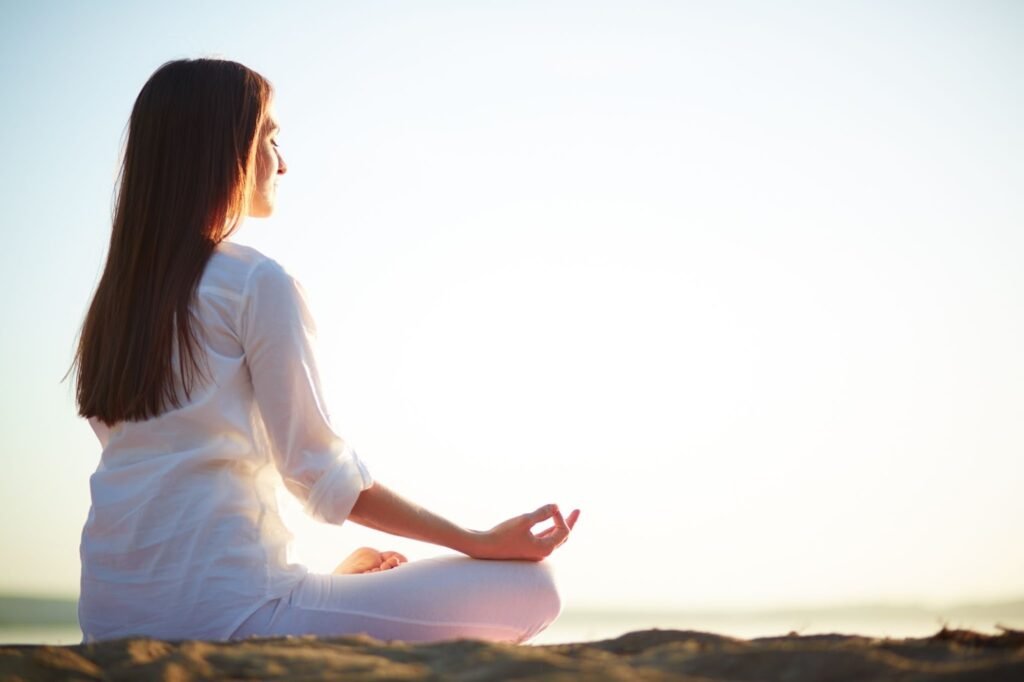
Deep relaxation helps reverse the effects of chronic stress by calming your mind and body, allowing you to reclaim your sense of well-being. It shifts your body from a stressed state to one of relaxation, reducing heart rate, muscle tension, and anxiety. Techniques like mindfulness, meditation, and deep breathing release feel-good neurotransmitters, enhancing your mood and emotional resilience. As you practice these techniques regularly, you’ll notice improved sleep, mental clarity, and physical comfort. By integrating deep relaxation into your routine, you cultivate lasting changes that empower you to manage stress effectively. There’s so much more you can discover about this transformative process.
KEY TAKEAWAYS
- Deep relaxation techniques, such as meditation and deep breathing, counteract the body’s stress response by promoting the release of calming neurotransmitters.
- Regular practice of deep relaxation leads to changes in brain wiring, enhancing future stress management capabilities.
- Techniques like progressive muscle relaxation and mindful breathing reduce muscle tension, improve sleep quality, and promote overall physical comfort.
- Engaging in deep relaxation fosters mental clarity, improving decision-making and problem-solving abilities by reducing anxiety.
- Establishing a consistent deep relaxation routine creates safe spaces for unwinding, enhancing the effectiveness of stress management practices.
UNDERSTANDING CHRONIC STRESS
Chronic stress is more than just feeling overwhelmed; it’s a persistent state of pressure that can impact your mental and physical health. You mightn’t even realize how chronic stressors, like work demands or personal relationships, can sneak into your life and take a toll.
When you’re constantly exposed to these stressors, your body remains in a heightened state of alert, triggering a continuous stress response. This means your heart races, your muscles tense, and your mind races, all ready to react to perceived threats.
It’s vital to recognize that while some stress can be beneficial, as it helps you meet challenges, chronic stress can lead to serious issues over time. You may experience anxiety, fatigue, or even physical ailments like headaches and digestive problems.
The impact of chronic stressors can rob you of the freedom you seek, leaving you feeling trapped and overwhelmed.
Understanding your stress response is the first step toward reclaiming your well-being. By identifying the specific stressors in your life, you can start to take control. You don’t have to remain in a cycle of stress; acknowledging these factors empowers you to implement changes.
Whether it’s setting boundaries, seeking support, or exploring relaxation techniques, recognizing what triggers your stress can help you break free and foster a healthier, more balanced lifestyle.
Embracing this journey toward understanding chronic stress not only paves the way for healing but also opens the door to a life filled with freedom and joy.
The Science of Deep Relaxation
Recognizing the toll that chronic stress takes on your body and mind sets the stage for understanding how deep relaxation can serve as a powerful antidote. At the heart of this connection lies the neurobiology of relaxation, which actively works to counteract your body’s stress response. When you engage in deep relaxation, your brain releases neurotransmitters like serotonin and dopamine, promoting a sense of calm and well-being.
To appreciate the effects of deep relaxation, consider the following comparisons:
| Aspect | Stress Response | Deep Relaxation |
| Heart Rate | Elevated | Decreased |
| Muscle Tension | Increased | Decreased |
| Breathing | Rapid and shallow | Slow and deep |
| Brain Activity | Heightened in stress areas | Balanced across regions |
When you practice techniques like mindfulness, meditation, or deep breathing, you’re not just taking a break; you’re initiating a profound physiological change. Your body shifts from the sympathetic nervous system—the fight-or-flight mode—to the parasympathetic system, which encourages relaxation and recovery.
Each time you choose deep relaxation, you’re not only alleviating immediate stress but also creating lasting changes in your brain’s wiring. This empowers you to handle future stressors with greater ease. Embracing this science allows you to reclaim your freedom from the chains of chronic stress.
Benefits of Deep Relaxation Techniques
When you practice deep relaxation techniques, you’re not just unwinding; you’re also enhancing your overall well-being. The relaxation response may improve insulin activity by activating genes that help to control blood sugar. You might find that your sleep quality improves, your mind feels clearer, and muscle tension eases. These benefits can greatly boost your daily life and help you manage stress more effectively.
Improved Sleep Quality
Harnessing deep relaxation techniques can greatly enhance your sleep quality, offering a much-needed reprieve from the chaos of daily life. When you incorporate practices like deep breathing, progressive muscle relaxation, or meditation, you create a tranquil relaxation environment that signals your body it’s time to unwind. Creating a tranquil relaxation environment—free from distractions and supported by relaxing music—signals your body that it’s safe to slow down and prepare for restorative rest.
This shift helps ease the stress and anxiety that often keep you tossing and turning at night. Improving your sleep hygiene is essential for achieving restorative rest. By practicing deep relaxation before bedtime, you can lower your heart rate and reduce cortisol levels, making it easier to drift off into a deep sleep.
This not only helps you fall asleep faster but also allows you to experience longer periods of uninterrupted slumber. Imagine waking up refreshed and energized, ready to seize the day with clarity and focus.
Enhanced Mental Clarity
Deep relaxation techniques can greatly boost your mental clarity, allowing you to think more clearly and make better decisions. When you practice these techniques, you create a calm mental space that fosters cognitive enhancement. This clarity helps you sift through the noise of daily stressors, making it easier to focus on what truly matters.
As you engage in deep relaxation, you activate your body’s natural stress management systems. This not only reduces feelings of overwhelm but also sharpens your ability to process information and solve problems. You might notice you can tackle challenges with a newfound perspective, seeing solutions you previously overlooked.
Moreover, deep relaxation techniques can enhance your creativity, helping you connect ideas in innovative ways. By quieting the mind, you open yourself to inspiration and clarity, breaking free from limiting thoughts. This newfound mental agility can empower you to navigate life with confidence and purpose.
Embracing deep relaxation is a pathway to greater mental clarity, allowing you to reclaim your focus and decision-making skills. It’s time to take control of your mind and experience the freedom that comes with a clear, relaxed state.
Reduced Muscle Tension
Muscle tension often feels like a heavy weight, pulling you down and increasing discomfort. When stress mounts, your body naturally tenses, leading to stiffness and pain.
But with deep relaxation techniques, you can experience profound muscle relaxation and tension release, allowing your body to return to its natural state of ease.
Imagine lying quietly, focusing on your breath as you let go of the tightness in your shoulders and neck. You’ll find that layers of stress peel away, revealing a lighter, more flexible you.
Techniques like progressive muscle relaxation and guided imagery can help you consciously release tension throughout your body. As you practice these methods,and when appropriate under medical guidance, muscle relaxers can also support the reduction of tightness, making your muscles feel softer and your movements more fluid.
The benefits extend beyond just physical comfort. Reduced muscle tension can improve your mood and enhance your overall sense of well-being.
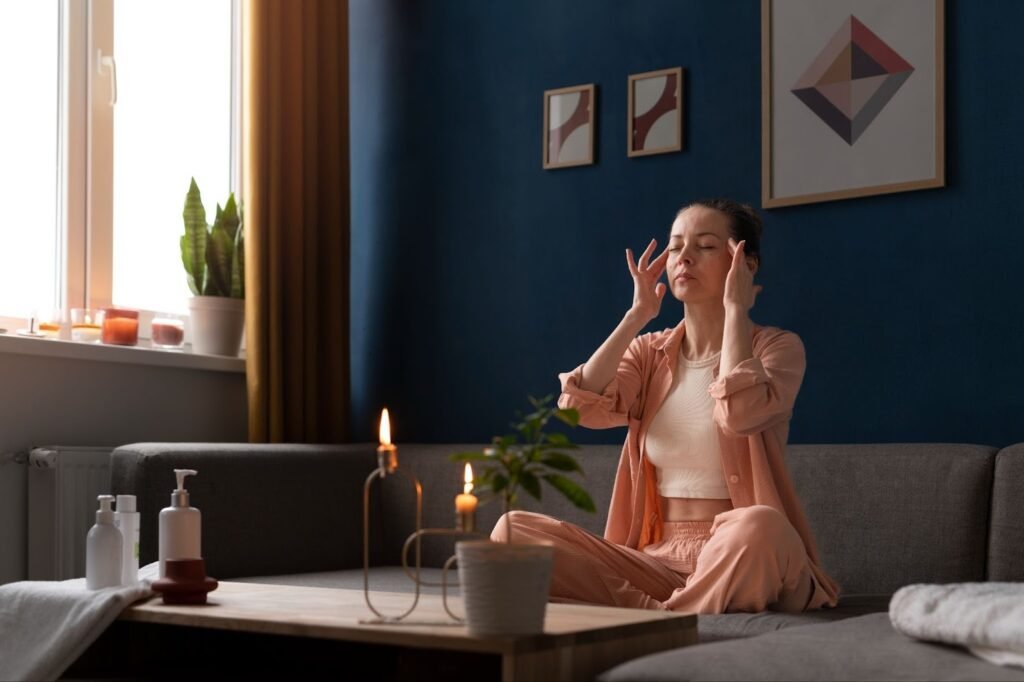
MEDITATION FOR STRESS RELIEF
Meditation can be a powerful tool for managing stress and enhancing your overall well-being. By incorporating mindfulness techniques and focused breathing exercises, you’ll learn to cultivate a sense of calm even in the midst of chaos. Let’s explore how these practices can transform your approach to stress relief. Relaxation techniques generally involve focus and awareness. You focus your attention on something that is calming and raise awareness of your body.
Mindfulness Techniques Explained
Many people find that incorporating mindfulness techniques into their daily routines can considerably alleviate stress.
Mindfulness practices help you become more aware of your thoughts, emotions, and sensations, enabling you to manage stress more effectively.
Here are three powerful mindfulness techniques you can easily integrate into your life:
- Body Scan: Take a few moments to focus on different parts of your body, noticing any tension. This practice enhances your awareness of physical sensations and promotes relaxation.
- Mindful Walking: As you walk, pay attention to each step. Feel the ground beneath your feet and the rhythm of your breath. This simple act can ground you and bring your mind back to the present.
- Gratitude Journaling: Write down three things you’re grateful for each day. This practice shifts your focus from stressors to positive aspects of your life, fostering a sense of peace.
Breathing Exercises Benefits
Deep breathing is the cornerstone of many other relaxation practices, too, and can be combined with other relaxing elements such as aromatherapy and music Building on the foundation of mindfulness techniques, breathing exercises serve as a powerful tool for stress relief. These simple yet effective breathing techniques can transform your state of mind, allowing you to regain control amidst chaos. By focusing on your breath, you create a sanctuary of calm, helping to alleviate anxiety and promote relaxation.
Here’s how different breathing techniques can enhance your stress management:
| Technique | Description | Benefits |
| Diaphragmatic | Breathe deeply into your belly | Reduces anxiety |
| Box Breathing | Inhale, hold, exhale, hold in equal counts | Enhances focus |
| 4-7-8 Breathing | Inhale for 4 seconds, hold for 7, exhale for 8 | Promotes sleep |
| Alternate Nostril | Breathe through one nostril at a time | Balances energy |
Incorporating these breathing exercises into your daily routine can empower you to manage stress effectively. You’ll find that the more you practice, the easier it becomes to tap into that inner peace whenever you need it. So take a moment, breathe deeply, and reclaim your freedom from stress.
Progressive Muscle Relaxation Explained
Progressive Muscle Relaxation (PMR) is a powerful technique designed to ease the tension that builds up in your body due to chronic stress. By focusing on muscle awareness and systematically tensing and relaxing different muscle groups, you can achieve significant stress reduction. This method promotes the relaxation response in your body, helping you to recognize and release muscle tension effectively.
Here’s how you can practice PMR:
- Find a Comfortable Position: Sit or lie down in a quiet space where you won’t be disturbed. Close your eyes and take a few deep breaths to center yourself.
- Body Scan: Start at your feet and work your way up. Tense each muscle group for about five seconds, then release the tension completely, focusing on the contrast between tension and relaxation. Notice how your body feels as you do this.
- Repeat: Continue this process for all major muscle groups—legs, abdomen, arms, shoulders, and face. With each release, allow yourself to sink deeper into physical relaxation.
As you practice PMR, you’ll enhance your body awareness, making it easier to identify when stress is creeping back in. This awareness can empower you to use relaxation techniques proactively, turning the tide on chronic stress.
Mindful Breathing Practices
Mindful breathing practices serve as a powerful tool for managing stress and enhancing your overall well-being. By cultivating breath awareness, you can transform your relationship with stress and reconnect to a sense of freedom.
One effective method is diaphragmatic breathing, where you focus on expanding your belly as you inhale deeply. This encourages relaxation and reduces tension.
Another technique is breath counting, where you count each inhale and exhale. This simple practice keeps your mind anchored in the present moment, helping to quiet racing thoughts.
Incorporating mindful pauses throughout your day can also provide much-needed moments of calm; even a few deep breaths can reset your nervous system.
A body scan can deepen your practice, guiding you to notice how each part of your body feels as you breathe.
Following this, you might try breath visualization—imagining your breath as a wave, washing over you, bringing peace with each inhale and releasing stress with every intentional exhalation.
Creating a Deep Relaxation Routine
Incorporating mindful breathing practices into your daily life can set the stage for a deep relaxation routine that effectively counters chronic stress.
By establishing a consistent deep relaxation routine, you turn these practices into a meaningful self care activity that creates a safe space to unwind and recharge from daily stressors. Here are three key elements to contemplate when crafting your relaxation practice:
- Mindful Breathing: Begin each session with slow, intentional breaths. Focus on inhaling deeply through your nose, holding for a moment, and exhaling gently through your mouth. This simple act grounds you in the present, helping to reduce anxiety.
- Visualization Techniques: As you breathe, imagine a serene landscape—a tranquil beach or a peaceful forest. Visualize the colors, sounds, and scents. This not only distracts your mind from stress but also immerses you in a calming experience, promoting deeper relaxation.
- Sensory Grounding: Incorporate sensory elements to enhance your routine. Use soothing music, calming scents like lavender, or even a soft blanket. Engage your senses fully during your relaxation time to anchor yourself, making the experience richer and more effective.

RELATED STUDIES ABOUT STRESS
As you embrace deep relaxation techniques, you might find unexpected moments of peace creeping into your daily life. Just when you feel overwhelmed, a few mindful breaths can ground you, reminding you that calm is always within reach. By prioritizing relaxation, you’re not just countering chronic stress; you’re rediscovering joy in the present. So, take a moment for yourself today—this simple act could transform your perspective, helping you navigate life’s challenges with renewed strength and clarity.
An Approach to Screen Susceptible Rats and Efficacy of an Antidepressive Treatment After Chronic Stress
Objective:
This study aimed to (1) identify behavioral markers for screening individual susceptibility or resilience to chronic unpredictable stress (CUSB) in rats, (2) evaluate the efficacy of fluoxetine (an SSRI antidepressant) in reversing stress-induced behaviors, and (3) apply a machine learning clustering method (k-means) to classify subjects based on stress response and treatment outcome.
Key Findings:
- Stress Induces Anxiety- and Depression-like Behaviors:
- CUSB exposure (during adolescence, adulthood, or both) led to anxiety-like behaviors (reduced time in center, increased immobility/grooming) and depression-like behaviors (reduced saccharine preference, increased immobility in forced swim).
- Effects were most severe in the “double-hit” group (stress in both adolescence and adulthood).
- Age of Stress Exposure Matters:
- Stress during adolescence had longer-lasting effects into adulthood.
- Stress only in adulthood produced milder, more homogeneous behavioral alterations.
- Fluoxetine Efficacy is Age- and Stress-Dependent:
- Fluoxetine (10 mg/kg) reversed depression-like behaviors (saccharine preference, forced swim immobility) in groups stressed during adolescence or adulthood only.
- It failed to reverse anxiety-like behaviors in any group and even showed anxiogenic effects in non-stressed controls.
- No recovery was observed in the double-hit group, suggesting treatment resistance after prolonged, cumulative stress.
- Individual Variability Revealed by k-Means Clustering:
- Using saccharine consumption, immobility, and center time as classifiers, k-means identified three distinct clusters:
- No alterations (control group).
- Moderate anxiety/depression profile.
- Severe anxiety/depression profile.
- Stress groups contained individuals across all clusters, highlighting non-homogeneous responses even under identical protocols.
- Fluoxetine Shifts Cluster Membership:
- Treatment reduced the proportion of subjects in the severe cluster and increased membership in milder or recovered clusters, demonstrating hierarchical recovery.
- However, no double-hit subjects moved to the “no alterations” cluster, underscoring the challenge of treating cumulative stress.
Conclusion:
This study demonstrates that:
- Behavioral markers (saccharine preference, immobility, center time) can effectively screen for stress susceptibility.
- Fluoxetine’s efficacy is limited to depression-like behaviors and depends on the timing and cumulative burden of stress.
- k-Means clustering is a valuable tool for capturing individual variability in stress response and treatment outcome, offering a translational approach to personalized depression research.
Implications:
The findings emphasize the need to consider individual differences and stress history in both preclinical models and clinical treatment of depression. The k-means approach provides a framework for stratifying subjects and evaluating personalized therapeutic efficacy.
| REFERENCE: Kenji B. Valencia-Flores, Yahel Vidal-de-laO, Diana Paz-Trejo, Hugo Sánchez-Castillo, An approach to screen susceptible rats and efficacy of an antidepressive treatment after chronic stress, IBRO Neuroscience Reports, Volume 18, 2025, Pages 803-813, ISSN 2667-2421, https://doi.org/10.1016/j.ibneur.2025.05.001. (https://www.sciencedirect.com/science/article/pii/S2667242125000673) |
An Inverted U-Shaped Relationship Between Chronic Stress and Motivation to Expend Effort for Reward
Objective:
This study investigated the relationship between chronic stress and the motivation to expend cognitive effort for reward in humans. Using behavioral, computational (drift-diffusion model, DDM), and electrophysiological (EEG/ERP) measures, the authors tested whether chronic stress exhibits an inverted U-shaped relationship with motivation—where moderate stress enhances, but low or high stress impairs, the willingness to work for rewards.
Key Findings:
- Behavioral Evidence:
- The offer acceptance rate (willingness to perform an extra task for reward) showed a curvilinear relationship with perceived stress (PSS scores).
- Participants were less motivated under both low and high chronic stress, but most motivated under moderate stress levels.
- Computational Modeling (DDM):
- The drift rate (v), a parameter reflecting the speed of evidence accumulation toward a decision, also exhibited an inverted U-shaped relationship with PSS scores.
- This suggests that moderate stress optimizes decision-making efficiency for effort-based rewards, while extremes impair it.
- Neurophysiological Evidence (EEG/ERP):
- The Reward Positivity (RewP) component, an ERP marker of reward sensitivity linked to dopaminergic activity, was larger for reward delivery vs. omission, especially in trials where extra effort could be expended.
- The ΔRewP (difference in RewP between reward and no-reward conditions) also followed an inverted U-shaped pattern with chronic stress, peaking at moderate stress levels.
- Sex Differences:
- Males showed higher motivation (acceptance rate, drift rate, ΔRewP) than females across stress levels.
- After controlling for sex, the inverted U-shaped relationships remained significant, indicating that stress effects on motivation are robust across sexes.
Conclusion:
The study provides multimodal evidence for an inverted U-shaped relationship between chronic stress and motivation to expend effort for reward. Moderate stress enhances motivation, possibly by optimizing dopaminergic and prefrontal engagement, while too little or too much stress reduces it. These findings align with allostatic load and reactive scope models, suggesting that stress can be adaptive within a optimal range but detrimental at extremes.
Implications:
- Clinical relevance: Understanding stress-related motivational deficits in disorders like depression, where either low or high stress may contribute to anhedonia and effort avoidance.
- Individual differences: Highlights the need to consider stress levels when assessing motivation and designing interventions for stress-related mental illnesses.
- Future research: Supports exploring dopaminergic mechanisms and developing strategies to maintain motivation under chronic stress.
| REFERENCE: Wei Yi, Xin Li, Wangxiao Chen, Linlin Yan, Fei Xin, Tony W. Buchanan, Jianhui Wu, An inverted U-shaped relationship between chronic stress and the motivation to expend effort for reward, Neurobiology of Stress, Volume 36, 2025, 100724, ISSN 2352-2895, https://doi.org/10.1016/j.ynstr.2025.100724. (https://www.sciencedirect.com/science/article/pii/S2352289525000189) |
Distinct Behavioural and Neurovascular Signatures Induced by Acute and Chronic Stress in Rats
Objective:
This study investigated the sex-specific behavioural and neurovascular effects of acute versus chronic stress in rats, focusing on anxiety- and depressive-like behaviours, neuroinflammation, and blood-brain barrier (BBB) integrity in the prefrontal cortex (PFC).
Methods:
- Subjects: Adult male and female Wistar rats.
- Stress Protocols:
- Acute stress: 6-hour restraint.
- Chronic stress: 6-week unpredictable chronic mild stress (uCMS) with varied daily stressors.
- Behavioural Tests: Open field test (OFT) for anxiety-like behaviour and locomotor activity; forced swimming test (FST) for depressive-like behaviour and coping strategies.
- Molecular Analysis: Western blot and ELISA to measure proteins related to BBB integrity (claudin-5, occludin, VEGF, VCAM-1), neuroinflammation (TNF-α, GFAP), and complement system (C3/C3aR) in the PFC.
Key Findings:
- Behavioural Effects:
- Acute Stress:
- Induced anxiety-like behaviour only in males (reduced centre time and visits in OFT).
- Reduced immobility time in the FST in both sexes, suggesting an active coping response.
- Chronic Stress (uCMS):
- No anxiety-like behaviour in either sex.
- Increased immobility time in the FST only in males, indicating depressive-like behaviour.
- Sex Differences: Control females were more active but exhibited higher baseline immobility in the FST than males.
- Neuroinflammatory Markers:
- Neither acute nor chronic stress significantly altered levels of TNF-α or GFAP in the PFC.
- No major pro-inflammatory response or astrocytic reactivity was observed.
- Complement System:
- C3 protein levels in serum and PFC were unchanged by stress.
- uCMS downregulated C3aR receptor levels in males only, suggesting sex-specific modulation of complement signalling.
- Blood-Brain Barrier (BBB) Proteins:
- Acute Stress:
- Reduced occludin and VEGF levels in both sexes, indicating BBB and vascular alterations.
- Chronic Stress (uCMS):
- Increased claudin-5 levels in females only, suggesting a potential compensatory BBB strengthening.
- No significant changes in occludin, VCAM-1, or VEGF in either sex.
Conclusions:
- Acute and chronic stress produce distinct and sex-specific behavioural and neurovascular profiles.
- Acute stress promotes anxiety in males and active coping in both sexes, alongside BBB disruption.
- Chronic stress induces depressive-like behaviour in males and may trigger adaptive BBB responses in females.
- Findings highlight the importance of considering stress type, duration, and sex in understanding stress-related neuropsychiatric disorders and BBB pathophysiology.
Significance:
This study provides novel insights into how stress differentially affects behaviour and BBB integrity, emphasising the need for sex-specific approaches in stress research and potential therapeutic strategies targeting neurovascular health.
| REFERENCE: Daniela M. Simões, José Carreira, Alexandre Henriques, Rita Gaspar, Eliane S. Sanches, Filipa I. Baptista, Ana Paula Silva, Distinct behavioural and neurovascular signatures induced by acute and chronic stress in rats, Behavioural Brain Research, Volume 493, 2025, 115706, ISSN 0166-4328, https://doi.org/10.1016/j.bbr.2025.115706. (https://www.sciencedirect.com/science/article/pii/S0166432825002931) |