
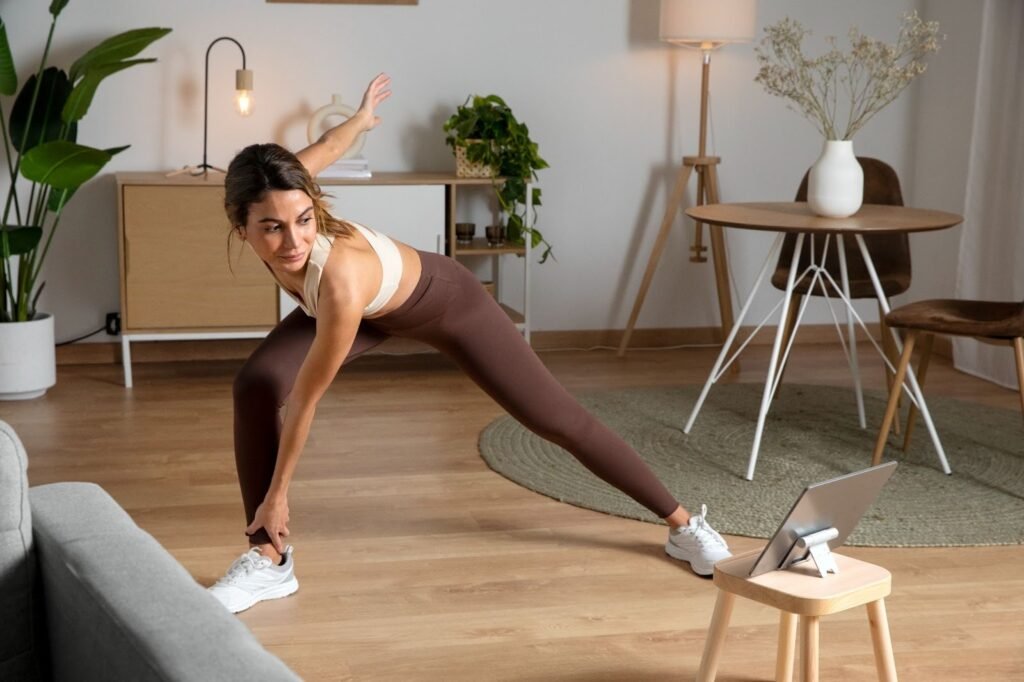
You can maximize your home fitness for weight loss without equipment by setting clear goals and creating a motivating environment. Incorporate bodyweight exercises like squats, push-ups, and lunges into a structured workout schedule. High-intensity interval training (HIIT) can boost calorie burning and keep workouts exciting. Stay active throughout the day by taking walking breaks and engaging in household chores, turning them into a fun workout. Track your progress regularly to stay accountable and motivated. By making these adjustments, you’ll transform your home into a powerful space for fitness and weight loss, and there’s even more to explore!
KEY TAKEAWAYS
- Set SMART fitness goals to maintain motivation and track progress effectively throughout your weight loss journey.
- Incorporate a variety of bodyweight exercises like push-ups, squats, and planks to build strength without needing equipment.
- Utilize high-intensity interval training (HIIT) for efficient calorie burning and improved cardiovascular fitness in shorter workout sessions.
- Engage in daily activities and household chores to increase movement and energy expenditure throughout the day.
- Explore active hobbies such as dancing, gardening, or outdoor activities to enhance fitness levels while enjoying yourself.
SET CLEAR FITNESS GOALS
Setting clear fitness goals is vital for your weight loss journey. When you define specific, measurable, achievable, relevant, and time-bound (SMART) goals, you create a roadmap that keeps you focused and motivated. Think about what you want to achieve—whether it’s shedding a certain number of pounds, fitting into a favorite outfit, or simply feeling more energetic. Writing these goals down gives them weight and makes them tangible.
As you initiate this journey, remember that goal setting isn’t just about the numbers; it’s about creating a vision for your health and well-being. Make your goals personal and emotionally resonant. This connection can fuel your fitness motivation when the going gets tough. Celebrate small victories along the way; each step forward is progress worth acknowledging.
It’s also important to revisit and adjust your goals as needed. Life can throw curveballs, and flexibility in your approach will help you stay on track. If you hit a plateau or face challenges, don’t be discouraged. Instead, reassess your goals and strategies. Perhaps you need to increase your activity level or explore new workout routines.
Ultimately, setting clear fitness goals empowers you to take control of your weight loss journey. By establishing these benchmarks, you’ll find the freedom to navigate challenges with confidence and resilience. Embrace the process, stay committed, and let your goals be the guiding light on your path to a healthier, happier you.
Design a Workout Schedule
A well-structured workout schedule is essential for maximizing your home fitness efforts and achieving your weight loss goals. By designing a routine that fits your lifestyle, you’ll create a sustainable path to success. Muscular endurance refers to the ability of a muscle to sustain repeated contractions against resistance for an extended period of time. To increase muscular indurance, you should engage in activities that work your muscles more than usual such as squats, push-ups, or jumping jacks. Muscular strength relates to your ability to move and lift objects. It’s measured by how much force you can exert and how much weight you can lift for a short period of time.
Start by identifying your preferred workout times. For many, morning routines can kickstart the day with energy and motivation. Consider scheduling 20 to 30 minutes each morning for a mix of cardio and strength-building activities. This way, you’re setting a positive tone that lasts throughout the day.
Next, balance your workouts with rest. It’s important not to overdo it, so plan for active recovery days. Use these days for light activities like walking or engaging in evening stretches. Stretching not only helps prevent injury but also improves flexibility, making your body feel more agile and ready for the next workout.
Be sure to incorporate a variety of exercises throughout the week. This keeps things fresh and exciting, preventing boredom. You might alternate between high-intensity interval training (HIIT) and more moderate-paced activities, ensuring you hit different muscle groups and stay engaged.
Utilize Bodyweight Exercises
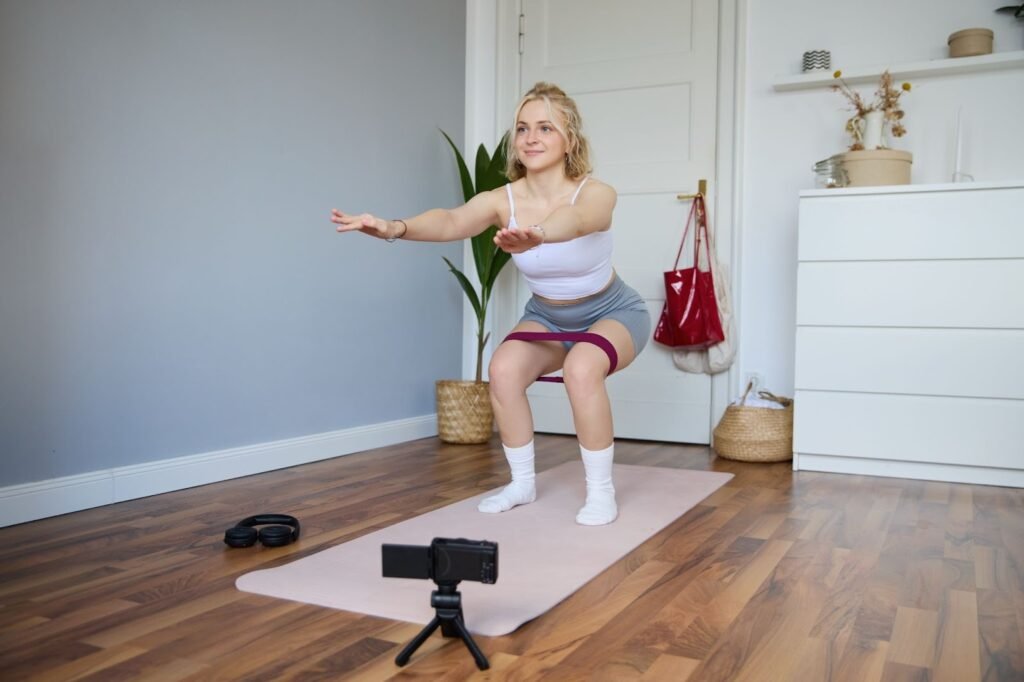
When you’re looking to maximize your home fitness routine, utilizing bodyweight exercises can be a game changer. These exercises not only require no equipment but also allow you to explore various bodyweight variations that keep your workouts fresh and engaging.
Think push-ups, squats, planks, and lunges—each offering an opportunity to challenge your body while building strength and endurance.
Focusing on bodyweight exercises helps develop core stability, which is essential for overall fitness. A strong core supports better posture, enhances performance in other activities, and reduces the risk of injury. Incorporating moves like planks or mountain climbers engages multiple muscle groups, ensuring you get the most out of each session.
You’ve got the freedom to create your own routine! Mix and match different exercises to target various parts of your body. For example, start with a set of squats, then shift to push-ups, followed by a core-focused workout like bicycle crunches.
This variety not only keeps things exciting but also prevents your body from hitting a plateau.
Don’t underestimate the power of your own body. You can build strength, improve flexibility, and increase endurance without stepping foot in a gym. Embrace the freedom that comes with bodyweight exercises and watch as your fitness level soars. Don’t underestimate the power of your own body—building strength, improving flexibility, and increasing endurance at home can be one of the most effective self care ideas for supporting both physical health and mental resilience.
Incorporate High-Intensity Intervals
Incorporating high-intensity interval training (HIIT) into your routine can supercharge your weight loss efforts.
Not only does HIIT burn calories more efficiently, but it also boosts your metabolism long after your workout. As you engage in these intense bursts of movement, the workout becomes more than calorie burning—it turns into a self care activity that builds mental toughness, confidence, and long-term discipline.
Let’s explore some effective HIIT workouts you can easily do at home to maximize your results!
Benefits of HIIT
High-Intensity Interval Training (HIIT) packs a powerful punch for those looking to shed pounds and boost fitness levels from the comfort of home. One of the standout HIIT benefits is its time efficiency; you can achieve more in a shorter workout, making it perfect for busy lifestyles.
This method not only accelerates fat burning but also provides a significant metabolic boost that keeps your body burning calories long after you finish.
As you engage in these intense bursts of activity, you’ll experience cardiovascular improvement and enhance your overall endurance. HIIT also promotes muscle preservation, so you retain that lean muscle mass while shedding fat.
Plus, the workout variety keeps things fresh and exciting, preventing boredom from creeping in.
Don’t underestimate the mental toughness you’ll gain. Pushing through those challenging intervals builds resilience, which can translate to other areas of your life.
Finally, HIIT can enhance flexibility, helping you move better and preventing injuries.
Sample HIIT Workouts
Ready to kickstart your fitness routine? Incorporating HIIT variations into your workouts can elevate your workout intensity and maximize fat loss. Here’s a sample workout plan to get you started, no equipment needed!
| Exercise | Duration |
| Jumping Jacks | 30 seconds |
| Rest | 15 seconds |
| High Knees | 30 seconds |
| Rest | 15 seconds |
| Burpees | 30 seconds |
| Rest | 15 seconds |
Repeat the above circuit 3-4 times for a full-body challenge. You’ll feel invigorated as you push through each interval!
Want to mix it up? Try adding other HIIT variations like mountain climbers, squat jumps, or plank jacks. The key is to maintain high intensity during each exercise, keeping your heart rate up and maximizing your calorie burn.
STAY ACTIVE THROUGHOUT THE DAY
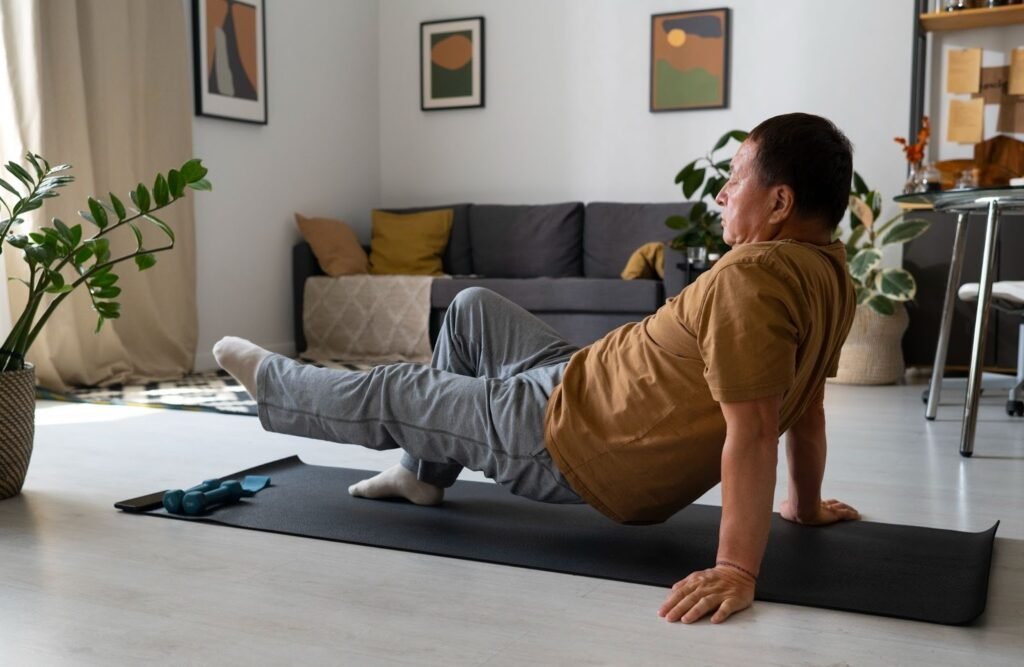
Staying active throughout the day is key to boosting your weight loss efforts. Incorporating regular movement into your routine isn’t just about weight loss—it’s also a form of self care that helps reduce stress, improve mood, and support long-term physical and mental well-being.
You can easily incorporate walking breaks, tackle household chores, or engage in active hobbies to keep your body moving.
Every little bit counts, so find fun ways to stay on your feet and make fitness a part of your daily routine!
Incorporate Walking Breaks
Incorporating walking breaks into your daily routine can transform your approach to fitness and weight loss. By taking short, frequent walks throughout your day, you not only boost your metabolism but also enhance your mood and energy levels.
Walking benefits are plentiful—improving cardiovascular health, aiding digestion, and promoting mental clarity. A couple of minutes jogging, marching in place, jumping rope, pedaling on a stationary bike, punching and kicking, going for a brisk walk, and/or twisting and swinging your arms and legs to get them moving! You could also do an easier variation of each exercise in your workout for one round, slow and controlled, to prep your body for the harder workout to come.
Think about how easy it’s to fit in these breaks. Set a timer to remind yourself every hour to take a brisk 5-10 minute walk. Whether you’re pacing around your home or stepping outside for fresh air, the frequency significance of these breaks can’t be overstated.
They keep your body active, breaking up long periods of sitting, which is vital for maintaining a healthy lifestyle.
Each walking break adds up over time, contributing to your overall weight loss goals. You’ll find that these moments not only help you burn calories but also encourage you to stay focused and productive.
Embrace the freedom that comes with movement. Make walking breaks a non-negotiable part of your day, and watch how they redefine your fitness journey. It’s time to step into a healthier, more vibrant you!
Utilize Household Chores
Taking walking breaks is just one way to keep your body moving throughout the day; another effective method is to harness the power of household chores.
Think of cleaning as your cleaning cardio! By incorporating chore challenges into your daily routine, you can turn mundane tasks into a fun and effective workout. Whether you’re vacuuming, scrubbing floors, or organizing your space, each movement contributes to your energy expenditure.
Active tidying can be an excellent way to boost your heart rate. Put on your favorite music and engage in a housework hustle, making each task feel like a mini fitness fun session. You’ll be surprised at how quickly those calories add up!
Consider setting a timer for productivity workouts—compete against yourself or a family member to see who can finish their chores first. This not only keeps you motivated but also makes cleaning feel less like a chore and more like an opportunity for movement motivation.
Engage in Active Hobbies
Engaging in active hobbies can greatly elevate your fitness routine while keeping things enjoyable. You don’t need a gym to stay fit; outdoor activities like hiking, biking, or jogging can be invigorating and rejuvenating.
Think about incorporating dance workouts into your routine—dancing not only burns calories but also lifts your spirits.
Gardening benefits your body and mind, offering a satisfying way to work out while connecting with nature. If you have family, consider organizing family games like tag or capture the flag; these activities foster bonding and keep everyone active.
Virtual classes are another fantastic option, allowing you to try yoga, Zumba, or kickboxing from the comfort of your home.
Challenge yourself with active challenges that encourage movement and creativity. Whether it’s a step count goal or a sports participation commitment, these can add excitement to your day.
Create a Motivating Environment
Creating a motivating environment at home can make all the difference in your fitness journey. When you surround yourself with positivity, your mindset shifts, making it easier to stay committed to your goals.
Start by decluttering your space; a clean environment can inspire you to move and exercise with purpose.
Consider adding motivational quotes that resonate with you. Hang them where you can see them every day—your workout area, bathroom mirror, or kitchen fridge. These reminders can fuel your determination, especially on days when you feel less than inspired.
Incorporate positive affirmations into your routine. Speak them aloud each morning or write them down in a journal. Phrases like “I am strong and capable” or “I choose to prioritize my health” can reinforce your commitment to fitness and well-being.
Lighting plays a significant role, too. Natural light energizes your space, so open those curtains and let the sunshine in. If that’s not possible, consider soft, warm lighting to create a welcoming vibe.
Track Your Progress Regularly
Once you’ve established a motivating environment, the next step is to track your progress regularly. Keeping a close eye on your journey isn’t just about numbers; it’s about celebrating your victories, big and small. Start by using a progress journal. Documenting your workouts, meals, and feelings creates a personal map of your transformation, allowing you to see how far you’ve come. Losing weight happens by not only changing your eating habits, but also stepping up your exercise routine. Regular exercise will go a long way in achieving your goals. To lose weight, you should aim to get at least 300 minutes of moderately intense activity each week. Here are some exercises that can help you on that journey. Just remember to first talk with your doctor about which ones might be best for you.
You might also consider using fitness apps. These tools can help you log workouts, track calories, and measure your progress more efficiently. Many apps even provide visual graphs that can be incredibly motivating, showing you the steady climb toward your goals.
Having accountability partners can make a world of difference too. Share your goals with friends or family who can cheer you on and hold you accountable. Regular check-ins can keep you committed and inspired, making the fitness journey feel less lonely.
Don’t forget to reward yourself with milestone rewards! Whether it’s treating yourself to a new workout outfit or a relaxing spa day, celebrating your achievements reinforces positive behavior. These rewards aren’t just incentives; they’re reminders of what you can accomplish when you put in the effort.
RELATED STUDIES ABOUT HOME FITNESS FOR WEIGHT LOSS
In conclusion, maximizing your home fitness for weight loss doesn’t require fancy equipment—just your determination and creativity. Think of it like planting a tree; the more effort you put into nurturing it now, the stronger and healthier it’ll grow over time. Stay committed to your goals, keep your workouts varied, and track your progress. Remember, every small step counts, so keep moving forward and watch your transformation unfold. You’ve got this!
Effects of Home-Based Exercise Programs on Physical Fitness in Cancer Patients Undergoing Active Treatment: A Systematic Review and Meta-Analysis of Randomized Controlled Trials
Study Objective: This systematic review and meta-analysis aimed to evaluate the effectiveness of home-based exercise programs in improving or preserving components of physical fitness—specifically cardiorespiratory fitness (CRF), muscle strength, and body composition—in adult cancer patients who are receiving active anticancer treatment (e.g., chemotherapy, radiotherapy).
Methodology:
- Data Sources: A comprehensive search was conducted across four databases (PubMed, Web of Science, Scopus, PEDro) up to August 2022.
- Eligibility: Included were randomized controlled trials (RCTs) evaluating home-based exercise (aerobic, resistance, or combined) in adults undergoing active cancer treatment. Studies with multicomponent interventions (e.g., exercise plus diet) were excluded.
- Studies Included: 28 RCTs, totaling 2,424 participants. The majority focused on breast cancer patients (13 studies) during adjuvant treatment.
- Analysis: Meta-analyses were performed for specific fitness outcomes. Methodological quality was assessed using the Cochrane RoB2 tool, and evidence certainty was graded using the GRADE framework.
Key Findings:
- Cardiorespiratory Fitness (CRF):
- Home-based exercise led to a significant improvement in the 6-Minute Walk Test (6MWT) distance (Standardized Mean Difference, SMD = 0.321, p = 0.010).
- However, this significant effect was lost when analyzing only interventions that did not exclusively consist of walking.
- No significant effects were found for peak oxygen consumption (VO₂peak) or peak power.
- Muscle Strength:
- No significant effects were found for handgrip strength or the 30-second chair stand test following home-based exercise interventions.
- Body Composition:
- No significant changes were observed in fat mass (FM), lean body mass (LBM), body weight, or body mass index (BMI).
- Safety: Adverse events were reported in only 7 of the 28 studies, suggesting home-based exercise is generally safe for this population during treatment.
Conclusions:
- Home-based exercise is an effective and viable strategy to improve functional walking capacity (6MWT) in cancer patients during active treatment.
- This type of intervention appears effective at preserving body composition and muscle strength, preventing the declines typically associated with cancer therapies, though it does not significantly improve them.
- The most consistent benefit was linked to walking-based programs.
- Supervised exercise is likely more effective for inducing significant gains in muscle strength and body composition.
Practical Implications:
- For clinicians and patients, home-based exercise can be recommended as a safe and accessible way to maintain or moderately improve functional capacity during taxing cancer treatments.
- It represents a practical alternative to overcome barriers like time, transportation, or access to facilities.
- For greater improvements in strength and body composition, supervised or more structured exercise programs should be considered when possible.
Research Recommendations: The review calls for more high-quality RCTs with larger sample sizes, standardized outcome measures (especially for strength), inclusion of diverse cancer types beyond breast cancer, and detailed reporting of adverse events and intervention characteristics.
| REFERENCE: Inês Ramos Correia, Vasco Cardoso, Catarina Cargaleiro, João P. Magalhães, Megan Hetherington-Rauth, Gil B. Rosa, Carla Malveiro, Leonor Vasconcelos de Matos, Maria João Cardoso, Luís B. Sardinha, Effects of home-based exercise programs on physical fitness in cancer patients undergoing active treatment: A systematic review and meta-analysis of randomized controlled trials, Journal of Science and Medicine in Sport, Volume 26, Issues 4–5, 2023, Pages 222-231, ISSN 1440-2440, https://doi.org/10.1016/j.jsams.2023.03.009. (https://www.sciencedirect.com/science/article/pii/S1440244023000476) |
The Role of Familial Conflict in Home Range Settlement and Fitness of a Solitary Mammal
Study Objective: This research investigated how two forms of familial conflict—Parent-Offspring Conflict (POC) and Sibling Competition (SC)—influence natal dispersal and settlement decisions in female brown bears (Ursus arctos). It further tested whether the resulting settlement patterns (distance from the natal range) correlate with key fitness measures.
Methodology:
- Study System & Data: A long-term, individual-based study (1989–2020) of a brown bear population in south-central Sweden. Data included detailed telemetry (home ranges), life history (survival, reproduction), and physical measurements for 77 radiotracked female bears from 35 mothers.
- Key Variables:
- Predictors: Measures of POC (litter type, mother’s age, mother’s living status) and SC (pairwise comparisons of sisters).
- Outcome: Distance settled from the natal range centroid.
- Fitness Measures: Survival to first reproduction, lifetime reproductive success (number of weaned offspring), and lifetime survival.
- Analysis: Used generalized linear mixed models (GLMMs) and survival regression to test predictions.
Key Findings:
- Evidence for Parent-Offspring Conflict (POC):
- Mother’s Status: Daughters settled twice as far from their natal range when their mother was alive (avg. 11.7 km) compared to when she was dead prior to settlement (avg. 6.82 km). This supports the hypothesis that living mothers induce greater dispersal in daughters, reducing competition.
- Other POC Factors: No significant effects were found for litter type (single vs. multiple females) or mother’s age on settlement distance.
- Strong Evidence for Sibling Competition (SC):
- In sister pairs, the sibling that settled “closer” to the natal range was, on average, nearly three times closer than her “further” sister.
- The sister settling closer was significantly larger (based on head circumference) than her dispersing sibling, indicating body size influences competitive outcomes for space.
- Contradictory Fitness Outcomes:
- Lifetime Survival: Females settling closer to the natal range had higher lifetime survival, supporting the resident fitness hypothesis that familiarity with the landscape reduces mortality risk.
- Reproductive Success: Contrary to predictions, females settling further from the natal range had a higher probability of surviving to reproduce and showed higher lifetime reproductive success.
Conclusions:
- Familial conflict shapes settlement patterns in female brown bears: living mothers and larger siblings influence dispersal distances.
- The relationship between settlement distance and fitness is complex and counterintuitive in this human-managed landscape. While settling close enhances survival, it appears to reduce reproductive success, possibly due to factors like socially delayed reproduction or higher cub mortality near the natal area.
- The strong influence of annual legal hunting in the population likely overrides or obscures expected evolutionary patterns. Hunting pressure causes high adult turnover, potentially disrupts social structures, and may be a more dominant driver of fitness outcomes than familial conflict or settlement location itself.
Implications:
- Highlights that in harvested populations, anthropogenic mortality can fundamentally alter the ecological and evolutionary drivers of dispersal and fitness.
- Suggests that conservation and management strategies for large carnivores must account for how human-induced mortality can reshape social dynamics, conflict, and ultimately population viability.
| REFERENCE: J.E. Hansen, A.G. Hertel, S.C. Frank, J. Kindberg, A. Zedrosser, The role of familial conflict in home range settlement and fitness of a solitary mammal, Animal Behaviour, Volume 202, 2023, Pages 39-50, ISSN 0003-3472, https://doi.org/10.1016/j.anbehav.2023.05.006. (https://www.sciencedirect.com/science/article/pii/S0003347223001240) |
Effect of Preoperative Exercise on Postoperative Complications After Colorectal Cancer Surgery in Older People with Low Physical Fitness: The CANOPTIPHYS Randomised Controlled Trial
Study Objective: This study aimed to evaluate whether a short-term, high-intensity, home-based preoperative exercise program (prehabilitation) could reduce postoperative complications, shorten hospital stay, and improve discharge outcomes in older patients (≥65 years) with low physical fitness undergoing colorectal cancer surgery.
Methodology:
- Design: Multicentre, parallel-arm, randomised controlled trial (RCT).
- Participants: 51 patients scheduled for colorectal cancer surgery who were ≥65 years old and had low maximal walking speed (<2 m/s).
- Intervention: Participants were randomised to:
- Intervention Group (n=27): A 2-3 week, home-based exercise program including inspiratory muscle training, aerobic interval training, and functional strength exercises. The program was high-frequency (target: 5-6 sessions/week) and high-intensity (guided by perceived exertion scales). At least six sessions were supervised by a physiotherapist.
- Control Group (n=24): Usual care (surgery without the structured exercise program).
- Primary Outcome: Occurrence of any postoperative complication within 30 days of surgery.
- Secondary Outcomes: Postoperative length of hospital stay and discharge destination (home vs. another care facility).
- Analysis: Intention-to-treat analysis using binary logistic regression and Mann-Whitney U tests.
Key Findings:
- Postoperative Complications: No statistically significant difference was found.
- 48.1% of the intervention group experienced at least one complication.
- 62.5% of the control group experienced at least one complication.
- The odds ratio (OR) was 0.56 (95% CI: 0.18–1.71), indicating no significant protective effect of the exercise program.
- Hospital Length of Stay: No significant difference.
- Median stay was 5 nights (IQR: 4–6) for the intervention group and 5.5 nights (IQR: 4–7.8) for the control group (p=0.55).
- Discharge Destination: No significant difference in the odds of being discharged to a rehabilitation/care facility instead of home (OR: 0.98, 95% CI: 0.29–3.27).
Conclusions:
- In this specific trial, a short-term (median 14 days), high-intensity preoperative exercise program did not significantly reduce the risk of postoperative complications, shorten hospital stay, or alter discharge destination in older, frail patients undergoing colorectal cancer surgery.
- The intervention was feasible and safe to deliver at home, with only minor adverse events reported.
- The results should be interpreted with caution due to the study’s small sample size, which limited statistical power. Notably, the intervention group had lower baseline physical fitness, potentially putting them at higher risk from the outset.
- The authors suggest that the short duration of the intervention (at the lower end of the planned 2-3 weeks) and challenges in achieving the target exercise intensity in this frail population may have contributed to the lack of observed effect.
Implications:
- While preoperative exercise remains a promising strategy, this study highlights the challenges of implementing effective prehabilitation within the tight timelines (often <3 weeks) of cancer surgery pathways for older, frail patients.
- Future research should focus on optimising intervention duration, intensity, and potentially combining exercise with nutritional support to achieve a sufficient “dose” to improve clinical outcomes in this high-risk group.
- The study provides valuable insights into the practicalities and adherence of home-based prehabilitation, paving the way for more tailored and feasible interventions.
| REFERENCE: Johanna Danielsson, Mikael Andersson, Malin Nygren-Bonnier, Anders Thorell, Mattias Soop, Christian Sturesson, Monika Egenvall, Elisabeth Rydwik, Effect of preoperative exercise on postoperative complications after colorectal cancer surgery in older people with low physical fitness: The CANOPTIPHYS randomised controlled trial, Journal of Geriatric Oncology, Volume 16, Issue 6, 2025, 102280, ISSN 1879-4068, https://doi.org/10.1016/j.jgo.2025.102280. (https://www.sciencedirect.com/science/article/pii/S1879406825000967) |