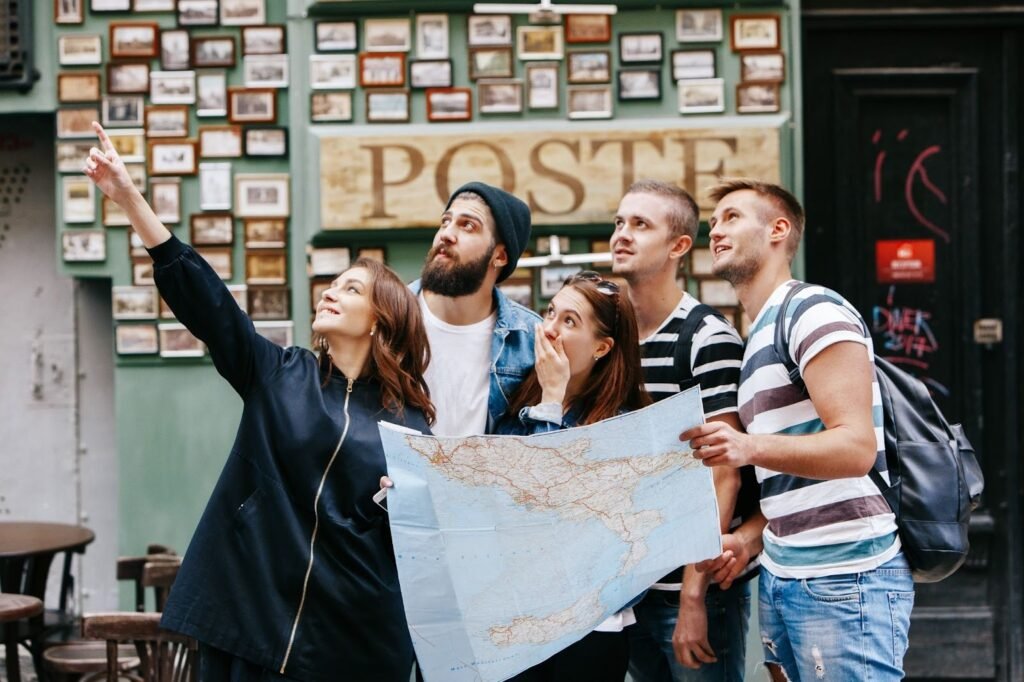
When planning large group travel for corporate retreats and team building, think beyond the ordinary. Consider beachfront resort retreats where work meets relaxation, with stunning ocean views and sunset bonfires to build camaraderie. For the adventurous, outdoor activities like ropes courses and city scavenger hunts can boost teamwork and problem-solving skills. Wellness escapes provide mindfulness sessions and spa treatments to rejuvenate your team, while cultural immersion experiences foster creativity through cooking classes and local arts. Unique venues like art galleries or botanical gardens also inspire collaboration. There’s much more to explore to find the perfect fit for your team!
KEY TAKEAWAYS
- Consider relaxation and wellness retreats at beachfront resorts for inspiring workspaces and rejuvenating activities like yoga and spa treatments.
- Engage in adventure and outdoor activities, such as ropes courses and scavenger hunts, to strengthen teamwork and foster creativity.
- Participate in cultural immersion experiences through cooking classes and artisan workshops to enhance collaboration and appreciation of local traditions.
- Explore unique venues like art galleries or historical landmarks to inspire creativity and promote deeper connections among team members.
- Organize community engagement and service trips to strengthen teamwork and positively impact local communities while enhancing organizational reputation.
BEACHFRONT RESORT RETREATS
When planning a corporate retreat, beachfront resort retreats are often a top choice for teams looking to blend work and relaxation seamlessly. Group vacation packages shine when logistics are taken off your plate. Many families love the ease of all-inclusive resorts, guided tours or themed cruise options. With access to customizable family vacation packages, you can focus on quality time while your travel advisor handles the details. Whether it’s arranging adjoining rooms or planning sightseeing routes, every element can be personalized. If your crew prefers time at sea, family cruise vacation packages combine entertainment, dining and multiple international stops; making it easy to please each and every family member.
Picture yourself and your colleagues waking up to the soothing sound of waves crashing against the shore, the salty breeze inviting you to step outside. These serene environments not only stimulate creativity but also foster strong team bonds.
During the day, you can host productive meetings in well-equipped conference rooms that overlook the ocean, allowing the stunning views to inspire innovation.
But it’s not all about work! Take advantage of the resort’s amenities by participating in seaside yoga sessions, where you can stretch and rejuvenate your mind while feeling the sand beneath your feet. This invigorating experience helps cultivate mindfulness, setting a positive tone for your team’s discussions.
As the sun sets, gather around for beach bonfire gatherings. There’s something magical about the flickering flames and the sound of laughter echoing against the backdrop of the rolling surf.
Share stories, roast marshmallows, and enjoy each other’s company under a starlit sky. This relaxed yet engaging atmosphere fosters camaraderie, allowing for deeper connections that can translate into improved teamwork back at the office.
In essence, beachfront resort retreats offer an ideal blend of productivity and leisure, making them a perfect setting for your next corporate gathering.
Embrace the freedom to explore both work and play, creating lasting memories while achieving your team’s goals.
Adventure and Outdoor Activities
Get ready to ignite your team’s spirit with thrilling outdoor challenges that push everyone to their limits. Traveling with a large group can be wonderful. Bigger numbers mean more people to do things with, more memories to be made, and more folks to split expenses between. But without careful planning, group trips can also be miserable. There’s nothing worse than misaligned expectations, budgets, and disagreements about the adventure ahead.
Imagine maneuvering a ropes course or conquering a group kayak race, all while strengthening bonds and enhancing teamwork.
Plus, nature-based workshops can help you harness creativity and foster collaboration, making your retreat not just adventurous but also impactful.
Thrilling Team Challenges
Adventure awaits your team as they plunge into thrilling challenges that not only test their limits but also foster collaboration and camaraderie.
Envision this: your group divided into teams, racing against the clock to solve puzzles that enhance problem solving and communication skills. These leadership exercises push everyone to engage, driving creative collaboration and trust building.
As you navigate obstacle courses or set out on a scavenger hunt, the competitive spirit ignites, encouraging participants to strategize and align their goals. Each challenge is designed to boost team dynamics, tapping into individual strengths while reinforcing the importance of resilience training.
Imagine your team scaling heights, overcoming fears, and cheering each other on—each moment solidifying bonds that stretch beyond the retreat.
These outdoor activities not only invigorate but also create lasting memories that shape your organization’s culture.
Nature-Based Workshops
Surrounded by the beauty of nature, your team can engage in invigorating workshops that blend adventure with personal growth. Picture hiking through lush forests or kayaking in serene lakes, all while fostering teamwork and communication.
Nature-based workshops are perfect for energizing your group and encouraging collaboration in a relaxed setting. You’ll explore activities that emphasize eco-friendly practices, teaching your team how to connect with the environment while respecting it.
Imagine participating in a tree-planting session, where each member contributes to a greener future. These hands-on experiences not only build camaraderie but also instill a sense of responsibility towards nature.
Incorporating mindfulness exercises enhances the experience further. Guided meditations amidst tranquil surroundings will help your team center themselves, promoting mental clarity and creativity.
These moments of reflection enable everyone to recharge, making them more present and engaged.
Urban Exploration Getaways
Urban exploration getaways offer a unique way to bond with your team while discovering the heartbeat of a city. At its best, travel has a way of making every daily anxiety feel absolutely insignificant. And at its worst, even the tiniest mishaps, like the wrong ingredients in the paella, feel like the end of the world. This is even more the case on group trips, when you’re dealing with people of different ages, needs, and activity levels, or traveling with a group of friends of friends, where you’re close with some and not quite as comfortable with others. When you’re trying to accommodate everyone’s travel wishes, but somehow end up pleasing nobody. And of course, that moment when you realize you’re going to need a vacation to recover from this vacation.
Imagine commencing on a thrilling scavenger hunt that leads you through hidden gems, or indulging in a cultural food tour that tantalizes your taste buds.
With adventure activities at your fingertips, you’ll create unforgettable memories and strengthen connections in an exciting urban landscape.
City Scavenger Hunts
A bustling cityscape filled with hidden gems and vibrant culture awaits you in a city scavenger hunt, where teams initiate an engaging quest to uncover local secrets. This adventure is more than just a fun outing; it fosters camaraderie and strengthens team dynamics as participants work together to solve clues and complete challenges.
As you explore, you’ll uncover fascinating snippets of local history that connect you to the city’s heartbeat. Each discovery sparks conversations and enhances collaboration, making it an ideal choice for corporate retreats.
| Activity | Benefit |
| Clue Solving | Boosts critical thinking |
| Team Photo Challenges | Encourages creativity |
| Local History Facts | Enhances cultural awareness |
Imagine wandering through vibrant streets, discovering quirky shops, and snapping photos at iconic landmarks—each moment is an opportunity to bond with your team. A city scavenger hunt not only invigorates your spirit of exploration but also ignites a sense of freedom as you navigate the urban landscape together. So, gather your colleagues, and get ready to set forth on an unforgettable journey!
CULTURAL FOOD TOURS
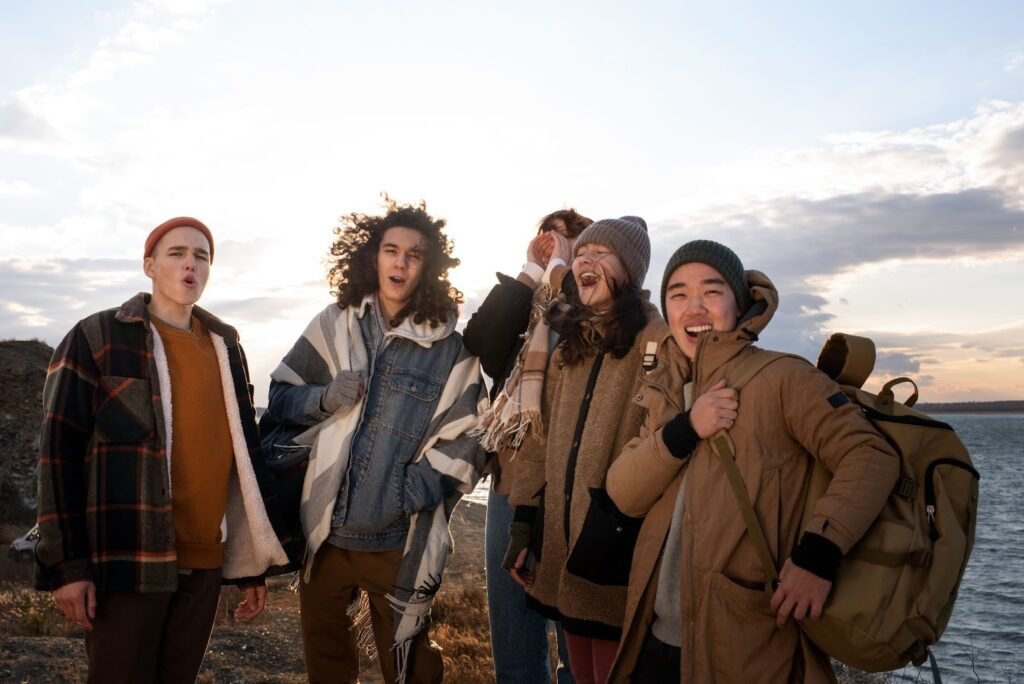
After uncovering the hidden treasures of a city through a scavenger hunt, why not continue your adventure by indulging in its culinary delights? Cultural food tours offer a perfect way to explore local flavors while bonding with your team.
Picture yourself wandering through vibrant markets, tasting exotic spices, and savoring authentic dishes that tell the story of the region. These gastronomic experiences take you beyond mere eating; they immerse you in the culture—similar to how travelers seek out the best places to solo travel for authentic, personal connections with a destination.
You’ll learn about traditional cooking techniques and the history behind each dish. Many tours even offer culinary workshops, where you can roll up your sleeves and create your own meals, guided by talented chefs. Imagine crafting a pasta dish in Italy or mastering sushi in Japan—these hands-on experiences foster collaboration and creativity within your group.
As you feast on local delicacies, you’ll not only nourish your body but also strengthen team bonds. Sharing a meal is one of the most universal ways to connect.
Adventure Activities Options
Beginning an adventure activity getaway opens up a world of excitement and discovery right in the heart of the city. Urban exploration isn’t just about sightseeing; it’s about forging connections through team bonding while steering through new experiences together, and even sharing practical backpacking tips for navigating busy city routes efficiently as a group.
You’ll find that these activities not only spark joy but also enhance camaraderie among your colleagues.
Consider these thrilling options for your next corporate retreat:
- Escape Rooms: Challenge your problem-solving skills while racing against the clock. It’s a fantastic way to build trust and teamwork through shared goals.
- City Scavenger Hunts: Release your creativity and strategic thinking as you work together to uncover hidden treasures in your city, balancing fun with risk management.
- Guided Urban Adventures: Explore local history or street art with a knowledgeable guide, merging learning with adrenaline as you traverse unique neighborhoods.
Wellness and Spa Escapes
Imagine stepping into a serene oasis where the hustle and bustle of everyday life fades away, leaving you rejuvenated and centered. A wellness and spa escape is the perfect way to bond with your team while investing in self-care and personal growth.
Picture yourself surrounded by lush landscapes, soothing sounds, and the gentle aroma of essential oils wafting through the air.
During your retreat, you can participate in mindfulness meditation sessions that help cultivate awareness and bring peace to your mind. Engage in invigorating yoga retreats designed to stretch your body and enhance your spirit.
Spa treatments await you, offering everything from soothing massages to revitalizing facials that melt away tension and stress, turning your retreat into a meaningful self care activity that nurtures both individual well-being and team connection.
Delve deeper into holistic healing through wellness workshops that focus on stress management techniques and emotional well-being. Nutrition seminars will empower you with knowledge on how to fuel your body effectively, while fitness classes keep your energy levels high and spirits lifted.
These experiences not only promote individual growth but also strengthen team dynamics. As you all share in these transformative activities, bonds deepen, and a sense of camaraderie flourishes.
You’ll return to work not just refreshed and invigorated but also more connected to one another. So, why not escape the ordinary and embrace a wellness retreat that nurtures both body and soul? Your team deserves this liberating experience.
Cultural Immersion Experiences
Cultural immersion experiences offer a unique opportunity for your team to dive deep into the local traditions, customs, and flavors of a destination, creating lasting memories and connections.
Engaging with a culture beyond the typical tourist attractions fosters creativity and strengthens bonds among team members.
Imagine your group participating in hands-on cultural workshops, where you can learn traditional crafts or culinary techniques directly from local artisans. This not only enhances team collaboration but also enriches your understanding of the community you’re visiting.
Here are three ideas to contemplate for your retreat:
- Cooking Classes: Release your inner chefs by learning to prepare authentic regional dishes, sharing meals that reflect local flavors.
- Artisan Workshops: Engage in pottery, weaving, or painting sessions led by local artists, allowing team members to express their creativity while supporting local talent.
- Cultural Festivals: Plan your retreat around local festivities, where your team can experience vibrant celebrations, music, and dance, immersing themselves in the community’s spirit.
Unique Venue Options
When it comes to selecting a venue for your corporate retreat, thinking outside the box can lead to an unforgettable experience. Imagine hosting your team in a stunning art gallery, surrounded by inspiring works that spark creativity and conversation.
These vibrant spaces not only provide a unique backdrop but also encourage collaboration and innovative thinking. Plus, many galleries offer customizable packages, ensuring your needs are met while promoting local culture.
Alternatively, consider holding your retreat at a historical landmark. These venues often boast rich stories and enchanting architecture that can add depth to your experience.
Picture your team gathered in a restored warehouse or a grand estate, engaging in team-building exercises amidst an atmosphere steeped in history. It’s a setting that fosters connection—both with each other and the past.
You might also explore outdoor venues like botanical gardens or nature reserves, where you can blend team activities with the beauty of nature.
The fresh air and serene surroundings can rejuvenate your spirit, making for a productive and enjoyable retreat.
Volunteer and Service Trips
Engaging in volunteer and service trips not only strengthens team bonds but also transforms your corporate retreat into a meaningful experience. By immersing yourselves in community engagement, you’ll cultivate a sense of purpose and connection that goes beyond the office walls.
These trips can foster skill development, enhance leadership training, and empower your workforce while making a real social impact.
Consider the benefits of participating in a service trip:
- Local Partnerships: Collaborating with nonprofits allows you to support community initiatives while building valuable connections.
- Cultural Exchange: Engaging with different cultures broadens perspectives, encouraging creativity and innovative problem-solving.
- Environmental Stewardship: Projects focused on sustainability help your team contribute positively to the planet.
As your team works together on meaningful projects, you’ll experience profound team bonding. Whether it’s rebuilding homes, organizing food drives, or participating in environmental clean-ups, each activity serves as a powerful reminder of the importance of teamwork and collaboration.
Nonprofit collaboration not only amplifies your social impact but also enhances your organization’s reputation. By investing in these experiences, you’re creating opportunities for personal growth, deeper relationships, and a commitment to creating a positive change.
Transform your corporate retreat into a journey that empowers your workforce while leaving a lasting legacy in the communities you serve. Ultimately, a volunteer and service trip can redefine your team’s dynamics, resulting in a more engaged and motivated workforce ready to tackle any challenge.
RELATED STUDIES ABOUT LARGE GROUP TRAVEL IDEAS
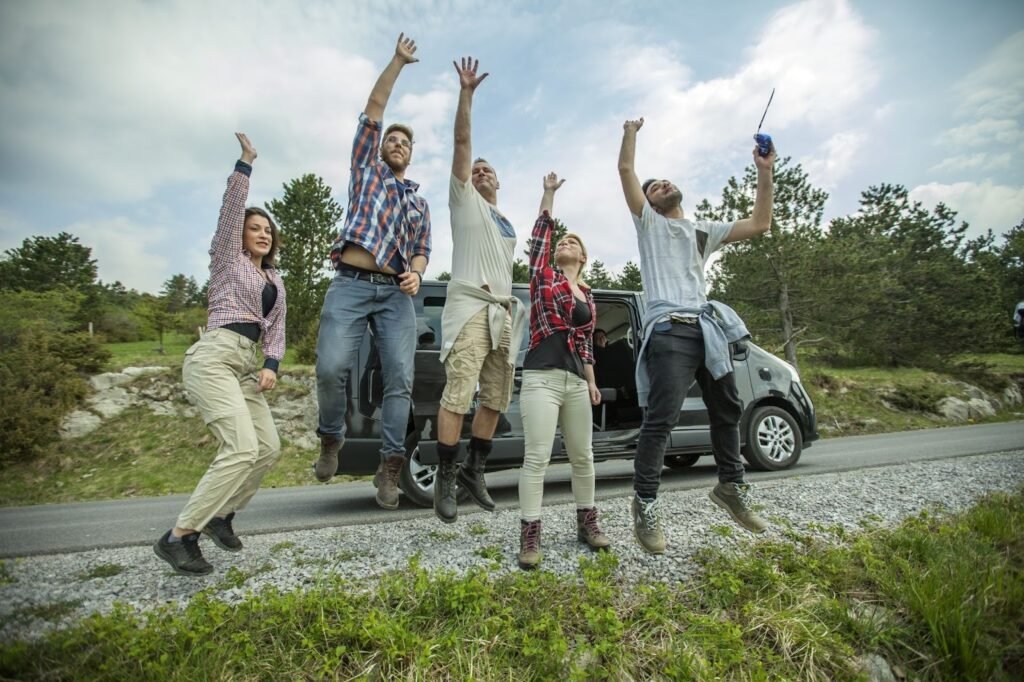
As you plan your next corporate retreat, imagine your team forging bonds like roots intertwining in rich soil, growing stronger together. Whether you choose the soothing waves of a beachfront resort or the thrill of outdoor adventures, each experience can rejuvenate spirits and spark creativity. Urban explorations and cultural immersions offer vibrant backdrops, while wellness escapes and unique venues inspire fresh ideas. Embrace this chance to unite your team, turning challenges into triumphs and colleagues into a cohesive force.
Integrating Hybrid Recurrent Neural Networks and Large Language Models for Daily Travel Behavior Prediction
Background and Problem Statement
Accurate prediction of individual travel behavior—including trip purpose, frequency, and mode choice—is essential for transportation planning, infrastructure investment, and policy development. Traditional modeling approaches (rule-based systems, discrete choice models, and conventional machine learning) face limitations in capturing the complex, sequential, and contextual nature of daily travel decisions. This study addresses these gaps by introducing a novel two-stage hybrid framework that integrates deep learning with large language models (LLMs).
Methodology
- Data Source: U.S. National Household Travel Survey (NHTS) 2022, covering over 100,000 households with detailed socioeconomic attributes and travel diaries.
- Stage 1 – Trip Purpose and Frequency Prediction:
- A Hybrid Long Short-Term Memory network with Two-Dimensional Attention and Residual Network processes socioeconomic features (income, age, household size, vehicle ownership, employment, etc.) to predict:
- Trip purpose across 10 categories (home, work, school, medical, shopping, social, transport someone, meals, other, stay home)
- Daily trip count per individual
- A Hybrid Long Short-Term Memory network with Two-Dimensional Attention and Residual Network processes socioeconomic features (income, age, household size, vehicle ownership, employment, etc.) to predict:
- The model operates on 48 half-hour time segments per day, incorporating sequential look-back features and positional timing data.
- Stage 2 – Mode Choice Prediction:
- Outputs from Stage 1 (predicted trip purposes and counts) are combined with original socioeconomic data and transformed into structured natural language prompts. These prompts are used to fine-tune a BERT-based LLM (textattack/bert-base-uncased-imdb) to predict mode choice across four categories: personal vehicle, public transit, walking, and other modes.
Key Findings
Stage 1 Performance:
- Accuracy: 0.82 (on imbalanced test set) | 0.52 (on balanced 10-class set)
- Trip count prediction MAE: 0.77 trips per person
- Purpose distribution MAE: ~3.1 percentage points
- Outperformed MNL, SVM, Random Forest, Decision Tree, ANN, LSTM, and ConvLSTM benchmarks
Stage 2 Performance:
- Mode choice accuracy: 0.82
- Class-wise accuracy: personal vehicle (0.83), public transit (0.96), walking (0.94), other modes (0.89)
- Outperformed all benchmark models; achieved 0.94 accuracy when using ground-truth Stage 1 inputs
Sensitivity Analysis:
- Stage 1: Temporal features (time of day, travel day) and demographic attributes (age, student status, employment) dominate predictions
- Stage 2: Race, life cycle stage, vehicle ownership, and urban area size are strongest predictors; income and employment show weaker direct effects
Contributions
- Novel hybrid architecture combining sequential deep learning with LLM-based classification for travel behavior prediction
- Two-stage decomposition that assigns temporal/sequential modeling to LSTM networks and contextual reasoning to LLMs, improving accuracy and interpretability
- Demonstrated feasibility of using fine-tuned open-source LLMs as structured classifiers for mode choice using textually encoded travel diaries
- Rigorous validation including ablation studies, accuracy@k metrics, confusion matrices, and permutation feature importance analysis
Limitations and Future Work
- Omitted variables: Travel cost, time, and access distance were excluded to isolate socioeconomic signals; integration planned for future extensions
- Dataset constraints: Reliance on secondary public data; future work should incorporate primary surveys with documented response rates
- LLM scale: Current study uses a small BERT-based model; larger models (Llama2-7b, GPT-4) may improve performance but require caution regarding hallucinations
- Bias considerations: High importance of race in mode choice predictions warrants further investigation and potential debiasing
Policy and Planning Implications
The model demonstrates that robust travel behavior predictions can be achieved using only socioeconomic and activity sequence data, offering a viable pathway for agencies with limited access to detailed cost or time-use datasets. The framework enables:
- Identification of demographic segments most likely to change behavior
- Targeting of outreach, subsidy, or transit investment programs
- Integration into activity-based microsimulation models
Future incorporation of cost and time variables will allow direct modeling of price elasticity and level-of-service impacts, strengthening the framework’s utility for policy evaluation.
Conclusion: This study presents a scalable, interpretable, and high-performing hybrid framework that advances the state of the art in travel demand modeling by bridging sequential deep learning and large language model capabilities.
| REFERENCE: Diyako Sharifi, Hamid Mirzahossein, Navid Kalantari, Farhad Sedighi, Integrating hybrid recurrent neural networks and large language models for daily travel behavior prediction, Transportation Research Interdisciplinary Perspectives, Volume 35, 2026, 101793, ISSN 2590-1982, https://doi.org/10.1016/j.trip.2025.101793. (https://www.sciencedirect.com/science/article/pii/S2590198225004725) |
Active Travel Street Intervention Ideas in Malta: Evaluating Citizen Feedback Using Sentiment Analysis
Background and Problem Statement
Malta is a highly car-dependent Mediterranean island nation, with over 84% of trips made by private vehicle and minimal active travel (walking 7%, cycling 0.5%). This dependence contributes to severe congestion, environmental degradation, sedentary behavior, and the highest adult overweight rate in Europe (62.5%). While policy plans for street experiments and tactical urbanism exist, meaningful citizen participation in the planning process remains a critical gap. This study addresses the need for innovative participatory methods to understand public perceptions of active travel interventions in car-dominated contexts.
Methodology
- Research Tool: A purpose-built Virtual Urban Living Lab (VULL)—an online participatory platform enabling citizens to evaluate, provide feedback on, and co-create street intervention ideas.
- Participants: 113 residents of Malta’s Principal Urban Area (60% male, 40% female; mean age 39.3 years). Recruitment via social media; sample reflects national car dependency (58.9% primary car users).
- Interventions Evaluated: Five stakeholder-proposed street redesign ideas (government, NGO, academia, private entity, citizen group) presented as before/after illustrations with descriptions. Ideas included:
- Colored walking lanes, signage, and green strips
- Traffic re-routing to create open public spaces
- Removal of on-street parking for greenery, benches, and wider pavements
- Cycle lane additions with signage
- Conversion of angled to parallel parking with two-way cycle lanes
- Data Collection (December 2023):
- Quantitative: 1–5 rating scale (strongly disagree to strongly agree)
- Qualitative: Open-ended feedback comments (565 total comments across five ideas)
- Interactive ideation: Virtual sticky-note board for citizen-proposed ideas with upvoting
- Analytical Approach: Sentiment analysis using ChatGPT-4 (zero-shot prompting) to classify feedback as positive, negative, or neutral and extract thematic insights. Manual spot-checking validated LLM outputs.
Key Findings
- Quantitative Ratings:
- All five ideas received positive average ratings (>3.0/5.0)
- NGO-proposed idea (traffic re-routing for public space) ranked highest: 4.38/5.0 (87.6% positive)
- Government-proposed idea (colored walking lane, signage) ranked lowest: 3.42/5.0 (23.9% negative)
Sentiment Analysis Results:
- Positive Sentiments:
- Enthusiasm for greenery, wider pavements, and safe cycling infrastructure
- Appreciation for designs that create community spaces and social cohesion
- Recognition of potential health, environmental, and quality-of-life benefits
- Strong support for traffic calming in residential streets (most upvoted citizen idea: 26 votes)
- Negative Sentiments & Concerns:
- Skepticism about painted, non-segregated cycle lanes (dooring risk, inadequate protection)
- Fear that signage alone will not reduce speeds without enforcement
- Opposition to parking removal without improved public transport alternatives
- Concerns about maintenance of greenery and feasibility in narrow streets
- Helplessness regarding pre-approved car-oriented infrastructure projects
- Neutral/Qualified Feedback:
- Calls for holistic, connected walking and cycling networks rather than isolated interventions
- Requests for complementary measures (public transport upgrades, enforcement, education)
- Context-specific observations about land use, school zones, and local traffic patterns
Citizen-Proposed Ideas (Top Upvoted):
- Traffic calming measures in residential streets (chicanes, greenery, speed tables) – 26 votes
- Safe walking streets connecting major destinations – 25 votes
- Pedestrian priority in village cores – 25 votes
- Enforcement of slower speeds – 25 votes
Discussion
Key Insights for Policy and Practice:
- Receptiveness Exists: Despite deep car dependence, Maltese citizens demonstrate openness to active travel interventions when designs are perceived as safe, attractive, and context-appropriate.
- Parking Is a Flashpoint: Removal of on-street parking remains highly contentious. Success requires coupling parking restrictions with visible, credible alternatives (improved public transport, centralized parking facilities).
- Networks Matter More than Segments: Citizens reject piecemeal cycling infrastructure; demand is for connected, island-wide networks that enable safe, practical door-to-door active travel.
- Community Space as a Driver: Interventions that reclaim streets for social interaction and public life generate strong positive sentiment and align with citizen aspirations for liveable neighbourhoods.
- Trust and Timing: Pre-approval of car-oriented infrastructure projects during participatory processes fosters cynicism and undermines engagement. Citizen input must occur before decisions are finalized.
- LLMs as Analytical Tools: ChatGPT-4 demonstrated high capability in classifying sentiment, extracting nuanced concerns, and processing qualitative data at scale, offering a time- and resource-efficient alternative to manual coding.
Limitations
- Small sample size (n=113) and short data collection window (one week)
- Recruitment via social media may over-represent individuals already sympathetic to active travel
- Digital divide may exclude vulnerable populations (though Malta has high digital literacy)
- Zero-shot sentiment analysis, while effective, requires manual validation to ensure accuracy
- English-only feedback; Maltese-language responses not captured
Conclusions and Recommendations
For Urban Planners and Policymakers:
- Adopt hybrid participatory approaches combining virtual tools (VULLs) with in-person engagement to ensure inclusive, representative input.
- Prioritize connected infrastructure over isolated pilot projects; develop walking and cycling networks with clear routes to key destinations.
- Pair parking removal with visible alternatives and communicate the package clearly to the public.
- Invest in traffic enforcement (speed cameras, parking controls) to complement physical infrastructure.
- Engage citizens early—before tenders are issued or contracts awarded—to build trust and meaningful co-ownership.
For Researchers:
- Further validate LLM applications in transport planning for sentiment, thematic, and aspect-based analysis of citizen feedback.
- Explore hybrid LLM–human workflows to balance automation efficiency with contextual interpretation.
- Extend VULL methodologies to other car-dependent contexts and compare cross-cultural responses to active travel interventions.
Conclusion: This study demonstrates that virtual urban living labs, combined with AI-driven sentiment analysis, offer a scalable, efficient, and insightful approach to understanding public perceptions of active travel interventions. In car-dependent Malta, citizens are not opposed to change—they are demanding better-designed, well-connected, and genuinely people-centered urban streets. The challenge for policymakers is not a lack of public will, but a failure to harness it through timely, transparent, and credible engagement processes.
| REFERENCE: Karyn Scerri, Maria Attard, Active travel street intervention ideas in Malta: Evaluating citizen feedback using sentiment analysis, Journal of Transport Geography, Volume 126, 2025, 104241, ISSN 0966-6923, https://doi.org/10.1016/j.jtrangeo.2025.104241. (https://www.sciencedirect.com/science/article/pii/S0966692325001322) |
Academic Travel From Above And Below: Institutions, Ideas, And Interests Shaping Contemporary Practices
Study Objective:
This study investigates the political and structural complexities behind efforts to reduce academic air travel. Despite universities’ formal commitments to carbon neutrality and the UN Sustainable Development Goals (SDGs), travel-related emissions often account for over one-third of university carbon footprints, and sustainable alternatives remain underutilized. The authors ask: How can universities work toward coherently enabling alternatives to flying with respect to all dimensions of sustainable development?
Methodology:
- Framework: The 3Is framework (Institutions, Ideas, Interests) was used to analyze policy coherence and the socio-political dynamics of travel reduction.
- Cases: Two climate research centers in Northern Europe:
- Centre for Climate and Energy Transformation (CET), University of Bergen (UiB), Norway
- Copernicus Institute of Sustainable Development, Utrecht University (UU), Netherlands
- Methods: Participant observation, semi-structured interviews (n=16), and analysis of travel policy documents.
Key Findings:
- Institutions: Structural Constraints vs. Policy Ambition
- UiB (Norway): National regulations mandate using the cheapest mode of travel, which in practice favors flying. The university travel agency cannot book ground transport abroad, making sustainable travel difficult. A lack of centralized emissions data prevents effective monitoring.
- UU (Netherlands): A binding policy requires train travel for distances under 700 km, with exceptions for special cases. However, no monitoring system exists, making the policy unenforceable in practice. Researchers are often unaware of existing alternatives (e.g., video studios, train compensation schemes).
- Ideas: Entrenched Norms and the “Good Science” Paradigm
- Air travel is deeply embedded in academic culture as a symbol of success, productivity, and networking.
- There is a widespread knowledge-action gap: even sustainability researchers fly frequently, justifying it as necessary for career progression and research efficiency.
- Both universities lack formal procedures requiring researchers to reflect on the environmental impact of their travel as part of project design.
- Interests: Uneven Power, Unequal Burdens
- Senior academics (who fly the most) are essential for cultural change, yet face the fewest barriers to flying.
- Junior staff, caregivers, and those with limited financial resources are disproportionately disadvantaged by policies that promote sustainable travel without providing adequate time or funding.
- At UU, the 700 km rule risks creating a two-tier system: those with resources can still fly long distances; those without may be grounded, potentially harming their career prospects.
- At UiB, departmental efforts to fund sustainable travel were overruled by faculty-level financial regulations, illustrating limited decentralized agency.
Conclusions:
- Reducing academic air travel is not a technical or behavioral choice problem, but a political and structural one.
- The 3Is framework reveals that policy incoherence arises from conflicting priorities across governance levels (state, university, faculty, individual).
- Mobility justice is a critical but overlooked dimension: current policies risk exacerbating inequalities rather than resolving them.
- The COVID-19 pandemic normalized remote participation, but this window has not been fully leveraged for systemic change.
Recommendations:
- For Universities & Policymakers:
- Grant departments greater autonomy to experiment with and fund sustainable travel alternatives.
- Develop robust monitoring systems to track travel emissions and policy compliance.
- Explicitly consider equity and accessibility in travel policy design (e.g., funding for overnight trains, support for caregivers).
- For Researchers & Academic Culture:
- Initiate collective, critical conversations on what constitutes “good science” in an era of climate crisis.
- Reward low-carbon practices (e.g., virtual networking, collaborative data collection) in hiring, tenure, and funding evaluations.
- For Funders:
- Require Carbon Management Plans for grant applications (as piloted by CET).
- Allow budget flexibility for slower, low-carbon travel options.
Overall Significance:
This study demonstrates that achieving low-carbon academic mobility requires more than individual behavior change or symbolic policy pledges. It demands institutional realignment, ideological reflection, and redistributive justice. The findings are relevant beyond academia, offering insights into the politics of decarbonization in organizations with deep-rooted mobility dependencies.
| REFERENCE: Nikki J.J. Theeuwes, Shayan Shokrgozar, Veronica L. Ahonen, Academic travel from above and below: Institutions, ideas, and interests shaping contemporary practices, Energy Research & Social Science, Volume 119, 2025, 103890, ISSN 2214-6296, https://doi.org/10.1016/j.erss.2024.103890. (https://www.sciencedirect.com/science/article/pii/S221462962400481X) |