
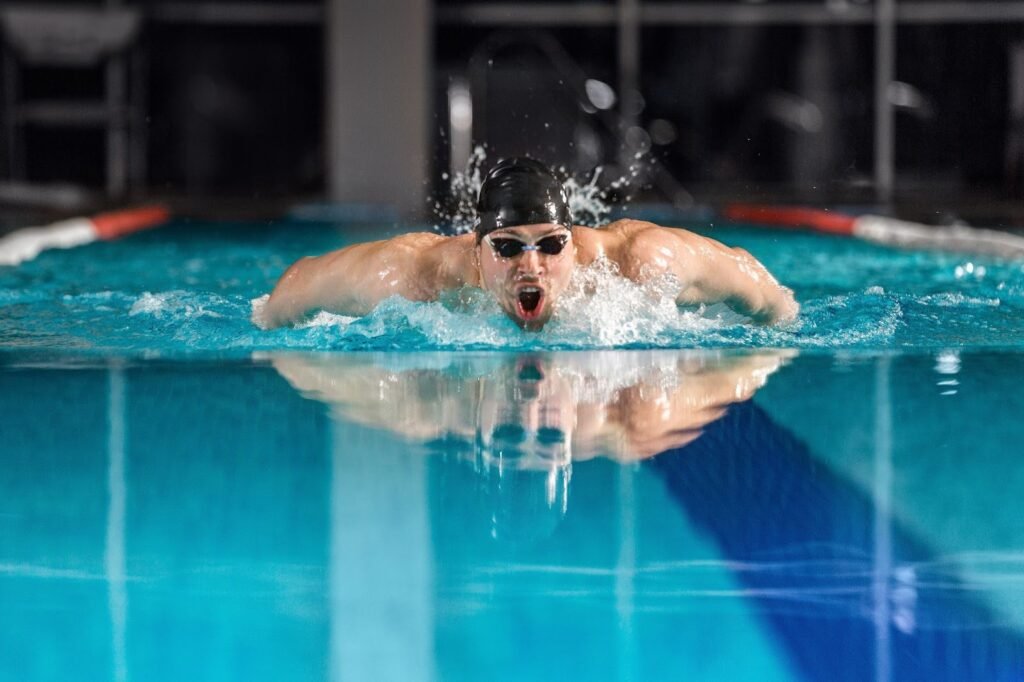
Swimming can be a game-changer for your mental health, dramatically reducing stress and enhancing mood. As you glide through the water, your body releases endorphins, creating feelings of happiness and relaxation. The rhythmic nature of swimming fosters mindfulness, allowing you to focus on the present and escape racing thoughts. Engaging with a swim community also builds social connections, further boosting your emotional well-being. Plus, the calming effects of water help improve sleep quality and promote resilience against daily challenges. If you’re curious about how these elements work together, you might want to explore further benefits and techniques associated with swimming.
KEY TAKEAWAYS
- Swimming releases endorphins, enhancing mood and promoting feelings of happiness and euphoria.
- Engaging in swimming fosters mindfulness, allowing individuals to focus on breath and movement, reducing stress and anxiety.
- Regular swimming improves sleep quality, helping to regulate sleep patterns and promote relaxation.
- Joining swim clubs nurtures social connections, fostering a sense of community and support that enhances mental health.
- The calming effects of water and hydrotherapy provide therapeutic relief, reducing anxiety and promoting overall emotional well-being.
ENHANCED MOOD AND HAPPINESS
Swimming isn’t just a fantastic workout; it’s also a powerful mood enhancer. When you plunge into the water, you’re not only engaging in a form of aquatic exercise but also setting the stage for a significant endorphin release. These natural chemicals, often referred to as “feel-good hormones,” can elevate your mood and create a sense of euphoria. Research shows that physical activity, especially swimming, stimulates the production of endorphins, which leads to improved emotional well-being.
As you glide through the water, the rhythmic movements can help you focus on the present moment, providing a revitalizing escape from daily stressors. This focus allows you to connect with your body and mind, creating a meditative experience that further enhances your happiness. The soothing properties of water can also amplify this effect, promoting relaxation and tranquility.
Moreover, swimming provides a sense of freedom that few other activities can match. Just as understanding hiking benefits for legs can motivate you to tackle trails, the buoyancy of water allows you to move with ease, liberating your body from the constraints of gravity. The buoyancy of water allows you to move with ease, liberating your body from the constraints of gravity. This sensation of weightlessness can be incredibly liberating, making you feel light and unburdened.
Whether you’re swimming laps or simply enjoying a leisurely float, you’re embracing an experience that promotes mental clarity and emotional stability.
Stress Reduction Techniques
Engaging in swimming offers more than just an uplifted mood; it also serves as an effective self care activity to manage stress and anxiety.
When you immerse yourself in the water, you’re not just exercising; you’re tapping into a powerful way to manage stress and anxiety.
Here are three stress reduction techniques you can incorporate into your swimming routine:
- Breathing Exercises: Focus on your breath as you swim. Inhale deeply through your nose and exhale through your mouth. This rhythmic breathing not only enhances your performance but also calms your mind, helping you to release tension.
- Relaxation Techniques: Utilize the soothing properties of water to practice relaxation. As you glide through the pool, visualize your worries floating away. You can even take a moment to float on your back, allowing the water to support you while you let go of stress.
- Mindful Swimming: Pay attention to your movements and the sensations of the water against your skin. This practice can help you stay present, reducing racing thoughts and promoting mental clarity.
Mindfulness in Water
Plunging into the water can transform your swimming experience into a practice of mindfulness, where every stroke becomes an opportunity to connect with the present moment. As you glide through the water, focus on your breath control—inhal deeply as you prepare to plunge beneath the surface, and exhale steadily as you swim. This rhythmic breathing not only fuels your body but also anchors your mind, fostering a sense of tranquility.
Embracing the concept of aquatic meditation, you can immerse yourself in the sensations of the water, similar to how following effective hiking tips can enhance your outdoor experiences. Feel the cool embrace as it washes over your skin, the gentle resistance as your limbs move, and the way the water cradles you. By tuning into these sensations, you can quiet the chatter of daily life, allowing your thoughts to drift away like leaves on the surface.
Swimming provides a unique environment for mindfulness, as the water’s buoyancy lets you float with ease, freeing you from gravity’s constraints. Combine this with focused breath control, and you’ll create a meditative state that enhances your mental clarity and emotional well-being.
As you practice this mindfulness in water, you might find that the stresses of the day dissolve, replaced by a deep sense of peace and connection. Each swim can serve as a reminder to slow down, breathe, and be present, ultimately leading to improved mental health and a renewed sense of freedom.
Social Connections Through Swimming
The camaraderie found in a swimming environment can greatly enhance your mental health by fostering social connections. When you immerse yourself in the world of swimming, you’re not just improving your physical fitness; you’re also opening the door to a vibrant community. For people with fibromyalgia, swimming can decrease anxiety, and exercise therapy in warm water can decrease depression and improve mood.
Here’s how swimming can help you build those essential bonds:
- Join Swim Clubs: Being part of a swim club allows you to meet like-minded individuals who share your passion. This sense of belonging can lead to lasting aquatic friendships.
- Participate in Group Lessons: Engaging in group lessons provides an opportunity to learn together and support one another. You’ll find that the encouragement from peers can make all the difference in your swimming journey.
- Attend Social Gatherings: Swim clubs often organize recreational outings and social gatherings, which can help strengthen your connections outside the pool. These events foster an enjoyable atmosphere where you can unwind and socialize.
Improved Sleep Quality
Building strong social connections through swimming not only enhances your sense of community but can also lead to significant improvements in your overall well-being, including better sleep quality. Engaging in regular swimming sessions helps regulate your sleep patterns, allowing you to fall asleep faster and enjoy deeper, more restorative rest.
The rhythmic nature of swimming can serve as a form of meditation, encouraging relaxation both mentally and physically. When you swim, your body releases endorphins, which reduce stress and anxiety—two major culprits that often disrupt sleep. By incorporating swimming into your routine, you’re not just getting in shape; you’re also teaching your body to unwind effectively.
In addition to the physical exertion, swimming provides an excellent opportunity to practice relaxation techniques. Whether it’s focusing on your breath as you glide through the water or simply enjoying the sensation of weightlessness, these moments can help calm your mind. This state of relaxation can carry over into your nightly routine, making it easier to shift into sleep. One study showed that people with osteoarthritis reported significant reductions in joint pain and stiffness, and experienced less physical limitation after engaging in activities like swimming and cycling.
Moreover, swimming can help you establish a consistent schedule, which is essential for maintaining healthy sleep patterns. When you swim at the same time each day, your body starts to recognize when it’s time to wind down.
Ultimately, by embracing the freedom swimming offers, you’re taking a powerful step toward enhancing your sleep quality, giving you the energy you need to tackle your day with enthusiasm.

THERAPEUTIC EFFECTS OF WATER
Water has a unique ability to soothe both the body and mind, making it an invaluable ally in mental health enhancement. Engaging with water can open the door to profound relaxation and rejuvenation, provides an all-over body workout, as nearly all of your muscles are used during swimming..
Here are three compelling hydrotherapy benefits you can experience:
- Calming Effects: The gentle embrace of water can greatly reduce anxiety levels, helping you feel more centered and at peace.
- Sensory Immersion: Submerging yourself in water engages multiple senses, providing a rich sensory experience that pulls you away from daily stresses.
- Aquatic Relaxation: Floating or swimming can create a meditative state, allowing you to escape from your thoughts and reconnect with your inner self.
Through water therapy, you can tap into the therapeutic effects of water. Therapeutic swimming sessions not only enhance physical fitness but also cultivate mental clarity.
Float therapy, for example, allows you to experience weightlessness, fostering a sense of freedom and liberation from mental burdens.
Water meditation is another powerful tool. As you focus on the soothing sounds of water and the sensation of it against your skin, you can quiet your mind and alleviate stress.
The calming effects of hydrotherapy create a safe space for emotional release, promoting overall well-being.
Building Mental Resilience
Swimming can greatly enhance your mood regulation, making it easier to manage stress and anxiety.
As you paddle through the water, you’re not just exercising your body but also sharpening your coping strategies for life’s challenges.
This powerful combination helps build mental resilience, allowing you to bounce back more effectively from setbacks.
Enhanced Mood Regulation
Engaging in regular swimming can greatly enhance your mood regulation, helping you build mental resilience. As you glide through the water, you’re not just exercising your body; you’re also nurturing your mind.
Here’s how swimming can elevate your emotional well-being:
- Boosts Cognitive Function: Swimming increases blood flow to the brain, enhancing your cognitive abilities. This heightened mental clarity allows you to process emotions more effectively.
- Enhances Emotional Awareness: The rhythmic nature of swimming encourages mindfulness. You become more attuned to your body and feelings, fostering better emotional regulation.
- Releases Endorphins: Physical activity, especially swimming, releases endorphins—natural mood lifters. These chemicals can alleviate feelings of anxiety and sadness, making it easier for you to maintain a positive outlook.
Improved Coping Strategies
Building on the enhanced mood regulation that comes from swimming, you’ll also find that it equips you with improved coping strategies. When you immerse yourself in the water, you’re not just exercising your body; you’re actively training your mind to manage stress more effectively.
Swimming encourages adaptive behaviors, allowing you to face challenges with a more resilient mindset. As you glide through the water, the rhythmic motion can help you practice emotional regulation. You learn to channel anxiety and frustration into a focused and calming experience.
Research shows that regular swimmers report greater emotional stability and a more positive outlook on life. This newfound ability to cope with stress translates beyond the pool, giving you the tools to handle daily pressures with grace.
Moreover, the meditative quality of swimming fosters mindfulness, which further enhances your capacity to regulate emotions. You start to recognize triggers and respond with adaptive strategies rather than reacting impulsively.
Ultimately, swimming builds mental resilience, empowering you to tackle life’s obstacles with renewed confidence and strength. So, embrace the freedom of swimming, and watch as it transforms your approach to stress and adversity.

RELATED STUDIES ABOUT SWIMMING BENEFITS
Incorporating swimming into your routine can greatly enhance your mental health and reduce stress. Did you know that a study found just 30 minutes of swimming can elevate your mood for up to 24 hours? By embracing the calming effects of water, fostering social connections, and practicing mindfulness, you’re not only boosting your happiness but also building mental resilience. So, immerse yourself and make a splash for your well-being—your mind will thank you!
Lymphangiogenesis Contributes To Exercise-Induced Physiological Cardiac Growth
Objective: This study aimed to investigate whether cardiac lymphangiogenesis (the growth of lymphatic vessels in the heart) contributes to exercise-induced physiological cardiac growth and to uncover the underlying molecular mechanisms.
Key Findings:
- Link Between Exercise and Lymphangiogenesis: Three weeks of swimming exercise in mice induced physiological cardiac growth (adaptive heart enlargement) and was accompanied by a significant increase in cardiac lymphangiogenesis, evidenced by higher density of lymphatic vessels and upregulation of lymphatic markers (LYVE-1 and Podoplanin).
- Critical Role of VEGFR3: Vascular Endothelial Growth Factor Receptor 3 (VEGFR3) was upregulated in exercised hearts. Inhibiting VEGFR3 with the drug SAR131675 blocked the exercise-induced increase in lymphangiogenesis and also attenuated the physiological cardiac growth and associated cardiomyocyte hypertrophy and proliferation.
- Lymphatic Endothelial Cells (LECs) Promote Growth: Conditioned medium from human lymphatic endothelial cells (LECs) promoted both hypertrophy and proliferation of isolated neonatal rat cardiomyocytes. This effect was dependent on VEGFR3 activity, as pre-treating LECs with a VEGFR3 inhibitor blocked these pro-growth effects.
- Key Signaling Molecules: The LEC-conditioned medium contained higher levels of Insulin-like Growth Factor-1 (IGF-1) and the extracellular protein Reelin (RELN), which are potential mediators of the LEC-cardiomyocyte crosstalk.
- Underlying Mechanisms: The beneficial effects of LEC-conditioned medium on cardiomyocytes were mediated through:
- Activation of the protein kinase B (AKT) signaling pathway.
- Modulation of the C/EBPβ–CITED4 axis (downregulation of C/EBPβ and upregulation of CITED4).
- Exercise-induced activation of AKT and the C/EBPβ–CITED4 axis in mouse hearts was also blocked by VEGFR3 inhibition.
Conclusion: This study reveals that cardiac lymphangiogenesis, driven by VEGFR3 activation, is essential for exercise-induced physiological cardiac growth. LECs secrete factors (including IGF-1 and RELN) that promote cardiomyocyte hypertrophy and proliferation via AKT activation and the C/EBPβ–CITED4 signaling axis.
Significance: These findings identify the cardiac lymphatic system as a novel and crucial player in the heart’s healthy adaptation to exercise. This opens new avenues for research into leveraging lymphangiogenesis to promote myocardial protection and repair.
| REFERENCE: Yihua Bei, Zhenzhen Huang, Xing Feng, Lin Li, Meng Wei, Yujiao Zhu, Shuqin Liu, Chen Chen, Mingming Yin, Huimin Jiang, Junjie Xiao, Lymphangiogenesis contributes to exercise-induced physiological cardiac growth, Journal of Sport and Health Science, Volume 11, Issue 4, 2022, Pages 466-478, ISSN 2095-2546, https://doi.org/10.1016/j.jshs.2022.02.005. (https://www.sciencedirect.com/science/article/pii/S2095254622000370) |
Endurance Swimming and Increased Risk of Atrial Fibrillation
Objective: This letter reports preliminary survey findings from an ongoing case-control study investigating the potential link between long-term, high-intensity endurance swimming and the risk of atrial fibrillation (AF), a common heart rhythm disorder.
Key Findings:
- High Prevalence of AF in Swimmers: A survey of 73 elite competitive swimmers (average age 71) from a “Masters Swimming” group revealed a self-reported atrial fibrillation rate of 26%.
- Markedly Elevated Risk: This prevalence is nearly five times higher than the rate reported in the general population, suggesting a strong association between lifelong, intense endurance swimming and AF.
- Specificity of the Cohort: The study identifies swimming as an endurance activity associated with increased AF risk, adding it to the list of previously implicated sports like running, cycling, and orienteering.
Context and Significance:
- The findings align with existing literature that connects long-term endurance exercise to an increased incidence of atrial fibrillation.
- The proposed mechanisms (e.g., left atrial remodeling, increased vagal tone) apply broadly to endurance sports, and this study provides evidence specific to swimming.
- The authors note that while heightened self-awareness in athletes might lead to earlier diagnosis, the magnitude of the increased risk strongly indicates an exercise-induced effect.
Implications and Future Research:
- Clinical Question: The study raises the important question of whether the cardiovascular benefits of endurance exercise are outweighed by the potential risk of AF, and if exercise recommendations should be modified for certain individuals.
- Need for Further Investigation: The ongoing case-control study will delve deeper by:
- Comparing swimmers to age- and sex-matched non-athlete controls.
- Assessing other AF risk factors and history of cerebrovascular disease.
- Potentially incorporating electrocardiograms and echocardiograms to evaluate heart structure and function.
- Aiming to establish if there is a specific “threshold” of exercise volume or intensity that elevates AF risk.
Conclusion: Preliminary data from a cohort of elite, older endurance swimmers indicate a substantially higher prevalence of atrial fibrillation compared to the general public. This reinforces the association between long-term, high-intensity endurance sports and AF risk, highlighting the need for more targeted research to understand the risk-benefit balance and guide clinical recommendations.
| REFERENCE: Andrew D. Schreiner, Brad A. Keith, Walter A. Brzezinski, Endurance swimming and increased risk of atrial fibrillation, Journal of Sport and Health Science, Volume 5, Issue 2, 2016, Pages 246-247, ISSN 2095-2546, https://doi.org/10.1016/j.jshs.2015.03.004. (https://www.sciencedirect.com/science/article/pii/S2095254615000307) |
Neurogranin As An Important Regulator In Swimming Training To Improve The Spatial Memory Dysfunction Of Mice With Chronic Cerebral Hypoperfusion
Objective: This study investigated the molecular mechanism by which swimming exercise improves cognitive deficits caused by chronic cerebral hypoperfusion (CCH), with a focus on the role of the postsynaptic protein neurogranin (Ng).
Key Findings:
- Ng Knockout Impairs Cognition: Genetically engineered mice with a conditional knockout of the Ng gene in the nervous system showed significant impairments in spatial memory, confirming Ng’s essential role in cognitive function.
- Swimming Reverses Cognitive Deficits: In a mouse model of vascular cognitive impairment (VCI) induced by bilateral common carotid artery stenosis (BCAS), a 5-week swimming regimen successfully:
- Improved performance in spatial memory tests (T-maze and Morris water maze).
- Enhanced synaptic plasticity in the hippocampus, as measured by the restoration of long-term potentiation (LTP).
- Upregulated key proteins in the calcium signaling pathway (Ng, Calmodulin, CaMKII).
- Reduced neuronal death, neuroinflammation, and white matter injury.
- Ng is Critical for Exercise Benefits: The cognitive and synaptic improvements induced by swimming were abolished in Ng knockout mice. This demonstrates that Ng is a necessary mediator for the therapeutic effects of swimming on VCI.
- Proposed Mechanism: Swimming upregulates Ng expression in the hippocampus. This promotes calcium signaling (Ca²⁺/Calmodulin/CaMKII pathway), which strengthens synaptic connections (LTP), enhances synaptic plasticity, and mitigates brain pathology, ultimately leading to improved spatial memory.
Conclusion: Regular swimming exercise alleviates vascular cognitive impairment by enhancing hippocampal synaptic plasticity, and this beneficial effect is critically dependent on the presence and upregulation of the protein neurogranin. Ng acts as a central node, linking exercise to improved calcium signaling, synaptic function, and reduced brain injury.
Significance:
- Therapeutic Insight: Identifies swimming as a potent non-pharmacological intervention for VCI and pinpoints Ng as a key molecular target.
- Biomarker Potential: Strengthens the case for Ng as a biomarker for synaptic integrity and cognitive health in vascular brain diseases.
- Mechanistic Clarity: Provides a detailed pathway (Exercise → ↑Ng → ↑Ca²⁺ signaling → ↑Synaptic Plasticity → ↑Cognition) explaining how aerobic exercise confers cognitive benefits in a model of chronic brain ischemia.
| REFERENCE: Huawei Lin, Jiayong Zhang, Yaling Dai, Huanhuan Liu, Xiaojun He, Lewen Chen, Jing Tao, Chaohui Li, Weilin Liu, Neurogranin as an important regulator in swimming training to improve the spatial memory dysfunction of mice with chronic cerebral hypoperfusion, Journal of Sport and Health Science, Volume 12, Issue 1, 2023, Pages 116-129, ISSN 2095-2546, https://doi.org/10.1016/j.jshs.2022.01.008. (https://www.sciencedirect.com/science/article/pii/S2095254622000230) |