
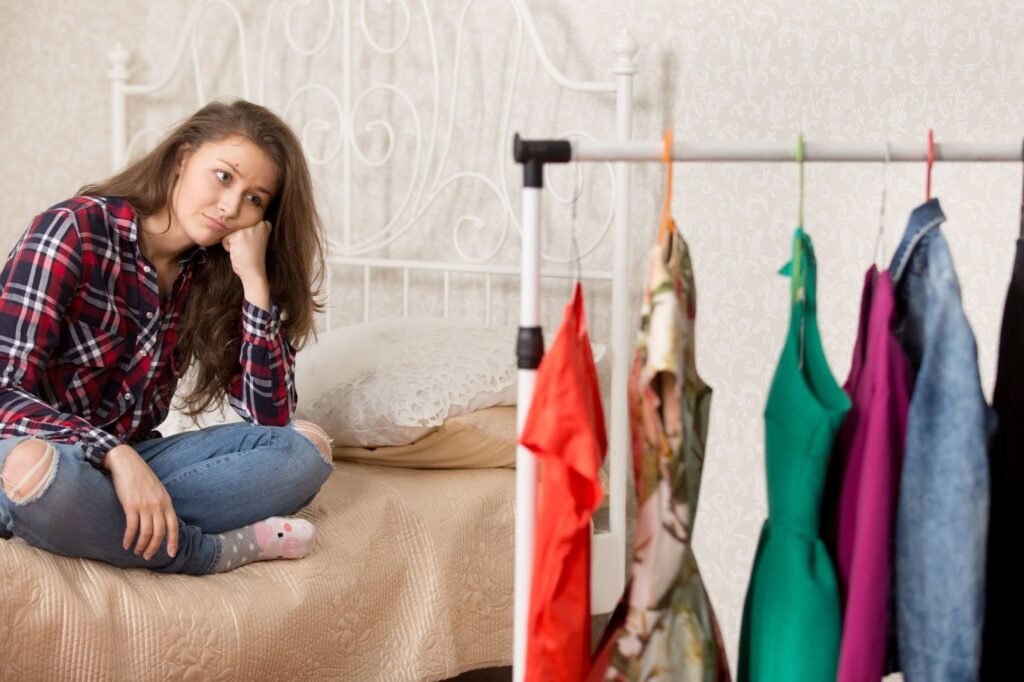
Your clothing choices can be powerful tools that dramatically influence your mood and overall well-being in daily life. What you wear doesn’t just reflect your identity—it actively shapes your emotions. Bright colors may energize you, while softer tones often evoke calmness. Comfort plays a vital role, too; wearing soft, breathable fabrics can enhance your relaxation and focus. Additionally, cultural influences and personal style intertwine to create unique expressions. By understanding the relationships between clothing, comfort, color, and cultural significance, you can empower your daily choices. Explore how these elements come together to enrich your emotional experience.
KEY TAKEAWAYS
- Clothing choices significantly influence emotional well-being, affecting confidence and overall mood throughout daily life.
- Color psychology plays a vital role in emotional expression; bold colors energize while softer shades promote calmness.
- Comfort in clothing enhances mental well-being, making relaxation wear essential for self-expression and emotional comfort.
- Seasonal changes impact wardrobe selections, with lighter fabrics uplifting spirits in spring and cozy textures providing warmth in winter.
- Personal identity is conveyed through clothing choices, as styles and colors reflect individual narratives and emotional states.
THE SCIENCE OF CLOTHING AND MOOD
Many people don’t realize just how deeply clothing influences their mood and behavior. The science of clothing and mood reveals that what you wear isn’t just about fashion trends; it’s about how those choices affect your emotional well-being. Clothing symbolism plays a significant role in shaping your identity, and understanding this can empower your personal style.
When you curate your wardrobe, consider the psychological effects of what you choose to wear. Wardrobe organization can help you feel more at ease, allowing for swift outfit coordination. Imagine opening your closet and knowing exactly what reflects your mood or aspirations for the day.
Seasonal wardrobes can also enhance your emotional state; lighter fabrics and bright colors in the summer can lift your spirits, while cozy textures and rich hues in winter can provide comfort.
Moreover, color associations impact how you feel and how others perceive you. Wearing bold colors might instill confidence, while softer shades can evoke calmness. Social perceptions of clothing can influence your interactions; how you dress can create a narrative that others respond to.
Ultimately, embracing your clothing choices as a reflection of your inner self allows for greater freedom in self-expression. By recognizing the connection between your outfits and your emotions, you can cultivate a wardrobe that not only looks good but also feels right, transforming your day-to-day experience into one of empowerment and authenticity.
Color Psychology in Fashion
When you slip into a vibrant outfit, the colors you choose can speak volumes about your mood and intentions. Color psychology plays an essential role in how you express yourself through fashion. Different colors evoke distinct emotional reactions, impacting not only how you feel but also how others perceive you. For instance, wearing red can exude confidence and passion, while blue often promotes calmness and trustworthiness.
Cultural meanings also influence these color associations. In some cultures, white represents purity, while in others, it may symbolize mourning. Your personal preferences and experiences shape how you connect with these colors, adding a layer of complexity to your choices.
As fashion trends evolve, so do the psychological effects of color combinations. You might find that pairing bright yellows with deep blues creates a visual impact that energizes you, igniting creativity and enthusiasm.
Understanding the interplay between color and your emotional state allows you to curate outfits that resonate with your inner self, emphasizing how fashion and mental health are closely intertwined. When you wear colors that align with your mood, you can amplify your confidence and authenticity. Alternatively, experimenting with unexpected color choices can push you out of your comfort zone, encouraging personal growth.
Ultimately, embracing the freedom to express yourself through color can transform not just your wardrobe, but also your outlook on life. So, the next time you dress, consider how your color choices reflect your emotions and intentions, and let them empower you.
The Role of Comfort
Comfort is a crucial element in your clothing choices, influencing not just your physical state but also your mental well-being. When you slip into comfort fabrics or cozy styles, it’s more than just a practical choice; it’s about creating a space for emotional comfort.
Imagine wearing relaxation wear that feels like a gentle embrace, allowing you to unwind and recharge. This tactile sensation can elevate your mood and give you the freedom to express yourself without restrictions.
Casual attire often plays an important role in your daily life, serving as a bridge between comfort and style. By selecting mood-enhancing materials, you empower yourself to feel at ease while maneuvering through your day.
Think about how certain fabrics, like soft cotton or breathable linen, can make you feel grounded and relaxed, pulling you away from the stresses of everyday life.
However, comfort isn’t just about fabric; it’s about stepping outside your comfort zones and approaching the way you dress as a self care activity, allowing your clothing choices to nurture both body and mind. When you wear what feels good to you, you’re not just choosing clothes; you’re embracing a lifestyle that prioritizes your well-being.
The right outfit can be a powerful tool, helping you cultivate a positive mindset. Ultimately, the clothes you wear should be an extension of who you are—reflecting your personality while providing the comfort you crave.
Dressing for Success
When you choose your outfit, consider how color and style can influence your confidence and the impression you make. According to studies, when we dress comfortably and feel at ease in our own skin, our ability to acquire knowledge and understanding improves. Wearing certain garments enables us to conceptualize and embody our aspirations, both present and future, as well as our fears regarding our own potential.
Wearing professional attire not only enhances your credibility in a work environment but also boosts your self-esteem as you navigate challenges.
Power of Color Choices
The colors you choose to wear can greatly influence not only how others perceive you but also how you feel about yourself. Color symbolism plays a crucial role in this, as certain hues evoke emotional responses that can shift your mood and energy. For instance, wearing blue might instill calmness, while bold reds can ignite passion and confidence.
Understanding color associations can help you align your outfit with your intentions for the day. Cultural significance also shapes how we interpret colors; what’s empowering in one culture might be perceived differently in another. By being mindful of these factors, you can elevate your mood and enhance your self-expression through your wardrobe choices.
Personal preferences matter too. If you love a particular color, wearing it can uplift your spirit and boost your confidence. Staying attuned to current color trends can also inspire fresh outfits that resonate with your evolving self.
Ultimately, harnessing the power of color in your clothing can transform your visual perception, allowing you to embrace freedom in expressing who you truly are. So, next time you dress, consider how your color choices reflect both your identity and your aspirations.
Impact on Confidence Levels
Dressing for success goes beyond simply choosing an outfit; it’s about cultivating a mindset that fuels your confidence and understanding the mindset behind personal style, which helps align your clothing choices with your true identity. When you select wardrobe choices that resonate with your personality, you’re not just putting on clothes; you’re making a statement about who you’re and how you want to be perceived. This alignment can lead to a significant self-esteem boost, enhancing the way you carry yourself.
Consider how you feel when you wear something that truly reflects your style. You likely notice a lift in your mood and an increase in your belief in your abilities. Those carefully chosen pieces can empower you, making you feel ready to tackle challenges and seize opportunities.
It’s fascinating how a well-fitted blazer or a vibrant dress can transform your outlook, encouraging you to express your true self. Embracing your unique wardrobe choices creates a personal brand that communicates confidence.
This isn’t just about aesthetics; it’s about the freedom to express yourself authentically, which ultimately enhances your sense of agency in daily life. So, next time you dress, remember that your outfit can be a powerful tool for boosting your confidence.
PROFESSIONAL ATTIRE IMPORTANCE
Your choice of professional attire plays a significant role in how you’re perceived in the workplace and affects your interactions with colleagues and clients. Adhering to workplace expectations and understanding the dress code can create a strong professional image, setting you apart in a competitive environment.
When you dress in appropriate business attire, you’re not just following trends; you’re making a statement about your commitment to your career and the opportunities it presents.
First impressions matter, and the right outfit coordination can pave the way for networking opportunities, helping you connect meaningfully with others. Gender differences in professional attire can also influence perceptions, so it’s crucial to find a style that reflects your identity while respecting industry norms.
Fashion trends can play a role, but authenticity should remain your priority. Your attire is a powerful tool for career advancement. By choosing outfits that align with your professional goals, you’re actively signaling your readiness for new challenges.
Embrace the freedom to express yourself through your clothing, while also recognizing the impact your choices have on how you navigate your professional landscape.
Cultural Influences on Style
Many people don’t realize how deeply culture shapes personal style, influencing everything from fabric choices to color preferences. Your cultural heritage often acts as a prism through which you view fashion trends, determining what feels right for you. For instance, traditional attire might resonate with your family’s history, evoking a sense of pride and belonging. This connection can guide your choices, often leading you to garments that symbolize your roots.
Societal norms play a vital role too. You might find yourself gravitating toward regional styles that reflect the community you’re part of, whether it’s the bright colors of a festival or the muted tones of everyday life. These influences shape your wardrobe, often without you even realizing it.
Global influences also seep into your style, as fashion history reveals a tapestry of interwoven cultures. You might wear a kimono-inspired jacket one day and a pair of African-print trousers the next, each piece telling a story of its origin. This diversity not only enriches your wardrobe but also allows you to express a broader narrative about who you are.
Ultimately, understanding these cultural influences can empower you. It helps you appreciate the layers of meaning in your attire and encourages you to embrace styles that resonate with your identity. By recognizing the cultural symbolism behind your clothing, you can celebrate your individuality while honoring the rich tapestry of influences that shape who you are.
Personal Identity and Expression
Clothing choices often reveal more than just a sense of style; they can uncover layers of personal identity and self-expression. Your wardrobe is a canvas where you paint your individuality, reflecting your thoughts, beliefs, and emotions.
When you embrace wardrobe diversity, you break free from societal norms and create a unique narrative that resonates with who you are. Our clothing choices are far from random. Each garment we drape over ourselves reflects a series of decisions shaped by who we are, how we feel, where we live, the communities we belong to, and who we wish to become. Clothes serve as a silent but profoundly expressive language, speaking volumes about our inner moods, personal aspirations, cultural values, and even our subconscious needs. The colours we gravitate towards, the textures we find comfort in, the patterns we boldly wear or quietly avoid—all are influenced by far more than the latest trends on a runway.
Consider how your clothing communicates to the world:
- Color Choices: Bright colors may convey joy and confidence, while muted tones might suggest introspection or comfort.
- Fit and Style: Loose-fitting clothes can indicate a laid-back attitude, while tailored outfits often express professionalism or ambition.
- Accessories: Unique jewelry or statement pieces can highlight your creativity and personal tastes.
By curating a wardrobe that aligns with your self-expression, you empower yourself to embrace your true identity. Each piece you wear can serve as a reminder of your journey, your passions, and your values.
When you feel comfortable and authentic in your clothing, it radiates confidence and invites others to see you for who you truly are.
Ultimately, choosing what to wear is an act of freedom. It’s an opportunity to communicate without words, to embody the essence of your being.
Seasonal Changes in Wardrobe Choices
As the seasons shift, your wardrobe choices naturally reflect the changing environment and your mood. As pretentious as that might sound, fashion is undoubtedly an important part of our lives. It affects how we are perceived and how we carry ourselves. It’s a means of reclaiming our identity. Fashion has certainly played an important role in my own life, and it’s interesting to reflect on my own personal style journey. When I was in elementary school, my outfits were incredibly colorful. They mostly consisted of flower-patterned dresses and skirts layered over brightly patterned tights. My then jubilant and colorful style simmered down as I grew older and admittedly more anxious.
You might find that brighter colors lift your spirits in spring, while cozy textures bring comfort during colder months.
Understanding how these elements influence your emotions can help you curate a wardrobe that truly resonates with your inner self.
Color Psychology Impact
Five vibrant hues can dramatically shift your mood as the seasons change, influencing not just how you feel but how you interact with the world. The colors you choose to wear are more than mere fabric; they carry color symbolism and evoke emotional responses that resonate with your inner self.
Consider how seasonal palettes can enhance your mood and reflect your personality.
- Warm reds and oranges: These colors can energize you and spark feelings of passion and enthusiasm.
- Cool blues and greens: Often linked to calmness, these hues may help in reducing stress and fostering tranquility.
- Bright yellows: Known for their uplifting nature, yellows can enhance your mood and stimulate creativity.
Cultural associations further shape your color preferences, creating psychological triggers that impact your daily life.
As you adapt your wardrobe with the seasons, pay attention to how these colors influence your visual perception and interactions.
Fabric Textures Influence Mood
While color plays a significant role in shaping your mood, the textures of the fabrics you wear can also have a profound impact on your emotional state. The weight of the fabric influences how you feel; light, airy materials like linen can evoke a sense of freedom, while heavier fabrics such as wool may provide comfort and warmth.
Tactile sensations matter—when you wear soft, velvety textures, you might experience a calming effect, whereas rough textures can trigger irritation or restlessness.
Textile patterns also contribute to your mood enhancement. A floral print can inspire joy and creativity, while geometric patterns might instill focus and order. Your fabric choices reflect your texture preferences, often tied to emotional associations; perhaps you feel more confident in a crisp cotton shirt or relaxed in a flowing silk dress.
As the seasons change, consider how your wardrobe can adapt to match not just the weather, but also your emotional landscape. Embracing various textures can reveal new sensory responses, allowing you to express your mood authentically and freely.
RELATED STUDIES ABOUT CLOTHES AND MOOD PSYCHOLOGY
In exploring the connection between clothing and mood, it’s clear that what you wear can greatly impact how you feel. For instance, studies show that 93% of people believe their clothing choices affect their confidence. By understanding the colors, comfort, and cultural influences in your wardrobe, you can harness the power of fashion to enhance your daily life. Embrace your personal style—after all, your clothes are more than just fabric; they’re an expression of who you are.
Preference for Hedonic Goals in Fibromyalgia: Is It Always an Avoidance Mechanism? Looking at the Relationship with Pain Acceptance from a Positive Psychology Perspective
Background:
Fibromyalgia (FM) is a chronic pain condition predominantly affecting women, associated with high functional impairment, sedentary behavior, and emotional distress. While much research has focused on negative psychological factors (e.g., catastrophizing, fear-avoidance), emerging evidence highlights the role of positive psychological resources—such as positive affect, openness to experience, and pain acceptance—in adaptive functioning. However, the role of hedonic goal preferences (i.e., prioritizing mood management and emotional well-being) remains underexplored and is often framed as maladaptive avoidance.
Objective:
This study examines whether the relationship between openness to experience and pain acceptance is mediated by positive affect, and whether this indirect effect is moderated by the preference for mood management (hedonic) goals. It adopts a positive psychology framework to reframe hedonic goals as potentially adaptive rather than inherently avoidant.
Methodology:
A cross-sectional study was conducted with 231 women diagnosed with fibromyalgia recruited from patient associations in Spain. Participants completed validated measures of:
- Openness to experience (NEO-FFI)
- Positive affect (PANAS)
- Pain acceptance (CPAQ—activity engagement subscale)
- Mood management goals (adapted Goal Pursuit Questionnaire)
- Pain severity (BPI)
Data were analyzed using SPSS macro-PROCESS (Model 4 for mediation; Model 7 for moderated mediation), controlling for pain severity and relevant sociodemographic variables.
Key Findings:
- Mediation:
- Openness to experience was positively associated with pain acceptance.
- This relationship was fully mediated by positive affect.
- Higher openness predicted greater positive affect, which in turn predicted higher pain acceptance.
- Moderated Mediation:
- The indirect effect of openness on pain acceptance via positive affect was moderated by mood management goals.
- The effect was significant only at medium and high levels of hedonic goal preference.
- At low levels of mood management goals, the pathway was not significant.
- Interpretation:
- Preference for mood management goals—often viewed as avoidance—may instead serve an adaptive function when oriented toward self-care and positive emotional regulation.
- In women with FM who value maintaining positive mood, openness to experience fosters positive affect, which enhances their capacity to engage in valued activities despite pain (i.e., pain acceptance).
Theoretical Contribution:
This study challenges the fear-avoidance model’s assumption that hedonic goals are inherently maladaptive. By applying the Broaden-and-Build Theory and the Dynamic Model of Affect, the authors demonstrate that mood management goals can function as contextual resources that amplify the benefits of positive traits and emotions. The findings support a psychological flexibility framework, wherein the adaptiveness of goal preference depends on its purpose and context.
Clinical Implications:
- Target positive affect and openness: Interventions should foster positive emotional experiences and curiosity toward new experiences, not merely reduce negative symptoms.
- Re-frame hedonic goals: Rather than discouraging mood management goals, clinicians can help patients pursue them as intentional self-care strategies, distinct from pain-avoidance.
- Tailored interventions: The benefits of openness and positive affect on pain acceptance are strongest in women with medium-to-high hedonic goal orientation; these patients may be particularly responsive to positive psychology interventions (PPIs).
- Nursing and multidisciplinary practice: Health professionals should integrate positive activity interventions that promote engagement, pleasure, and meaning—alongside traditional pain management strategies.
Limitations:
Cross-sectional design precludes causal inference; sample is predominantly female and recruited from patient associations, limiting generalizability to men and clinical settings. Future research should include longitudinal designs, male participants, and objective functional outcomes.
Conclusion:
This study provides novel evidence that preference for hedonic goals is not uniformly maladaptive in fibromyalgia. When driven by self-care rather than avoidance, mood management goals enhance the positive pathway from openness to experience to pain acceptance via positive affect. These findings support a paradigm shift toward strength-based, contextual, and positive psychology-informed approaches in chronic pain management.
| REFERENCE: Carmen Ecija, Lorena Gutierrez, Patricia Catala, Cecilia Peñacoba, Preference for Hedonic Goals in Fibromyalgia; Is It Always an Avoidance Mechanism? Looking the Relationship with Pain Acceptance from a Positive Psychology Perspective, Pain Management Nursing, Volume 25, Issue 1, 2024, Pages 80-87, ISSN 1524-9042, https://doi.org/10.1016/j.pmn.2023.11.006. (https://www.sciencedirect.com/science/article/pii/S1524904223002035) |
The Serotonin Gene 5-HTTLPR and Brain Food-Reward Responses During Sadness: A Mood-Induction Neuroimaging Study
Background:
High-calorie foods become particularly rewarding and difficult to resist under conditions of emotional distress. Individuals carrying the short allele variant of the serotonin transporter gene (S-allele 5-HTTLPR) exhibit heightened emotional and neuroendocrine stress reactivity, which may increase their vulnerability to stress-induced eating and weight gain. However, the neural mechanisms underlying this gene × mood interaction on food reward processing remain underexplored.
Objective:
This study investigated whether homozygous S-allele carriers differ from homozygous L-allele carriers in their behavioural and neural responses to high- vs. low-calorie food cues before and after sad mood induction. The primary focus was on brain regions implicated in appetitive reward and cognitive control.
Methodology:
- Participants: 28 healthy homozygous 5-HTTLPR carriers (15 S/S; 13 L/L) selected from a larger DNA database (N = 827). After excluding non-responders to mood induction, final analyses included 21 participants (9 S/S; 12 L/L).
- Design: 2 (genotype) × 2 (mood: pre/post sad mood induction) × 2 (food cue: high-calorie vs. low-calorie) mixed design.
- Mood Induction: Combined sad music + self-referent sad statements (adapted from Mayer & Velten).
- fMRI Task: Visual food exposure task with high-calorie (sweet/savoury) and low-calorie food pictures, plus matched neutral objects.
- ROIs: Predefined appetitive (e.g., amygdala, striatum, insula, OFC, vmPFC) and cognitive control (e.g., IFS, dlPFC, superior parietal lobule) regions, derived from Neurosynth meta-analysis.
- Measures: Subjective mood (POMS depression subscale), food wanting/liking, and BOLD contrast for high- vs. low-calorie foods.
Key Findings:
- Mood Induction:
- Significant increase in sad mood post-induction in 75% of participants (p<.001).
- Non-responders (n = 7) were predominantly S-allele carriers (6/7) and were excluded from main analyses.
- Subjective Food Reward:
- No significant effects of mood or genotype on wanting or liking ratings.
- fMRI – Cognitive Control ROIs:
- Significant genotype × mood induction interaction for high- vs. low-calorie food contrasts (p=.005).
- Before mood induction: LL-carriers showed significantly greater activation in cognitive control ROIs (IFS, dlPFC, superior parietal lobule) compared to SS-carriers (p=.028).
- After mood induction: LL-carriers exhibited a significant decline in cognitive control activation (p=.003); SS-carriers showed no change.
- Effects were most pronounced for sweet high-calorie foods and in left hemisphere regions.
- fMRI – Appetitive ROIs:
- No significant main effects or interactions in appetitive reward regions.
Interpretation:
- LL-allele carriers appear to recruit greater cognitive control resources when exposed to high-calorie foods under neutral mood conditions, suggesting a greater capacity to resist palatable food cues.
- This cognitive control advantage is lost during sad mood, reflected in reduced prefrontal and parietal activation.
- SS-allele carriers, in contrast, do not show this baseline elevation in cognitive control and are unaffected by mood.
- Findings suggest that LL-carriers may be more susceptible to mood-induced lapses in dietary self-control, despite—or perhaps because of—their higher baseline inhibition capacity.
Theoretical Contribution:
This is the first study to demonstrate a 5-HTTLPR × mood interaction on food-related cognitive control brain responses. It challenges the assumption that S-allele carriers are universally more vulnerable to stress-induced eating and suggests that LL-carriers may experience greater relative declines in self-control under negative affect. The results align with models of self-control fatigue and highlight the importance of considering genetic and affective context in understanding food reward processing.
Limitations:
- Small sample size, though adequately powered for medium-to-large effects.
- Gender imbalance (mostly female), limiting generalisability across sexes.
- No direct measure of hunger or food intake behaviour.
- Mood induction was mild; stronger or more ecologically valid stressors may yield different results.
Conclusions:
LL- compared to SS-5-HTTLPR genotypes show greater cognitive control-related brain responses to high-calorie foods in the absence of stress, which may reflect a protective mechanism against overeating. However, this advantage is selectively diminished by sad mood, potentially increasing vulnerability to disinhibited eating in contexts of emotional distress. These findings underscore the need for genetically informed, context-sensitive approaches in the study of food reward, self-regulation, and obesity risk.
| REFERENCE: C. Rob Markus, Esther H.H. Keulers, The serotonin gene 5-HTTLPR and brain food-reward responses during sadness: a mood-induction neuroimaging study, Journal of Affective Disorders, Volume 384, 2025, Pages 1-11, ISSN 0165-0327, https://doi.org/10.1016/j.jad.2025.05.010. (https://www.sciencedirect.com/science/article/pii/S0165032725007670) |
How Exposure to Body Neutrality Content on TikTok Affects Young Women’s Body Image and Mood
Background:
Image-centric social media platforms like TikTok perpetuate unrealistic beauty standards, contributing to body dissatisfaction, negative mood, and upward appearance comparisons among young women. While body positivity content has shown some benefits, it often remains appearance-focused and may still trigger comparisons. Body neutrality—a growing social media movement—shifts focus from how the body looks to what it can do, promoting non-judgmental attitudes, functionality appreciation, and self-worth beyond appearance.
Objective:
This experimental study examined the immediate effects of brief exposure to TikTok body neutrality content on young women’s functionality appreciation, body satisfaction, mood, upward appearance comparisons, and the valence of appearance-related thoughts, relative to thin ideal and appearance-neutral (art) content.
Methodology:
- Sample: 189 undergraduate women (M age =19.25) randomly assigned to one of three 12-minute TikTok video compilations:
- Body neutrality (e.g., exercising for wellbeing, clothes fitting the body, functionality affirmations; diverse body types, including creators with visible disabilities)
- Thin ideal (e.g., “get ready with me,” weight-loss-focused workouts; homogeneous lean/toned bodies)
- Art control (painting tutorials; appearance-neutral)
- Design: Between-subjects, pre-test/post-test with ANCOVAs controlling for baseline scores.
- Measures: State functionality appreciation (FAS), body satisfaction, mood (VAS), upward appearance comparisons, valence of appearance/clothing thoughts, and intention to follow content.
- Piloting: Content validated for representativeness and quality by independent age-matched raters.
Key Findings:
- Functionality Appreciation & Body Satisfaction:
- Body neutrality group reported significantly higher functionality appreciation and body satisfaction at post-test than both thin ideal and art groups (p<.001; large effect sizes: η p2 =.39 and .29, respectively).
- Mood:
- Positive mood was significantly higher in the body neutrality group than the thin ideal group (p<.001, d=0.71).
- No significant difference between body neutrality and art control groups on mood.
- Upward Appearance Comparisons:
- Thin ideal group reported significantly more upward comparisons than both body neutrality and art groups (p<.001, d=1.23 and 2.49, respectively).
- However, body neutrality group still reported more comparisons than the art group (d=1.01), suggesting appearance-related content—even when positive—can still trigger comparisons.
- Appearance Thoughts & Valence:
- Over 90% of women in both body neutrality and thin ideal groups thought about their appearance while viewing.
- Critically: Women in the body neutrality group reported significantly more positive thoughts about their appearance (d=1.17) and clothing (d=0.81) than those in the thin ideal group.
- Intention to Engage:
- Women were more likely to follow or view body neutrality content in the future than thin ideal content (d=0.75), indicating genuine appeal and potential for sustained engagement.
Theoretical Contributions:
- First experimental study to demonstrate the immediate benefits of TikTok body neutrality content on multiple positive body image outcomes.
- Extends positive body image frameworks (Tylka & Wood-Barcalow; Piran) by showing that functionality-focused, non-judgmental content can enhance state body appreciation and mood.
- Challenges the assumption that thinking about appearance is inherently harmful; valence matters more than frequency.
- Distinguishes body neutrality from body positivity by removing the imperative to “love” one’s body and instead promoting respect, care, and functional appreciation.
Practical Implications:
- Body neutrality content offers a scalable, accessible, and engaging micro-intervention for improving young women’s body image and mood.
- Social media users can be encouraged to actively follow body neutrality creators to shape platform algorithms toward more supportive content.
- College counselors and mental health practitioners may recommend body neutrality content to clients who struggle with appearance-focused ideals or feel resistant to body positivity messaging.
- Content creators and educators can use these findings to design evidence-informed campaigns that reduce appearance pressures and promote functionality appreciation.
Limitations & Future Directions:
- Short-term effects only; longitudinal and ecological momentary assessment studies needed.
- Sample predominantly white, young, female, and university-based; limits generalizability.
- No validated measure of body neutrality currently exists—development and validation are urgent research priorities.
- Combined video topics (e.g., clothing, exercise, affirmations) make it difficult to isolate which components drive effects.
- Future research should examine effects in more diverse samples (e.g., gender, age, disability, eating disorder history) and test longer-term engagement.
Conclusion:
Brief exposure to body neutrality content on TikTok significantly improves young women’s functionality appreciation, body satisfaction, and mood, while reducing upward appearance comparisons relative to thin ideal content. Importantly, it fosters more positive appearance-related thoughts, even when appearance remains salient. Body neutrality offers a promising, inclusive, and de-pathologizing alternative to appearance-focused content on social media, with potential for real-world impact on young women’s psychological well-being.
| REFERENCE: Veya Seekis, Rebecca K. Lawrence, How exposure to body neutrality content on TikTok affects young women’s body image and mood, Body Image, Volume 47, 2023, 101629, ISSN 1740-1445, https://doi.org/10.1016/j.bodyim.2023.101629. (https://www.sciencedirect.com/science/article/pii/S1740144523001389) |