
Whenever I find myself untangling the biology of chronic stress, I am constantly reminded of how disconnected we can feel from our own bodies when anxiety takes over. In my neuroscience work, we spend endless hours looking at pathways, neuroendocrine loops, and biochemical biomarkers.
Yet, in our lived human experience, an overtaxed nervous system does not announce itself as a graph or a chart—it arrives as an invisible weight in the chest, shallow breaths caught high in the throat, and a quiet, persistent sense of depletion. We often treat emotional resilience as an abstract mental muscle, telling ourselves to simply “think more positively” or push past the fatigue. But our psychology is fundamentally tethered to our physiology.
When cortisol floods the system, rational mindset shifts can only take us so far if the body itself remains convinced that it is under siege. This is why conscious breathing is far more than a wellness trend to me; it is the most direct, somatic bridge back to baseline equilibrium. Taking a mindful breath is a profound act of nervous system reclamation, signaling to your brainstem that right now, in this single unhurried second, you are entirely safe.
Breathwork offers powerful techniques that can greatly lower cortisol levels, directly supporting your emotional resilience and mental health. By encouraging relaxation and mindfulness, these methods help you manage stress more effectively. Lower cortisol levels reduce anxiety and improve overall mood, fostering emotional balance. As you practice breathwork consistently, you’ll notice a transformation in your ability to handle daily challenges. Discover how you can integrate these practices into your routine for even more profound benefits.
KEY TAKEAWAYS
- Breathwork techniques reduce cortisol levels, promoting relaxation and mitigating the impacts of stress on emotional well-being.
- Lower cortisol levels through breathwork enhance emotional resilience, reducing anxiety and fostering a balanced mental state.
- Consistent breathwork practice improves cognitive function, aiding in clearer thinking and better decision-making during stressful situations.
- Breathwork empowers individuals to manage stress effectively, transforming negative emotional patterns into positive coping mechanisms.
- Incorporating breathwork into daily routines promotes mindfulness and strengthens long-term mental health strategies for overall emotional stability.
WHAT IS BREATHWORK AND HOW IT WORKS
Life is the period between the first breath and the last one. While breathing is behavioral and respiration is reflexive; therefore, breathing and respiration are not the same phenomenon. Breathing is based on the energy flow by moving downward/upward, expanding/narrowing of the chest and abdomen area in the physical body, and how this flow affects our bodies physically, mentally and spiritually.
Breathwork, which involves various techniques for controlling your breath, can greatly impact your mental health. By engaging in breathwork practices, you tap into a powerful tool to enhance your emotional well-being.
These techniques promote relaxation and mindfulness, offering you a pathway to greater self-awareness and emotional freedom. Research shows that conscious breathing can increase oxygen flow to the brain, improving cognitive function and reducing anxiety.
Breathwork benefits also include the ability to foster emotional resilience. By regularly practicing different breathing techniques, you can cultivate a sense of calm that helps you navigate life’s challenges with ease.
Whether it’s diaphragmatic breathing or box breathing, each method offers unique advantages tailored to your needs. Ultimately, integrating breathwork into your routine can empower you to reclaim control over your mental landscape, transforming stress into serenity and fostering a deeper connection with yourself.
How Breathwork Reduces Cortisol Levels for Better Emotional Health
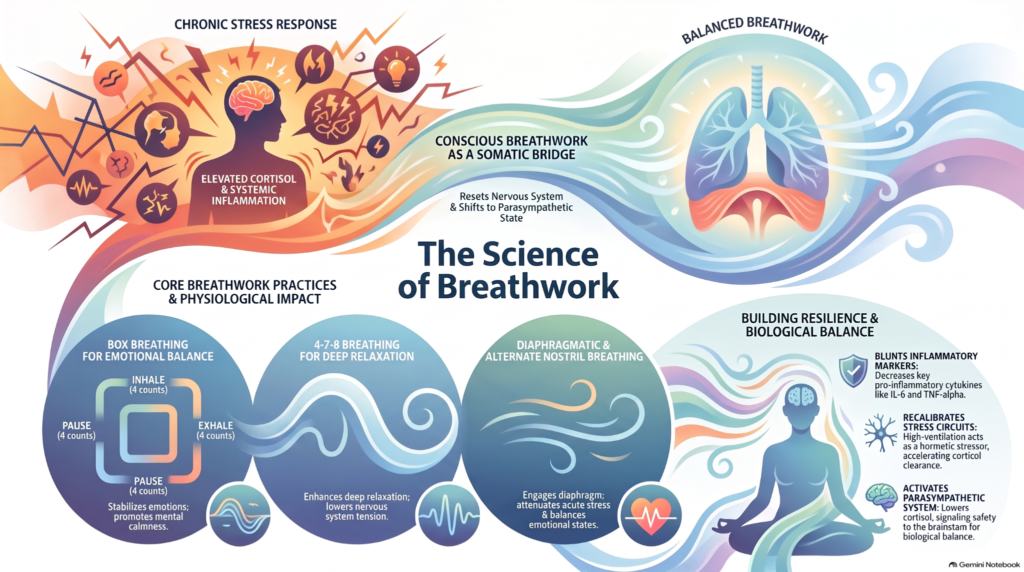
Your body’s stress response often heightens cortisol levels, leading to feelings of anxiety and overwhelm. Understanding the neuroscience of relaxation helps explain how controlled breathing can activate the body’s relaxation response, reduce stress, and support emotional well-being. Breathwork offers a powerful tool for cortisol reduction, helping you regain emotional balance. By focusing on your breath, you signal your body to switch from a stress state to a relaxation response, effectively lowering cortisol levels.
| Breathwork Technique | Effect on Cortisol Levels |
| Diaphragmatic Breathing | Reduces stress response |
| Box Breathing | Promotes calmness |
| 4-7-8 Breathing | Enhances relaxation |
| Alternate Nostril Breathing | Balances emotions |
Research shows that consistent breathwork practice can lead to lasting changes in your physiological response to stress. When you commit to this practice, you cultivate resilience, empowering yourself to navigate life’s challenges with greater ease. Embrace breathwork as a pathway to emotional freedom and improved mental health.
The Connection Between Cortisol and Stress: Why It Matters
Understanding the connection between cortisol and stress is essential for anyone looking to improve their mental health. Cortisol, often called the “stress hormone,” plays a significant role in your body’s stress response. When you encounter a challenge, your adrenal glands release cortisol, preparing you to react.
However, chronic stress can lead to elevated cortisol levels, disrupting cortisol regulation and affecting your overall well-being. High cortisol can impair cognitive function, weaken your immune system, and increase the risk of anxiety and depression.
Recognizing how your stress response triggers cortisol release empowers you to take actionable steps to manage stress effectively. Techniques like breathwork can help balance cortisol levels, fostering emotional resilience.
How Stress Impacts Mental Health
It turns out the sigh you emit that often comes after frustration or sadness is crucial to human existence. It helps to regulate breathing by triggering a huge-volume breath followed by a pause and was found to significantly decrease the stress response in anxiety-prone individuals.
While stress is a natural response to challenging situations, its prolonged presence can severely impact your mental health. Elevated stress hormones can lead to various issues that disrupt your emotional balance and overall psychological wellbeing.
Here’s how stress manifests in your life:
- Mental Fatigue: Constant stress can leave you feeling drained, making it hard to concentrate.
- Emotional Burnout: Over time, persistent stress can strip away your emotional resilience, leading to feelings of hopelessness.
- Anxiety Disorders: Chronic stress can trigger or exacerbate anxiety disorders, affecting your daily life.
- Coping Mechanisms: Without effective strategies to manage stress triggers, you may resort to unhealthy habits that further compromise your mental health.
Recognizing these patterns is the first step toward reclaiming your freedom and nurturing your emotional wellbeing.
BUILD EMOTIONAL RESILIENCE WITH BREATHWORK
When exploring the physiology of the vagus nerve and the autonomic nervous system, one common pitfall stands out: people often approach breathwork with rigid perfectionism. I see this frequently in wellness discussions, where beginners believe that lowering cortisol requires immediate mastery of complex counts or forceful inhales. But your nervous system doesn’t respond to tension masquerading as calm.
In fact, hyper-focusing or forcing lung capacity during acute distress can heighten vigilance instead of soothing it. True emotional resilience develops when we practice these techniques not as an emergency fire extinguisher during a full-blown panic spike, but as a gentle, baseline habit woven throughout ordinary moments. When you soften your diaphragm while answering routine morning emails or resting beside a sunny window, you condition your physiological circuits in a neutral state.
Over time, this low-stakes conditioning creates an accessible biological safety anchor. Whether you are engaging with slow parasympathetic cadences like box breathing or exploring dynamic, hormetic patterns like high-ventilation practices, the secret is consistent self-compassion. You are not aiming to eliminate cortisol entirely—you need it to navigate life—you are simply teaching your autonomic wiring that peace is an accessible home base it can always return to.
Breathing is the first and the last thing we do in life. It’s a largely subconscious activity which our body carries out many times per minute in order to keep us alive and thriving. Yet an emerging realm of science is demonstrating that sometimes our bodies benefit from a little help to do it optimally.
You can enhance your emotional resilience by practicing breath regulation techniques that help manage your stress response.
Research shows that controlled breathing can lower cortisol levels, making you more resilient in the face of challenges.
Breath Regulation Techniques
As stressors mount in daily life, breath regulation techniques emerge as powerful tools for building emotional resilience. By mastering these methods, you can reclaim your mental space and enhance your well-being.
Here are four effective techniques:
- Diaphragmatic Breathing: Engage your diaphragm to take deeper breaths, promoting relaxation and reducing anxiety.
- Nostril Breathing: Alternate nostril breathing balances your energy and calms your mind, fostering a sense of peace.
- Box Breathing: Inhale for four counts, hold for four, exhale for four, and hold again for four, creating a rhythmic pattern that stabilizes emotions.
- 4-7-8 Breathing: Inhale for four counts, hold for seven, and exhale for eight, encouraging a soothing release of tension.
Embrace these techniques to cultivate a resilient mind and an empowered spirit.
Stress Response Management
Understanding how to manage your stress response is essential for building emotional resilience, especially in today’s fast-paced world. Practicing parasympathetic nervous system relaxation through controlled breathing can help calm the body’s stress response and support emotional balance.
Stress management techniques like breathwork empower you to take control of your emotional regulation. When you consciously engage in breathwork, you stimulate your parasympathetic nervous system, which helps reduce cortisol levels and promotes a sense of calm.
Studies show that consistent breathwork practice not only alleviates stress but also enhances your ability to handle future challenges with greater ease. By incorporating these techniques into your daily routine, you cultivate a resilient mindset, allowing you to navigate life’s ups and downs with confidence.
Embracing breathwork can be your pathway to emotional freedom, helping you reclaim your peace and well-being.
Simple Breathwork Techniques to Start Practicing Today
While many might feel overwhelmed by the prospect of incorporating breathwork into their daily routine, starting with just a few simple techniques can yield significant benefits for mental health and cortisol reduction.
Focusing on breath awareness and mindful inhalation can help you reclaim your sense of calm and clarity. Here are four techniques to try:
- Diaphragmatic Breathing: Place one hand on your belly and the other on your chest. Breathe deeply, ensuring your belly rises more than your chest.
- Box Breathing: Inhale for a count of four, hold for four, exhale for four, and pause for four. Repeat this cycle several times.
- 4-7-8 Breathing: Inhale for four counts, hold for seven, and exhale for eight. This technique promotes relaxation.
- Nostril Breathing: Alternate inhaling through one nostril and exhaling through the other to balance energy.
Each of these techniques can empower you to enhance your emotional resilience.
Integrating Breathwork Into Your Daily Routine for Lasting Benefits
Incorporating breathwork into your daily routine can be a game-changer for mental health and stress management. Making breathwork a regular self care activity can help you manage daily stress, lower tension, and strengthen your emotional resilience over time. By practicing mindful integration of breathwork techniques, you can effectively reduce cortisol levels and enhance emotional resilience.
Start with just a few minutes each day—perhaps in the morning or during lunch breaks. Focus on simple patterns: inhale for four counts, hold for four, exhale for four, and pause for four. This daily practice not only calms your nervous system but also cultivates a greater sense of awareness and control over your emotions.
Research shows that consistent breathwork can lead to long-term improvements in anxiety and stress levels. As you commit to this practice, you’ll likely find that you approach daily challenges with newfound clarity and strength.
Ultimately, integrating breathwork into your life isn’t just a routine; it’s an empowering step toward achieving greater freedom and emotional balance.
RELATED STUDIES ABOUT BREATHWORK AND CORTISOL REDUCTION
Incorporating breathwork into your daily routine can be a game-changer for your emotional resilience and mental health. By reducing cortisol levels, you’re not just alleviating stress—you’re crafting a fortress of calmness around your mind. As you practice these simple techniques, you’ll find that maneuvering through life’s challenges becomes as effortless as a gentle breeze. Embrace breathwork, and you’ll reveal the incredible potential to thrive emotionally, transforming your mental landscape into a sanctuary of peace and strength.
High ventilation breathwork practices: An overview of their effects, mechanisms, and considerations for clinical applications
This review provides a comprehensive synthesis of high ventilation breathwork (HVB) practices, examining their historical lineages, acute phenomenological effects, underlying autonomic and neurometabolic mechanisms, and emerging clinical indications and contraindications.
Study Overview & Conceptual Definition:
- Defining HVB: High Ventilation Breathwork refers to volitional breathing practices that increase minute ventilation beyond resting metabolic requirements via elevated respiratory rate, increased tidal volume, or both (i.e., voluntary hyperventilation). This contrasts with slow-paced breathing techniques (<10 breaths/min), which primarily operate by enhancing cardiac parasympathetic tone.
- Historical Lineage & Modern Taxonomy: HVB practices encompass ancient contemplative traditions and modern therapeutic adaptations:
- Traditional Yogic & Buddhist Practices: Kapalabhati (“Skull Shining Breath”, emphasizing forceful abdominal exhalations and passive inhalations), Bhastrika (“Bellows Breath”, involving active, forceful inhalations and exhalations up to 100+ breaths/min), and Tibetan Buddhist g-Tummo (“Inner Fire” vase breathing paired with visualization and retention).
- Contemporary Post-Psychedelic & Integrated Techniques: Grof Breathwork (GBW, formerly Holotropic Breathwork, developed by Stanislav and Cristina Grof as a non-pharmacological means to induce altered states of consciousness following the criminalization of LSD in 1968), Rebirthing Breathwork, Conscious Connected Breathing (CCB), Holorenic Breathwork, the Wim Hof breathing Method (WHbM, alternating hyperventilation with prolonged apnea), and Sudarshan Kriya Yoga (SKY, cyclical rhythms of slow, medium, and fast ventilation).
- Interrupted vs. Continuous Hyperventilation: A critical distinction exists between techniques utilizing continuous, unpaused hyperventilation for extended periods (GBW, CCB, Rebirthing) and those incorporating breath retentions (apnea/Kumbhaka) or cyclic pacing back to resting baselines (WHbM, g-Tummo, SKY, Kapalabhati). Continuous practices maintain sustained homeostatic disruption, whereas retention periods allow periodic normalization of blood gases.
Acute Phenomenology & Altered States of Consciousness (ASCs):
- Sensory & Somatic Manifestations: Acute effects of HVB include light-headedness, visual disturbances, paresthesia, palpitations, hot flashes, sweating, tremors, and hypocapnia-induced carpopedal tetany (cramping of the extremities). Affective releases frequently involve crying, laughing, and cathartic vocalizations.
- Hallucinogen-Like Altered States: Prolonged continuous HVB induces non-ordinary ASCs marked by perceptual distortions, visions, and experiences of ego dissolution (“oceanic boundlessness” or a compromised sense of self). In clinical and retreat settings, over 80% of psychiatric inpatients described GBW as inducing psychedelic-like experiential states, with approximately 10% experiencing a “complete mystical experience” comparable to moderate psilocybin doses (10 mg/70 kg).
Neurophysiological & Neurometabolic Mechanisms:
- Respiratory Alkalosis & High-Affinity Hypoxia: Hyperventilation drives excessive elimination of arterial carbon dioxide, dramatically lowering end-tidal CO2 (ETCO2) and elevating blood and cerebrospinal fluid pH. This respiratory alkalosis triggers potent cerebral vasoconstriction—reducing cerebral blood flow (CBF) by approximately 2% for every 1 mmHg decline in ETCO2. Concurrently, alkalosis shifts the oxyhemoglobin dissociation curve to the left (the Bohr effect), impairing oxygen offloading to cerebral tissues and generating cellular hypoxia despite adequate blood oxygen saturation.
- Neuronal Hyperexcitability & Glycolytic Shift:
- Alkalosis impairs cortical GABAergic transmission and neural repolarization while reducing ionized serum calcium (Ca2+), lowering seizure thresholds and disinhibiting pyramidal neurons.
- Fast-spiking parvalbumin interneurons (PV-INs)—which generate gamma oscillations essential for perceptual binding, executive control, and conscious self-representation—are uniquely vulnerable to metabolic hypoxia due to high mitochondrial ATP demands. Hypoxic disruption of PV-IN gamma networks alters cortical excitation-inhibition balance.
- Cells shift toward anaerobic glycolysis, driving brain and peripheral lactate accumulation and activating noradrenergic arousal circuits in the Locus Coeruleus.
- Autonomic & Neuroendocrine Reset (Eustress / Hormesis): HVB rapidly disinhibits sympathetic drive, increasing heart rate, blood pressure, and sympathetic sudomotor tone. While hyperventilation acutely triggers adrenomedullary epinephrine release and HPA-axis cortisol spikes, controlled trials (e.g., WHbM and SKY) demonstrate accelerated post-stress cortisol clearance and attenuated pro-inflammatory cytokine release (e.g., TNF-alpha, IL-6) in response to endotoxin challenges. This suggests that volitional HVB acts as a hormetic “eustress” stimulus that recalibrates defective allostatic stress responses.
- Interoceptive Predictive Coding Model of Ego Dissolution: The authors propose that ASCs in continuous HVB stem from a profound mismatch in predictive interoceptive processing. Ascending subcortical signals from the brainstem convey urgent, primordial survival alarms to slow breathing and restore metabolic homeostasis. However, descending volitional motor drive from the prefrontal and motor cortices actively overrides these signals. This unresolved interoceptive prediction error “overload” disrupts higher-order metacognitive awareness of physiological self-efficacy, severing the feeling of bodily agency and culminating in depersonalization, perceptual detachment, and ego dissolution.
Preliminary Clinical Evidence Base:
- Post-Traumatic Stress Disorder (PTSD): The strongest empirical evidence for HVB exists in PTSD populations evaluating SKY. Randomized controlled trials in military veterans and disaster survivors demonstrate large reductions in PTSD checklist scores (effect sizes up to 2.9), reductions in startle hyperarousal, and non-inferiority to first-line Cognitive Processing Therapy (CPT). Controlled HVB may function mechanistically as interoceptive exposure therapy, enabling patients to experience acute somatic arousal in a safe, volitional context and promoting emotional extinction.
- Depressive & Anxiety Disorders: RCTs of SKY and Kapalabhati have demonstrated significant reductions in self-reported depression and anxiety, accompanied by reductions in ACTH, plasma cortisol, and perceived stress in university students and psychiatric outpatients. Observational studies of WHbM show medium-to-large reductions in subjective stress and depressive symptoms.
- Somatosensory & Immune Modulation: WHM and related practices demonstrate robust voluntary modulation of the innate immune system, suppressing inflammatory responses to bacterial endotoxins and improving subjective pain scores in oncology cohorts.
Clinical Safety, Risk Stratification, & Contraindications:
- Absolute & Relative Contraindications:
- Epilepsy: Hyperventilation routinely induces absence and focal seizures within 90 seconds in susceptible patients via respiratory alkalosis, hypocalcemia, and acute CBF reduction; active seizure disorders represent a primary contraindication.
- Cardiovascular & Cerebrovascular Pathology: Due to acute blood pressure surges and marked cerebral vasoconstriction, HVB is contraindicated in severe or malignant hypertension, coronary artery disease, heart failure, cardiac arrhythmias, prior stroke/TIA, and intracranial aneurysms.
- Panic Disorder (PD): PD patients exhibit heightened hypersensitivity to respiratory acid-base shifts (“false suffocation alarms”) and exaggerated cerebral lactate accumulation; caution and medical pre-screening are warranted.
- Psychosis & Pregnancy: Prolonged continuous HVB can trigger profound dissociative reactions, contraindicating use in active psychotic disorders; physiological fluctuations also pose risks during pregnancy.
- Environmental Safety: Solitary practice must never occur in or near water (due to shallow water blackout risks from hypocapnia-induced loss of consciousness) or around hard surfaces where fainting could result in traumatic injury.
| REFERENCE: Guy W. Fincham, Amy Kartar, Malin V. Uthaug, Brittany Anderson, Lottie Hall, Yoko Nagai, Hugo Critchley, Alessandro Colasanti, High ventilation breathwork practices: An overview of their effects, mechanisms, and considerations for clinical applications, Neuroscience & Biobehavioral Reviews, Volume 155, 2023, 105453, ISSN 0149-7634, https://doi.org/10.1016/j.neubiorev.2023.105453. (https://www.sciencedirect.com/science/article/pii/S0149763423004220) |
Hatha yoga reduces momentary stress but does not impact diurnal profiles of salivary cortisol and alpha-amylase: A randomized controlled trial
This randomized controlled trial examines the impact of an eight-week Hatha yoga intervention on subjective momentary stress and diurnal biological stress markers—salivary cortisol (sCort) and salivary alpha-amylase (sAA)—in healthy adults using an ecological momentary assessment (EMA) protocol.
Study Overview & Methodology:
- Research Objective: Evaluated whether a physically oriented mind-body practice (Hatha yoga) reduces real-time subjective stress and alters diurnal biomarkers representing hypothalamic-pituitary-adrenal (HPA) axis activity (sCort) and autonomic nervous system (ANS) sympathetic tone (sAA) in naturalistic everyday settings.
- Participants & Recruitment: Screened 345 adults recruited through the University of Vienna, Austria. Randomized 116 healthy, yoga-naïve participants (<2 sessions/month in the past year) without psychiatric or neurological disorders into two parallel cohorts. Ninety-eight participants initiated the protocol, and 73 participants completed all requisite EMA and biological data points for the final per-protocol analysis (intervention group, n = 34; waitlist control group, n = 39; 86% female; mean age = 24.97 ± 4.51 years).
- Intervention Architecture: The intervention group attended an 8-week structured Hatha yoga program led by four certified instructors, requiring participation in 3 to 5 sessions per week (mean attendance = 2.55 ± 0.55 sessions/week). Each 60-minute session followed a standardized sequence: 5–10 minutes of warm-up, 40–50 minutes of physical postures (asanas), and 5–10 minutes of supine relaxation (savasana). According to the Essential Properties of Yoga Questionnaire (EPYQ), the program emphasized breathwork, body awareness, and acceptance/compassion, with moderate emphasis on physicality and mindfulness.
- Ecological Momentary Assessment (EMA) Protocol: Conducted across three consecutive days at both baseline (pretest) and study completion (posttest). Participants provided five daily saliva samples via passive drool (awakening, 30 minutes post-awakening, 11:00 AM, 2:00 PM, and 7:00 PM) accompanied by simultaneous visual analogue scale (VAS, 0–100) momentary stress ratings, alongside an additional subjective assessment prior to bedtime (yielding 30 biological and 36 self-report data points per participant).
- Biochemical & Statistical Analytics: Quantified sCort via luminescence immunosorbent assay and sAA activity via enzymatic photometric testing. Analyzed outcomes using two-level hierarchical linear mixed-effects modeling (Level 1: repeated occasions; Level 2: individuals). Models adjusted for Level 1 covariates (recent intake of food or drink, medication, physical activity, smoking, and menstrual cycle phase) and Level 2 covariates (age, body mass index, baseline medications, smoking status).
Key Findings:
- Significant Alleviation of Momentary Subjective Stress:
- Multilevel regression revealed a statistically significant intervention-by-time interaction effect for subjective momentary stress (beta = -11.06, p = 0.040, Cohen’s d = -2.12).
- Estimated marginal means demonstrated that subjective stress declined substantially in the Hatha yoga group from pretest to posttest, whereas subjective stress scores slightly increased in the waitlist control group.
- The full model incorporating the intervention interaction explained significantly more conditional variance (Delta R^2 = 15.1%) and marginal variance (Delta R^2 = 3.1%) compared to the unconstrained null model (p < 0.001).
- Invariance of Diurnal Salivary Cortisol (HPA Axis):
- The intervention exerted no significant effect on diurnal sCort concentrations (beta = -0.02, p = 0.407, Cohen’s d = -0.82).
- Predictor models including the intervention interaction failed to account for significantly more variance than models specifying control covariates alone (Delta R^2 = 0.1%, p = 0.871).
- Invariance of Diurnal Salivary Alpha-Amylase (Sympathetic Tone):
- The intervention produced no significant change in diurnal sAA activity (beta = -0.06, p = 0.536, Cohen’s d = -0.62).
- Full multilevel adjustment for Level 1 and Level 2 confounders confirmed no statistically significant intervention modulation on diurnal sAA output.
- Baseline Invariance: Baseline pretest assessments confirmed no significant differences between the intervention and control cohorts on subjective momentary stress, sCort, or sAA levels.
Theoretical & Mechanistic Interpretation:
- Psychological Coping vs. Endocrine Reset: The marked divergence between reduced momentary distress and unaffected diurnal biomarkers suggests that Hatha yoga primarily enhances psychological appraisal, coping, and subjective resilience rather than altering basal diurnal neuroendocrine set points.
- Healthy Cohort Baselines: In non-clinical, healthy cohorts with normal circadian rhythms, physiological stress axes may have limited room for basal down-regulation, whereas prior studies reporting cortisol reductions predominantly sampled clinical cohorts with baseline HPA axis dysregulation.
- Resting Curves vs. Acute Reactivity: Unaltered diurnal baseline profiles do not preclude biological efficacy; rather, neuroendocrine adaptations following postural yoga practice may manifest selectively as blunted reactivity during acute stress challenges rather than shifts in daily resting curves.
Methodological Considerations & Limitations:
- Control Condition Design: The use of an inactive waitlist control group introduces potential self-report expectancy bias, as participants knew their assignment and favorable views of yoga could influence self-reported stress ratings.
- Sample Homogeneity: The final analyzed sample was predominantly female (86%) and young adults (mean age ~25 years), restricting demographic generalizability to broader populations.
- Attrition & Adherence: Of 116 randomized participants, 73 were included in final modeling, reflecting dropout and adherence requirements typical of multi-week physical training protocols.
Practical & Clinical Implications:
- Accessible Stress Relief: An 8-week regimen of Hatha yoga serves as a feasible, low-risk lifestyle intervention to alleviate daily subjective stress and mental strain in healthy adults.
- Targeted Intervention Design: Because asana-focused Hatha yoga primarily modulates subjective coping, interventions aiming to reshape autonomic or HPA axis basal circadian set points may require protocols with higher concentrations of dedicated pranayama (breath regulation) and meditation.
- Rigorous Stress Assessment: Highlights the necessity of pairing ecological momentary assessments with biological sampling and strict behavioral/metabolic covariate controls when evaluating mind-body modalities in naturalistic environments.
| REFERENCE: Bence Szaszkó, Hannah Tschenett, Ulrich Ansorge, Urs Markus Nater, Hatha yoga reduces momentary stress but does not impact diurnal profiles of salivary cortisol and alpha-amylase: A randomized controlled trial, Psychoneuroendocrinology, Volume 171, 2025, 107191, ISSN 0306-4530, https://doi.org/10.1016/j.psyneuen.2024.107191. (https://www.sciencedirect.com/science/article/pii/S0306453024002361) |
The role of yoga in inflammatory markers
This mini-review synthesizes clinical and experimental literature investigating the regulatory effects of yoga practices on circulating cortisol and classical inflammatory biomarkers, mapping its therapeutic potential across psychoneuroimmunology, metabolic health, auto-immune disorders, oncology, and maternal care.
Study Overview & Conceptual Framework:
- Rationale & Scope: While yoga research historically concentrates on subjective psychological outcomes such as stress, anxiety, and depression, this review shifts emphasis toward objective biological endpoints within psychoneuroimmunology and immunopsychiatry. It evaluates how physical postures (asana), breathwork (pranayama), and meditation (dhyana) modulate inflammatory and endocrine cascades.
- Biological Underpinnings: Chronic psychophysiological stress overactivates the hypothalamic-pituitary-adrenal (HPA) axis and sympathetic nervous system, driving sustained hypercortisolemia and the systemic release of pro-inflammatory cytokines—including interleukin-6 (IL-6), interleukin-1 beta (IL-1beta), tumor necrosis factor-alpha (TNF-alpha), and C-reactive protein (CRP). These inflammatory mediators are central drivers of metabolic dysfunction, cardiovascular disease, neurodegenerative conditions, auto-immunity, and major depressive disorder.
Key Biomarker Findings Across Clinical Domains:
- Stress Management & Depression:
- Cytokine & CRP Modulation: Controlled trials demonstrate that expert yoga practitioners show blunted inflammatory reactivity relative to novices, who exhibit 41% higher IL-6 and 4.75-fold higher odds of detectable CRP following laboratory stress. Short-term (10-day) to multi-week regimens significantly reduce circulating IL-6 and TNF-alpha alongside elevations in immune-inhibitory beta-endorphins. A 10-week randomized trial in depressed patients confirmed selective reductions in serum IL-6 relative to health education controls.
- Endocrine & Neuroplastic Pathways: Yoga interventions consistently down-regulate serum cortisol and improve depressive scores, concurrently elevating brain-derived neurotrophic factor (BDNF) when delivered as a monotherapy or combined with standard pharmacotherapy. Daily yogic meditation for 8 weeks in distressed caregivers significantly augmented cellular telomerase activity.
- Older Populations & Vascular Aging:
- Mucosal & Humoral Immunity: Yoga interventions in older adults enhance salivary secretory immunoglobulin A (SIgA) secretion rates and testosterone while suppressing cortisol, supporting mucosal host defense against upper respiratory tract infections.
- Vascular Risk Factors: Customized Hatha yoga for older adults significantly reduces systemic CRP and increases serum albumin, reversing unfavorable vascular inflammatory profiles.
- Cardiovascular & Metabolic Disorders:
- Heart Failure & Obesity: In chronic heart failure patients, bi-weekly yoga therapy significantly decreased IL-6 and CRP compared to standard medical care alone, alongside improvements in quality of life. In overweight and metabolic risk cohorts, intensive interventions produced reductions in BMI, total cholesterol, endothelin-1, adiponectin, and IL-6 within 10 days to 3 months.
- Null Findings: In contrast, primary care trials in hypertensive cohorts using once-weekly classes failed to detect significant changes in CRP or IL-6, indicating that low-frequency regimens may fall below therapeutic thresholds.
- Auto-Immune Diseases:
- Rheumatoid Arthritis: High-intensity protocols (e.g., 90–120 minutes daily, 5–6 days weekly for 7–8 weeks) combined with disease-modifying anti-rheumatic drugs (DMARDs) led to significant decreases in CRP, IL-6, and TNF-alpha and upregulated telomerase activity. Conversely, lower-dose regimens (e.g., 3 weekly classes) failed to significantly modulate diurnal cortisol.
- Inflammatory Bowel Disease: An 8-week intervention improved clinical pain, stiffness, and anxiety, but did not yield significant between-group differences in systemic inflammatory markers.
- Oncology (Breast Cancer):
- Long-Term Cytokine Suppression: A randomized trial of 200 breast cancer survivors demonstrated that twice-weekly yoga for 12 weeks significantly reduced IL-6, TNF-alpha, and IL-1beta while boosting vitality, with reductions in IL-6 and IL-1beta persisting at 3-month post-intervention follow-up.
- Molecular Signaling & Cellular Markers: Mindful yoga (MBSR) and restorative Iyengar protocols reduced cortisol, decreased IL-4 and IL-6, suppressed pro-inflammatory NF-kB transcription factor activity, and elevated anti-inflammatory glucocorticoid receptor expression. Pre-surgical interventions reduced anxiety and lowered blood levels of CD56 and IgA (a marker linked to tumor burden).
- Maternal & Prenatal Health:
- A 20-week randomized trial in healthy pregnant women demonstrated that bi-weekly prenatal yoga significantly attenuated cortisol, elevated salivary IgA across pregnancy, and improved neonatal birth outcomes, including higher birth weight.
Methodological Challenges & Literature Limitations:
- Interventional Heterogeneity: Interventions vary widely in tradition (Hatha, Iyengar, integrated yogic packages), component weighting (physical asana versus breathwork/meditation), and delivery parameters.
- Dosing & Power Disparities: Trial dosages range from single acute exposures to 120-minute daily sessions across multiple months, with smaller pilot trials frequently underpowered to detect subtle cytokine fluctuations or genomic changes.
- Biological Collection Confounders: Extensive reliance on salivary cortisol exposes data to confounding from unmonitored participant compliance, sampling timing, sleep schedules, caffeine, nicotine, and psychotropic medication use.
- Duration of Follow-Up: Most studies terminate immediately post-intervention, leaving long-term biological durability and practice maintenance largely uncharacterized.
Clinical & Scientific Implications:
- Most Robust Biomarkers: Across diverse health conditions, IL-6, IL-1beta, and CRP show the most consistent and reproducible down-regulation following structured yoga practice, establishing them as standard primary endpoints for future clinical trials.
- Scalable Adjuvant Therapy: Because of its favorable safety profile and multi-target systemic benefits, supervised yoga serves as an accessible lifestyle medicine adjuvant to standard pharmacotherapy, targeting the upstream stress-inflammation pathways underlying chronic disease.
| REFERENCE: Carolina Estevao, The role of yoga in inflammatory markers, Brain, Behavior, & Immunity – Health, Volume 20, 2022, 100421, ISSN 2666-3546, https://doi.org/10.1016/j.bbih.2022.100421. (https://www.sciencedirect.com/science/article/pii/S2666354622000114) |
CONCLUSION
Reflecting on the clinical research and the lived reality of burnout, it becomes clear that deep healing rarely requires grand, complicated interventions. True resilience is built quietly through patient, restorative micro-practices that honor how our brains and bodies are wired. Lowering systemic stress is not about erasing life’s unpredictability or striving for an artificial, unbroken state of calm; it is about widening your physiological window of tolerance so that challenges no longer sweep away your emotional grounding.
When you make room for intentional breathwork, you give your endocrine system the biological breathing room it desperately craves to clear away circulating stress hormones and restore internal equilibrium. I always encourage people to treat this journey like tending an indoor garden: growth happens beneath the surface through steady, gentle consistency rather than forced, overnight transformation.
Be patient with your mind on the days it feels unsettled, and let your breath be an unconditional ally. By offering your body this regular moment of stillness, you step out of survival mode and cultivate a lasting, grounded resilience that gently supports every aspect of your life.