

Over my decade researching fashion systems and working with personal clients, I have watched countless people stand frozen in front of full closets feeling entirely detached from the reflection staring back at them. We are constantly conditioned by algorithmic trends and high-gloss runways to treat clothing as an external performance—a frantic race to acquire whatever silhouette is deemed acceptable this month. Yet in my own life and practice, the most profound styling shifts have never originated from trends; they began on the mornings when getting dressed was transformed into a deliberate, restorative ritual.
Whether I am sketching a silhouette at my studio desk or unearthing a beautifully preserved vintage jacket at a neighborhood consignment shop, I see fashion as a wearable language that speaks directly to our nervous system. Slipping into a garment is not merely an aesthetic routine; it is an intimate touchpoint where tactile sensations, drape, and visual balance converge to shape how grounded we feel in our own skin.
When you wear pieces that honor your natural lines and resonate with your authentic rhythm, clothing ceases to be an instrument of comparison. It becomes an anchor that nurtures emotional equilibrium, allowing you to walk into any room feeling composed, centered, and genuinely seen.
Your fashion choices serve not just as a form of self-expression but as a mirror reflecting your identity and feelings. The colors and styles you wear influence your mood, confidence, and social interactions. When your outfit aligns with your inner self, you experience a boost in self-image and assertiveness. This powerful connection between clothing and emotional well-being impacts how you engage with the world. Understanding this relationship can reveal more about enhancing your self-perception and confidence.
KEY TAKEAWAYS
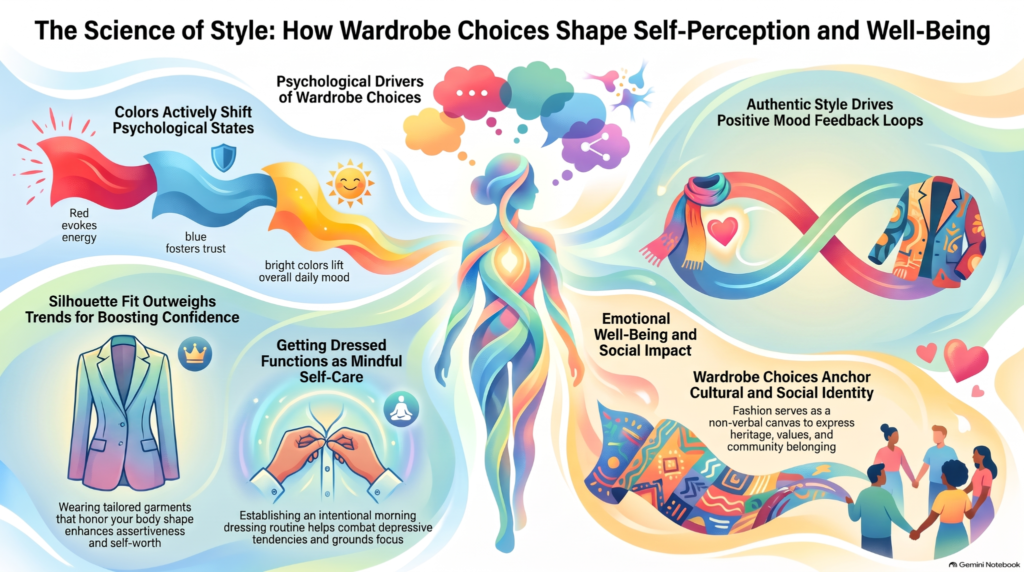
- Color choices in fashion can evoke specific emotions, influencing mood and self-perception positively or negatively.
- Wearing well-fitted clothing enhances confidence and self-image, leading to increased assertiveness in social interactions.
- Fashion serves as a medium for self-expression, reflecting identity and fostering emotional exploration and acceptance.
- Uplifting outfits can create a positive feedback loop, boosting mood and confidence while improving overall emotional well-being.
- Intentional fashion choices correlate with productivity, demonstrating the impact of clothing on focus and engagement in daily tasks.
THE PSYCHOLOGICAL IMPACT OF COLOR CHOICES IN FASHION
Fashion is much more than just fabric; it is an expressive medium that allows people to convey identity, foster confidence, and navigate social dimensions of life. Color analysis—which helps people discover complementary colors for skin tone, eyes, and hair—can change mood and confidence. For example, dressing for body shape and using body shape as a dimension of body acceptance and healthy body image can allow one to identify as someone that is authentically themself, increasing confidence.
When you choose an outfit, the colors you select do more than just reflect trends; they can greatly influence your mood and how others perceive you. Color symbolism plays a vital role in this dynamic. For instance, wearing red can evoke feelings of passion and energy, while blue often brings a sense of calm and trustworthiness. Understanding these emotional associations allows you to harness the power of color to express your true self.
Consider how you feel in a bright yellow shirt compared to a muted gray one. The former might lift your spirits, while the latter could dampen them. When you embrace colors that resonate with your emotions, you create an authentic representation of yourself.
This conscious choice empowers you to navigate social interactions with confidence, as your outfit becomes a canvas for your inner state. Ultimately, your color choices can liberate you, reflecting your personality while shaping how you connect with the world.
How Fashion Styles Influence Confidence Levels
Fashion is also an often overlooked way to maintain or improve mental health. It can give us something to look forward to every day and help us combat depression. One of the main symptoms of depression or a depressive episode is having trouble with self care, such as not showering or not getting dressed. Getting dressed in the morning is often an overlooked aspect of self-care but can help combat depressive tendencies and in turn become a mindful practice.
While the specific styles you choose to wear can often feel like a personal expression, they also play a significant role in shaping your confidence levels. When you embrace a look that resonates with your personality, you experience a boost in style confidence.
It’s not just about the clothes; it’s about how they empower you. Each outfit has the potential to transform your mindset and elevate your emotional self-image.
Consider how slipping into a well-fitted suit or a vibrant dress can shift your perspective, making you feel more assertive and self-assured. This fashion empowerment stems from aligning your exterior with your inner self, creating a harmonious balance.
When you feel good in what you wear, it radiates outward, influencing how you engage with the world. Ultimately, your fashion choices can be a powerful tool in cultivating the confidence you desire, fostering a sense of freedom in self-expression.
How Fashion Shapes Our Social Identity
In today’s hyper-visual digital culture, the body is increasingly treated as a performance: it is styled and filtered and is constantly judged against idealised beauty standards. Social media reinforces these ideals by flooding us with edited images, and some people even turn to cosmetic surgery in an attempt to meet them. Such pressures not only influence how individuals present themselves, but also how they feel about their bodies. This can lead to increased anxiety, dissatisfaction, and a tendency to compare oneself to others
Your fashion choices do more than just reflect your personal style; they also signal aspects of your identity to the world around you.
Each outfit can serve as a canvas for cultural expression, revealing your heritage and beliefs.
Personal Style Expression
Fashion profoundly influences how you perceive yourself and how others perceive you. Your individual style serves as a canvas for creative expression, allowing you to communicate your identity without uttering a word.
When you choose clothing that resonates with your inner self, it can enhance your confidence and shape your emotional self-image. Each outfit becomes a reflection of your mood, beliefs, and aspirations, influencing how you engage with the world.
Cultural Identity Representation
When you explore different styles, you’re not just choosing garments; you’re engaging in a dialogue with your cultural background and social environment.
Fashion serves as a powerful medium for cultural representation, allowing you to express your identity in ways that resonate deeply. Each piece you wear can reflect your heritage, beliefs, and values, transforming clothing into a canvas for identity expression.
As you curate your wardrobe, you navigate the complexities of social identity, connecting with others who share similar backgrounds or ideologies. This conscious selection fosters a sense of belonging and empowerment, reinforcing the idea that your fashion choices aren’t merely aesthetic—they’re an essential part of who you’re and how you relate to the world around you.

HOW FASHION AFFECTS YOUR EMOTIONAL WELL-BEING?
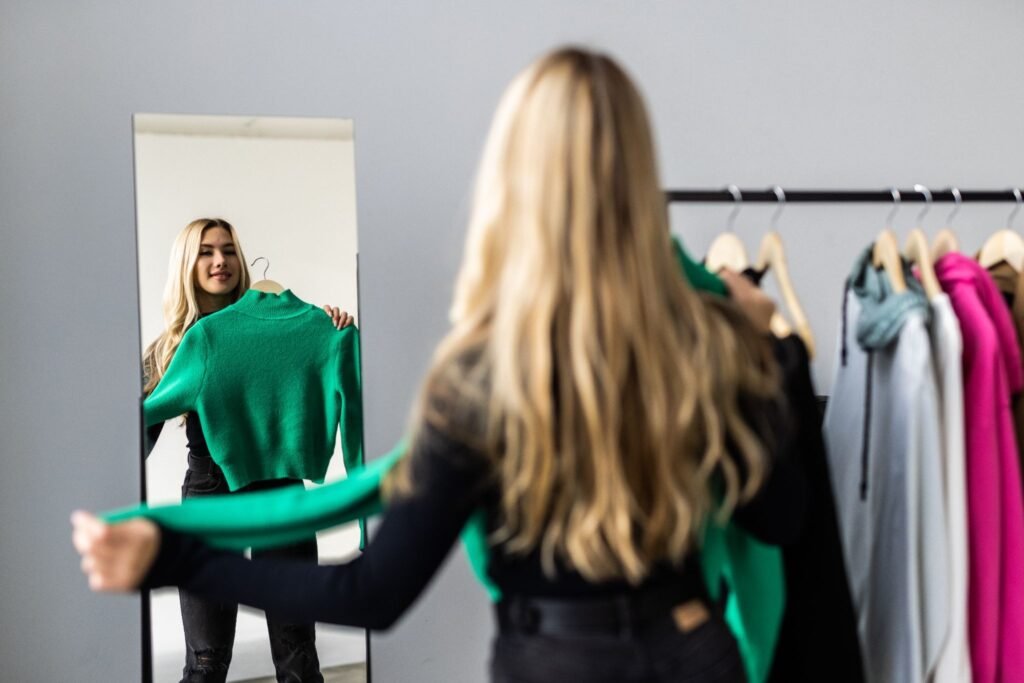
Whenever I analyze seasonal palettes or guide someone through paring down to an intentional capsule wardrobe, I notice how quickly the conversation shifts from mere fabrics to vulnerable conversations about body image and self-worth. During one of my early research projects in New York, I spent weeks documenting how individuals interacted with fitting room mirrors. The moments of hesitation, the instinctive tugging at seams, and the visible sigh of relief when a cut balanced their natural frame revealed something fundamental: our garments serve as an active mirror for our internal narrative.
In my personal wardrobe, this realization transformed how I curate what I own. I stopped buying pieces out of novelty and began selecting garments with the exact same mindfulness I bring to my morning yoga practice: focusing on breathability, alignment, and how each fiber feels against the body.
When you introduce a vibrant tone that awakens your complexion, or choose an adaptable silhouette tailored precisely to your unique proportions, you are not conforming to societal standards—you are reclaiming agency over your self-view. You begin dressing to support your energy and honor your lifestyle, turning personal style into a quiet, unwavering declaration of bodily acceptance and daily empowerment.
Although it might seem superficial, the clothes you wear can considerably influence your emotional well-being. When you choose outfits that resonate with your identity, you’re exploring the connection between fashion and mental health, enhancing emotional expression and helping you communicate feelings you might struggle to verbalize. This process allows you to communicate feelings you might struggle to verbalize, serving as a bridge between your inner self and the world around you.
Wearing colors or styles that uplift you can create a positive feedback loop, boosting your confidence and altering your mood. Conversely, donning clothes that don’t align with your true self can lead to discomfort and self-doubt.
Embracing fashion as a tool for emotional exploration empowers you to craft an image that reflects your authentic self. By understanding how your wardrobe choices affect your emotional landscape, you can take steps toward cultivating a style that nurtures your mental well-being and promotes freedom in self-expression.
How Fashion Choices Impact Mood and Productivity?
The clothes you choose not only express your identity but also play a significant role in shaping your mood and productivity. When you wear something that resonates with your style, it can lead to immediate mood enhancement. When you wear something that resonates with your style, understanding clothes and mood psychology helps explain how your clothing choices can influence your emotions, confidence, and overall mood.
Think about those days when you slip into your favorite outfit—suddenly, you feel more confident and ready to tackle challenges.
Conversely, clothing that feels uncomfortable or doesn’t reflect who you’re can drag you down, affecting your focus and energy levels.
Research shows that dressing intentionally can provide a productivity boost, enabling you to engage more fully with your tasks.
The Influence of Fashion on Body Image and Self-View
Fashion plays an essential role in shaping how you perceive your body and self-worth. Your clothing choices often reflect deeper feelings about yourself, impacting your body image and self-view. When you embrace styles that align with body positivity, you not only celebrate your individuality but also challenge societal norms that dictate what’s considered beautiful.
This connection between fashion psychology and self-perception is profound; the right outfit can empower you, making you feel confident and liberated. Conversely, trends that emphasize unattainable ideals can lead to negative self-talk and diminished self-esteem.
Understanding the influence fashion holds over your emotions allows you to make more conscious choices. By curating a wardrobe that uplifts rather than constricts, you foster a healthier relationship with your body. Ultimately, when you approach fashion as a tool for self-expression, you pave the way for a more positive self-image and a fulfilling sense of freedom.
Practical Fashion Tips to Enhance Self-Esteem
When it comes to enhancing your self-esteem through fashion, understanding your unique body shape is key.
By selecting styles that flatter your figure and colors that resonate with your personality, you can transform how you feel about yourself. Choosing outfits that make you feel comfortable and confident can become a meaningful self care activity, helping you express your individuality, improve your mood, and strengthen your self-esteem.
These simple yet powerful choices can greatly boost your confidence and help you express your true self.
Dress for Your Body
How can you transform your wardrobe into a source of confidence? Start by embracing your body shape and recognizing that fit matters more than trends.
Opt for styles that offer versatility, allowing you to mix and match for various occasions. Focus on silhouette balance; highlight your best features while downplaying areas you’re less confident about.
Play with proportions to create a visual harmony that celebrates your uniqueness. Select fabrics that feel good on your skin, as the comfort factor impacts your overall mood.
Consider personal tailoring for that perfect fit, which can greatly enhance your body positivity. When you dress in a way that resonates with your identity, you’ll experience a genuine confidence boost that radiates from within.
Choose Colors Wisely
What colors resonate with your spirit and elevate your mood? Understanding color psychology can transform how you feel about yourself. Each hue carries its own symbolism; for instance, blue exudes calmness, while yellow sparks joy.
When you choose your wardrobe, think about how these colors influence your emotional self-image. Wearing shades that reflect your personality not only boosts your confidence but also creates a vibrant connection with those around you.
Imagine donning a fiery red when you need to feel empowered or a soft green for tranquility. Embrace this freedom of choice; let colors empower you and enhance your self-esteem.
RELATED STUDIES ABOUT HOW FASHION AFFECTS SELF PERCEPTION
In the intricate dance between fashion and self-perception, your choices serve as a subtle brushstroke on the canvas of your emotional landscape. By embracing styles that resonate with your inner self, you can cultivate a more harmonious relationship with your body and mind. As you navigate this vibrant domain, remember that each garment holds the potential to elevate your spirits and enhance your confidence. Ultimately, fashion becomes not just an expression, but a powerful ally in your journey toward self-acceptance.
Sustainable innovation in fashion: Leveraging digital product passports for transparent product information and enhanced brand perception communication
This empirical investigation examines how consumer-facing attributes of digital product passports (DPPs) shape consumer perceptions of brand technological competence and brand green value, how these value dimensions translate into overall brand attitude, and how consumer age moderates this relationship within a voluntary adoption market.
Conceptual Framework & Rationale
- The Emergence of Digital Product Passports in Fashion: The fashion and textile apparel sector faces increasing pressure to support circular economy practices, curb post-purchase landfill waste, and provide full supply-chain traceability. DPPs have emerged as a digital labeling mechanism using embedded physical tags (e.g., QR codes, RFID, near-field communication [NFC] chips) that allow consumers to scan and access a product’s lifecycle history, material origins, ethical sourcing, care requirements, and end-of-life pathways.
- The Voluntary Adoption Context: While the European Commission plans to mandate DPP implementation for textile apparel by late 2027, the United States—the world’s largest fashion market—currently has no such regulatory requirement. Under mandatory mandates, DPPs serve primarily as a baseline compliance requirement; however, in voluntary markets like the US, early DPP implementation functions as a strategic differentiator that signals brand-level capabilities.
- Theoretical Integration (Cue Utilization & Diffusion of Innovation Theories):
- Cue Utilization Theory: Consumers rely on extrinsic cues when intrinsic product quality cues are difficult to assess directly. DPP attributes function as extrinsic signals that inform consumer evaluations of the brand.
- Diffusion of Innovation Theory (DIT): Identifies five core technological attributes influencing adoption: observability, simplicity (inverse of complexity), trialability, relative advantage, and compatibility.
- Green Transparency: Represents the open, honest disclosure of environmental practices and product lifecycle impacts, serving as an informational cue that complements technological attributes.
- Dual Dimensions of Brand Value: The authors hypothesize that DPP attributes shape two distinct dimensions of brand value: brand technological competence (the organization’s perceived capability to develop and deploy advanced technologies) and brand green value (the perceived environmental benefits relative to consumer costs).
- Moderation by Consumer Age: Because older cohorts (Gen X, Baby Boomers) rely more heavily on in-store product information and demonstrate greater alignment between sustainable attitudes and purchasing actions compared to younger cohorts (Gen Z, Millennials), age is posited to moderate the strength of the brand value–attitude relationship.
Methodology & Empirical Architecture
- Sampling & Data Collection: An online survey conducted via Dynata recruited 391 US adult consumers aged 18 and older, yielding a final analytical sample of 302 usable responses after excluding incomplete or invalid entries.
- Sample Demographics & Familiarity:
- Demographics: Mean participant age was 51.6717.77 years; 52% identified as female; 79% identified as White/European American, 7.3% Black/African American, 4.6% Hispanic/Latinx, and 4.3% Asian; 51% held at least a bachelor’s degree.
- DPP Awareness & Tag Experience: While QR codes were widely recognized and used (69.5%), followed by RFID (21.5%) and NFC (16.9%), only 28% had ever scanned a digital tag to retrieve garment information, confirming early-stage market adoption.
- Construct Measurement & Second-Order Factor Restructuring:
- Latent constructs were measured using validated 7-point Likert scales (and 7-point bipolar semantic differentials for brand attitude).
- Multicollinearity and Factor Re-specification: High correlations among the five original DIT constructs prompted exploratory and confirmatory factor analyses, identifying two second-order factors:
- Accessibility: Combining simplicity and trialability.
- Compatible Advantage: Combining relative advantage and compatibility.
- The revised measurement model achieved acceptable construct validity and fit: 2(470)=895.52,p<0.001, CFI=0.96, RMSEA=0.06, SRMR=0.05, with all HTMT ratios <0.90.
- Analytical Modeling:
- Structural equation modeling (SEM) in Mplus with robust maximum likelihood estimation tested main paths.
- Bootstrap mediation analysis (5,000 resamples) evaluated indirect pathways.
- Hierarchical linear regression in SPSS tested the moderating effects of age, categorized into three life stages: younger (39 years, n=107), middle-aged (40–59 years, n=96), and older (60 years, n=99).
Key Empirical Findings
- Structural Equation Model Performance: The structural model demonstrated good empirical fit: 2(477)=923.19,p<0.001, CFI=0.95, RMSEA=0.06, SRMR=0.05.
- Antecedents of Brand Technological Competence:
- Green Transparency: Proved to be the strongest positive driver (=0.50,p<0.001).
- Compatible Advantage: Exerted a substantial positive effect (=0.46,p<0.001).
- Observability: Significantly and positively influenced competence perceptions (=0.12,p<0.05).
- Accessibility: Counter to initial hypotheses, accessibility (simplicity + trialability) had no significant effect (=-0.05,p=0.78).
- Antecedents of Brand Green Value:
- Both compatible advantage (=0.45,p<0.001) and green transparency (=0.42,p<0.001) were significant positive predictors of perceived green value.
- Formation of Brand Attitude & Relative Impact:
- Perceived brand technological competence was the primary driver of overall favorable brand attitude (=0.65,p<0.001).
- Brand green value exerted a positive, statistically significant, but smaller direct effect on brand attitude (=0.19,p<0.01).
- Bootstrap Mediation Pathways:
- Brand technological competence significantly mediated the effects of green transparency ($\beta = 0.33, 95\%\text{ CI: } [0.20, 0.48]$), compatible advantage ($\beta = 0.30, 95\%\text{ CI: } [0.12, 0.51]$), and observability ($\beta = 0.08, 95\%\text{ CI: } [0.02, 0.14]$) on brand attitude.
- Brand green value significantly mediated the effects of compatible advantage ($\beta = 0.09, 95\%\text{ CI: } [0.01, 0.21]$) and green transparency ($\beta = 0.08, 95\%\text{ CI: } [0.02, 0.18]$) on brand attitude.
- Accessibility showed no significant indirect effect on brand attitude through either value dimension.
- The Moderating Influence of Consumer Age:
- Hierarchical regression confirmed a significant positive moderation effect of age on the path between brand technological competence and brand attitude (=0.28,p<0.05,R2=0.01,F=5.62).
- Age similarly moderated the relationship between brand green value and brand attitude (=0.26,p<0.05,R2=0.01,F=4.68).
- In both instances, the positive influence of brand value on overall brand attitude was significantly amplified among older consumers (60 years) relative to younger cohorts.
Theoretical & Practical Implications
- Rethinking Technological Simplicity as a “Baseline Expectation”: The non-significant impact of accessibility indicates that basic smartphone interactions (e.g., scanning a QR code) have become ubiquitous consumer habits. Consumers view usability as an expected baseline convenience rather than an indicator of organizational technological sophistication. Competence is instead inferred from whether the technology provides superior functional utility (compatible advantage) and rich, verifiable data disclosure (green transparency).
- Prioritizing Competence Over Green Claims in Marketing: Because technological competence exerted more than three times the direct effect on brand attitude compared to green value (=0.65 vs. =0.19), fashion brands risk diminishing returns if they frame DPPs purely as ecological communication. Marketing strategies should highlight the brand’s technological capabilities, data infrastructure, and digital sophistication alongside environmental claims.
- Addressing the Senior Consumer Segment: DPPs offer practical value to older shoppers who frequently encounter difficulty reading small print on physical fabric labels. By offering a readable mobile interface that delivers in-store product details, DPPs satisfy older consumers’ preferences for physical retail exploration and translate more strongly into positive brand attitudes.
- Extending Value Beyond Standard Compliance: Brands can leverage the unstandardized nature of voluntary DPP rollouts to incorporate high-value features, such as digital authenticity verification, counterfeit protection, and integrated resale/circularity channels.
Methodological Limitations
- Attitudinal vs. Behavioral Endpoints: The study measured self-reported brand attitude rather than actual transactional behavior, in-store scan frequency, or willingness to pay a price premium.
- Simulated vs. Physical Interaction: Respondents evaluated digital tag descriptions and illustrative imagery rather than interacting with physical, garment-embedded DPP tags in a real retail environment.
- Data-Driven Model Modifications: Merging the five DIT constructs into two second-order constructs was statistically necessary due to multicollinearity, but warrants replication across other consumer markets.
- Low Initial Tag Utilization: Only 28% of respondents had prior experience scanning digital garment labels, meaning baseline responses reflect perceived impressions rather than longitudinal habituation.
| REFERENCE: Kyuree Kim, Eunjoo Cho, Ann Marie Fiore, Sustainable innovation in fashion: Leveraging digital product passports for transparent product information and enhanced brand perception communication, Cleaner and Responsible Consumption, Volume 23, 2026, 100497, ISSN 2666-7843, https://doi.org/10.1016/j.clrc.2026.100497. (https://www.sciencedirect.com/science/article/pii/S2666784326001117) |
How virtual fitting rooms shape wellbeing and readiness for virtual events: The moderating role of self-perception traits
This empirical investigation examines how user interactions during the preparatory stage of virtual fitting rooms (VFRs)—specifically dressing and customizing an avatar—influence psychological readiness for subsequent virtual events through the mediating mechanism of hedonic wellbeing, and evaluates how self-perception traits (fashionable self-image and tendency to social comparison) moderate these relationships across professional and entertainment contexts.
Conceptual Framework & Theoretical Rationale
- Virtual Fitting Rooms as Immersive Onboarding: As organizations adopt immersive technologies across workplace collaboration and entertainment spaces, VFRs have emerged as a critical preparatory touchpoint where users construct and dress their digital avatars. Rather than serving as mere digital tailoring tools, VFRs function as an identity-building stage that establishes users’ cognitive, emotional, and social expectations before entering virtual environments.
- Readiness for Virtual Events: Readiness reflects a user’s psychological preparedness—mental confidence, certainty, and emotional capacity—to transition from avatar preparation into the main immersive event. Adequate readiness is essential for fostering sustained engagement, reducing immersion friction, and enhancing overall satisfaction.
- Integration of Self-Determination Theory (SDT): The authors utilize SDT to position hedonic wellbeing—conceptualized as an immediate, short-term affective state characterized by pleasure and gratification—as a mediating mechanism. Experiential inputs in VFRs fulfill basic psychological needs:
- Competence: Supported by perceived clothing attractiveness, which bolsters confidence in digital self-presentation.
- Autonomy: Fulfilled via self-congruence with avatar clothing, enabling authentic self-expression.
- Competence & Autonomy: Reinforced by intuitive, aesthetically pleasing VFR design.
- Relatedness & Autonomy: Fostered through VFR enjoyment, generating intrinsic emotional connection and agency.
- Social Comparison Theory (SCT) and Dispositional Moderation: Drawing on SCT, the study introduces two self-perception traits that govern how users internalize VFR cues:
- Fashionable Self-Image: The extent to which users perceive themselves as stylish and value external admiration of their style.
- Tendency to Social Comparison: The dispositional inclination to evaluate one’s appearance and abilities relative to others, amplifying sensitivity to avatar aesthetics even during solitary customization tasks.
Methodology & Experimental Architecture
- Dual-Context Empirical Design: To assess generalizability across functional environments, two distinct real-time VFR studies were conducted utilizing the commercial “Style Me” 360-degree avatar customization platform:
- Study 1 (Professional Context, N=251): Participants dressed avatars to attend a simulated formal workplace meeting in a corporate Metaverse setting.
- Study 2 (Entertainment Context, N=256): Participants customized avatars for a social virtual party emphasizing leisure and informal signaling.
- Participant Cohorts & Verification: Both studies recruited UK adults aged 18–60 via Prolific who possessed prior immersive tech experience (VR/AR). In Study 1, participants had a mean age of 36.77 years (49.8% male, 47.4% female, 2.8% non-binary/third gender). In Study 2, mean age was 34.81 years (53.5% female, 41.4% male, 4.7% non-binary/third gender, 0.4% prefer not to say). Genuine task engagement was verified through open-ended avatar descriptions and attention filters.
- Measurement & Common Method Bias Controls:
- Constructs were evaluated using validated psychometric scales (Table 1), including items for perceived attractiveness, self-congruence, VFR design, VFR enjoyment, hedonic wellbeing, readiness for the virtual event, fashionable self-image, and tendency to social comparison.
- Procedural separations and Harman’s single-factor tests verified that common method bias was within acceptable bounds ($31.71\%$ variance explained in Study 1; $34.98\%$ in Study 2).
- Analytical Modeling Protocol:
- Confirmatory factor analysis (CFA) in AMOS 29.0 confirmed measurement model fit, convergent validity (AVE=0.81to0.97), and discriminant validity across both cohorts.
- Structural Equation Modeling (SEM) tested direct paths and mediation hypotheses (H1–H4).
- Hayes’ PROCESS Model No. 7 (5,000 bias-corrected bootstrap resamples) evaluated moderated mediation models (H5–H6).
Key Empirical Findings
- Mediation of Hedonic Wellbeing Across Contexts:
- Perceived Attractiveness Wellbeing Readiness (H1): Supported in both contexts (Study 1 professional: b = 0.21, 95% CI 0.08, 0.38; Study 2 entertainment: b = 0.24, 95% CI 0.06, 0.42).
- Self-Congruence Wellbeing Readiness (H2): Significant in the professional setting (b = 0.37, 95% CI 0.22, 0.48), but non-significant in the entertainment setting (b = 0.07, 95% CI -0.41, 0.01).
- VFR Design Wellbeing Readiness (H3): Supported across both domains (Study 1: b = 0.13, 95% CI 0.07, 0.21; Study 2: b = 0.15, 95% CI 0.01, 0.30).
- VFR Enjoyment Wellbeing Readiness (H4): Not supported as an unconditional direct indirect effect in either study (Study 1: b = 0.05, 95% CI -0.15, 0.03; Study 2: b = 0.01, 95% CI -0.10, 0.10).
- Moderation by Fashionable Self-Image:
- Study 1 (Professional): Moderated mediation was confirmed across all four paths (H5a–H5d supported). High fashionable self-image amplified the indirect positive effects of attractiveness, self-congruence, and design on readiness. For VFR enjoyment, individuals with low fashionable self-image exhibited a negative indirect effect on readiness through diminished wellbeing, whereas those with high fashionable self-image displayed a strong positive effect.
- Study 2 (Entertainment): Moderated mediation was supported for attractiveness (b=0.13,CI[0.09,0.16]), self-congruence (b=0.10,CI[0.06,0.15]), and enjoyment (b=0.07,CI[0.03,0.11]), but not for design (b=0.02,CI[-0.03,0.07]).
- Moderation by Tendency to Social Comparison:
- Study 1 (Professional): Moderated mediation was supported across all four dimensions (H6a–H6d supported). Higher comparison tendencies amplified the positive indirect effects of attractiveness, self-congruence, design, and enjoyment on readiness.
- Study 2 (Entertainment): Social comparison significantly conditioned indirect paths for attractiveness (b=0.15,CI[0.12,0.19]), self-congruence (b=0.15,CI[0.12,0.19]), and design (b=0.14,CI[0.10,0.18]), but not for enjoyment (b=-0.01,CI[-0.03,0.03]).
- Directional Shifts: For participants with low social comparison tendencies, the indirect relationships between VFR factors and readiness through wellbeing were neutral or negative; for high-comparison individuals, these effects shifted to strongly positive.
Theoretical & Practical Implications
- Context-Dependent Salience of Identity Congruence: While clothing attractiveness and interface design universally drive wellbeing and readiness, self-congruence is highly context-sensitive. In professional virtual settings, individuals experience heightened concern regarding credibility, social evaluation, and role conformity, making identity alignment between the user and avatar essential. In contrast, entertainment settings allow for exploratory, playful, or fantasy-oriented avatar styling where authentic self-congruence is secondary to aesthetic experimentation.
- Resolving the “Enjoyment Paradox” in Task-Oriented Prep: In professional settings, pushing playful “enjoyment” features can backfire among individuals with low fashionable self-image, who view excessive gamification as an unwelcome distraction from the serious task of preparing for a work meeting.
- Implications for Virtual Platform Architects:
- Context-Aware Interface Scaffolding: VFR architectures should calibrate their feature sets based on event formality. Professional platforms must prioritize curated catalogs supporting authentic identity representation, professional credibility, and clean functional navigation. Entertainment environments should emphasize visual appeal, creative experimentation, and high-fidelity aesthetics.
- Personalization via Social Traits: Systems that integrate brief onboarding questions or behavioral tracking to gauge users’ fashion interest and social comparison habits can dynamically adjust interface complexity. High-comparison users benefit from features that simulate social feedback, lighting previews, and social visibility.
Study Limitations
- Scenario-Based Role Simulation: Participants customized avatars for hypothetical event prompts rather than attending high-stakes live virtual meetings or live public events with genuine peers, potentially attenuating real-world social risks.
- Omission of Broader Environmental Stimuli: The research focused on clothing, self-concept, and basic interface design, leaving unexamined additional sensory elements such as avatar movement physics, auditory cues/background music, virtual brand logos, and dynamic lighting conditions.
- Demographic and Cultural Constraints: Data were collected exclusively from UK-based participants with prior exposure to immersive technologies, which may limit generalizability to novice users or markets with contrasting fashion and social comparison norms.
| REFERENCE: Maher Georges Elmashhara, Marta Blazquez, Jorge Julião, How virtual fitting rooms shape wellbeing and readiness for virtual events: The moderating role of self-perception traits, Journal of Business Research, Volume 215, 2026, 116352, ISSN 0148-2963, https://doi.org/10.1016/j.jbusres.2026.116352. (https://www.sciencedirect.com/science/article/pii/S0148296326003875) |
How to enhance employees’ emotional, cognitive, and intentional readiness for retail automation in the fashion retail industry: A mixed PLS-SEM, NCA, and fsQCA study
This empirical study examines how perceived organizational stimuli influence retail employees’ tri-dimensional digital readiness (emotional, cognitive, and intentional) toward retail automation in the fashion industry through the psychological mechanisms of Psychological Capital (PsyCap), employing a methodological triangulation of partial least squares structural equation modeling (PLS-SEM), necessary condition analysis (NCA), and fuzzy-set qualitative comparative analysis (fsQCA).
Conceptual Framework & Theoretical Rationale
- Retail Automation Pressures in Fashion: Driven by escalating labor costs, rapid inventory turns, and demands for elevated customer experiences, US fashion retailers are rapidly integrating automated service technologies—including smart point-of-sale (POS) systems, self-checkout stations, RFID systems, and AI-driven platforms. However, organizational implementations frequently falter due to employee resistance and technological strain.
- Employee-Centered S-O-R Extension: While the Stimulus-Organism-Response (S-O-R) framework has been extensively applied to consumer shopping behavior, its application to employee organizational behavior during technological disruption remains scarce. Drawing on Jacoby’s reconceptualized S-O-R model, the study conceptualizes perceived organizational resources as environmental stimuli (S), psychological capital as internal organismic mechanisms (O), and digital readiness dimensions as behavioral/intentional responses (R).
- Deconstructing Psychological Capital (PsyCap): Rather than treating PsyCap as a monolithic second-order construct, the authors deconstruct it into its four constituent dimensions—hope, self-efficacy, resilience, and optimism (HERO)—to evaluate their distinct and asymmetric effects on readiness.
- Tri-Dimensional Digital Readiness: Grounded in organizational change theory, digital readiness is conceptualized across three interrelated dimensions:
- Emotional Readiness (ER): Affective reactions, positive attitudes, and openness toward automation.
- Cognitive Readiness (CogR): Beliefs regarding the necessity, utility, and personal capability to adopt automation.
- Intentional Readiness (IR): The willingness to invest energy and effort into learning and operating automated systems.
- Core Research Objectives:
- Delineate the directional relationships between organizational stimuli (organizational learning and digital capability), the four PsyCap dimensions, and digital readiness dimensions via PLS-SEM.
- Identify the non-compensatory bottleneck conditions necessary for high intentional readiness using NCA.
- Uncover the equifinal, sufficient causal configurations leading to high intentional readiness using fsQCA.
Methodology & Triangulated Analytical Architecture
- Sampling & Data Quality Protocols: Data were collected via Prolific from employees across the US fashion retail sector (apparel, footwear, cosmetics, luxury, and department stores). Strict qualification criteria required participants to have direct, regular interaction with newly introduced automated store technologies.
- Screening & Cleaning: From 512 raw responses, cases were removed due to incomplete submissions (n=11), failed attention checks (n=23), rapid completion times under 3 minutes (n=9), generalized Cook’s distance outliers (n=29), and straightlining (n=21), leaving a final analytical sample of 419 retail professionals.
- Sample Profile: 57.0% female, 41.2% male; 49.8% Gen Y (Millennials), 26.2% Gen Z; 75.4% full-time; 54.5% mid-level managers, 33.7% entry-level staff; and 44.8% working in large retail enterprises.
- Prevalent Technologies: Self-checkout (64%), buy online, pick up in-store (BOPIS; 60%), in-store apps (55%), and smart POS (50%).
- Instrumentation & Measurement Model Evaluation:
- Measured using validated 7-point Likert scales: Organizational Learning (Yang, 2003), Digital Capability (Zhu & Kraemer, 2002; Lin, 2006), PsyCap Questionnaire (Luthans et al., 2007), and Change Readiness (Bouckenooghe et al., 2009).
- PLS-SEM assessment in SmartPLS v.4 established convergent validity (factor loadings 0.727, CR0.862, AVE0.611) and discriminant validity (Fornell-Larcker criterion satisfied; all HTMT ratios <0.90). Full collinearity VIFs were <3.3, and Harman’s single-factor test accounted for 41.42% of variance, ruling out common method variance concerns.
- Methodological Triangulation Protocol:
- PLS-SEM: Assessed linear path coefficients, indirect mediation, and variance explained (R2: Hope=0.435, SE=0.338, Optimism=0.352, Resilience=0.230, ER=0.627, CogR=0.233, IR=0.520).
- NCA: Evaluated necessity effect sizes (d) using the ceiling regression with free disposal hull (CR-FDH) method and derived a bottleneck percentage matrix.
- fsQCA 4.1: Calibrated continuous variables into fuzzy-set membership using Mean SD thresholds, executing truth table analysis with a frequency threshold of 5 and a consistency cutoff of 0.85 (PRI consistency 0.70).
Key Empirical Findings
- PLS-SEM Linear Paths & Direct Relationships:
- Stimuli to PsyCap Mechanisms: Perceived organizational learning positively predicted all four PsyCap dimensions (hope: =0.355,p<0.001; self-efficacy: =0.438,p<0.001; optimism: =0.444,p<0.001; resilience: =0.116,p<0.05). Perceived digital capability similarly enhanced all four dimensions (hope: =0.387,p<0.001; self-efficacy: =0.205,p<0.001; optimism: =0.214,p<0.001; resilience: =0.404,p<0.001).
- Differential Effects of PsyCap on Readiness:
- Hope: Was the only resource positively associated with all three readiness dimensions (ER: =0.331,p<0.001; CogR: =0.233,p<0.01; IR: =0.236,p<0.001).
- Self-Efficacy (The Cognitive Closure Paradox): Directly enhanced intentional readiness (=0.201,p<0.01), but had no effect on emotional readiness (=-0.043,p>0.05) and exerted a significant negative effect on cognitive readiness (=-0.155,p<0.05).
- Optimism: Strongly predicted emotional readiness (=0.512,p<0.001) and cognitive readiness (=0.190,p<0.01), but showed no direct link to intentional readiness (=0.099,p>0.05).
- Resilience: Enhanced cognitive readiness (=0.240,p<0.001), but had no direct effect on emotional (=0.063,p>0.05) or intentional readiness (=-0.000,p>0.05).
- Drivers of Intentional Readiness: Emotional readiness was the primary driver of intentional readiness (=0.330,p<0.001). Cognitive readiness exhibited no significant direct relationship with intentional readiness (=-0.071,p>0.05).
- Indirect Serial Mediation: Significant indirect paths revealed that emotional readiness successfully channeled the positive influence of organizational stimuli and employee optimism into intentional effort (OLOptimismERIR: =0.075,p<0.001; DCOptimismERIR: =0.036,p<0.01).
- NCA Necessary Conditions & Bottleneck Thresholds:
- Prerequisites for Intentional Readiness: NCA confirmed that digital capability (d=0.202,p<0.001) and self-efficacy (d=0.136,p<0.001) are non-compensatory necessary conditions (medium effect size range). Organizational learning (d=0.095) and optimism (d=0.098) operated as near-necessary conditions. Cognitive readiness was not necessary (d=0.016,p=0.470).
- Bottleneck Escalation: To achieve 80% intentional readiness, employees require minimum thresholds of 2.148% digital capability and 3.580% self-efficacy. However, to attain 100% intentional readiness, required digital capability escalates sharply to 20.048% (alongside 6.683% self-efficacy, 10.740% optimism, and 5.251% emotional readiness), proving that high intentional commitment cannot occur without robust digital infrastructure.
- fsQCA Causal Configurations:
- Truth table analysis generated seven equifinal sufficient solutions (overall solution coverage = 0.519, consistency = 0.897).
- The Central Role of Affect: Emotional readiness was the sole core condition present across all seven configurations.
- Configuration Archetypes:
- Holistic Pathway (Solution 1): Joint presence of both organizational stimuli and all PsyCap dimensions alongside core emotional readiness produces high intentional readiness without needing cognitive readiness.
- Stimulus-Driven Compensatory Pathways (Solutions 2, 3, 5): Strong organizational learning, digital capability, and combined emotional/cognitive readiness compensate for deficits in specific PsyCap resources (e.g., absence of self-efficacy in Solution 2, hope in Solution 3, or resilience in Solution 5).
- Psychology-Dominant Pathways (Solutions 4, 6): High individual PsyCap combined with emotional and cognitive readiness produces high intentional adoption even when organizational learning (Solution 4) or digital capability (Solution 6) is absent.
- Targeted Capability Recipe (Solution 7): Presence of organizational stimuli, self-efficacy, and optimism alongside core emotional readiness yields high intentional readiness, even in the complete absence of hope, resilience, and cognitive readiness.
Theoretical & Practical Implications
- Explaining the Cognitive Closure Effect: The negative relationship between self-efficacy and cognitive readiness (=-0.155) reflects a Dunning-Kruger and Einstellung dynamic: employees with high self-confidence may overestimate their mastery of automated tools, fostering cognitive rigidity, underestimating workflow complexity, and short-circuiting the deeper cognitive processing required to understand technological nuances.
- The Primacy of Affect Over Cognitive Understanding: Cognitive readiness alone does not convert into behavioral intention (=-0.071), whereas emotional readiness is a decisive enabler. Employees may logically grasp why retail automation is necessary for company competitiveness yet remain paralyzed by unaddressed emotional stressors (fear of obsolescence, technology anxiety).
- Strategic Triangulation Insights: While NCA established that digital capability and self-efficacy are non-negotiable prerequisites (without which intentional adoption cannot begin), fsQCA demonstrated that emotional readiness is the operational core condition that converts those baseline capabilities into active adoption effort.
- Managerial Prescriptions for Fashion Retailers:
- Alleviate Emotional Anxiety First: Rather than focusing solely on technical manuals, managers must prioritize emotional support initiatives, open discussions regarding job stability, and recognition programs to build affective comfort toward retail automation.
- Infrastructure Upgrades to Cross the Bottleneck: Because achieving complete intentional readiness requires a jump in organizational digital capability from ~2% to $>20\%$, retailers must invest heavily in stable digital infrastructure, seamless POS integrations, and dedicated on-floor technical troubleshooting.
- Tailor Interventions to Employee Profiles: Recognizing that equifinality governs adoption, retailers can deploy distinct strategies: either building comprehensive psychological capital to compensate for legacy infrastructure, or providing robust digital systems to support employees experiencing lower personal resilience.
Study Limitations
- Sector & Sampling Boundaries: Focused entirely on non-probability samples of US fashion retail employees, limiting direct generalizability to other geographic markets, non-fashion retail categories (e.g., big-box grocery), or non-retail industrial automation.
- Cross-Sectional Self-Report Data: Reliance on cross-sectional survey instruments prevents tracking how psychological states and readiness adapt over time as automation matures, while introducing potential self-report biases regarding perceived capabilities.
- Absence of Objective Behavioral Endpoints: Intentional readiness was evaluated as an attitudinal and behavioral intention rather than through objective on-the-job telemetry, error rates, or logged system usage metrics.
| REFERENCE: Xun (Catherine) Sun, Jung Ha-Brookshire, How to enhance employees’ emotional, cognitive, and intentional readiness for retail automation in the fashion retail industry: A mixed PLS-SEM, NCA, and fsQCA study, Journal of Retailing and Consumer Services, Volume 94, 2027, 104989, ISSN 0969-6989, https://doi.org/10.1016/j.jretconser.2026.104989. (https://www.sciencedirect.com/science/article/pii/S0969698926002705) |
CONCLUSION
If studying fashion movements and human behavior has taught me anything, it is that true style is never about keeping up with a cycle designed to render your wardrobe obsolete. The clothes we collect throughout our lives tell our personal history; they hold memory, movement, and identity in every stitch. When you stop viewing your body as something to fix to fit the clothes, and instead treat your garments as supportive tools designed to fit your real life, your entire relationship with dressing shifts.
My deepest hope for anyone navigating personal style is to approach their closet not with pressure or digital self-comparison, but with genuine curiosity and grace. Let your wardrobe evolve into a curated space of trusted pieces that make you stand a little taller, breathe a little easier, and express who you are without requiring validation from an external feed.
Dressing well is an intentional act of self-care—an everyday ritual that bridges how you look on the outside with how peacefully and assertively you carry yourself within. When you honor that connection, your clothes stop being mere fabric and become an authentic sanctuary.