

In my years working as an experiential travel consultant and leading mindfulness retreats across the globe, I have noticed a striking pattern in the way people approach time off. Far too often, we treat vacations as high-stakes escape hatches—frantic attempts to outrun burnout by packing our itineraries with every landmark, cafe, and tourist hotspot imaginable. We convince ourselves that taking a trip is synonymous with finding peace, only to return home more mentally drained and physically exhausted than when we boarded the plane.
True vacation happiness rarely comes from cramming our days with photo opportunities or racing through a checklist. Instead, it begins the moment we treat travel as an intentional extension of self-care. When you view your journey through a mindful lens, the primary destination is no longer just a dot on a map; it becomes a dedicated space to pause, breathe, and quiet the persistent noise of everyday life.
Travel gives us a rare, neutral canvas where we can step out of our automatic routines and listen closely to what our minds and bodies actually need. Embracing vacation mindfulness isn’t about passively doing nothing; it is about choosing experiences that restore your inner clarity, deepen your presence, and allow genuine relaxation to settle into your bones.
Self-care is essential for your mental well-being, serving as a buffer against stress and anxiety. Vacations enhance this effect by promoting relaxation, creativity, and happiness. Scientific research shows that stepping away from daily stressors leads to significant mood improvements. Engaging in self-care strategies while traveling, like mindful journaling and intentional breaks, maximizes your experiences. Exploring how self-care and vacation happiness intertwine can reveal transformative benefits that await you.
KEY TAKEAWAYS
- Self-care practices, such as mindfulness and relaxation, enhance mental well-being and buffer against stress during vacations.
- Vacations provide a break from daily stressors, rejuvenating mental health and promoting positive emotions through new experiences.
- Engaging in leisure activities during travel amplifies relaxation and receptiveness to positivity, enhancing overall vacation happiness.
- Balancing adventure with relaxation techniques during vacations fosters resilience and prevents burnout, contributing to greater satisfaction.
- Choosing destinations that align with personal relaxation preferences can significantly boost mood and provide effective stress relief.
WHY SELF-CARE MATTERS AND HOW IT WORKS
While you might think of self-care as a luxury, it’s actually an essential component of maintaining your overall well-being. Engaging in self-care practices can greatly enhance your mental health, providing a buffer against stress and anxiety. Studies show that prioritizing self-care leads to improved mood and emotional regulation, which grants you greater freedom to navigate life’s challenges.
You might feel overwhelmed by daily demands, but taking time for yourself—whether through mindfulness, exercise, or hobbies—can yield profound self-care benefits. These activities promote the release of endorphins, reducing feelings of stress and fostering a sense of accomplishment.
Additionally, self-care encourages you to reconnect with your values and passions, empowering you to live a more fulfilling life.
How Vacations Promote Mental Well-Being and Happiness?
Happiness is a highly valued matter, with a few exceptions all humans want to be happy and many people try to get happier than they are. Generally speaking, individuals control only approximately 40% of their happiness. Some 50% of the differences among people’s happiness levels are accounted for by their genetically determined set points, while 10% is accounted for by unintentional activity.
Taking time for self-care isn’t just about daily practices; it extends to how you structure your time off, particularly through vacations. When you take a break from routine, you embrace vacation mindfulness, allowing yourself to be present and savor each moment. This intentional focus enhances your travel joy, as you experience new cultures, cuisines, and landscapes that invigorate your spirit.
Research shows that stepping away from daily stressors can greatly improve your mental well-being. Vacations create opportunities for relaxation, connection, and exploration, all of which contribute to a heightened sense of happiness.
By prioritizing your time off, you’re not just escaping; you’re nurturing your mental health. Engaging in diverse experiences fosters creativity, reduces anxiety, and promotes a more positive outlook on life.
Ultimately, these moments of joy and mindfulness can lead to lasting happiness, making every vacation a crucial component of your self-care journey.
The Science of Stress Relief on Vacation
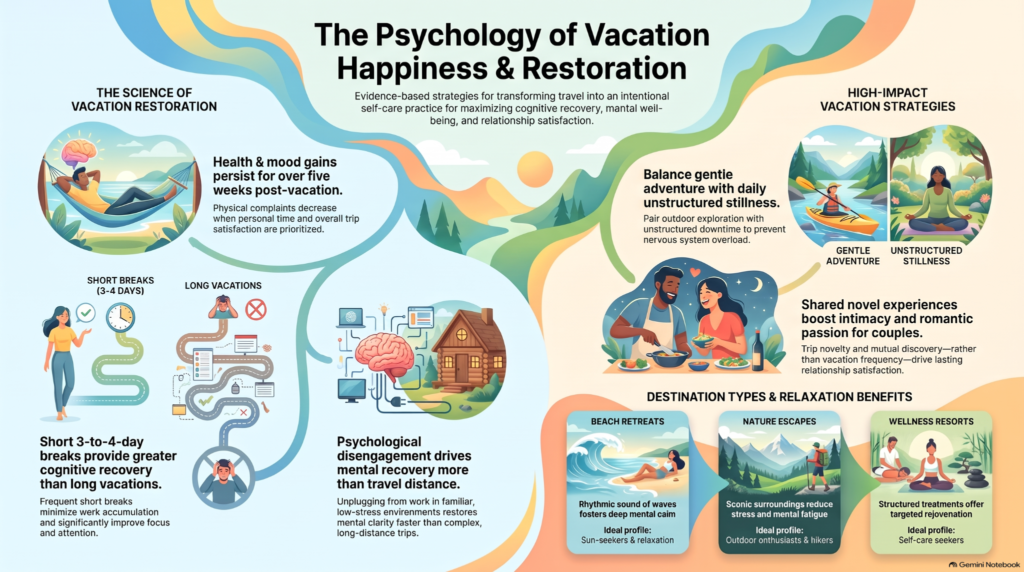
One study found that three days after vacation, people’s physical complaints, quality of sleep and mood had improved compared to before vacation. These gains were still present five weeks later, especially in those who had more personal time and overall satisfaction during their vacation. This suggests you have some control over how you feel; schedule more personal time and engage in activities that you enjoy, and you will feel better physically, sleep better and be in a better mood for more than a month.
When you take a vacation, you’re not just escaping the daily grind; you’re also tapping into a wealth of psychological benefits that can greatly reduce stress.
Research shows that during these breaks, your brain shifts into a relaxation response, promoting neurobiological changes that enhance your mood and well-being.
Understanding these mechanisms can empower you to prioritize vacations as essential for your mental health.
Psychological Benefits of Vacations
Summer is traditionally the most popular time for employees to take time off, with many planning one or two weeks away from the workplace. For people with demanding jobs and little flexibility, these vacation days become a highly anticipated event—a chance to disconnect, recharge, and simply live life on their own terms.
Vacations offer an essential opportunity to disconnect from daily stressors and rejuvenate your mental health.
When you embrace a vacation mindset, you create space for relaxation and reflection, which can enhance your overall well-being. Studies show that even short breaks can greatly reduce stress levels and improve mood.
This is where travel therapy comes into play, allowing you to explore new environments and experiences that stimulate positive emotions. Engaging with different cultures and landscapes not only fosters creativity but also provides a sense of freedom, breaking the monotony of daily routines.
By prioritizing vacations, you invest in mental resilience, ultimately leading to a more balanced life.
Neurobiology of Relaxation Responses
As you immerse yourself in a vacation, your brain undergoes a remarkable transformation that promotes relaxation and stress relief. This shift is driven by powerful relaxation mechanisms, activating your parasympathetic nervous system.
Your body releases neurochemical responses, such as serotonin and dopamine, which enhance feelings of joy and tranquility. You may notice a decrease in cortisol levels, reducing stress and anxiety.
Engaging in leisure activities, whether lounging by the beach or hiking in nature, further amplifies these effects. Your brain becomes more receptive to positive experiences, fostering a sense of freedom and well-being.
Effective Strategies for Self-Care During Travel
Although travel can be exhilarating, it often disrupts your usual routines and self-care practices, leading to increased stress and fatigue. To maintain your well-being, start with mindful packing. Choose versatile clothing and essential items that promote comfort and relaxation, reducing decision fatigue. This intentional approach frees up mental space for enjoyment.
Incorporating travel journaling can also enhance your experience. Documenting your thoughts and feelings helps you process new experiences and reduces anxiety. Reflecting on your day fosters mindfulness, allowing you to savor moments rather than rushing through them.
Additionally, prioritize breaks in your itinerary. Incorporating mindful journaling, meditation, or scheduled breaks into your travel routine can turn each moment of relaxation into a meaningful self care activity that reduces stress, supports emotional well-being, and helps you enjoy your vacation more fully. Schedule downtime to recharge, whether it’s enjoying a quiet moment at a café or meditating in a park. These strategies not only help you stay grounded but also encourage a deeper connection with your surroundings, maximizing the joy of your travel adventures.
HOW ADVENTURE AND SELF-CARE BOOST VACATION HAPPINESS
Whenever I consult with travelers designing itineraries, my first piece of advice is to completely dismantle the “checklist” mindset. It is so easy to let ambitious travel plans turn into another demanding job where you feel guilty for resting. During one of my early extended journeys through Southeast Asia, I caught myself running from temple to market from sunrise to sunset, terrified of missing out on a cultural landmark. By day four, I felt completely disconnected, irritable, and overwhelmed. That was the moment I realized that meaningful travel cannot happen when our nervous systems are trapped in constant motion.
The turning point came when I made an intentional habit of weaving sacred, unstructured pauses into every single day. I started waking up twenty minutes early to sit quietly with a camera or journal, noticing the morning light hit the stones before the crowds arrived. I learned to schedule afternoons where the only agenda was lingering over a slow, nourishing lunch or simply watching everyday street life unfold.
Pairing gentle outdoor adventures—like a morning hike along a coastal path—with dedicated stillness afterward creates a rhythmic balance that keeps you grounded. When you release the urge to document everything and give yourself permission to just be, travel shifts from sensory overload into genuine neurobiological rejuvenation.
Adventure travel can greatly enhance your vacation happiness by providing thrilling experiences that boost your mood and create lasting memories.
At the same time, incorporating relaxation techniques guarantees you recharge, preventing burnout from the excitement.
Balancing adventure with self-care allows you to maximize joy and fulfillment during your getaway.
Benefits of Adventure Travel
Many travelers find that engaging in adventure travel greatly enhances their overall vacation happiness and well-being. Adventure activities, such as hiking, kayaking, or rock climbing, offer not just adrenaline but also an opportunity for personal growth. When traveling with family or friends, exploring large group travel ideas can help you choose destinations and activities that encourage connection, shared experiences, and relaxation while ensuring everyone has an enjoyable and memorable getaway.
These experiences push you out of your comfort zone, fostering resilience and self-discovery. Research shows that the thrill of tackling challenges can elevate your mood and create lasting memories.
In addition, immersing yourself in nature during these travel experiences can lead to reduced stress levels and increased feelings of connectedness.
By choosing adventure travel, you’re not just escaping daily routines; you’re embracing freedom, cultivating joy, and enriching your life.
Ultimately, these adventures can transform ordinary vacations into extraordinary journeys of self-care and happiness.
Importance of Relaxation Techniques
While engaging in thrilling activities can be exhilarating, integrating relaxation techniques into your vacation routine is equally essential for maximizing happiness and well-being.
Mindfulness practices, such as meditation or yoga, can ground you in the moment, enhancing your enjoyment of both adventures and downtime. By taking just a few minutes for deep breathing exercises, you can lower stress levels and cultivate a sense of peace amidst the excitement.
Research shows that balancing adventure with relaxation not only boosts your mood but also improves overall satisfaction with your vacation.
Overcoming Challenges to Taking Time Off for Self-Care
Taking time off for self-care can feel intimidating, especially when work demands and personal obligations seem relentless. You might encounter barriers to vacationing, such as tight deadlines or the belief that your absence will disrupt productivity. However, recognizing these obstacles is the first step to overcoming them.
Effective time management can help you carve out opportunities for breaks. Prioritize tasks, delegate when possible, and set boundaries to protect your self-care time.
Additionally, remind yourself that taking a break isn’t a luxury; it’s essential for maintaining your mental health and productivity. Studies indicate that regular time off enhances creativity and reduces burnout. By reframing your perspective on self-care as a necessity rather than an indulgence, you can embrace the freedom to recharge.
Practical Tips for Choosing Relaxing Destinations
How do you determine which destinations will truly help you unwind and recharge? Start by identifying what relaxes you most—whether it’s the sound of waves at beach retreats or the tranquility of nature escapes. For travelers who enjoy exploring scenic trails and peaceful nature escapes, a comfortable hiking travel backpack can keep essentials organized and make outdoor adventures more relaxing and enjoyable. Consider wellness resorts that offer spa treatments or quiet hideaways designed for solitude.
Here’s a simple guide:
| Type of Destination | Benefits | Ideal For |
| Beach Retreats | Peaceful, rhythmic waves | Sun-seekers, relaxation |
| Nature Escapes | Fresh air, scenic views | Hikers, nature lovers |
| Wellness Resorts | Spa treatments, rejuvenation | Self-care enthusiasts |
| Urban Oases | Culture, dining, convenience | City explorers |
| Mountain Cabins | Cozy, serene atmospheres | Retreat seekers, solitude |

RELATED STUDIES ABOUT PSYCHOLOGY OF VACATION HAPPINESS
In summary, prioritizing self-care through vacations is like tending to a garden; both require attention and nurturing to flourish. By understanding the psychological benefits of travel and implementing effective self-care strategies, you can cultivate a more vibrant and fulfilling life. Embrace the opportunity to step away from daily stressors, allowing your mind and body to rejuvenate. Ultimately, taking time for yourself isn’t just a luxury; it’s essential for sustaining your mental well-being and happiness.
Couples vacations and romantic passion and intimacy
Conceptual Framework & Theoretical Rationale
- The Relationship Maintenance Challenge: Maintaining relationship quality—specifically romantic passion, physical intimacy, and relationship satisfaction—is a universal priority for couples, yet habituation and day-to-day routines frequently erode these indicators over time.
- Theoretical Foundation (The Self-Expansion Model): Grounded in Arthur Aron’s self-expansion model, individuals possess an innate drive to grow and expand their self-concepts by acquiring novel perspectives, competencies, and identities. In close relationships, this expansion occurs primarily through two principles:
- Individual Expansion: Growing personal competencies through novel, challenging, and interesting experiences.
- Inclusion of Other in the Self: Sharing novel and exciting experiences with a partner, which integrates the partner’s perspectives into one’s own self-concept and reignites romantic passion and intimacy.
- Vacations as Multi-Day Self-Expansion Contexts: While prior relationship research has focused on brief, laboratory-based tasks or single date nights (lasting minutes to hours), leisure vacations remove individuals from home routines for extended multi-day periods. Vacations inherently offer opportunities for self-expanding activities—such as exploring unfamiliar destinations, tasting new cuisines, or engaging in physical challenges.
- Core Research Objectives:
- Determine whether self-expanding vacation experiences are associated with post-vacation relationship quality (passion, satisfaction, physical intimacy).
- Test whether these benefits require traveling together as a couple versus vacationing independently.
- Evaluate the dyadic influence of shared self-expansion across multiple vacations using paired partner-actor reports.
Methodology & Empirical Architecture
The investigation employed a two-study, multi-sample design evaluating mixed-sex cohabitating adult couples in the United States:
- Study 1: Individual Perspective & Moderation Analysis (N=238):
- Design & Sample: Recruited 470 US adults via Amazon Mechanical Turk (MTurk), filtering for cohabitating individuals who had been in their relationship during their most recent leisure vacation (n=238 retained; mean age 35.8 years; 66.4% female; mean relationship length 10.329.51 years).
- Quasi-Experimental Comparison: Compared participants who traveled with their romantic partner (89%) against those who traveled without their partner (11%).
- Instrumentation:
- Self-Expanding Experiences Scale: Developed and validated a 5-item scale (=0.88; e.g., “This vacation was exciting/challenging”) measuring novel and engaging vacation attributes.
- Romantic Passion: 5-item non-obsessive passion subscale from the Passionate Love Scale (=0.92).
- Relationship Satisfaction: Relationship Quality Scale (=0.91) assessing closeness and overall happiness.
- Analytical Modeling: Moderation analyses using Hayes’ PROCESS macro (Model 1) testing the interaction between travel companionship (with vs. without partner) and self-expanding experiences.
- Study 2: Dyadic Reciprocal Design (N=204 individuals / 102 couples):
- Design & Eligibility: Recruited 102 cohabitating, child-free romantic couples who had taken at least two joint vacations together (lasting 3 nights) in the prior calendar year. Both partners independently completed separate surveys.
- Sample Profile: Mean relationship length 11.4111.75 years (ranging 1 to 50 years); 76.5% married; taking an average of 2.650.68 vacations per year.
- Instrumentation:
- Shared Self-Expanding Experiences Scale: Developed a 5-item dyadic scale (=0.70; e.g., “We tasted new food,” “We did things that were a little daring,” “How novel were your joint vacations overall?”) rated on a 0–100 sliding scale.
- Physical Intimacy: 2-item behavioral scale (=0.78; “We had sex” and “We showed affection by kissing, touching, or holding hands” during a typical week at home; 0–100 sliding scale).
- Relationship Satisfaction: 8-item composite scale (=0.91) combining need-fulfillment connectedness and relationship satisfaction.
- Analytical Modeling: Multilevel modeling (MLM) with random intercepts in SPSS (treating Dyad ID as a grouping factor) to account for non-independence between paired partners.
Key Empirical Findings
- Study 1: The Essential Role of Joint Travel:
- Romantic Passion (H2a Supported): The interaction between self-expanding experiences and traveling with a partner significantly predicted post-vacation romantic passion (b=0.65,t[234]=2.02,p=0.044,R2=0.02).
- For participants who vacationed with their partner, self-expanding experiences strongly predicted greater romantic passion (b = 0.29, t234 = 3.25, p = 0.001, 95% CI 0.114, 0.463).
- For participants who vacationed without their partner, self-expansion showed no significant association with passion (b=-0.36,t[234]=-1.17,p=0.247).
- Relationship Satisfaction (H2b Partially Supported): The overall regression model was significant (F[3,234]=5.38,p=0.001,R2=0.06). Conditional effects demonstrated that self-expansion significantly predicted relationship satisfaction among those traveling with their partner (b = 0.17, t234 = 3.15, p = 0.002, 95% CI 0.064, 0.276), but not for those traveling alone (b=-0.01,p=0.976).
- Invariance to Relationship Duration: These effects held across both newer and long-term relationships, with no significant confounding by relationship length or participant gender.
- Romantic Passion (H2a Supported): The interaction between self-expanding experiences and traveling with a partner significantly predicted post-vacation romantic passion (b=0.65,t[234]=2.02,p=0.044,R2=0.02).
- Study 2: Dyadic Predictors of Post-Vacation Physical Intimacy:
- Shared Self-Expansion Drives Physical Intimacy (H1c Supported): Multilevel random-intercept models confirmed that shared self-expanding vacation experiences significantly predicted higher post-vacation physical intimacy (kissing, touch, and sexual intercourse) (b=6.15,SE=1.72,p<0.001, Pseudo R2=0.13).
- Quality Over Frequency: The total number of vacations taken per year was unrelated to physical intimacy (b=1.92,p>0.05), and there was no interaction between vacation frequency and self-expansion (p=0.41). Physical intimacy was governed by the novelty and challenge of the trips, not the volume or duration of travel.
- Relationship Length as a Covariate: As expected from relationship literature, longer relationship duration was negatively associated with physical intimacy (b=-14.20,p=0.024); however, shared self-expansion remained a significant positive predictor even after controlling for relationship length.
- Relationship Satisfaction (H1b Not Supported in Study 2): Shared self-expansion did not significantly predict relationship satisfaction in Study 2 (F[1,194]=0.56,p=0.452). The authors attribute this to a statistical ceiling effect, as cohabitating couples who regularly take multiple multi-night vacations per year exhibited uniformly high baseline satisfaction (M=4.37/5.0,SD=0.64) with limited variance.
Theoretical & Industry Implications
- Extension of the Self-Expansion Model to Tourism: The findings demonstrate that self-expansion theory generalizes beyond brief lab tasks to complex, multi-day leisure travel. Vacations represent concentrated environments where couples can engage in shared exploration, counteracting the natural habituation that occurs in long-term partnerships.
- Shared Experience as a Prerequisite: Personal self-expansion experienced away from a partner does not spill over into enhanced romantic passion. Relational benefits require joint participation, supporting the “inclusion of other in the self” principle.
- Practical Prescriptions for Tourism Providers & Destination Marketers:
- Curate Micro-Novelty Over Extreme Thrills: Self-expansion does not require hazardous or extreme activities, which can induce stress or safety concerns. Modest, structured novel experiences—such as regional cooking classes, local culinary tastings, guided nature hikes, unique trivia nights, or curated dinner discussion prompts—provide sufficient self-expansion to benefit couples.
- Market Relationship Maintenance: Destination marketing organizations (DMOs) and resorts should frame couples’ packages around shared discovery, learning, and playful adventure rather than passive, sedentary escape alone.
- Focus on Experience Quality Over Trip Frequency: Because trip frequency did not predict intimacy, travel providers should emphasize enriching the quality and memorability of individual itineraries.
Study Limitations
- Cross-Sectional & Retrospective Design: Both studies gathered retrospective reports on past vacations alongside current relationship metrics, demonstrating temporal association but precluding definitive causal conclusions.
- Unmeasured Time Latency: The exact elapsed time between vacation return and survey completion was not recorded (vacations occurred within the preceding 12 months), limiting insights into the decay rate of post-vacation relationship boosts.
- Sample Constraints: Focused exclusively on mixed-sex cohabitating couples within the United States, warranting replication among same-sex couples, non-cohabitating partners, and diverse cross-cultural cohorts.
- Exclusion of Families with Children: Study 2 restricted sampling to child-free couples to isolate dyadic interactions; future research must evaluate how the presence of children alters couple self-expansion during family travel.
| REFERENCE: John K. Coffey, Moji Shahvali, Deborah Kerstetter, Arthur Aron, Couples vacations and romantic passion and intimacy, Annals of Tourism Research Empirical Insights, Volume 5, Issue 1, 2024, 100121, ISSN 2666-9579, https://doi.org/10.1016/j.annale.2024.100121. (https://www.sciencedirect.com/science/article/pii/S266695792400003X) |
It is not a vacation of leisure: The effect of maternity-leave stigma on fertility intentions in China
Conceptual Framework & Theoretical Rationale
- The Chinese Demographic Dilemma & Policy Paradox: Despite the transition from the Universal Two-Child Policy (2015) to the Three-Child Policy (2021) and widespread provincial extensions of statutory maternity leave (granting working women 128 to 190 days and men 7 to 30 days of paternity leave), China entered negative population growth in 2022 (births dropped to 9.56 million against 10.41 million deaths) with births declining further to 9.02 million in 2023. While extended leave increases birth rates in many Western nations, it has paradoxically failed to stimulate fertility in China.
- Workplace Stigma Beyond Dirty Occupations: Integrating sociological and organizational stigma theories (Goffman, 1963; Link & Phelan, 2001; Ashforth & Kreiner, 1999), the authors argue that workplace stigma is not confined to physical labor or tainted occupations. Government-mandated statutory rights—specifically maternity leave—can become socially tainted. A preliminary sentiment analysis of 383 online comments across Weibo, Zhihu, and Xiaohongshu revealed that 86.49% of keywords regarding maternity leave were negative, reflecting pervasive workplace biases.
- The “Maternity-Leave Stigma” Construct: Defined as the extent to which working individuals of childbearing age hold biased, pessimistic beliefs regarding (taking) maternity leave relative to other statutory vacations. It encompasses four distinct tainted dimensions:
- Cognitive Stigma: Believing maternity leave is not genuine leisure, but rather a demanding period requiring complex advance applications and organizational approvals.
- Emotional Stigma: Associating maternity leave with physical exhaustion, pain, and negative emotions rather than relaxation.
- Moral Stigma: Feelings of workplace shame and guilt toward colleagues and supervisors for receiving compensation while absent.
- Consequence Stigma: Anticipating negative career outcomes upon return, such as workplace disconnection, stalled promotion, demotion, pay cuts, and discrimination.
- Theoretical Mechanisms (COR & EVLN Frameworks):
- Conservation of Resources (COR) Theory: Threat of resource loss (salary growth, career trajectory) motivates employees to protect their resources by avoiding the triggering condition—childbearing.
- Anticipatory Psychological Contract Violation from Organization (APCVO): Employees predict their employer will not honor obligations or support them during leave, evoking feelings of betrayal. Under Turnley & Feldman’s Exit-Voice-Loyalty-Neglect (EVLN) model, because voice and passive loyalty are deemed ineffective against entrenched workplace discrimination, employees resort to an exit strategy—voluntarily giving up their childbearing eligibility to avoid career penalties.
- Gender Moderation: Maternity leave is biologically necessary and visible for women (recovery from childbirth), exposing them directly to stereotype threats. For men, paternity leave is shorter, discretionary, and often invisible (men can avoid stigma by simply not claiming leave), leading to a stronger inhibiting effect among women.
Methodology & Scale Validation (Study 1)
- Scale Development Protocol: Following established psychometric guidelines (Hinkin, 1998; Flora & Flake, 2017), an initial 12-item instrument (MLS1–MLS12) was drafted from qualitative interviews, online sentiment data, and occupational stigma scales (Shantz & Booth, 2014).
- Phase 1: Item Analysis & Exploratory Factor Analysis (EFA):
- Administered to N1=296 working individuals of childbearing age in China (64.53% female, 70.27% married, 84.12% college-educated).
- Item Performance: Extreme group tests (top vs. bottom 27%) confirmed significant discriminative power for all 12 items. Corrected item-total correlation coefficients ranged from r=0.58 to 0.76 (all p<0.01), and Cronbach’s for the 12-item pool was 0.90.
- EFA Extraction: Principal component analysis with oblique rotation (KMO=0.89, Bartlett’s 2[66]=1,716.87,p<0.001) extracted four factors with eigenvalues >1 explaining 73.57% of total variance:
- Factor 1: Consequence Stigma (MLS8–MLS12; 21.96% variance).
- Factor 2: Cognitive Stigma (MLS1–MLS3; 19.27% variance).
- Factor 3: Moral Stigma (MLS6–MLS7; 17.23% variance).
- Factor 4: Emotional Stigma (MLS4–MLS5; 15.11% variance).
- Phase 2: Confirmatory Factor Analysis (CFA):
- Validated using an independent sample (N2=340; 58.53% female, 69.12% married).
- The 4-factor model demonstrated good empirical fit: 2(48)=183.69,2/df=3.83,CFI=0.94,TLI=0.92,RMSEA=0.07,SRMR=0.04.
- Standardized factor loadings ranged from 0.72 to 0.92, and subscale internal reliabilities were robust (=0.88 for cognitive, 0.80 for emotional, 0.81 for moral, and 0.84 for consequence stigma; total scale =0.93).
Empirical Hypothesis Testing (Study 2)
- Design & Matched Longitudinal Tracking: A three-stage, two-month lagged design (N2=N3=340) where maternity-leave stigma and demographics were assessed at Stage 2, and APCVO (12-item scale; =0.96) and fertility intentions (2 items; =0.78) were measured two months later at Stage 3 to minimize common method bias.
- Hypothesis Testing via Hierarchical Regression & PROCESS Modeling:
- Direct Detrimental Effect (H4 Supported): After controlling for marital status, age, baseline number of children, education, monthly income, and job type, maternity-leave stigma significantly undermined fertility intentions (=-0.39,p<0.001,R2=0.27).
- Antecedent to Contract Violation (H1 Supported): Maternity-leave stigma was a strong positive predictor of anticipatory psychological contract violation from the organization (=0.89,p<0.001,R2=0.74).
- Impact of Violation on Intentions (H2 Supported): APCVO was significantly and negatively related to fertility intentions (=-0.44,p<0.001).
- Full Mediation Mechanism (H3 Supported): When APCVO was introduced into the model with maternity-leave stigma, the direct effect of stigma on fertility intentions became completely non-significant (=0.00,p>0.05), while APCVO remained strongly negative (=-0.45,p<0.001).
- Bootstrap mediation confirmed that APCVO fully mediated the relationship (indirect effect = -0.40, SE = 0.08, 95% CI: -0.55, -0.25; Sobel Z=-5.15,p<0.001).
- Gender Moderation (H5 Supported): The interaction between maternity-leave stigma and gender was significant (=0.37,p<0.001,R2=0.10).
- Simple slope analysis showed that while both genders experienced negative effects, the inhibiting effect of stigma on fertility intentions was substantially stronger for working women (b = -0.53, SE = 0.06, p < 0.001, 95% CI: -0.65, -0.41) compared to working men (b = -0.16, SE = 0.08, p < 0.05, 95% CI: -0.31, -0.01).
Theoretical & Policy Implications
- Resolving the Policy Implementation Puzzle: Explains why extending statutory leave duration fails to raise birth rates. While policymakers focus on objective metrics (leave length, statutory pay), employees evaluate subjective organizational realities. When extended leave amplifies workplace discrimination and psychological contract violations, it intensifies career anxiety and discourages childbearing.
- Employer-Side Cost Redistribution: Under current Chinese regulations, individual employing organizations shoulder significant direct and indirect costs for maternity leave. This incentivizes employers to subtly penalize childbearing employees, breeding stigma. A truly fertility-friendly society requires the state and social insurance funds—rather than private employers alone—to absorb leave-related replacement costs and tax burdens.
- Mitigating Workplace Contract Violations: Organizations must establish transparent re-entry career pathways, safeguard promotion tracks for returning mothers, and maintain open communication to counteract anticipatory contract violations.
Methodological Limitations
- Employee-Centric Perspective: The study surveyed employees (beneficiaries) and did not capture organizational leadership or human resource manager perspectives (providers), omitting the structural cost pressures driving institutional stigma.
- Proxy Intentions vs. Realized Fertility: The outcome measured subjective childbearing intentions rather than longitudinal, realized birth outcomes, though prior baseline children was statistically controlled.
- Geographic & Cultural Boundary: Conducted exclusively within urban mainland China, limiting direct generalizability to institutional environments with different social safety nets, universal parental leave sharing, or distinct labor market protections.
| REFERENCE: Haiyan Zhang, Yang Yang, Shuwei Sun, It is not a vacation of leisure: The effect of maternity-leave stigma on fertility intentions in China, Acta Psychologica, Volume 248, 2024, 104413, ISSN 0001-6918, https://doi.org/10.1016/j.actpsy.2024.104413. (https://www.sciencedirect.com/science/article/pii/S0001691824002907) |
Taking a break: Exploring the restorative benefits of short breaks and vacations
Conceptual Framework & Theoretical Rationale
- Workplace Stress, Mental Fatigue, and the Right to Respite: The persistent demands of modern professional environments can deplete cognitive resources and physical energy, leading to emotional distress, occupational burnout, and impaired performance. The blurring of working-time boundaries due to mobile technology has intensified this depletion, while many employees fail to use their full annual leave entitlements or remain connected to work while away.
- Attention Restoration Theory (ART): Grounded in Rachel and Stephen Kaplan’s framework, ART posits that continuous, voluntary concentration on demanding tasks causes “directed attention fatigue”. Recovery requires environments that provide four specific qualities:
- Fascination: Holding involuntary attention effortlessly, allowing directed attention mechanisms to rest.
- Being Away: Providing physical and mental distance from everyday routines, obligations, and stressors.
- Extent: Offering sufficient richness, coherence, and scale to engage the mind.
- Compatibility: Matching the setting to the individual’s personal intentions and inclinations.
- Vacations as Public Health Resources: While restorative environments have been extensively studied in natural settings, botanical gardens, and retreats, empirical investigations validating whether destination leisure travel directly restores objective cognitive capacity remain scarce. Furthermore, debate persists regarding whether extended vacations are necessary or if shorter, frequent breaks provide comparable or superior restorative benefits.
- Core Research Objectives:
- Demonstrate the restorative benefits of taking time off using objective cognitive, physiological, and self-report measures.
- Compare the relative restorative effectiveness of short breaks versus longer vacations.
- Identify specific environmental attributes, activity choices, and contextual characteristics that drive cognitive recovery and well-being.
Methodology & Experimental Architecture
- Study Design: A three-arm, prospective causal-comparative field study tracking outcomes before, during, immediately after, and at a one-week follow-up.
- Participant Cohort (N=156):
- Recruited among professional and academic staff at the University of Queensland, Australia.
- Sample Composition: 122 females, 34 males; 36 academic staff, 120 professional/administrative staff; evenly distributed between 20 and 50 years of age (15% aged >50).
- Comparison Groups:
- Short Break Group (n=44): 3 to 4 days away from home and work.
- Vacation Group (n=64): 1 to 5 weeks away from home and work.
- No Break Group (n=48): Maintained normal work routines without a break for at least 3 months prior and during the study period.
- Retention: 99% retained from pre- to post-test (N=155); 112 participants completed all four waves through the follow-up.
- Measurement Suite:
- Physiological Indicators: Systolic blood pressure (SBP), diastolic blood pressure (DBP), and heart rate (HR) recorded seated in the office at set times across multiple days (four pre-readings, four post-readings, two follow-up readings).
- Objective Cognitive Performance:
- Stroop Color-Word Test: Assessed speed and accuracy in inhibiting automatic reading responses under cognitive conflict.
- Letter Cancellation Test: Timed visual search task measuring speed and accuracy in crossing out target letters (“a” and “t”) within structured text.
- Digit Symbol Substitution Test (DSST): Complex processing speed and working memory.
- Subjective Restorative Outcomes:
- Restored Mental State Scale (Packer & Bond, 2010): 6-item scale measuring feelings of being refreshed, calm, relaxed, and content across six testing points.
- Attention Recovery and Reflection Scale (Staats et al., 2003): 12 items administered post-break evaluating renewed energy, focus, and capacity for reflection.
- Restorative Attributes & Contextual Predictors:
- Perceived Destination Restorative Quality Scale (Lehto, 2013): Evaluated six dimensions (compatibility, extent, mentally away, physically away, fascination, and discord).
- Activity Participation: 13 distinct activity types rated on a 7-point scale.
- Contextual Factors: Setting (beach, forest, urban, rural), accommodation type, travel companions, and trip duration.
- Analytical Approach: Repeated-measures ANOVAs (23 and 33) to test time-by-group interaction effects, followed by pairwise 22 comparisons and stepwise linear regressions to identify primary environmental and behavioral drivers.
Key Empirical Findings
- 1. Objective Cognitive Restoration:
- Taking time away significantly restored directed attention capacity compared to remaining at work.
- Stroop Test: Demonstrated a significant time group interaction (F[2,151]=8.795,p<0.001,partial2=0.104). Improvements persisted at the one-week follow-up (F[2,109]=4.644,p=0.012).
- Letter Cancellation: Significant time group interaction (F[2,151]=11.897,p<0.001,partial2=0.136), which remained significant at follow-up (F[2,109]=5.719,p=0.004).
- Digit Symbol Substitution: No significant between-group interaction effects were observed.
- 2. The Cognitive Advantage of Short Breaks Over Vacations:
- Pairwise comparisons revealed that participants taking short breaks gained greater cognitive improvement than those on longer vacations:
- Stroop (Pre-to-Post): Short Break vs. Vacation (F[1,104]=5.940,p=0.016,partial2=0.054).
- Letter Cancellation (Pre-to-Post): Short Break vs. Vacation (F[1,104]=11.192,p=0.001,partial2=0.097). This advantage was maintained at follow-up (F[1,63]=11.131,p=0.001,partial2=0.150).
- Pairwise comparisons revealed that participants taking short breaks gained greater cognitive improvement than those on longer vacations:
- 3. Subjective Well-Being & Restorative Mental States:
- Restored Mental State: Increased steadily during time off and peaked immediately post-break across both vacation groups compared to the no-break control (F[2,150]=10.840,p<0.001,partial2=0.126). Scores gradually declined upon returning to work, though vacationers retained significant benefits at follow-up (p=0.033).
- Attention Recovery & Reflection: Both break groups scored significantly higher than the no-break group (Attention Recovery: F[2,148]=77.329,p<0.001; Reflection: F[2,150]=24.341,p<0.001), with no significant difference between short breaks and longer vacations.
- 4. Lack of Physiological Convergence:
- Across systolic blood pressure, diastolic blood pressure, and heart rate, no significant interaction effects emerged across conditions (p>0.05), demonstrating that daytime resting autonomic metrics in office environments did not capture restorative differences.
- 5. Environmental & Behavioral Predictors of Restoration:
- The Role of Discord: Discord (chaos, crowds, confusion) was the single strongest negative predictor of cognitive performance on both the Stroop (=-0.112) and Letter Cancellation tests (=-0.284). Vacationers reported significantly higher discord than short-break travelers.
- Being Mentally Away: Strongest positive driver of Restored Mental State (=0.303) and Attention Recovery (=0.667). Short-break travelers reported higher levels of being mentally away than vacationers.
- Familiarity vs. Unfamiliarity (“Physically Away”): When controlling for being mentally away, physical distance was negatively associated with attention recovery (=-0.327). Escaping psychological obligations in a familiar, comfortable setting is more restorative than traveling to a novel, logistically complex destination.
- Activity Impact: Passive relaxation (resting, sleeping) predicted higher perceived mental restoration (=0.249) and attention recovery (=0.401). Conversely, work-related activities (checking emails) undermined attention recovery (=-0.302), and screen-based entertainment impaired Stroop performance (=-0.126).
- Social Context: Traveling with children or family groups was negatively associated with all three subjective restorative outcomes (=-0.215to-0.265).
Theoretical & Practical Implications
- Validation of ART in Tourism Settings: Confirms that tourism functions as an effective public health intervention capable of reversing directed attention fatigue.
- Rethinking Trip Duration & Frequency: Trip length had little direct bearing on cognitive recovery. Because restorative benefits diminish within one to two weeks following a return to work, distributing multiple short breaks across the year provides more sustainable, recurring cognitive recovery than relying on an isolated annual holiday, while minimizing the work backlog upon return.
- Soft Fascination Over Hard Fascination: Engaging with nature, quiet surroundings, and unstructured rest supports self-reflection and cognitive recovery, whereas high-stimulation activities (commercial entertainment, crowded sightseeing) deplete attentional reserves.
- Actionable Strategies for Travelers & Employers:
- Travelers: Choose familiar, low-stress environments (e.g., quiet coastal or rural settings), disengage completely from work communications, and minimize structured itineraries.
- Hospitality Providers: Design dedicated quiet spaces, reduce sensory clutter, and emphasize access to calming natural elements.
- Organizations: Actively encourage complete detachment from work during leave, respect unavailability, and implement buffer systems to prevent overwhelming work accumulation upon employee return.
Methodological Limitations
- Non-Randomized Field Design: Participants self-selected into break types rather than being experimentally randomized, introducing potential baseline differences in pre-existing fatigue or planning resources.
- Sample Characteristics: The study drew from a university staff population (predominantly female, 78.2%), which may not fully represent occupations with rigid shifts or distinct physical workloads.
- Follow-up Duration & Control Matching: Post-intervention tracking was restricted to one week post-return, and the No Break control group testing schedule was designed to mirror the longer vacation timeline rather than the short-break interval.
| REFERENCE: Jan Packer, Taking a break: Exploring the restorative benefits of short breaks and vacations, Annals of Tourism Research Empirical Insights, Volume 2, Issue 1, 2021, 100006, ISSN 2666-9579, https://doi.org/10.1016/j.annale.2020.100006. (https://www.sciencedirect.com/science/article/pii/S2666957920300069) |
CONCLUSION
As you look ahead to planning your next journey, I invite you to measure the success of your time off not by the distance traveled or the monuments visited, but by how grounded and nourished you feel upon your return. True well-being cannot be packed into an airtight suitcase or manufactured through a luxury itinerary; it is an internal state that you nurture through small, intentional choices.
A short, quiet weekend in a secluded cabin or a peaceful walk along a familiar coastline can often do far more to restore your mental clarity than a chaotic multi-city trek halfway around the world. When we return from travel, the sights and sounds of unfamiliar places eventually fade into memories. What endures is the renewed capacity to meet our everyday lives with patience, wonder, and emotional resilience.
Treat your upcoming time away as a sacred ritual of self-restoration rather than a transactional getaway. Protect your boundaries, leave ample white space in your schedule, and let curiosity, rather than obligation, steer your days. When travel is approached as a mindful act of self-care, every adventure becomes a meaningful return to yourself.