

As a strength and conditioning coach with a decade of experience, I’ve seen countless athletes obsess over their training splits while completely overlooking the fuel that makes those sessions possible. From my perspective, your pre-workout nutrition is the literal foundation of your performance. In the early days of my career after graduating from Boston University, I used to think performance only came from animal proteins, but I’ve since seen how a shift toward nutrient-dense, plant-based options can transform an athlete’s output.
It isn’t just about avoiding a “crash”; it’s about providing your body with the specific macronutrients, complex carbohydrates for steady energy and plant proteins for muscle support, that allow you to push past a plateau. I’ve personally found that when I fuel with something like a banana and almond butter smoothie, my energy levels during rock climbing or a high-intensity cycling session are far more stable than when I rely on heavy, processed snacks.
We often talk about biomechanics and recovery science, but if the chemical energy in your system is lacking, your form will suffer regardless of how well-designed your program is. I want to help you see these meals not as a chore, but as a strategic tool to empower your performance and long-term health.
Plant-based pre-workout meals are packed with essential nutrients that boost energy and performance. Focus on blends of carbohydrates, protein, and healthy fats to fuel your workouts. Quick options like energizing smoothies with spinach and bananas or overnight oats made with plant-based milk work wonders. Snacking on hummus with carrot sticks before exercising provides healthy fats and complex carbs. Don’t forget about hydration—coconut water is a great choice. Incorporating these nutrient-dense foods will enhance your workout preparation. You’ll soon discover even more creative meal ideas that can elevate your fitness game.
KEY TAKEAWAYS
- Plant-based pre-workout meals provide complex carbohydrates, healthy fats, and protein for sustained energy and optimal performance during workouts.
- Energizing smoothies made with leafy greens, fruits, and nut butter offer a balanced mix of macronutrients for quick fueling.
- Overnight oats with rolled oats, plant-based milk, and fresh fruits deliver easy-to-digest energy without hassle before exercise.
- Nutritious snacks like hummus with veggies or whole-grain crackers ensure energy levels are maintained in the 30-60 minutes before workouts.
- Incorporating nutrient-dense foods like edamame, legumes, and whole grains supports muscle repair and endurance during physical activities.
BENEFITS OF PLANT-BASED NUTRITION
Embracing plant-based nutrition can markedly enhance your overall health and athletic performance. By choosing a diet rich in fruits, vegetables, whole grains, and legumes, you can tap into numerous plant-based advantages that benefit both your body and mind. Research shows that plant-based diets are linked to lower risks of chronic diseases such as heart disease, diabetes, and certain cancers. This means you’re not just fueling your workouts; you’re also promoting long-term wellness.
One of the key benefits of plant-based nutrition is improved nutrient absorption. Plant foods are packed with vitamins, minerals, and antioxidants, which are critical for your body’s recovery and energy levels. For example, the fiber found in plant-based foods helps regulate digestion and enhances the absorption of essential nutrients. This means when you choose a plant-based pre-workout meal, you’re ensuring your body effectively utilizes the nutrients you consume.
Moreover, plant-based diets often lead to better hydration levels, as many fruits and vegetables have high water content. Staying hydrated can profoundly impact your performance, endurance, and recovery.
You’ll also find that plant-based options are generally lower in unhealthy fats and high in complex carbohydrates, providing sustained energy for your workouts.
Incorporating more plant-based meals into your regimen allows you to experience these benefits firsthand. You’ll feel more energized, recover quicker, and support your health—all while enjoying the freedom that comes with choosing a diet that resonates with your values and goals.
Top Nutrients for Energy
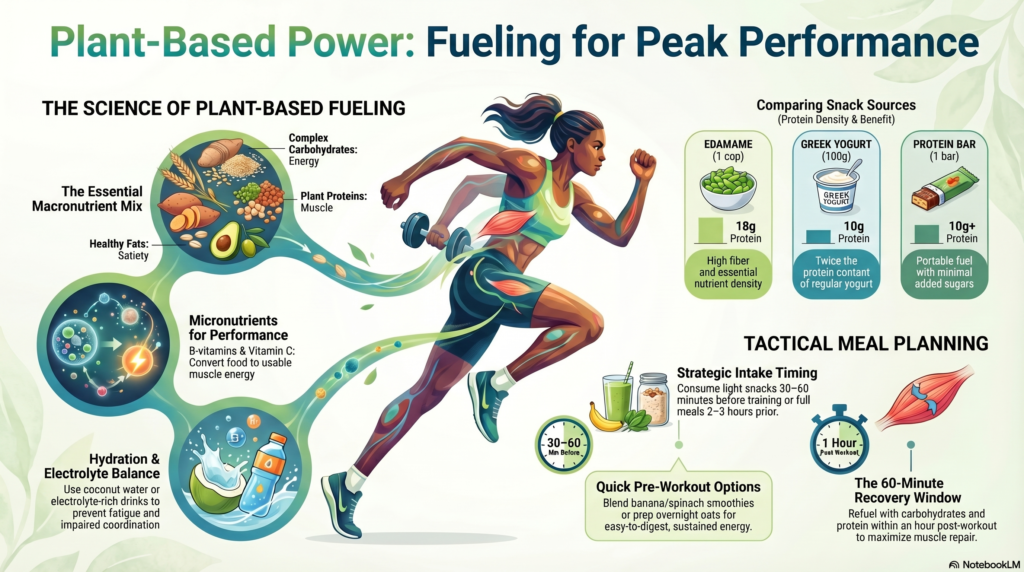
To fuel your workouts effectively, it’s essential to focus on important macronutrients like carbohydrates, proteins, and fats. A well-balanced pre-workout meal can help you train harder, recover faster and feel stronger. Ideally, these meals should be eaten around two to three hours before exercise and contain a mix of carbs for energy and protein for muscle support. For early morning workouts or when appetite is low, lighter options or liquid nutrition can also be a great solution.
Additionally, key vitamins play a significant role in enhancing performance, while proper hydration is critical for maintaining endurance.
Understanding these components can help you optimize your energy levels and improve your overall workout experience.
Essential Macronutrients for Energy
Fueling your body for a workout requires more than just motivation; it hinges on the right balance of macronutrients. Carbohydrates are your primary source of energy, providing the fuel needed for intense cardio workouts and helping you maintain stamina throughout your training sessions. Achieving a proper carbohydrate balance is imperative. Aim for whole grains, fruits, and vegetables to guarantee sustained energy release and avoid crashes during your session.
Protein plays an essential role too, especially when it comes to protein timing. Consuming protein before your workout can help with muscle repair and growth, making it easier to achieve your fitness goals. Plant-based options like lentils, chickpeas, and quinoa not only offer protein but also deliver essential amino acids.
Don’t forget about healthy fats, as they support overall energy levels and can help keep you satiated. Opt for sources like avocados, nuts, and seeds. These fats provide long-lasting energy, significant for endurance activities.
Ultimately, balancing these macronutrients allows you to maximize your performance and feel empowered in your workouts. By understanding how each macronutrient contributes to your energy levels, you can tailor your pre-workout meals for ideal results.
Key Vitamins for Performance
A variety of key vitamins can greatly enhance your workout performance and overall energy levels. For instance, B vitamins, including B1 (thiamine), B2 (riboflavin), and B12, are essential for energy metabolism. They help convert carbohydrates into glucose, which fuels your workouts. You can find these vitamin sources in plant-based foods like legumes, nuts, and whole grains.
Vitamin C also plays an important role in performance enhancement by supporting your immune system and reducing fatigue. Citrus fruits, bell peppers, and broccoli are excellent sources.
Meanwhile, vitamin D is fundamental for muscle function and can be obtained through fortified plant milks or exposure to sunlight.The food you eat is full of nutrients that provide calories to fuel your body. So getting the right mix of nutrients is crucial for your fitness plan. Proper pre-workout nutrition –– including when and how much you eat –– can give you energy, boost your performance, and aid your recovery.
Don’t overlook vitamin E, which acts as an antioxidant, protecting your cells from oxidative stress during intense workouts. Nuts, seeds, and green leafy vegetables are rich in this vitamin.
Incorporating a variety of these vitamins in your pre-workout meals not only supports your energy needs but also enhances your overall athletic performance. By focusing on these nutrient-dense plant-based sources, you’re setting yourself up for success on your fitness journey.
Hydration’s Role in Endurance
While vitamins play a significant role in enhancing workout performance, hydration is equally important for endurance. Staying properly hydrated can profoundly impact your performance, endurance, and recovery, turning hydration into a simple yet powerful self care activity that supports both physical energy and overall well-being.
When you exercise, you lose fluids through sweat, and if you don’t replace these fluids, your body can quickly become dehydrated. This can lead to fatigue, decreased coordination, and impaired cognitive function, all of which can hinder your workout.
Effective hydration strategies can make a substantial difference. Aim to drink water consistently throughout the day, and consider adding electrolyte-rich beverages before, during, and after your workout. These drinks help maintain electrolyte balance, ensuring that your muscles function efficiently while you push your limits.
If you’re engaging in longer endurance activities, think about incorporating natural sources of hydration, such as coconut water or smoothies with fruits high in water content. These options can provide essential nutrients alongside hydration.
Quick And Easy Meal Ideas
In my 10 years of guiding clients, I’ve noticed that “meal mutability”, the ability to adapt a recipe to what you actually have in your pantry, is a secret weapon for consistency. Many people fail because they think they need a rigid, perfect plan, but as a coach, I advocate for flexibility. For example, I often blend my drumming sessions with cardio, and just as that requires a certain rhythm, your nutrition needs a sustainable flow.
If you don’t have time for a full meal, a quick snack like hummus and carrots 30 to 60 minutes before hitting the gym can provide the complex carbs and healthy fats needed to sustain endurance. I also can’t stress the importance of micronutrients enough. We often focus on calories, but B vitamins and Vitamin C are what actually help convert that food into usable glucose for your muscles.
I’ve observed that clients who incorporate more leafy greens and whole grains tend to report less fatigue and better immune function, which is critical when you’re training for competitive goals. Even small habits, like using coconut water for electrolytes or prepping overnight oats the night before, can significantly impact your recovery time and hydration levels. It’s about creating a “protein timing” strategy that supports muscle repair before you’ve even finished your last set.
When you’re short on time but need an energy boost, quick and easy meal ideas can make all the difference. Veggies are great for snacking but not very high in protein. Pairing them with yogurt dip can increase your protein intake. Yogurt dip is typically made by combining yogurt with herbs and flavorings, such as dill and lemon juice, as in this recipe. For more protein, it’s best to use Greek yogurt, which contains almost twice as much protein as regular yogurtTrusted Source. A 100-g portion (1/3–1/2 cup) of Greek yogurt contains 10 gTrusted Source of protein. For convenience, you can make a batch of yogurt dip ahead of time and portion it into snack-size containers to grab it when you need it.
Energizing smoothie recipes, nutritious snack options, and simple overnight oats provide the fuel you need without the hassle.
These meals not only save time but also guarantee you’re getting the nutrients necessary for peak performance.

ENERGIZING SMOOTHIE RECIPES
Smoothies are often a go-to choice for those looking to fuel up before a workout, thanks to their convenience and nutritional benefits. By blending together various ingredients, you can create energizing smoothie combinations that provide the essential nutrients your body craves.
Start with a base like almond milk or coconut water, then add fruits such as bananas or berries for natural sweetness and antioxidants. If you want an extra boost, consider incorporating superfood additions like spinach, chia seeds, or spirulina. These ingredients not only enhance the nutritional profile but also support your energy levels during exercise.
For a quick recipe, try blending one banana, a handful of spinach, a tablespoon of almond butter, and a cup of almond milk. This combination offers a balance of carbohydrates, healthy fats, and protein, making it an ideal pre-workout option.
You can also mix it up by experimenting with different smoothie combinations, like mango and ginger or avocado and cacao. The possibilities are endless, ensuring you won’t get bored.
Enjoy these energizing smoothies to feel fueled and ready for your workout!
Nutritious Snack Options
Nutritious snacks are vital for maintaining energy levels and supporting performance during workouts. Choosing snacks with high nutrient density can greatly impact your energy and endurance. For a quick energy boost, consider options like apple slices with almond butter or a handful of mixed nuts. These snacks not only offer healthy fats and proteins but also provide the vitamins and minerals your body needs.
Snack timing is essential; aim to eat a small snack about 30 to 60 minutes before your workout. This allows your body to digest and convert the nutrients into energy efficiently.
If you prefer something more substantial, try hummus with carrot sticks or whole-grain crackers topped with avocado. Both options deliver healthy fats and complex carbohydrates that keep you fueled.
Another excellent choice is a smoothie made with spinach, banana, and a scoop of plant-based protein powder. This combination guarantees you’re getting a balance of macronutrients while maximizing nutrient density.
Simple Overnight Oats
Overnight oats are an incredibly convenient and versatile meal option that can fuel your workouts with ease. By combining rolled oats with your choice of plant-based milk, you create a nutrient-dense base that’s ready to go when you wake up. This overnight preparation allows the oats to absorb the liquid, making them creamy and easy to digest, perfect for a pre-workout meal.
You can customize your overnight oats with a variety of oatmeal toppings to suit your taste and nutritional needs. Fresh fruits like bananas or berries add natural sweetness and a boost of vitamins, while nuts and seeds provide healthy fats and protein. For added flavor, consider incorporating nut butters, cocoa powder, or spices such as cinnamon.
The beauty of overnight oats lies in their adaptability; you can mix and match ingredients to keep your meals exciting. Plus, they’re quick to prepare—just combine your ingredients the night before, and grab them on your way out the door.
With their high fiber content and sustained energy release, overnight oats guarantee you’re well-fueled for your workout, helping you to perform at your best.
Smoothies for Pre-Workout Fuel
When you need a quick and effective way to fuel your workout, smoothies can be a game-changer. They’re not only easy to prepare but also versatile enough to cater to your specific nutritional needs. By choosing the right smoothie ingredients, you can create a blend that provides the energy and nutrients necessary for peak performance.
Start with a base of leafy greens, like spinach or kale, which are packed with vitamins and minerals. Add a banana or a handful of berries for carbohydrates that provide a quick energy boost. Incorporating nut butter or hemp seeds can also give you healthy fats and protein, which will help sustain your energy levels throughout your workout.
When it comes to blending techniques, using a high-speed blender makes a significant difference. It guarantees that your ingredients are smoothly combined, allowing for better nutrient absorption. For a creamier texture, consider adding a splash of plant-based milk or yogurt. If you prefer a revitalizing kick, toss in some ice cubes or frozen fruits.
Don’t forget to experiment with spices like cinnamon or ginger, which can enhance flavor and offer additional health benefits.
By knowing how to mix and match your smoothie ingredients effectively, you can create a delicious and nutritious pre-workout drink that empowers you to perform at your best.
Protein-Packed Snack Options
Looking for quick, protein-packed snacks to fuel your workouts? You’re in the right place! Choosing nutrient-dense plant-based pre-workout meals helps maintain steady energy levels, making your nutrition strategy a strong foundation for home fitness for weight loss and consistent training progress.
Whether you’re training for endurance or strength, these snacks can help keep your muscles fueled.
First up, consider edamame. These young soybeans deliver about 18 grams of protein per cup and are loaded with fiber and essential nutrients. Sprinkle some sea salt for flavor, and you’ve got a great pre-workout option.
Another fantastic choice is hummus paired with whole-grain pita or veggies. Chickpeas are rich in protein and provide complex carbohydrates, promoting sustained energy. Timing your snack is critical—aim to eat about 30 minutes to 2 hours before your workout to optimize performance.
If you’re in the mood for something sweet, try a protein bar made from natural ingredients like nuts and seeds. Look for bars with at least 10 grams of protein per serving and minimal added sugars. These bars are portable, making them perfect for on-the-go snacking.
Don’t overlook nut butter! A tablespoon of almond or peanut butter on whole-grain toast or apple slices packs a protein punch while offering healthy fats.
Lastly, consider a plant-based yogurt topped with nuts or seeds for a creamy, protein-rich snack.
Carbohydrate Sources for Endurance
To maintain endurance during prolonged workouts, prioritizing carbohydrate intake is key. Carbohydrates serve as your main energy source, fueling your muscles and brain. Whole grains like quinoa, brown rice, and oats provide starchy carbs that release energy steadily, helping you sustain performance. Incorporating ancient grains into your meals can further enhance nutrient density and offer a variety of flavors.
Legume benefits shouldn’t be overlooked either. Beans, lentils, and chickpeas are packed with carbohydrates and protein, making them excellent pre-workout choices. Pair these with a mix of vegetable power, such as sweet potatoes or carrots, to create a hearty meal that keeps you energized.
Don’t forget about fruit varieties! Bananas, apples, and berries not only provide quick energy but are also rich in vitamins and minerals. They’re perfect for a light snack or blended into a smoothie.
Nut options and seed choices are also fantastic for added nutrition. Almonds, walnuts, chia seeds, and flaxseeds deliver healthy fats and a small amount of carbs, providing a balanced energy boost.
For those times when you need something quick, energy gels can be a convenient solution. However, try to rely on whole food sources whenever possible for prime nutrition.
Post-Workout Recovery Tips
Post-workout recovery is essential for enhancing your performance and preventing injury. After pushing your body during a workout, your muscles need time to heal and rebuild, which is where effective recovery strategies come into play.
To support muscle repair, start by refueling your body within 30 to 60 minutes of finishing your workout. This window is vital for maximizing nutrient absorption.
Focus on consuming a blend of carbohydrates and protein. A plant-based recovery meal could include a smoothie made with banana, spinach, and pea protein or a quinoa salad with chickpeas and mixed vegetables. These options provide the necessary amino acids and carbohydrates to kickstart muscle recovery.
Hydration is equally important. Replenishing lost fluids helps restore your body’s balance and supports overall recovery. Consider drinking water or a homemade electrolyte drink to maintain ideal hydration levels.
Incorporating stretching and mobility work post-workout can also aid recovery. Gentle stretches help alleviate tightness and can enhance flexibility, which is essential for preventing injuries.
Additionally, consider incorporating practices like foam rolling or yoga, which can promote blood flow and further assist with muscle repair.

RELATED STUDIES ABOUT PRE WORKOUT MEALS
Incorporating plant-based pre-workout meals can considerably boost your energy and performance. For example, a study showed that athletes who consumed a smoothie made with spinach, banana, and almond milk improved their endurance by 15% compared to those who didn’t. By focusing on nutrient-dense options, you’re not just fueling your workout but also supporting long-term health. Embrace these meals, and you’ll likely notice enhanced energy levels and quicker recovery after your training sessions.
Meal Mutability: Understanding How Variations in Meal Concepts and Recipe Flexibility Relate to Food Provisioning
Objective: This short communication introduces the concept of “meal mutability” — the degree to which recipes are flexibly interpreted and adapted in household cooking — and explores its relationship with food provisioning practices. The aim is to provide a conceptual tool for better understanding and modelling sustainable and healthy dietary transitions.
Key Findings:
- Concept of Meal Mutability:
- Meal mutability describes how recipes are not fixed but are open-ended “games” (Borghini, 2015), allowing for variation in ingredients, methods, and techniques while still being recognizable as the same meal.
- This flexibility affects how households plan meals, shop, and manage food, with implications for sustainability, nutrition, and waste.
- Flexibility in Practice: Evidence from Interviews:
- Constrained Provisioning (e.g., Vegetable Boxes):
- Participants like Siobhan and Daria received weekly vegetable boxes with unknown contents, requiring high meal mutability. They adapted recipes around delivered ingredients, demonstrating creativity (e.g., making pancakes from surplus pumpkin).
- Such constrained provisioning cultivates high food agency and flexibility, linking limited choice to high mutability.
- Flexible Provisioning with High Mutability:
- Freya kept a well-stocked pantry and created meals based on available ingredients, asking: “What have we got that needs using?” This approach minimized extra shopping trips, preserving flexibility at the cooking stage rather than the provisioning stage.
- Low Mutability with Structured Provisioning:
- Sara used a dieting app with strict recipe guidelines and planned meals while shopping. Ingredients were bought with specific recipes in mind, reducing mutability but still relying on staple items that allow for some flexibility.
- Interplay Between Provisioning and Cooking:
- Meal mutability acts as a buffer between provisioning constraints and meal outcomes. High mutability can compensate for restricted ingredient choice (e.g., vegetable boxes), while low mutability may require more precise, anticipatory shopping.
- The “puzzle” of meal planning (DeVault, 1991) involves balancing taste, nutrition, cost, and available ingredients, with mutability allowing the recipe itself to adapt to solve this puzzle.
- Implications for Sustainability and Health:
- Understanding meal mutability can improve quantitative models of dietary environmental impacts, which often overlook recipe variability.
- Policies and interventions promoting sustainable diets (e.g., circular gastronomy) should account for how households adapt recipes, to design more realistic and effective guidelines.
Conclusion:
- Meal mutability is a key, underexplored dimension of household food practices that links recipe flexibility to modes of provisioning. Recognizing this variability is essential for:
- Developing accurate environmental and nutritional assessments of diets.
- Designing food policies, product innovations, and cooking interventions that align with real household behaviors.
- Advancing the goal of a circular gastronomy—redesigning meals for a sustainable future.
Recommendations:
- Future research should quantify meal mutability and its determinants across diverse households.
- Integrate mutability into lifecycle assessments and dietary guidelines to reflect real-world cooking practices.
- Support food agency and cooking skills to enable adaptable, sustainable meal preparation.
| REFERENCE: Jack Pickering, Christian J. Reynolds, Meal mutability: Understanding how variations in meal concepts and recipe flexibility relate to food provisioning, International Journal of Gastronomy and Food Science, Volume 33, 2023, 100797, ISSN 1878-450X, https://doi.org/10.1016/j.ijgfs.2023.100797. (https://www.sciencedirect.com/science/article/pii/S1878450X23001397) |
A Formative Evaluation of an Online Meal Kit and Grocery Platform for Supplemental Nutrition Assistance Program Recipients
Objective: This formative qualitative study assessed the barriers and facilitators to using an online meal kit and grocery platform called NY SNAP Express among SNAP-eligible adults in New York State, using the COM-B (Capabilities, Opportunities, Motivations, and Behaviors) model to guide analysis.
Key Findings:
- Demographics:
- 32 participants, mostly female (71.9%), mean age 48.8 years.
- Diverse racial/ethnic backgrounds: 25% Chinese, 25% Black/Biracial, 53% White.
- 50% out of work for >1 year, 62.5% reported annual income under $10,000.
- Barriers to Online Food Purchasing (COM-B Framework):
- Capabilities:
- Physical: Health conditions, aging, and difficulty transporting heavy groceries.
- Psychological: Limited internet access, low digital literacy, and language barriers (non-English speakers).
- Opportunities:
- Physical: High food costs, extra fees for delivery/pick-up, lack of reliable transportation.
- Social: Stigma associated with using SNAP benefits and fear of judgment.
- Motivations:
- Concerns over meal kit quantity (sufficiency for families) and quality (freshness, packaging).
- Preference for in-store shopping to select items personally, especially perishables.
- Distrust of online platforms and risk of sharing personal/EBT information.
- Facilitators to Online Food Purchasing (COM-B Framework):
- Capabilities:
- Physical: Perceived health and nutrition benefits for families.
- Psychological: Opportunity to gain cooking knowledge and skills via recipes and tips.
- Opportunities:
- Physical: Potential to save money if meals are affordable; interest in discounts/free shipping.
- Social: Support from family/friends; cultural relevance of meal kits (e.g., Mexican, Asian foods).
- Motivations:
- Efficiency – saves time and reduces stress for busy parents/older adults.
- Customization – ability to choose/modify meal kits to fit household preferences and needs.
- Key Insights for Platform Improvement:
- Offer multilingual support and culturally diverse meal options.
- Provide customization features and clear communication about portion sizes/quality.
- Waive fees for delivery/pick-up for SNAP recipients to improve equity.
- Include educational resources (recipes, cooking tips) to build skills and confidence.
- Ensure easy navigation and offer technical support, especially for older adults.
Conclusions:
Online platforms like NY SNAP Express have potential to improve food access and nutrition for SNAP recipients, but must address significant barriers related to cost, technology, language, stigma, and trust. Tailoring platforms to be affordable, customizable, culturally relevant, and user-friendly is critical for uptake and effectiveness.
Implications for Practice & Policy:
- Policymakers should subsidize delivery/pick-up fees for SNAP users.
- Developers should integrate multilingual interfaces, customization options, and communication tools between shoppers and users.
- Future pilot testing should involve continuous user feedback to refine platform design and ensure equitable access.
| REFERENCE: Reah Chiong, Julio Salas, Julia Kohn, Emily St John, Roger Figueroa, A Formative Evaluation of an Online Meal Kit and Grocery Platform for Supplemental Nutrition Assistance Program Recipients, Journal of Nutrition Education and Behavior, Volume 56, Issue 1, 2024, Pages 43-53, ISSN 1499-4046, https://doi.org/10.1016/j.jneb.2023.10.016. (https://www.sciencedirect.com/science/article/pii/S1499404623005389) |
Weight Loss is Greater with Consumption of Large Morning Meals and Fat-Free Mass Is Preserved with Large Evening Meals in Women on a Controlled Weight Reduction Regimen
Objective: This study aimed to determine if the timing of larger meals (morning vs. evening) affects changes in body weight, body composition, or energy metabolism during a controlled weight loss program.
Methods:
- Participants: Ten healthy, premenopausal women (aged 23–39) with body fat ≥30% completed a 15-week metabolic ward study.
- Design: After a 3-week weight stabilization phase, participants underwent two consecutive 6-week weight loss periods with a moderate energy deficit and regular exercise.
- Intervention: In a crossover design:
- AM Pattern: 70% of daily calories consumed in two morning meals (breakfast and lunch).
- PM Pattern: 70% of daily calories consumed in two evening meals (dinner and snack).
- Measurements: Changes in body weight, fat mass (FM), fat-free mass (FFM), and energy metabolism (via indirect calorimetry) were assessed.
Key Findings:
- Weight Loss: Greater overall weight loss occurred with the AM pattern (−3.90 kg/6wk) vs. PM pattern (−3.27 kg/6wk), P<0.05.
- Fat-Free Mass (FFM): Significantly better preservation of FFM was observed with the PM pattern (loss of −0.25 kg/6wk) vs. AM pattern (loss of −1.28 kg/6wk), P<0.001.
- Fat Mass (FM): Loss of FM was significantly greater with the PM pattern only during the first 6-week period, with no difference in the second period, indicating a possible order effect.
- Energy Metabolism:
- Postprandial energy expenditure and carbohydrate oxidation increased predictably after larger meals (AM or PM).
- Fat oxidation rates varied by pattern and period but showed no consistent long-term effect on total energy balance.
- Period Effect: Regardless of meal pattern, more weight and fat mass were lost in the first 6 weeks, while more FFM was lost in the second 6 weeks.
Conclusions:
- Consuming larger meals in the morning led to slightly greater weight loss, but at the expense of greater loss of fat-free mass.
- Consuming larger meals in the evening better preserved fat-free mass, which is crucial for maintaining metabolic health and muscle integrity during weight loss.
- The timing of meal intake can influence body composition outcomes independently of total calorie intake and exercise.
Practical Implication: For individuals aiming to lose weight while minimizing muscle loss, incorporating larger meals in the evening may be a beneficial strategy within a balanced, energy-restricted diet.
| REFERENCE: Nancy L. Keim, Marta D. Van Loan, William F. Horn, Teresa F. Barbieri, Patrick L. Mayclin, Weight Loss is Greater with Consumption of Large Morning Meals and Fat-Free Mass Is Preserved with Large Evening Meals in Women on a Controlled Weight Reduction Regimen1,2, The Journal of Nutrition, Volume 127, Issue 1, 1997, Pages 75-82, ISSN 0022-3166, https://doi.org/10.1093/jn/127.1.75. (https://www.sciencedirect.com/science/article/pii/S0022316622073060) |
CONCLUSION
Wrapping things up, it’s important to remember that your fitness journey is a marathon, not a sprint. The way you recover is just as vital as the way you train. Research shows that refueling within a 30-to-60-minute window with a mix of carbohydrates and protein is the key to kickstarting muscle repair. I’ve personally found that a plant-based yogurt topped with seeds or a quinoa salad provides that perfect post-workout balance without making me feel sluggish.
Interestingly, while morning meals might lead to slightly higher weight loss, studies suggest that larger evening meals can actually help preserve fat-free mass, which is a major factor in maintaining metabolic health and muscle integrity. This tells us that timing matters, but so does the quality of what you’re putting into your body.
Whether you’re a beginner or a seasoned athlete, embracing nutrient-dense plant foods will help you feel more energized and recover faster. My goal is to help you find that balance where exercise feels less like a struggle and more like a high-performance jam session. Let’s use these plant-based strategies to fuel your ambition and keep you moving toward those peaks, one well-timed meal at a time.