

Whenever I talk about building mental resilience at self-care workshops, people usually expect me to prescribe high-output physical routines—mile splits, trail circuits, or structured breathwork. During my graduate work in sports psychology at Boston University, we spent countless hours studying physiological strain and performance optimization, but one of the most transformative tools I discovered wasn’t tracked on a stopwatch; it was written down in a notebook.
For years, I treated journaling purely as a logbook: miles run, weight moved, daily calories accounted for. It felt mechanical and, frankly, like another task to check off before collapse. But the turning point came when I shifted from tracking performance to exploring recreational self-care. Just like sitting down at my piano to noodle through an unscripted jazz progression or digging into the backyard soil without worrying about neat rows, putting a pen to blank paper became my mental clearing ground. It is low-stakes self-discovery.
When you step back from performance metrics and treat writing as deliberate recreation, the cognitive noise quietens down. You stop treating your feelings like problems that need an instant fix and begin observing them with genuine curiosity, which is the foundational bedrock of both everyday mindfulness and long-term psychological resilience.
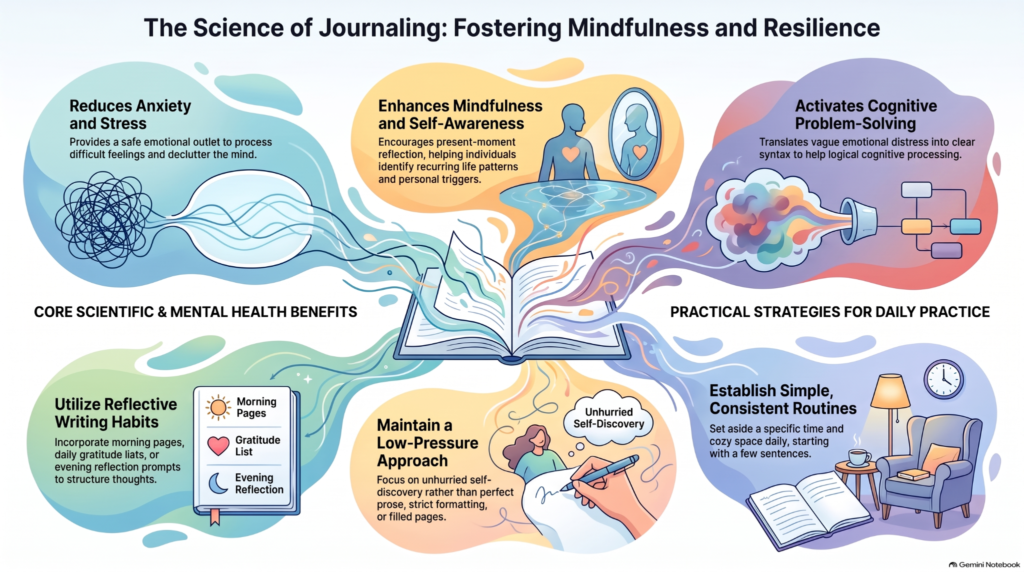
Journaling’s scientific benefits greatly enhance your mindfulness and resilience. It offers an emotional outlet, allowing you to process thoughts and feelings, which reduces anxiety and stress. Regular writing cultivates self-awareness, helping you identify patterns and triggers in your life. This practice fosters resilience through self-reflection, enabling you to navigate challenges with clarity. By integrating journaling into your daily routine, you can empower yourself further, revealing deeper insights into your emotional well-being and personal growth.
KEY TAKEAWAYS
- Journaling reduces anxiety and depression by providing an emotional outlet, enhancing overall mental well-being.
- It fosters mindfulness by encouraging present-moment reflection, allowing for deeper awareness of thoughts and feelings.
- Regular journaling cultivates resilience through self-reflection, aiding individuals in navigating life’s challenges effectively.
- It enhances emotional regulation and cognitive processing, contributing to clearer articulation of emotions and improved problem-solving skills.
- Journaling provides a safe space for emotional expression, facilitating trauma processing and personal growth over time.
HOW JOURNALING IMPROVES MENTAL HEALTH: KEY BENEFITS
Journaling is a self-care exercise that involves recording your life events and related feelings and thoughts. It can be a way to declutter your mind and cope with stress, anxiety, and depression. As you put your experiences into words, you can begin to organize thoughts, express and process emotions, identify patterns, and reflect on ways to improve your well-being.
When you take a moment to jot down your thoughts, you mightn’t realize the profound impact journaling can have on your mental health. Engaging in this practice offers numerous journaling benefits that go beyond mere self-expression.
Research indicates that writing can help reduce anxiety and depressive symptoms by providing an outlet for your emotions. Understanding the science of hobbies and mental health improvement also highlights how activities like journaling can support emotional regulation, reduce stress, and strengthen overall mental well-being. It allows you to process experiences, fostering a sense of control over your thoughts and feelings.
Moreover, journaling enhances mindfulness by encouraging you to stay present and reflect on your daily experiences. This self-reflection cultivates resilience, helping you navigate life’s challenges more effectively.
As you document your journey, you’re likely to identify patterns and triggers, empowering you to make conscious changes.
Ultimately, by incorporating journaling into your routine, you can create a powerful tool for enhancing your mental health and embracing the freedom to explore your inner world.
Effective Journaling Techniques for Enhanced Self-Care
To enhance your self-care through journaling, consider using reflective prompts that encourage deeper insights into your thoughts and feelings. Making journaling a regular self care activity can help you build mindfulness, process emotions, and strengthen your overall mental well-being.
Establishing a daily writing habit can also create a grounding routine, helping you process experiences consistently.
Together, these techniques foster mindfulness and resilience, supporting your overall mental well-being.
Prompts for Reflection
Effective journaling techniques, particularly through the use of thoughtful prompts for reflection, can greatly enhance your self-care routine. By engaging with creative prompts, you invite deeper personal reflections that foster self-awareness and emotional clarity.
Consider questions like, “What am I grateful for today?” or “What challenges did I face, and how did I overcome them?” These inquiries not only stimulate your thoughts but also cultivate resilience.
Research indicates that reflective writing can reduce stress and improve mental well-being, making it a powerful self-care tool. Similarly, exploring the benefits of painting can provide another creative outlet for expressing emotions, relieving stress, and supporting overall emotional well-being. Embrace this practice as a path to freedom, allowing your thoughts to flow without judgment.
Daily Writing Habits
Establishing daily writing habits can greatly bolster your self-care routine and enhance mindfulness. By committing to this practice, you create a space for reflection and emotional processing.
Here are some effective techniques to contemplate:
- Morning pages: Write three pages of stream-of-consciousness thoughts each morning to clear your mind.
- Gratitude lists: List three things you’re grateful for daily to shift your focus toward positivity.
- Reflective journaling: Spend a few minutes each evening summarizing your day, allowing for deeper insights.
- Themed prompts: Choose a theme for the week and explore it in your entries to enrich your self-discovery.
These habits not only foster resilience but also cultivate a mindful approach to life, empowering you to navigate challenges with greater ease.
Journaling for Resilience: Reflective Writing Benefits
Journaling, also known as writing, blogging, or keeping a diary, involves the regular practice of recording thoughts and activities. This personal writing technique is particularly beneficial for individuals facing stressful situations, such as dealing with serious illnesses like cancer. It provides a means of stress relief through self-expression, fostering personal insight, and creating a sense of connection with oneself and others. Journaling can be a low-cost, accessible method for managing stress, especially for those unable to engage in other stress-reducing activities or medications.
Journaling allows you to express and process your emotions, creating a safe space for reflection.
This practice not only helps you make sense of your feelings but also enhances your problem-solving skills, making challenges feel more manageable.
Emotional Expression and Processing
Emotional resilience thrives when you engage in reflective writing, allowing you to process your feelings and experiences. Journaling fosters emotional clarity and stress relief, enabling you to navigate life’s challenges. Here’s how it benefits you:
- Emotional regulation: Writing helps you manage your emotions effectively.
- Cognitive processing: It promotes deeper understanding of your thoughts and feelings.
- Self-discovery: You uncover insights about yourself, enhancing personal growth.
- Trauma processing: Reflective writing can facilitate healing from past experiences.
Through creative expression, you gain control over anxiety and foster self-reflection, all essential for building resilience.
Enhanced Problem-Solving Skills
When faced with complex challenges, the act of reflective writing can greatly enhance your problem-solving skills. By engaging in journaling, you sharpen your ability to identify problems clearly. This process allows you to articulate your thoughts, revealing underlying issues that may have seemed overwhelming at first.
Once you’ve pinpointed the problem, journaling encourages solution exploration. You can brainstorm potential strategies, weigh pros and cons, and visualize outcomes, fostering a sense of agency. Research shows that this active engagement with your thoughts cultivates resilience, as you learn to navigate difficulties with a clearer mindset.
Ultimately, reflective writing becomes a powerful tool, empowering you to approach life’s challenges with confidence and creativity, nurturing your desire for freedom and self-discovery.

HOW TO MAKE JOURNALING A PART OF YOUR DAILY LIFE
In coaching athletes and everyday professionals, I often see people run directly into an invisible wall: analysis paralysis. When stress hits, our inner internal dialogue spirals, looping the same worst-case scenarios without ever reaching a resolution. I have felt that exact friction myself during periods of intense burnout. The mental loop tells you that you are making progress just by worrying harder, but in reality, you’re merely expending emotional bandwidth without moving an inch forward.
This is where the tactile mechanics of pen on paper create a cognitive circuit breaker. When I write through a complex issue or an emotionally charged day, the act of translating vague discomfort into concrete syntax forces my prefrontal cortex to organize the chaos. On paper, half the fears I build up reveal themselves as either manageable logistics or irrational catastrophizing.
It mirrors what happens when you hit a challenging tempo shift in music: you can’t play five bars ahead, you have to attend entirely to the note under your fingers right now. Journaling demands that same immediate presence. It strips the drama away from the event, leaving you with an honest, objective mirror. Once that mental residue is mapped out across the lines of a page, problem-solving stops feeling like an existential crisis and starts looking like practical, step-by-step navigation.
Reflection can be undertaken in various ways, such as journaling or in conversation, it involves going through your thoughts, behaviours and feelings, to learn about when you have met or exceeded your expectations of yourself, and when you have failed them, and when you could improve.
Many people find that integrating journaling into their daily routine can lead to profound benefits for mindfulness and resilience.
To truly embed this practice, consider the following strategies:
- Choose a specific time**: Set aside a particular time each day, whether it’s morning or evening, to write. Consistency builds habit.
- Use journal prompts**: Have a list of prompts handy to kickstart your thoughts. These can guide your reflections and deepen your insights.
- Create a comfortable space: Designate a cozy, distraction-free area where you can focus on your journaling. This helps foster a mindful atmosphere.
- Keep it simple: Don’t pressure yourself to write pages. Even a few sentences can be impactful and maintain the flow of your daily routine.
Common Challenges in Keeping a Journal
Integrating journaling into your daily routine can be rewarding, but it’s not without its hurdles. Many face writer’s block, struggling to find the right words or ideas, which can be frustrating.
Time constraints often push journaling down your priority list, making it easy to neglect. You might also experience emotional resistance, finding it tough to confront certain feelings or thoughts.
Perfectionism struggles can inhibit your creativity, as you may worry about how your writing looks or sounds. Inconsistent habits can lead to motivation dips, leaving you feeling disconnected from the practice.
Privacy concerns might arise, causing you to second-guess what to write, while self-judgment amplifies these hesitations. Recognizing these challenges is essential; overcoming them can transform your journaling experience into a liberating act of self-discovery and expression.
Long-Term Benefits of Journaling for Emotional Well-Being
Although you might encounter challenges in maintaining a journaling practice, the long-term benefits for your emotional well-being are profound.
Committing to journaling fosters journal longevity and cultivates emotional clarity, allowing you to navigate life’s complexities with greater ease.
Over time, you may find that:
- Your self-awareness increases, helping you identify triggers and patterns in your emotions.
- You develop resilience, as reflecting on past experiences equips you to handle future challenges.
- Emotional clarity emerges, enabling you to articulate feelings more effectively and communicate with others.
- Stress and anxiety decrease, as writing becomes a safe outlet for processing emotions.
How Journaling Enhances Mindfulness Practices
When you engage in journaling, it can greatly enhance your mindfulness practices by fostering a deeper connection between your thoughts and the present moment. This reflective practice encourages you to articulate feelings and thoughts, promoting mindful awareness.
By putting pen to paper, you create a space to explore your inner world, helping you identify patterns or triggers that often go unnoticed in daily life.
Research shows that journaling can reduce stress and anxiety, as it allows for the processing of emotions in a structured way. This process cultivates resilience, enabling you to approach challenges with a clearer mind.
As you regularly document your experiences, you become more attuned to your thoughts, enhancing your ability to stay present. Ultimately, this practice empowers you to navigate life’s complexities with greater ease and freedom, solidifying the transformative potential of mindful journaling in your self-care routine.

RELATED STUDIES ABOUT JOURNALING AS RECREATIONAL SELF-CARE SCIENTIFIC BENEFITS
Incorporating journaling into your daily routine can lead to profound improvements in mental health and resilience. As you navigate the complexities of your thoughts and emotions, you may find unexpected insights that enhance your mindfulness practices. Curiously, the act of writing can coincide with moments of clarity that deepen your self-awareness. By embracing journaling as a form of self-care, you not only foster emotional well-being but also cultivate a richer, more resilient perspective on life’s challenges.
Best Practice Guidance for Male Individuals Using Anabolic Androgenic Steroids in Recreational Sports Within Primary Care: Protocol for a Modified Delphi Consensus Study
This study protocol outlines the design of a modified Delphi consensus study aimed at establishing evidence-based, clinically feasible best-practice guidance for primary care physicians providing medical care and harm-reduction services to male recreational sportspeople using anabolic androgenic steroids (AASs) in Switzerland.
Study Overview & Clinical Rationale
- Epidemiological Scope & Harms: The nonmedical use of image- and performance-enhancing drugs (IPEDs)—predominantly AASs—has become a major global public health concern, with global lifetime prevalence estimated at 3.3% in the general population, 6.4% in males, and 18.4% among recreational sportspeople. In Switzerland alone, estimated users range between 200,000 and 300,000. Nonmedical use is associated with elevated premature mortality and multi-organ morbidity spanning cardiomyopathy, renal and hepatic damage, endocrine dysfunction (e.g., secondary hypogonadism, testicular atrophy), neurobehavioral disturbances, and androgen dependence syndrome.
- The Clinical Treatment Gap: Despite experiencing frequent adverse effects, only a small minority of AAS users access medical care. Key barriers include fear of stigma, lack of trust in healthcare professionals, fear of legal repercussions, and widespread self-medication guided by non-professional online forums.
- The Primary Care Role & Legal Boundaries: Primary care provides low-threshold access, comprehensive chronic disease management, and multi-specialty care coordination. However, general practitioners face ambiguity regarding diagnostic screening, harm reduction, and Swiss anti-doping legal frameworks that can penalize medical providers under certain conditions. Crucially, the protocol targets male non-competing recreational athletes, bodybuilders, and fitness participants; competitive athletes bound by the World Anti-Doping Code fall outside the scope of this clinical framework to avoid conflict with anti-doping regulations.
Multi-Step Mixed-Methods Framework
The protocol employs a sequential four-phase methodology adhering to the DELPHISTAR reporting criteria and established consensus study guidelines:
- Step 1: Systematic Problem Identification (Four Substudies):
- PRISMA-ScR Scoping Literature Review: Comprehensive search of PubMed, MEDLINE, and Embase (2005–2025) to map screening protocols, diagnostic criteria, side-effect profiles, and clinical management strategies (graded using GRADE methodology).
- Empirical Clinical Data Integration: Real-world clinical experience and caseload data drawn from the specialized integrated outpatient service established in June 2023 at the Arud Centre for Addiction Medicine in Zurich.
- Peer Involvement: Direct review of extracted outcomes and recommendations by a selected cohort of five peer individuals with lived experience of AAS use from the Arud Centre to ensure relevance and non-stigmatizing approaches.
- Multidisciplinary Steering Group Formation: A panel of clinical specialists holding FMH (Swiss Medical Association) credentials across cardiology, endocrinology, psychiatry, addiction medicine, sports medicine, and andrology to review, reconcile, and finalize the item pool for Delphi testing.
- Step 2: Selection of Delphi Panel:
- Targeting a homogeneous expert panel of at least 25 primary care physicians (FMH specialists) recruited via the University of Zurich’s primary care teaching and research network.
- Panelists will be assigned unique identification codes to ensure mutual anonymity throughout the iterative voting process.
- Step 3: Iterative Web-Based Delphi Survey (3 Rounds):
- Administered via Delphi Manager software across three successive rounds, with each round accessible for three weeks.
- Experts rate each proposed measure independently on two 5-point Likert scales: Relevance (appropriateness for primary care: 1 = irrelevant to 5 = relevant) and Feasibility (implementability in primary care: 1 = not feasible to 5 = feasible).
- Open-text fields collect qualitative suggestions to refine items or propose new measures.
- Iterative feedback between rounds provides panelists with aggregated group medians, interquartile ranges (IQRs), and qualitative summaries to facilitate re-evaluation of non-consensus items. A response rate $\ge 70\%$ per round is mandated to maintain methodological rigor.
- Step 4: Closing Criteria & External Endorsement:
- Consensus Threshold: Defined a priori as $>75\%$ agreement (ratings of 4 or 5) on both relevance and feasibility.
- Institutional Validation: The resulting draft guidance will undergo external review and formal approval from the quality commissions of key Swiss medical bodies: the Swiss Society of General Internal Medicine (SSGIM), the Swiss Society of Addiction Medicine (SSAM), and Sport and Exercise Medicine Switzerland (SEMS).
Project Milestones & Significance
- Funding & Ethics: Granted ethical clearance by the Cantonal Ethics Committee Zurich (BASEC-Nr Req-2024-00643) and funded by Sport and Exercise Medicine Switzerland (CHF 10,000).
- Timeline: Delphi rounds are scheduled through early 2026, with the completed best-practice guidance anticipated for formal publication and dissemination in summer 2026.
- Clinical & Policy Impact: By bridging specialized addiction and endocrine medicine with general practice, this project will deliver the first standardized, consensus-based Swiss primary care recommendations for recreational AAS users, establishing harm reduction and health monitoring while clarifying the legal and ethical boundaries of medical care.
| REFERENCE: Raphael Magnolini, Oliver Senn, Stefan Neuner-Jehle, Philip Bruggmann, Best Practice Guidance for Male Individuals Using Anabolic Androgenic Steroids in Recreational Sports Within Primary Care: Protocol for a Modified Delphi Consensus Study, JMIR Research Protocols, Volume 14, 2025,, ISSN 1929-0748, https://doi.org/10.2196/65233. (https://www.sciencedirect.com/science/article/pii/S1929074825005141) |
“Like the Wild West”: Health care provider perspectives on impacts of recreational cannabis legalization on patients and providers at a tertiary psychiatric hospital in Ontario, Canada
This qualitative empirical study evaluates the perspectives and lived experiences of health care providers regarding the impacts of recreational cannabis legalization on patients and clinical service delivery within a major tertiary psychiatric hospital in Ontario, Canada.
Study Overview & Conceptual Framework
- Policy Context: Canada legalized recreational cannabis consumption and commercial sale under the federal Cannabis Act in October 2018, following more than two decades of authorized medical cannabis access.
- Clinical Rationale: While legalization aimed to displace illicit markets and establish product safety standards, commercial expansion and the availability of high-potency cannabis derivatives have heightened concerns regarding psychiatric morbidity, emergency presentations, and patient self-medication.
- Research Gap: Although population-level epidemiological studies have tracked post-legalization trends, empirical data capturing direct provider experiences within specialized acute and tertiary mental health settings remain limited.
- Core Objectives: The investigation focused on:
- Examining provider perceptions of patient cannabis consumption patterns, motivations, and mental health effects.
- Evaluating how legalization altered daily clinical workflows, therapeutic communication, and harm reduction practices.
- Identifying provider educational gaps and training deficiencies.
- Gathering provider-driven recommendations across health system sectors, regulatory bodies, and commercial retail frameworks.
Methodology & Sample Architecture
- Setting: The Centre for Addiction and Mental Health (CAMH) in Toronto, Ontario—a large, urban tertiary psychiatric facility providing inpatient, crisis/emergency, ambulatory, forensic, medical withdrawal, and outpatient care. The hospital maintains an inpatient cannabis policy authorizing non-combustible medical cannabis (oral, topical, or spray forms) under clinical oversight.
- Recruitment & Sampling: Recruited 20 multidisciplinary health care providers through institutional bulletins and clinical unit postings between June 1 and July 2, 2021.
- Participant Demographics:
- Gender & Age: 14 women (70%) and 6 men (30%); mean age was 38.15 ± 10.15 years (range 25–64).
- Racial/Ethnic Background: 70% identified as White European (n=14).
- Professional Roles: Registered nurses (30%, n=6), staff physicians/psychiatrists (20%, n=4), and clinical pharmacists (20%, n=4), with the remaining 30% consisting of recreation therapy, social work, dietetic services, and psychology.
- Experience & Leadership: Mean tenure in current roles was 5.58 ± 6.72 years (range 8 months to 30 years), with 25% serving in senior management or administrative positions.
- Data Collection: Semi-structured telephone interviews (mean duration 40 minutes, range 25–57 minutes) followed a standardized interview guide with open-ended prompts and follow-up probes.
- Analytical Strategy: Audio recordings were transcribed, anonymized, and managed in NVivo 12. The multidisciplinary team executed a hybrid deductive-inductive thematic analysis using an iterative codebook development process with peer debriefing and reflexivity controls.
Key Qualitative Findings
- Motivations for Patient Cannabis Use & Self-Medication:
- Providers reported widespread patient self-treatment for psychiatric symptoms, including anxiety, depressive disorders, trauma-related insomnia, chronic pain, and post-traumatic stress disorder (PTSD).
- In patients with schizophrenia, cannabis was frequently used to counteract anhedonia, quiet auditory hallucinations, and temporarily restore hedonic capacity.
- Providers observed that while cannabis offers immediate subjective relief, it often triggers a cycle of dependence and rebound distress, where withdrawal exacerbates baseline psychiatric symptoms.
- Clinicians noted that self-medication is often fueled by systemic healthcare barriers and experiences of marginalization that make formal psychiatric services difficult to access.
- Substance Hierarchies, Normalization, and Motivation:
- In concurrent disorder settings, cannabis was rarely considered the primary substance of concern, as harms linked to opioids, alcohol, and methamphetamines took clinical priority.
- Providers noted that government legalization has fostered a false perception of clinical safety among patients. Because commercial cannabis is legally sanctioned, patients frequently show reduced motivation to address problematic consumption or view cannabis use disorder as a treatment target.
- Acute Psychiatric Decompensation & Emergency Department Visits:
- Clinicians reported rising emergency department presentations for cannabis-induced psychosis, acute symptom exacerbation in chronic psychotic disorders, cannabis hyperemesis syndrome (CHS), and severe withdrawal-induced anxiety.
- High-potency THC products (concentrates, high-percentage flower) were viewed as particularly destabilizing for patients vulnerable to psychosis.
- Edible cannabis products were highlighted as an increasing source of accidental intoxication and acute distress, as novice consumers often stack doses due to delayed metabolic onset.
- Clinical Relationship Benefits & Harm Reduction:
- Legalization and reduced social stigma have made patients more open and forthright about disclosing cannabis use during clinical interviews, allowing clinicians to screen for safety concerns (such as driving while impaired) and drug-drug interactions.
- Legal, regulated storefronts provide an alternative to the unregulated illicit market, shielding consumers from contaminants, synthetic additives, and mold.
- Transparent packaging detailing THC and CBD content enables clinicians to engage in harm reduction by encouraging patients to switch to lower-potency strains or choose non-combustible products.
- Provider Knowledge Deficits & Institutional Training Deficiencies:
- A majority of clinicians reported low confidence discussing cannabis pharmacology, adverse effects, dosing, and drug interactions due to an absence of formal education during their professional schooling.
- Except for hospital pharmacists—who receive training mandated by the Ontario College of Pharmacists—providers across medicine, nursing, psychology, and social work had to rely on self-directed learning or develop their own patient materials.
- Providers voiced frustration with professional licensing bodies and regulatory colleges for offering little clinical guidance or treating cannabis like an illicit drug.
- Challenges with Medical and Recreational Market Systems:
- Providers described the commercial medical cannabis authorization framework as poorly regulated and “like the Wild West,” characterized by specialized fee-for-service clinics that authorize high daily amounts without sufficient diagnostic indication, monitoring, or clinical follow-up.
- Clinicians expressed concern over the high geographic density of retail dispensaries, noting instances where multiple storefronts opened near psychiatric hospital exits and addiction recovery centers, acting as visual triggers for patients working toward abstinence.
- Retail marketing strategies using terms like “organic” and “Canadian-grown” were criticized for downplaying psychoactive risks and creating a health halo around potent concentrates.
Systemic Recommendations from Providers
- Medical Educators & Regulatory Colleges: Update undergraduate, graduate, and continuing medical curricula to include standardized education on cannabis pharmacology, drug interactions, and mental health effects; publish formal clinical practice guidelines and position statements with standardized dosing equivalents (analogous to standard drink metrics for alcohol).
- Mental Health & Addiction Service Delivery: Implement standardized screening tools upon admission to detect cannabis use disorders early; introduce manualized, evidence-based cognitive behavioral therapy (CBT) and harm reduction programming; and allocate protected time and funding for staff training.
- Public Health & Government Authorities: Launch evidence-based public education campaigns addressing edible dosing and impaired driving; reinvest cannabis excise tax revenues into accessible mental health and addiction treatment infrastructure; and fund high-quality clinical research to evaluate therapeutic potential and health harms.
- Medical Cannabis Regulatory Oversight: Establish stricter clinical standards and auditing for dedicated medical cannabis clinics, and consider integrating medical dispensing within formal hospital and community pharmacy environments.
- Commercial Retail Regulations: Institute municipal zoning buffer rules to limit dispensary density and prevent storefronts from opening near psychiatric hospitals, schools, and addiction treatment centers; mandate point-of-sale screening and warning resources; and provide helpline access directly within retail environments.
Study Limitations
- Single-Center Hospital Scope: The study was conducted at a single urban tertiary psychiatric hospital with a preexisting inpatient medical cannabis policy, meaning findings may not represent rural settings, community-based facilities, or institutions with different cannabis policies.
- Pandemic Confounding: Data were collected during the COVID-19 pandemic, a period when widespread pandemic-related anxiety, social isolation, and disrupted healthcare services may have influenced patient cannabis use independently of legalization.
| REFERENCE: Jessica L. Wiese, Tara Marie Watson, Nikki Bozinoff, Brian Rush, Vicky Stergiopoulos, Bernard Le Foll, Sergio Rueda, “Like the Wild West”: Health care provider perspectives on impacts of recreational cannabis legalization on patients and providers at a tertiary psychiatric hospital in Ontario, Canada, Journal of Substance Use and Addiction Treatment, Volume 167, 2024, 209487, ISSN 2949-8759, https://doi.org/10.1016/j.josat.2024.209487. (https://www.sciencedirect.com/science/article/pii/S2949875924001991) |
Self-medication with psychedelics: a scoping review and narrative synthesis of review-level evidence
This scoping review and narrative synthesis maps review-level evidence on self-medication with psychedelics, evaluating the substances used, targeted clinical conditions, reported therapeutic outcomes, adverse effects, and methodological quality of existing syntheses.
Study Overview & Conceptual Framework
- Public Health Context: Past-year hallucinogen use in the United States nearly doubled from approximately 4.7 million individuals in 2015 to 8.8 million in 2023, according to SAMHSA data. Alongside cultural interest in personal growth and spirituality, a growing subset of individuals reports using psychedelics unsupervised to treat physical or psychiatric conditions—a practice operationalized as self-medication.
- Research Rationale & Objectives: While clinical trials of psychedelic-assisted therapy have expanded rapidly, unsupervised self-medication patterns, therapeutic efficacy, and potential harms remain poorly characterized. The authors conducted a scoping review of review-level evidence to synthesize which psychedelics are self-administered, identify the primary target indications, summarize benefits and adverse outcomes, and evaluate the rigor of the existing synthesis literature.
- Core Terminology: Self-medication is defined as the self-directed, unsupervised use of substances to manage self-diagnosed disorders or alleviate perceived negative physical or emotional states (e.g., pain, anxiety, mood disturbances) without professional clinical oversight.
Methodology & Review Architecture
- Framework & Reporting Guidelines: Conducted according to the PRISMA Extension for Scoping Reviews (PRISMA-ScR 2018) 22-item checklist. An initial umbrella review protocol was adapted to a scoping design due to the heterogeneity and scarcity of the literature base.
- Search Strategy & Eligibility: Searched PubMed, PsycINFO, and Google Scholar (October–November 2024) using combinations of (“self-medication” OR “self-treatment”) AND “psychedelics”.
- Inclusion Criteria: Review papers (systematic, scoping, or narrative) examining unsupervised or self-directed therapeutic use of classical psychedelics (psilocybin, LSD, DMT, mescaline) or non-classical psychedelics (MDMA, ketamine, ibogaine, salvinorin A, nitrous oxide) in human populations across any physical, mental, or behavioral condition.
- Exclusion Criteria: Exclusively non-therapeutic motives (recreation, spirituality), reviews focused solely on clinically administered psychedelic-assisted therapy, and non-English publications.
- Screening & Data Extraction: Four independent reviewers screened 282 records, resulting in 17 full-text assessments and 3 final included reviews. Data extraction was facilitated using Elicit AI and manually verified by reviewers.
- Methodological Quality Appraisal: Applied the AMSTAR-2 (A Measurement Tool to Assess Systematic Reviews) instrument across 11 domains to contextualize the methodological rigor and bias risks of the included reviews without calculating rigid summary scores.
Included Reviews & Synthesized Scope
The synthesis centered on three published review articles:
- Basedow & Kuitunen-Paul (2022, Drug and Alcohol Review): Systematic review of 37 studies (17 quantitative, n=11,452; 20 qualitative, n>1,372) mapping motives for serotonergic psychedelic use.
- Goel et al. (2023, Anesthesiology): Scoping review of 21 studies (9 surveys, 7 case series/reports, 5 trials) on psychedelics for pain, containing 8 studies with self-medication data (n>1,847).
- Kooijman et al. (2023, Pain Practice): Narrative review examining psychedelics for chronic and recurrent pain disorders, highlighting patient-reported self-management.
Key Findings & Clinical Insights
- Primary Substances & Target Indications:
- Substances: Psilocybin and LSD were the most frequently reported compounds across self-medication datasets. DMT and MDMA appeared less frequently and exhibited inconsistent therapeutic profiles.
- Clinical Indications: Cluster headache (CH) was the most prominent indication. Other reported conditions included migraines, fibromyalgia, neuropathic pain, phantom limb pain, and broader negative affective states (distress, anxiety, and depression).
- Underlying Motivations:
- Self-medication was predominantly driven by desperation, severe treatment resistance, and dissatisfaction with conventional pharmacotherapies or intolerable side effects (“last-resort” option).
- Users in headache cohorts reported primarily therapeutic intent rather than recreational motives, with little interest in experiencing psychoactive alterations.
- In the broader motives review, coping motives (using psychedelics to alleviate negative affect) appeared in 67% of included studies.
- Reported Efficacy & Treatment Outcomes:
- Cluster Headache Abortive and Prophylactic Relief: In a primary survey of 496 cluster headache patients summarized in the reviews, psilocybin and LSD were rated comparable to high-flow oxygen and superior to triptans for aborting attacks (rapid relief within ~20 minutes). For prevention, psilocybin and LSD were reported as more effective than verapamil or prednisone, with ~70% reporting preventive benefits and ~40% achieving complete remission.
- Substance Differences: LSD and psilocybin consistently reduced attack frequency and duration, whereas MDMA was reported to worsen or prolong cluster headache periods in certain reports.
- Chronic Pain & Fibromyalgia: In a survey of 250 chronic pain patients, 147 used psychedelics for pain; 127 of 187 microdosers and 118 of 163 macrodosers reported pain reduction. In a fibromyalgia sample (n=354), 11 of 12 self-medicating individuals experienced symptom improvement.
- Dosing Patterns & Sub-Hallucinogenic Efficacy:
- Therapeutic benefits frequently occurred independently of a full hallucinogenic experience. Prolonged remission or pain relief was repeatedly documented at sub-hallucinogenic or microdosed levels.
- Microdosing was preferred by many users to minimize cognitive and daily functional disruption while simultaneously achieving mood enhancement and pain reduction.
- Safety Profile & Cases of Ineffectiveness:
- Overall adverse events in self-medication surveys were rare, mild, and transient (e.g., dizziness, nausea, transient blood pressure/heart rate elevations, mild anxiety).
- Pain worsening was reported by fewer than 15% of participants overall (e.g., 13.2% [33/250] in one chronic pain cohort, comprising 5.3% of microdosers and 19.5% of macrodosers). Ineffectiveness was noted in a subset of cluster headache patients (e.g., 4 of 18 in one series).
Methodological Quality & AMSTAR-2 Appraisal
- Quality Ratings:
- Basedow & Kuitunen-Paul and Goel et al. met 6 of 11 AMSTAR criteria, reflecting moderate methodological quality.
- Kooijman et al. met 4 of 11 criteria, indicating low methodological quality.
- Systematic Deficiencies in the Evidence Base:
- While reviews demonstrated adequate data extraction transparency and conflict-of-interest disclosure, all three lacked registered a priori protocols, comprehensive grey literature searches, formal quality appraisals of included primary studies, and assessments of publication bias.
- The authors noted several data extraction inaccuracies in the underlying reviews (e.g., failing to contextualize that an MDMA adverse effect occurred in only 1 of 30 patients, or that single-dose LSD remission conclusions in cluster headache stemmed from only 2 individuals).
Implications, Legal Considerations, & Future Directions
- Mechanistic Implications: The finding that symptom relief occurs at sub-hallucinogenic doses challenges the assumption that acute subjective, mystical, or hallucinatory experiences are required for therapeutic efficacy, pointing toward peripheral or sub-perceptual neuroplastic, serotonergic, or anti-inflammatory pathways.
- Regulatory Lag & Harm Reduction: Because classical psychedelics remain Schedule I controlled substances in most jurisdictions, patients who self-medicate navigate significant legal risks. State-level regulatory models (e.g., Oregon Psilocybin Services Act, Colorado Proposition 122) provide legal pathways but remain geographically restricted and cost-prohibitive for many. Specialized peer-support and harm-reduction resources (such as the Fireside Project) represent important interim measures to enhance safety.
- Major Literature Gaps: Current reviews focus heavily on headache and chronic pain disorders. There is a complete absence of review-level synthesis regarding self-medication for psychiatric conditions where clinical trials show strong efficacy—most notably substance use disorders (alcohol, tobacco, opioids), major depressive disorder, and PTSD.
- Research Roadmap: Future investigations require prospective observational cohorts, pragmatic real-world trials with standardized dosing verification, objective endpoints, and comprehensive systematic syntheses capturing recent primary studies and diverse psychiatric populations.
| REFERENCE: Shreya Shiju, Rohan Tirumala, Elliot Marseille, Self-medication with psychedelics: a scoping review and narrative synthesis of review-level evidence, Exploratory Research in Clinical and Social Pharmacy, Volume 21, 2026, 100709, ISSN 2667-2766, https://doi.org/10.1016/j.rcsop.2026.100709. (https://www.sciencedirect.com/science/article/pii/S2667276626000077) |
CONCLUSION
If there is one thing I emphasize above all else in my coaching practice, it’s that self-care is not a performance sport. You do not get bonus points for writing eloquent prose, filling three notebook pages before dawn, or keeping a pristine journal that looks curated for a social feed. The minute personal reflection becomes a chore loaded with self-judgment, it ceases to serve your well-being and starts functioning as another subtle source of pressure.
My own notebook isn’t an orderly archive. It is messy, fragmented, and full of half-finished sentences, random observations from afternoon garden walks, and scattered notes about things that challenged me during the week. But that imperfection is precisely where its therapeutic value lives. Building emotional resilience isn’t about maintaining total control over your life; it’s about having a reliable, compassionate anchor when things get noisy and unpredictable.
Treat journaling the same way you would a walk through a pine forest or an evening listening to good vinyl: an unhurried, restorative pause in your day. Give yourself permission to show up imperfectly on the page, and you will find that the quiet clarity you build there naturally spills over into every challenge you face off the page.