

In my clinical psychology practice, I often sit across from clients who treat rest as an earned luxury rather than a biological requirement. They describe feeling caught in an endless loop of tension, racing thoughts, and mental exhaustion, yet whenever they attempt to relax, an internal voice labels it as unproductive or wasteful. In graduate school and during my years investigating deep breathing and mindfulness, one fundamental truth became clear: relaxation is not merely the passive absence of work; it is an active, neurochemical shift.
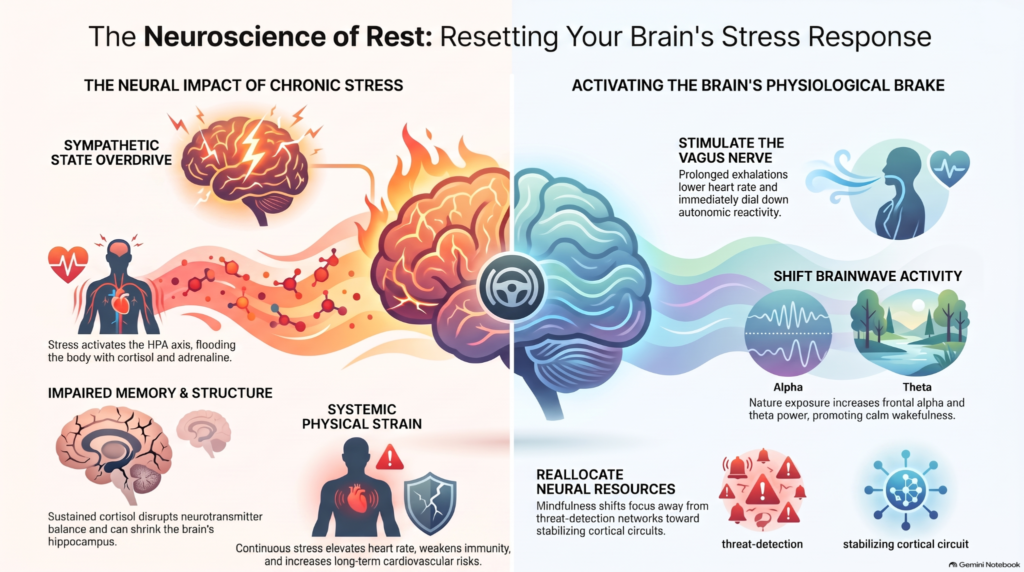
When we experience continuous pressure, our nervous system remains locked in a high-alert sympathetic state, flooding the brain with cortisol and limiting our ability to see solutions clearly. We cannot simply command our minds to calm down through sheer willpower alone.
To truly break the cycle of chronic tension, we must engage the body’s physiological brake pedal. Looking at relaxation through the lens of neuroscience removes the guilt so often attached to taking a break. It transforms self-care from a vague, trendy indulgence into a targeted physiological intervention, giving you the practical clarity needed to help your brain step out of emergency mode and reset your baseline well-being.
Understanding the neuroscience of relaxation can greatly aid in managing stress effectively. Techniques that reduce cortisol levels not only enhance emotional clarity but also foster creative problem-solving. Stress activates the HPA axis, impacting neurotransmitter balance and mood. By employing proven relaxation strategies, like mindfulness or breathing exercises, you can counteract the physical effects of stress on your body. Discovering how these methods work can empower you to cultivate lasting habits for healthier stress management in your life.
KEY TAKEAWAYS
- Relaxation techniques reduce cortisol levels, effectively lowering stress and promoting emotional stability.
- Understanding the brain’s stress response helps identify triggers and implement effective relaxation strategies.
- Regular practice of relaxation, such as breathing exercises, enhances cognitive function and problem-solving abilities.
- Building a supportive network reinforces commitment to stress management and encourages healthier habits.
- Monitoring stress levels through journaling allows for self-reflection and adjustment of stress management approaches.
WHY UNDERSTANDING RELAXATION CAN HELP YOU MANAGE STRESS
Understanding relaxation is essential for effective stress management, as it directly impacts your brain’s response to stressors. When you prioritize relaxation, you reveal numerous benefits that contribute to stress reduction.
Research shows that engaging in relaxation techniques like deep breathing or mindfulness can lower cortisol levels, the hormone primarily responsible for stress. This physiological shift enhances your emotional stability, allowing you to respond to challenges with greater clarity and composure.
Moreover, relaxation fosters a sense of freedom by creating space for creative thinking and problem-solving. When your mind isn’t clouded by stress, you’re better equipped to make decisions that align with your values and aspirations.
Regularly incorporating relaxation practices into your routine can also improve your overall well-being, reinforcing positive feedback loops that further diminish stress. By understanding and embracing relaxation, you empower yourself to take control of your life and cultivate a healthier, more balanced approach to stress management.
How Stress Affects Your Brain and Body
When you experience stress, your brain triggers a complex stress response mechanism, releasing hormones like cortisol that prepare your body for immediate action.
This reaction can lead to various physical effects, such as increased heart rate and muscle tension, which, if persistent, may result in long-term health consequences like cardiovascular disease.
Understanding these processes is essential for effectively managing stress and mitigating its impact on your overall well-being.
Brain’s Stress Response Mechanism
Stress triggers a complex response in your brain and body that can considerably impact your overall health. Understanding this stress response is essential for managing it effectively.
Here’s how stress alters your brain chemistry:
- Hormonal Surge: Stress activates the hypothalamic-pituitary-adrenal (HPA) axis, releasing cortisol and adrenaline.
- Neurotransmitter Imbalance: Elevated cortisol disrupts the balance of neurotransmitters, affecting mood and cognitive function.
- Memory Impairment: Chronic stress can shrink the hippocampus, leading to difficulties in learning and memory retention.
Recognizing these mechanisms can empower you to take control, fostering healthier habits that counteract stress’s detrimental effects.
Physical Effects of Stress
Although it often goes unnoticed, the physical effects of stress on your brain and body can be profound and far-reaching. When you encounter physical stressors, your body initiates physiological responses, such as the release of cortisol and adrenaline. These hormones prepare you for a fight-or-flight reaction, increasing heart rate and blood pressure.
However, chronic stress can lead to persistent activation of these responses, which may compromise your immune system and elevate inflammation levels. You might experience tension headaches, digestive issues, or fatigue as a result. In some cases, healthcare professionals may recommend muscle relaxers for certain muscle-related conditions, alongside healthy habits that promote relaxation.
Understanding these effects is essential, as they highlight the importance of managing stress effectively. By acknowledging how stress physically impacts you, you empower yourself to adopt healthier habits that promote relaxation and overall well-being.
Long-Term Health Consequences
Chronic exposure to stress can lead to significant long-term health consequences that affect both your brain and body. Prolonged stress is linked to the development of chronic diseases and can severely impact your mental health.
Here are three key consequences to take into account:
- Cardiovascular Issues: Continuous stress can elevate your heart rate and blood pressure, increasing the risk of heart disease.
- Cognitive Decline: Chronic stress negatively affects memory and cognitive function, potentially leading to conditions like Alzheimer’s.
- Mental Health Disorders: Long-term stress is a major contributor to anxiety and depression, disrupting your emotional well-being.
Recognizing these risks empowers you to adopt healthier stress management habits, ultimately promoting better overall health and freedom from these debilitating conditions.
The Role of Neurotransmitters in Stress Management
In neuroscience these days, there is a lot of focus on how different brain areas do different things. These functional units of the brain, made up of gray matter, are like little modules, each doing its own special task, such as speech, memory, vision, or movement. Yet, in order for the brain to work as an integrated whole, the different brain regions need to send and receive information to and from each other. This is done through the brain’s white matter. Think of white matter as being like fiber optic cables connecting the various modules—the brain’s version of the internet.
When you experience stress, your brain releases a complex cocktail of neurotransmitters that play a critical role in your body’s response. Key players include cortisol, adrenaline, and serotonin, each triggering specific chemical reactions that influence your mood and physical state.
Maintaining neurotransmitter balance is essential; too much cortisol can lead to anxiety, while insufficient serotonin may contribute to depression.
Your ability to manage stress hinges on how these neurotransmitters interact. For instance, when you engage in relaxation techniques, your brain can shift the balance toward calming neurotransmitters, promoting a sense of well-being. This shift reduces the negative effects of stress and enhances your resilience.
Understanding the intricacies of neurotransmitter function empowers you to make informed choices that foster emotional freedom. By prioritizing activities that support healthy neurotransmitter levels, you’ll build a more effective stress management strategy.

PROVEN TECHNIQUES TO TRIGGER YOUR RELAXATION RESPONSE
Throughout my years designing stress interventions, I have observed that people frequently abandon relaxation practices because they expect instant silence in their minds. When their thoughts continue to wander during deep breathing or quiet sitting, they assume they have failed. From a brain science perspective, this expectation sets an impossible standard. Your brain is a dynamic prediction engine, constantly forecasting demands and sorting through sensory inputs.
When you practice intentional breathing or pause for a moment of quiet observation, the goal is not to eradicate thought entirely; it is to shift neural resource allocation away from reactive threat-detection networks and back toward stabilizing cortical circuits. In my own clinical and research work, I focus heavily on how deliberate, prolonged exhalations stimulate the vagus nerve, initiating an immediate cascade that dials down heart rate and tempers autonomic reactivity.
You can achieve this reset through simple micro-practices: step away from your monitor, step outside for a few minutes to let natural visual patterns soothe visual processing fatigue, or sip a warm cup of herbal tea while feeling the ground beneath your feet. Consistent, modest moments of physical down-regulation teach your nervous system that safety is accessible, steadily reshaping how you handle stress over time.
To effectively manage stress, it’s essential to activate your body’s relaxation response, which counteracts the physiological effects of stress. Here are three proven techniques you can use:
- Breathing Exercises: Practice deep, slow breathing to lower your heart rate and enhance oxygen flow, helping to calm your mind and body.
- Progressive Relaxation: Tense and then relax each muscle group, starting from your toes and moving up to your head. This technique promotes physical awareness and releases built-up tension.
- Guided Meditations: Use audio or apps to immerse yourself in calming imagery and sounds. Incorporating visualization techniques can help transport your mind to peaceful places, reducing anxiety.
In addition, exploring nature immersion, yoga practices, and the aromatherapy benefits of essential oils can greatly enhance your relaxation experience.
How Mindfulness Can Help You Relax
Mindfulness meditation has received the most attention in neuroscience research over the past two decades. Behavioral studies suggest that mindfulness mediation provides beneficial effects on a number of cognitive domains, including attention, memory, executive function, and cognitive flexibility. Additionally, these effects have been found in multiple brain regions, including the cerebral cortex, subcortical grey and white matter, brain stem and cerebellum. This finding is unsurprising because mindfulness practices do involve multiple aspects of mental function.
Mindfulness, as a practice of focusing your attention on the present moment, greatly contributes to relaxation by reducing stress and enhancing emotional regulation. Techniques like mindful breathing and guided imagery help ground you in the now, promoting a sense of calm. Engaging fully with your breath slows your heart rate and lowers cortisol levels, while guided imagery allows your mind to escape to serene settings, facilitating deeper relaxation.
| Benefits of Mindfulness | Mindful Breathing | Guided Imagery |
| Reduces anxiety | Slows heart rate | Evokes peace |
| Enhances focus | Lowers cortisol | Sparks creativity |
| Improves mood | Promotes clarity | Builds resilience |
| Increases self-awareness | Fosters relaxation | Encourages positivity |
| Cultivates compassion | Aids in emotional regulation | Strengthens coping skills |
Incorporating these practices into your daily routine can lead to a profound sense of freedom and well-being.
Create Your Own Stress Management Plan
Creating a personalized stress management plan empowers you to take control of your well-being. Incorporating a regular self care activity, such as taking a relaxing walk, practicing deep breathing, or enjoying a favorite hobby, can help reduce stress and support your overall well-being. To effectively address your stress triggers, consider incorporating various relaxation techniques and coping strategies tailored to your lifestyle. Here’s a structured approach:
- Identify Stress Triggers: Recognize what situations elevate your stress levels. Understanding these can help you avoid or prepare for them.
- Set Personal Goals: Establish clear objectives for your stress management. Whether it’s practicing mindfulness daily or engaging in regular physical activity, these goals should align with your values.
- Implement Support Systems**: Surround yourself with a network of friends, family, or professionals who support your self-care methods** and lifestyle changes.
Regularly engage in mindfulness practices to enhance your resilience.
Measuring Your Progress in Stress Management
Meditation has roots in the contemplative practices of nearly every major religion. The prevalence of meditation in the media has given the word various meanings. We will refer to meditation as the cultivation of basic human qualities, such as a more stable and clear mind, emotional balance, a sense of caring mindfulness, even love and compassion—qualities that remain latent as long as one does not make an effort to develop them. It is also a process of familiarization with a more serene and flexible way of being.
To effectively measure your progress in stress management, you need to track your stress levels regularly.
By setting achievable goals, you can create benchmarks that allow you to assess improvements over time.
This structured approach not only enhances accountability but also reinforces your commitment to managing stress effectively.
Tracking Stress Levels
As you explore stress management, tracking your stress levels becomes essential for evaluating your progress and refining your approach.
Effective stress tracking can empower you to gain insights into your emotional state and enhance your overall well-being. Regularly monitoring your emotional and physical responses can help you recognize stress early and adjust your relaxation techniques before it begins to affect your daily activities. Here are three methods to reflect on:
- Stress Journaling: Document your daily experiences and emotions to identify patterns and triggers, fostering self-awareness.
- Daily Check-Ins: Rate your stress levels on a scale from 1 to 10, helping you recognize fluctuations and adjust your strategies accordingly.
- Physical Indicators: Monitor bodily responses like heart rate or tension, as these can reveal stress levels that may not surface in your thoughts.
Setting Achievable Goals
Understanding your stress levels sets the stage for setting achievable goals in stress management. Start with clear goal setting that reflects realistic expectations.
Break your objectives into smaller, manageable tasks to foster incremental progress. This approach enhances personal accountability by allowing you to track your achievements systematically.
Incorporate motivation strategies, like rewarding yourself for reaching milestones, to keep your spirits high. Utilize self-reflection techniques to assess what works and what doesn’t, adjusting your action planning as necessary.
Effective time management is essential; allocate specific time slots for stress-relief activities and stick to them.

RELATED STUDIES ABOUT NEUROSCIENCE OF RELAXATION
In the intricate dance between stress and relaxation, understanding the neuroscience behind your responses can be transformative. By harnessing proven techniques and embracing mindfulness, you can cultivate a resilient mind and body. Think of your stress management plan as a tailored suit—crafted to fit your unique needs. As you measure your progress, remember that each small step is a victory, paving the way for a healthier, more balanced life where calm reigns supreme over chaos.
Your brain on nature: A scoping review of the neuroscience of nature exposure
This scoping review critically evaluates 108 peer-reviewed neuroimaging studies (published between 2014 and mid-2025) investigating the neurobiological effects of nature exposure on healthy human brain function, cognitive-affective processing, and brain morphology across laboratory, virtual reality (VR), and real-world field settings.
Study Overview & Methodology:
- Methodological Guidelines: Conducted in accordance with PRISMA-ScR guidelines and Joanna Briggs Institute (JBI) methodology across Scopus, PubMed, and Web of Science databases. Out of 9,418 initial records screened, 108 empirical studies meeting strict inclusion criteria were systematically charted and synthesized.
- Neuroimaging Modalities Evaluated:
- Electroencephalography (EEG): 78 studies, comprising 57 laboratory/indoor setups (static images, videos, audio, VR, indoor plants) and 21 real-world mobile field experiments.
- Functional Magnetic Resonance Imaging (fMRI): 12 studies, including 11 laboratory paradigms (pictures, soundscapes) and one pre-/post-exposure field walking study.
- Functional Near-Infrared Spectroscopy (fNIRS): 6 studies, encompassing 4 laboratory/biophilic room experiments and 2 real-world outdoor studies.
- Structural Magnetic Resonance Imaging (MRI): 12 studies, comprising 11 population-based biobank/cohort analyses and one outdoor exercise structural trial.
- Demographic Coverage: Encompassed sample sizes ranging from small laboratory neuroimaging cohorts (6 to 38 participants in fMRI and fNIRS) to moderate EEG samples (10 to 116) and large-scale epidemiological biobanks (e.g., ABCD Study, UK Biobank), with a balanced overall participant sex ratio (62% female, 38% male).
Convergent Neurobiological Findings Across Modalities:
- Electrophysiological Signatures (EEG):
- Spectral Oscillations: Nature exposure consistently increases frontal alpha (8–12 Hz) and theta power—reflecting calm wakefulness, inward-focused attention, and reduced cognitive load—while significantly decreasing high-frequency beta and gamma activity, signaling diminished stress and physiological arousal.
- Event-Related Potentials (ERPs) & Connectivity: Natural environments attenuate the Late Positive Potential (LPP; marking faster emotional recovery from stressors), enhance Error-Related Negativity (ERN; indicating improved cognitive control and error monitoring), and shift frontal alpha asymmetry (FAA) toward positive approach-related affective states. Graph-theoretical metrics demonstrate enhanced functional connectivity and network integration.
- Environmental & Sensory Features: Fractal geometries and biophilic forms amplify alpha/theta synchrony; blue spaces (wetlands, coastlines) afford the most rapid autonomic and electrophysiological recovery (typically emerging within 8–15 minutes). Multisensory integration (visual paired with natural audio or subtle olfactory cues) elicits greater relaxation than isolated single-modality sensory presentations.
- Functional Hemodynamic & Network Dynamics (fMRI & fNIRS):
- Stress & Rumination Downregulation: Exposure to natural scenes and real-world outdoor walks reduces blood-oxygen-level-dependent (BOLD) activation in the amygdala, anterior insula, and subgenual prefrontal cortex (sgPFC), directly tracking self-reported reductions in rumination and negative affect.
- Network Rebalancing: Natural sights and soundscapes increase functional coherence within the Default Mode Network (DMN) and dorsal/ventral attentional networks (DAN/VAN), supporting effortless attentional restoration (engaging the cuneus, precuneus, and posterior cingulate cortex). Conversely, urban acoustic/visual noise elevates BOLD signal entropy, amygdalar reactivity, and perceived cognitive strain.
- Prefrontal Oxygenation (fNIRS): Brief interactions with nature images, indoor biophilic plant walls, and outdoor green/blue spaces reliably reduce oxygenated hemoglobin (Oxy-Hb) across the right orbitofrontal cortex (OFC) and broader prefrontal cortex, indicating alleviated mental fatigue and reduced cognitive load.
- Brain Morphology & Macrostructural Plasticity (Structural MRI):
- Cohort Evidence: Population-based studies (e.g., ABCD preadolescents, UK Biobank adults) link sustained residential greenspace exposure to greater total grey and white matter volumes, larger cortical surface area, regionally thicker cortices (temporal, insular), preserved basal ganglia volumes, and slower age-related cortical thinning.
- Microstructural White Matter Tracts: Greener residential exposure correlates with higher fractional anisotropy (FA) and lower mean, radial, and axial diffusivity (MD/RD/AD), reflecting more coherent, better-myelinated structural connectivity.
- Cognitive & Behavioral Correlates: These structural advantages co-vary with faster processing speed in adults, higher fluid and crystallized intelligence, improved working memory, superior academic performance, and fewer externalizing or attentional behavioral problems in youth.
- Authenticity Gradient: While immersive VR and digital representations produce short-term alpha/theta elevation and stress buffering, real-world outdoor nature immersion consistently yields wider, longer-lasting neural and physiological benefits. By contrast, indoor architectural “naturalness” without authentic living elements primarily modulates early visual cortices without engaging broader frontolimbic or emotional regulatory circuits.
Proposed Multilevel Neurobiological Cascade:
The authors propose an integrative 4-level model bridging acute state changes and long-term neuroplastic adaptation:
- Sensory Coherence: Occipital and temporal cortices process the low-entropy, fractal patterns of natural stimuli efficiently, mitigating early perceptual load and executive demands.
- Limbic-Autonomic Regulation: Decreased amygdala, insula, and hypothalamic reactivity combined with heightened parasympathetic/vagal outflow (elevated HRV, lowered salivary amylase and skin conductance) drive rapid stress recovery.
- Attentional Restoration: Frontal-parietal rebalancing, reduced prefrontal metabolic demand (lowered Oxy-Hb), and elevated alpha-theta synchrony facilitate effortless directed attention replenishment.
- Self-Affective Integration: Enhanced functional coupling between medial prefrontal and posterior cingulate cortices within the DMN fosters emotional coherence, psychological restoration, and feelings of connectedness.
- Exposome Integration: Within an exposome framework, recurrent activation of this cascade over time scaffolds structural resilience, protecting against urban allostatic load (noise, crowding, air pollution).
Convergence with Contemplative Neuroscience:
- Shared Neural Fingerprints: Nature exposure exhibits striking neurophysiological parallels with mindfulness and meditative states, including frontal alpha/theta synchronization, suppressed beta/gamma arousal, attenuated LPP responses, reduced DMN rumination, and amygdalar downregulation.
- Spontaneous Neural Regulation: While meditation achieves these states via active, effortful cognitive training, natural environments act as passive, “spontaneous regulators” of the human central nervous system, creating low-barrier therapeutic synergies for public health and wellness interventions.
Key Moderators & Methodological Limitations:
- Individual & Contextual Moderators:
- Trait Nature Connectedness: Individuals with higher baseline psychological connection to nature exhibit larger restorative EEG responses, deeper stress reduction, and greater affective benefits.
- Sex-Specific Differences: Women frequently display greater reductions in limbic stress responses and more pronounced alpha-theta modulation than men.
- Exposure Dosage: Micro-exposures (3–10 minutes) trigger initial autonomic/oscillatory recovery, but sustained exposures (15 minutes) are required for robust cognitive-affective stabilization.
- Literature Limitations:
- Pervasive methodological heterogeneity across stimulus presentation, exposure durations, and sensor configurations.
- Overreliance on healthy adult cohorts, leaving clinical populations (e.g., anxiety, depression, neurodegenerative disorders) understudied.
- Cross-sectional dominance and potential publication bias toward positive findings.
Translational & Future Directions:
- Research Priorities: The authors present a 5-stage roadmap prioritizing standardized protocols, synchronized cross-modal acquisition (e.g., simultaneous mobile EEG-fNIRS or EEG-fMRI in nature), longitudinal life-course designs, and diverse clinical and socioeconomic sampling.
- Policy & Architectural Design: Provides empirical justification for incorporating authentic green and blue spaces into urban planning, biophilic workplace layouts, hospital healing gardens, and educational facilities as evidence-based structural public health interventions.
| REFERENCE: Constanza Baquedano, Antonia Olguí, Luis Sebastian Contreras-Huerta, Fernando E. Rosas, Mar Estarellas, Your brain on nature: A scoping review of the neuroscience of nature exposure, Neuroscience & Biobehavioral Reviews, Volume 183, 2026, 106565, ISSN 0149-7634, https://doi.org/10.1016/j.neubiorev.2026.106565. (https://www.sciencedirect.com/science/article/pii/S0149763426000205) |
The mind-body-world unity: The predictive mind and the allostatic paradigm as a bridge between neuroscience and traditional Chinese medicine. A conceptual review
This conceptual review explores points of theoretical convergence and functional alignment between Traditional Chinese Medicine (TCM) and contemporary neuroscience, specifically bridging the ancient concepts of Qi and Zang-Fu organ systems with modern paradigms of allostasis, predictive processing, and interoceptive active inference.
Study Overview & Conceptual Framework:
- Epistemological Scope & Caveats: The review establishes a functional, heuristic dialogue between two epistemologically heterogeneous systems. TCM is rooted in symbolic-relational cosmology and qualitative pattern observation, whereas modern neuroscience operates through mathematical modeling and empirical measurement. Rather than attempting epistemic reductionism, the author maps analogical mechanisms where both traditions understand mind, body, and environment as a dynamic, non-dual, self-regulating unity.
- The Triadic and Enactive Model: TCM views human health through the Heaven-Human-Earth triad, governed by reciprocal resonance (ganying) where cosmic rhythms and earthly conditions shape internal physiology. This corresponds to 4E cognitive science (embodied, embedded, enactive, extended) and psychoneuroendocrineimmunology (PNEI), which treat the mind not as an isolated product of the brain, but as an emergent, situated process arising from continuous brain-body-world interactions.
Functional Convergences Between TCM and Predictive Neuroscience:
- Vital Energy (Qi) vs. Interoceptive Active Inference:
- In TCM, Qi represents the vital flow animating physiological and psychological functions, integrating innate Jing (essence stored in Kidneys) and acquired Qi (derived from respiration and nutrition via Lungs and Spleen).
- In neuroscience, the brain acts as a proactive prediction machine rather than a passive stimulus receiver, utilizing internal generative models (combining phylogenetically inherited priors and ontogenetically learned experience) to anticipate metabolic demands and minimize predictive uncertainty.
- Both paradigms conceptualize biological regulation as proactive homeodynamics attuned to cyclical, circadian, and seasonal rhythms, rather than rigid, reactive homeostasis.
- Organic Function Over Anatomical Structure:
- TCM defines Zang-Fu organs functionally and relationally (as “energetic vortices”) rather than as isolated anatomical parts; for instance, the Heart governs circulation and houses consciousness (Shen), while the Spleen governs digestion and cognitive integration (Yi).
- Modern neurobiology similarly moves away from strict neuroanatomical localizationism toward distributed, domain-general networks (e.g., insula and anterior cingulate cortex [ACC] participating in emotion, cognition, and visceromotor control), reflecting a “many-to-many” mapping between structure and function.
- Bidirectional Emotion-Viscera Dynamics:
- TCM posits that emotional patterns are bodily expressions of organ Qi (e.g., anger linked to Liver Qi ascent, fear to Kidney Qi descent, excessive rumination to Spleen Qi stagnation), and vice versa.
- Predictive neuroscience confirms that subjective feelings and core affects are interoceptive predictions constructed by the brain’s interoceptive-allostatic system (insula, ACC, amygdala, hypothalamus) from ascending visceral signals (cardiac, respiratory, gastric), directly driving allostatic regulation and bodily self-awareness.
Pathological Processes: Allostatic Load and Qi Disharmony:
- Chronic Stress and Prediction Error Consolidation: Stress represents a state of predictive uncertainty where internal models fail to effectively forecast or manage environmental demands. When predictive errors persist uncorrected, sympathetic-adreno-medullary and HPA axis hyperactivation lead to the accumulation of allostatic load, driving multisystem wear and tear (e.g., hypertension, central pain sensitization, insulin resistance, depressive symptoms).
- Heuristic Equivalents in Qi Pathology:
- Qi Stagnation (blockage): Parallels rigid, maladaptive predictive models that fail to update based on incoming sensory evidence, reinforcing chronic emotional tension, pain anticipation, and somatic distress.
- Qi Deficiency (depletion): Mirrors prolonged allostatic exhaustion, presenting as energy conservation, fatigue, anhedonia, and psychomotor blunting seen in major depression.
- Qi Excess (hyperactivity): Corresponds to hypervigilant predictive states that generate exaggerated autonomic responses to minor environmental threats, sustaining systemic inflammation and anxiety.
- The Bio-Exposome and Environmental Alignment: Recent concepts of the “bio-exposome” emphasize reciprocal adaptation between intracellular stress machinery and outer social-ecological environments, matching the classical view that health requires dynamic resonance with external environmental shifts.
Therapeutic Mechanisms of Traditional Mind-Body Practices:
- Meditation and Mind-Body Disciplines as “Prediction Training”:
- Practices like mindfulness, slow breathing, and Qigong enhance interoceptive precision weighting while down-weighting rigid, high-level abstract cognitive narratives (rumination, threat forecasting).
- This facilitates a shift toward perceptual inference, allowing internal models to be updated accurately by real-time sensory data.
- Neurobiologically, these practices strengthen structural and functional connectivity between the ACC, anterior insula, and amygdala, enhancing frontolimbic cortical control.
- Epigenetically, mind-body interventions downregulate pro-inflammatory gene expression (NF-kB, COX2), normalize glucocorticoid receptor expression, and modulate chromatin-modifying enzymes (HDACs, HATs, DNMTs) to restore physiological resilience.
- Acupuncture as Predictive Realignment:
- Needling manual stimulation (e.g., at ST36/Zusanli) increases parasympathetic vagal tone and heart rate variability (HRV), synchronizing autonomic rhythms across cardiac, respiratory, and vasomotor systems.
- Neuroimaging confirms that acupuncture modulates key nodes of the Salience Network and Default Mode Network (medial PFC, ACC, insula), resetting distorted predictive pain matrices and dampening central sensitization. Connective tissue mechanotransduction acts as an afferent sensory signal that updates bodily predictive models.
- Therapeutic Context and Ritual: Placebo analgesia, provider empathy, and shared clinical rituals reduce predictive uncertainty, acting as top-down contextual priors that actively attenuate nociceptive processing.
Clinical, Preventive, & Philosophical Implications:
- Shift Toward Proactive Prevention: Both frameworks advocate intervening in the intermediate phase of functional dysregulation before irreversible structural pathology crystallizes, directly echoing the classical Neijing aphorism that “the Sage treats what is not yet illness”.
- Whole-Person Integrative Healthcare: Bridging ancient systemic models with computational neuroscience provides an empirical rationale for multimodal medicine, combining pharmacotherapy with mind-body practices, lifestyle regulation, and therapeutic relationships to restore dynamic psychophysiological allostasis.
| REFERENCE: Andrea Minelli, The mind-body-world unity: The predictive mind and the allostatic paradigm as a bridge between neuroscience and traditional Chinese medicine. A conceptual review, Brain Behavior and Immunity Integrative, Volume 14, 2026, 100158, ISSN 2949-8341, https://doi.org/10.1016/j.bbii.2026.100158. (https://www.sciencedirect.com/science/article/pii/S2949834126000103) |
Bridging neuroscience and practice: A semi-structured music therapy approach with autistic children
This paper presents a developmentally informed and neuroscience-grounded semi-structured music therapy (MT) framework for autistic children, adapting the Therapeutic Music Capacities Model to bridge empirical research, neural mechanisms of change, and clinical practice.
Study Overview & Conceptual Framework:
- Rationale & Research Context: Music therapy has demonstrated developmental and psychosocial benefits for autistic children, but empirical investigation has faced a tension between highly rigid interventions (which lack clinical adaptability) and open improvisational models (which challenge replication and procedural fidelity). This paper outlines a semi-structured protocol—reconstructed and expanded from the Music for Autism (M4A) randomized controlled trial across sites in Norway and Austria—balancing methodological consistency with individualized flexibility.
- Neurodiversity Paradigm & Identity-First Language: Aligns with the neurodiversity perspective by adopting identity-first language (“autistic child”) and rejecting deficit-based normalization models. Neurological and behavioral mechanisms are conceptualized not to “correct deficits,” but to leverage autistic individuals’ inherent musical strengths, unique sensorimotor processing profiles, and self-determined well-being.
- The Therapeutic Music Capacities Model Adaptation: Adapts Brancatisano et al.’s four-level model (context, capacities/active ingredients, mechanisms, and benefits) to autistic children, focusing on four primary capacities: engaging attention, evoking emotion, promoting synchronization, and fostering social connection.
Neurobiological Mechanisms of Change:
- Engagement & Bottom-Up Neuroplastic Integration:
- Autistic children frequently show preserved or superior musical processing (e.g., enhanced pitch discrimination, melodic memory, and prolonged musical attention).
- Musical interaction functions as an environmental enrichment medium activating large-scale bilateral cortico-subcortical and cerebellar networks.
- In autism, MT promotes functional connectivity between auditory and motor networks while reducing atypical over-connectivity between auditory and visual association cortices. This bottom-up sensorimotor integration provides neural scaffolding for higher-order attentional regulation, joint attention, and social communication.
- Emotional Resonance, Reward, & Co-Regulation:
- Music engages the dopaminergic mesolimbic reward system (particularly the nucleus accumbens) and modulates autonomic/endocrine stress reactivity.
- Autistic individuals demonstrate intact emotional processing and limbic/ventral striatal activation in response to music, providing a non-verbal channel for affective expression.
- Therapist-child musical improvisation facilitates emotional synchrony via fronto-parietal mirror neuron systems and limbic circuits, supporting co-regulation and shared affective states.
- Rhythmic Entrainment & Sensorimotor Coupling:
- Predictable rhythmic auditory cues drive neural entrainment—repetitive auditory neuronal firing entrains motor neuron activation patterns—priming motor planning, initiation, and execution.
- Rhythmic synchronization reduces motor asynchrony and supports shared timing during joint actions (e.g., synchronized drumming), fostering interpersonal attunement and collaborative play.
- Preserved Social & Communication Networks:
- Spoken language often displays atypical left fronto-temporal activation (inferior frontal gyrus/Broca’s area) in autistic children, yet this circuitry shows preserved or enhanced activation and functional connectivity during sung-word perception across the autism spectrum.
- Shared neural architecture between music and speech allows musical interaction to serve as an accessible scaffold for receptive and expressive communication.
Semi-Structured Intervention Protocol Architecture:
- Core Operational Structure & Setting:
- Individual 45-minute sessions delivered once weekly over 12 weeks in a consistent, dedicated room equipped with a soft carpet, table, chairs, and musical instruments.
- Two collaborative parent meetings (pre- and post-intervention) are conducted to gather contextual insights into child interests and ensure ecological continuity.
- Predictable Sequence & Visual Scaffolds:
- Sessions follow a tripartite routine: an individualized “hello” greeting song, engagement with four collaboratively chosen musical instruments, and a concluding “goodbye” song.
- Utilizes three structured visual supports: a 12-instrument choice board to encourage autonomy, a visual timetable to sequence activities and clarify transitions, and feeling cards to assist emotional labeling and regulation.
- Diverse Instrumental Mediums:
- Incorporates 12 specific instruments across wind (flute, kazoo), string/pitched percussion (ukulele, piano, xylophone, kalimba), untuned percussion (djembe, egg shakers, Boomwhackers, Bear bells), and vocal/narrative tools (microphone, musical book) to provide oral-motor, fine-motor, tactile, and rhythmic stimulation.
- Eight Core Therapeutic Principles:
- Establishing and nurturing rapport (cultivating relational safety and trust).
- Focusing on strengths and incorporating praise (affirming unique ideas, activating dopaminergic motivation).
- Emotional and musical attunement (mirroring tempo/pitch or matching affective intensity to support mutual regulation).
- Balancing child-led and therapist-led dynamics (following child initiative while introducing variations to practice social reciprocity).
- Playing together (engaging in turn-taking, call-and-response, and synchronized group play).
- Providing choices (reinforcing autonomy and self-determination).
- Prompting (using selective musical, rhythmic, visual, or verbal cues to sustain focus).
- Shaping behavior and modeling (setting clear safety boundaries and providing live behavioral templates for imitation).
Clinical, Developmental, & Research Implications:
- Interpersonal Attunement as a Developmental Precursor: Bodily awareness, sensory processing, and self-regulation serve as necessary developmental building blocks for social reciprocity; therapists must initially connect through the child’s bodily and sensory expressions before introducing complex interpersonal demands.
- Research Transparency & Replicability: Providing an explicit, semi-structured manual resolves the longstanding trade-off between standardized intervention fidelity and clinical responsiveness, establishing a concrete protocol suitable for multi-site randomized controlled trials and cross-cultural evaluation.
- Interdisciplinary Synthesis: Linking clinical arts therapies with cognitive neuroscience reframes music from an instructional background aid into a dynamic, multisensory relational therapy grounded in experience-dependent neuroplasticity.
| REFERENCE: Marianna Ruiz, Maayan Salomon-Gimmon, Karsten Specht, Christian Gold, Maj-Britt Posserud, Bridging neuroscience and practice: A semi-structured music therapy approach with autistic children, The Arts in Psychotherapy, Volume 96, 2025, 102375, ISSN 0197-4556, https://doi.org/10.1016/j.aip.2025.102375. (https://www.sciencedirect.com/science/article/pii/S0197455625001285) |
CONCLUSION
When we evaluate the long-term journey of stress management, the most durable progress is rarely built on dramatic lifestyle overhauls. Real transformation happens through small, steady neurological deposits made day after day. As a clinician, I always advise against approaching relaxation as another demanding task on your to-do list that triggers self-judgment when missed. The brain adapts through gentle consistency, not rigid perfectionism.
By viewing your habits through an understanding of neuroplasticity, you recognize that every single time you choose a five-minute breathing exercise, pause to assess your bodily tension, or spend a restorative morning walk outdoors, you are physically strengthening the neural pathways that support calm, flexible thinking. You are training your internal systems to recognize that chronic fight-or-flight does not have to be your default state of living.
Give yourself permission to treat your recovery with the same clinical importance you give your productivity. True resilience is not measured by how much pressure you can tolerate before collapsing; it is shaped by how thoughtfully and regularly you help your body and mind return home to a place of rest, equilibrium, and genuine restoration.