

In over a decade of practicing cognitive behavioral therapy and researching self-worth, I have witnessed countless high-achieving, deeply compassionate individuals confuse emotional depletion with nobility. We live in a culture that subtly conditions us to equate self-sacrifice with virtue, teaching us to override our internal alarms until we are running on absolute fumes.
When I am working with coaching clients, they often confess that taking a step back or declining an obligation feels selfish, as though self-preservation were an act of abandonment toward others rather than an act of stewardship toward themselves. In reality, psychological resilience is not built by enduring endless friction; it is sustained through deliberate preservation. Just as in rock climbing, where securing your anchor points and honoring your physical grip limits is what keeps you on the wall, mental endurance requires clear, non-negotiable boundaries.
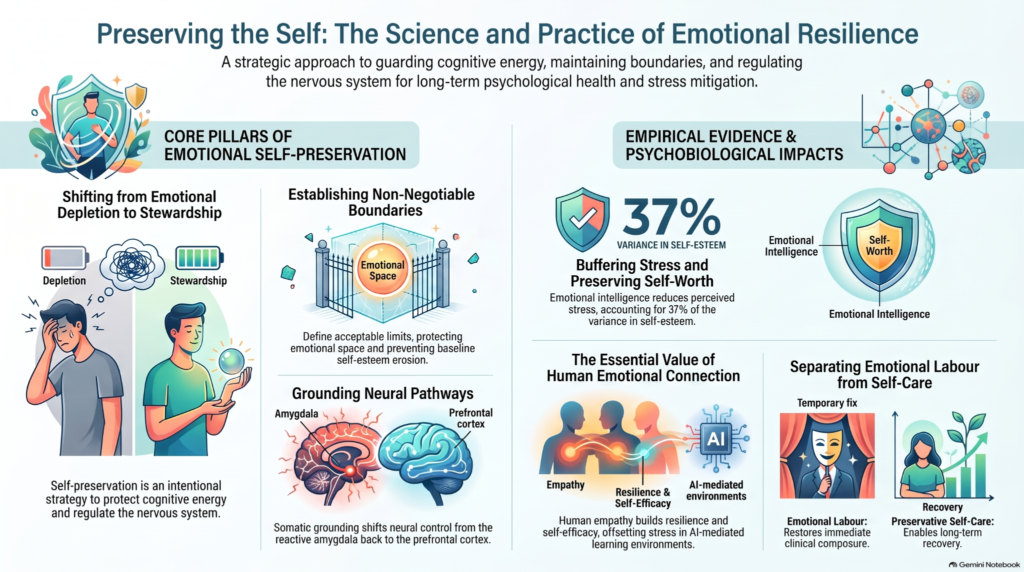
When you fail to guard your emotional bandwidth, the subconscious begins to register your own needs as secondary, quietly eroding your baseline self-esteem. Emotional self-preservation is neither an indulgence nor a retreat into isolation. It is an intentional, evidence-based strategy to protect your cognitive energy, regulate your nervous system, and reaffirm that your peace holds intrinsic, indisputable value.
Emotional self-preservation techniques empower you to take control of your mental health and self-worth. By identifying your boundaries and triggers, you learn to prioritize your well-being. Practicing self-care enhances your happiness and fosters resilience against life’s challenges. Healthy relationships and effective coping strategies further support your emotional landscape, leading to lasting improvements in self-esteem and mental wellness. Discover how to cultivate these essential skills for a more fulfilling life and strengthen your emotional foundation.
KEY TAKEAWAYS
- Emotional self-preservation techniques enhance self-awareness, empowering individuals to respond thoughtfully to life’s challenges rather than reacting impulsively.
- Establishing boundaries through these techniques fosters healthier relationships, prioritizing emotional well-being and self-worth.
- Mindfulness and self-care practices promote resilience, reducing anxiety and enhancing overall mental health over time.
- Journaling and creative outlets provide clarity on emotions, supporting personal growth and a stronger sense of self.
- Cultivating emotional intelligence through self-preservation techniques leads to improved coping mechanisms and a more fulfilling life experience.
WHY EMOTIONAL SELF-PRESERVATION MATTERS TO YOU
Self-preservation, the drive to protect ourselves, extends beyond survival—it nurtures mental health and daily serenity. Embracing this instinct can enhance our daily lives by encouraging healthy boundaries and self-care practices.
Emotional self-preservation matters to you now more than ever, especially in a world that constantly demands your attention and energy. To thrive, you need to cultivate self-awareness development and emotional intelligence, allowing you to navigate life’s challenges with grace.
By tuning into your feelings and understanding their origins, you empower yourself to respond rather than react, fostering a sense of control over your emotional landscape.
Recognizing your needs and limitations gives you the freedom to prioritize your well-being. You can set boundaries that protect your emotional space, ensuring you’re not overwhelmed by external pressures.
This journey isn’t just about survival; it’s about embracing your authentic self and nurturing your mental health. When you invest in your emotional self-preservation, you’re not only safeguarding your peace but also enhancing your capacity for joy and connection.
Recognizing Emotional Boundaries and Triggers for Self-Preservation
Understanding your emotional landscape is key to identifying your boundaries and triggers. You’ll find that emotional awareness empowers you to recognize when your limits are being tested. Start by paying attention to how certain situations or interactions make you feel. Do you sense anxiety, irritation, or sadness? These emotions often signal a crossed boundary.
Boundary identification isn’t just about saying “no”; it’s about honoring your feelings and needs. Reflect on past experiences—what triggered discomfort or discomfort?
How Self-Care Boosts Your Self-Worth
Self-preservation is protecting yourself from harm. In many instances, it’s instinctual, like pulling your hand back from a hot surface so that you don’t burn yourself. Neuroscientists cite biological instincts as driving factors behind this kind of self-preservation, like running from predators in a fight-or-flight response.
Taking time for self-care isn’t just a luxury; it’s essential for recognizing your worth. When you prioritize your well-being, cultivate positive mindset habits, and establish healthy boundaries, you send a powerful message to yourself that you matter.
Let’s explore how these practices can elevate your self-worth and create a more fulfilling life.
Prioritizing Personal Well-Being
Prioritizing your well-being is more than just a trendy buzzword; it’s an essential step toward recognizing your self-worth. When you take time for self-care, you’re actively choosing happiness and showing yourself you matter.
Engage in self-reflection exercises that help you understand your needs and desires. This practice not only boosts your mood but also deepens your connection with yourself.
As you prioritize your well-being, you’ll discover how it elevates your self-esteem and fosters a sense of freedom. Remember, it’s okay to say no to things that drain you and yes to activities that uplift you.
Embrace this journey, and watch how your self-worth flourishes when you commit to nurturing your personal happiness.
Cultivating Positive Mindset Habits
While it might feel challenging at times, cultivating positive mindset habits through self-care can greatly enhance your self-worth. Engaging in practices like positive affirmations and gratitude journaling allows you to shift your focus from negativity to appreciation, fostering a healthier self-image and learning how to gain confidence through consistent self-care and positive self-talk. Here’s a quick guide to help you get started:
| Habit | Benefits |
| Positive Affirmations | Boosts confidence |
| Gratitude Journaling | Increases overall happiness |
| Daily Self-Check-Ins | Enhances self-awareness |
Establishing Healthy Boundaries
Establishing healthy boundaries is essential for nurturing your self-worth, as it empowers you to protect your emotional energy and prioritize your needs.
By engaging in boundary setting, you create a framework that defines what’s acceptable in your life, helping you navigate complex relationship dynamics.
It’s not about building walls; it’s about ensuring that your emotional space remains sacred. When you clearly communicate your limits, you not only honor yourself but also teach others how to treat you.
This practice fosters genuine connections based on mutual respect and understanding. Remember, prioritizing your needs isn’t selfish—it’s a crucial step towards achieving freedom and self-acceptance.
Embracing boundaries can transform your relationships and reinforce your sense of self-worth.

PRACTICAL TECHNIQUES FOR ENHANCING RESILIENCE AND STRESS MANAGEMENT
Whenever I step up to an open canvas to paint abstract landscapes, I am reminded of an essential rule of composition: negative space is just as vital as the brushstrokes themselves. If every inch of the canvas is packed with dense pigment, the image turns into chaotic mud. The human psyche functions under the exact same principle. Through my clinical practice, I frequently notice that when individuals feel their self-worth cratering, they attempt to “fix” it through hyper-productivity or aggressive external validation, when what they actually require is cognitive decompression. Emotional self-preservation provides that breathing room.
Techniques such as somatic grounding, emotional labeling, and expressive creative outlets do something measurable in the brain: they disrupt automatic threat-response loops, shifting neural governance from the reactive amygdala back to the deliberate prefrontal cortex. This pause creates the psychological safety necessary to examine your internal narrative rather than simply enduring chronic distress.
When you choose to set an uncomfortable boundary or carve out dedicated stillness amidst a demanding schedule, you are not merely managing immediate tension. You are actively conditioning your neural pathways to recognize that your emotional threshold deserves respect, reinforcing a grounded sense of assertiveness and self-worth that cannot be easily derailed by external turbulence.
As you navigate the challenges of daily life, developing practical techniques for enhancing resilience and managing stress can make a considerable difference in your emotional well-being.
Here are four strategies to help you boost emotional resilience and achieve effective stress reduction:
- Mindfulness Practice: Take a few moments each day to focus on your breath, grounding yourself in the present. This simple practice can considerably reduce anxiety and enhance your awareness.
- Physical Activity: Engage in regular exercise, whether it’s a brisk walk or a dance class. Movement not only boosts your mood but also releases endorphins, helping to alleviate stress.
- Journaling: Write down your thoughts and feelings to process emotions better. This can provide clarity and help you gain perspective on your challenges.
- Creative Outlets: Explore hobbies that inspire you—painting, playing music, or crafting. These activities can serve as powerful tools for stress management and emotional expression.
Embrace these techniques, and watch your resilience grow!
How Healthy Relationships Contribute to Emotional Well-Being?
Healthy relationships play an essential role in your emotional well-being, offering support, understanding, and a sense of belonging.
The dynamics of these relationships can profoundly impact your mental health, fostering resilience and a positive self-image. When you surround yourself with people who genuinely care, you create a safe space to express your feelings without fear of judgment.
Emotional support from friends, family, or partners boosts your confidence and helps you navigate life’s challenges, making confidence building backed by psychology an important part of developing a positive self-image and maintaining emotional well-being. These connections provide a buffer against stress, reminding you that you’re not alone in your struggles.
When you engage in healthy relationship dynamics, you cultivate trust, empathy, and open communication, which are crucial for emotional freedom.
Effective Self-Care Practices for Emotional Well-Being
Taking care of your emotional well-being starts with practices like mindfulness and establishing healthy boundaries.
By focusing on the present moment and learning to say no when needed, you’re giving yourself the space to nurture your feelings. Making journaling, meditation, or spending time on hobbies a regular self care activity can help you manage stress, strengthen emotional resilience, and maintain a healthier relationship with yourself.
Mindfulness and Meditation Practices
A lack of self-preservation doesn’t feel like a dramatic collapse at first. It’s a gentle erosion of yourself each time you say yes when you actually wanted to say no, or when you swallow the truth to not hurt the person across from you, and all the times you pretend you’re doing great to not make life harder for the people around you.
When life feels overwhelming, turning to mindfulness and meditation can be a powerful way to reclaim your emotional balance.
These practices encourage you to connect with the present moment and nurture your well-being. Here are some simple yet effective strategies:
- Mindful breathing: Focus on your breath, inhaling deeply and exhaling slowly. This helps ground you.
- Body scan: Tune into your body, noticing areas of tension and consciously relaxing them.
- Guided meditation: Listen to recordings that lead you through visualization or relaxation techniques.
- Daily gratitude: Reflect on three things you’re thankful for each day, boosting your mood and perspective.
Healthy Boundaries Establishment
Finding balance through mindfulness and meditation can set the stage for another vital component of emotional well-being: establishing healthy boundaries.
When you practice boundary setting, you empower yourself to honor your needs and desires. It’s essential to communicate your limits clearly and confidently. Use effective communication strategies to express what feels comfortable and what doesn’t.
Remember, setting boundaries isn’t selfish; it’s a necessary form of self-care. By doing this, you create space for healthier relationships and enhance your emotional resilience.
Embracing your right to say “no” allows you to reclaim your time and energy, fostering a sense of freedom. Prioritize your well-being, and trust that establishing healthy boundaries will support your long-term mental health and self-worth.
Long-Term Benefits of Emotional Self-Preservation Techniques
Although it may seem challenging at first, practicing emotional self-preservation techniques can lead to remarkable long-term benefits.
By cultivating emotional intelligence and employing effective coping strategies, you’ll strengthen your mental well-being and sense of self-worth.
Here are some key benefits you can expect:
- Increased Resilience: You’ll bounce back from setbacks more easily, equipping yourself to handle life’s ups and downs.
- Enhanced Self-Awareness: Understanding your emotions helps you make better decisions and improve relationships.
- Better Stress Management: With effective coping strategies, you’ll navigate stress with greater ease, reducing its impact on your life.
- Improved Relationships: Establishing healthy emotional boundaries fosters deeper, more authentic connections with others.
Embracing these techniques empowers you to take charge of your emotional landscape, allowing for a freer, more fulfilling life.
You deserve this journey toward mental health and self-worth!

RELATED STUDIES ABOUT EMOTIONAL SELF-PRESERVATION TECHNIQUES
Emotional self-preservation isn’t just a shield; it’s your armor in the battle for mental health and self-worth. By recognizing your boundaries, practicing self-care, and nurturing healthy relationships, you’re not just surviving—you’re thriving. Remember, it’s okay to prioritize your emotional well-being; doing so is a demonstration of your strength. Embrace these techniques, and you’ll cultivate a resilient spirit that can weather any storm. Your journey to lasting mental health starts with you.
Emotional intelligence, self-esteem, and psychobiological stress: conditional indirect associations in military personnel
This cross-sectional empirical study investigates the conditional indirect association between emotional intelligence (EI) and self-esteem through perceived stress among Chinese military personnel, evaluating the salivary alpha-amylase-to-cortisol ratio (sAA/cortisol ratio) as a physiological boundary condition.
Study Overview & Conceptual Framework:
- Theoretical Grounding: Grounded in allostatic load theory and social self-preservation theory, which posit that psychological appraisal mechanisms and neuroendocrine stress systems interact to shape adaptive coping and self-evaluative outcomes.
- Research Scope: While prior research has linked emotional intelligence to reduced stress and elevated self-esteem in university or civilian cohorts, little empirical work has examined these pathways within high-stress military populations under continuous occupational strain. This study tests whether autonomic-endocrine dysregulation systematically modulates the protective efficacy of emotional intelligence on self-worth.
- Biological Marker Rationale: Salivary alpha-amylase (sAA) and salivary cortisol serve as surrogate indices of sympathetic nervous system (SNS) and hypothalamic-pituitary-adrenal (HPA) axis activity, respectively. The sAA/cortisol ratio indexes dysregulation between these complementary systems, providing an integrated biomarker of biological stress load.
Participants & Methodology:
- Sample & Recruitment: Enrolled 150 Chinese military personnel on a volunteer basis. After eliminating incomplete submissions and invalid biological specimens, the final cohort comprised 143 male military participants (mean age = 27.20 ± 11.02 years; 95.3% retention rate). Due to sample homogeneity, age was retained as the sole demographic covariate.
- Psychological Instrumentation:
- Emotional Intelligence: Wong-Law Emotional Intelligence Scale (WLEIS; 16 items on a 7-point Likert scale, Cronbach’s alpha = 0.92).
- Perceived Stress: Chinese adaptation of the 10-item Perceived Stress Scale (PSS-10; 7-point Likert scale, Cronbach’s alpha = 0.83).
- Self-Esteem: Rosenberg Self-Esteem Scale (RSES; 10 items on a 7-point Likert scale, Cronbach’s alpha = 0.82).
- Biomarker Collection & Assays: Basal resting saliva was sampled via a 2-minute cotton swab (salivette) chewed untouched by hands, immediately placed on ice, and frozen at -20°C. Concentrations were measured in duplicate using commercial ELISA kits: sAA (sensitivity = 0.94 ng/ml, intra-assay variability = 5.14%, inter-assay = 5.08%) and cortisol (sensitivity = 0.07 ng/ml, intra-assay = 4.50%, inter-assay = 7.17%).
- Analytical Modeling: Endocrine values and the sAA/cortisol ratio were log-transformed to address right-skewness. Hypotheses were tested using conditional process analysis (Hayes PROCESS framework) and structural equation modeling (SEM) with 5,000 bootstrap resamples and Monte Carlo simple slope simulations.
Key Findings:
- Direct & Indirect Psychological Pathways:
- Emotional intelligence exhibited a strong negative association with perceived stress (beta = -0.63, p < 0.001).
- Perceived stress exhibited a significant negative association with self-esteem (beta = -0.42, p < 0.001).
- Emotional intelligence retained a significant positive direct relationship with self-esteem when controlling for perceived stress (beta = 0.24, p < 0.05).
- Mediational bootstrapping verified a significant positive indirect pathway linking emotional intelligence to self-esteem through perceived stress (indirect beta = 0.26, SE = 0.08, 95% CI [0.13, 0.43]), accounting for 37% of variance in self-esteem (R2=0.37).
- Moderating Role of the sAA/Cortisol Ratio:
- Moderated Association: The interaction term between perceived stress and the log-transformed sAA/cortisol ratio significantly predicted self-esteem (beta = -0.22, SE = 0.06, p < 0.001), indicating that the negative association between perceived stress and self-esteem varies by biological stress state.
- Exacerbated Vulnerability: Simple slope testing demonstrated that the negative impact of perceived stress on self-esteem was markedly stronger in individuals with elevated sAA/cortisol ratios (+1 SD: beta = -0.62, p < 0.001) relative to those with lower ratios (-1 SD: beta = -0.51, p < 0.001).
- Amplified Protective Effect of EI: Conditional indirect effect modeling via Monte Carlo simulations confirmed that the indirect protective effect of emotional intelligence on self-esteem via reduced perceived stress was substantially stronger under high sAA/cortisol dysregulation (+1 SD: beta = 0.41, SE = 0.10, 95% CI [0.23, 0.61]) compared to low sAA/cortisol levels (-1 SD: beta = 0.14, SE = 0.08, 95% CI [0.02, 0.31]).
Theoretical & Practical Implications:
- Multi-System Psychobiological Interdependence: Demonstrates that the relationship between psychological stress perception and core self-worth is not static, but is dynamically modulated by SNS-HPA axis coordination. Individuals exhibiting heightened resting-state neuroendocrine dysregulation are biologically more vulnerable to stress-induced decrements in self-esteem.
- Enhanced Protective Value of Emotional Competencies: Emotional intelligence proves most critical precisely when biological stress systems are taxed or dysregulated, where adaptive cognitive appraisal and emotion regulation provide a necessary buffer against stress-mediated threats to self-esteem.
- Targeted Military Resilience Programs: Supports the integration of psychological emotion regulation skills (such as cognitive reappraisal) with physiological regulation training (e.g., physical conditioning, biofeedback, and relaxation practices) to attenuate basal sympathetic hyperarousal.
- Objective Biopsychosocial Screening: Suggests incorporating non-invasive salivary biomarker screening (sAA/cortisol ratios) into routine military health surveillance to identify personnel experiencing hidden neuroendocrine dysregulation who would benefit from targeted stress-reduction interventions.
Methodological Limitations:
- Cross-Sectional Design: Precludes causal attribution or directional determination regarding whether neuroendocrine imbalance preceded or developed as a consequence of subjective stress perceptions.
- Baseline Static Sampling: Focused exclusively on resting-state basal saliva, omitting real-time endocrine reactivity during acute high-stakes combat simulations or field operational stress.
- Sample Homogeneity: Constrained to a young, entirely male Chinese military cohort (N = 143), limiting generalizability to female service members or diverse occupational demographics subject to different endocrine profiles.
| REFERENCE: Yuting Feng, Bin Liu, Zhongying Wu, Zhujing Ma, Lei Song, Lin Zhang, Li Guo, Xiaodong Zhao, Hongchang Sun, Yinchuan Jin, Qun Yang, Emotional intelligence, self-esteem, and psychobiological stress: conditional indirect associations in military personnel, Personality and Individual Differences, Volume 244, 2025, 113253, ISSN 0191-8869, https://doi.org/10.1016/j.paid.2025.113253. (https://www.sciencedirect.com/science/article/pii/S0191886925002156) |
The impact of teacher emotional support on students’ engagement in AI-mediated English learning environments: The mediating role of resilience and self-efficacy
This quantitative empirical study investigates the impact of teacher emotional support on student classroom engagement in artificial intelligence (AI)-mediated English as a Foreign Language (EFL) learning environments, evaluating the parallel mediating mechanisms of academic resilience and self-efficacy.
Study Overview & Conceptual Framework:
- The Human–AI Educational Debate: As generative AI and large language models (LLMs) such as ChatGPT enter language education to provide 24/7 personalized practice and immediate instructional feedback, debates persist regarding whether automated agents diminish or replace the necessity of human educators. The authors hypothesize that while AI automates cognitive and procedural delivery, the affective dimension—specifically teacher emotional support—represents an irreplaceable, distinctively human contribution essential for sustained student engagement.
- Theoretical Grounding: Framed around Self-Determination Theory (SDT) and Social Cognitive Theory. In AI-mediated settings, SDT posits that optimal learning engagement requires the satisfaction of three core psychological needs: relatedness (human care and interpersonal connection that algorithms cannot provide), competence (confidence in mastering both linguistic content and technical tools), and autonomy (respect for learner choice and perspective). Teacher emotional support directly fulfills relatedness and scaffolds competence through resilience and self-efficacy.
Participants & Methodology:
- Sampling & Cohort Profile: Utilized convenience sampling across Chinese universities, recruiting college students studying EFL across diverse academic disciplines and levels (undergraduate to doctoral). Of 745 distributed surveys, 603 met rigorous data screening criteria (excluding invariant responses, rapid completion times, and failed embedded attention checks; 80.9% effective response rate). The final analyzed sample was gender-balanced (48.92% male, 51.08% female).
- Contextualized Psychometric Instruments (5-Point Likert Scales):
- Teacher Emotional Support Scale: Adapted from Romano et al. (15 items across three subdimensions: Positive Climate, Teacher Sensitivity, and Regard for Adolescent Perspective; Cronbach’s alpha = 0.906) contextualized to AI-assisted instruction.
- Brief Resilience Scale: Adapted from Smith et al. (6 items; Cronbach’s alpha = 0.851), measuring students’ perceived capacity to bounce back from setbacks encountered when using AI tools for English learning.
- General Self-Efficacy Scale: Adapted from Zhang and Schwarzer (10 items; Cronbach’s alpha = 0.935), capturing confidence in navigating linguistic challenges and technical AI interfaces.
- Classroom Engagement Scale: Adapted from Eerdemutu et al. (9 items covering Behavioral, Emotional, and Cognitive Engagement; Cronbach’s alpha = 0.962).
- Statistical & Modeling Procedures: Evaluated using SPSS 27.0 and AMOS 26.0. Confirmatory Factor Analysis (CFA) verified construct validity and model fit (chi-square/df = 1.755, CFI = 0.968, TLI = 0.966, RMSEA = 0.035, SRMR = 0.025). Hypothesized paths and indirect effects were tested via Structural Equation Modeling (SEM) and 5,000-resample bootstrapping with 95% bias-corrected confidence intervals.
Key Structural Equation Modeling Findings:
- Significant Direct Influence of Emotional Support:
- Teacher emotional support directly and positively predicted classroom engagement in AI-mediated environments (beta = 0.466, t = 3.535, p < 0.001), validating Hypothesis 1.
- Perceptions of educator warmth, sensitivity, and respect serve as an essential emotional buffer against the alienation, techno-stress, or anxiety frequently triggered when students interact with automated systems.
- Strong Antecedent to Psychological Resources:
- Teacher emotional support exerted large, positive direct effects on both self-efficacy (beta = 0.748, t = 9.982, p < 0.001) and resilience (beta = 0.621, t = 9.190, p < 0.001).
- Empathetic educator feedback establishes a psychologically safe climate that reframes technical or linguistic errors as learning opportunities, building both confidence and coping persistence.
- Parallel Mediating Mechanisms:
- Indirect Path via Resilience: Resilience significantly mediated the link between teacher emotional support and engagement (indirect effect = 0.153, 95% CI [0.030, 0.272], p = 0.024), confirming Hypothesis 2. Greater resilience allows learners to persist despite technical friction and linguistic setbacks (direct path resilience to engagement: beta = 0.207, t = 3.121, p = 0.002).
- Indirect Path via Self-Efficacy: Self-efficacy significantly mediated the relationship between emotional support and engagement (indirect effect = 0.286, 95% CI [0.086, 0.491], p = 0.008), confirming Hypothesis 3. Self-efficacy demonstrated a stronger indirect path than resilience, indicating that belief in one’s capability to operate AI tools and acquire language skills drives immediate active participation (direct path self-efficacy to engagement: beta = 0.322, t = 3.551, p < 0.001).
Theoretical & Pedagogical Implications:
- Rejection of Teacher Replacement Narratives: Empirically refutes the notion that AI instruction renders human teachers obsolete. Instead, human empathy and technological efficiency operate synergistically; AI delivers instructional and diagnostic support, while human educators provide the interpersonal relatedness and emotional scaffolding necessary for sustained engagement.
- Dual Competence Training for Educators: Institutional professional development programs should not restrict teacher training to technical AI literacy alone. Curricula must place equal emphasis on socio-emotional competencies, training educators how to provide emotional support, run one-on-one check-ins to monitor technology-induced anxiety, and cultivate reflective learning habits in blended spaces.
- Scaffolded Pedagogical Design: Instruction should combine scaffolded AI tasks with collaborative peer support and instructor reassurance, ensuring students build dual linguistic-technological self-efficacy and resilience rather than experiencing cognitive overload or isolation.
Limitations & Research Directions:
- Cross-Sectional Constraints: The cross-sectional design precludes definitive causal claims over time, underscoring the need for longitudinal tracking across semester-long AI curricula.
- Sample & Cultural Homogeneity: The investigation was restricted to Chinese university EFL students, warranting cross-cultural evaluation across diverse geographic, demographic, and educational settings.
- Self-Report Dependency: Future studies should augment subjective self-report questionnaires with objective, real-time engagement telemetry, observational classroom coding, and comparative trials across different generative AI platforms.
| REFERENCE: Quan Quan, Yang Gao, Qikai Wang, The impact of teacher emotional support on students’ engagement in AI-mediated English learning environments: The mediating role of resilience and self-efficacy, Acta Psychologica, Volume 260, 2025, 105766, ISSN 0001-6918, https://doi.org/10.1016/j.actpsy.2025.105766. (https://www.sciencedirect.com/science/article/pii/S0001691825010790) |
Emotional labour in therapeutic work – the case of physiotherapists and psychotherapists in Poland
This comparative qualitative study examines the mechanisms, practices, and occupational experiences of emotional labour among private-practice physiotherapists and psychotherapists in Poland, utilizing Hochschild’s concepts of surface and deep acting alongside Bolton’s typology of emotion management to sociologically reconceptualize therapy as a normative, relational setting.
Study Overview & Conceptual Framework:
- Socio-Institutional Setting: Both occupations operate within Poland’s “patchwork” healthcare architecture, marked by persistent public funding shortages and high demand for specialized care. Consequently, private, one-to-one individual practices have emerged as the primary service arena, granting practitioners high occupational autonomy outside rigid bureaucratic workplace hierarchies.
- Comparative Rationale: Physiotherapists intervene predominantly through bodily touch, operating under feeling rules regarding physical intimacy and tactile decorum. Psychotherapists intervene through the human psyche, operating under normative frameworks governing psychological exposure (“symbolic undressing”). Despite these distinct therapeutic mediums, both professions rely on relational foundations of empathy, trust, and client cooperation.
- Theoretical Integration:
- Hochschild’s Emotional Labour Framework: Analyzes emotional regulation commodified within market exchange, distinguishing between surface acting (managing external affective displays) and deep acting (actively modifying internal feeling states to align with occupational expectations).
- Bolton’s Typology of Emotion Management: Evaluates pecuniary (commercial/client retention), prescriptive (professional/ethical norms), presentational (general civility), and philanthropic (spontaneous, altruistic care) emotion management.
- Reconceptualization of Therapy: Reframes therapy from a mechanical technical procedure into a normative, relational setting where practitioners manage both their own emotional states and those of their clients.
Methodology & Collaborative Data Synthesis:
- Research Cohort & Data Sources: Synthesizes data from two independent qualitative studies conducted in Poland between 2022 and 2025, comprising 26 in-depth individual interviews (IDIs):
- Physiotherapists: 14 licensed practitioners (8 women, 6 men; experience ranging from several months to 15 years) recruited purposively in the Pomeranian Voivodeship.
- Psychotherapists: 12 accredited psychotherapists (7 women, 5 men; experience ranging from 5 to 40 years) recruited purposively across major urban centers; psychiatrists lacking accredited psychotherapy certification were excluded.
- Collaborative Coding Procedure: The authors integrated datasets via a six-step comparative process: transcript exchange, collaborative identification of shared themes, independent return to codebooks, code refinement, joint thematic categorization across four structured video seminars, and final illustrative quotation synthesis.
Key Empirical Findings & Professional Convergences:
- Professional Socialization & the “Cloak of Competence”:
- In both groups, emotional norms are internalized through higher education and ongoing professional training.
- Physiotherapists develop an embodied “cloak of competence” and somatic desensitization during anatomy labs and clinical training, enabling them to perceive patient nudity, illness, and bodily touch as emotionally neutral.
- For psychotherapists, professional socialization is maintained through continuous clinical supervision, which establishes standards of self-awareness and emotional containment.
- Managing Intimacy, Setting Tone, & Verbal Exchange:
- Physiotherapists normalize physical vulnerability through surface acting: maintaining composure, grooming, and deliberate procedural sequencing (starting manipulations on less sensitive anatomical zones before progressing to emotionally reactive areas).
- Psychotherapists navigate emotional vulnerability through active listening, reflective summarization, and cognitive presence.
- Spoken conversation emerged as essential across both modalities: in psychotherapy, it serves as the core diagnostic and treatment instrument; in physiotherapy, it serves as a critical parallel medium that fosters trust and facilitates somatic intervention.
- Emotional Outbursts vs. The “Difficult Patient”:
- Spontaneous Affective Releases: Patients’ intense emotional releases (such as sudden weeping during musculoskeletal/visceral therapy or distressing trauma disclosures in psychotherapy) are not classified as “difficult” by practitioners, but are embraced as legitimate manifestations of therapeutic release.
- The “Difficult Patient” Typology: Both groups classify patients as difficult when they resist active collaboration. This includes individuals who remain passive, skeptical, or demanding of effortless cures, those who disregard home exercises or behavioral recommendations outside the clinic, manipulative clients seeking legal documentation, and overbearing parents of adolescent patients.
- Manifestations of Emotional Exhaustion:
- Physiotherapists report exhaustion characterized by sensory overstimulation, conversational monotony (listening to repetitive small talk), physical tension, and post-touch fatigue, occasionally referring to drained states as encounters with “energy vampires”.
- Psychotherapists describe exhaustion through metaphors of deep saturation—such as acting as an “emotional sponge” or a “sewage treatment plant for emotions”—frequently carrying worries, dreams, and feelings of helplessness regarding suicidal patients beyond clinical hours.
- Both groups experience somatic symptoms of work stress, with physiotherapists reporting neck pain and postural strain, while psychotherapists report tension headaches, back pain, and pervasive fatigue.
Key Differences in Emotion Regulation Strategies:
- Distancing Techniques:
- Physiotherapists frequently deploy explicit, cognitive distancing strategies: compartmentalizing the clinic from their home life, limiting personal involvement strictly to solvable mechanical problems, and maintaining superficial conversational boundaries.
- Psychotherapists report fewer explicit distancing mechanisms; they utilize deep acting to consciously hold back overwhelming emotions (noting that “patients do not come to the doctor to absorb the doctor’s emotions”) while simultaneously deploying selective emotional authenticity and vulnerability as an alliance-building tool.
- Institutionalization of Supervision:
- Formal supervision is central, mandatory, and universal in psychotherapy, serving as an ethical decompression chamber to process transference, emotional burdens, and isolation.
- Supervision is virtually absent in private physiotherapy practice, forcing physical therapists to rely entirely on individualized, informal coping mechanisms (though some practitioners advocate for its institutional introduction).
- Job Satisfaction and Identity:
- Psychotherapists articulate high job satisfaction, describing their deep emotional involvement as a vehicle for reciprocal personal maturation and intellectual growth.
- Physiotherapists express career satisfaction through successful problem-solving and symptom alleviation, but foreground existential self-development less prominently.
Demarcating Emotional Labour and Self-Care:
- Theoretical Clarification: The authors delineate the ambiguous boundary between emotional labour and self-care by analyzing temporal and intentional orientation:
- Emotional Labour (Instrumental / Deep Acting): Practices executed during or immediately following clinical sessions aimed at restoring psychological equilibrium to sustain the therapeutic alliance, maintain composure, and optimize patient outcomes (e.g., washing hands in cold water between appointments, ventilating or scenting treatment rooms to “clear patient energy”, or deploying transitional homebound case discussions).
- Self-Care (Preservative): Health-promoting practices temporally removed from the direct therapeutic setting aimed at general well-being and personal recovery (e.g., caseload capping, boxing, running, horseback riding, swimming, pottery, or artistic engagement).
- Dynamic Interdependence: The capacity to deploy effective deep acting within the consulting room is contingent upon consistent restorative self-care outside of it.
Sociological & Professional Implications:
- Hegemony of Prescriptive Norms: Emotion management within both professions is driven almost entirely by prescriptive (professional ethics) and pecuniary (market survival) feeling rules. Philanthropic emotion management (unregulated, spontaneous emotional giving) remains constrained by occupational codes.
- The Relational Infrastructure of Care: Demonstrates that emotional labour is not a peripheral secondary task, but a core constitutive component of professional therapeutic work. Whether interventions target the physical body or the psychological apparatus, practitioners navigate shared emotional demands, balancing professional detachment with interpersonal attunement.
| REFERENCE: Bartosz Mika, Justyna Zielińska, Emotional labour in therapeutic work – the case of physiotherapists and psychotherapists in Poland, Social Science & Medicine, Volume 406, 2026, 119586, ISSN 0277-9536, https://doi.org/10.1016/j.socscimed.2026.119586. (https://www.sciencedirect.com/science/article/pii/S0277953626006623) |
CONCLUSION
Lasting self-worth is never an accidental byproduct of easy circumstances; it is an active, daily discipline rooted in self-respect. As both a researcher and a clinician, I have found that true confidence rarely stems from bravado or uninterrupted optimism. Instead, authentic confidence is born from self-trust—the quiet, unshakable certainty that when demands mount and relational pressures test your limits, you will not betray your own well-being to keep the peace.
Emotional self-preservation is the bedrock upon which that trust is built. When you commit to preserving your emotional health, you fundamentally change your relationship with yourself. You stop viewing exhaustion as a badge of honor and begin treating your mental energy as the finite, valuable resource it truly is. As you step forward from this reading, view your boundaries not as rigid barriers erected out of fear, but as conscious self-commitments designed to protect your vitality.
Allow your self-care practices to be grounded, consistent rituals rather than emergency crisis interventions. By choosing to preserve your peace, honor your physical and emotional cues, and advocate for your emotional space, you take permanent ownership of your mental health and anchor your self-worth in enduring strength.