

In my clinical practice over the past twelve years, I have listened to countless clients describe feeling completely betrayed by their own bodies. They sit across from me in frustration, exhausted by sudden spikes in heart rate, tight chests, or sudden waves of mental fog whenever work or life demands peak. They wonder why they cannot simply “think” their way out of stress. But from both a cognitive behavioral perspective and my work with self-esteem research, I remind them that their physiology is not malfunctioning—it is protecting them.
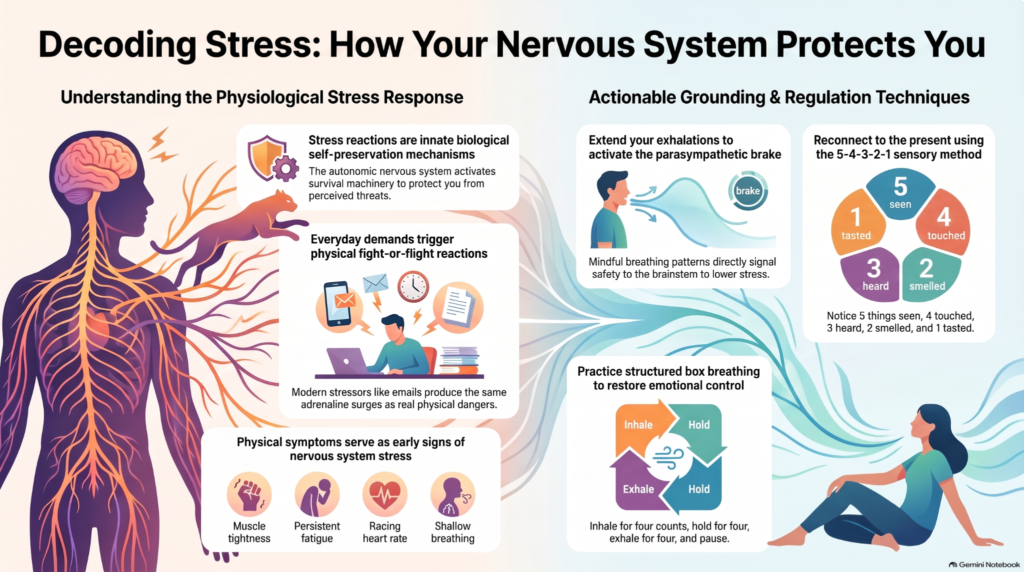
Our modern lifestyle constantly triggers biological survival machinery that evolved for life-or-death physical encounters. Outside the therapy room, when I am hanging off a rock face while climbing, my nervous system naturally surges with adrenaline to preserve my physical safety. The difficulty arises when an overwhelming email inbox or interpersonal confrontation produces that exact same surge. That survival drive is primal and tenacious; it refuses to be ignored.
The breakthrough happens the moment we stop judging our fight-or-flight reactions as personal weakness and instead view them as an innate self-preservation mechanism. When you understand how the autonomic nervous system operates, you transition away from feeling helpless and begin stepping into empowered, self-directed regulation.
Understanding your nervous system’s response to stress is key to managing your well-being. When faced with stress, your Autonomic Nervous System triggers a fight or flight response, leading to physical signs like a racing heart and shallow breathing. Being aware of these reactions helps you implement calming techniques like mindful breathing and grounding exercises. By developing resilience through mindfulness, you can better navigate stressful situations. There’s more to explore that can enhance your coping strategies and emotional regulation.
KEY TAKEAWAYS
- Understanding the Autonomic Nervous System helps identify stress responses and manage reactions to perceived threats effectively.
- Recognizing physical indicators of stress, such as muscle tightness and racing heart, promotes proactive stress management strategies.
- Mindful breathing techniques can calm the nervous system, reducing the fight or flight response during stressful situations.
- Reflecting on personal stress triggers enhances awareness, allowing for better anticipation and management of stressors.
- Setting specific and measurable goals for stress management can improve focus and motivation in self-preservation efforts.
UNDERSTANDING THE NERVOUS SYSTEM AND STRESS CONNECTION
The connection between your nervous system and stress is essential to understand if you want to manage your stress effectively. Your nervous system plays a significant role in your body’s stress response, activating when you perceive threats. This response isn’t just a reaction; it’s a survival mechanism designed to protect you.
When faced with stress, your body releases hormones like adrenaline, preparing you to fight or flee. This physiological reaction can be beneficial in small doses, but chronic activation can lead to negative health effects.
Recognizing this connection empowers you. You can learn to identify your triggers and how your body reacts. By understanding the signals your nervous system sends, you can take proactive steps to mitigate stress.
Whether it’s through breathing exercises, mindfulness, or physical activity, you have the tools to reclaim your sense of freedom and calm your stress response, promoting overall well-being in your life.
How Your Autonomic Nervous System Handles Stress
When stress hits, your autonomic nervous system (ANS) springs into action, regulating your body’s involuntary responses.
This system is essential for managing the autonomic response to stress triggers, helping you navigate life’s challenges. Understanding how your ANS functions can empower you to reclaim your peace.
Here are three ways your ANS handles stress:
- Fight or Flight: When you perceive a threat, your body prepares to react, increasing heart rate and blood flow to muscles.
- Rest and Digest: Once the threat passes, your ANS shifts, promoting relaxation and digestion, allowing your body to recover.
- Balance Maintenance: Your ANS continuously works to keep your body’s functions balanced, adapting to different stress levels.
Recognizing the Signs of Stress in Your Body
Deep, slow breathing is one of the quickest ways to calm a dysregulated nervous system. Try this simple technique: inhale slowly through your nose for four counts, hold for four counts, exhale through your mouth for six counts and pause for two counts before repeating.
Recognizing the signs of stress in your body is essential for managing your overall well-being. Your body signals can provide vital insights into your mental and emotional state. Common indicators of stress include tension headaches, persistent fatigue, and digestive issues.
You might notice a racing heart or shallow breathing during stressful moments, which are clear body signals that your nervous system is reacting.
Being attuned to these symptoms fosters stress awareness, empowering you to take action before stress escalates. You may also experience muscle tightness or irritability, which are signs that you need to pause and reassess.
Effective Techniques to Calm Your Nervous System
Self-preservation, often referred to as the survival instinct, is the inherent tendency of living organisms to take actions that enhance their chances of survival while minimizing potential harm. This instinct manifests in various ways, such as seeking food to satisfy hunger, escaping from dangers, or avoiding threats. The survival instinct is foundational to many behavioral traits observed across species, including humans, where it historically influenced responses to hazards through mechanisms like the fight-or-flight reaction.
When stress takes hold, calming your nervous system is essential for regaining balance.
Mindful breathing techniques, grounding exercises, and connecting with nature can help you create a sense of peace and stability.
Let’s explore these effective strategies to support your well-being.
Mindful Breathing Techniques
How can mindful breathing techniques help you regain control over your nervous system? By focusing on your breath, you can signal your body to enter a state of deep relaxation, reducing stress and anxiety.
Mindful breathing allows you to connect with the present moment, fostering a sense of freedom and clarity. Here are three effective techniques to get you started:
- Diaphragmatic Breathing: Inhale deeply through your nose, allowing your abdomen to rise. Exhale slowly through your mouth.
- Box Breathing: Inhale for four counts, hold for four, exhale for four, and pause for four.
- 4-7-8 Breathing: Inhale for four counts, hold for seven, and exhale for eight.
These techniques empower you to cultivate calmness and resilience.
Grounding Exercises Explained
Grounding exercises are often a powerful way to calm your nervous system and bring you back to the present moment. These grounding techniques enhance body awareness, helping you reconnect with your senses. Here are some effective strategies:
| Technique | Description |
| 5-4-3-2-1 Method | Identify 5 things you see, 4 you can touch, 3 you hear, 2 you smell, and 1 you taste. |
| Deep Breathing | Inhale deeply for 4 seconds, hold for 4, and exhale for 6. Repeat. |
| Body Scan | Mentally scan your body, noticing tension and relaxation in each area. |
| Grounding Object | Hold a small object and focus on its texture, shape, and weight. |
| Nature Visualization | Picture a calming natural scene and immerse yourself in it mentally. |
Using these techniques regularly can empower you to manage stress effectively.
Nature Connection Benefits
Dr. Albers says that hypervigilance is sometimes just a personality trait. “Sometimes, a person is just more aware and mindful of their environment or other people’s feelings, but if hypervigilance is chronic or severe, it’s usually a symptom of a mental health disorder.”
Connecting with nature offers numerous benefits for your mental well-being, especially when it comes to calming your nervous system. Engaging in nature therapy and practicing outdoor mindfulness can greatly reduce stress.
Here are three effective techniques to reconnect with the natural world:
- Mindful Walking: Take a leisurely stroll in a park or forest, focusing on the sights, sounds, and smells around you. This can ground you in the present moment.
- Nature Sounds: Listen to recordings of natural sounds like birds chirping or water flowing. This can create a soothing atmosphere to help ease anxiety.
- Gardening: Digging your hands into the soil can foster a sense of peace and connection, allowing you to unwind and recharge your spirit.
Embrace these moments to cultivate inner freedom and calm.

HOW TO BUILD RESILIENCE WITH MINDFULNESS
Whenever I guide clients through somatic grounding and cognitive reframing, I emphasize that regulation is not an intellectual switch you simply flip on. It requires deliberate somatic communication. As highlighted in community discussions, many people struggle to even recognize what authentic relaxation feels like because their nervous systems have been perpetually locked in hypervigilance. When you have lived with elevated baseline tension for months or years, simply sitting still can feel surprisingly unsafe.
This is why practical, bottom-up tools—such as vagal nerve engagement, structured breath pacing, and sensory grounding—are fundamental. In my own routine, when I step away from psychological research to paint abstract landscapes, I treat the process as an active mindfulness practice. Immersing my senses in the physical resistance of the brush, the texture of the canvas, and the colors on the palette creates the exact sensory grounding that tells the amygdala the threat has passed.
Clinical research on deep breathing confirms this: extending your exhalations activates the parasympathetic brake, signaling safety straight to the brainstem. You do not have to master grand, elaborate rituals; micro-practices practiced consistently restore the flexible baseline your body is constantly striving to maintain.
Building resilience through mindfulness can transform how you respond to stress.
By understanding the benefits of mindfulness, you can develop techniques that enhance your emotional strength and clarity.
Let’s explore how these practices can empower you to navigate challenges with greater ease.
Understanding Mindfulness Benefits
While you may feel overwhelmed by daily stressors, embracing mindfulness can greatly enhance your resilience. Mindfulness practices empower you to respond rather than react to stress, promoting better emotional regulation.
Here are three key benefits of mindfulness:
- Improved Focus: By training your mind to stay present, you enhance your concentration and decision-making skills.
- Emotional Awareness: Mindfulness helps you recognize your emotions, fostering healthier responses and reducing anxiety.
- Stress Reduction: Regular mindfulness practices lower cortisol levels, leading to a calmer state of being.
Incorporating these benefits into your life not only cultivates resilience but also supports confidence building backed by psychology, helping you navigate stressful situations with greater self-awareness and emotional control.
Embrace mindfulness, and watch your stress transform into opportunities for growth.
Practicing Mindful Techniques
Practicing mindful techniques can greatly enhance your resilience, especially when you face life’s inevitable challenges.
Mindful meditation serves as a powerful tool for stress reduction, allowing you to cultivate a deeper awareness of your thoughts and feelings. By dedicating just a few minutes daily to this practice, you can develop a greater sense of control over your emotional responses.
As you focus on your breath or the sensations in your body, you create a mental space that fosters clarity and calm. This awareness helps you recognize stress triggers and respond more effectively.
Embracing mindfulness not only strengthens your ability to cope but also empowers you to navigate life’s ups and downs with grace.
How to Create Your Personalized Stress Management Plan
How can you create a personalized stress management plan that truly resonates with your unique needs? Start by identifying your personal goals and stress triggers. Understanding what specifically causes you stress is the first step in creating a plan that works for you.
Here are three essential steps to take into account:
- Assess Your Triggers: Take time to reflect on what situations or activities trigger your stress. Knowing these can help you anticipate challenges.
- Set Realistic Goals: Define what you want to achieve with your stress management plan. These goals should be specific, measurable, and attainable.
- Choose Techniques: Experiment with various stress-relief techniques like mindfulness, deep breathing, physical activity, or a simple self care activity such as journaling or spending time in nature. Find what resonates with you and incorporate it into your daily routine.
Navigating Stressful Situations With Greater Resilience
Creating a personalized stress management plan is just the beginning; the real challenge lies in applying it when faced with stressful situations. You can navigate these moments with greater resilience by focusing on emotional regulation. When stress hits, pause and breathe deeply, allowing your body to settle. This simple act can help you regain control over your emotions and thoughts.
Practice mindfulness regularly to strengthen your ability to stay present during stressful events. This enhances your stress management skills and increases your awareness of your nervous system’s responses.
Developing a toolkit of coping strategies—like journaling, exercise, or talking to a friend—empowers you to respond rather than react impulsively, making emotional self-preservation techniques valuable for maintaining emotional balance and managing stress effectively.

RELATED STUDIES ABOUT NERVOUS SYSTEM SELF-PRESERVATION RESPONSE
Just like a ship steering through turbulent seas, you can guide through stress by understanding your nervous system’s responses. By recognizing the signs of stress and employing effective techniques to calm yourself, you can build resilience and create a personalized stress management plan. Embracing mindfulness will help you remain anchored, allowing you to face life’s challenges with greater ease. Remember, your awareness is a powerful tool—use it to guide towards calmer waters and a healthier, more balanced life.
Recent advances in self-assembled nanoplatforms for central nervous system disorders therapy: Design principles, multifunctional strategies, and therapeutic applications
This review systematically examines recent advancements in self-assembled nanocarriers (SA-NCs) for central nervous system (CNS) disorders, analyzing the anatomical and functional barriers of the brain, the thermodynamic mechanisms of molecular self-assembly, multifunctional delivery strategies, and preclinical applications across neurological pathologies.
Study Overview & Conceptual Framework:
- The CNS Delivery Dilemma: Over 98% of small-molecule therapeutics and virtually all biopharmaceuticals fail to cross the blood-brain barrier (BBB). In clinical pipelines, approximately 90% of neurotherapeutic candidates fail to secure FDA approval, with limited BBB permeability serving as the primary bottleneck.
- Rationale for Molecular Self-Assembly: Self-assembly provides a bottom-up fabrication methodology governed by thermodynamic equilibrium (G<0). Assemblies are driven by non-covalent forces—hydrogen bonds, van der Waals interactions, hydrophobic effects, electrostatic interactions, – stacking, and host–guest complexes. These materials offer low structural complexity, spontaneous organization, batch scalability, and multi-payload encapsulation, providing advantages over conventional synthetic nanocarriers.
Physiological Barriers & Route Architecture:
- Barrier Stratification:
- Blood-Brain Barrier (BBB): Formed by brain capillary endothelial cells (bECs) interconnected by continuous tight junctions, supported by pericytes, vascular smooth muscle cells, and astrocytic end-feet. It restricts paracellular flux and expresses efflux pumps (e.g., P-gp, BCRP) that actively export therapeutics.
- Blood-Cerebrospinal Fluid Barrier (BCSFB): Located at the choroid plexus epithelium (~1.7 m² surface area in humans). Capillaries are fenestrated, but apical epithelial tight junctions limit macromolecular diffusion. CSF bulk flow restricts drug penetration primarily to periventricular tissue.
- Olfactory Gateway: Enables non-invasive nose-to-brain transport bypassing systemic circulation via olfactory and trigeminal nerve pathways.
- Delivery Strategies:
- Non-Invasive Routes: Oral delivery faces enzymatic degradation and first-pass hepatic metabolism; intranasal administration avoids hepatic clearance, achieves rapid mucosal absorption, and provides direct access to the CSF and parenchymal space.
- Invasive Interventions: Intrathecal (IT) and intracerebroventricular (ICV) injections introduce agents directly into the CSF but have limited parenchymal reach; local depot systems (e.g., Gliadel wafers, 3D hydrogels) provide sustained localized release at resection sites; focused ultrasound (FUS) combined with microbubbles transiently and reversibly disrupts tight junctions for up to 24 hours to facilitate nanocarrier extravasation.
Taxonomy & Material Classification of SA-NCs:
- Lipid-Based SA-NCs: Comprise liposomes, solid lipid nanoparticles (SLNs), and nanostructured lipid carriers (NLCs). They mimic cell membrane bilayers, demonstrate high biocompatibility, encapsulate both lipophilic and hydrophilic cargos, and penetrate the BBB via membrane fusion or adsorptive endocytosis.
- Protein-Based SA-NCs: Utilize endogenous scaffolds like human serum albumin and ferritin (e.g., heavy-chain ferritin [HFn]). They exploit native transport mechanisms (e.g., TfR1-mediated transcytosis) through “Trojan Horse” delivery and offer high architectural rigidity.
- Polysaccharide-Based SA-NCs: Utilize natural biopolymers including chitosan and hyaluronic acid (HA). Cationic chitosan enhances electrostatic retention at negatively charged endothelial membranes, while HA selectively targets CD44 receptors on tumors and activated glia.
- Nucleic Acid-Based SA-NCs: Formed via DNA origami and RNA self-assembly, enabling atomic-level spatial control over size, geometry, and ligand stoichiometry, though structural stabilization (e.g., phosphorothioate backbones) is necessary to mitigate nuclease degradation.
Multifunctional Engineering Strategies:
- Membrane-Translocating Modifications:
- Physicochemical Modulation: Smaller nanoparticles (<50–100 nm) and lipophilic coatings cross the BBB more efficiently; cationic charges promote adsorptive uptake, while negative charges favor mucosal delivery. Natural terpenes (e.g., borneol, menthol) function as transient tight junction openers by down-regulating claudin-5 and occludin.
- Receptor-Mediated Transcytosis (RMT): Functionalization with transferrin (Tf), lactoferrin (Lf), T7 peptide, or Angiopep-2 (targeting LRP1) triggers receptor-mediated endocytosis and transcytosis across bECs.
- Transporter & Cell-Mediated Transcytosis: Hijacks nutrient carriers (e.g., GLUT1 via glycosylation) or incorporates cell-penetrating peptides (CPPs like TAT) to enhance intracellular delivery.
- Exosome & Cell-Hybrid Platforms: Coating synthetic cores with natural exosomes (Exo) or live cells (e.g., neutrophil-mediated “Trojan horse” transport) minimizes mononuclear phagocyte system (MPS) clearance and facilitates transcytosis.
- Functional Targeting & Disease Microenvironment Responsiveness:
- Ligand Placement Engineering: Pre-functionalization before assembly ensures high stoichiometric reproducibility (favorable for GMP scale-up) but risks ligand burying; post-assembly click chemistry maximizes surface ligand exposure but introduces colloidal instability risks.
- Stimuli-Responsive Payloads: Includes acidic pH-responsive linkers, matrix metalloproteinase-2 (MMP-2) cleavable peptides, and reactive oxygen species (ROS)-cleavable bonds (e.g., boronic esters) to restrict release to ischemic, inflamed, or neoplastic foci.
- External Triggers: Uses near-infrared (NIR) light for photothermal therapy or ultrasound (US) activation to trigger localized sonodynamic ROS generation, ferroptosis, and cuproptosis.
- Dual-Stage “Cascade” Targeting: Decouples BBB penetration from pathological localization (e.g., Angiopep-2 for RMT paired with CD133 antibodies for glioma stem cells, or TGN paired with QSH for amyloid-beta plaques).
Therapeutic Applications Across CNS Pathologies:
- Malignant CNS Tumors (Glioblastoma & Brain Metastases): SA-NCs target overexpressed receptors (LRP1, SPARC, gp60) while circumventing P-glycoprotein efflux. Dual-action nanoplatforms combine chemotherapy (paclitaxel, temozolomide) with immunotherapy (STING agonists, CpG adjuvants, PD-L1 siRNA) and phototherapy, reprogramming the immunosuppressive tumor microenvironment and suppressing recurrence.
- Neurodegenerative Diseases (AD & PD):
- Parkinson’s Disease: ROS-responsive carrier-free nanomedicines (dopamine dimers assembled with rasagiline mesylate) selectively deliver dopamine, scavenge ROS, and halt alpha-synuclein aggregation; selenium-loaded albumin nanoparticles preserve dopaminergic midbrain neurons.
- Alzheimer’s Disease: Stimuli-responsive polymeric micelles deliver anti-amyloid antibody fragments (e.g., 3D6-Fab, achieving a 41-fold accumulation increase over free antibody); supramolecular photo-responsive assemblies prevent amyloid-beta fibril aggregation.
- Cerebrovascular Disorders: Peptide-templated nanozymes (PNzyme/MnO2) target fibrin in microthrombi to promote localized thrombolysis, penetrate the BBB, and scavenge ROS to attenuate ischemic reperfusion injury.
- Acute Neurotrauma (TBI & SCI): Self-assembled hydrogels (e.g., amygdalin/glycyrrhizic acid AG-gel) applied during craniotomy bind complement C3, suppress post-traumatic neuroinflammation, and accelerate functional motor recovery; polyphenol-metformin assemblies create a permissive regenerative niche for endogenous neural stem cells following spinal cord trauma.
- Autoimmune Neuroinflammation & Psychiatric Conditions: Cervical subcutaneous injections of self-assembled ursolic acid nanoparticles access deep cervical lymph nodes and meningeal lymphatics to promote remyelination in multiple sclerosis; intranasal thiol-functionalized nano-odor systems transport agomelatine to olfactory receptors to relieve depressive phenotypes.
Translational Bottlenecks & Clinical Outlook:
- Bench-to-Bedside Disconnect: While several liposomal and micellar therapies have achieved commercialization (e.g., Doxil, AmBisome, Vyxeos, Onpattero, Comirnaty), central nervous system indications remain sparse—primarily limited to intrathecal liposomal formulations (DepoCyt, DepoDur).
- Critical Bottlenecks:
- Immunological Clearance: Even PEGylated “stealth” formulations acquire a serum “protein corona”, inducing chronic neuroinflammation or the accelerated blood clearance (ABC) phenomenon upon repeated administration.
- Peripheral Receptor Sequestration: Broad peripheral expression of TfR1 and LRP1 in the liver, spleen, and vasculature can cause peripheral drug sink effects and systemic toxicity.
- Manufacturing Reproducibility: Complex multifunctional multi-component assemblies face major CMC and GMP scale-up challenges, requiring microfluidics-based fabrication to achieve batch-to-batch uniformity.
- Evaluation Standardization: Recommends moving beyond simple brain-to-plasma ratios by incorporating quantitative %ID/g metrics, transendothelial electrical resistance (TEER) microfluidic chips, in vivo PET/MRI theranostics, and disease-specific behavioral endpoints (e.g., Rotarod, Morris Water Maze, Forced Swim Test) to accelerate clinical translation.
| REFERENCE: Wei Zhang, Long Wan, Yu Chen, Shenglong Li, Yuling Mao, Recent advances in self-assembled nanoplatforms for central nervous system disorders therapy: Design principles, multifunctional strategies, and therapeutic applications, Materials Today Bio, Volume 38, 2026, 103083, ISSN 2590-0064, https://doi.org/10.1016/j.mtbio.2026.103083. (https://www.sciencedirect.com/science/article/pii/S2590006426003261) |
Engineered nanoparticles for mitigating nervous system infections
This review provides a comprehensive analysis of engineered nanomaterials designed to overcome physiological barriers, improve targeted therapeutics, and enhance rapid diagnostics across central and peripheral nervous system infections.
Study Overview & Conceptual Framework:
- Clinical Bottlenecks: Infections spanning the central nervous system (CNS) and peripheral nervous system (PNS)—including bacterial meningitis, viral encephalitis, neurotuberculosis, cerebral malaria, toxoplasmosis, HIV-associated neurocognitive disorders, and infectious neuropathies—remain major causes of worldwide mortality and long-term neurological sequelae. Conventional interventions are limited by restricted drug penetration across specialized physiological boundaries (the blood-brain barrier [BBB], blood-cerebrospinal fluid barrier [BCSFB], and blood-nerve barrier [BNB]), off-target organ toxicities, narrow therapeutic windows, emergence of antimicrobial resistance, and delayed diagnostic workflows.
- Mechanistic Redefinition of Nanomaterials: Rather than treating nanoparticles merely as inert encapsulation vehicles, the review categorizes engineered nanoplatforms as active functional interfaces. These systems are designed to cross or bypass biological barriers, interact with pathogen-specific entry mechanisms, regulate host neuroinflammatory injury, provide intrinsic catalytic or antimicrobial activity, and amplify diagnostic signatures from low-abundance biomarkers in cerebrospinal fluid (CSF) and peripheral biofluids.
Engineered Nanoplatforms Across Major Neuroinfectious Pathologies:
- Bacterial Meningitis:
- Overcoming Barriers & Efflux: Tailored polymeric nanocarriers, such as RVG29-functionalized PEG-PLGA micelles incorporating Pluronic P85, facilitate receptor-mediated transcytosis across the BBB while inhibiting P-glycoprotein-mediated drug extrusion. This targeted delivery substantially reduces intracranial bacterial loads, improves survival outcomes, and mitigates off-target systemic organ toxicities.
- Catalytic Nanozymes: Ultrasmall, protein-supported gold (Au) nanozymes administered intranasally navigate olfactory and trigeminal routes to access the CNS. Exploiting glucose oxidase- and peroxidase-like catalytic cascades, they induce localized reactive oxygen species (ROS) generation that selectively eradicates multidrug-resistant pathogens (E. coli, MRSA) without provoking antimicrobial resistance.
- Surface-Enhanced Raman Scattering (SERS): Plasmonic Au nanosensing substrates paired with charge-reversal surface chemistries achieve rapid, high-accuracy phenotypic classification of meningitis-causing bacterial strains in CSF without requiring prolonged microbiological culture.
- Neurotuberculosis (CNS TB):
- Nose-to-Brain Delivery: Mucoadhesive chitosan nanoparticles and chitosan-coated PLGA nano-embedded microparticles loaded with first-line antitubercular drugs (e.g., isoniazid, rifampicin) leverage nasal mucosal transport to achieve sustained intracranial drug concentrations, reducing mycobacterial burden, neuroinflammation, and cerebral edema.
- Rapid Immunodiagnostics: Electrochemical aptasensors incorporating electrodeposited Au nanoparticles and structure-switching DNA aptamers detect trace concentrations of the hypoxia-inducible mycobacterial antigen HspX directly in CSF, providing high sensitivity and rapid diagnostic turnaround.
- Viral Encephalitis & Retroviral Neuroinfections:
- Intrinsic Antiviral Nanomaterials: Inorganic and metallic/metal-oxide nanoparticles (including CuO, PEGylated ZnO, and selenium nanoparticles) exhibit intrinsic antiviral mechanisms against neurotropic viruses such as HSV-1 by physically disrupting viral capsids, generating localized oxidative stress, and suppressing immediate-early viral gene expression.
- Multimodal Neuro-HIV Systems: Cationic nanogels functionalized with ApoE peptides deliver phosphorylated nucleoside analogues (AZT-TP) across the BBB, lowering viral reservoirs within brain macrophages while reducing mitochondrial neurotoxicity. Concurrently, luminescent PLGA/carbon-dot nanocarriers delivering protease inhibitors attenuate astrocytic matrix metalloproteinase release, stabilizing the BBB and mitigating chronic neuroinflammation driving neurocognitive impairment.
- Parasitic & Fungal Infections of the CNS:
- Toxoplasmosis & Cerebral Malaria: Amorphous silica (SiO2) nanoparticles, eugenol-functionalized zinc oxide suspensions, and metal-organic frameworks (MOFs) demonstrate marked reductions in intracranial cyst burden and parasitic load in murine models, down-regulating neurotoxic cellular infiltrates and reversing microvascular blockages.
- Cryptococcal Meningitis: Surface-modified polymeric and lipid nanoparticles functionalized with polysorbate 80 or ApoE peptides engage low-density lipoprotein (LDL) receptors on brain microvascular endothelial cells, facilitating transcellular delivery of antifungal agents, abolishing drug-induced hemolytic toxicity, and clearing fungal tissue burdens.
- Neurocysticercosis: Antisolvent-precipitated nanocrystals and amorphous nanosuspensions of anthelmintics (fenbendazole, ivermectin) enhance dissolution rates and bioavailability, disrupting parasite energy metabolism and eliminating cysticerci while suppressing secondary inflammatory ependymitis and hemorrhage compared to standard therapy.
- Peripheral Nervous System (PNS) Infections & Neuropathies:
- Diagnostic Paper Microfluidics & Biosensing: Handheld and smartphone-integrated paper microfluidic platforms using fluorescent nanoparticle immunoagglutination detect Borrelia burgdorferi outer surface antigens at femtogram-per-milliliter concentrations within minutes. Label-free electrochemical sensors incorporating epitope-imprinted polymers achieve sub-nanomolar quantification of Mycobacterium leprae antigens directly from clinical biofluids.
- Axonal & Synaptic Targeting: Ligand-functionalized mesoporous silica nanoparticles transport antiviral therapeutics across neural synapses in models of neurotropic RNA virus infection, improving systemic survival and attenuating peripheral nerve degeneration.
Translational Bottlenecks & Future Perspectives:
- Incompletely Characterized Translocation Dynamics: Although many platforms demonstrate increased central drug concentrations, the relative physiological contributions of receptor-mediated transcytosis, adsorptive endocytosis, glymphatic transport, and inflammation-induced barrier breakdown are infrequently quantified with mechanistic precision.
- Biocompatibility, Protein Corona, & Long-Term Fate: Inorganic and non-biodegradable nanomaterials raise safety concerns regarding persistent reticuloendothelial accumulation (liver and spleen), chronic microglial activation, and secondary immune stimulation. Furthermore, in vivo protein corona formation and biofluid variability can alter surface charge and targeting specificity.
- Chemistry, Manufacturing, and Controls (CMC) Scale-Up: Multicomponent and multifunctional nano-assemblies face significant manufacturing hurdles, including batch-to-batch reproducibility, scalable synthesis, formulation stability during sterilization, and regulatory validation.
- Strategic Development Priorities:
- Artificial Intelligence Integration: Leveraging machine learning models across the design lifecycle to predict size-charge-ligand configurations, toxicity risks, and pharmacokinetics prior to synthesis, while deploying AI-driven spectral analysis to interpret multiplexed diagnostic outputs.
- Microenvironment-Responsive Architectures: Advancing smart systems that remain inert in systemic circulation and selectively activate in response to pathological stimuli (e.g., altered local pH, reactive oxygen species, hypoxia, pathogen enzymes, or inflammatory cytokines).
- Clinically Grounded Validation: Moving beyond isolated in vitro metrics by utilizing human organ-on-chip BBB models and standardized animal pipelines that benchmark pathogen eradication, neurofunctional recovery, and longitudinal safety.
- Field-Deployable Designs: Developing shelf-stable, dry-powder, or intranasal formulations and cost-effective diagnostic cartridges tailored for resource-limited settings where neuroinfectious burdens remain highest.
| REFERENCE: Masoud Negahdary, Shiv S. Verma, Mohamed S. Draz, Engineered nanoparticles for mitigating nervous system infections, Coordination Chemistry Reviews, Volume 567, Part 1, 2026, 218202, ISSN 0010-8545, https://doi.org/10.1016/j.ccr.2026.218202. (https://www.sciencedirect.com/science/article/pii/S0010854526006387) |
Research advances on tetrahedral framework nucleic acids in diseases of the skeletal, joint, spinal, nervous, and muscular systems
This systematic review examines the structural architecture, intrinsic biological activities, drug-loading capabilities, and preclinical therapeutic applications of tetrahedral framework nucleic acids (tFNAs) across skeletal, joint, spinal, nervous, and muscular diseases.
Structural Architecture & Biological Mechanisms
- Nanostructure & Self-Assembly: Tetrahedral framework nucleic acids are pyramid-shaped, three-dimensional DNA nanomaterials formed by the complementary base pairing of four single-stranded DNA oligonucleotides. They assemble rapidly (on the order of seconds) with synthesis yields reaching approximately 90%, outperforming more intricate DNA origami architectures such as DNA dodecahedra (76%) and DNA fullerenes (69%) in fabrication efficiency and yield.
- Reagent-Free Cellular Internalization & Stability: Unlike linear DNA, tFNAs (particle size 10 nm, zeta potential -9 mV) penetrate negatively charged mammalian cell membranes without transfection agents via fossa-protein-dependent endocytosis. Uptake follows a biphasic trajectory: membrane-bound random motion (>45 s) followed by rapid internalization within 15 s. Their rigid spatial framework resists compressive degradation and confers serum stability in 10% fetal bovine serum for up to 42 h.
- Cellular Behavior & Stem Cell Modulation: tFNAs activate Wnt/-catenin signaling cascades (upregulating -catenin, Lef1, and cyclin D) and induce cyclin-dependent kinase-like 1 (CDKL1) to drive the proliferation of chondrocytes, neural stem cells, mesenchymal stem cells, and myoblasts. They promote cell migration by downregulating long non-coding RNA XLOC 101623 to activate Tiam1/Rac1 and RHOA/ROCK2 signaling, while guiding osteogenic, odontoid, and chondrogenic differentiation in stem cell lineages.
- Intrinsic Anti-Inflammatory & Antioxidant Capacity: Through efficient endocytic uptake, tFNAs function directly as reactive oxygen species (ROS) scavengers by modulating NF-B, Nrf2, MAPK, and nitric oxide pathways. They suppress cellular pyroptosis by downregulating the NLRP3/Caspase-1/GSDMD cascade and inhibit pro-inflammatory cytokines (TNF-, IL-1, IL-6).
- Programmable Drug-Delivery & Smart Release: Vertices, edges, sticky ends, and the internal cavity provide programmable sites for covalent conjugation or physical encapsulation of small molecules, aptamers, peptides, antibodies, and microRNAs with encapsulation efficiencies exceeding 90%. Functional designs include enzyme-responsive release modules and nucleic acid bioswitches for spatiotemporally controlled on-demand drug delivery.
Applications in Skeletal & Joint Disorders
- Bone Defects & Osteonecrosis: Functionalizing tFNAs with puerarin enhances aqueous solubility, preserves microvascular perfusion, and attenuates steroid-induced avascular necrosis of the femoral head. In bone defect repair, tFNAs conjugated with BMP-2-binding peptides and assembled into hyaluronic acid methacrylate hydrogels (HA-p3T) capture endogenous BMP-2 with ~90% efficiency, significantly stimulating Runx2, type I collagen, and osteocalcin expression and augmenting trabecular bone formation (P<0.0001).
- Bone Tumors & Macrophage Reprogramming: tFNAs loaded with all-trans retinoic acid (T-ATRA) eliminate osteosarcoma stem cells via Wnt activation, outperforming free ATRA in suppressing tumor expansion (P<0.001) and extending survival in vivo (P<0.01). Assemblies incorporating the mutant p53 activator APR-246 downregulate BCL-2 and upregulate BAX, inducing osteosarcoma apoptosis. Furthermore, CD206-responsive tetrahedra delivering siRNA against CSF-1R reprogram immunosuppressive M2 tumor-associated macrophages into pro-inflammatory M1 phenotypes, driving CD4+/CD8+ T-cell infiltration and suppressing osteosarcoma recurrence.
- Infectious Osteomyelitis & Osteoporosis: Loading antibiotics (neomycin, ampicillin) onto tFNAs enhances bacterial membrane penetration, reducing required antimicrobial dosages and downregulating TNF- and IL-1 while upregulating VEGF and -SMA. In osteoporosis models, berberine-loaded tFNAs (T-BBR) suppress BMSC apoptosis by reducing Caspase-3, restoring trabecular bone mass significantly better than free berberine (P<0.001).
- Cartilage Regeneration & Osteoarthritis: Aptamer-functionalized tFNAs co-delivering miR-140 and miR-455 (A-T-M) target mesenchymal stem cells, upregulating Sox9, ACAN, and Col2a1 while suppressing hypertrophic markers (Col10, Runx2, MMP-13) via the HIF-1/FOXO/SOX9 axis to regenerate hyaline cartilage. In osteoarthritis models, tFNAs encapsulating nobiletin, astaxanthin, or miR-143-3p alleviate chondrocyte oxidative stress, suppress NLRP3/caspase-1-mediated pyroptosis, block NCOA4-mediated ferritinophagy and ferroptosis, preserve extracellular matrix, and elevate mechanical pain thresholds (P<0.001).
- Rheumatoid & Gouty Arthritis: Delivery of miR-23b via tFNAs (T-23b) suppresses synovial hyperplasia, downregulates RANK and Csf2, and protects joint structures from osteoclast-mediated bone erosion (P<0.0001). For acute gout, curcumin-loaded tFNAs (Cur-TFNAs) inhibit NF-Bp65 and iNOS while activating Nrf2/HO-1, significantly suppressing joint swelling (P<0.001).
Applications in Spinal, Nervous, & Muscular Diseases
- Ankylosing Spondylitis & Disc Degeneration: In ankylosing spondylitis models, tFNAs suppress IL-17-mediated inflammatory cascades (TNF-, IL-6, IL-17, IL-23), upregulate Foxp3+ regulatory T cells, and inhibit ectopic ossification in chondrocytes (P<0.0001). In intervertebral disc degeneration, tFNA-miR-155 complexes (TR155) suppress TNF–induced apoptosis in nucleus pulposus cells, improve mitochondrial ATP production, reduce lipid peroxidation (MDA), and preserve extracellular matrix integrity.
- Neuropathic Pain & Peripheral Nerve Injury: tFNAs mitigate neuropathic pain by suppressing T-cell activation and chemokine expression via MAPK signaling, while restoring mitochondrial respiration and SOD activity. In peripheral nerve crush injuries, tFNAs loaded with miR-22 (MiDs) induce macrophage polarization toward repair phenotypes, promote the transformation of Schwann cells into repair phenotypes, and activate BDNF/TrkB and PI3K/Akt/mTOR pathways, restoring nerve conduction velocity and motor function in rat facial nerve models.
- Ischemic Stroke & Parkinson’s Disease:
- In ischemic stroke, homing-peptide-conjugated tFNAs carrying miR-124 (tmc) accumulate selectively in ischemic brain tissue, suppressing Toll-like receptor/NF-B activation, driving microglia into neuroprotective M2 phenotypes, preventing A1 reactive astrocyte transformation, and reducing neurological mortality (P<0.01).
- In Parkinson’s models, oral ginger-derived exosome nanovesicles loaded with tFNAs (Exo@tac) exhibit gastric acid resistance, modulate the gut microbiota-brain axis, elevate 5-HT and dopamine synthesis, suppress microglial neuroinflammation, and reduce -synuclein accumulation, improving motor coordination (P<0.001).
- Sarcopenia & Muscle Injury: In sarcopenic muscle, tFNAs prevent mitochondrial fission by downregulating Drp1 and upregulating Mfn1, inhibit apoptosis via the BIM/BCL-xL pathway, and preserve muscle fiber diameter and grip strength (P<0.01). Following acute muscle trauma, tFNAs stimulate C2C12 myoblast proliferation via Wnt/-catenin, upregulate PAX7 to maintain satellite cell stemness, and promote protective autophagy (LC3-II and Beclin1 conversion) to accelerate functional muscle repair (P<0.001).
Translational Challenges & Future Directions
- Cost & Scalability: High chemical synthesis costs for structured DNA oligonucleotides restrict industrial scale-up, requiring the development of lower-cost enzymatic or biological synthesis methods.
- In Vivo Retention & Pharmacokinetics: Small unmodified tFNAs are rapidly cleared via hepatic and renal filtration (persisting ~1 h post-intravenous injection). Strategies such as surface PEGylation, targeted ligand conjugation, or biomaterial hydrogel encapsulation are needed to extend systemic circulation half-life and tissue residency.
- Preclinical Gaps: Existing evidence is predominantly limited to small rodent models and short-term evaluation periods. Systematic translational pipelines require rigorous pharmacokinetic, biodistribution, long-term biosafety, and potential immunogenicity profiling in large animal models before initiating human clinical trials.
| REFERENCE: Lihang Wang, Cong Chen, Research advances on tetrahedral framework nucleic acids in diseases of the skeletal, joint, spinal, nervous, and muscular systems, Materials Today Advances, Volume 31, 2026, 100960, ISSN 2590-0498, https://doi.org/10.1016/j.mtadv.2026.100960. (https://www.sciencedirect.com/science/article/pii/S2590049826002754) |
CONCLUSION
Ultimately, cultivating resilience is about building an authentic, compassionate relationship with your physiological limits. Throughout my career evaluating confidence and self-worth, I have observed that authentic confidence does not come from pretending you never feel overwhelmed. Instead, it stems from knowing that when your alarm system inevitably goes off, you possess the tools and self-trust to guide yourself back to safety.
The cutting-edge biomedical research examining how the nervous system repairs and protects itself under stress mirrors what we observe behaviorally: self-preservation is woven into the very fabric of our biology. When life pushes you into turbulent waters, your racing heart and heightened senses are merely your body fighting for you.
Honor that biological intent, but do not let it trap you in chronic survival mode. Take a slow, measured breath, ground your feet against the floor, and allow your nervous system the recovery time it genuinely deserves. By blending evidence-based self-regulation with everyday self-care, you reclaim your internal peace and step forward with grounded strength.