
Whenever I lead weekend wellness workshops or sit down with clients who feel completely emotionally depleted, there is a recurring theme that always surfaces: we tend to treat self-care like an isolated island. People often assume that caring for their mental health means withdrawing from everyone else, locking the door, and going inward. But over the past decade of coaching, I have watched true emotional renewal happen through an entirely different doorway—generosity.
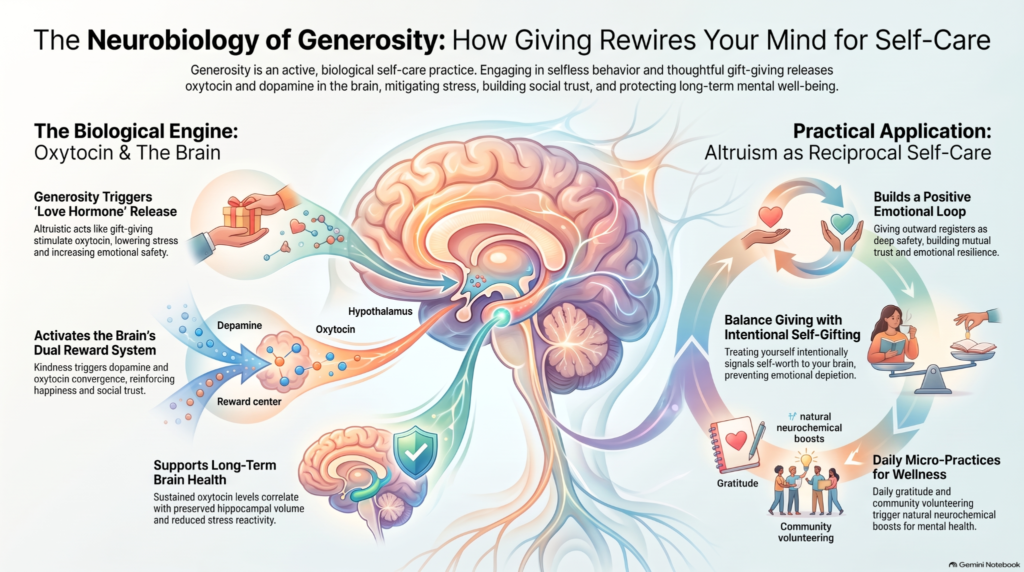
On quiet Sunday mornings, after spending an hour watercolor journaling, I often bake small loaves of zucchini or cinnamon bread to drop off at neighbors’ doorsteps or to share with folks at our local community garden. The shift in my own nervous system after doing that is almost immediate. You feel lighter, more grounded, and deeply anchored to the world around you. Science describes this exact experience through the release of oxytocin, that incredible neuropeptide that quiets our alarm systems and cements social trust.
When we give without strings attached, our bodies aren’t distinguishing between outward altruism and inner healing; it registers as deep safety. Cultivating kindness isn’t an extracurricular activity you squeeze into your calendar when you have spare energy. It is an active, reciprocal self-care practice that nourishes your own mental landscape just as profoundly as it blesses the person receiving your care.
Engaging in altruistic behavior, like gift-giving, stimulates oxytocin release, promoting emotional wellness and fostering deeper social connections. This “love hormone” enhances feelings of trust and belonging, leading to increased happiness and reduced stress. Acts of kindness not only benefit others but also boost your psychological health through positive feedback loops. Understanding how these dynamics work can enrich your emotional landscape, making your interactions more fulfilling and purposeful. Discover what else you can do to enhance your well-being.
KEY TAKEAWAYS
- Gift-giving activates oxytocin release, strengthening emotional bonds and enhancing feelings of trust and safety.
- Altruistic acts like gift-giving boost psychological well-being through increased neurotransmitter release associated with pleasure and reward.
- Engaging in selfless behaviors fosters empathy and compassion, promoting personal growth and emotional resilience.
- Acts of kindness through gift-giving create positive feedback loops that enhance emotional wellness and encourage further altruism.
- Practicing gratitude and volunteering alongside gift-giving nurtures connections, reducing isolation and improving overall mental health.
WHAT OXYTOCIN DOES FOR YOUR EMOTIONS
Oxytocin, often dubbed the “love hormone,” plays an essential role in shaping your emotional experiences. Its effects on emotional bonding are well-documented, influencing how you connect with others.
When you engage in acts of kindness, like gift-giving, your brain releases oxytocin, enhancing feelings of trust and empathy. This neuropeptide fosters deeper relationships, allowing you to form emotional connections that contribute to your overall well-being.
Research shows that increased oxytocin levels can reduce stress and anxiety, promoting a sense of safety and belonging. The oxytocin effects extend beyond romantic relationships; they also apply to friendships and familial ties.
By nurturing emotional bonds, you empower yourself to cultivate a supportive social network. This positive reinforcement encourages further prosocial behavior, creating a cycle of emotional wellness.
Understanding these dynamics can help you harness oxytocin’s potential, enriching your life and enhancing your relationships.
The Science of Altruism and Brain Benefits
Acts of kindness, such as giving gifts, not only enhance emotional connections but also tap into a broader phenomenon known as altruism. Altruism neuroscience reveals that engaging in selfless acts activates brain regions associated with reward and pleasure, indicating that helping others can boost your own well-being through the brain’s self reward system.
Studies show that when you practice altruism, your brain releases neurotransmitters linked to happiness, reinforcing a cycle of positive behavior.
Moreover, empathy development plays a significant role in this process. As you empathize with others, you strengthen neural pathways that enhance your ability to connect and respond compassionately.
This not only fosters personal growth but also cultivates a sense of purpose. By understanding the brain benefits of altruism, you can appreciate how acts of kindness contribute to your emotional wellness and overall psychological health, empowering you to embrace a lifestyle centered on compassion and connection.
The Connection Between Gift-Giving and Oxytocin
Oxytocin is a neuropeptide often referred to as the love hormone or as part of the so-called “happy hormones” group. Your body produces oxytocin naturally, but it also has medical uses, such as in childbirth and encouraging lactation. However, if you want to feel more love, so to speak, you may be able to use certain strategies to encourage its production naturally. Hugging, kissing, cuddling, and sexual intimacy are all known to trigger oxytocin production. But there are plenty of other non-physical ways that might help boost this feel-good hormone, too.
When you engage in gift-giving, you’re not just making someone else’s day brighter; you’re also triggering the release of oxytocin, often referred to as the “bonding hormone.” This neuropeptide plays an essential role in social bonding and emotional connection, enhancing feelings of trust and empathy between individuals.
Research in gift psychology shows that the act of giving can stimulate oxytocin production, creating a positive feedback loop that fosters deeper emotional bonding. As you give, you’re not only expressing care but also reinforcing social ties that contribute to your psychological well-being.
This biological response highlights how altruistic behavior can be a powerful tool for enhancing relationships. By understanding the connection between gift-giving and oxytocin, you can appreciate the profound impact your actions have on both the recipient and yourself, ultimately promoting a healthier emotional landscape in your life.
How Kindness and Generosity Improve Emotional Health
Engaging in acts of kindness and generosity not only benefits those around you but also greatly enhances your own emotional health. Research indicates that performing kind acts can boost your emotional resilience, helping you cope with stress and adversity more effectively.
The kindness impact on your mental well-being is profound, promoting feelings of joy and fulfillment.
- Strengthens social connections and reduces feelings of isolation
- Releases oxytocin, fostering a sense of trust and bonding
- Enhances overall life satisfaction and boosts self-esteem
- Encourages a positive feedback loop, inspiring further acts of kindness
Gift-Giving As Self-Care
Gift-giving can greatly enhance your emotional connections with others, creating a sense of belonging and community.
Research shows that engaging in this practice not only boosts your mood but also promotes happiness through the joy of giving. Gift-giving can be a meaningful self care activity that boosts your mood, strengthens emotional connections, and creates a sense of purpose. By choosing thoughtful gifts for loved ones, you can express appreciation while nurturing your own emotional wellness through acts of kindness and generosity.
Enhancing Emotional Connection
Although you may think of gift-giving primarily as an outward expression of generosity, it also serves as a profound form of self-care that enhances emotional connections.
Engaging in thoughtful gift-giving fosters emotional bonding and strengthens relationships, creating a sense of belonging and mutual appreciation.
- It deepens trust and understanding between you and others.
- It reinforces your social ties, enhancing community feeling.
- It promotes empathy, allowing you to connect on a deeper level.
- It cultivates gratitude, benefiting both the giver and receiver.
BOOSTING MOOD AND HAPPINESS
In my coaching practice, one of the most transformative concepts I introduce to clients is the bridge between giving to others and intentional self-gifting. We often grow up believing that giving to someone else is noble, but gifting something to ourselves is somehow selfish or indulgent. That is a myth we need to gently unlearn.
Neurochemically, your brain lights up with the warm, reassuring pulse of oxytocin and dopamine when intentionality and care are present. Giving outward reminds us of our capacity to bring comfort and joy to our community. But turning that generosity inward—treating yourself to a set of fine-tip pens for journaling, a supportive yoga block, or simply an uninterrupted afternoon tea—is an essential tool for emotional restoration. It serves as a tangible signal to your subconscious that your efforts, your presence, and your small daily victories are worth celebrating.
When I volunteer with local community wellness groups, I see how people blossom when they receive a small, thoughtful gesture. We deserve to experience that exact same emotional safety and affirmation from within our own hands. By blending altruism toward others with thoughtful self-gifting, you create a sustainable feedback loop. You are no longer pouring from an empty cup; you are actively refilling it through everyday acts of gratitude and kindness.
When you give a gift, you’re not just making someone else’s day; you’re also boosting your own mood and happiness.
Research indicates that engaging in altruistic behaviors, like gift-giving, triggers the release of oxytocin, a hormone closely linked to mood enhancement. This physiological response can lead to elevated feelings of joy and satisfaction.
By incorporating gift-giving into your happiness strategies, you create a ripple effect of positivity that benefits both you and the recipient. Exploring the best gifts for yourself can also be a rewarding form of self-care, allowing you to celebrate your achievements, enjoy your favorite activities, and strengthen your sense of self-appreciation. It’s a form of self-care that reinforces emotional wellness, allowing you to cultivate a sense of purpose.
Ultimately, the act of giving fosters a cycle of joy, making it an effective tool for boosting overall happiness and improving your emotional state.
Fostering Community Engagement
Engaging in acts of generosity, such as giving gifts, can greatly enhance community bonds and individual well-being. By participating in community initiatives and sharing thoughtful gifts, you foster essential social connections that strengthen the fabric of your community. This not only benefits others but also promotes your own emotional health.
- You feel a sense of belonging.
- Your actions inspire others to contribute.
- Strengthened relationships create a support network.
- Collective gratitude nurtures a positive environment.
Research shows that altruism triggers the release of oxytocin, enhancing feelings of trust and empathy.
This cycle of giving and receiving cultivates a vibrant community where everyone thrives, emphasizing the powerful role of gift-giving as a form of self-care.
Real-Life Examples of Altruism Boosting Emotional Wellness
Altruism feels good because it stimulates dopamine, oxytocin and serotonin. We’re tempted to repeat altruistic gestures whether or not they help those they purport to help because our brain is designed to repeat behaviors that feel good. This conundrum has been called Pathological Altruism. When you understand the neurochemistry of altruism, the selfish motives are clear.
As people engage in acts of altruism, they often experience a notable boost in their emotional wellness. Research shows that participating in random acts of kindness, such as volunteering at a local shelter or helping a neighbor, can trigger the release of oxytocin, enhancing feelings of connection and happiness.
For instance, individuals who contribute to community support initiatives report higher life satisfaction and reduced stress levels.
Furthermore, studies indicate that people who regularly engage in altruistic behaviors not only feel better about themselves but also foster deeper social bonds. These interactions create a positive feedback loop; as you give, you inspire others to act, amplifying the sense of community.
Ultimately, these real-life examples underscore the powerful link between altruism and emotional wellness, demonstrating that your actions can greatly impact both your well-being and that of those around you.
How Can You Cultivate an Altruistic Mindset for Better Wellbeing?
Stress is a natural reaction that occurs when your body and mind respond to challenges, changes, or pressures in your life. It is characterized by mental tension or worry. Everyone experiences stress at one point or another, but how you deal with it can greatly affect your mental health and well-being.
To cultivate an altruistic mindset, practicing gratitude daily can enhance your emotional wellbeing.
Research shows that recognizing what you’re thankful for can shift your perspective and increase your desire to help others.
Additionally, volunteering in your community not only benefits those in need but also fosters a sense of connection and purpose in your own life.
Practice Gratitude Daily
Practicing gratitude daily can markedly enhance your emotional wellness by fostering an altruistic mindset. Engaging in gratitude journaling allows you to reflect on positive experiences and cultivate a thankful mindset.
This practice not only improves your mood but also encourages prosocial behavior, which can lead to a deeper sense of connection with others.
- Acknowledging small acts of kindness you receive
- Recognizing the support of friends and family
- Fostering appreciation for life’s simple pleasures
- Celebrating your personal growth and achievements
Volunteer In Your Community
Volunteering in your community provides a powerful avenue for cultivating an altruistic mindset, which can greatly enhance your emotional wellbeing. Engaging in local volunteer opportunities not only fosters community impact but also allows you to connect with diverse individuals and causes.
Research indicates that altruistic behaviors trigger the release of oxytocin, promoting feelings of happiness and reducing stress. By actively participating in community service, you develop empathy and a sense of purpose, essential components of emotional wellness.
Additionally, these experiences can lead to increased social connections, further supporting your mental health. Ultimately, embracing volunteerism equips you with the tools to nurture not only others but yourself, creating a fulfilling cycle of giving and personal growth.
RELATED STUDIES ABOUT OXYTOCIN RELEASE DURING ALTRUISTIC BEHAVIOR
In summary, engaging in gift-giving acts like a key that opens the door to emotional wellness. The release of oxytocin during altruistic behavior not only enhances your mood but also strengthens your connections with others. By embracing kindness and generosity, you can cultivate a mindset that prioritizes self-care. This reciprocal relationship between altruism and emotional health encourages you to invest in both your own wellbeing and that of those around you, fostering a more compassionate world.
Having Infants in the Family Group Promotes Altruistic Behavior of Marmoset Monkeys
This empirical neuroethological study investigates altruistic rescue behavior and its neurofunctional correlates in the common marmoset (Callithrix jacchus), evaluating how offspring age, family group structure, vocal communication, and auditory-insular cortical activation govern pro-social interventions.
Study Overview & Experimental Design
- Background & Evolutionary Context: Common marmosets live in monogamous family groups and practice cooperative breeding, where fathers, mothers, and older siblings share infant-carrying and food provisioning. While prior studies demonstrated low-cost food sharing with unrelated peers, whether marmosets perform high-cost, risky altruistic rescue actions—and how parental brain states regulate such actions—remained unknown.
- High-Cost Rescue Paradigm: The authors developed an experimental paradigm requiring potential rescuers to overcome significant natural aversion by leaping across a 50-cm-wide water moat (12 cm deep) onto a platform. Rescuers had to depress a lever on a transparent restraining box to open a trap door, liberating the trapped subject and carrying it back to the home cage within a 15-minute trial window. An identical adjacent box containing an inert object (a ball) served as a control.
- Behavioral Cohort & Groups: Tested 68 marmoset groups across various conditions:
- Parents with infants (PI): Tested with their own young infants (<1 month), juveniles (>2 months), or novel infants from unfamiliar family groups.
- Parous couples with juveniles only (PJ) and Nulliparous couples (NP).
- Non-infant groups (NI) tested for mate-directed rescue.
- Older siblings (mean age = 23834 days) tested with younger siblings (mean age = 163 days).
- Awake fMRI Neuroimaging Protocol: Conducted awake blood-oxygen-level-dependent (BOLD) functional MRI at 9.4 Tesla across 11 adult marmosets (7 parous adults currently living with infants [<2 months; PI group] and 8 adults without infants [NI group; 4 imaged across both reproductive states]). marmosets underwent a 4-week restraint-acclimation protocol and were exposed to 28-second blocks of natural infant calls (5-day-old infant), juvenile calls (158-day-old juvenile), and their phase-scrambled acoustic controls delivered at 85–110 dB SPL.
Key Behavioral Findings
- High Motivation for Infant Rescue:
- Marmoset parents exhibited near-universal rescue behavior for trapped young infants (<1 month old), jumping across the water pool in 100% of trials and opening the trap door in 92% of trials (mean jumping latency = 12463s; opening latency = 24572s).
- Rescuers never opened the control box containing the ball. When the restraining box contained food or was empty, parents rarely jumped or opened the door (<20%), confirming that opening was not exploratory and that infant rescue motivated parents to overcome a high-cost physical barrier.
- Tested alone, both mothers and fathers rescued with 100% frequency and significantly shorter latencies (jumping: mother 115s, father 117s; opening: mother 6525s, father 4919s) than when tested together, reflecting an audience effect where the presence of a partner delays action.
- Strict Age-Dependent Boundary (<2 Months):
- Across longitudinal tracking (2–4 weeks up to 20–22 weeks) and cross-sectional testing across 32 parental pairs (offspring ages 6 to 181 days), rescue frequency declined steeply and latency increased with offspring age (p<0.001).
- Rescue occurred in 100% of groups with infants <1 month (8/8) and 40% of groups with infants 1–2 months (4/10), but dropped to 7% (1/14) once offspring exceeded 2 months of age. This coincides with the developmental milestone where marmosets achieve independent locomotion and self-sustained feeding.
- Vocal Triggers & Lack of Kin Discrimination:
- When visual cues were blocked using opaque tape, parents still jumped and opened the box at high rates for both their own infant and novel infants from other families, but rarely did so for trapped juveniles.
- Playback of pre-recorded infant calls from a hidden wireless speaker was sufficient to trigger platform jumping (70% for own infant calls, 50% for novel infant calls, 10% for juvenile calls).
- Acoustic analysis revealed trapped young infants emitted distinct, complex vocal repertoires—including Cry, Compound-Cry, and Trill-Twitter calls characterized by shorter durations and higher dominant frequencies—whereas juveniles primarily emitted fear/anxiety-associated Tsik calls.
- Dependence on Family Group Structure:
- Older siblings readily rescued younger infant siblings (jumping and opening rates significantly higher than empty controls, p<0.05), demonstrating alloparental rescue motivation.
- Nulliparous couples (NP; 17% rescue) and parous couples with only juveniles (PJ; 0% rescue) rarely or never rescued novel infants.
- Adult mates rarely rescued each other under baseline conditions (NI: 11% opening; PI: 18% opening). However, introducing hidden infant calls or a hidden infant dramatically increased mutual mate rescue in parents currently living with infants (PI: 68% jumping, 43% opening; vs. NI: 25% jumping, 8% opening, p<0.05). Rescuing did not occur when the trapped mate was replaced with an adult-sized toy.
Neurofunctional Mechanisms (Awake 9.4T fMRI)
- Cortical Remodeling in Parents Living with Infants:
- In adult marmosets currently living with young infants (PI group), infant distress calls (versus phase-scrambled controls) elicited robust, widespread blood-oxygen-level-dependent (BOLD) activation across specialized cortical networks (FDR-corrected p<0.05).
- Activated clusters spanned the auditory cortex (auditory core, medial and lateral auditory belts, rostral and caudal parabelts, superior temporal rostral area) as well as the agranular, dysgranular, and granular insular and parainsular cortices.
- Absence of Activation in Non-Infant Groups:
- The exact same infant-call stimuli produced no statistically significant BOLD activation in adult marmosets lacking young infants in their home cage (NI group).
- Playback of juvenile calls elicited minimal activation in the PI group and no significant activation in the NI group.
- Neuroethological Alignment: The insular cortex is implicated in social affect, empathy, and pain perception in primates. These fMRI findings demonstrate that actively cohabiting with dependent offspring enhances the perceptual and affective salience of infant distress signals, priming auditory-insular circuits to lower the behavioral threshold for high-cost altruistic action.
Evolutionary & Comparative Implications
- Cooperative Breeding & Generalized Alloparental Care: Marmosets’ willingness to rescue novel infants aligns with evolutionary models of cooperative breeding. Because wild marmoset groups exhibit high internal genetic relatedness and reproductive suppression, selective pressure may favor a generalized, call-triggered parental response rather than kin-discriminatory screening.
- State-Dependent Pro-Social Switchboard: Altruistic motivation in marmosets is not an immutable behavioral trait, but a dynamic, state-dependent neuroethological condition. The presence of dependent infants primes the entire family group—activating mothers, fathers, and older siblings to incur physical risk for infants and enhancing mutual cooperation between adult pair-mates.
| REFERENCE: Junfeng Huang, Xiaochun Cheng, Shikun Zhang, Liangtang Chang, Xuebo Li, Zhifeng Liang, Neng Gong, Having Infants in the Family Group Promotes Altruistic Behavior of Marmoset Monkeys, Current Biology, Volume 30, Issue 20, 2020, Pages 4047-4055.e3, ISSN 0960-9822, https://doi.org/10.1016/j.cub.2020.07.045. (https://www.sciencedirect.com/science/article/pii/S0960982220310708) |
Convergence of oxytocin and dopamine signalling in neuronal circuits: Insights into the neurobiology of social interactions across species
This narrative review examines the anatomical convergence, reciprocal physiological interactions, and behavioral consequences of oxytocin (OXT) and dopamine (DA) signaling in the brain, integrating preclinical rodent paradigms and human neuroimaging to elucidate their joint roles in adaptive social behaviors and neuropsychiatric conditions.
Study Overview & Neuroanatomical Interplay
- Research Scope & Theoretical Rationale: While oxytocin and dopamine have each been extensively studied as independent modulators of social affiliation and reward learning, this review focuses on their direct cross-talk and structural convergence across mesocorticolimbic and hypothalamic circuits.
- Reciprocal Anatomical Connections:
- Hypothalamic oxytocinergic neurons originating in the paraventricular nucleus (PVN) and supraoptic nucleus (SON) project to dopamine-rich target fields, including the ventral tegmental area (VTA), nucleus accumbens (NAc), amygdala (AMY), and prefrontal cortex (PFC).
- Conversely, the PVN and SON receive dopaminergic projections (arising from the VTA and the incertohypothalamic system) and express functional D1-like and D2-like dopamine receptors.
- In the NAc, oxytocin fibers from the PVN are closely juxtaposed with incoming VTA dopaminergic axons, and the VTA, NAc, and AMY co-express both oxytocin receptors (OXTR) and dopamine receptors.
- Biased Midbrain Modulation:
- In vitro electrophysiology and optogenetics demonstrate that oxytocin differentially modulates midbrain dopamine subpopulations.
- Oxytocin application directly increases firing rates in VTA dopamine neurons via OXTR activation.
- Concurrently, oxytocin decreases the firing of dopamine neurons in the lateral substantia nigra pars compacta (SNc) through an indirect, local GABAergic interneuron-mediated inhibitory mechanism.
Convergence Across Non-Reproductive & Reproductive Behaviors
- Sociability & Social Salience:
- Optogenetic excitation of PVN oxytocinergic terminals within the VTA enhances social approach and facilitates social conditioned place preference (sCPP) in mice, whereas terminal inhibition eliminates sCPP. This effect is mediated by an increase in the excitation-to-inhibition ratio of VTA-DA neurons projecting to the NAc medial shell, which elevates accumbal dopamine release.
- In humans, intranasal OXT modulates social cue salience. Functional MRI studies reveal that OXT administration selectively enhances VTA activation to emotionally charged social cues (both rewarding and aversive faces) without altering responses to neutral stimuli, while attenuating amygdala hyperreactivity to reduce uncertainty.
- Cooperation:
- Human neuroimaging during iterated Prisoner’s Dilemma games demonstrates that OXT administration down-regulates activity in dopamine-receptive regions (NAc, insula, orbitofrontal cortex) during mutual cooperation in females, while reducing VTA and amygdala reactivity following non-cooperative outcomes in males.
- In rodent operant Prisoner’s Dilemma paradigms, systemic OXT increases collaborative lever pressing and reduces defection, paralleling the dopamine-mediated encoding of social reward prediction errors seen in humans.
- Pair Bonding & Cross-Taxa Affiliation:
- In monogamous prairie voles, prelimbic cortical OXT infusions induce mating-dependent partner preference by triggering downstream dopamine release in the NAc; this preference is blocked by systemic dopamine receptor antagonists or chronic psychostimulant exposure.
- In human males, intranasal OXT increases the perceived attractiveness and reward value of their partner, accompanied by elevated VTA and NAc BOLD responses.
- Cross-species analyses demonstrate that pair-bonding butterflies (Chaetodontidae) exhibit coupled OXTR and D1 receptor expression in the ventral telencephalon (the teleost NAc homologue), while female zebra finches require D2 receptor activation to establish courtship song preferences, reflecting evolutionary conservation across vertebrates.
- Parental Care:
- Chemogenetic activation of PVN-to-VTA oxytocin projections in male mandarin voles promotes pup licking and grooming by driving accumbal dopamine release, whereas chemogenetic inhibition suppresses paternal behaviors and reduces accumbal dopamine.
- In human mothers, synchronous maternal behavior and “motherese” vocal synchrony correlate positively with plasma OXT levels and striatal dopamine D2-receptor responses (measured by [11C]raclopride PET displacement) when observing their children.
- Pup auditory cries engage a non-lemniscal thalamo-PVN pathway in maternal mice, evoking central oxytocin release into the VTA to trigger pup retrieval.
Pathophysiological Dysregulation & Psychiatric Models
- Social Stress & Avoidance:
- Adolescent social isolation in male mice produces adult social memory deficits driven by hyperactive PVN oxytocin neurons projecting to the VTA; chemogenetic dampening of this pathway restores normal VTA-DA excitability and sociability.
- In chronic social defeat stress (SDS), social avoidance and stress susceptibility correlate with altered VTA-DA projection dynamics (where inhibiting VTA-NAc projections confers resilience, while inhibiting VTA-mPFC projections promotes susceptibility).
- In female California mice, defeat-induced social vigilance is driven by extrahypothalamic oxytocin hyperactivation in the bed nucleus of the stria terminalis (BNST), which can be prevented by local OXT knockdown.
- Autism Spectrum Disorder (ASD):
- In Shank3B knockout mice, intranasal OXT rescues sociability deficits by restoring VTA dopaminergic synaptic plasticity; this therapeutic rescue fails in mice with conditional OXTR deletions restricted specifically to dopamine neurons.
- Human postmortem autoradiography identifies selective reductions in SNc OXTR binding in females with ASD, while clinical trials show that intranasal OXT enhances NAc reward prediction error signals during social reinforcement learning tasks.
- Schizophrenia:
- Intranasal OXT modulates social learning and restores eye gaze patterns toward facial cues in schizophrenia patients while altering activation across the right lateral parietal cortex, anterior insula, and amygdala.
- In Nrg1/Disc1 dual-mutant mouse models, schizophrenia-like social withdrawal is accompanied by elevated hypothalamic OXT expression and concurrent down-regulation of striatal D2 dopamine receptors.
Methodological Limitations & Translational Outlook
- Translational Constraints: Human functional neuroimaging cannot directly quantify synaptic dopamine or oxytocin release in real time, relying on blood/salivary proxy titers or displacement PET, whereas rodent studies involve invasive circuit manipulation that may not fully reflect human social complexity.
- Context & Sex Dependencies: Behavioral and neuroendocrine responses to exogenous OXT diverge markedly according to biological sex, baseline social competencies, and task dynamics (e.g., static versus dynamic social stimuli).
- Future Directions: The review calls for integrating cell-type-specific single-cell RNA sequencing, spatial proteomics, and simultaneous PET-fMRI to identify precise molecular drug targets at the OXT-DA interface (particularly within the VTA-NAc axis), supporting tailored interventions for neuropsychiatric disorders marked by social deficits.
| REFERENCE: Virginie Rappeneau, Fernando Castillo Díaz, Convergence of oxytocin and dopamine signalling in neuronal circuits: Insights into the neurobiology of social interactions across species, Neuroscience & Biobehavioral Reviews, Volume 161, 2024, 105675, ISSN 0149-7634, https://doi.org/10.1016/j.neubiorev.2024.105675. (https://www.sciencedirect.com/science/article/pii/S0149763424001441) |
Oxytocin for maintaining mental health in older adults
This narrative review synthesizes clinical, preclinical, and prospective epidemiological evidence evaluating the multifaceted role of the neuropeptide oxytocin in maintaining mental health, preserving cognitive function, and preventing dementia among older adults, with a specific focus on findings from the longitudinal Kurokawa Study in Japan.
Study Overview & Conceptual Framework
- Clinical & Gerontological Background: Social isolation and loneliness affect approximately one in four community-dwelling older adults and represent established, modifiable risk factors for Alzheimer’s disease (AD) and related dementias. According to the Lancet Commission, addressing modifiable lifestyle and psychosocial risk factors can potentially prevent or delay up to 40% of dementia cases.
- The Neuroendocrine Hypothesis: Beyond its traditional roles in parturition and lactation, oxytocin functions as a central neurotransmitter and neuromodulator that enhances social cognition, trust, altruism, and interpersonal attachment while buffering against social isolation. The review examines how oxytocin exerts neuroprotective, anti-inflammatory, and stress-buffering effects across aging neural networks, specifically targeting the hippocampus and amygdala.
Preclinical & Clinical Findings in Dementia and Cognitive Decline
- Preclinical Neuroprotection in AD Models:
- In rat models of AD, 60-day oxytocin administration suppressed caspase-3 expression, prevented hippocampal apoptosis, and improved memory performance.
- In mouse models, oxytocin reversed amyloid–induced deficits in hippocampal synaptic plasticity (long-term potentiation). Intracerebroventricular and intranasal delivery improved behavioral and cognitive performance.
- In APPswe/PS1dE9 transgenic mice, exogenous oxytocin administration restored social and non-social memory while attenuating microglial neuroinflammation.
- Contradictory Biomarker Profiles in Human Dementia:
- Post-Mortem Findings: Earlier studies reported a 33% increase in intracerebral oxytocin concentrations within post-mortem hippocampal and temporal lobe tissues of AD patients compared to controls, leading to hypotheses that altered oxytocin signaling might contribute to memory disturbance.
- Biofluid Equivocality: Multiple clinical investigations observed no significant differences in plasma, serum, or cerebrospinal fluid (CSF) oxytocin concentrations when comparing healthy older controls with patients diagnosed with AD, Lewy body dementia, or frontotemporal dementia.
- Symptomatic Interventions in Frontotemporal Dementia (FTD):
- Intranasal oxytocin administration in patients with frontotemporal dementia produced measurable improvements in social cognitive domains, characterized by enhanced facial expression recognition, increased empathy, decreased apathy, and better relationships with caregivers.
- Dose-response analyses identified that high-dose intranasal oxytocin (72 IU) achieved the greatest reduction in neuropsychiatric symptoms relative to placebo.
Prospective Insights from the Kurokawa Study (Saga Prefecture, Japan)
The Kurokawa Study initiated brain health tracking in 2004 among approximately 230 community-dwelling older adults (aged 65 years) residing in Kurokawa-cho, Imari City, utilizing comprehensive neuropsychological batteries, structural MRI, and biofluid assays.
- Longitudinal Cognitive & Structural Preservation:
- Logical Memory: Baseline serum oxytocin levels positively correlated with logical memory scores measured seven years later in older Japanese women.
- Hippocampal Preservation: Longitudinal voxel-based morphometry revealed that higher baseline serum oxytocin concentrations significantly predicted greater preservation of left hippocampal volume after seven years, controlling for age, gender, handedness, and total intracranial volume.
- Contrast with Younger Cohorts: While high oxytocin has been linked to smaller hippocampal/amygdalar volumes in younger populations or adults with early-life trauma, high basal oxytocin in healthy late adulthood appears protective, likely by promoting hippocampal neurogenesis, synaptic plasticity, and mitigating stress-induced atrophy.
- Affective Regulation & HPA Axis Attenuation:
- Cross-sectional evaluations demonstrated that higher serum oxytocin levels significantly correlated with lower depressive symptoms on standardized geriatric depression inventories.
- This protective association is attributed to oxytocin’s modulation of hypothalamic-pituitary-adrenal (HPA) axis activity, where oxytocin release down-regulates neuroendocrine stress reactivity and hypercortisolemia (a recognized accelerator of hippocampal neurodegeneration).
- Synergy with Brain-Derived Neurotrophic Factor (BDNF):
- While the Kurokawa Study detected no isolated correlations between circulating inflammatory markers (CRP, IL-6, IL-1, sTREM2) and brain volumes in this cognitively preserved cohort, a significant positive correlation was identified between serum BDNF and oxytocin levels.
- This suggests a synergistic, neuroprotective interaction in older adults, where BDNF and oxytocin mutually reinforce neuroplasticity and cellular resilience.
- Psychosocial & Cultural Observations:
- Paradoxically, stronger beliefs in an afterlife among Kurokawa residents correlated with lower circulating serum oxytocin levels, indicating complex psychospiritual dimensions of attachment and grief in older cohorts that warrant deeper behavioral investigation.
Endogenous Modulation, Methodological Challenges, & Translational Outlook
- Non-Pharmacological Endogenous Elevation:
- Because oxytocin secretion responds to behavioral stimuli, interventions that foster social connection, cooperative tasks (e.g., collaborative games), acts of altruism/kindness, and tactile touch (such as back massage) elevate circulating oxytocin and alleviate feelings of loneliness.
- Preclinical findings also demonstrate that traditional Japanese Kampo medicine (Kamikihito) elevates endogenous oxytocin secretion under stress conditions.
- Methodological Vulnerabilities & Analytical Debates:
- Circulating plasma/serum oxytocin exhibits substantial intra-individual diurnal fluctuation (33% to 51%) and vulnerability to venipuncture stress, requiring standardized sampling windows (e.g., 13:00–15:00) and repeated-measures protocols.
- The field remains divided over analytical assays: commercial enzyme-linked immunosorbent assay (ELISA) kits following extraction-free protocols risk non-specific binding, underscoring the ongoing methodological debate over whether solid-phase extraction must precede oxytocin quantification.
- Peripheral biomarkers may not linearly reflect central nervous system peptide availability or receptor density variations (e.g., OXTR single nucleotide polymorphisms).
- Clinical Roadmap: Future research must establish safe, standardized dosing protocols for long-term intranasal oxytocin delivery, characterize sex-specific response variations, and execute well-powered, multi-center randomized controlled trials to determine whether oxytocin-targeted interventions can successfully arrest prodromal neurodegeneration and alleviate behavioral and psychological symptoms of dementia (BPSD).
| REFERENCE: Ryuzo Orihashi, Yoshito Mizoguchi, Oxytocin for maintaining mental health in older adults, Archives of Gerontology and Geriatrics Plus, Volume 1, Issue 4, 2024, 100090, ISSN 2950-3078, https://doi.org/10.1016/j.aggp.2024.100090. (https://www.sciencedirect.com/science/article/pii/S2950307824000870) |
CONCLUSION
Looking back at both the clinical research and the hundreds of personal journeys I have walked alongside, one truth stands clear: emotional wellness is never a solo journey. We are wired for connection, and hormones like oxytocin serve as biological proof that our well-being is intimately tied to how we show up for the world and ourselves.
Whenever I catch myself feeling scattered, overwhelmed by deadlines, or mentally fatigued, I resist the urge to retreat completely into my own head. Instead, I look for a small win to honor. Sometimes that means handwriting a brief note of gratitude to a friend; other times, it means gifting myself an hour in the kitchen to bake something warm and nourishing. Both actions spring from the very same root of love and mindful appreciation.
You do not need grand gestures, elaborate budgets, or sweeping lifestyle shifts to experience this balance. Small, thoughtful acts of kindness—whether directed toward a neighbor, a family member, or your own tired body—gently rewire your neurochemistry toward trust, resilience, and calm. Treat generosity as an everyday ritual, celebrate your progress along the way, and let the simple act of giving anchor your personal healing.