
Throughout my years studying leisure science and advocating for recreational wellness, I have noticed a troubling cultural pattern: we tend to treat our hobbies as guilty indulgences rather than essential maintenance for our minds. Whenever life speeds up, leisure is the very first commitment we cross off the calendar. Yet, when examining psychological resilience and nervous system regulation, engaging in structured, mindful play proves to be anything but frivolous. It serves as a biological counterweight to chronic strain.
On a personal level, whether setting out on a sixty-mile cycling route or quietly watching watercolor pigments bloom across wet paper, intentional hobbies create a profound mental shift. In those spaces, productivity is no longer measured by deadlines, performance metrics, or external demands. Your mind is permitted to operate purely for the joy of engagement and curiosity. Science consistently confirms that these dedicated pockets of recreational immersion do far more than offer a fleeting distraction.
They systematically lower cortisol, restore cognitive bandwidth, and replenish the emotional reserves we exhaust every day. Stepping away to engage in an activity you genuinely love is not an act of avoidance; it is one of the most effective, accessible tools for self-preservation and mental stability.
Engaging in hobbies greatly boosts your emotional well-being. Research shows that these activities enhance mental health by reducing anxiety and depression. They promote mindfulness, allowing you to focus on the present while lowering stress levels. Creative pursuits channel your emotions, empowering self-expression and fostering emotional resilience. Plus, hobbies often create social connections, combating feelings of isolation. As you explore the science behind this, you’ll discover even more ways hobbies can transform your mental health.
KEY TAKEAWAYS
- Engaging in hobbies releases dopamine, enhancing mood and emotional well-being while providing a buffer against stressors.
- Creative hobbies, like painting, serve as effective outlets for self-expression, reducing anxiety and fostering emotional control.
- Mindfulness practices within hobbies promote present-moment awareness, lowering stress and enhancing cognitive engagement.
- Social connections formed through shared hobbies create supportive communities, reducing feelings of isolation and enhancing emotional resilience.
- Regular engagement in diverse activities fosters personal transformation, leading to improved mental health and overall quality of life.
HOW HOBBIES ENHANCE MENTAL HEALTH AND WELL-BEING
Engaging in hobbies can greatly enhance your mental health and well-being. When you explore hobby diversity, you open yourself up to a world of experiences that can foster emotional resilience. Research shows that participating in a variety of activities allows you to challenge your mind, build new skills, and connect with others, all essential for mental fitness.
Hobbies like painting, gardening, or playing an instrument provide an avenue for self-expression, which can help you process emotions and reduce feelings of isolation.
Moreover, the act of engaging in something you enjoy releases dopamine, contributing to a more positive mindset. By deliberately choosing different hobbies, you create a buffer against stressors and develop coping mechanisms that empower you.
This proactive approach nurtures your mental well-being, enabling you to face life’s challenges with greater strength. So, don’t hesitate—embrace the freedom that comes with diverse hobbies for a more balanced life.
How Hobbies Reduce Stress and Anxiety
While you may not realize it, immersing yourself in a hobby can greatly lower your stress and anxiety levels. Exploring the swimming benefits, for example, can help you relieve stress, improve your mood, and support your overall mental well-being. Engaging in mindful practices within your hobbies allows you to focus on the present moment, helping you to escape daily pressures.
Here are three ways hobbies can achieve this:
- Nature Immersion: Spending time outdoors, whether gardening or hiking, connects you with nature, reducing cortisol levels and promoting relaxation.
- Creative Expression: Activities like painting or writing enable you to channel emotions constructively, transforming anxiety into creativity.
- Social Connections: Joining clubs or groups centered around your interests fosters community, offering support and reducing feelings of isolation.
How Creative Hobbies Boost Your Emotional Health
Creative hobbies play an essential role in enhancing your emotional health, as they provide an effective outlet for self-expression and personal reflection. Engaging in activities like painting, writing, or crafting can stimulate the release of dopamine, a neurotransmitter linked to pleasure and satisfaction. Exploring the benefits of painting can also provide an effective outlet for self-expression, helping you process emotions, reduce stress, and support emotional well-being. This process mirrors principles found in art therapy, where creative expression serves as a therapeutic tool for emotional healing.
Moreover, these hobbies can help you build emotional resilience. By channeling your feelings into a tangible form, you not only process your emotions but also cultivate a sense of control over them. Studies show that individuals who regularly engage in creative pursuits report lower levels of anxiety and depression, highlighting the profound impact these activities have on emotional well-being.
Ultimately, embracing creative hobbies empowers you to explore your inner self, fostering a healthier emotional landscape and allowing for greater freedom in expressing who you truly are.
Fostering Social Connections Through Hobbies
Mental health can be impacted by many different things, from life-changing events to everyday tasks. And while there are many strategies we can actively engage in to improve our mental health, an often-overlooked factor is spending time on an activity that you enjoy – otherwise known as a hobby.
Participating in hobbies not only nurtures your emotional health but also serves as a gateway to building meaningful social connections. Engaging in shared experiences fosters community engagement, creating bonds that enhance your sense of belonging.
Here are three ways hobbies can help you connect with others:
- Shared Interests: Pursuing a hobby with others allows you to connect over common passions, whether it’s painting, hiking, or playing an instrument.
- Collaborative Projects: Working together on projects, like community gardens or art exhibits, deepens relationships and promotes teamwork.
- Support Networks: Joining clubs or classes creates a supportive environment where you can share challenges and celebrate successes together.
HOW HOBBIES CULTIVATE MINDFULNESS AND PRESENCE

When people ask me how to select a restorative recreational activity, my advice is always rooted in the science of self-care: stop approaching your hobbies with a performance mindset. In our hyper-productive world, people often bring their workplace perfectionism into their private leisure, feeling pressured to monetize their crafts, train for rigorous races, or produce flawless creative outcomes. The moment an activity becomes about external achievement, its mindfulness and nervous-system benefits slip away.
When volunteering at local community parks or watching people paint side-by-side, the most powerful healing emerges when participants embrace what I call “structured low-stakes play.” In these moments, you grant yourself total permission to be an amateur, experiment without judgment, and engage for the sensory experience itself. If you are mentally overstimulated from screen work, pick an embodied physical pursuit like trail cycling, swimming, or pottery, which grounds you firmly in physical sensation.
If you feel emotionally drained, seek out tactile, quiet outlets that allow feelings to process organically beneath conscious awareness. A truly therapeutic hobby is never an obligation or a line item on your self-improvement checklist; it is an open playground where your authentic self can simply exist and recharge.
Engaging in hobbies can greatly enhance your focus and presence in the moment.
By immersing yourself in activities you enjoy, you naturally reduce stress and anxiety, allowing your mind to settle.
Additionally, these creative outlets foster expression, which can be therapeutic, helping you connect with your thoughts and feelings more deeply.
Enhancing Focus Through Engagement
When you immerse yourself in a hobby, it often serves as a powerful means to enhance your focus and cultivate mindfulness. Engaging in activities you love helps sharpen your attention through effective focus techniques and promotes cognitive engagement.
Here are three ways hobbies can boost your concentration:
- Flow State: When you lose yourself in an activity, you experience a flow state that heightens your awareness and reduces distractions.
- Mindful Attention: Hobbies encourage you to be present, fostering an environment where your mind can settle and focus on the task at hand.
- Skill Development: Mastering new skills keeps your brain engaged, stimulating mental resources necessary for improved focus.
Reducing Stress and Anxiety
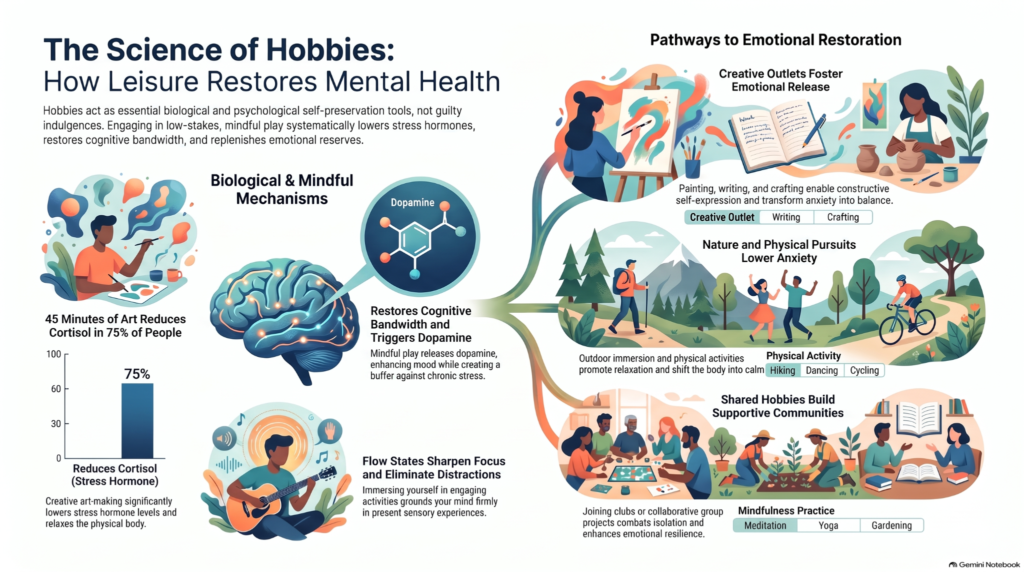
Creating art, like painting, drawing, and crafting, can help people work through their emotions, get out of thought loops, and feel proud of their creations. These activities are also great at reducing stress. One experiment showed that even one 45-minute art-making session helped reduce stress hormone (cortisol) levels in 75% of participants.
Hobbies not only enhance focus but also play a significant role in reducing stress and anxiety. Engaging in activities like gardening or painting allows you to immerse yourself in the present moment, promoting mindfulness.
As you practice mindful breathing during these hobbies, your body shifts from a state of tension to relaxation. Nature immersion, whether through hiking or birdwatching, has been shown to lower cortisol levels, further alleviating anxiety.
By dedicating time to your hobbies, you create a sanctuary of freedom where worries fade away. This intentional engagement fosters a sense of control and peace, empowering you to navigate daily challenges with a clearer mind.
Embrace these moments; they’re essential for your emotional well-being.
Fostering Creative Expression
While it may not always be obvious, creative expression through hobbies can greatly enhance your sense of mindfulness and presence. Engaging in artistic outlets allows you to immerse yourself in the moment, fostering a deeper connection to your feelings and surroundings.
Here are three ways hobbies cultivate mindfulness:
- Imaginative play: When you create, whether through painting or writing, you enter a state of flow, reducing distractions and enhancing focus.
- Sensory engagement: Activities like gardening or cooking engage your senses, heightening your awareness of textures, smells, and flavors.
- Emotional release: Expressing feelings through creativity can serve as a therapeutic outlet, helping you process emotions and achieve balance.
Choosing the Right Hobby for Your Well-Being
Finding a hobby that resonates with you can greatly enhance your mental well-being, as various activities have been shown to reduce stress and improve mood. Choosing a hobby you enjoy can be a rewarding self care activity that supports emotional resilience, relaxation, and personal growth.
Consider the following table to help you identify potential hobbies that align with your interests:
| Physical Activity | Creative Outlet | Mindfulness Practice |
| Hiking | Painting | Meditation |
| Dancing | Writing | Yoga |
| Cycling | Crafting | Gardening |
Engaging in a hobby that excites you can lead to increased happiness and fulfillment. Reflect on what activities you’ve enjoyed in the past. This awareness can guide your choices, allowing you to embrace hobbies that not only entertain but also promote emotional resilience and personal growth. Choose freely, and prioritize what feels best for you!
Transformative Hobbies: Real-Life Stories
A hobby is any activity that you frequently do for pleasure during your leisure time. This could include creative, athletic, and intellectual activities.
Engaging in a hobby can lead to profound changes in your life, as evidenced by countless personal stories.
These transformative experiences reveal how hobbies can reshape your mental health and emotional well-being.
Here are three inspiring personal journeys:
- Artistic Expression: A woman took up painting after a tough divorce, finding solace in creativity. Her artwork became a pathway to healing, helping her rediscover joy.
- Physical Activity: A man started running to cope with anxiety. Over time, he not only improved his fitness but also built a supportive community, boosting his confidence.
- Gardening: Another individual turned to gardening, discovering the therapeutic benefits of nurturing plants. This hobby grounded him, alleviating feelings of isolation.
These stories underscore the power of hobbies as tools for transformation, illustrating how they can become essential elements in your journey toward emotional freedom and well-being.
RELATED STUDIES ABOUT SCIENCE OF HOBBIES AND MENTAL HEALTH IMPROVEMENT
In exploring the relationship between hobbies and mental health, you’ll find that engaging in activities you love isn’t just enjoyable—it’s essential. Studies show that hobbies can considerably reduce stress and enhance emotional resilience. By choosing a hobby that resonates with you, you’re not only nurturing your well-being but also fostering connections and mindfulness. So, immerse yourself in your passions. You might just discover that the simple act of doing what you love can transform your mental health in profound ways.
“Like a frog boiling in water”: A qualitative analysis of stress, vicarious trauma, and mental health among forensic sciences professionals
This qualitative study investigates the lived experiences of occupational stress, vicarious trauma, and mental health among forensic science professionals, analyzing the institutional, cultural, and psychological dynamics shaping help-seeking behaviors and workplace support.
Study Overview & Conceptual Framework
- Occupational Context: Forensic science professionals operate at the intersection of science and the legal system, translating complex analytical findings into evidence for courts. The United States employs approximately 20,700 forensic technicians, with workforce demand projected to grow 13% to 14% by 2034.
- Trauma Exposure & Psychological Risks: Forensic personnel encounter direct and indirect traumatic stimuli, including graphic crime scenes, decomposed remains, child fatalities, and digital child sexual abuse material. This exposure places practitioners at elevated risk for burnout, post-traumatic stress disorder (PTSD), secondary traumatic stress (STS), and vicarious trauma (VT)—the progressive, permanent disruption of an individual’s cognitive schemas, worldview, trust, and sense of safety.
- Research Rationale: While prior research has quantified distress through standardized psychometric scales, quantitative instruments often overlook the nuanced interplay between occupational demands, workplace culture, and coping mechanisms. Grounded in qualitative responses from members of the American Academy of Forensic Sciences (AAFS), this study provides experiential context to existing survey data to inform organizational policy.
Methodology & Qualitative Architecture
- Sampling & Recruitment: Participants were recruited from the AAFS membership across 12 specialized disciplines (e.g., criminalistics, pathology/biology, digital and multimedia sciences, odontology, toxicology, and jurisprudence) via listservs and professional social media. Out of 618 total survey respondents, 246 completed the final open-ended qualitative prompt; 23 non-substantive entries were removed, yielding a final analytical cohort of 223 professionals.
- Sample Demographics:
- Age & Gender: Mean age was 49.07 years (SD = 14.41, range 23–86). The cohort was predominantly female (71.7%, n=160), alongside 24.7% male (n=55) and 2.2% non-binary (n=5).
- Race & Family Status: 87.4% identified as Caucasian/White (n=195), 69.5% were married (n=155), and 58.7% had children (n=131).
- Experience & Employment: 41.7% possessed 21 or more years of forensic experience (n=93), and 57.4% worked in government agencies (city, county, state, or federal).
- Data Coding & Analytic Rigor: Responses were analyzed inductively using HyperResearch and Excel through a collaborative, iterative bottom-up thematic coding process led by two experienced researchers, maintaining reflexivity throughout. The final coding framework comprised 78 unique codes across four primary themes (totaling 628 coded references):
- Sources of Stress (36.78%, 231 references)
- Barriers to Help-Seeking and Stigma (24.20%, 152 references)
- Impact and Coping (22.30%, 140 references)
- Positive Experiences and Paths Forward / Workplace Support (16.24%, 102 references)
(An additional 0.48% comprised physical symptoms unrelated to work stress).
Key Empirical Themes & Findings
- Multidimensional Sources of Stress (36.78%):
- Organizational and Supervisory Dysfunction: Participants frequently reported that organizational climate and management behavior were more stressful than case-related trauma. Common stressors included abusive or unqualified supervisors, micromanagement, credit-taking, gaslighting, and peer monitoring (“tattling”).
- Workload Demands & Fear of Error: Chronic case backlogs, rigid turnaround times (TATs), understaffing, and a lack of downtime created a “hamster wheel” sensation. These conditions were compounded by the high-stakes fear of committing analytical errors, being sued by victims’ families, or facing intense public and media scrutiny.
- Courtroom Testimony: Giving expert witness testimony was highlighted as an unpredictable, acute stressor involving cross-examination pressure and intense preparation over which analysts had little control.
- Distressing Case Characteristics: Cases involving children (especially processing clothing or seeing items mirroring an analyst’s own children), homicides, suicides, and gruesome crime scenes elicited severe distress. Conversely, interactions with victims’ families were rarely cited as a primary stressor.
- Cumulative “Boiling Frog” Dynamic: Stress was described not solely as discrete traumatic events, but as a slow, insidious accumulation across decades (“like a frog boiling in water”) that compounded personal life stressors, such as pregnancy, family illnesses, or adverse childhood experiences.
- Psychological Impact & Divergent Coping Mechanisms (22.30%):
- Psychological Manifestations: Participants documented anxiety, generalized anxiety disorder (GAD), clinical depression, nightmares, night terrors, panic attacks, paranoia (e.g., feeling a presence in the car after an exhumation), intrusive flashbacks, and suicidality. Several senior practitioners noted that PTSD only became fully apparent upon retirement.
- Adaptive Coping: Constructive strategies included peer debriefing with colleagues who understood the work, seeking support from spouses, engaging in hobbies, physical exercise, and religion.
- Maladaptive Coping & Avoidance: Unhealthy responses included alcohol misuse, cynicism, and persistent cognitive detachment. Notably, participants described active stimulus avoidance—such as avoiding children’s clothing aisles, movies with violence, or crime-related books—which can lead to progressive emotional disconnection and a fractured sense of self.
- Compartmentalization: While frequently used to manage mass disasters and infant deaths, respondents recognized that habitual compartmentalization risked turning into chronic emotional numbness.
- Barriers to Help-Seeking & Workplace Stigma (24.20%):
- Material & Financial Barriers: Specialized trauma clinicians frequently operated outside insurance networks, requiring out-of-pocket payment. Employer assistance discounts (e.g., BetterHelp) remained cost-prohibitive for early-career staff, while insurance-covered options had long waitlists and required complex referrals.
- Time Deficits: Overwhelming workloads and rigid courtroom schedules left analysts without time to attend therapy or routine medical appointments.
- Subcultural Stigma & Career Retaliation: Admitting emotional distress was broadly viewed as a sign of weakness or professional incompetence. Participants reported pervasive cultural attitudes of “suck it up” and “you knew what you signed up for”. Employees actively avoided on-site counseling services out of fear that supervisors or peers would see them, worrying that seeking help would negatively affect promotions, casework assignments, or courtroom credibility.
- Workplace Support Mechanisms & Policy Perspectives (16.24%):
- Superficial Wellness Initiatives: Participants expressed frustration with superficial wellness gestures (such as therapy dog visits every few months) that substituted for substantive clinical psychological support.
- The Provider Competence Gap: A critical finding was that existing Employee Assistance Programs (EAPs) and available mental health providers often lacked understanding of forensic workflows. Participants reported that counselors—often retired law enforcement officers—were either naive regarding laboratory realities, biased against female civilian scientists, or lacked specific trauma-processing tools.
- The Policy Debate on Mandatory vs. Voluntary Care: Participants were divided regarding mandatory mental health services. Some favored mandatory, employer-funded counseling scheduled during paid work hours to remove individual stigma and ensure equitable access. Others strongly opposed mandatory care, insisting that therapy must remain voluntary with independent provider selection to ensure confidentiality and avoid career penalties.
Practical & Policy Implications
- Trauma-Informed Forensic Leadership: Organizations must recognize that workplace stress is heavily driven by managerial practices. Forensic laboratories should train supervisors in trauma-informed leadership, burnout mitigation, and supportive workload allocation rather than placing the burden of stress management entirely on individual analysts.
- Culturally Competent Clinician Networks: Agencies must vet and retain mental health professionals who specialize in secondary traumatic stress and understand the unique pressures of civilian forensic science, differentiating forensic workflows from sworn policing.
- Confidentiality & Access Protection: To overcome the fear of professional penalization, organizations must establish confidential avenues for mental health access—such as subsidized off-site or telehealth services—ensuring utilization remains unmonitored by internal management.
- Subcultural De-Stigmatization: Professional societies and academic institutions must incorporate trauma literacy, vicarious trauma education, and stress management into baseline forensic curricula, reframing psychological care as routine professional maintenance rather than personal failure.
Methodological Limitations & Future Directions
- Design Limitations: The qualitative dataset was drawn from a single open-ended question within an online survey, precluding real-time follow-up or probing questions regarding complex experiences.
- Potential Selection Biases: Fewer than half of survey respondents completed the open-ended item, introducing potential non-response and self-report biases common to trauma and mental health research.
- Sample Generalizability: The sample was drawn exclusively from the American Academy of Forensic Sciences (AAFS), resulting in an overrepresentation of White, highly experienced, and government- or academically-employed professionals.
- Future Research Needs: Studies should use semi-structured qualitative interviews to examine gender- and discipline-specific stressors (such as field vs. laboratory roles), evaluate the efficacy of mandatory versus voluntary counseling policies, and examine systemic strategies to dismantle subcultural mental health stigmas in forensic organizations.
| REFERENCE: Daniella J. Ferrante, Sonali Tyagi, Kathryn C. Seigfried-Spellar, “Like a frog boiling in water”: A qualitative analysis of stress, vicarious trauma, and mental health among forensic sciences professionals, Forensic Science International: Synergy, Volume 12, 2026, 100681, ISSN 2589-871X, https://doi.org/10.1016/j.fsisyn.2026.100681. (https://www.sciencedirect.com/science/article/pii/S2589871X26000240) |
Results of an impact evaluation of Canada’s Student Mental Health Network
This summative impact evaluation investigates the feasibility, accessibility, and utility of Canada’s Student Mental Health Network during the 2024–2025 academic year, assessing changes in mental health outcomes, mental health literacy, social support, and help-seeking behaviors across Canadian post-secondary students.
Study Overview & Conceptual Framework
- Clinical & Systemic Context: Over the past decade, psychological distress, high stress, and mental illness diagnoses among Canadian post-secondary students have escalated significantly, overwhelming campus-based counseling services. While national frameworks emphasize whole-campus approaches, many students report low awareness of available resources, unfamiliarity with access pathways, and discomfort seeking downstream clinical care.
- The Student Mental Health Network: Developed in 2019 using a participatory model, the Network serves as a centralized, open-access, digital “one-stop shop” delivering evidence-based upstream mental health resources created “for-students, by-students” and validated by subject matter experts. The platform operates across three primary action pillars:
- Learn: Curated educational modules, TED Talk video libraries, and mental health training courses.
- Connect: Connection toolkits, peer connection avenues, and campus club portals.
- Access: Specialized resource directories, campus mental health services mapping, and vetted mental health app recommendations.
- Evaluation Objectives: The evaluation evaluated three core domains:
- Longitudinal changes in mental health literacy, perceived social support, help-seeking barriers, and psychological outcomes.
- Platform engagement patterns and their associations with student outcomes.
- Qualitative user feedback concerning platform usability, content relevance, and structural improvements.
Methodology & Evaluation Architecture
- Study Design: A concurrent mixed-methods design incorporating four rounds of online surveys and 14 online focus groups administered over the 2024–2025 academic year.
- Quantitative Survey Sample: Aggregated 2,050 responses across four waves: T1 (n=705), T2 (n=739), T3 (n=601), and T4 (n=514).
- Demographic Characteristics: Participants were predominantly single (~45–51%), cisgender women (~68–71%), full-time undergraduate students (~65–73%), aged 21–25 (M26 years).
- Diversity & Geographic Coverage: Approximately 29–33% identified as 2SLGBTQIA+, 13–16% were international students, and 23–25% were first-generation students. Respondents represented institutions across Canada, led by Newfoundland and Labrador (~22–27%), Ontario (~22–25%), Manitoba (~14–16%), and New Brunswick (~11–13%).
- Qualitative Focus Groups: 14 semi-structured focus groups (n=41 total participants across two semesters; 40 unique participants) examining user experience, content quality, and perceived mechanisms of change.
- Psychometric Instrumentation:
- Mental Health & Distress: Patient Health Questionnaire-9 (PHQ-9), Generalized Anxiety Disorder-7 (GAD-7), 4-item Perceived Stress Scale (PSS-4), and Brief Post-Secondary Student Stressors Index (Brief-PSSI).
- Resilience: 10-item Connor-Davidson Resiliency Scale (CD-RISC-10).
- Core Program Dimensions: Adapted Mental Health Literacy Questionnaire, Multidimensional Scale of Perceived Social Support (MSPSS; friends and family subscales), Barriers to Access to Care Evaluation (BACE; stigma subscale), and General Help Seeking Questionnaire (GHSQ).
- Analytical Approach: Descriptive statistics, Bonferroni-adjusted independent t-tests for gender-stratified comparisons across time points, and inductive thematic analysis (Braun & Clarke framework) of open-ended survey text and focus group transcripts.
Key Empirical Findings
- Elevated Baseline Psychological Distress:
- Approximately 50% of the entire sample screened positive for clinically relevant symptoms of both depression (PHQ-9 10) and anxiety (GAD-7 10) across all evaluation time points.
- Gender Disparities & Longitudinal Mental Health Trajectories:
- Non-Binary Students: Non-binary respondents reported the highest levels of anxiety, depression, and perceived stress across all survey time points (p<0.001), alongside the lowest levels of family support (p=0.009). They also faced the highest perceived barriers to care, specifically highlighting fear of involuntary psychiatric hospitalization (p<0.001), inability to afford care (p<0.001), and being too unwell to seek help (p<0.001).
- Men: Men reported the highest baseline resilience scores (p<0.001) and lower distress, but exhibited the lowest mental health literacy across all indicators (p<0.001), weaker friend-based social support (p<0.001), and disproportionate endorsement of the belief that they “did not have a problem” (p<0.001).
- Women: Women exhibited statistically significant longitudinal improvements across all measured mental health domains:
- Depression (PHQ-9) scores decreased significantly between T2 and T3 (t=3.43,p<0.01) and between T2 and T4 (t=2.64,p<0.05).
- Anxiety (GAD-7) scores decreased significantly between T2 and T3 (t=3.17,p<0.01) and remained stable at T4.
- Perceived stress (PSS-4) decreased between T1 and T3 (p<0.05), T2 and T3 (p<0.01), and T2 and T4 (p<0.05).
- Resilience (CD-RISC-10) scores increased significantly over time (t=-2.75,p<0.05).
- No significant mental health changes were observed over time among men or non-binary participants.
- Barriers to Care and Student Stressors:
- Composite barriers to accessing care decreased significantly from T1 to T4 across the total sample (p<0.05).
- The most pervasive barrier endorsed across all genders was the desire for self-reliance (“wanting to solve the problem on my own”).
- Brief-PSSI evaluations identified academic demands (exams, workload, maintaining grades) and personal expectations as the most severe, persistent stressors. Significant temporal decreases were observed only for “adjusting to university life” (severity dropped from 1.91 to 1.74,p<0.05; frequency p=0.02) and “social pressures” (severity dropped from 1.95 to 1.84,p<0.05; frequency p=0.02), effects driven primarily by female respondents.
- Website Engagement & Counterintuitive Associations:
- Approximately 500 respondents (~25% of survey participants) reported actively utilizing the Network. Among users, frequency of use increased significantly over time (p<0.001), driven predominantly by women.
- Mental Health Literacy Paradox: Lower frequency of Network use correlated with higher baseline mental health literacy, particularly knowing where to seek help (p<0.001), knowing how to support struggling peers (p=0.005), and identifying positive coping mechanisms (p=0.008). This indicates that students with established coping mechanisms had less need for recurring platform use.
- Help-Seeking Barriers Association: More frequent Network use correlated with higher perceived barriers to care (p=0.004), driven by preferences for alternative care modalities (p=0.008), the unavailability of culturally matched clinicians (p<0.001), and fear of stigma (p<0.05). This suggests the platform serves as an alternative support tool for underserved students facing institutional healthcare barriers.
Qualitative Insights & User Experiences
- Acceptability & Usability: Focus group participants unanimously endorsed the Network’s utility, emphasizing its student-friendly tone, clean visual aesthetic, estimated completion timestamps for modules, and the reassuring credibility of a centralized evidence-based hub. Students reported using the site as an “as needed” support tool and as an interim bridge during long wait times for campus clinical counseling.
- Pillar Performance: The Learn and Access pillars (specifically mobile app directories, instructional module series, and curated TED Talks) were the most frequently used. Conversely, the Connect pillar was identified as the platform’s primary “weak spot,” as students were either already aware of campus clubs, lacked interest, or found the offering ambiguous.
- User Recommendations:
- Subgroup Content: Expanding resources tailored to mature students, 2SLGBTQIA+ populations, neurodivergent individuals, and students managing complex conditions beyond mild-to-moderate depression and anxiety (e.g., bipolar disorder, schizophrenia).
- Platform Navigation: Implementing an interactive keyword search function, an automated navigational chatbot, a built-in self-assessment screening tool, and completing the French translation.
- Outreach Expansion: Partnering with campus Student Wellness Services, student unions, and leveraging TikTok and Instagram to move beyond beginning-of-term promotional cycles.
Implications for Post-Secondary Mental Health Strategy
- Role of Upstream Digital Platforms: The findings support the feasibility and utility of student-centered upstream platforms, demonstrating that centralized digital psychoeducation can mitigate perceived barriers to care and offer support that aligns with students’ preference for autonomous self-management.
- Subgroup-Targeted Interventions:
- High-distress non-binary students require specialized, identity-affirming upstream resources and institutional protections that directly address healthcare distrust and clinical marginalization.
- Men require targeted psychoeducation designed to dismantle stigma, improve emotional symptom identification, and address the limitations of unassisted self-reliance.
Limitations & Methodological Considerations
- Recruitment & Sampling Bias: Participants were recruited from a prior research contact list, potentially over-representing students interested in mental health and under-representing clinical extremes.
- Unmatched Longitudinal Design: Rather than tracking a single linked cohort longitudinally, the four survey rounds functioned as independent cross-sectional samples, precluding definitive individual-level causal attributions.
- Self-Report Measurement: All metrics were derived via subjective self-report questionnaires and voluntary focus groups without objective behavioral platform analytics (e.g., direct clickstream or web log telemetry).
| REFERENCE: Brooke Linden, Marissa Khury, Claire Diana-Gonsalves, Anika Agarwal, Results of an impact evaluation of Canada’s Student Mental Health Network, Social Sciences & Humanities Open, Volume 13, 2026, 102625, ISSN 2590-2911, https://doi.org/10.1016/j.ssaho.2026.102625. (https://www.sciencedirect.com/science/article/pii/S2590291126001890) |
Mental health and well-being in higher education: A review of international students living abroad
This narrative review synthesizes global empirical research, theoretical perspectives, and policy insights published between 2016 and 2025 regarding the mental health and well-being of international higher education students studying abroad, examining systemic stressors, protective mechanisms, help-seeking barriers, and institutional interventions.
Study Overview & Conceptual Framework
- Global Higher Education Context: International students represent a rapidly expanding tertiary population navigating complex cross-cultural, academic, social, and legal transitions. Concurrently, university students worldwide experience rising psychological distress, with young adulthood (ages 18–25) coinciding with the peak epidemiological window for the onset of major depressive disorder, bipolar disorder, schizophrenia, and suicide risk.
- Synthesis Scope: Building upon Forbes-Mewett and Sawyer’s seminal 2016 Australian study, the review examines literature indexed in Scopus, Web of Science, PsycINFO, PubMed, and Google Scholar across five core thematic areas: acculturative stress, social support and belonging, personal resilience and coping, stigma and help-seeking, and institutional/policy responses (including COVID-19 pandemic impacts).
- Theoretical Integration: The synthesis integrates multiple theoretical models to explain international student adjustment:
- Culture Shock and Acculturation Frameworks (Ward, Bochner, & Furnham): Explain the accumulation of initial language barriers, academic discrepancies, and everyday survival stressors.
- Social Identity Model of Identity Change (SIMIC): Examines how retaining heritage ties while establishing host-community memberships buffers against psychological distress.
- Broaden-and-Build Theory (Fredrickson): Demonstrates how positive emotional experiences expand cognitive coping repertoires and build psychological resources.
- Mental Health Literacy and Help-Seeking Models (Jorm; Kleinman’s idioms of distress): Explain how cultural framing, stigma, and service awareness govern clinical engagement.
Drivers of Acculturative Stress & Adjustment Vulnerabilities
- Academic Transition & Pedagogical Dissonance: International students frequently encounter second-language communication obstacles and divergent teaching paradigms. Moving from passive or rote-learning cultures to Western educational formats that demand active debate, questioning instructors, and continuous public presentations often induces severe self-doubt, reduced academic confidence, and classroom culture shock.
- Daily Living Demands & Financial Precarity: Managing independent living tasks (e.g., housing, transportation, cuisine, budgeting) without customary family safety nets creates acute vulnerability. Countering the assumption that international students represent an affluent monolith, empirical work indicates that currency exchange rate shifts, tuition increases, visa restrictions on work hours, and high living costs create chronic financial strain directly linked to diminished mental and physical well-being.
- Non-Linear Stress Trajectories: Rather than experiencing a smooth, progressive adjustment curve, longitudinal evidence reveals that acculturative stress can intensify over time. For example, a tracking study of Chinese students in Australia revealed that acculturative stress increased across their first five months, with language barriers remaining the most persistent ongoing struggle (cited by 84% of participants) and elevating risks for clinical anxiety and depression.
Social Connectedness, Belonging, and the Isolation Dilemma
- Structurally Produced Isolation: Loneliness among international students functions not simply as an individual emotional struggle, but as a structural condition produced by institutional timetabling (e.g., loss of common campus lunch hours, commuter-heavy campus schedules), lack of informal mingling spaces, and limited interest from domestic students in cross-cultural friendships.
- Bonding vs. Bridging Social Capital:
- Bonding Networks: Co-national peer networks offer vital psychological safety, practical advice, and familiar cultural validation. However, exclusive reliance on co-national bubbles can restrict host-language acquisition and broader institutional integration.
- Bridging Networks: Cultivating cross-cultural ties with domestic peers and diverse cohorts mitigates internalizing symptoms and improves academic retention.
- Creative Community-Building: Innovative non-traditional modalities—such as structured stand-up comedy workshops (which use shared humor to reframe acculturation challenges and practice language skills) and group leisure activities—satisfy fundamental relatedness needs and enhance life satisfaction.
Resilience, Psychological Flexibility, and Coping Mechanisms
- Dynamic Rather Than Static Trait: Resilience is framed as an emergent, context-dependent skill developed through experiential mastery of daily independent problem-solving (e.g., negotiating foreign bureaucracies, budgeting, cooking) rather than an innate fixed attribute.
- Acceptance and Commitment Therapy (ACT) Adaptations:
- Interventions in Finland adapted 5-session ACT group workshops for international students, targeting psychological flexibility, mindfulness, and value-guided action. Evaluations showed statistically significant reductions in stress, anxiety, and depression that were maintained at a 7-week follow-up.
- Videoconference-delivered ACT groups during the pandemic achieved comparable symptom reduction and flexibility gains to face-to-face delivery, validating the scalability of remote group resilience interventions.
- Physical Activity & Meaning-Making: Campus intramural sports and combat martial arts training foster ego-resilience indirectly by generating positive emotions, releasing acute tension, and replenishing emotional energy outside academic environments.
Stigma, Mental Health Literacy, and the Help-Seeking Gap
- Service Underutilization & Delayed Help-Seeking: Despite experiencing comparable or higher distress levels than domestic peers, international students demonstrate significantly lower rates of campus counseling utilization. Students frequently delay seeking help until reaching severe crisis or “disaster” points (e.g., acute academic failure or suicidality), turning preventable issues into emergencies.
- Cultural Stigma & Idioms of Distress:
- In many collectivist cultures, psychological problems carry intense social stigma, where personal distress is perceived as bringing shame upon family reputation or viewed as a moral failing.
- Distress is frequently somatized into physical complaints, with students viewing medical treatment as acceptable while rejecting psychotherapy.
- Distrust surrounding confidentiality, fear of academic record blemishes, and anxieties regarding student visa cancellations severely inhibit disclosure.
- Linguistic & Structural Mismatch: Even students with advanced academic English struggle to convey subtle affective states and emotional trauma in a second language. Counseling centers staffed solely by monolingual providers without multicultural competencies exacerbate service avoidance. Conversely, bilingual counseling circles (e.g., Mandarin-speaking support groups) and discreet counseling locations significantly increase service uptake.
- The Acculturation Paradox: While higher host-culture acculturation generally correlates with positive attitudes toward therapy, higher acculturative stress can simultaneously heighten self-stigma among students who feel shame for struggling to adapt, demonstrating that time in-country does not automatically resolve barriers.
Institutional Responses, Policy Reforms, and Pandemic Lessons
- Orientation & Transition Reforms: Moving away from overwhelming, one-off “information dump” orientation weeks toward extended first-year experience courses and staggered, multi-touchpoint check-ins (e.g., outreach one month into the term) improves resource retention and reduces early distress.
- Integrated & Embedded Campus Services: Best-practice models embed dedicated international student counselors directly within international student centers, co-locate psychological counseling with general student services to de-stigmatize care, and recruit culturally diverse, multilingual clinicians.
- Peer Ambassador Programs: Utilizing trained international student mental health ambassadors to share personal counseling experiences leverages peer word-of-mouth, which remains the single most effective tool for eroding cultural stigma.
- Pandemic Innovations & Safety Nets: The COVID-19 pandemic revealed acute structural vulnerabilities when students lost part-time employment and faced exclusions from government welfare. Successful institutional responses included emergency hardship funds, campus food pantries, visa advocacy, automated virtual check-ins, and tele-mental health services. The literature stresses that these emergency adaptations should be institutionalized as permanent support infrastructure.
- National Policy Integration: National bodies (such as Australia’s National Strategy for International Education 2021–2030) increasingly formally recognize international student well-being. However, critical policy analyses caution that these initiatives often remain tied to market-driven institutional reputations and tuition revenues rather than rights-based student equity. Mandatory inclusion of mental healthcare parity in international student health insurance plans represents an essential structural policy safeguard.
Gaps in Current Literature & Future Research Directions
- Methodological Limitations: The narrative scope of the current synthesis lacks pooled meta-analytic effect sizes. The broader literature base remains geographically concentrated in major English-speaking host nations (Australia, the US, the UK, and Canada), leaving transnational education hubs and non-Western host countries under-researched.
- Intersectional Invisibility: Limited empirical attention has been directed toward the intersectional experiences of mature students, international student parents, 2SLGBTQIA+ individuals, and women of color living abroad.
- Need for Longitudinal Trajectory Studies: Research requires multi-wave longitudinal designs tracking student cohorts from pre-departure through degree completion to evaluate the long-term impact of specific institutional interventions on academic retention, clinical recovery, and post-graduation transitions.
| REFERENCE: Aulia Luqman Aziz, Corrienna Abdul Talib, Athrusy Robiul Hakim, Rida Rimadani, Mental health and well-being in higher education: A review of international students living abroad, Social Sciences & Humanities Open, Volume 14, 2026, 103120, ISSN 2590-2911, https://doi.org/10.1016/j.ssaho.2026.103120. (https://www.sciencedirect.com/science/article/pii/S2590291126006856) |
CONCLUSION
Looking at the evidence surrounding burnout, occupational strain, and personal well-being, one core truth stands out: we cannot think our way out of chronic emotional exhaustion—we have to restore ourselves through lived, restorative experiences. Taking regular time out for meaningful recreation is neither an earned luxury nor an afterthought for when our tasks are done; it is the fundamental infrastructure upon which sustainable mental health is built.
Whether cultivating a modest container garden, strumming a few chords on an old guitar, or spending Saturday mornings planting native saplings in a community green space, these deliberate acts of leisure ground us in something real and present. They remind our bodies that life is vastly broader than our urgent to-do lists and workplace responsibilities.
By intentionally protecting space on your calendar for structured play, creative exploration, and unstructured curiosity, you are taking an active, evidence-based stand for your emotional equilibrium. Do not wait for your schedule to magically clear before claiming your leisure. Reclaim your hobbies today as your sanctuary of emotional freedom, lean into the process with open curiosity, and let genuine play do the quiet, transformative work of renewing your mind.