
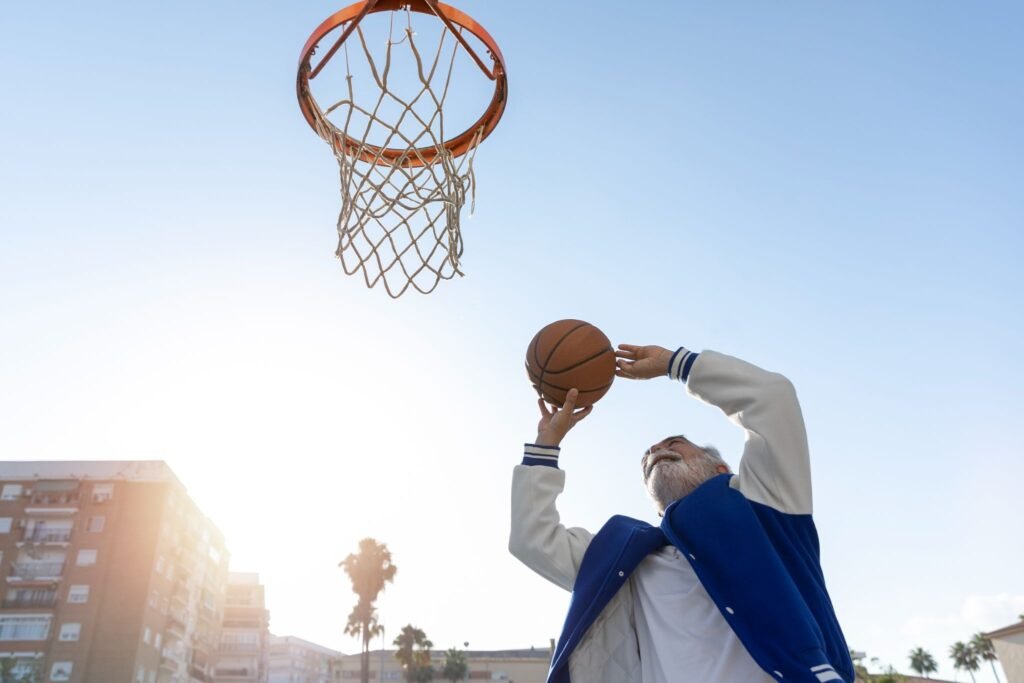
Whenever I talk with coaching clients who feel stuck in a mental rut, the conversation almost invariably turns to exercise, and their shoulders immediately drop. Most people associate working out with grueling obligation—staring blankly at a treadmill monitor or grinding through sets while checking their watch. But throughout my years studying human development, I’ve found that true emotional resilience doesn’t come from forced discipline; it comes from dynamic, immersive play.
There is something irreplaceable about picking up a basketball and stepping onto a court. You aren’t merely burning calories; you are giving your nervous system an invitation to be present. The textured grip of the leather, the immediate feedback of the net swishing, and the continuous calculation of spacing and speed immediately strip away the background chatter of daily stress.
Instead of chasing a cheap dopamine hit from mindlessly scrolling your phone, engaging in active play creates a genuine biochemical reward cycle that leaves you energized rather than drained. I often tell people that play isn’t a childish indulgence—it’s an evolutionary mechanism that keeps our minds nimble, optimistic, and connected to the world around us. Basketball just happens to deliver that lesson in one of the most vibrant, exhilarating packages available.
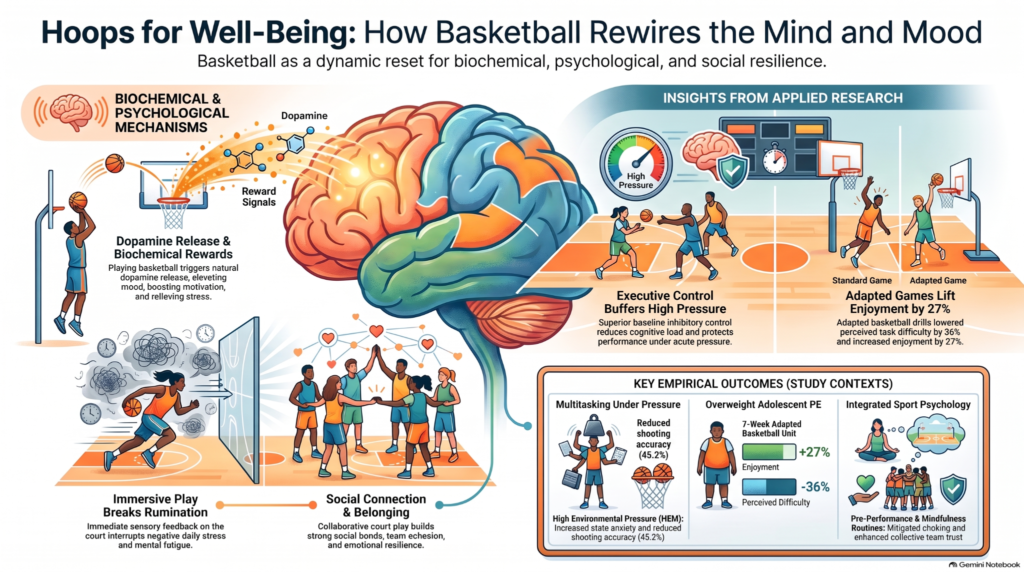
Engaging in basketball isn’t just about physical activity; it’s also a powerful way to boost your mental well-being. As you play, your body releases dopamine, the feel-good chemical that lifts your mood and enhances motivation. This experience not only promotes joy through competition, but also strengthens social connections with teammates, fostering a sense of belonging. By making basketball a regular part of your routine, you’ll discover even more ways to reap these mental health benefits.
KEY TAKEAWAYS
- Engaging in basketball releases dopamine, enhancing mood and creating a sense of enjoyment through physical activity and competition.
- The camaraderie and support from teammates foster social connections that contribute to overall mental well-being.
- Regular basketball participation boosts self-esteem and confidence as players witness their skill improvement and achievements.
- The dynamic nature of basketball provides an exhilarating escape from daily stress, promoting emotional resilience and balance.
- Physical activity through basketball activates natural stress relief mechanisms, enhancing both mental health and enjoyment in life.
WHY BASKETBALL IS A GREAT OUTLET FOR PHYSICAL ACTIVITY
When you hit the court, you’re not just playing a game; you’re engaging in a dynamic form of physical activity that offers numerous benefits for your body and mind.
The beauty of basketball lies in its blend of intense movement and strategic collaboration. Mastering basketball techniques not only boosts your physical fitness but also sharpens your mental agility. As you dribble, shoot, and defend, you’re developing coordination, endurance, and strength, all while enjoying the thrill of the game.
Moreover, embracing team strategies fosters a sense of belonging and mutual support. You learn to communicate effectively, building trust with your teammates as you work towards a shared goal.
This camaraderie enhances your overall experience, empowering you to push your limits. So, lace up your sneakers and take that first shot; you’re not just playing basketball, you’re crafting a healthier, more vibrant you. Freedom awaits you on the court!
The Happiness of Playing Basketball
Basketball is an enjoyable sport that suits many skill levels and ages, owing to its worldwide popularity. A standard basketball team has five players per side. You can also play two-on-two or three-on-three games, or even on your own. With indoor courts, you can play basketball year-round. The main objective of the game is to score points by shooting the ball through the hoop. You use defensive strategies to prevent the other team from scoring. You can play basketball with a playful or competitive spirit. Either way, it’s a fantastic way to gain strength, coordination, and muscular endurance. Plus, you’ll have the opportunity to be a part of a team and a larger community.
Playing basketball not only boosts your physical health but also elevates your mood through social connections.
As you share the court with teammates and friends, you experience joy that comes from collaboration and camaraderie.
This blend of movement and interaction creates a unique happiness that can transform your overall well-being.
Physical Activity Benefits
Engaging in basketball not only elevates your heart rate but also considerably boosts your mood and mental well-being.
This dynamic sport serves as an excellent form of endurance training, enhancing your stamina while promoting cardiovascular health. Each dribble, jump, and shot pushes your body to new limits, releasing endorphins that create a sense of euphoria.
You’ll feel a surge of energy and a lift in your spirits, making it easier to shake off daily stresses. The rhythm of the game allows you to forget your worries, embracing the freedom that comes from movement.
By integrating basketball into your routine, you’re not just playing a game; you’re embracing a rewarding self care activity that supports your happiness, relieves stress, and promotes overall mental well-being.
Social Interaction Joy
The joy of basketball extends beyond the physical benefits, tapping deeply into the social connections it fosters. When you step onto the court, you engage in team dynamics that enhance your sense of belonging.
The playful competition not only fuels your passion for the game but also strengthens friendships, creating a support system that enriches your mental well-being. Each pass, shot, and cheer builds camaraderie, allowing you to experience joy in the moment.
Embracing this social aspect empowers you, reminding you that you’re part of something bigger. So, the next time you play, relish those connections; they’re essential to your happiness.
Celebrate the laughter, the teamwork, and the shared victories that basketball brings into your life.
Socializing Through Basketball: Building Connections on the Court
Physical activity (PA) has positive effects on cardiovascular and general health, and it can also protect the human brain and cognition. Both cross-sectional and prospective studies have shown that individuals with better fitness or higher levels of PA tend to have higher levels of neurocognitive function compared to inactive or sedentary people. Several of these studies have observed the effects on the executive functions (EFs) involved in higher cognitive processes. For instance, studies with adolescents have shown a relationship between PA and better cognitive outcomes, presenting improvements in EFs, while low levels of PA are closely related to impaired EFs. However, when this relationship is tested in experimental studies, the results are not entirely congruent. Some meta-analyses have found positive effects for aerobic (AER) exercise interventions on EFs, but reviews such as Young et al., have observed cases in which no effects were reported. Although it has been consistently shown that PA has a positive effect on neurocognition, many questions remain about the factors that trigger cognitive benefits.
While many players focus on improving their skills, the court also serves as a vibrant social hub where connections flourish. Engaging in basketball fosters team dynamics, allowing you to bond with teammates over shared goals and triumphs.
These interactions don’t just enhance your game; they also encourage friendship growth that extends beyond the court. When you pass the ball or celebrate a win together, you’re building a supportive network that can uplift your spirits and enrich your life.
The camaraderie you forge during practice or casual games creates a sense of belonging, essential for mental well-being.
How Competing in Basketball Can Lift Your Spirits
Competing in basketball not only hones your skills but also serves as a powerful catalyst for emotional uplift. When you step onto the court with your teammates, you immerse yourself in a dynamic environment where team dynamics fuel your competitive spirit. This synergy creates a sense of belonging, reminding you that you’re part of something bigger.
As you face challenges together, each victory—even small ones—sparks joy and satisfaction, releasing dopamine that elevates your mood. The adrenaline rush from competition can break the monotony of daily life, giving you an exhilarating sense of freedom.
Moreover, the shared experience of pushing through struggles and celebrating achievements fosters deep connections with your teammates, enhancing your emotional well-being.
Embrace the thrill of competition; it can lift your spirits and provide a unique outlet for self-expression and resilience. So, lace up your sneakers and let the game elevate your mindset!
Practical Tips For Making Basketball A Regular Part Of Your Life
No matter what your age, fundamental movement skills—the foundation for all physical activity—are key for an active lifestyle. Fundamental movement skills are categorised as locomotor (think: running or jumping), object control (catching and throwing) and stability (balancing and twisting) skills.
Incorporating basketball into your routine can be a game-changer for both your physical and mental health. Start by checking local basketball schedules to find games that fit your lifestyle. Whether you’re a beginner or a seasoned player, community leagues are a fantastic way to engage with others while honing your skills.
Consider joining a league that aligns with your interests and skill level; it’ll keep you motivated and accountable.
Make basketball a regular commitment by setting aside specific days and times each week for practice or games. You could also invite friends to join you—this fosters camaraderie and turns workouts into fun, social events.
Remember, the key is consistency; treat these sessions as essential appointments for your well-being. Embrace the freedom basketball offers to express yourself, relieve stress, and connect with others.
Taking these steps can transform your life, one dribble at a time.
REAL-LIFE BENEFITS OF BASKETBALL ON MENTAL HEALTH
In my practice as a recreation strategist, I spend a great deal of time looking at how play rebuilds emotional self-regulation. When adults come to me burned out, their brains are often starved of clean neurochemical rewards. Modern routines are packed with friction, high expectations, and prolonged abstract tasks that never seem to finish. On a basketball court, however, that dynamic flips. The brain enters a concentrated feedback loop: you anticipate a bounce pass, read the floor, release a jump shot, and receive an instant outcome. Even missing a shot and grabbing your own rebound provides immediate sensory closure that the mind naturally craves.
What fascinates me most from a developmental standpoint is how this sport blends individual mastery with psychological safety. When you adapt games to keep them fun—whether it’s running light half-court runs, practicing casual free-throw games with a neighbor, or running modified low-pressure drills—you bypass the self-critical voice that convinces you that movement has to hurt to count.
The dopamine released here isn’t just a fleeting feeling of accomplishment; it actively buffers against mental fatigue, improves task-switching ability, and restores our sense of self-agency. It’s tangible proof that your body and mind can cooperate to produce sheer joy on demand.
Playing basketball isn’t just about the game; it can genuinely transform your mental health.
You’ll find that the physical activity helps relieve stress, fosters social connections, and boosts your self-esteem.
Embracing this sport can lead to a healthier mindset and a stronger support network, making every dribble and shot count for more than just points on the scoreboard.
Stress Relief Through Play
Many people find that engaging in basketball offers a unique escape from daily stressors, providing not just physical exercise but also a mental reset.
The fast-paced rhythm of the game encourages playful engagement, allowing you to let go of worries and immerse yourself in the moment. As you dribble, shoot, and pass, you activate your body’s natural stress management systems, releasing endorphins that boost your mood.
This active involvement not only relieves tension but also cultivates a sense of freedom, empowering you to reclaim your mental space. Each game becomes a powerful tool in your arsenal against stress, reminding you that joy and relief can often come from simply playing.
Embrace this opportunity to nurture your well-being through the exhilarating world of basketball.
Social Connections and Support
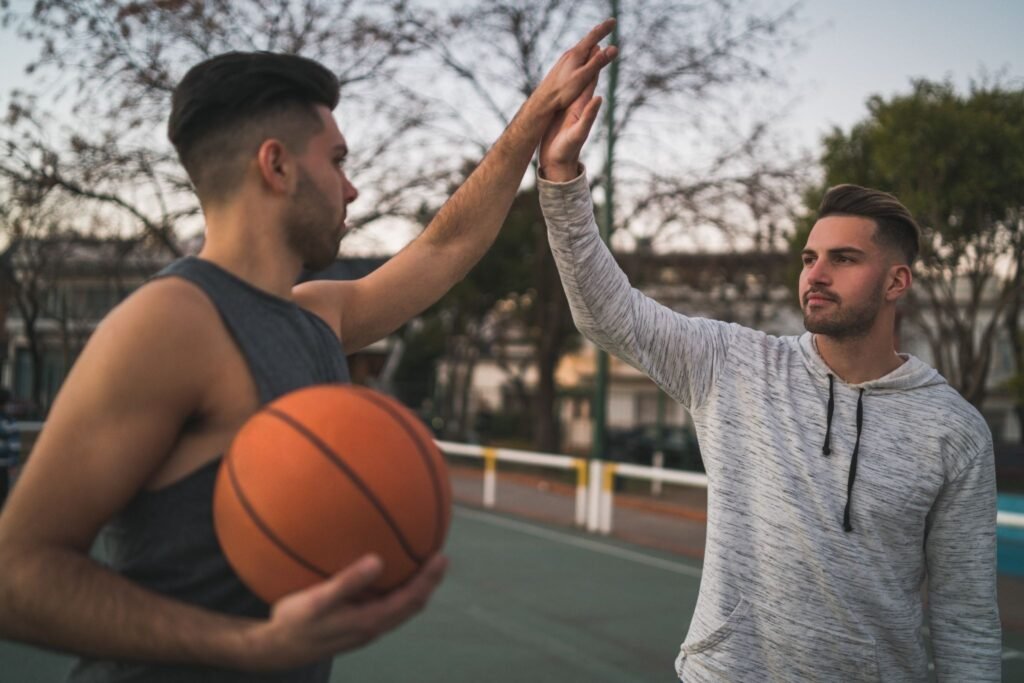
The bond formed on the basketball court can greatly enhance your mental health, offering a sense of belonging and community. Engaging in team dynamics fosters genuine connections, leading to meaningful friendships that can provide support in challenging times.
When you play, you’re not just honing your skills; you’re also building a network of trust and camaraderie.
- Shared experiences: Every game creates memories that strengthen your bonds.
- Emotional support: Friends you make on the court can help you navigate life’s ups and downs.
- Collaboration: Working together on strategies deepens your sense of unity and purpose.
Boosting Self-Esteem and Confidence
When you step onto the basketball court, you’re not just engaging in a sport; you’re starting a journey that can greatly boost your self-esteem and confidence. Each dribble and shot becomes a reflection of your self-worth development. As you improve your skills, you’ll notice a remarkable transformation in how you view yourself, much like the benefits associated with cycling recreation and brain oxygenation, which highlight how recreational exercise can support cognitive function, mental clarity, and overall well-being.
Basketball challenges you, pushing your limits and fostering resilience. Every game teaches you that failure is a stepping stone, not a setback, which is essential for confidence building.
The camaraderie with teammates further reinforces your sense of belonging and encourages personal growth. By embracing this sport, you’re not just playing; you’re cultivating a powerful mindset that propels you toward greater freedom in life.
The Science of Dopamine and Its Role in Mood Enhancement
Although you mightn’t realize it, dopamine plays an essential role in shaping your mood and overall mental well-being. This neurotransmitter is often called the “feel-good” chemical because it’s vital for mood regulation and motivation. When you engage in activities like basketball, you trigger dopamine release, boosting your happiness.
Here are some ways dopamine impacts your mental state:
- Enhances pleasure: It makes you feel joy when you achieve goals, whether big or small.
- Increases motivation: A healthy dopamine level fuels your drive to pursue your passions, like playing basketball.
- Promotes resilience: Higher dopamine helps you cope with stress, allowing for a more balanced emotional life.
Understanding dopamine’s influence empowers you to seek experiences that enhance your mood. By embracing activities such as basketball and casual gaming and mood regulation, you can explore enjoyable ways to support emotional balance, relieve stress, and bring more joy into your daily life.
RELATED STUDIES ABOUT BASKETBALL RECREATION AND DOPAMINE REWARD
Incorporating basketball into your routine isn’t just about sinking shots; it’s about discovering a vibrant avenue for joy and connection. The dopamine boost you get from playing uplifts your spirits and fosters lasting friendships. By embracing this dynamic game, you’re not only nurturing your physical health but also cultivating a positive mindset. So lace up those sneakers, hit the court, and let the rhythm of the game elevate your well-being. It’s time to bounce back into happiness!
Influence of environmental pressure and inhibitory control capacity on anxiety, mental workload and shooting performance in multitasking basketball contexts
This empirical study examines how environmental pressure—manipulated through cognitive-motor task complexity and performance outcome consequences—impacts state anxiety, mental workload, and shooting performance in youth basketball athletes, while evaluating the moderating role of baseline inhibitory control (IC) capacity.
Study Overview & Conceptual Framework
- Performance Context & The Choking Phenomenon: In basketball, shooting accuracy is the primary determinant of match success, yet execution is highly vulnerable to competitive pressure. High stakes often precipitate “choking under pressure,” characterized by an acute, involuntary breakdown in skilled performance mediated by state anxiety.
- Theoretical Grounding:
- Attentional Control Theory (ACT): Proposes that anxiety shifts attention away from task-relevant visual cues toward external threats or intrusive performance worries, demanding greater compensatory mental effort (workload) while degrading operational efficiency.
- Grid Theory & Cognitive Control: Simple motor tasks require minimal conscious regulation, whereas dynamic, open-skill sporting contexts demand continuous executive function to suppress prepotent errors and adapt actions in real time. Inhibitory control (IC)—specifically the interplay between proactive planning and reactive motor inhibition—is hypothesized to shield athletes from distractors and stress-induced disruption.
- Ecological Limitations in Prior Research: Laboratory studies of sports choking have historically relied on isolated, low-complexity motor tasks with static conditions and artificial penalties, failing to recreate the simultaneous cognitive-motor multitasking, physiological intensity, and volatile consequences inherent to real sport competition.
- Core Objectives:
- Determine how environmental pressure (combining cognitive-motor task demands with outcome-based point deduction/reset consequences) alters state anxiety, salivary alpha-amylase (sAA), perceived mental workload, and basketball shooting accuracy.
- Investigate whether baseline inhibitory control capacity moderates susceptibility to pressure-induced performance decrements.
Methodology & Experimental Architecture
- Participants: Thirty-nine federated youth basketball players (26 males, 13 females; mean age 14.91.3 years; 7.52.0 years of playing experience). All engaged in 270minutes of weekly structured training, competed on regulation hoops (3.05m), and were free of concussive, neurological, or musculoskeletal disorders.
- Study Design & Controls: An intrasubject, repeated-measures design completed across five separate sessions (three pre-experimental characterization sessions and two counterbalanced experimental conditions separated by 72hours):
- Standardized Physiological Intensity: Target heart rate was controlled in real time using chest straps (Polar H10/Vantage M) to maintain Zone 4 aerobic intensity ($80\text{–}90\%\text{ HR}_{\text{max}}$; mean achieved $85.1 \pm 2.7\%\text{ HR}_{\text{max}}$).
- Competitive Incentive Structure: To ensure engagement, two independent monetary awards (€100 each) were established for the highest cumulative score and highest overall shooting percentage across both conditions.
- Basketball Multitasking Protocol (FITLIGHT System):
- Athletes began outside the 3-point line (6.75m) while continuously dribbling. Four frontal light pods (FL 1–4) above the free-throw line displayed visual cues dictating dribble direction, and two lateral perimeter pods (FL 5–6) served as photocells at a standardized 4.9m distance from the hoop to log reaction times and enforce shooting boundaries.
- Each session comprised 5 blocks of 20 trials (100 total shots per condition) with 1-minute inter-block recovery.
- Environmental Pressure Manipulation:
- Low Environmental Manipulation (LEM): Low task complexity and no negative consequences. Participants processed a single invariant rule (Rule 1: external green light = dribble to the same side), presented in an alternating sequence (Right-Left-Right-Left). Scoring awarded +1point per successful shot with zero penalties for misses or rule errors.
- High Environmental Manipulation (HEM): High cognitive complexity coupled with punitive outcome consequences. Participants processed dual conflicting rules based on stimulus color and pod ring location (Rule 1 vs. Rule 2) presented pseudo-randomly in a Go-NoGo probability structure (65% Rule 1 / 35% Rule 2, with 35% counter-directional shifts). Scoring awarded +1point per made shot, deducted -1point for rule errors or missed shots, and completely reset the score to zero if three consecutive errors occurred.
- Measurement Instrumentation:
- Baseline Inhibitory Control: Assessed via a computerized arrow Go-NoGo task (Superlab 4.5; 180 trials, 32.2% NoGo frequency) recording response accuracy and reaction time. Athletes were stratified into “Better IC” (n=16) and “Worse IC” (n=23) clusters using k-means clustering.
- State Anxiety & Physiological Stress: Spanish version of the State-Trait Anxiety Inventory (STAI; pre- and post-session) and salivary alpha-amylase (sAA; passive drool samples analyzed via automated enzymatic colorimetry, adjusted for flow rate).
- Subjective Mental Workload: NASA Task Load Index (NASA-TLX) measuring six subscales (Mental Activity, Physical Demand, Temporal Demand, Performance/Execution, Effort, and Frustration).
- Statistical Modeling: Linear mixed-effects models (LMM; lme4/lmerTest in R) with condition and IC cluster as fixed effects and participant code as a random intercept using Satterthwaite approximations for degrees of freedom, supplemented by repeated-measures ANOVAs and linear regression.
Key Empirical Findings
- Efficacy of the Pressure Induction (Manipulation Checks):
- Physiological exercise intensity was equivalent across conditions (168.344.23bpm; $85.1\%\text{ HR}_{\text{max}}$), ensuring cardiovascular demands did not confound cognitive outcomes.
- State anxiety increased from pre- to post-session in both conditions, but the escalation was substantially greater under HEM (F(1,38)=362.88,p<0.001,p2=0.633) than LEM (F(1,38)=59.57,p<0.001,p2=0.109).
- Salivary alpha-amylase rose significantly from pre- to post-task in both arms (p<0.001) and demonstrated a trend toward higher absolute levels under HEM (t(38)=1.866,p=0.062).
- Direct Impact on Mental Workload, Anxiety, and Shooting Accuracy:
- Heightened Anxiety: The HEM condition elicited significantly higher post-task state anxiety compared to LEM (24.725.70 vs. 15.265.67; t(38)=8.074,p<0.001,d=0.606).
- Elevated Cognitive Load: NASA-TLX demonstrated significantly higher Mental Activity (68.4613.48 vs. 44.2321.78; t(38)=15.158,p<0.001,d=0.34), Frustration (63.9716.15 vs. 44.8723.41; t(38)=2.846,p=0.007,d=0.331), and Global Workload (60.6010.61 vs. 48.8310.95; t(38)=2.386,p=0.022,d=0.255) under HEM. Physical Demand, Temporal Demand, and Effort did not differ between conditions (p>0.15), confirming that cognitive and emotional stressors drove perceived load.
- Shooting Performance Breakdown: Basketball shooting percentage dropped significantly under high environmental manipulation ($45.21 \pm 10.31\%$ in HEM vs. $51.69 \pm 10.06\%$ in LEM; t(38)=-5.194,p<0.001,d=-0.648).
- Cognitive-Motor Impairment: In HEM, rule-compliance accuracy declined (0.890.07 vs. 0.930.06) and cognitive-motor reaction times slowed (2908468ms vs. 2636266ms).
- Regression Analysis: State anxiety was inversely associated with final-block shooting performance (=-0.125,R2=0.048,p=0.053), indicating that acute anxiety elevations directly contributed to performance degradation.
- The Moderating Role of Inhibitory Control:
- Athletes classified within the “Better IC” cluster (higher baseline Go-NoGo accuracy [168.294.79 vs. 165.034.45] and faster reaction times [309.0336.73ms vs. 385.5932.58ms]) outperformed the “Worse IC” cluster across both environments:
- In LEM: $56.25 \pm 12.49\%$ vs. $48.52 \pm 6.53\%$ (t(38)=2.771,p=0.007).
- In HEM: $48.06 \pm 10.46\%$ vs. $43.22 \pm 9.95\%$ (t(38)=2.039,p=0.046).
- Athletes with superior IC experienced significantly lower perceived mental activity across both sessions (t(38)=2.32,p=0.026). Superior executive control protected against cognitive overload, enabling athletes to maintain proactive motor control and suppress erroneous actions under high consequence pressure.
- Athletes classified within the “Better IC” cluster (higher baseline Go-NoGo accuracy [168.294.79 vs. 165.034.45] and faster reaction times [309.0336.73ms vs. 385.5932.58ms]) outperformed the “Worse IC” cluster across both environments:
Practical & Training Implications
- Designing Pressure Training Environments: Increasing isolated physical effort or drill volume is insufficient to inoculate players against competitive failure. Coaches should systematically integrate cognitive-motor unpredictability alongside direct performance consequences (e.g., score resets, point deductions, public evaluations) into sport-specific drills to replicate the emotional and cognitive demands of real competition.
- Cognitive Profiling & Assessment: Evaluating inhibitory control using computerized Go-NoGo tests or reactive sport-specific drills provides baseline profiles of an athlete’s susceptibility to cognitive overload and pressure-induced choking.
- Subjective Workload Monitoring: Utilizing the NASA-TLX “mental activity” subscale provides coaches with a rapid, accessible metric to quantify perceived mental strain, helping balance drill complexity to prevent cognitive burnout while optimizing pressure acclimatization.
Study Limitations
- Absence of Direct Defense: While the multitasking design replicated perceptual-motor complexity and psychological pressure, drills lacked active defensive opposition, which introduces physical contact and interactive tactical unpredictability.
- Directionality Constraints: The study design could not resolve whether execution errors caused acute anxiety spikes or whether escalating anxiety directly generated subsequent motor errors.
- Sample Demographics & Multi-Club Variance: The sample comprised 39 youth athletes drawn from three regional basketball clubs, precluding adequately powered sub-analyses across biological sex or competitive coaching styles. Future work requires portable neuroimaging (fNIRS, mobile EEG) to monitor real-time prefrontal cortical load and sympathetic dynamics during actual competition.
| REFERENCE: A. Gutiérrez-Capote, J. Jiménez-Martínez, I. Madinabeitia, E. Torre, A.S. Leicht, M. Botía, F. Alarcón, D. Cárdenas, Influence of environmental pressure and inhibitory control capacity on anxiety, mental workload and shooting performance in multitasking basketball contexts, Psychology of Sport and Exercise, Volume 81, 2025, 102960, ISSN 1469-0292, https://doi.org/10.1016/j.psychsport.2025.102960. (https://www.sciencedirect.com/science/article/pii/S1469029225001591) |
Integrative psychological interventions for enhancing basketball performance: A focus on individual and team dynamics
This integrative review synthesizes empirical and theoretical research on sport psychological interventions in basketball, critically appraises the methodological quality of the evidence base, and advances an integrated framework linking individual competitive state with collective team spirit.
Conceptual Framework & Rationale
- The Socio-Cognitive Complexity of Basketball: While basketball training has historically emphasized physical conditioning and tactical execution, competitive success is heavily governed by rapid decision-making under intense temporal and emotional pressure.
- The Fragmented Paradigm: Existing literature frequently compartmentalizes interventions, investigating individual-level self-regulation (e.g., imagery, self-talk, biofeedback) independently from team dynamics (e.g., team building, cohesion, leadership). This division overlooks the reciprocal mechanisms through which individual emotional control reinforces interpersonal trust, and how a cohesive, psychologically safe team climate lowers individual threat appraisals.
- Review Objectives:
- Synthesize evidence across individual and collective sport psychology interventions contextualized to basketball.
- Map intellectual themes and identify structural gaps using bibliometric co-occurrence analysis.
- Formulate an integrated conceptual architecture—the “Virtuous Cycle”—linking individual state to collective team dynamics.
- Propose a multi-method assessment framework and longitudinal research agenda structured around “Psychological Periodization”.
Methodology & Bibliometric Mapping
- Search Strategy & Study Selection: Adhering to PRISMA 2020 guidelines, comprehensive searches across Web of Science, PubMed, and PsycINFO yielded 1,904 records. Following deduplication (979 unique records remaining) and two-stage screening against formal eligibility criteria, 151 peer-reviewed studies were included.
- Methodological Quality Appraisal: Empirical studies were evaluated using design-appropriate instruments (adapted PEDro scale for RCTs and quasi-experimental trials, CASP checklist for qualitative studies, and adapted JBI checklists for cross-sectional studies).
- Bibliometric Co-Occurrence Analysis (VOSviewer): Term co-occurrence mapping across the 151 included studies identified five distinct clusters dominated by individual psychological variables (self-concept, anxiety, emotions, motivation) and cross-sectional survey methodologies. Crucially, the mapping empirically exposed major structural absences in the current literature: team-level constructs (collective efficacy, shared mental models), longitudinal terms (multi-season, skill decay), and objective sport analytics (clutch metrics, lineup ratings) were virtually absent from core keyword networks.
Evidence Synthesis: Individual Competitive State Interventions
- Arousal Regulation & Stress Inoculation:
- Mechanisms: High-pressure scenarios (such as late-game free throws or hostile crowds) trigger sympathetic hyperactivation and attentional narrowing, driving motor choking. Interventions such as diaphragmatic breathing, biofeedback (HRV training), and Progressive Muscle Relaxation (PMR) stimulate vagal tone, restoring parasympathetic control and prefrontal executive function.
- Application: Structured pre-performance routines (incorporating diaphragmatic breathing and kinesthetic dribble sequences) shield motor execution during free throws. Post-turnover trigger words (e.g., “Reset”) serve as cue-controlled circuit breakers, interrupting negative rumination and accelerating defensive transition.
- Attentional Focus & Cognitive Control:
- Mindfulness (MBSR-Based Protocols): Cultivates meta-awareness and cognitive defusion, allowing athletes to observe internal frustration without reacting impulsively, thereby preserving broad external court awareness (the “quiet eye”).
- Contextualized Simulation Training: Applying stress-inoculation principles (e.g., training under crowd noise, physical fatigue, and shot-consequence penalties) improves retrieval and motor stability in clutch scenarios.
- Confidence & Self-Efficacy:
- Mastery Imagery: Full-sensory mental rehearsal of technical mechanics activates primary motor and sensory cortices, reinforcing neural pathways without physical fatigue. External-focus imagery scripts specific to free throw execution outperform generic internal-focus coaching cues.
- Self-Talk Refinement: Delineates between motivational/positive self-talk (affect regulation) and instructional self-talk (e.g., “See the waist”), which directs attention to critical biomechanical cues during defense.
- Performance Accomplishment Review: Structured video reviews focused deliberately on made shots and successful possessions facilitate attributional retraining, reinforcing stable, internal, controllable perceptions of competence.
- Motivation & Hierarchical Goal Setting:
- Evaluates the SMARTER framework (Specific, Measurable, Achievable, Relevant, Time-bound, Evaluated, Revised).
- Establishes a functional hierarchy: Outcome goals provide overarching competitive vision but carry low controllability; Performance goals benchmark self-referenced statistical standards; and Process goals (e.g., boxing out, executing defensive rotations) provide total immediate controllability, protecting against outcome-related anxiety and supporting self-efficacy.
Evidence Synthesis: Team Spirit and Collective Dynamics
- Fostering Collective Efficacy: Rooted in Bandura’s social cognitive theory, collective efficacy represents the shared belief in a unit’s collective capability. Cultivated through collaborative review of past comeback film (vicarious modeling), strategic verbal persuasion framing team identity around resilience (“This is who we are”), and synchronized group imagery simulating tactical schemes (e.g., full-court press execution).
- Developing Shared Mental Models (SMMs):
- Fast-paced court sports require non-verbal tacit coordination. SMMs provide overlapping cognitive representations of tactical systems.
- Formed through standardized on-court communication protocols, non-verbal defensive signaling (hand/finger cues), off-court collaborative problem-solving, and player-led video analysis sessions that emphasize the systemic “why” behind tactical sets rather than individual error attribution.
- Social Cohesion, Trust, and Psychological Safety:
- While task cohesion focuses on objective coordination, social cohesion provides the psychological safety required for athletes to accept feedback, take calculated tactical risks, and maintain mutual accountability without resentment.
- Advanced through structured role clarity sessions (explicitly validating the systemic value of non-scoring roles) and transparent conflict resolution protocols addressing sensitive issues like playing time.
- Distributed Leadership Empowerment: Moves beyond designated team captains toward functional, decentralized leadership. Coaches empower multiple peer leaders across distinct functional domains (e.g., defensive vocal leader, huddle de-escalator, bench morale leader), creating a redundant, self-sustaining team infrastructure that remains stable during individual off-nights.
The Integrated Framework: The “Virtuous Cycle” & Novel Concepts
- The Virtuous Cycle Mechanics: Individual competitive regulation directly catalyzes collective functioning. When an athlete regulates emotional arousal, on-court decision-making improves; consistent, unselfish tactical execution deposits into the team’s “relational trust bank”. Reciprocally, operating within a high-trust, cohesive unit creates a psychological safety net that mitigates individual fear of failure, lowers cognitive load, and sustains individual self-efficacy under pressure.
- Novel Integrative Interventions (Theoretical Propositions Requiring Empirical Testing):
- Team Mindfulness: Synchronized circle breathing on-court, cultivating shared “we-awareness” and collective attentional alignment prior to tip-off.
- Synchronized Pre-Performance Routines: Coordinated, team-wide behavioral rituals executed at timeouts and quarter breaks to leverage behavioral synchrony, triggering simultaneous physiological calming across the unit.
- Jersey-Swap Imagery: Guided visualization where players mentally rehearse possessions from the exact visual and physical perspective of a teammate (e.g., a guard visualizing setting screens as a center) to build cognitive empathy, reduce on-court friction, and refine shared mental models.
- The Coach as a Psychological Architect: Reconceptualizes the coaching role from an authoritarian tactical commander to an environmental architect who models emotional regulation, designs psychologically safe climates, and utilizes multi-method data to guide team culture.
Methodological Critique & Future Research Agenda
- Pervasive Methodological Deficiencies:
- Demographic Homogeneity: Over-representation of adult male professional athletes, with female, youth, and adaptive basketball populations severely under-studied. Evidence indicates that arousal and mindfulness interventions validated in men cannot be assumed to transfer automatically to female or youth cohorts without adaptation.
- Subjective Self-Report Bias: Over-reliance on retrospective questionnaires vulnerable to social desirability, lacking alignment with objective behavioral performance.
- Absence of Longitudinal Tracking: A near-total void of multi-season studies, leaving skill decay, maintenance schedules, and developmental sequencing unexamined.
- The Proposed Multi-Method Assessment Framework: Establishes a mandatory three-pillar triangulation model for future intervention validation:
- Longitudinal Psychometrics: Administering validated scales (e.g., Group Environment Questionnaire, Athlete Mindfulness Questionnaire) across pre-, mid-, and post-season intervals.
- Systematic Behavioral Film Analysis: Quantifying observable on-court actions, including verbal/non-verbal communication frequency, supportive gestures following errors, defensive rotation calls, and huddle dynamics.
- Advanced Sport-Specific Analytics: Evaluating objective efficiency metrics, specifically clutch performance (last 5 minutes, score within 5 points: free throw %, turnover ratio), lineup offensive/defensive ratings (points per 100 possessions), and hustle stats (charges drawn, loose balls recovered, deflections).
- Psychological Periodization Model: Mental skills training must be systematically integrated into macro-, meso-, and microcycles with the same periodized precision as physical conditioning. Training must adapt across competitive phases: pre-season (cohesion, shared mental models, goal setting), in-season (maintenance, cognitive load adaptation), and playoffs (clutch stress inoculation, advanced imagery).
- Cultural Intelligence & Transculturation: Given the globalization of basketball rosters, interventions must be culturally adapted rather than generically applied. Approaches to communication, conflict resolution, and leadership must align with cultural values (e.g., individualistic vs. collectivistic communication; egalitarian vs. hierarchical leadership deference) to ensure intervention efficacy across international team compositions.
| REFERENCE: Lan-Kai Yang, Zhou Yang, Geoff Bird, Integrative psychological interventions for enhancing basketball performance: A focus on individual and team dynamics, Acta Psychologica, Volume 265, 2026, 106652, ISSN 0001-6918, https://doi.org/10.1016/j.actpsy.2026.106652. (https://www.sciencedirect.com/science/article/pii/S0001691826004531) |
The impact of adapted exercises in basketball on the perception of the difficulty and physical enjoyment of students with overweight
This randomized controlled intervention study evaluates the effects of a 7-week adapted basketball teaching unit on the perception of task difficulty and physical activity enjoyment among adolescents with overweight and obesity in high school physical education.
Conceptual Framework & Educational Context
- Public Health and Pediatric Context: Adolescent overweight and obesity represent critical public health issues linked to long-term cardiometabolic disorders, hypertension, and type 2 diabetes. Excess fat mass and physical inactivity impair gross motor coordination, cardiorespiratory fitness, muscular strength, agility, and dynamic balance.
- Physical Education Barriers: In conventional school physical education (PE), adolescents with obesity frequently encounter feelings of physical incompetence, repeated motor failure, weight-based teasing, and body shaming. Consequently, many develop avoidance behaviors, including seeking medical exemptions to escape participation. This decline in physical activity engagement and enjoyment is especially pronounced among adolescent girls, who report lower perceived physical competence and greater body appearance distress.
- Pedagogical Framework: Rooted in didactic engineering and French adapted physical education guidelines for students with partial aptitude, the study tested whether structured modifications to sport drills could alleviate perceived task difficulty and enhance affective enjoyment without isolating students from their peers.
- Hypotheses: The authors hypothesized that an adapted basketball curriculum would:
- Significantly decrease perceived task difficulty in both male and female adolescents with overweight.
- Significantly increase physical activity enjoyment, with a specific focus on mitigating the gender gap in physical activity engagement.
Methodology & Experimental Architecture
- Participants: Sixty-six secondary school students aged 16 to 18 years from rural high schools in Regueb, Tunisia, classified as overweight or obese based on International Obesity Task Force (IOTF) BMI cutoffs.
- Randomization & Group Distribution: Participants were randomly assigned to an experimental group (EG) or a control group (CG):
- Experimental Group (EG; n=32): 20 boys (mean age 16.170.58 years; mean BMI 26.001.18) and 12 girls (mean age 16.000.86 years; mean BMI 27.331.53).
- Control Group (CG; n=34): 21 boys (mean age 16.080.80 years; mean BMI 27.451.19) and 13 girls (mean age 16.141.01 years; mean BMI 27.031.49).
- Intervention Protocol (7-Week Unit):
- Both groups completed coeducational PE classes consisting of one 50-minute basketball session per week for 7 weeks (14 total scheduled PE sessions), administered by the same physical education instructors under identical facility conditions.
- Adapted Basketball Curriculum (EG): Early sessions prioritized non-competitive, engagement-oriented gameplay. Subsequent technical drills were systematically adapted to reduce physical strain and support offensive execution:
- 1-on-1 Drills: Defensive players were restricted to one-handed defending and were required to delay their defensive action until after the offensive player completed an initial pass.
- 3-on-3 Drills: Modified into asymmetrical 3-on-2 configurations to provide spatial and numerical advantages for offensive ball handlers.
- Offensive Rotations: Students with overweight were permitted structured offensive substitutions, providing frequent micro-recovery breaks while maintaining on-court participation.
- Traditional Basketball Curriculum (CG): Completed standard, unmodified competitive basketball teaching units without defensive restrictions, numerical advantages, or adapted recovery rotations.
- Assessment Instruments:
- Perception of Difficulty (DP-15): A 15-point rating scale with 7 semantic labels based on the Borg scale (ranging from 1 = “extremely easy” to 15 = “extremely difficult”), completed immediately following the first and final basketball sessions.
- Physical Activity Enjoyment Scale (PACES): An 18-item inventory using a 7-point bipolar rating scale (aggregate score range: 18 to 126; higher scores represent higher enjoyment), administered post-intervention.
- Statistical Analysis: Analyzed using SPSS 18.0. Normality was confirmed via the Kolmogorov-Smirnov test. Two-way repeated-measures ANOVAs (Group Time) were computed separately by sex to assess main and interaction effects on DP-15 and PACES scores, supported by post-hoc tests, percentage evolution (Delta%), and Cohen’s d effect sizes (0.05).
Key Empirical Findings
- Significant Reduction in Perceived Task Difficulty (Both Sexes):
- Repeated-measures ANOVA demonstrated significant main effects of Time and significant Group Time interactions for perceived difficulty across both boys (F(1,39)=13.76,p<0.001,2=0.26) and girls (F(1,23)=6.97,p<0.01,2=0.23).
- In the adapted experimental group (EG):
- EG Girls: Perceived difficulty dropped significantly by 36% (Delta% = -0.36, p < 0.001) from pre-test (7.5) to post-test (4.8).
- EG Boys: Perceived difficulty dropped significantly by 27% (Delta% = -0.27, p < 0.001) from pre-test (8.1) to post-test (5.9).
- Control groups performing standard basketball exhibited no significant change in difficulty ratings over the 7 weeks (CG boys: Delta% = -0.01, p = 0.98; CG girls: Delta% = +0.03, p = 0.096).
- Gender-Specific Divergence in Physical Enjoyment (PACES):
- Girls: A significant Group Time interaction emerged for enjoyment (F(1,39)=123.48,p<0.0001,2=0.76). Girls participating in the adapted curriculum experienced a 27% increase in physical activity enjoyment (Delta% = +0.27, p < 0.001), with mean PACES scores climbing from 58 to 78 points. Control group girls showed no statistically significant change (p=0.135).
- Boys: The adapted intervention produced no significant change in enjoyment scores among boys in either group (EG boys: p = 0.808, Delta% = +0.01; CG boys: p = 0.700, Delta% = -0.01). Although adapted drills successfully reduced boys’ perceived difficulty, their baseline enjoyment was already relatively preserved and remained stable across both conditions.
Practical & Pedagogical Implications
- Mitigating PE Avoidance in Overweight Youth: Standard team sport drills with unmodified physical and tactical demands expose cardiorespiratory deficits and coordination limitations, reinforcing feelings of failure and fatigue. Integrating tactical adjustments—such as offensive numerical superiority (3-on-2), restricted defensive pressure, and structured rest rotations—reduces perceived exertion and preserves participation.
- Closing the Female Physical Activity Engagement Gap: Adolescent girls with obesity encounter substantial emotional obstacles to physical activity, including heightened body consciousness, fear of peer judgment, and low athletic self-efficacy. The 27% increase in PACES scores indicates that adapted, low-threat, game-based learning environments effectively alleviate these psychosocial pressures, transforming physical education from an aversive setting into a positive, competence-building experience.
- Pedagogical Imperative: Adapting learning scenarios to the physical capacities of students with overweight should be treated not as an optional accommodation, but as a core pedagogical necessity to improve school-based physical literacy and promote sustained physical activity adherence.
Limitations & Future Research Directions
- Unmonitored Physiological Variables: The investigation did not measure real-time internal training load (e.g., continuous heart rate telemetry, rating of perceived exertion), body composition alterations, or dietary patterns across the 7-week cycle.
- Absence of Mediational Psychometrics: Potential psychological mediators driving enjoyment gains—such as changes in body esteem, perceived self-competence, or peer social support—were not evaluated through qualitative measures or structural equation modeling.
- Demographic & Sport Specificity: The sample was drawn exclusively from high schools within a single rural district in Tunisia (Regueb) and assessed only basketball. Future research should evaluate diverse student cohorts, alternative team and individual sports, and multi-season follow-up periods to determine whether school-based adapted physical education leads to durable, lifelong physical activity habits.
| REFERENCE: Oumayma Slimi, Antonella Muscella, Santo Marsigliante, Mourad Bahloul, The impact of adapted exercises in basketball on the perception of the difficulty and physical enjoyment of students with overweight, Heliyon, Volume 10, Issue 7, 2024, e29190, ISSN 2405-8440, https://doi.org/10.1016/j.heliyon.2024.e29190. (https://www.sciencedirect.com/science/article/pii/S2405844024052216) |
CONCLUSION
If you take one lesson away from all of this, let it be that movement is meant to be felt, shared, and enjoyed, not checked off an exhausting to-do list. As someone who spends her weekends exploring nature trails, getting messy experimenting with sourdough starters, and watching people discover themselves through community arts, I know firsthand that spontaneous play is the ultimate stabilizer in an overcomplicated world.
Basketball offers an accessible doorway back into that headspace. You don’t need a pristine court or a hyper-competitive league to claim its mental health benefits. All it takes is the willingness to lace up your shoes, step into the rhythm of the game, and let the sheer joy of movement do its work. Celebrate the awkward passes, laugh when an easy layup bounces off the rim, and embrace the collective lift that happens when people move together.
When we make space for this kind of active recreation, we aren’t just preserving our physical stamina; we are nurturing our curiosity, rebuilding our emotional bandwidth, and reminding our brains how good it feels to be fully alive. Grab a ball, invite a friend, and let the court be your reset button.