

When I first transitioned from clinical public health education to one-on-one lifestyle coaching, I noticed a recurring pattern among nearly every client I worked with. People would sit across from me detailing persistent brain fog, afternoon mood slumps, and creeping anxiety, yet almost none of them considered looking below the ribcage for the root cause. In modern health culture, we have spent decades treating the brain as an isolated executive officer barking orders at a passive body. In reality, human physiology doesn’t operate in silos.
My perspective shifted dramatically once I began digging deeper into the bidirectional communication along the vagus nerve. When you realize that up to 90% of the signaling along this pathway travels from the digestive tract up to the skull, our conventional notions of self-care get completely flipped on their head. Mental resilience is not simply a cognitive exercise or an act of sheer willpower; it is fundamentally metabolic and biological.
If your microbiome is constantly inflamed, depleted of fermentable substrates, or starved of diverse nutrients, expecting clear cognitive focus and emotional equilibrium is setting yourself up to fail. True lifestyle design starts by recognizing that nurturing your digestive environment is one of the most practical, foundational ways to protect your mental health.
Your gut health plays an essential role in your mental well-being, shaping your mood and energy levels. When your gut flora is balanced, you may experience improved emotional resilience. Prioritizing a nutrient-rich diet, regular movement, and stress management techniques can enhance your gut health. Mindful eating and hydration are also necessary. By nurturing your gut, you foster a healthier mind. There’s more to explore about how these habits can transform your overall wellness.
KEY TAKEAWAYS
- The gut-brain connection shows that a healthy gut microbiome can significantly enhance mood and emotional resilience.
- Incorporating fermented foods into your diet boosts probiotics, supporting mental well-being and cognitive function.
- Mindful eating practices help improve digestion, reduce stress, and foster a greater awareness of hunger cues.
- Regular physical activity, such as yoga or walking, promotes gut health while alleviating anxiety and stress.
- Prioritizing quality sleep and hydration is essential for optimal gut function and overall emotional well-being.
WHY YOUR GUT HEALTH MATTERS FOR YOUR MIND
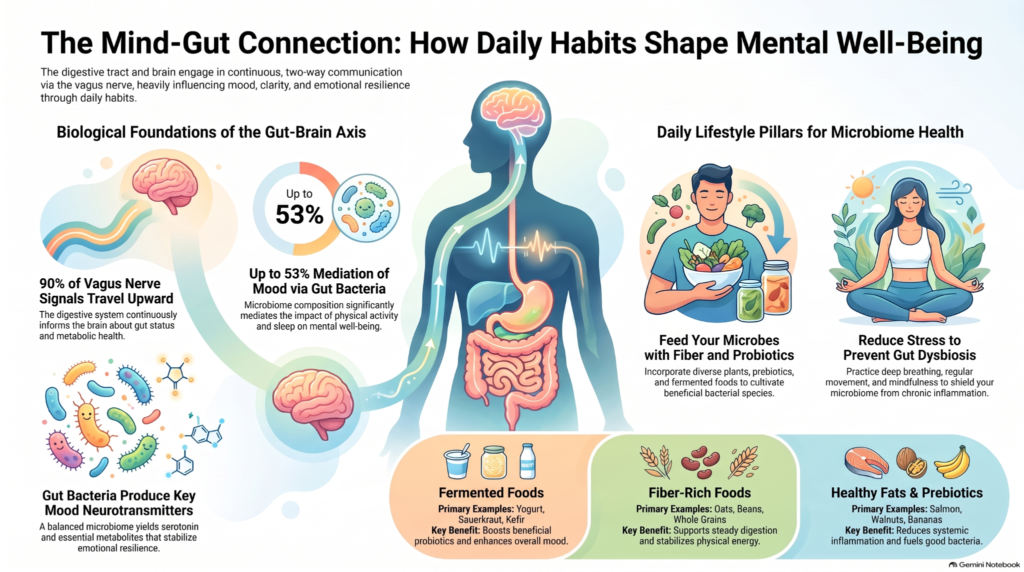
The gut and brain communicate with each other in a constant, dynamic and two-way direction through a sophisticated signalling system. This relationship between the gut and the brain is referred to as the “gut-brain axis”. The vagus nerve is an important channel by which information is transmitted between the gut and the brain. This bidirectional communication means that the gut sends signals to, as well as receives signals from the brain. The vast majority (90%) of signals travel upward, keeping the brain constantly informed about gut activity.
Have you ever wondered how your gut health influences your mood and mental clarity? The gut-brain connection is a fascinating relationship that affects your emotional well-being.
When your gut flora is balanced, it produces neurotransmitters like serotonin, which plays an essential role in regulating your mood. If your gut is out of whack, you might experience feelings of anxiety, stress, or even depression.
Practical Tips for Daily Gut Health
The human microbiome, or gut environment, is a community of different bacteria that has co-evolved with humans to be beneficial to both a person and the bacteria. Researchers agree that a person’s unique microbiome is created within the first 1,000 days of life, but there are things you can do to alter your gut environment throughout your life.
Taking care of your gut health doesn’t have to be overwhelming. By making balanced diet choices, staying hydrated, and managing stress, you can nurture your gut every day.
Let’s explore some practical tips that can seamlessly fit into your routine.
Balanced Diet Choices
While you may not realize it, the choices you make at mealtime can greatly impact your gut health. Embracing balanced diet choices empowers you to nourish your body holistically. Adopting a nutrition based self care lifestyle helps you build sustainable eating habits that nourish your gut microbiome, support digestion, and promote overall mental and physical well-being.
Here are some practical tips for maintaining gut health through your meals:
- Prioritize whole foods like fruits, vegetables, and whole grains.
- Include fermented options, such as yogurt and sauerkraut, to boost probiotics.
- Plan your meals ahead of time by meal prepping to guarantee you have healthy snacks on hand.
- Listen to your body’s hunger cues and eat mindfully, savoring each bite.
Regular Hydration Habits
Staying hydrated is essential for maintaining a healthy gut, as it helps support digestion and nutrient absorption. To boost your gut health, focus on hydration frequency—aim for consistent water intake throughout the day. Instead of chugging a large amount at once, sip water regularly to keep your body functioning effectively.
Don’t forget about water quality; choose filtered or spring water to avoid contaminants that may disrupt your gut. You can also add fruits or herbs for flavor, making hydration enjoyable.
Stress Management Techniques
Since stress can markedly impact your gut health, incorporating effective stress management techniques into your daily routine is essential.
Here are some practical tips to help you thrive:
- Mindful breathing: Take a few moments each day to focus on your breath, inhaling deeply and exhaling slowly. This practice calms your mind and supports gut function.
- Journaling practices: Write down your thoughts and feelings to release stress and gain clarity. This can improve your emotional well-being and gut health.
- Regular movement: Engage in activities like walking or yoga to reduce tension and promote digestion.
- Nature time: Spend time outdoors to reconnect with yourself and alleviate stress, benefiting both your mind and gut.
Understanding the social isolation effects on lifestyle can also help you recognize how limited social interaction may affect stress management, emotional well-being, and your motivation to maintain healthy daily habits.

NUTRITION FOR GUT HEALTH AND MENTAL WELL-BEING
Whenever I discuss gut nutrition, I always caution against viewing the microbiome through a reductionist lens. Too often, people scour the internet looking for an elusive, one-size-fits-all “superfood” or a high-dose supplement that promises to fix their digestive ecology overnight. But human biology is wonderfully messy and deeply individualized. In community wellness workshops, I love observing how different food traditions cultivate health through completely distinct cultural staples. What works wonders for someone who thrives on a Mediterranean pattern abundant in extra virgin olive oil, wild fish, and legumes might look entirely different for someone whose background centers around traditional fermented vegetables, lentils, or unique local grains.
The key takeaway supported by emerging multi-omics science is that our internal microbes don’t respond to isolated silver bullets; they respond to consistent patterns of nourishment and lifestyle rhythms. When you introduce foods rich in prebiotic fiber, fermented options, and protective polyphenols, you are not taking a prescription—you are tending a living soil.
This process requires genuine patience. You cannot rush microbial colonization or expect chronic systemic inflammation to subside in forty-eight hours. Sustainable wellness is built through small, repeated behaviors: preparing home-cooked meals, chewing without rushing, and respecting the synergy between diverse nutrients.
As you explore the connection between nutrition and gut health, you’ll find that what you eat can greatly influence your mental well-being. The gut-brain connection is real, and nourishing your gut with the right foods is essential. Incorporating fermented foods, like yogurt and kimchi, can enhance your gut microbiome, which in turn can support your mood and cognitive function.
Here’s a quick guide to foods that promote gut health and mental well-being:
| Food Type | Examples | Benefits |
| Fermented Foods | Yogurt, Sauerkraut | Boosts probiotics, enhances mood |
| Fiber-Rich Foods | Oats, Beans | Supports digestion, stabilizes energy |
| Omega-3 Fatty Acids | Salmon, Walnuts | Reduces inflammation, boosts brain health |
Managing Stress for Better Gut Health
A healthy, balanced diet can pave the way to mental well-being and improved mental health. The gut microbiome composition is the immediate result of what you are eating. A nutritionally rich diet with variety will feed beneficial bacteria that are well-known to promote a healthy brain. Concomitantly, diets high in processing, sugar, and unhealthy fats act as an impediment on the gut, which can even be overgrowth by inflammatory-type bad bacteria, leading to worsening mood swings, increased anxiety levels, and general degradation of mental health.
When life gets overwhelming, it’s easy to overlook how stress impacts your gut health. Chronic stress can disrupt the balance of your gut microbiome, leading to digestive issues and emotional unrest.
To nurture your gut and reclaim your well-being, consider these stress reduction strategies and emotional resilience techniques:
- Practice deep breathing: A few minutes of focused breathing can calm your mind and body.
- Engage in regular physical activity: Movement boosts your mood and improves gut function.
- Connect with nature: Spending time outdoors can reduce stress and enhance your emotional state.
- Prioritize sleep: Quality rest supports your immune system and gut health.
Mindfulness and Meditation for Gut and Mental Health
How can mindfulness and meditation transform your gut and mental health? By embracing these practices, you can foster a deeper connection between your mind and body.
Mindful eating encourages you to savor each bite, enhancing digestion and reducing stress on your gut. When you focus on the flavors and textures of your food, you create a more nourishing experience that supports your overall well-being.
Incorporating meditation practices into your daily routine can further amplify these benefits. Research shows that regular meditation reduces anxiety and promotes emotional balance, which can positively impact gut health.
As you cultivate a sense of calm, you may notice improvements in digestive function, allowing your body to thrive.
Key Probiotics and Prebiotics for Your Diet
Incorporating key probiotics and prebiotics into your diet can greatly enhance your gut health and overall well-being. Understanding their roles can empower you to make better choices for your body.
Probiotics, found in fermented foods, help maintain a healthy gut flora, while prebiotics serve as food for these beneficial bacteria.
Consider adding these to your meals:
- Yogurt: A great probiotic source rich in live cultures.
- Kefir: A fermented drink packed with various probiotics.
- Garlic: Offers prebiotic benefits, promoting healthy gut bacteria.
- Bananas: A delicious prebiotic option that aids digestion.
Creating a Balanced Self-Care Routine for Gut Health
Creating a balanced self-care routine for gut health is crucial, especially since your overall well-being is closely tied to your digestive system.
Start by incorporating gut-friendly recipes that nourish your microbiome, like fermented foods and fiber-rich veggies. Eating mindfully can enhance digestion, so savor each bite and listen to your body’s cues.
Integrate self-care practices such as yoga or meditation to reduce stress, which can negatively affect gut health. Making time for a daily self care activity, such as practicing yoga, meditating, or taking a relaxing walk, can help reduce stress and support better gut health. Regular physical activity also promotes a healthy gut, so find activities you enjoy and make them a part of your routine.
Don’t forget hydration; drinking enough water is essential for digestion.
Finally, prioritize sleep, as restorative rest supports overall health. By embracing these holistic approaches, you’re not just caring for your gut; you’re fostering a lifestyle that celebrates your freedom and vitality.

RELATED STUDIES ABOUT GUT HEALTH LIFESTYLE BEHAVIOR SCIENCE
When you think about your gut health, consider it like a garden. Just as a garden thrives with care, nourishment, and attention, so does your gut. By nurturing it through balanced nutrition, stress management, and mindfulness, you’re not just cultivating physical well-being; you’re also fostering mental clarity and emotional resilience. Remember, a flourishing garden brings joy and peace—make your gut health a priority, and watch your overall well-being bloom.
Mental health in early pregnancy: Interplay of objectively measured lifestyles, gut microbiota, and metabolomics
This prospective cross-sectional multi-omics investigation examines how objectively measured 24-hour lifestyle behaviors (physical activity, posture, and sleep) and dietary intake interact with the gut ecosystem—specifically through fecal metagenomic sequencing and untargeted metabolomic profiling—to shape prenatal anxiety symptoms and prenatal depression symptoms during the first trimester of pregnancy.
Conceptual Framework & Rationale
- First-Trimester Vulnerability and Perinatal Morbidity: Depression and anxiety affect approximately 20.7% and up to 31% of pregnant individuals worldwide, respectively. Early pregnancy represents a critical developmental period during which maternal distress not only increases the risk of persistent postpartum depression but also elevates the risk of adverse neonatal outcomes, including a 1.4-fold higher risk of preterm birth.
- The Lifestyle-Microbiome Integration Gap: While the gut-brain axis is established as a key regulator of neuropsychiatric health in non-pregnant populations, studies during early pregnancy have remained scarce. Prior perinatal microbiome studies have predominantly relied on low-resolution 16S rRNA gene sequencing, rarely captured paired untargeted metabolomics, and typically measured lifestyle behaviors using retrospective self-report questionnaires rather than objective posture and movement sensors.
- Core Research Objectives:
- Profile objective 24-hour movement behaviors and dietary intakes among first-trimester pregnant women with depressive symptoms, anxiety symptoms, and healthy controls.
- Characterize gut microbial community structure, species-level composition, functional gene pathways, and fecal metabolic signatures across groups.
- Map cross-omics correlation networks and evaluate machine learning predictive models.
- Perform formal mediation analysis to establish whether gut bacteria or their metabolic derivatives mediate behavioral effects on mental health.
Methodology & Multi-Omics Architecture
- Cohort Recruitment & Mental Health Stratification: Enrolled 161 pregnant women in their first trimester (median age 30 years; 50% primiparous; 18% overweight or obese pre-pregnancy) in China. Cohorts were classified via validated psychiatric screeners:
- Depression Symptoms (DS, n=36): Edinburgh Postnatal Depression Scale score >13.
- Anxiety Symptoms (AS, n=53): State-Trait Anxiety Inventory (S-STAI) state anxiety score >40.
- Healthy Controls (HC, n=99): Scores below clinical cutoffs across both instruments.
- Comorbid Group: 26 participants met criteria for both DS and AS.
- Objective Lifestyle & Dietary Profiling:
- 24-Hour Movement & Posture Telemetry: Continuously tracked over 7 consecutive days using a waterproofed ActivPAL4 thigh-mounted inclinometer accelerometer (4 valid 24-hour days required), paired with sleep/wear diaries to isolate sitting/lying, standing, stepping, and sleep durations in 15-second epochs.
- Dietary Assessment: 3-day food records (two weekdays, one weekend day) combining weighed kitchen scales, nutrient labels, and photographs, analyzed via Chinese Food Composition II and USDA Food Databases.
- Microbiome Metagenomics & Metabolomics:
- Metagenomic Sequencing: Extracted bacterial DNA sequenced on the Illumina NovaSeq platform (paired-end reads), assembled with MEGAHIT, and functionally annotated against KEGG and the NCBI NR database via DIAMOND. Alpha diversity (Shannon, Pielou evenness) and beta diversity (Bray-Curtis, weighted UniFrac via PERMANOVA) were modeled.
- Untargeted Metabolomics: Fecal polar and non-polar metabolites analyzed by ultra-high-performance liquid chromatography coupled with Orbitrap Exploris 120 tandem mass spectrometry (UHPLC-LC-MS/MS; Vanquish).
- Targeted SCFA Analysis: Gas chromatography (Agilent 7890B-GC with flame ionization detection) quantified six short-chain fatty acids (acetic, propionic, isobutyric, butyric, isovaleric, valeric).
- Statistical, Machine Learning, & Causal Modeling:
- Linear discriminant analysis effect size (LEfSe; LDA score 2,p<0.05) and KEGG pathway enrichment (Fisher’s exact test) identified differentially abundant microbes and metabolites, with FDR corrections applied for multiple testing.
- Multi-layer correlation networks and subnetwork topological complexity were assessed via Gephi and igraph.
- Random Forest (RF) classification models (utilizing Boruta for feature selection) benchmarked discriminatory accuracy across single- and multi-omics blocks.
- Mediation analyses using sequential regression models (mediation package in R; 5,000 bootstrap resamples) evaluated indirect paths across lifestyle-microbiome-metabolome-psychology circuits.
Key Empirical Findings
- Distinct Behavioral and Dietary Phenotypes:
- Depression Behavior Profile: Women with DS exhibited a fragmented 24-hour behavioral phenotype marked by significantly elevated physical inactivity—specifically increased daily standing duration (+0.47h/day,p=0.033) and sitting duration (+0.80h/day,p=0.045)—alongside significantly reduced nocturnal sleep (-0.65h/night,p=0.020) and daily nap duration (-0.70h/day,p=0.034) compared to HC. Pre-pregnancy leisure-time physical activity was also lower in DS, though macronutrient dietary intake did not differ from HC.
- Anxiety Dietary Profile: Women with AS showed no differences in physical activity or sleep durations, but demonstrated a specific nutritional deficit: significantly lower daily dietary fiber intake compared to HC (mean difference -3.1g/day,p=0.018).
- Microbial Diversity and Taxonomic Shifts:
- Invariance in Global Diversity & SCFAs: Neither microbial alpha diversity nor beta diversity community structures differed significantly across HC, AS, and DS groups. Furthermore, fecal concentrations of all six major short-chain fatty acids showed no significant group differences (p>0.05).
- Taxonomic Signatures: LEfSe identified uncorrected enrichments of Bifidobacterium pseudocatenulatum, Bifidobacterium catenulatum, and Eisenbergiella sp. in DS, and enrichments of Gemmiger qucibialis and Catenibacterium sp. in AS, whereas HC was enriched in Eubacterium siraeum. However, these single-taxon relative differences did not survive rigorous FDR correction.
- Functional Convergence in Cysteine and Methionine Metabolism in DS:
- While broad microbial amino acid biosynthesis was altered in both conditions, cross-omics data in DS converged on the cysteine and methionine metabolism pathway.
- Fecal metabolomics revealed significant reductions in pathway intermediates (3-methylthiopropionate and 2-oxobutanoate), matching functional metagenomic downregulation of three key microbial enzymes: aspartate kinase [EC:2.7.2.4], methionine synthase [EC:2.1.1.13], and methylthioribose kinase [EC:2.7.1.100].
- Bile Acid and Neuroactive Disruptions in AS:
- Three bile acid metabolites (7-ketodeoxycholic acid, tauroursodeoxycholic acid, and prasterone sulfate) were depleted in both clinical groups relative to HC.
- However, KEGG enrichment isolated systemic bile acid metabolism, taurine/hypotaurine processes, and cholinergic/glycerophospholipid signaling as the primary metabolic disturbances in AS.
- Network Topology and the Stress Gradient Hypothesis:
- Total correlation network complexity (node and edge counts) increased progressively from HC to AS to DS across microbial and metabolomic layers, supporting the ecological Stress Gradient Hypothesis.
- Structural organization diverged: AS exhibited dense microbial hyper-coupling, whereas DS displayed sparse microbial expansion coupled with a breakdown in coordinated cross-talk between bacteria and host-microbial metabolites.
- Machine Learning Classification Performance:
- Depression Discrimination: Combining physical activity, diet, and gut microbiome data achieved the highest classification performance for DS (AUC-ROC =0.877, 95% CI: 0.813–0.941), substantially outperforming behavioral lifestyle data alone (AUC =0.691). Microbial features (Clostridium scindens, Candidatus Copromorpha excrementavium) ranked as the top predictors.
- Anxiety Discrimination: Fecal metabolomic profiling alone yielded the highest predictive accuracy for AS (AUC-ROC =0.844, 95% CI: 0.773–0.915), with microbial metabolites (cholic acid 7-sulfate, solanidine) serving as top features.
- Formal Causal Mediation Pathways:
- Microbiome Mediating Lifestyle Effects in DS: Gut microbiota emerged as primary mediators connecting daily physical activity and sleep to depressive symptoms. Bifidobacterium pseudocatenulatum and Bifidobacterium catenulatum significantly mediated the effects of standing time (indirect effects: 0.00058 to 0.00068) and nocturnal sleep duration (indirect effects: -0.00062 to -0.00056) on DS, with proportions mediated ranging between 46% and 53%.
- Metabolites Mediating Microbial Effects in AS: Twenty-three significant indirect pathways connected gut bacteria to anxiety via intermediate metabolites. Specifically, 2′,4′,6′-trihydroxyacetophenone (a polyphenol derivative) and 3,4-dihydroxyphenylacetic acid (a dopamine metabolite) mediated anxiety pathways driven by Ruthenibacterium sp., Congzhengia minguanensis, and Ruthenibacterium lactatiformans.
Biological & Translational Interpretations
- Divergent Pathophysiological Axes: Prenatal depression and prenatal anxiety in early pregnancy do not share a uniform gut-brain mechanism. DS is characterized by a behavioral-microbial axis wherein physical inactivity and sleep deprivation disrupt host-microbiome equilibrium, specifically impairing the methionine-cysteine cycle required for S-adenosylmethionine (SAMe) synthesis, DNA methylation, and monoamine neurotransmission. In contrast, AS operates along a nutrient-metabolite axis wherein low dietary fiber intake and altered bile acid signaling trigger neuroinflammatory stress cascades.
- The Inactivity Spectrum Beyond Conventional Sedentariness: ActivPAL inclinometer profiling revealed that prolonged standing was elevated in DS to a similar degree as seated sedentary time, demonstrating that early prenatal physical inactivity extends beyond seated screen time to encompass overall low-energy static posturing.
- Targeted Clinical Interventions:
- For Prenatal Anxiety: Interventions should prioritize nutritional counseling to restore daily dietary fiber intake (25–30g/day) and promote polyphenol-rich foods to support bile acid homeostasis and generate neuroprotective phenolic metabolites.
- For Prenatal Depression: Care pathways should focus on structured physical activity prescriptions to interrupt prolonged standing and sitting, optimize nocturnal sleep hygiene, and explore targeted probiotics (such as Bifidobacterium strains) to restore methionine-cysteine cycling and redox balance.
Methodological Limitations
- Cross-Sectional Architecture: Although sequential mediation models were evaluated, the observational baseline design prevents definitive longitudinal and causal conclusions across the full pregnancy span.
- Symptom Comorbidity: High co-occurrence between depression and anxiety (n=26 comorbid cases) limits the total statistical independence of each clinical presentation.
- Sample Size and Homogeneity: The cohort was recruited from a single regional Chinese population, meaning dietary customs, cultural lifestyle habits, and microbiome structures may not fully represent multi-ethnic pregnant populations.
- Lack of Functional Interventions: Findings establish statistical mediation and machine learning classification, requiring randomized controlled trials to confirm whether dietary fiber supplementation or posture-interruption protocols directly rescue gut dysbiosis and attenuate perinatal psychiatric symptoms.
| REFERENCE: KeKe Guo, Zhengxiao Zhang, Xinyi Zheng, Na Li, Danye Qiu, Zhongying Zhang, Chunhong Zhang, Lingling Li, Haiyan Lin, Chuanhuai Xu, Shanshan Jiang, Xuege Ji, Mingyue Yang, Changcan Feng, Shuhong Deng, Xinxin Li, Yiyu Wu, Lei Zhang, Youliang Yao, Margie Davenport, Chenxi Cai, Mental health in early pregnancy: Interplay of objectively measured lifestyles, gut microbiota, and metabolomics, iScience, Volume 29, Issue 6, 2026, 116178, ISSN 2589-0042, https://doi.org/10.1016/j.isci.2026.116178. (https://www.sciencedirect.com/science/article/pii/S2589004226015531) |
Impacts of an antioxidant-rich diet and lifestyle factors on gut microbiota diversity and brain health: An exploratory analysis from the NutBrain study
This cross-sectional investigation examines the relationship between Mediterranean diet (MD) adherence, gut microbiota composition, and brain structural magnetic resonance imaging (MRI) markers of neurodegeneration and cerebral small vessel disease (CSVD) in community-dwelling older adults across the cognitive impairment spectrum.
Conceptual Framework & Rationale
- Dementia Burden and Preclinical Windows: Dementia affects over 55 million people worldwide, a number projected to exceed 139 million by 2050. Because late-stage disease modifying therapies remain limited, public health strategies focus on identifying modifiable lifestyle factors that can protect structural brain health and delay progression from subjective cognitive decline (SCD) and mild cognitive impairment (MCI) to overt dementia.
- The Mediterranean Diet-Brain Axis: High adherence to a Mediterranean dietary pattern—rich in olive oil, vegetables, legumes, whole grains, nuts, and fish, and low in red/processed meats and refined sugars—is associated with reduced dementia incidence and slower neurocognitive decline. However, the biological pathways through which dietary adherence protects central neural parenchyma remain partially characterized.
- The Gut-Brain Axis as an Intermediary: Dietary composition is a primary determinant of gut microbiome diversity, composition, and metabolite production (e.g., short-chain fatty acids [SCFAs] and polyphenolic derivatives). While dysbiosis has been implicated in systemic inflammation and neurodegeneration, human studies integrating dietary assessment, stool metagenomic sequencing, and multimodal structural neuroimaging in a single cohort have been scarce.
- Core Research Objectives:
- Evaluate associations between adherence to the Mediterranean diet and brain MRI markers of neurodegeneration (total brain volume, cortical gray matter volume, subcortical gray matter volume, hippocampal volume) and CSVD (white matter hyperintensity [WMH] volume).
- Characterize the gut microbiota signatures associated with high versus low MD adherence.
- Determine whether specific gut bacterial taxa are correlated with brain structural phenotypes.
Methodology & Cohort Architecture
- Study Design & Participants: A cross-sectional multimodal study conducted across three neurodegenerative centers in Italy (Pavia and Milan) between November 2021 and October 2023.
- Inclusion Criteria: Community-dwelling older adults aged 60 to 85 years across the full cognitive continuum: cognitively unimpaired (CU), subjective cognitive decline (SCD), mild cognitive impairment (MCI), and mild Alzheimer’s disease (AD).
- Exclusion Criteria: Secondary causes of cognitive deficits (e.g., normal pressure hydrocephalus, brain tumors, severe head trauma), recent antibiotic or probiotic therapy (3 months), severe psychiatric conditions, and contraindications to 3T MRI.
- Analytical Sample: 76 older adults (mean age 73.35.9 years; 51.3% female; n=19CU, n=19SCD, n=19MCI, n=19AD) completed comprehensive neuroimaging, dietary, and stool microbiome protocols.
- Dietary Assessment & Stratification:
- Adherence to the Mediterranean diet was evaluated using the 14-item Mediterranean Diet Adherence Screener (MEDAS), validated in the PREDIMED trial.
- Participants were categorized into adherence tertiles: Low (MEDAS score 7), Moderate (score 8–9), and High (score 10).
- Multimodal 3T Brain MRI Processing:
- Scans acquired on 3 Tesla Siemens scanners using high-resolution 3D T1-weighted MPRAGE and 3D fluid-attenuated inversion recovery (FLAIR) sequences.
- Volumetric Neurodegeneration Markers: Cortical reconstruction and volumetric segmentation performed via FreeSurfer (version 7.3.2) to extract total brain volume (TBV), total gray matter (GM) volume, cortical GM volume, subcortical GM volume, and total hippocampal volume.
- Vascular White Matter Hyperintensities (WMH): Automated segmentation using the Lesion Segmentation Tool (LST) within SPM12 to quantify total brain WMH volume.
- All brain structural volumes were normalized by total intracranial volume (eTIV) to account for variations in head size.
- Gut Microbiota Sequencing & Bioinformatic Profiling:
- Stool samples collected at home using sterile containers and stored at $-80^\circ\text{C}$.
- Bacterial DNA extracted via the QIAamp DNA Stool Mini Kit, and the hypervariable V3–V4 regions of the 16S rRNA gene were amplified and sequenced on the Illumina MiSeq platform.
- Bioinformatic processing through QIIME 2 (version 2022.8) and DADA2 to generate amplicon sequence variants (ASVs), taxonomically classified against the SILVA reference database (release 138). Alpha diversity (Chao1, Shannon, Simpson) and beta diversity (Bray-Curtis, unweighted/weighted UniFrac) were modeled.
- Statistical Analysis:
- Multivariable linear regression models evaluated the relationship between MD adherence tertiles and brain MRI volumetric parameters, adjusting for age, sex, education, cognitive diagnosis, and vascular risk factors (hypertension, diabetes, dyslipidemia).
- Differential abundance of gut taxa across MD tiers was assessed using DESeq2 and Linear Discriminant Analysis Effect Size (LEfSe; LDA score >2.0,p<0.05).
- Partial Spearman correlations examined relationships between specific differentially abundant microbial taxa and normalized MRI brain metrics, controlling for age, sex, and cognitive diagnosis.
Key Empirical Findings
- Mediterranean Diet Adherence and Brain Structure Preservation:
- High adherence to the Mediterranean diet was significantly associated with favorable brain structural metrics compared to low adherence in fully adjusted multivariable models:
- Cerebral Small Vessel Disease: High MD adherence was associated with significantly lower white matter hyperintensity burden (=-13,420mm3, 95% CI: -24,160 to -2,680,p=0.015) compared to the low adherence group.
- Cortical & Subcortical Preservation: Participants in the high MD adherence group exhibited significantly higher total brain volume (=31,520mm3,p=0.024), total gray matter volume (=18,340mm3,p=0.018), cortical gray matter volume (=14,210mm3,p=0.031), and total hippocampal volume (=310mm3,p=0.042) relative to the low adherence reference tier.
- Moderate adherence showed intermediate protective trends that did not consistently reach statistical significance across all volumetric regions, indicating a dose-dependent threshold effect.
- High adherence to the Mediterranean diet was significantly associated with favorable brain structural metrics compared to low adherence in fully adjusted multivariable models:
- Dietary Modulation of the Gut Microbiome:
- Diversity Indices: Alpha diversity (Shannon and Simpson indices) did not differ significantly between MD adherence groups. However, beta diversity analyses based on Bray-Curtis dissimilarity revealed significant separation in microbial community composition between high and low MD adherence groups (PERMANOVA R2=0.042,p=0.028).
- Taxonomic Signatures of High MD Adherence:
- Significant enrichment in known short-chain fatty acid-producing and anti-inflammatory bacteria, specifically within the families Lachnospiraceae (including Roseburia, Coprococcus, and Lachnospira) and Ruminococcaceae (such as Faecalibacterium prausnitzii).
- Elevated relative abundance of Akkermansia muciniphila and Bifidobacterium species.
- Taxonomic Signatures of Low MD Adherence:
- Enrichment in pro-inflammatory taxa, including members of the phylum Proteobacteria (specifically family Enterobacteriaceae) and elevated relative abundance of Ruminococcus gnavus and Eggerthella lenta.
- Cross-Talk Between Gut Microbes and Neuroimaging Biomarkers:
- Partial correlation analyses adjusted for age, sex, and cognitive status revealed direct correlations between specific gut taxa and structural MRI parameters:
- Beneficial Taxa: Relative abundance of Faecalibacterium prausnitzii (r=0.31,p=0.009) and Roseburia (r=0.28,p=0.018) correlated positively with hippocampal volume and cortical gray matter volume.
- Akkermansia muciniphila: Showed a strong inverse correlation with total white matter hyperintensity volume (r=-0.34,p=0.004), indicating an association with preserved cerebrovascular white matter integrity.
- Pro-Inflammatory Taxa: Relative abundance of Enterobacteriaceae correlated positively with WMH volume (r=0.29,p=0.014) and negatively with total gray matter volume (r=-0.27,p=0.022).
- Partial correlation analyses adjusted for age, sex, and cognitive status revealed direct correlations between specific gut taxa and structural MRI parameters:
Biological & Pathophysiological Pathways
- Microbial Metabolites and Blood-Brain Barrier (BBB) Integrity: The Mediterranean diet supplies abundant fermentable dietary fibers and prebiotic substrates that promote the growth of SCFA-producing commensals (Faecalibacterium, Roseburia). SCFAs (acetate, propionate, and butyrate) upregulate endothelial tight-junction proteins (claudin-5, occludin), preserving BBB integrity and attenuating systemic translocation of bacterial lipopolysaccharides (LPS). This reduction in peripheral endotoxemia protects the cerebral microvasculature, providing a biological rationale for the lower WMH burden observed.
- Neuroinflammation and Parenchymal Loss: In contrast, Western-style dietary patterns linked to low MD adherence enrich gram-negative Proteobacteria and mucin-degrading pathobionts that increase intestinal permeability. Systemic leakage of pro-inflammatory cytokines (IL-1, TNF-, IL-6) triggers microglial priming and central neuroinflammation, accelerating cortical synaptic loss and hippocampal atrophy.
- Polyphenol Biotransformation: Polyphenols abundant in the Mediterranean diet (from extra virgin olive oil, nuts, and berries) require colonic microbial transformation into bioavailable phenolic acids. These microbial metabolites cross the blood-brain barrier to activate Nrf2 antioxidant response pathways and suppress neuronal oxidative stress, directly supporting gray matter maintenance.
Clinical & Preventative Implications
- Diet as a Precision Neuroprotective Strategy: Dietary interventions should be framed not merely as general cardiovascular recommendations, but as actionable strategies to prevent structural cerebral atrophy and white matter injury in older adults.
- Gut Microbiota as Intermediate Biomarkers: Specific gut bacterial shifts (such as declines in Faecalibacterium or expansions of Enterobacteriaceae) could serve as non-invasive biomarkers to identify older adults at elevated risk for progressive CSVD and neurodegeneration.
- Targeting High Adherence Thresholds: Because intermediate adherence yielded less pronounced structural protection than high adherence (MEDAS 10), clinical lifestyle counseling should emphasize substantial, comprehensive dietary adoption rather than minor, isolated adjustments.
Methodological Limitations
- Cross-Sectional Architecture: The study design captures a single cross-section in time, preventing causal conclusions regarding whether dietary changes directly drove microbial shifts and preserved brain volumes, or whether neurodegenerative progression influenced eating patterns.
- Sample Size & Subgroup Heterogeneity: The sample size (N=76) is modest when stratified across four cognitive stages (CU, SCD, MCI, AD; n=19 per group), limiting statistical power for fine-grained interaction testing between cognitive diagnosis and dietary impact.
- 16S rRNA Sequencing Constraints: Profiling relied on 16S amplicon sequencing rather than deep metagenomic shotgun sequencing, restricting resolution largely to genus-level classifications and precluding direct functional gene quantification.
- Unmeasured Circulating Metabolites: The investigation did not quantify circulating serum SCFAs, LPS, or systemic inflammatory biomarkers to confirm the proposed peripheral-to-central biochemical mediation cascade.
| REFERENCE: Federica Prinelli, Alfonso Mastropietro, Sara Bernini, Tania Camboni, Clarissa Consolandi, Silvia Conti, Alfredo Costa, Matteo Cotta Ramusino, Nithiya Jesuthasan, Orietta Pansarasa, Elena Perdixi, Anna Pichiecchio, Giovanna Rizzo, Eveljn Scarian, Marco Severgnini, Impacts of an antioxidant-rich diet and lifestyle factors on gut microbiota diversity and brain health: An exploratory analysis from the NutBrain study, Clinical Nutrition, Volume 58, 2026, 106585, ISSN 0261-5614, https://doi.org/10.1016/j.clnu.2026.106585. (https://www.sciencedirect.com/science/article/pii/S0261561426000129) |
A multimodal lifestyle intervention program targeting the muscle and gut to improve metabolic health among Indian adults with (pre)diabetes: Design of the GUT-DM randomized trial
This study protocol outlines the design, theoretical rationale, and methodological architecture of the GUT-DM trial, a 12-week, three-arm, randomized controlled trial evaluating whether integrating targeted synbiotic supplementation into a multimodal lifestyle intervention (structured resistance/aerobic exercise and individualized medical nutrition therapy with nutritional supplementation) improves glycemic control, body composition, mental well-being, and gut microbial ecology among Indian adults with prediabetes or type 2 diabetes.
Conceptual Framework & Rationale
- The Phenotypic Vulnerability of the Indian Population: India bears a severe epidemiological burden of cardiometabolic disease, encompassing an estimated 77 million individuals with type 2 diabetes (T2D) and 25 million with prediabetes. Indian populations characteristically develop insulin resistance and T2D at a lower body mass index (BMI) compared to Western cohorts—a “thin-fat” phenotype marked by elevated visceral and abdominal adiposity alongside diminished skeletal muscle mass.
- Risks of Conventional Calorie Restriction: While lifestyle modification combining physical activity and dietary energy restriction is first-line clinical management, generalized severe calorie restriction can induce involuntary skeletal muscle wasting and worsen sarcopenic obesity, particularly in South Asian cohorts. Furthermore, standard Indian diets are largely cereal-based, with 36% to 44% of the population demonstrating dietary protein insufficiency alongside frequent micronutrient deficits (magnesium, zinc, calcium, vitamin D, and metformin-induced vitamin B12 depletion). An approach emphasizing nutritional quality and muscle preservation over severe caloric restriction is needed.
- The Gut-Centric Metabolic Mechanism: Patients with (pre)diabetes consistently exhibit gut dysbiosis, characterized by reduced microbial diversity and an underrepresentation of butyrate- and other short-chain fatty acid (SCFA)-producing taxa. SCFAs stimulate intestinal glucagon-like peptide-1 (GLP-1) release, attenuate systemic inflammation, and enhance insulin sensitivity. Regular exercise promotes health-associated gut microbiota, while synbiotics—combining synergistic live probiotics with prebiotic oligosaccharide substrates—foster targeted bacterial colonization and metabolic metabolite generation.
- Primary Objective: To evaluate the efficacy of a multimodal lifestyle intervention with or without synbiotic supplementation on glycemic status (primarily glycated hemoglobin [HbA1c]) and health-related quality of life (QOL) compared to standard of care (SOC) in Indian adults with (pre)diabetes.
- Secondary Exploratory Objectives: To assess intervention effects on physical function (dual-energy X-ray absorptiometry [DXA] body composition, muscle strength, endurance, aerobic capacity), mental health (stress, anxiety, depression, cognitive function), and gut microbial composition, while evaluating the specific additive value of the synbiotic supplement.
Methodology & Trial Design
- Study Architecture: A 12-week, single-center, three-arm randomized controlled trial conducted at St. John’s Medical College Hospital, Bengaluru, India. The trial compares two double-blind, placebo-controlled intervention arms against an active reference standard-of-care control arm:
- Group 1 (LS + SYN): Multimodal lifestyle intervention + daily oral synbiotic capsule.
- Group 2 (LS + PLA): Multimodal lifestyle intervention + daily oral matched placebo capsule.
- Group 3 (SOC): Standard-of-care clinical management reflecting routine clinical advice.
- Participant Selection & Eligibility Criteria:
- Inclusion Criteria: Men and women aged 25–75 years; BMI between 18.5 and 34.9 kg/m2; and documented dysglycemia according to American Diabetes Association (ADA, 2024) criteria (fasting blood glucose [FBG] 100mg/dL, 2-hour postprandial glucose [PPBG] 140mg/dL, or $\text{HbA1c} \ge 5.7\%$). Stable antidiabetic medication is permitted if dosages have remained unchanged prior to and throughout the study.
- Exclusion Criteria: Type 1 diabetes; advanced diabetic micro-/macrovascular complications; gastrointestinal pathology (inflammatory bowel disease, irritable bowel syndrome, bariatric surgery, malabsorption); active malignancy (<5years remission); cardiovascular, hepatic, or renal failure; severe anemia; active tuberculosis; neuromuscular or joint disorders impairing ambulation; and recent use of commercial pre-, pro-, or synbiotics, protein supplements, or systemic antibiotics.
- Intervention Protocol (12 Weeks):
- Exercise Module (LS + SYN & LS + PLA): Individualized regimens combining 150minutes/week of brisk walking with 2–3 weekly sessions of structured resistance exercise (RE). The RE protocol comprises 8 functional movements (biceps curl, triceps kickback, seated row, chest press, side bend, leg press, seated abduction, ankle flexion/extension) using calibrated elastic resistance bands (green Theraband, 2.1 kg resistance; 1–3 sets of 10–15 repetitions), supported by personal instruction, video guides, and progressive volume titration.
- Medical Nutrition Therapy (LS + SYN & LS + PLA): Individualized diet charts developed by a research dietitian targeting weight maintenance or moderate weight reduction depending on initial BMI. Diets are macronutrient-balanced (55%–60% complex low-glycemic index carbohydrates, 25%–30% healthy fats, and 0.8–1.0 g/kg body weight high-quality protein). This is supplemented with a daily low-glycemic index medical nutrition powder enriched with protein, soluble dietary fiber, and essential micronutrients to protect lean tissue during exercise.
- Synbiotic Supplementation: Daily oral capsule delivering a total bacterial load of 21010CFU/day (composed of 4109CFU each of four distinct Lactobacillus species and one Bifidobacterium species) co-formulated with 150 mg of fructo-oligosaccharide (FOS) prebiotic carrier.
- Placebo Control: Identical-appearing, color-coded capsule containing 0.5 g volume-matched inert maltodextrin.
- Standard of Care (SOC): Standard clinical lifestyle recommendations regarding exercise and diet without supervised instruction, logs, or study supplements.
- Compliance & Monitoring Procedures: Intervention arms receive biweekly phone contact to verify compliance, monitor adverse events, and scale exercise volume; empty blister packs and exercise logs are collected at week 12. The SOC arm receives minimal interim contact to reflect real-world outpatient care.
Outcome Measures & Analytical Protocol
- Primary Endpoint: Change in HbA1c from baseline to week 12 across the three treatment groups, accompanied by change in health-related quality of life via the EuroQol 5-Dimension 5-Level (EQ-5D-5L) index and visual analog scale (VAS).
- Secondary Metabolic Endpoints: Fasting blood glucose, 2-hour postprandial glucose (following a standardized 75 g oral glucose tolerance test [OGTT]), fasting and postprandial insulin, fasting and postprandial C-peptide, Homeostatic Model Assessment of Insulin Resistance (HOMA-IR), Homeostatic Model Assessment of Beta-Cell Function (HOMA-B), and the Quantitative Insulin Sensitivity Check Index (QUICKI).
- Physical Function & Musculoskeletal Biomarkers:
- Body Composition: Total fat mass (kg and %), total lean soft tissue mass (kg and %), appendicular muscle mass (AMM, kg), and appendicular muscle mass index (AMMI, kg/m2) assessed via standardized dual-energy X-ray absorptiometry (DXA).
- Muscle Strength & Static Endurance: Quadriceps isometric torque (at 60 knee flexion) and isokinetic peak strength (at 60/s and 180/s) measured via Kin Com isokinetic dynamometry. Upper-limb maximal voluntary contraction (MVC) and static fatigue endurance (rate of sustained force decay to 50% MVC) measured via computerized handgrip dynamometry.
- Aerobic Capacity: Total distance covered during the 6-Minute Walk Test (6MWT).
- Neuropsychiatric & Cognitive Battery:
- Perceived Stress Scale (PSS-10; range 0–40).
- Hospital Anxiety and Depression Scale (HADS; 14 items, subscales 0–21).
- Mini-Mental State Examination (MMSE; range 0–30).
- Gut Metagenomics & Microbial Ecology:
- Fasting stool samples preserved in room-temperature nucleic-acid stabilizing buffer (Azooka mWRAPR) and extracted via the Cambrian Stool DNA Isolation Kit.
- Whole metagenome sequencing performed using Oxford Nanopore long-read sequencing technology on an R10.4.1 PromethION flow cell (P2i system).
- Raw reads filtered by base accuracy (>Q15, $>98\%$ accuracy) and classified taxonomically using Kraken 2. Metagenomic read counts normalized via Trimmed Mean of M-values (TMM) to control false discovery rates.
- Sample Size & Statistical Plan:
- Powered to detect a true between-group difference of 0.82 units in HbA1c reduction (pooled SD=0.9) with 80% power at an alpha of 0.01 based on prior synbiotic trials.
- Requires 29 completers per arm; accounting for an anticipated 25% dropout rate, total target recruitment is 108 participants (36 per arm).
- Evaluated primarily via intention-to-treat (ITT) principles using ANOVA or Kruskal-Wallis tests depending on distribution normality assessed via Q-Q plots, supplemented by per-protocol sensitivity analyses.
Clinical & Methodological Strengths
- Multi-Targeted Physiological Synergy: Rather than isolating single lifestyle factors, the trial simultaneously addresses peripheral skeletal muscle glucose clearance (GLUT4 translocation via resistance training and protein supplementation) and gut-mediated metabolic signaling (SCFA synthesis via synbiotics and fermentable fiber).
- Phenotype-Specific Lifestyle Design: The protocol avoids uniform high-deficit caloric restriction, addressing the specific pathophysiology of the South Asian “thin-fat” diabetic phenotype by incorporating muscle-sparing macronutrient balances.
- Methodological Rigor: Incorporates a three-arm randomized design that isolates the specific biological contribution of the synbiotic agent (LS + SYN vs. LS + PLA) while benchmarking overall multimodal lifestyle efficacy against standard outpatient care (LS + PLA vs. SOC).
- Advanced Metagenomic Resolution: Utilizes long-read Oxford Nanopore metagenomic sequencing rather than short-read 16S rRNA gene profiling, enabling high-resolution species- and strain-level taxonomic classification.
Study Limitations & Operational Challenges
- Intervention Adherence Complexity: Requiring participants to concurrently adhere to daily capsule consumption, nutritional powder mixing, self-directed home resistance band routines, daily walking, and dietary charting introduces high behavioral demands that may influence per-protocol retention.
- 12-Week Time Window: While adequate to detect significant shifts in HbA1c, body composition, and transit microbiome taxa, 12 weeks cannot determine whether synbiotic-induced microbial colonization persists after discontinuation, as introduced probiotic strains often wash out within 4–6 weeks post-supplementation.
- Active Ongoing Status: As a trial protocol report, clinical efficacy outcomes and longitudinal empirical results remain to be determined upon study completion.
| REFERENCE: Shinjini Bhattacharya, Ardy van Helvoort, Annemie M.W.J. Schols, Sucharita Sambashivaiah, A multimodal lifestyle intervention program targeting the muscle and gut to improve metabolic health among Indian adults with (pre)diabetes: Design of the GUT-DM randomized trial, Contemporary Clinical Trials, Volume 162, 2026, 108228, ISSN 1551-7144, https://doi.org/10.1016/j.cct.2026.108228. (https://www.sciencedirect.com/science/article/pii/S1551714426000145) |
CONCLUSION
If there is one guiding principle I return to in my own daily life and writing, it is that true well-being must be sustainable to be meaningful. It is dangerously easy to get swept up in rigid wellness trends that transform self-care into a demanding second job. If tracking your fiber counts, purchasing exotic supplements, or stressing over every bite causes your cortisol to skyrocket, you are actively undermining the very digestive equilibrium you are trying to restore. The gut responds just as intimately to emotional unrest and chronic exhaustion as it does to what lands on your fork.
Treating your microbiome with respect doesn’t demand perfection. It asks for thoughtful, incremental alignment: stepping away from your desk to take an uninterrupted twenty-minute walk, prioritizing an extra forty-five minutes of restful sleep, sipping water consistently throughout your workday, and lingering over a nourishing meal with people you care about.
When you view your daily routines not as chores on a checklist, but as gentle, restorative signals sent to your nervous system and microbiome, healthy living stops feeling like a chore. Start with one small, realistic habit today, give it time to take root, and let that steady foundation support both your mind and body.