

In my lifestyle consulting practice and the wellness workshops I facilitate, I often meet people who feel entirely exhausted by the modern concept of self-care. It has somehow become synonymous with expensive spa days, rigid elimination diets, or intricate twenty-step morning routines that induce more anxiety than they relieve. Whenever someone sits across from me feeling defeated because they couldn’t stick to a pristine meal plan, I encourage them to take a slow, deep breath and step back.
True self-care is not a performance, nor is it a moral scorecard based on how “cleanly” you ate today. Grounded in behavioral science, self-care is simply the daily, quiet practice of recognizing what your nervous system and body genuinely need to function with ease and vitality. Nutrition is one of our most intimate touchpoints with this reality. What we put on our plate directly dictates neurotransmitter production, blood sugar stability, and our cognitive capacity to handle life’s inevitable stressors.
When we bridge psychology with nutrition, we stop viewing food through the punitive lens of restriction and start seeing it as an act of emotional grounding. Nourishing your body with wholesome, nutrient-dense foods isn’t about chasing perfection; it’s about giving your brain the physiological foundation it needs to feel calm, focused, and resilient.
Combining self-care psychology with nutrition is essential for sustainable health improvements. By practicing self-awareness, you can identify emotional triggers, enabling healthier food choices. Nutrient-rich foods, like omega-3 fatty acids and leafy greens, support your mental well-being and boost your mood. Mindful eating enhances your relationship with food, turning meals into satisfying experiences. Overcoming barriers like time constraints and financial pressures will further empower your self-care journey. There’s much more to explore for a healthier lifestyle.
KEY TAKEAWAYS
- Engage in self-awareness practices to enhance emotional resilience and better manage stress and triggers affecting your health choices.
- Incorporate balanced, nutrient-rich foods into your diet to support both mental and physical health while promoting emotional stability.
- Utilize mindful eating techniques to foster a healthier relationship with food and improve portion control for sustainable dietary habits.
- Establish consistent routines for meal planning and self-care activities to prioritize well-being and align with long-term health goals.
- Build a support system to enhance commitment to healthy eating and self-care practices, while navigating cultural and financial barriers.
UNDERSTANDING SELF-CARE PSYCHOLOGY AND ITS NUTRITIONAL CONNECTION
While you might think of self-care as simply pampering yourself, it actually encompasses a deeper psychological framework that considerably impacts your overall health. Engaging in self-awareness practices allows you to better understand your thoughts and emotions, paving the way for effective emotional resilience strategies. Maintaining meaningful relationships can also strengthen emotional resilience, as understanding the social isolation effects on lifestyle reveals how limited social interaction may influence stress management, emotional well-being, and the ability to maintain healthy daily habits.
When you recognize your triggers and patterns, you can respond to challenges with greater clarity and strength. This awareness empowers you to set boundaries, manage stress, and cultivate healthier relationships.
By integrating these practices into your daily routine, you actively foster a mindset that values personal growth and well-being. Consider journaling or mindfulness meditation as tools to enhance your self-awareness.
These methods not only boost your emotional resilience but also create a solid foundation for a more fulfilling life. Ultimately, understanding self-care psychology leads to sustainable health improvements and a deeper connection with yourself, fostering the freedom to thrive.
How Nutrition Impacts Mental and Emotional Well-Being
When you nourish your body with balanced, nutrient-rich foods, you’re not just supporting physical health; you’re also enhancing your mental and emotional well-being.
Research in nutritional neuroscience shows that what you eat directly influences brain function and emotional regulation. For instance, omega-3 fatty acids found in fish can boost mood and reduce anxiety, while a diet rich in fruits and vegetables promotes cognitive clarity.
Conversely, consuming processed foods high in sugar can lead to mood swings and decreased emotional stability. By prioritizing wholesome foods, you’re empowering your brain to function efficiently, which can improve your resilience against stressors.
This connection between nutrition and mental health emphasizes the significance of mindful eating. When you understand how your food choices affect your emotional landscape, you can take charge of your well-being, fostering a lifestyle that supports not just physical health but also mental and emotional freedom.
Key Nutritional Strategies for Your Self-Care Routine
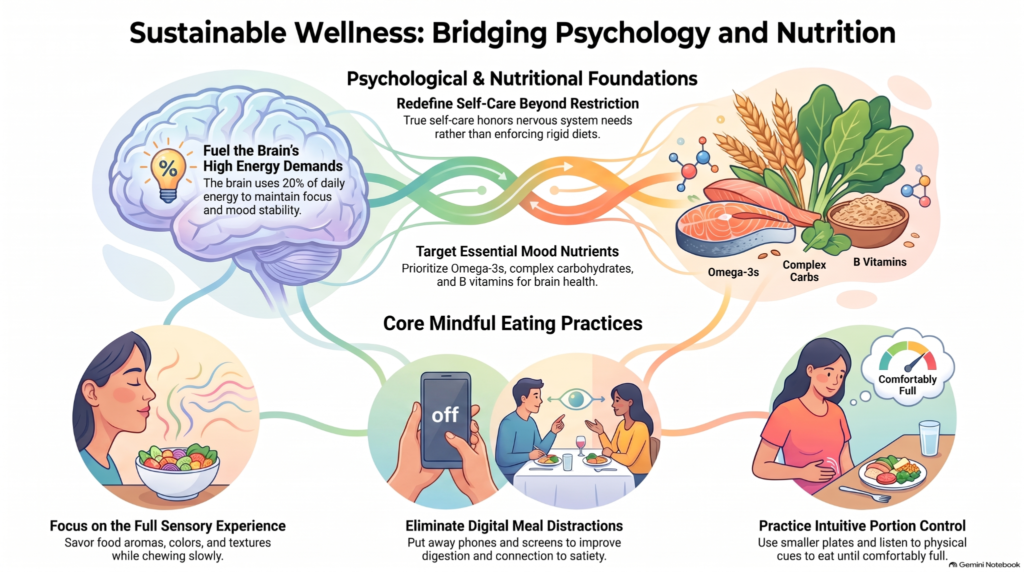
Nutrition does more than fuel our bodies – it fuels our mind. The brain, which uses about 20% of our energy each day, requires enough energy (or calories) and nutrients to perform at its best. When we don’t provide our bodies with enough energy and nourishment, our brains can struggle to maintain focus, a good mood, and mental clarity. We’ve all experienced a time when we’ve felt “hangry” (angry and hungry) due to not eating for a while. It’s a clear signal our brains need energy and nutrients to function optimally.
When it comes to enhancing your self-care routine, focusing on key nutritional strategies can make a significant difference.
By incorporating balanced meal planning, practicing mindful eating, and choosing nutrient-dense foods, you can support both your physical and mental well-being.
These strategies not only foster healthier eating habits but also empower you to take charge of your overall health journey.
Balanced Meal Planning
Proper nutrition is fundamental to brain health. Nutrients like omega-3 fatty acids, vitamins B and D, and minerals such as magnesium and zinc are crucial for brain function and emotional regulation. For instance, omega-3 fatty acids, found in fish and flaxseeds, are known to reduce symptoms of depression and anxiety. Similarly, vitamin D, which we primarily get from sunlight, has been linked to mood regulation and cognitive performance.
Creating balanced meal plans isn’t just about choosing healthy foods; it’s an essential component of your self-care routine that can greatly impact your overall well-being.
Start with meal prep by selecting seasonal ingredients that not only taste better but are often more affordable. During grocery shopping, focus on diverse recipe varieties to keep your meals exciting and aligned with your dietary preferences.
Pay attention to portion sizes to avoid overeating, and establish regular eating schedules to stabilize your energy levels throughout the day.
Finally, embrace food budgeting to prioritize nutritious options without breaking the bank.
Mindful Eating Practices
While you might think of eating as a simple daily task, incorporating mindful eating practices can transform your relationship with food and enhance your self-care routine.
By tuning into your body’s hunger cues and fostering emotional awareness, you’ll create a more intuitive eating experience. Consider these strategies to cultivate mindful meals:
- Food Journaling: Track what you eat and how it makes you feel, promoting awareness and reflection.
- Meal Rituals: Establish consistent routines around meals, allowing time to savor each bite and appreciate the flavors.
- Gratitude Practice: Before meals, express gratitude for your food, enhancing sensory satisfaction and deepening your connection to what you consume.
These practices can help you enjoy freedom in your eating journey while supporting sustainable health improvements.
Nutrient-Dense Food Choices
Incorporating nutrient-dense food choices into your self-care routine can greatly enhance your overall health and well-being. Focus on superfoods, like leafy greens, berries, and nuts, which offer powerful antioxidants and essential nutrients. These foods provide significant health benefits, boosting your immune system and enhancing energy levels.
Additionally, practice nutrient timing by consuming these foods around your physical activities to maximize their effects. For instance, having a banana or a smoothie before a workout can fuel your performance, while a protein-rich meal afterward aids in recovery.
Self-Care Nutrients for Boosting Mood and Energy
Self-care is simply doing what you need, rather than what you feel you should be doing. It’s about getting to know what your own body needs to prosper and looking after yourself in a way you’re comfortable with and can sustain. It covers many aspects of looking after yourself: your physical body, mental health and emotional well-being, and nutrition plays a part in all of these core functions.
When you prioritize self-care, the right nutrients can greatly enhance your mood and energy levels. Incorporating specific foods into your diet can help you feel more vibrant and balanced.
Here are three key self-care nutrients to reflect upon:
- Omega-3 Fatty Acids: Found in fatty fish like salmon and walnuts, these mood-boosting foods can help reduce symptoms of depression and anxiety.
- Complex Carbohydrates: Whole grains, like oats and quinoa, act as energy-enhancing snacks that provide a steady release of glucose, keeping your spirits high throughout the day.
- B Vitamins: Foods rich in B vitamins, such as leafy greens and eggs, support brain function and mood regulation, helping you maintain consistent energy levels.

HOW TO PRACTICE MINDFUL EATING FOR BETTER SELF-CARE
Whenever I lead mindful eating exercises during our community sessions, I always begin by asking participants to reflect on the last meal they ate without a screen in sight. Most struggle to remember. In our fast-paced lives, eating has become an unconscious background task—we swallow meals while scrolling on our phones, answering work emails, or rushing between appointments. We rarely pause to evaluate not just what we are consuming, but how it makes us feel physically and emotionally.
A question that comes up frequently in discussions around clean eating is how to navigate the overwhelming debate around processed foods. People often ask whether they have to eliminate everything that comes in a package to truly be healthy. In behavioral coaching, I encourage looking at nutrition as a gentle continuum rather than an all-or-nothing trap. Yes, minimizing ultra-processed items with high amounts of refined sugars and artificial additives makes an astonishing difference in sustained energy levels, mood regulation, and even cellular hydration. But obsessing over whether whole-grain bread or canned legumes are “bad” just fosters unnecessary dietary distress.
When we practice mindful eating—savoring textures, listening to gentle satiety signals, and checking in with ourselves before opening the refrigerator—we build intuitive wisdom. You begin to notice that wholesome meals give you sustained clarity, whereas mindless snacking often leaves you feeling foggy and depleted.
Practicing mindful eating can transform your relationship with food and enhance your self-care routine.
By focusing on the sensory experience of each bite, eliminating distractions during meals, and being mindful of portion sizes, you can cultivate a more satisfying and healthier eating experience.
This approach not only promotes better digestion but also fosters a deeper connection to your body’s hunger cues.
Focus on Sensory Experience
How often do you pause to truly savor the flavors and textures of your meals? Engaging in mindful eating enhances your sensory awareness and transforms your dining experience.
By practicing mindful exploration, you not only enjoy your food but also nourish your body and soul. Here are three ways to enhance your sensory experience during meals:
- Engage Your Senses: Focus on the aroma, color, and texture of each bite. Notice how different tastes combine.
- Chew Slowly: Take your time to chew each bite thoroughly, allowing flavors to unfold.
- Reflect: After your meal, take a moment to reflect on the experience. How did it make you feel?
Embracing these practices leads to a more fulfilling and healthier relationship with food.
Eliminate Distractions During Meals
Eliminating distractions during meals is essential for cultivating mindful eating habits that enhance your overall well-being. When you focus on the food in front of you, you can truly savor each bite, leading to greater satisfaction and healthier choices.
Start by minimizing meal distractions; put away your phone and turn off the TV. Consider this a digital detox—an opportunity to reconnect with your senses and the present moment. Research shows that mindful eating can improve digestion and promote better food choices, so embrace this practice.
Create a peaceful eating environment, allowing yourself to fully experience the flavors, textures, and aromas of your meal. By doing so, you’ll foster a deeper appreciation for your food and nourish both body and mind.
Practice Portion Control Mindfully
While many people struggle with portion sizes, practicing mindful portion control can considerably enhance your self-care routine.
By being aware of what and how much you eat, you can foster a healthier relationship with food. Here are three ways to practice mindful servings:
- Use Smaller Plates: This simple trick can trick your brain into feeling satisfied with less food.
- Savor Every Bite: Take the time to enjoy each bite, focusing on flavors and textures, which can prevent overeating.
- Listen to Your Body: Pay attention to hunger cues and eat only until you’re comfortably full.
Overcoming Barriers to Healthy Eating
Even though you may face various obstacles to healthy eating, recognizing and addressing these barriers is essential for making lasting dietary changes.
Start with barrier identification; understanding your emotional triggers can help you navigate cravings more effectively. Cultural influences and social dynamics often shape your food choices, so reflect on how cultural influences on self care practices affect your eating habits, daily routines, and approach to personal well-being.
Financial constraints might limit your options, but with strategic planning, you can prioritize nutritious foods within your budget. Time management is also vital; meal prepping can save you time during busy weeks.
Don’t underestimate knowledge gaps; educating yourself about nutrition empowers you to make better decisions. Finally, focus on habit formation; gradually introducing healthier foods can make the shift smoother.
Creating a Sustainable Self-Care Lifestyle for Long-Term Health
Addressing the barriers to healthy eating sets the foundation for a sustainable self-care lifestyle that promotes long-term health. Scheduling a daily self care activity, such as preparing a nutritious meal, practicing mindfulness, or taking a relaxing walk, can help you maintain consistency and support long-term physical and emotional well-being.
To create this lifestyle, you can implement strategies that foster mindful routines and emotional resilience. Here are three key steps to get you started:
- Establish Consistent Routines: Integrate sustainable habits into your daily life. Set specific times for meals and self-care activities to guarantee you prioritize your well-being.
- Practice Self-Reflection: Use self-awareness techniques to assess your progress. Reflect on what works for you and adjust your approach as needed, enhancing your personal growth.
- Manage Stress Effectively: Develop stress management strategies that align with your lifestyle. Engaging in activities that motivate your health can lead to lasting changes.

RELATED STUDIES ABOUT NUTRITION BASED SELF CARE LIFESTYLE
In a world where fast food reigns supreme and stress is a badge of honor, embracing self-care through nutrition might seem like a radical idea. But isn’t it ironic that the simplest choices—like choosing an apple over a candy bar—can lead to profound changes in your mental and emotional well-being? By prioritizing mindful eating and nourishing your body, you’re not just improving your health; you’re also reclaiming the power to thrive in a chaotic world.
Nutritional and lifestyle supportive care recommendations for management of obesity with GLP-1 – based therapies: An expert consensus statement using a modified Delphi approach
An international multidisciplinary expert consensus statement, developed via a two-round modified Delphi approach, establishes practical clinical guidance for nutritional, physical activity, and supportive lifestyle interventions across the entire continuum of glucagon-like peptide-1-based therapies (GBT; including liraglutide, semaglutide, and tirzepatide) for weight management.
Conceptual Framework & Rationale
- The Incretin Paradigm Shift & Unmet Clinical Needs: First- and second-generation GBTs—such as liraglutide, semaglutide, and the dual GLP-1/GIP receptor co-agonist tirzepatide—elicit substantial mean weight reductions of 15% to 25% in clinical trials by reducing appetite, enhancing satiety, and slowing gastric transit. However, in real-world clinical practice, average weight loss is often lower (~5%), and 50% to 75% of patients discontinue therapy within one year due to gastrointestinal adverse effects, cost, or loss of access.
- Nutritional Vulnerability in Obesity: Individuals with obesity paradoxically face an elevated risk of malnutrition and micronutrient deficiencies (e.g., vitamins D, A, B1, B9, B12, iron, calcium, and magnesium) stemming from poor baseline diet quality, altered micronutrient metabolism, and chronic systemic inflammation. The potent appetite suppression induced by GBTs can worsen these pre-existing insufficiencies if caloric intake falls without adequate nutrient density.
- Body Composition & Lean Mass Loss: Approximately 25% to 30% of total weight lost during GBT treatment consists of lean body mass (roughly 1 kg of lean mass per 4 kg lost). While this decline is a typical physiological adaptation to a lower total body weight, rapid or unmonitored muscle loss poses clinical risks of sarcopenic obesity, frailty, and functional decline, particularly in older adults, individuals with severe obesity, or postmenopausal women.
- Objectives of the Consensus: Because most patients receiving GBT are managed in primary care without routine access to registered dietitians or obesity specialists, an international panel developed 52 actionable, consensus-based recommendations to guide supportive care before, during, and after GBT use.
Methodology & Delphi Architecture
- Literature Scoping Base: An independent scoping review searched PubMed, Embase, Web of Science, Cochrane, and Medline for clinical trials, meta-analyses, and practice guidelines published between January 1, 2021, and June 30, 2025. Because randomized controlled trials of GBTs have rarely documented or standardized dietary and lifestyle protocols, the evidence base was supplemented by established principles from bariatric surgery, intensive lifestyle trials, and clinical practice guidelines.
- Expert Panel Composition: A multidisciplinary international panel of 15 specialists from Australia, Belgium, Canada, China, Denmark, Germany, Spain, the United Kingdom, and the United States, including endocrinologists, obesity medicine specialists, registered dietitians, and exercise physiologists.
- Delphi Protocol & Consensus Rules: Two rounds of independent, confidential online voting evaluated an initial pool of 85 statements on a 9-point Likert scale (1 = absolutely disagree to 9 = absolutely agree; consensus defined a priori as $\ge 67\%$ scoring 7–9). A total of 52 statements achieved consensus and were organized across seven operational modules spanning the patient journey.
Core Recommendations Across the Patient Journey
- Foundational Nutrition Considerations:
- Individualized & Guideline-Endorsed Diets: Dietary guidance should be personalized, culturally acceptable, and grounded in evidence-based dietary patterns (e.g., Mediterranean, DASH, Portfolio, or Low-Glycemic Index diets) using shared decision-making.
- Multidisciplinary Integration: A registered dietitian should be integrated into assessment, education, and follow-up care wherever feasible.
- Alcohol & Snacking Restrictions: Alcohol intake should be minimized or discouraged due to its empty caloric load and risk of impairing behavioral and medication adherence. High-calorie, nutrient-poor snacking between meals should be avoided.
- Dietary Fiber Targets: Maintain high fiber intake (25g/day for women, 30g/day for men, and 35g/day for individuals with diabetes, or 14gper1,000kcal) combining soluble and insoluble sources to preserve bowel regularity and cardiometabolic health.
- Physical Activity & Lean Mass Preservation:
- Structured Exercise Prescriptions: Adults should target 150min/week of moderate-to-vigorous aerobic exercise combined with progressive resistance training (2–3 sessions/week) to attenuate muscle and bone mineral density loss.
- Stepwise Progression for Inactive Patients: For sedentary individuals or those with joint limitations, clinicians should set gradual, measurable goals starting at 4,000–6,000 steps per day. High-protein intake alone does not build or maintain muscle; it requires mechanical loading through resistance exercise.
- Phase 1: Pre-Treatment Evaluation & Preparation:
- Screening for Eating Disorders: Assess for disordered eating patterns prior to initiation using validated primary care screening tools (e.g., SCOFF or ESP; a score 2 warrants specialist referral).
- Medication & Risk Audits: Review and modify obesogenic medications (e.g., certain antipsychotics, corticosteroids, and beta-blockers) and screen for baseline sarcopenia via physical function tests (handgrip dynamometry, chair-stand tests).
- Pre-Initiation Caloric Strategies: A low- to very low-calorie step-down diet (starting at 1,000–1,200 kcal/day) or partial meal replacements may be utilized before starting GBT to initiate lifestyle adaptations.
- Phase 2: Active Weight Loss Phase:
- Protein Targets During Rapid Loss: Maintain a daily protein intake of 1.2–1.5 g/kg actual body weight/day (or 25%–30% of total daily energy on a 1,600 kcal/day diet) from high-quality lean sources (poultry, fish, eggs, low-fat dairy, soy, legumes) to minimize muscle protein catabolism.
- Hydration Requirements: Maintain fluid intake at 2–4 L/day (or 35mL/kgbodyweight/day), monitoring urine color to prevent dehydration, with individualized caution in patients with renal or congestive heart failure.
- Eating Behaviors: Encourage mindful eating practices—consuming small, frequent meals, recognizing satiety cues, and stopping when comfortably full.
- Monitoring for Excessive Weight Loss: Weight loss exceeding 1.5 kg/week beyond the first month should be flagged for potential under-nutrition, hidden systemic illness, or severe muscle wasting, prompting dose adjustments or structured meal planning. Suboptimal response ($\le 5\%$ loss at 12 weeks) warrants treatment re-evaluation.
- Phase 3: Weight Loss Maintenance Phase:
- Protein in Maintenance: Adjust protein intake to 0.8g/kgactualbodyweight/day, maintaining higher targets (1.0–1.2g/kg/day) in adults aged 65 years with normal renal function.
- Healthy Fats & Gallstone Prophylaxis: Because rapid weight reduction increases gallstone risk, include 25–60 g/day of healthy dietary fats (olive oil, nuts, seeds, fatty fish) to stimulate regular gallbladder emptying and support fat-soluble vitamin absorption.
- Long-Term Strategy: Sustainable maintenance requires ongoing clinical touchpoints every 6 to 12 months, continuous behavioral counseling, and potentially higher physical activity volumes (200min/week) to counter metabolic adaptation.
Management of Gastrointestinal Adverse Effects
- Incidence & Characteristics: Gastrointestinal symptoms—nausea, vomiting, diarrhea, and constipation—occur in 50% to 60% of patients, typically emerging during dose titration. While nausea is usually transient, constipation is the most persistent adverse effect over multi-year therapy.
- Mitigation Protocols:
- Nausea and Vomiting: Reduce meal volume, avoid high-fat and spicy foods, separate fluids from solid food intake, minimize carbonated beverages, and slow the GBT dose-titration schedule. Pharmacological antiemetic therapy can be utilized safely without compromising weight loss efficacy, as GLP-1 satiety circuits operate independently from emetic pathways.
- Diarrhea: Implement oral rehydration solutions, temporary dietary modifications, and targeted antidiarrheal pharmacotherapy if persistent.
- Constipation: Increase fluid intake (>2L/day) and progressively titrate dietary fiber; introduce soluble fiber supplementation (e.g., psyllium) if dietary sources are insufficient.
Safeguards for Therapy Discontinuation
- The Reality of Weight Regain: GBT treats obesity as a chronic, progressive disease; cessation results in the regain of approximately two-thirds of lost weight within one year (as confirmed in STEP-1 extension, STEP-4, and SURMOUNT-4 trials).
- Preventing Rebound Following Interruption:
- When therapy must be stopped due to financial constraints, drug shortages, pregnancy, or surgery, clinicians should establish proactive discontinuation safeguards.
- Maintain intensive behavioral and lifestyle support with a registered dietitian, reinforce structured resistance and aerobic exercise (150min/week), and utilize calorie-controlled, high-protein meal replacements (1–2 meals/day) to help stabilize body weight and glycemic control.
Methodological Limitations & Research Priorities
- Indirect Evidence Reliance: Due to the scarcity of randomized GBT trials that systematically report or manipulate dietary composition and exercise protocols, recommendations were largely derived from bariatric and general obesity literature alongside expert consensus.
- Geographic & Population Representation: The expert panel was predominantly Western-based, and available trial cohorts lack racial, geographic, and socioeconomic diversity.
- Research Needs: Priority areas include establishing precise macronutrient needs during incretin therapy, investigating intermittent “stop-and-go” maintenance dosing, evaluating long-term functional muscle and bone outcomes, and identifying biological predictors of non-response.
| REFERENCE: J.L. Sievenpiper, J. Ard, M. Blüher, W. Chen, J.B. Dixon, A. Fitch, L. Gigliotti, K. Khunti, A. Lecube, M.E.J. Lean, B. Mittendorfer, A.F.H. Pfeiffer, D.H. Ryan, T. Vilsbøll, L.F. Van Gaal, Nutritional and lifestyle supportive care recommendations for management of obesity with GLP-1 – based therapies: An expert consensus statement using a modified Delphi approach, Obesity Pillars, Volume 17, 2026, 100228, ISSN 2667-3681, https://doi.org/10.1016/j.obpill.2025.100228. (https://www.sciencedirect.com/science/article/pii/S2667368125000725) |
“Mistakes in the nutritional and lifestyle management of chronic liver disease and how to avoid them: A narrative review”
This narrative review identifies and analyzes ten pervasive, high-impact clinical errors in the nutritional and lifestyle management of chronic liver disease (CLD)—spanning metabolic dysfunction-associated steatotic liver disease (MASLD), alcohol-related liver disease (ALD), cirrhosis, and the liver transplant continuum—providing an evidence-based, translational roadmap with practical corrective actions tailored for both specialized centers and resource-limited settings.
Conceptual Framework & Clinical Rationale
- Epidemiological Scope and Disease Burden: Chronic liver disease affects hundreds of millions globally: MASLD impacts approximately 40% of the world’s adult population, while ALD accounts for nearly 50% of cirrhosis-related mortality in Western countries, with both etiologies increasingly converging in the same individuals. Compensated cirrhosis carries a 10-year mortality of 20% to 30%, which escalates to over 60% within 5 years once hepatic decompensation occurs.
- Sex- and Reproductive-Status Disparities: Men develop MASLD earlier and progress to hepatocellular carcinoma (HCC) and decompensation more frequently; premenopausal women exhibit relative estrogen-mediated hepatoprotection, but experience accelerated steatohepatitis and fibrosis postmenopause, arguing against uniform “one-size-fits-all” counseling. Furthermore, women progress to alcohol-related fibrosis, cirrhosis, and hepatitis faster than men at equivalent consumption due to lower total body water and lower gastric alcohol dehydrogenase activity.
- The “Guideline-to-Practice” Chasm: Despite robust guideline recommendations from international hepatology societies (EASL, AASLD, APASL, ESPEN, ACG), nutritional assessment is documented in fewer than half of hospitalized cirrhotic patients, caloric and protein targets are rarely met, and low-protein diets continue to be erroneously prescribed for hepatic encephalopathy.
- Review Objectives: Rather than duplicating guidelines, the authors deconstruct ten entrenched clinical mistakes, synthesize underlying physiological mechanisms, and establish an outpatient-usable corrective action plan adaptable to settings lacking specialized multidisciplinary teams or imaging-based body composition tools.
Methodology & Literature Scoping Architecture
- Search Parameters & Sources: Comprehensive literature search across PubMed/MEDLINE and Google Scholar covering January 2013 through January 2026, using MeSH terms for MASLD, NAFLD, ALD, cirrhosis, liver transplantation, malnutrition, sarcopenia, frailty, and dietary/lifestyle modification.
- Study Selection Criteria: Prioritized randomized controlled trials, systematic reviews, meta-analyses, and practice guidelines from EASL, AASLD, APASL, ESPEN, and ACG, yielding 56 cited benchmark references.
- Translational Orientation: All clinical errors were paired with explicit stepwise corrections and tiered alternatives (e.g., bedside anthropometry, simplified recall) suitable for low- and middle-income healthcare contexts.
The Ten Clinical Mistakes & Evidence-Based Corrective Actions
- Mistake 1: Sidelining Lifestyle Modification in MASLD as Pharmacotherapies Expand:
- The Error: With the recent approvals of resmetirom (FDA-approved March 2024) and semaglutide (FDA-approved August 2025 for non-cirrhotic MASH with moderate-to-severe fibrosis), clinicians increasingly relegate lifestyle counseling to a background consideration. However, trial response rates for drugs remain modest (e.g., 29.9% MASH resolution for resmetirom 100 mg vs. 9.7% placebo), and all trials included background lifestyle support.
- Corrective Strategy: Frame lifestyle intervention as primary therapy. Target 7% to 10% weight loss in overweight/obese patients to reverse steatohepatitis and fibrosis, and 3% to 5% weight loss in lean MASLD. Prescribe 150 minutes/week of moderate-intensity aerobic exercise plus resistance training 2–3 times/week (which lowers hepatic fat independent of weight loss). Emphasize that weight loss mitigates cardiovascular disease, the leading cause of death in MASLD. A $\ge 5\%$ weight reduction at 6 months serves as an early response benchmark.
- Mistake 2: Delivering Uniform, Generic Dietary Advice in MASLD:
- The Error: Instructing patients vaguely to “cut carbs” or “eat less fat” ignores patient preferences, metabolic comorbidities, cultural cooking customs, and food insecurity (which independently predicts higher liver stiffness).
- Corrective Strategy: Select an evidence-based pattern that achieves a sustainable hypocaloric deficit. While the Mediterranean diet has the strongest metabolic and cardiovascular support, low-fat, low-carbohydrate, and intermittent fasting regimens achieve comparable hepatic fat reductions if caloric restriction is maintained. Counsel patients to eliminate ultra-processed foods, refined carbohydrates, sugar-sweetened beverages, and processed meats. Encourage consumption of 2–3 cups/day of unsweetened black drip coffee, an accessible intervention associated with reduced advanced fibrosis risk.
- Mistake 3: Failing to Advise Alcohol Abstinence in MASLD with Significant Fibrosis or ACLD:
- The Error: Assuming alcohol intake below conventional MetALD thresholds (<20g/day in women, <30g/day in men) is benign. Low-to-moderate alcohol intake interacts supra-additively with metabolic syndrome to accelerate fibrosis progression.
- Corrective Strategy: Screen for alcohol use at every visit using validated tools (e.g., AUDIT-C). For any patient with liver stiffness measurement (LSM) >10kPa (significant fibrosis, F3), LSM >15kPa (advanced chronic liver disease [ACLD]/cirrhosis), or biopsy-proven F3–F4 fibrosis, give clear, unambiguous instructions for total alcohol abstinence. Refer alcohol-dependent patients to addiction medicine for medical withdrawal and pharmacological support (baclofen, naltrexone, acamprosate).
- Mistake 4: Overlooking Malnutrition in Alcohol-Related Liver Disease (ALD):
- The Error: Treating malnutrition as an incidental finding that resolves spontaneously with alcohol cessation. Malnutrition affects ~50% of ALD outpatients and nearly 100% of hospitalized alcohol-associated hepatitis (AAH) patients, independently driving infection and mortality.
- Corrective Strategy: Screen every inpatient and outpatient using the Royal Free Hospital-Nutritional Prioritising Tool (RFH-NPT) rather than generic hospital tools. Prescribe 35–40 kcal/kg/day energy and 1.2–1.5 g/kg/day protein in frequent small meals. Administer empirical intravenous thiamine prior to glucose infusions to avert Wernicke’s encephalopathy, and systematically evaluate and replate zinc, magnesium, folate, phosphate, and fat-soluble vitamins (A, D, E). Initiate nasogastric enteral feeding early if oral intake falls short of targets.
- Mistake 5: Failing to Systematically Screen Cirrhotic Patients for Malnutrition:
- The Error: Relying on visual impression, raw body weight, BMI, or serum albumin. Fluid overload masks muscle wasting, and albumin functions as an inflammatory negative acute-phase reactant reflecting liver failure rather than nutritional state.
- Corrective Strategy: Screen all cirrhotic patients at diagnosis, reassessing compensated patients every 6–12 months and decompensated or hospitalized patients every 4–8 weeks using the RFH-NPT. In high-risk patients, evaluate skeletal muscle mass at L3 on CT (skeletal muscle index [SMI]), assess handgrip dynamometry, and measure physical performance via the Short Physical Performance Battery (SPPB), 6-Minute Walk Test, or Liver Frailty Index (LFI; score >4.5 denotes severe frailty). In resource-limited settings, substitute mid-upper arm circumference (MUAC), handgrip strength, and structured 24-hour recalls.
- Mistake 6: Approaching Malnutrition in Cirrhosis with Fatalism (“Nothing Can Be Done”):
- The Error: Accepting progressive cachexia as an unmodifiable symptom of end-stage liver disease, leaving patients in severe energy deficit exacerbated by prolonged fasting and unpalatable unseasoned diets.
- Corrective Strategy: Manage malnutrition with the same clinical urgency as varices or ascites. Prescribe 30–35 kcal/kg dry body weight/day (subtracting 5% weight for mild ascites, 10% for tense ascites) and 1.2–1.5 g/kg/day protein. Restructure meal schedules into 3 main meals and 3 snacks. Mandate a Late Evening Snack (LES) providing ~50 g complex carbohydrates and 10–15 g protein (e.g., milk with biscuits or cereal) taken between 9:00 PM and 11:00 PM to shorten overnight fasting, counteract catabolic gluconeogenesis from muscle breakdown, and improve nitrogen balance.
- Mistake 7: Prescribing Low-Protein Diets for Hepatic Encephalopathy (HE):
- The Error: Restricting protein intake based on outdated 1950s assumptions that dietary protein fuels hyperammonemia. Systemic ammonia is predominantly generated via colonic bacterial deamination, glutamine mucosal metabolism, and renal pathways. Protein restriction drives muscle catabolism and worsens outcomes.
- Corrective Strategy: Never restrict dietary protein in HE; maintain 1.2–1.5 g/kg/day during acute episodes, recovery, and maintenance. Skeletal muscle serves as the primary extrahepatic site for ammonia clearance by synthesizing glutamine via glutamine synthetase; preserving muscle mass is paramount for ammonia detoxification. Prioritize vegetable- and dairy-based proteins over red meat to leverage their lower ammoniagenic amino acid profiles, higher dietary fiber, and prebiotic modulation of the microbiome. Consider branched-chain amino acid (BCAA) supplementation in patients intolerant of protein targets or with established sarcopenia.
- Mistake 8: Overlooking Muscle-Mass Depletion (Sarcopenia) as a Prognostic Factor:
- The Error: Focusing clinical encounters exclusively on ascites, diuretics, and lab panels while skeletal muscle quietly atrophies. Sarcopenia affects 30% to 70% of cirrhotic patients and is an independent predictor of mortality (adjusted HR 2.07; CT-based SMI HR 1.86), providing prognostic discrimination beyond MELD. Sarcopenic obesity—where excess adiposity masks severe muscle wasting—is frequently overlooked when clinicians rely strictly on BMI.
- Corrective Strategy: Explicitly communicate the prognostic value of muscle preservation to the patient. Prescribe safe, individualized physical activity (moderate walking, chair-based exercises, supervised resistance training), which is safe even in compensated and stable decompensated cirrhosis. Strictly avoid prolonged bed rest during hospitalizations. For sarcopenic patients, increase protein targets to 1.5 g/kg/day. In sarcopenic obesity, guide cautious, dietitian-supervised 5% to 10% weight loss with resistance exercise and high protein provision to spare skeletal muscle.
- Mistake 9: Overloading Patients with Complex, Unjustified Food Restrictions:
- The Error: Issuing restrictive “avoidance lists” (excluding meats, fruits, dairy, or salt entirely), which generates anxiety, reduces palatability, drops caloric intake to 24–25 kcal/kg/day, and worsens malnutrition.
- Corrective Strategy: Reinforce that, aside from alcohol, virtually no food is contraindicated in cirrhosis. Restrict sodium moderately (80 mmol/day 2g sodium or 5 g table salt) only in patients with ascites, and always pair it with culinary palatability strategies (herbs, spices, lemon juice, garlic, vinegar) to prevent caloric reduction. Actively encourage fruits and vegetables; do not restrict them unless severe hyperkalemia is documented. Provide structured, written dietitian counseling rather than verbal prohibitions.
- Mistake 10: Failing to Correct Malnutrition, Sarcopenia, and Frailty Before Liver Transplantation:
- The Error: Focusing transplant workups strictly on cardiopulmonary clearance, cross-matching, and MELD scores while neglecting nutritional status, assuming surgical recovery alone will correct deficits. Malnutrition (40–70%), sarcopenia (30–70%), and frailty (up to 32%) independently predict waitlist mortality, post-transplant infections, ventilator dependence, and 1-year graft and patient mortality.
- Corrective Strategy: Conduct formal nutritional screening (RFH-NPT), CT-based L3 skeletal muscle indexing, handgrip strength, and Liver Frailty Index testing at the time of waitlist listing. Issue a written prescription: 35 kcal/kg/day, 1.2–1.5 g/kg/day protein, late-evening snacks, and structured prehabilitation combining aerobic and resistance training. Reassess waitlisted patients every 8–12 weeks (more frequently if deteriorating). Apply Enhanced Recovery After Surgery (ERAS) principles perioperatively to prevent unnecessary starvation, and continue structured high-protein nutrition, BCAA supplementation, and metabolic monitoring post-transplantation.
Translational & Health System Implications
- Reframing Clinical Paradigms: Nutrition and exercise must be managed with the same clinical discipline, pharmacological rigor, and routine documentation as hemodynamic stabilization or antiviral therapy.
- Implementation in Low-Resource Healthcare Settings: Where specialized modalities (CT body composition software, indirect calorimetry, dedicated hepatology dietitians) are unavailable, clinicians can successfully operationalize these guidelines using low-cost surrogates:
- Bedside RFH-NPT screening relying on weight changes and appetite.
- Handgrip dynamometry and mid-upper arm circumference for muscle wasting.
- Structured verbal 24-hour dietary recalls paired with standardized, translated educational handouts.
- System-Level Integration: Healthcare networks must integrate validated nutritional screening into electronic health record workflows, embed registered dietitians into outpatient liver clinics, and formalize prehabilitation protocols across transplant assessment pathways.
| REFERENCE: Madunil Anuk Niriella, Renisha Chrismi Karunanayake, Himashi Prasadini Wickramasuriya, Arjuna Priyadarshin De Silva, “Mistakes in the nutritional and lifestyle management of chronic liver disease and how to avoid them: A narrative review”, Clinical Nutrition Open Science, Volume 69, 2026, 100718, ISSN 2667-2685, https://doi.org/10.1016/j.nutos.2026.100718. (https://www.sciencedirect.com/science/article/pii/S266726852600094X) |
A self-service response system to improve nutrition impact symptoms management among home-based patients with advanced cancer and their family caregivers
This developmental and usability study details the creation and mixed-methods evaluation of “Ni Shuo” ($NiS^\copyright$), an evidence-based, knowledge-graph-enabled mobile health (mHealth) self-service response system developed via a human-centered design (HCD) framework to support home-based patients with advanced cancer and their family caregivers in managing nutrition impact symptoms (NIS).
Conceptual Framework & Rationale
- Burden of Nutrition Impact Symptoms in Advanced Cancer: In China, cancer represents a substantial public health burden (accounting for 4.82 million new cases and 2.57 million deaths in 2022), with over half of patients diagnosed at an advanced stage. Between 50% and 85% of patients experience NIS—such as anorexia, nausea, vomiting, dysgeusia, dysphagia, pain, and fatigue—and 51.9% experience three or more co-occurring symptoms. NIS drives progressive malnutrition, muscle wasting, cachexia, and functional decline while generating profound emotional distress and care burden among family caregivers.
- The Dyadic Homecare Paradigm and Clinic-to-Home Gap: Due to preferences for familiarity and a “normal life,” 80% of advanced cancer patients in China choose home as their primary care environment. Symptom management relies heavily on the patient-caregiver dyad. However, family caregivers often lack specialized oncology management knowledge, and traditional episodic, clinic-based consultations are unable to provide the continuous, real-time guidance required to address dynamic symptoms at home.
- Limitations of Existing Oncology mHealth Systems: Current digital health solutions for palliative care frequently offer only passive monitoring, generic non-individualized educational text, or medication reminders, lacking real-time interactive reasoning and dynamic personalization. Furthermore, many systems fail to engage patient-caregiver dyads during the development process.
- Study Objectives:
- Develop an evidence-based, knowledge-graph-powered interactive response platform tailored to Chinese patient-caregiver dyads using a six-phase human-centered design approach.
- Conduct expert user experience inspections and formal end-user usability testing guided by ISO 9241-11 standards to evaluate effectiveness, efficiency, satisfaction, and operational barriers.
Methodology & System Architecture
- Development Framework & Reporting Standards: Guided by the Human-Centered Design framework (ISO 9241-210) across two stages and six phases, adhering to the mHealth Evidence Reporting and Assessment (mERA) checklist. Developed as a WeChat Mini Program on a three-layer architecture (display, logical, and data layers) compatible with iOS and Android devices, operating in Mandarin Chinese.
- Phase 1 to 4: Collaborative Prototyping & Knowledge Engineering:
- Interdisciplinary Team: A six-member core group combining palliative oncology nursing researchers and software engineers.
- Evidence-Based Knowledge Base: Formulated using a “6S” evidence synthesis of 61 high-quality clinical resources (18 clinical decision documents, 38 practice guidelines, 5 expert consensus statements appraised via AGREE II and JBI tools) validated through a multidisciplinary Delphi panel, establishing 300 evidence-based non-pharmacological management strategies across 13 core nutrition impact symptoms.
- Knowledge Graph Construction: Engineered via Neo4j graph database technology to represent complex semantic relationships between symptoms, underlying etiologies, clinical manifestations, dietary recommendations, and nursing interventions.
- User Requirements Gathering: Purposive sampling of 4 patients with advanced cancer (lung, gastric, breast, colorectal, and nasopharyngeal) and 3 primary caregivers engaged in qualitative interviews analyzed using inductive content analysis to establish user personas, operational priorities, and interface preferences.
- Core System Modules:
- Knowledge Base Module: Interactive, illustrated educational repository covering symptom definitions, mechanisms, dietary modifications, and non-pharmacological interventions for 13 common NIS.
- Intelligent Response Module: A floating conversational assistant (“Management Consulting Q&A Assistant”) leveraging natural language processing (NLP) to parse natural language queries (text or voice) and query the Neo4j knowledge graph to return real-time, evidence-based recommendations.
- Self-Report Module: Standardized dyadic reporting forms tracking symptom severity, symptom distress, impact ranking, anthropometrics (weight, height, BMI), and psychosocial metrics (quality of life, eating-related distress, family function, caregiver burden) with automated reminders.
- Feedback Interaction Module: Data visualization dashboard displaying longitudinal trend curves and radar/spider diagrams of symptom trajectories, auto-generating individualized daily management plans with a calendar clocking system, social sharing, and bidirectional feedback mechanisms (likes, text feedback, manual clinical escalation requests).
- Phase 5 & 6: Expert and End-User Usability Evaluation:
- Expert Inspection (Phase 5): Five digital health user experience (UX) experts with 5 years of experience conducted think-aloud reviews across functional modules, cognitive load, navigation logic, and system recovery.
- End-User Usability Testing (Phase 6): Conducted with 18 patient-caregiver dyads (represented by 7 patients and 11 primary caregivers; mean age 5515.03 years, range 22–63) tested over a 1-week usage period.
- Evaluation Metrics:
- Effectiveness: Task completion rates and input accuracy across five core tasks (self-report entry, symptom selection/sequencing, symptom evaluation, plan customization, and plan execution).
- Efficiency: Mean, minimum, and maximum duration spent completing each task.
- Satisfaction: Measured via the 16-item Post-Study System Usability Questionnaire (PSSUQ; 7-point Likert scale where 1 = strongly agree / optimal satisfaction, 7 = strongly disagree) and post-test semi-structured qualitative interviews.
Key Empirical Findings
- System Usability & Operational Performance:
- Effectiveness: Participants achieved 100% task completion rates and 100% input accuracy across all five operational tasks, with no critical software failures or unrecoverable navigation errors.
- Efficiency: The total average task execution duration was 8 minutes and 10 seconds (SD=31seconds), with all individual tasks completed in under 4 minutes:
- Self-report entry: average 2:01 (range: 1:06–3:03).
- Symptom selection and sequencing: average 1:24 (range: 0:38–2:19).
- Symptom evaluation: average 0:52 (range: 0:42–1:08).
- Personalized plan customization: average 3:09 (range: 2:55–3:30).
- Implementation of customized plan: average 0:43 (range: 0:37–0:54).
- User Satisfaction (PSSUQ): The overall composite PSSUQ score was 1.770.03, demonstrating high user acceptance across all evaluated sub-dimensions:
- Interface Quality: 1.610.12.
- Information Quality: 1.820.10.
- System Quality: 1.880.12.
- Highest-rated single items included ease of learning (Item 16: 1.390.12), interface appeal (Item 14: 1.560.12), and satisfaction with features (Item 15: 1.560.12).
- Qualitative Themes and User Perceptions:
- High Usability and Professional Trust: Dyads highlighted that the digital interface was easier and more engaging than conventional paper symptom diaries, praising the credibility of the guidance and noting that real-time answers matched advice received from hospital clinicians.
- Perceived Clinical and Dyadic Utility: Participants reported that longitudinal trend charts and radar diagrams clarified symptom severity, guiding actionable changes in cooking practices, meal timing, and daily pacing.
- End-User Optimization Feedback:
- Computational Responsiveness: Participants noted intermittent interface delays and query processing latency, requesting server optimization to support instantaneous response times.
- Linguistic Calibration: Users observed that clinical terminology in certain educational outputs was overly formal, recommending conversational language, simpler phrasing, and visual infographics to accommodate lower health literacy.
- Multi-Modal Content Enrichment: Participants suggested incorporating short video cooking demonstrations and specific recipes for targeted nutritional needs (e.g., bone marrow suppression or neutropenia).
Practice, Palliative Care, & Technical Implications
- Bridging the Palliative Transition to Home Care: By operationalizing an intelligent knowledge graph rather than static text, $NiS^\copyright$ provides automated, round-the-clock decision support, addressing the gap between hospital discharge and outpatient follow-up in resource-constrained oncology systems.
- Empowering the Caregiver Dyad: Structuring the platform for shared dyadic use acknowledges that family caregivers manage the majority of meal preparation and symptom observation, mitigating caregiver anxiety and improving care coordination.
- WeChat Ecosystem Accessibility: Building the tool as a WeChat Mini Program minimizes barriers related to downloading independent applications, leveraging existing digital habits across Chinese populations.
Methodological Limitations
- Sample Demographics and Selection Bias: Usability testing was conducted at a single regional hospital center with a small sample (N=18 dyads), excluding non-smartphone users and selecting a relatively younger, digitally literate cohort (mean age 55 years), which limits generalizability to older or less tech-proficient cancer populations.
- Absence of Clinical Efficacy Endpoints: Guided by ISO 9241-11, this investigation was designed as a formative usability study; it did not evaluate longitudinal clinical outcomes such as body weight retention, cachexia progression, emergency department presentation rates, or caregiver burnout.
- Language and Regional Specificity: The prototype operates exclusively in simplified Chinese within the WeChat digital ecosystem, requiring software re-engineering and cultural adaptation for use in non-Chinese oncology settings.
| REFERENCE: Yitao Wei, Zhenglong Lin, Bingqian Ou, Jinyi Wu, Guojuan Chen, Guiru Xu, Xiaoyan Lin, Jianwei Zheng, Huimin Xiao, A self-service response system to improve nutrition impact symptoms management among home-based patients with advanced cancer and their family caregivers, Asia-Pacific Journal of Oncology Nursing, Volume 13, 2026, 100852, ISSN 2347-5625, https://doi.org/10.1016/j.apjon.2026.100852. (https://www.sciencedirect.com/science/article/pii/S2347562526000028) |
CONCLUSION
When I take time to journal on Sunday mornings or decompress during a quiet hike through our local nature reserve, I am constantly reminded of one enduring truth: nature never rushes, yet everything gets accomplished. Lasting lifestyle change follows the exact same natural rhythm. As clinical research and behavioral psychology consistently reveal, radical overhauls and punishing health kicks almost always trigger burnout and rebound. Sustainable wellness is never built on radical deprivation; it is built on small, consistent micro-habits that you can joyfully sustain for decades.
Integrating mindful nutrition into your life doesn’t require an immaculate pantry or rigid dietary dogma. It starts with simple, deliberate choices: drinking a tall glass of water before reaching for coffee, sitting down to savor a colorful, nutrient-rich lunch without digital distractions, or gently preparing a warm, balanced meal at night as an expression of self-respect. Notice how your body responds when you honor its basic biological cues rather than fighting against them.
Be patient with your progress. Give yourself permission to adapt, experiment, and find what genuinely aligns with your lifestyle and cultural roots. When you anchor your daily nutrition in self-compassion and psychological awareness, you step out of the exhausting cycle of guilt and into a steady, empowering rhythm of lasting health.