

As an urban lifestyle writer and sociologist, I spend a great deal of time analyzing how modern city dwellers navigate sensory overload. In dense metropolitan spaces, retreat often masquerades as self-preservation. A few years ago, following an intense professional burnout, I turned my apartment into an impenetrable sanctuary. I stopped commuting, skipped weekend coffee meetups, and convinced myself that pulling away from the world was the ultimate form of self-care. At first, the quiet felt liberating. I wasn’t draining my emotional reserves on small talk or crowded transit, and I finally had endless unstructured hours to read, work, and tinker with coffee beans in total peace.
What I failed to realize was that this self-imposed solitude had crossed an invisible line from intentional rest into functional social isolation. Without external social commitments to anchor my days, my sleep schedule slowly unraveled, and the natural rhythm that kept me grounded disappeared. Prolonged isolation has a deceptive way of softening the edges of reality until you no longer recognize how small your daily world has become.
What felt like protective solitude was actually dulling my emotional resilience, proving that true urban wellness isn’t about retreating from life, but learning how to live in community without losing your personal peace.
Social isolation can greatly impact your lifestyle, mental health, and daily habits. It often leads to feelings of anxiety and depression, disrupting routines and self-care practices. You might notice irregular sleep patterns and a decline in hygiene or nutrition. Behavioral changes, like increased irritability or aimlessness, may surface. Understanding these connections is essential. By exploring strategies for connection and resilience, you can regain balance and improve your emotional well-being in a connected world.
KEY TAKEAWAYS
- Social isolation can lead to emotional disconnection, increasing anxiety and depression despite physical proximity to others.
- Irregular sleep patterns and neglect of self-care often result from prolonged isolation, affecting overall well-being.
- The loss of motivation and structure in daily routines may stem from a lack of social commitments, leading to aimlessness.
- Positive thoughts and self-care strategies are essential for mitigating the negative impacts of isolation on mental health.
- Engaging in community activities and virtual communication can help foster connections, enhancing resilience against the effects of social isolation.
WHAT IS SOCIAL ISOLATION AND WHAT CAUSES IT?
While you might think of social isolation as simply being alone, it’s actually a complex experience that can greatly impact your mental health. Understanding the causes of isolation is essential for reclaiming your sense of freedom.
Isolation can stem from various factors, including physical limitations, relocation, or social anxiety. These causes can manifest in different types of isolation—emotional, social, or even environmental—each affecting your well-being uniquely.
Emotional isolation occurs when you feel disconnected from those around you, regardless of physical proximity. Social isolation, on the other hand, involves a lack of social interactions, which can leave you feeling unsupported and lonely.
Environmental isolation can arise from living in remote areas or communities lacking social resources. By recognizing these forms and their causes, you can begin to address your situation and seek connections that nourish your mental health and foster a more fulfilling life.
The Emotional Impact of Social Isolation on Mental Health
Loneliness is a state of mind we’re all familiar with, even if we hesitate to talk about it. It’s that sense of emptiness and longing that arises when you notice a gap between your current situation and your desired social life—and it can tie in with all sorts of negative emotions. You might feel lonely and bitter if you find out that friends are socializing without you. You may pine for people who are no longer around, rue past mistakes you’ve made in your social life, or feel disconnected, isolated, or even ashamed that you have such a hard time connecting with others and building new friendships.
Social isolation doesn’t just leave you feeling lonely; it can deeply affect your emotional well-being and mental health. The loneliness effects can be profound, leading to increased anxiety, depression, and a sense of hopelessness.
When you’re cut off from social connections, your emotional resilience can weaken, making it harder to cope with life’s challenges. Research shows that prolonged isolation can trigger negative thought patterns, heightening feelings of worthlessness and despair.
Moreover, the absence of supportive relationships can hinder your ability to regulate emotions effectively. You might find it difficult to experience joy or connect with others, perpetuating a cycle of isolation.
Understanding these emotional impacts is essential for reclaiming your freedom and fostering mental well-being. By recognizing the detrimental effects of social isolation, you can take proactive steps to build connections and strengthen your emotional resilience, paving the way for a healthier, more fulfilling life.
How Social Isolation Affects Your Daily Routines
Social isolation and loneliness are widespread, with around 16% of people worldwide – one in six – experiencing loneliness. While the latest estimates suggest that loneliness is most common among adolescents and younger people, people of all ages experience loneliness – including older people, with around 11.8% experiencing loneliness. A large body of research shows that social isolation and loneliness have a serious impact on physical and mental health, quality of life, and longevity.
When you experience social isolation, your daily routines can shift dramatically, often without you even realizing it. This can lead to significant routine disruptions that affect your daily habits and overall well-being.
Here are three common ways social isolation might alter your routines:
- Irregular Sleep Patterns: You might find yourself staying up later or waking up at odd hours, disrupting your natural sleep cycle.
- Neglecting Self-Care: It’s easy to let hygiene, nutrition, and exercise slide when you’re feeling isolated, leading to a decline in physical health.
- Reduced Structure: Without social commitments, you might lose the motivation to stick to a daily schedule, leaving you feeling aimless.
The income inequality impact on self care behaviors can also contribute to these challenges, as limited financial resources may make it harder to access nutritious food, maintain healthy routines, or participate in social activities that support mental well-being.
Recognizing these shifts is essential. By identifying how social isolation impacts your daily habits, you can take steps to reclaim a sense of routine and balance in your life, fostering a healthier mental state.
Behavioral Changes Linked to Social Isolation
Social isolation and mental health have a bidirectional relationship. Isolation can also lead to changes in the brain that might contribute to the onset of mental health conditions. Poor social support can make it more challenging for people to manage stress, which can also significantly affect health and well-being.
As you grapple with social isolation, you may notice subtle but significant behavioral changes that can impact your mental health. Many individuals experience an anxiety increase as they withdraw from social interactions, leading to a cycle of social withdrawal that can feel suffocating.
You might find yourself using unhealthy coping mechanisms, like excessive screen time or avoiding responsibilities, which can exacerbate feelings of loneliness.
Behavioral shifts can manifest in various ways. Perhaps you’ve become more irritable or less motivated to engage in activities you once enjoyed.
These changes are often linked to the mind’s struggle to adapt to isolation, as the absence of social support can make it challenging to process emotions effectively.
Recognizing these shifts is essential for reclaiming your sense of freedom and well-being. By addressing these behaviors, you pave the way for healthier coping strategies and a more balanced lifestyle.
The Connection Between Social Isolation and Physical Health
While you might focus on the emotional toll of social isolation, its impact on physical health is equally concerning.
Research shows that social isolation can lead to significant health risks, including:
- Reduced Physical Activity: When you’re isolated, you’re less likely to engage in regular exercise, leading to a sedentary lifestyle.
- Increased Risk of Chronic Diseases: Lack of social interaction is correlated with higher rates of chronic conditions like heart disease and obesity.
- Impaired Immune Function: Isolation can weaken your immune system, making you more susceptible to illnesses.
Understanding these connections helps you realize that your social relationships are essential not just for mental well-being, but for your physical health too.
By fostering connections, you can actively combat the risks associated with isolation, promoting a healthier, more vibrant life.

COMBATTING SOCIAL ISOLATION: STRATEGIES FOR CONNECTION
During that prolonged period of physical detachment, I noticed how rapidly daily habits decay once interpersonal accountability vanishes. It did not happen overnight; rather, it was a slow, imperceptible erosion of daily structure. Because no one was expecting me anywhere, I stopped setting alarms. My morning bike rides—routines that once energized me and exposed me to morning sunlight—were replaced by mindless late-night screen scrolling and irregular meals cobbled together from whatever was in the pantry. When you live without the social scaffolding that requires you to present yourself to the world, fundamental self-care begins to feel negotiable.
The physiological shift was the most startling part. My sociology training taught me that human connection regulates our nervous systems, but living through its absence was sobering. Even minor interactions, like picking up groceries or answering a courier at the door, began to trigger a subtle spike of fight-or-flight anxiety.
My resting heart rate crept up, and an unexplained physical lethargy took hold. Without regular social friction and real-world interactions, my body responded as though isolation itself were a chronic low-grade threat. Solitude without community does not recharge personal wellness; over time, it quietly compromises the physical and mental momentum you need to thrive.
To combat social isolation, you can leverage virtual communication tools, engage in community activities, and prioritize mindfulness and self-care.
Research shows that these strategies not only foster connection but also enhance your overall well-being.
Virtual Communication Tools
In today’s digital age, you can harness virtual communication tools to bridge the gap created by social isolation, fostering meaningful connections that might otherwise be lost.
Embracing these tools can empower you to enhance your social interactions and mental well-being. Here are three effective strategies:
- Virtual meetups: Organize or join online gatherings with friends, family, or like-minded individuals, facilitating real-time conversations and shared experiences.
- Online networking: Engage in professional or hobbyist communities through platforms like LinkedIn or Discord, expanding your social circle and opportunities.
- Video calls: Utilize apps like Zoom or Skype for face-to-face conversations, providing a sense of presence that text-based communication often lacks.
Community Engagement Activities
Virtual communication tools can provide a temporary solution to social isolation, but community engagement activities offer a deeper, more sustainable way to foster connections.
By participating in community outreach, you can create meaningful relationships that extend beyond the digital sphere. Volunteer opportunities not only help you contribute to a cause you care about but also connect you with like-minded individuals who share your values.
Research shows that engaging in these activities enhances your sense of belonging and purpose, which are essential for mental well-being. Additionally, being part of a community can combat loneliness and improve overall life satisfaction. Recognizing cultural influences on self care practices can help people choose community activities and wellness routines that align with their cultural values, traditions, and sense of belonging.
Embracing these connections empowers you to break free from isolation and cultivate a supportive network that enriches your daily life.
Mindfulness and Self-Care
While connections with others are essential for mental health, practicing mindfulness and self-care can greatly enhance your ability to combat social isolation.
Incorporating mindfulness practices into your daily routine not only nurtures your mental well-being but also fosters resilience. Choosing a simple self care activity, such as mindful breathing, journaling, or spending time outdoors, can help reduce stress and support emotional well-being while navigating social isolation.
Here are three self-care routines you can adopt:
- Daily Meditation: Spend just 10 minutes focusing on your breath to ground yourself and reduce anxiety.
- Nature Walks: Engage with nature by taking a walk, which can uplift your mood and stimulate positive thoughts.
- Journaling: Reflect on your thoughts and feelings through writing, helping you process emotions and gain clarity.
How to Build Resilience in a Connected World
As you navigate the complexities of a hyper-connected world, building resilience becomes essential for maintaining your mental health. Research indicates that resilience isn’t just an innate trait; it’s a skill you can cultivate through intentional practices. Engage with connected communities to foster supportive relationships that reinforce your emotional strength.
Start by setting boundaries with technology to reduce overwhelm—designate device-free times to reconnect with yourself and others. Participate in group activities that resonate with your interests, which can enhance your sense of belonging and purpose.
Moreover, practice gratitude regularly; acknowledging the positive aspects of your life can shift your mindset during challenging times.
Remember, resilience building involves both individual efforts and collective support. By nurturing connections and prioritizing self-care, you create a robust foundation that empowers you to thrive in this interconnected landscape.
Embrace these strategies, and you’ll find your ability to adapt and recover strengthens considerably.
RELATED STUDIES ABOUT SOCIAL ISOLATION EFFECTS ON LIFESTYLE
In a world where nearly one in five adults experiences social isolation, it’s vital to recognize its profound impact on mental health and daily habits. This disconnect can lead to anxiety, depression, and even physical ailments, making it essential to foster connections. By actively seeking relationships and engaging in community activities, you can combat the effects of isolation. Prioritizing social interactions not only enhances your well-being but also builds resilience in an increasingly disconnected world.
Social isolation, healthy lifestyle, and intrinsic capacity among older adults in China: A longitudinal study
This longitudinal cohort study evaluates the independent and interactive associations of social isolation and a composite healthy lifestyle with intrinsic capacity (IC) among community-dwelling older adults in China, utilizing three waves of data from the China Health and Retirement Longitudinal Study (CHARLS).
Conceptual Framework & Rationale
- Demographic Transitions and Functional Aging: Global population aging is accelerating rapidly, with older adults projected to exceed 1.5 billion by 2050. In China, over 216 million individuals are aged 65 or older, and the old-age disability rate is anticipated to expand from 7.0% to nearly 13.7% by mid-century.
- The Intrinsic Capacity Paradigm: Introduced by the World Health Organization (WHO) within its Integrated Care for Older People (ICOPE) framework, intrinsic capacity represents the composite of all physical and mental capacities across five core domains: locomotor, cognitive, vitality, sensory, and psychological. This paradigm shifts gerontological care away from deficit- and disease-centered models toward preserving functional reserves.
- Social and Behavioral Determinants: Social isolation—affecting over 30% of Chinese older adults—is an established determinant of functional decline, cognitive deterioration, and mortality. Unlike Western cultural contexts where peer and community networks predominate, Chinese older adults rely heavily on intra-familial support; disruption of family networks presents an acute threat to functional autonomy. Concurrently, healthy lifestyle behaviors confer neuroprotection, support physical resilience, and buffer cardiometabolic vulnerability.
- Research Gap & Study Purpose: Most prior gerontological investigations examined social isolation and lifestyle behaviors as isolated risk factors. Evidence evaluating their interactive, compounded, and domain-specific longitudinal effects on multidimensional intrinsic capacity remains limited.
Methodology & Cohort Architecture
- Study Design & Data Source: Longitudinal panel analysis of the China Health and Retirement Longitudinal Study (CHARLS), capturing three survey waves across four years (Wave 1: 2011; Wave 2: 2013; Wave 3: 2015). Subsequent waves (2018 and 2020) were excluded because they lacked standardized physical performance examinations required to operationalize the locomotor and vitality domains.
- Inclusion & Analytical Sample: Included adults aged 60 years with complete baseline data across intrinsic capacity, social isolation, lifestyle behaviors, and clinical covariates. From 17,708 initial respondents in 2011, the final baseline analytical cohort comprised 4,495 older adults (n=3,853 followed in 2013; n=3,401 followed in 2015; cumulative 4-year attrition: 19.8%).
- Operational Definitions & Instrumentation:
- Intrinsic Capacity (Outcome; Total Score 0–10): Operationalized across five domains using a validated bifactor confirmatory model (2=1,075.944,RMSEA=0.037,CFI=0.946,TLI=0.926). Each domain was scored 0 (severely impaired), 1 (mildly impaired), or 2 (optimal):
- Locomotor: Short Physical Performance Battery (SPPB; 5 chair-stand test, balance tests, gait speed).
- Cognitive: Adapted Telephone Interview of Cognitive Status (TICS; numerical ability, temporal orientation, visuospatial skills, immediate and delayed episodic memory).
- Sensory: Self-reported visual and hearing impairments.
- Vitality: Objective peak handgrip strength and peak expiratory flow (lung capacity).
- Psychological: 10-item Center for Epidemiologic Studies Depression Scale (CESD-10).
- Social Isolation Index (Independent Variable; Score 0–4): Derived from four binary indicators (1 point each: living alone; unmarried/divorced/widowed; contacting children less than once weekly; participating in social activities less than monthly). Grouped into score tiers: 0 (no isolation), 1–2 (moderate isolation), and 3–4 (severe isolation).
- Healthy Lifestyle Score (Independent Variable; Score 0–5): Composite of five modifiable lifestyle metrics (1 point each):
- Non-smoking (never smoker or former smoker).
- Non-drinking (alcohol consumption <1 time/week in past year).
- Regular physical activity (3 times/week, 30 minutes moderate-to-vigorous exercise).
- Healthy nocturnal sleep duration (7 hours/night).
- Age-adjusted body mass index (18.5BMI<24.0kg/m2 for age <80; 22.0BMI<26.9kg/m2 for age 80).
- Grouped into score tiers: 0–2 (low adherence), 3 (moderate adherence), and 4–5 (high adherence).
- Covariates: Age, sex, educational attainment (illiterate, primary school, middle school, high school and above), per-capita household consumption expenditure tertiles, bodily pain (none, single-site, multi-site), self-reported chronic diseases (none, single, multimorbidity), and history of falls in the prior two years.
- Intrinsic Capacity (Outcome; Total Score 0–10): Operationalized across five domains using a validated bifactor confirmatory model (2=1,075.944,RMSEA=0.037,CFI=0.946,TLI=0.926). Each domain was scored 0 (severely impaired), 1 (mildly impaired), or 2 (optimal):
- Statistical Modeling: Evaluated cross-sectional patterns via multiple linear regressions and longitudinal trajectories via linear mixed-effects models specifying subject-specific random intercepts and random slopes over time. Models treated social isolation, healthy lifestyle, economic status, and health factors as time-varying exposures across waves. Fully adjusted models (Model 5) incorporated sociodemographics, comorbidities, pain, falls, and the formal interaction term (SocialIsolationHealthyLifestyle), supported by age- and sex-stratified sensitivity analyses.
Key Empirical Findings
- Baseline Cohort Profile:
- Median age was 66.0 years (IQR: 62.0–71.0; 51.5% male, 48.5% female). 53.8% of the cohort was illiterate, 54.5% presented with multimorbidity, and 27.6% experienced multi-site pain.
- Exposure Distributions: Social isolation scores were 0 in 31.0%, 1–2 in 62.3%, and 3–4 in 6.7% of participants. Healthy lifestyle scores were 0–2 in 28.5%, 3 in 37.0%, and 4–5 in 34.6% of participants.
- Overall baseline mean intrinsic capacity score was 6.671.76 out of 10 points.
- Independent Longitudinal Associations:
- In fully adjusted linear mixed-effects models (Model 5):
- Social Isolation: Compared to no isolation (score 0), moderate isolation (score 1–2) was associated with significantly reduced IC ( = -0.36, 95% CI: -0.42 to -0.30, p < 0.001), and severe isolation (score 3–4) was associated with an even greater reduction ( = -0.65, 95% CI: -0.77 to -0.53, p < 0.001).
- Healthy Lifestyle: Compared to low adherence (score 0–2), moderate lifestyle adherence (score 3) was positively associated with IC ( = 0.27, 95% CI: 0.20 to 0.34, p < 0.001), while high adherence (score 4–5) conferred twice the benefit ( = 0.54, 95% CI: 0.47 to 0.60, p < 0.001).
- In fully adjusted linear mixed-effects models (Model 5):
- Interactive Associations and Attenuation Patterns:
- When evaluated against the reference group with the highest joint risk (low lifestyle score 0–2 combined with severe isolation 3–4), adherence to healthy lifestyle behaviors demonstrated a protective effect that diminished as social isolation worsened:
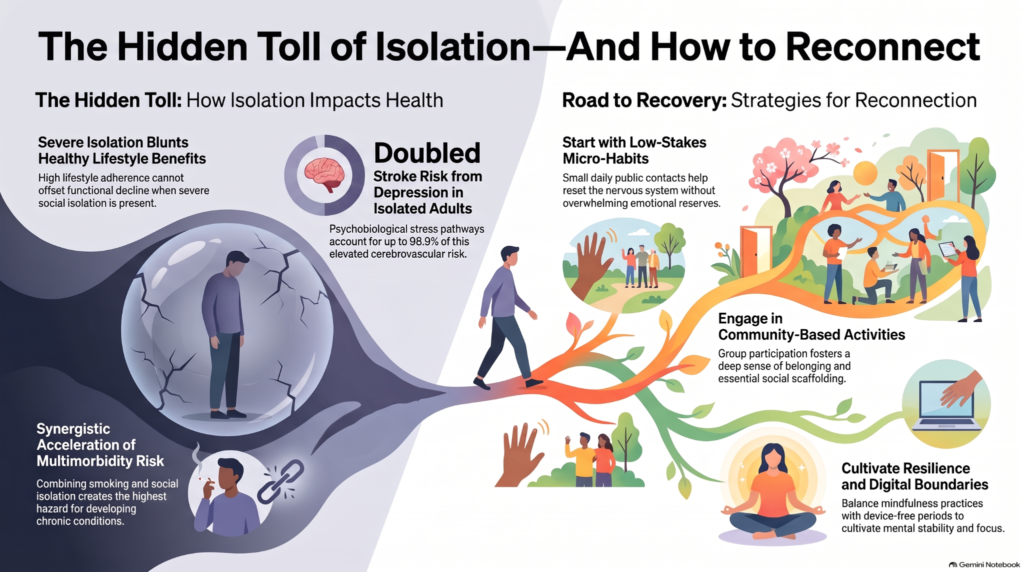
- High Lifestyle Adherence (Score 4–5): Produced its strongest protective effect among older adults with no social isolation ( = 1.07, 95 CI: 0.86 to 1.28, p < 0.001). This positive association weakened to =0.79 (9\% CI: 0.59 to 0.99, p < 0.001) under moderate isolation, and dropped to =0.50 (95% CI: 0.24 to 0.77, p < 0.001) under severe isolation.
- Moderate Lifestyle Adherence (Score 3): Conferred significant protection under zero isolation ( = 0.89, 95\%\text{ CI: } 0.67\text{ to } 1.09, p < 0.001) and moderate isolation ( = 0.49, 95% CI: 0.29 to 0.69, p < 0.001). However, under severe social isolation (score 3–4), moderate lifestyle adherence was no longer statistically significant ( = 0.14, 95% CI: -0.12 to 0.39, p = 0.293).
- When evaluated against the reference group with the highest joint risk (low lifestyle score 0–2 combined with severe isolation 3–4), adherence to healthy lifestyle behaviors demonstrated a protective effect that diminished as social isolation worsened:
- Domain-Specific Functional Divergence:
- Social isolation demonstrated the strongest longitudinal associations with declines in the cognitive and psychological domains.
- Healthy lifestyle adherence was most strongly linked to preservation and improvements in the locomotor and psychological domains.
- Subgroup Robustness:
- Sensitivity analyses stratified across age (<75 vs. 75 years) and biological sex confirmed that the independent protective effects of healthy behaviors and the detrimental effects of social isolation remained consistent across demographic strata (p<0.001 across all models).
- Social isolation exerted slightly larger negative effect sizes among older adults aged 75 (=-0.79) and female participants (=-0.76).
Mechanistic & Pathophysiological Pathways
- Neuroendocrine Cascades of Social Disconnection: Social isolation activates the hypothalamic-pituitary-adrenal (HPA) axis, elevating circulating glucocorticoids and precipitating systemic low-grade neuroinflammation. This physiological stress response damages hippocampal circuits and prefrontal networks, explaining why cognitive and psychological capacities showed the greatest sensitivity to social isolation.
- Social Scaffolding and Behavioral Reinforcement: In the absence of family networks and daily interpersonal contact, older adults experience fewer opportunities for complex cognitive processing and verbal communication. Furthermore, isolated individuals lack informal caregiving reminders, reducing compliance with medical regimens, physical movement, and balanced nutrition, which accelerates functional frailty and motoric cognitive risk syndromes.
- Limits of Lifestyle Buffering Against Severe Isolation: While physical activity, non-smoking, and adequate sleep support mitochondrial bioenergetics, musculoskeletal mass, and vascular perfusion (driving gains in the locomotor domain), these lifestyle factors cannot fully offset the chronic neurobiological burden of severe social disconnection. When isolation is severe (score 3–4), the protective benefit of a healthy lifestyle is substantially blunted, and moderate lifestyle adherence loses statistical significance entirely.
Public Health, Clinical, & Policy Implications
- Dual-Target Intervention Paradigms: Public health guidelines for healthy aging cannot rely solely on promoting diet, exercise, or smoking cessation. Clinical care pathways must integrate formal social connectivity initiatives (e.g., social prescribing, community day centers, intergenerational family support programs) alongside lifestyle counseling.
- Targeting the ICOPE Screening Framework: Community primary care clinicians should screen for social isolation as a direct clinical risk factor for intrinsic capacity decline. Older adults identified as living alone or lacking regular family contact should be prioritized for comprehensive functional assessments and targeted social support.
- Addressing Sociodemographic Vulnerabilities: Because low education (53.8% illiteracy at baseline) and lower economic status strongly predicted lower IC, public health initiatives must design low-literacy health-education programs to foster functional reserves among socioeconomically disadvantaged older cohorts.
Study Limitations
- Cultural & Geographic Specificity: The cohort comprised community-dwelling older adults in China, where filial piety and family co-residence traditions are strong; findings may not fully generalize to Western societies where institutional living, formal community care, and peer networks predominate.
- Observational Follow-Up Duration: The 4-year analytical follow-up across three waves cannot capture lifelong functional trajectories or rule out reverse causation (i.e., older adults with preclinical functional decline withdrawing from social interactions or abandoning physical exercise prior to baseline).
- Exclusion of Later Survey Waves: Due to structural omissions of objective physical performance measures (SPPB and lung function) in CHARLS 2018 and 2020, long-term multi-decade changes could not be evaluated.
- Self-Reported Lifestyle Parameters: Dietary intake, physical activity, and sleep duration relied on self-reported questionnaires rather than objective 24-hour actigraphy, dietary records, or continuous physiological monitoring.
| REFERENCE: Xiao Yue, Quan Yuan, Rong Zhou, Mei Wang, Social isolation, healthy lifestyle, and intrinsic capacity among older adults in China: A longitudinal study, The Journal of nutrition, health and aging, Volume 29, Issue 8, 2025, 100583, ISSN 1279-7707, https://doi.org/10.1016/j.jnha.2025.100583. (https://www.sciencedirect.com/science/article/pii/S1279770725001083) |
Association between depression and stroke in a socially isolated population: Mediating role of unhealthy lifestyle behaviors
This cross-sectional investigation utilizes data from two nationally representative longitudinal aging cohorts—the English Longitudinal Study of Ageing (ELSA) in the United Kingdom and the China Health and Retirement Longitudinal Study (CHARLS) in China—to evaluate the independent association between depression and stroke specifically within socially isolated older adults, while quantifying the mediating role of unhealthy lifestyle behaviors (tobacco smoking and alcohol consumption) across differing sociocultural contexts.
Conceptual Framework & Public Health Rationale
- Stroke Burden and Vulnerable Populations: Despite global declines in age-standardized incidence and mortality, stroke ranks second in global mortality and third in disability-adjusted life years (DALYs) lost worldwide, making the identification of modifiable risk factors in high-vulnerability populations a public health priority.
- Social Isolation as a High-Risk Context: Social isolation—defined as limited objective interaction or insufficient participation in social activities—is recognized as an independent risk factor for adverse cardiovascular events, chronic disease, and mortality. Rather than treating isolation merely as a statistical covariate, the authors isolated this high-risk population to evaluate the compound risks conferred by concurrent psychiatric conditions.
- Depression, Shared Biological Pathways, and Maladaptive Behaviors: Depression and social isolation share common biological pathways, including chronic sympathetic hyperactivity, hypothalamic-pituitary-adrenal (HPA) axis dysregulation (glucocorticoid resistance), persistent systemic inflammation, and endothelial dysfunction, all of which elevate cerebrovascular susceptibility. Furthermore, depressed individuals frequently adopt unhealthy lifestyle coping mechanisms (e.g., smoking and hazardous alcohol use).
- Core Research Objective: To clarify the direct association between depressive symptoms and stroke among socially isolated individuals and evaluate whether unhealthy lifestyle behaviors mediate this relationship across two distinct national aging cohorts.
Methodology & Cohort Architecture
- Study Design & Data Sources: Cross-sectional analysis of community-dwelling adults aged 50 years drawn from Wave 9 (2018–2019) of ELSA (N=19,802 initial recruitments) and Wave 4 (2018) of CHARLS (N=25,586 initial recruitments).
- Study Inclusion via Social Isolation:
- Social isolation was applied as an inclusion criterion rather than a comparative variable.
- ELSA: Defined as not holding membership in any community, social, or religious organizations.
- CHARLS: Defined as participating in six domains of social activities (meeting friends; playing Mahjong, cards, or chess; sports/social clubs; community organizations; volunteer/philanthropic work; educational training) less than once per month.
- Analytical Cohort: After excluding individuals aged <50 years, those with incomplete surveys, and those with missing data for social participation, lifestyle habits, or depressive scales, the final sample comprised 13,069 socially isolated individuals: 4,454 from ELSA and 8,615 from CHARLS.
- Operational Definitions & Instrumentation:
- Depression Symptoms (Exposure): Assessed via the 8-item Center for Epidemiologic Studies Depression Scale (CESD-8; score range 0–8; cutoff 4 indicating depression) in ELSA, and the 10-item version (CESD-10; score range 0–30; cutoff 10 indicating depression) in CHARLS.
- Stroke (Outcome): Identified via self-reported physician diagnosis of stroke across both cohorts.
- Unhealthy Lifestyle Behaviors (Mediators):
- Smoking: Categorized as current smoker versus non-smoker (never smoked or quit).
- Alcohol Consumption: Assessed as binary consumption (yes vs. no) over the preceding 12 months.
- Sociodemographic Covariates: Chronological age, biological sex, and educational attainment (categorized as high school and below vs. above high school).
- Statistical Modeling & Sensitivity Framework:
- Multivariable logistic regression models were fitted to estimate odds ratios (ORs) and 95% confidence intervals (Model 1: unadjusted; Model 2: adjusted for age, sex, and education).
- Subgroup and interaction analyses were conducted across age (<65 vs. 65 years), sex, and education tiers.
- Mediation analysis was executed using the R mediation package based on the potential outcomes framework by Imai et al. (using probit links for binary outcomes and 1,000 non-parametric bootstrap iterations), reporting indirect, direct, and total effects on the probability risk scale.
- Sensitivity analyses included E-value computations to quantify robustness to unmeasured confounding and reverse-causality mediation models (depression stroke unhealthy behaviors).
Key Empirical Findings
- Cohort Characteristics & Baseline Disparities:
- CHARLS: Mean age 63.538.87 years; 50.77% female; 97.43% educated at or below high school; 43.80% smokers; 46.64% alcohol drinkers; 40.10% prevalence of depression (n=3,455); and 7.50% stroke prevalence (n=646).
- ELSA: Mean age 67.3910.21 years; 57.00% female; 41.22% educated above high school; 61.07% smokers; 85.29% alcohol drinkers; 12.66% prevalence of depression (n=564); and 4.74% stroke prevalence (n=211).
- Independent Depression-Stroke Associations:
- After adjusting for age, sex, and educational attainment (Model 2), depression was independently associated with stroke in both cohorts:
- CHARLS: OR=1.94 (95% CI: 1.64–2.28, P<0.001).
- ELSA: OR=1.98 (95% CI: 1.39–2.82, P<0.001).
- E-Value Sensitivity: The calculated E-values were 3.29 for CHARLS and 3.37 for ELSA, indicating that an unmeasured confounder would require an association of at least 3.3-fold with both depression and stroke simultaneously to negate the observed findings.
- After adjusting for age, sex, and educational attainment (Model 2), depression was independently associated with stroke in both cohorts:
- Subgroup Stratifications:
- In CHARLS, the association remained consistent across age subgroups (<65years: OR=2.07; 65years: OR=1.84;Pinteraction=0.757) and sex (Pinteraction=0.644). Across education, the association was significant in the lower-education tier (OR=1.92,P<0.001), while the higher-education subgroup was non-significant (OR=2.46,P=0.053), though interaction testing confirmed no significant effect modification (Pinteraction=0.594) and overlapping confidence intervals.
- In ELSA, the association was statistically significant across age categories and educational strata (Pinteraction>0.05). While significant in females (OR=2.07,P=0.001) and marginally non-significant in males (OR=1.82,P=0.050), the sex interaction term was non-significant (Pinteraction=0.315).
- Cross-Cultural Heterogeneity in Behavioral Mediation:
- CHARLS (China):
- Total effect of depression on stroke: 0.04535 (95% CI: 0.03537–0.05547).
- Direct effect of depression on stroke: 0.04482 (95% CI: 0.03444–0.05460, P<0.001).
- Smoking mediated 1.10% of the total effect (indirect effect: 0.00053, 95% CI: 0.00009–0.00110, P=0.020).
- Alcohol consumption showed no mediating role (indirect effect: -0.00002,P>0.999, proportion mediated: $0.00\%$).
- ELSA (United Kingdom):
- Total effect of depression on stroke: 0.04395 (95% CI: 0.02196–0.06619).
- Direct effect of depression on stroke: 0.03758 (95% CI: 0.01775–0.05914, P<0.001).
- Alcohol consumption mediated 14.10% of the total effect (indirect effect: 0.00637, 95% CI: 0.00326–0.01040, P<0.001).
- Smoking showed no statistically significant mediation (indirect effect: 0.00044,P=0.300, proportion mediated: $0.80\%$).
- CHARLS (China):
- Reverse-Causality Testing:
- In secondary sensitivity models testing stroke as a mediator of depression onto lifestyle behaviors (depressionstrokeunhealthybehaviors), all indirect paths were non-significant (P>0.05), with mediation proportions near zero, suggesting that reverse causation did not drive the primary findings.
Biological & Cross-Cultural Interpretations
- The Predominance of Direct Psychobiological Effects: Across both national cohorts, the vast majority of stroke risk linked to depression operated through direct pathways (85.9% in ELSA; 98.9% in CHARLS) rather than through tobacco or alcohol use. This pattern indicates that neuroendocrine dysregulation, heightened vascular tone, glucocorticoid receptor resistance, and pro-inflammatory signaling remain the primary drivers of cerebrovascular vulnerability in socially isolated older adults.
- Sociocultural Shaping of Coping Mechanisms: The divergence in behavioral mediators between the two cohorts reflects distinct cultural norms surrounding substance use and coping:
- In China, where smoking frequently serves as a traditional social medium to relieve loneliness and interpersonal stress, tobacco use captured a statistically significant portion of the behavioral pathway.
- In the UK, where alcohol consumption is deeply integrated into social coping and pub culture, alcohol misuse operated as a more prominent behavioral mediator for coping with depressive distress among isolated older adults.
Clinical & Preventative Implications
- Screening Depression Within Socially Isolated Cohorts: Because depression prevalence reached 40.10% among socially isolated older adults in China and nearly doubled stroke odds in both countries, public health guidelines should integrate standardized depression screening into primary stroke prevention protocols, particularly for individuals living without active community participation.
- Prioritizing Psychosocial Interventions: Given that unhealthy behaviors accounted for only a modest share of stroke risk (1.10% to 14.10%), behavioral modification programs (smoking cessation, alcohol moderation) should be treated as complementary measures rather than standalone solutions. Primary prevention must prioritize timely psychosocial support, mental health treatment, and structural initiatives to reduce social disconnection.
Methodological Limitations
- Cross-Sectional Architecture: The observational design prevents establishing definitive causal temporality between the onset of depressive symptoms, adoption of unhealthy coping behaviors, and subsequent cerebrovascular events.
- Potential Collider Stratification Bias: Conditioning enrollment strictly on social isolation could introduce collider bias if social isolation is itself a joint downstream consequence of depression, stroke risk, and unmeasured sociodemographic characteristics.
- Binary Operationalization of Lifestyle Exposures: Smoking and alcohol use were coded as binary indicators (yes/no), precluding fine-grained dose-response analyses incorporating cumulative duration, pack-years, or standard units of alcohol consumed per week.
- Self-Reported Stroke Verification: Stroke incidence was determined through self-reported physician diagnoses rather than verification via electronic health records, brain imaging (CT/MRI), or hospital discharge registers.
| REFERENCE: Ruichun Jin, Tianshu Feng, Association between depression and stroke in a socially isolated population: Mediating role of unhealthy lifestyle behaviors, Journal of Stroke and Cerebrovascular Diseases, Volume 35, Issue 6, 2026, 108650, ISSN 1052-3057, https://doi.org/10.1016/j.jstrokecerebrovasdis.2026.108650. (https://www.sciencedirect.com/science/article/pii/S1052305726001138) |
Social and lifestyle factors associated with the risk of developing multimorbidity in middle-aged and older adults
This prospective, population-based cohort study utilizes data from the UK Biobank to investigate the independent and joint associations of social factors (loneliness, social isolation) and lifestyle behaviors (smoking, sleep duration, sedentary time, dietary intake) with the long-term risk of developing incident multimorbidity among middle-aged and older adults.
Conceptual Framework & Rationale
- Multimorbidity as a Global Health Priority: The co-occurrence of two or more chronic conditions represents an escalating challenge for healthcare systems globally. Multimorbidity reflects cumulative biological aging, is concentrated among socioeconomically disadvantaged groups, and drives severe physical impairment, diminished quality of life, and premature mortality.
- Gaps in Social Determinants Research: While adverse lifestyle factors (smoking, poor diet, physical inactivity) are established contributors to cardiometabolic disease, the longitudinal role of social factors remains unresolved. Prior findings on social isolation are conflicting, with several studies failing to detect significant relationships.
- The Middle-Aged Vulnerability Window: Most longitudinal investigations have focused exclusively on older cohorts (65 years), overlooking middle-aged adults (ages 40–60), who represent the primary demographic window for the initial onset and accumulation of chronic conditions.
- Core Research Objective: To examine whether loneliness, objective social isolation, and modifiable lifestyle behaviors independently predict incident multimorbidity over a median 13-year follow-up in a large cohort free of multimorbidity at baseline.
Methodology & Cohort Architecture
- Study Design & Population: A prospective cohort of 407,115 middle-aged and older adults recruited between 2006 and 2010 across 22 assessment centers in England, Scotland, and Wales, tracked until incident multimorbidity, death, or May 31, 2022 (median follow-up: 13.2 years, IQR: 12.3–13.9).
- Exclusion Criteria: Baseline prevalent multimorbidity (n=39,485) and incomplete covariates (n=55,531) were excluded from the initial 502,131 participants.
- Operational Definitions & Instrumentation:
- Incident Multimorbidity (Primary Outcome): Defined as the documented diagnosis date of a second chronic condition from a predefined panel of nine major diseases: type 2 diabetes, stroke, coronary heart disease, depression, osteoarthritis/arthritis, Parkinson’s disease, dementia, chronic obstructive pulmonary disease (COPD), and major cancers. Diagnoses were linked via ICD-9/ICD-10 codes across national inpatient records, primary care databases, cancer registries, and death certificates.
- Social Factors:
- Loneliness (Subjective): Evaluated via a 2-item questionnaire adapted from the UCLA Loneliness Scale (frequency of feeling lonely and availability of a confidant; scored 0–2; 2 classified as lonely).
- Social Isolation (Objective): Evaluated via a 3-item index (living alone, visiting friends/family less than once per month, and zero weekly participation in social/civic/sports clubs; scored 0–3; 2 classified as isolated).
- Lifestyle Behaviors:
- Smoking Status: Categorized as never, previous, or current smoker.
- Sleep Duration: Classified as optimal (7–8 hours/night) or non-optimal (<7 or >8 hours/night).
- Sedentary Lifestyle: Total daily hours spent watching television, categorized into population tertiles (T1 low, T2 middle, T3 high).
- Dietary Consumption: Self-reported 1-year food frequency converted to daily/weekly intakes: fruits and vegetables (tertiles of g/day), processed meat ( 1 vs. >1 time/week), red meat ( 2 vs. >2 servings/week), and oily fish ( <2 vs. 2 servings/week).
- Sociodemographic & Anthropometric Covariates: Age, biological sex, ethnicity (British vs. other), educational attainment (less than primary, secondary, university), area-level deprivation (Townsend Deprivation Index), and body mass index (BMI; tertiles).
- Statistical Modeling & Sensitivity Framework:
- Multivariable Cox proportional hazards regression models estimated Hazard Ratios (HRs) and 95% Confidence Intervals (CIs). Model 1 adjusted for demographics and education; Model 2 (fully adjusted) incorporated the Townsend Deprivation Index and BMI.
- Sex-stratified analyses and formal multiplicative interaction models were fitted.
- Separate Cox models evaluated joint exposure profiles between individual social factors and lifestyle behaviors.
- Sensitivity Analyses: Validated in a subsample of 178,000 individuals with 24-hour dietary recalls adjusting for total caloric energy intake, and separately after excluding depression from the multimorbidity outcome definition (to eliminate reverse causality with lifestyle/social withdrawal).
Key Empirical Findings
- Cohort Characteristics & Multimorbidity Incidence:
- Over 13.2 median years of follow-up, 33,794 participants (8.3%) developed incident multimorbidity.
- The baseline mean age was 56.28.1 years (54.6% female). Participants developing multimorbidity were older at baseline (60.47.0 vs. 55.98.1 years), had higher average BMI (28.8 vs. 27.1kg/m2), and experienced higher area deprivation.
- Independent Associations with Social Factors:
- In fully adjusted models (Model 2), both subjective loneliness and objective social isolation independently predicted incident multimorbidity:
- Loneliness: HR=1.30 (95% CI: 1.25–1.36, p<0.001).
- Social Isolation: HR=1.15 (95% CI: 1.11–1.19, p<0.001).
- In fully adjusted models (Model 2), both subjective loneliness and objective social isolation independently predicted incident multimorbidity:
- Independent Associations with Lifestyle Behaviors:
- Tobacco Smoking: Current smoking was the strongest behavioral risk factor (HR=2.10, 95% CI: 2.04–2.17, p<0.001), while previous smokers retained elevated risk (HR=1.25, 95% CI: 1.22–1.28, p<0.001) compared to never smokers.
- Sleep & Sedentary Habits: Non-optimal sleep duration was associated with higher risk (HR=1.23, 95% CI: 1.20–1.26, p<0.001). High television sedentary time (T3 vs. T1) increased risk by 22% (HR=1.22, 95% CI: 1.19–1.25, p<0.001).
- Dietary Factors: Processed meat intake exceeding once per week increased risk (HR=1.09, 95% CI: 1.06–1.11, p<0.001). Conversely, moderate (HR=0.93, 95% CI: 0.90–0.95) and high (HR=0.96, 95% CI: 0.93–0.98) fruit and vegetable intake conferred protection. Red meat (p=0.31) and oily fish (p=0.22) intakes showed no significant independent associations.
- Joint Associations & High-Risk Clustering:
- The highest incident risk observed across the study occurred among individuals with the combination of current smoking and social isolation (HR=2.39, 95% CI: 2.21–2.61; pinteraction=0.003).
- Non-optimal sleep combined with loneliness or social isolation conferred a 32% increased risk (HR=1.32 for both).
- Processed meat intake combined with loneliness increased risk by 21% (HR=1.21, 95% CI: 1.12–1.32; pinteraction=0.012).
- Higher fruit and vegetable intake partially attenuated the risk associated with loneliness (HR=0.87) and social isolation (HR=0.85, pinteraction=0.02).
- Sex-Stratified Interactions:
- A significant sex interaction was observed for smoking (pinteraction<0.001), with current smoking conferring a higher relative hazard in women (HR=2.25, 95% CI: 2.14–2.35) than in men (HR=1.98, 95% CI: 1.89–2.07).
- Fruit and vegetable intake showed stronger protective associations in women (T3 vs. T1: HR=0.93, pinteraction<0.001) than in men (T3 vs. T1: HR=0.98).
- Associations for loneliness, social isolation, sleep duration, and sedentary hours did not differ significantly by biological sex.
- Sensitivity Analyses: Findings remained stable when models were adjusted for caloric intake from 24-hour dietary recalls and after excluding depression as an outcome disease, confirming that results were not artifacts of dietary misreporting or psychiatric reverse causation.
Biological & Pathophysiological Pathways
- Neuroendocrine & Immune Disruption from Social Disconnection: Loneliness and social isolation activate the sympathetic nervous system and hypothalamic-pituitary-adrenal (HPA) axis, promoting sustained glucocorticoid release, downregulating anti-inflammatory response pathways, and elevating systemic inflammatory cytokines (e.g., IL-6, CRP). This chronic low-grade inflammation accelerates endothelial damage, atherogenesis, and insulin resistance across multiple organ systems.
- Behavioral-Biological Clustering: Social isolation removes interpersonal accountability, peer encouragement, and social scaffolding, predisposing individuals to adopt sedentary behaviors, irregular sleep routines, and higher consumption of processed convenience foods. The substantial risk amplification seen in socially isolated smokers highlights how neuroendocrine stress cascades and direct toxic exposures synergize to accelerate multi-organ decline.
Clinical & Public Health Implications
- Screening Beyond Traditional Risk Factors: Clinical risk assessments for chronic disease must look beyond blood pressure, lipids, and BMI to systematically evaluate social vulnerability. Loneliness and social isolation represent independent, modifiable determinants comparable in effect size to established behavioral risk factors.
- Integrated Preventive Interventions in Midlife: Because chronic disease onset accelerates during middle age, preventive health programs must target adults in their 40s and 50s before irreversible disease accumulation occurs. Interventions combining social connection initiatives (e.g., community group programs, social prescribing) with smoking cessation and sleep hygiene provide a high-yield strategy to curb multimorbidity.
Study Limitations
- Healthy Volunteer Bias in UK Biobank: Participants are predominantly of white British ancestry (90.3%) and hold higher average education and socioeconomic standing than the general UK population, which may restrict external generalizability to more deprived or racially diverse populations.
- Single Baseline Exposure Measurement: Social and lifestyle factors were captured via self-reported touchscreen questionnaires at baseline without tracking changes, cessation, or cumulative dose trajectories over the 13-year follow-up.
- Conservative Multimorbidity Operationalization: Multimorbidity was restricted to a predefined list of nine severe chronic conditions, which may underestimate the incidence of less fatal but disabling conditions (such as chronic kidney disease, osteoporosis, or sensory loss).
- Observational Design: Despite multivariable adjustments and exclusion of baseline cases, residual confounding and preclinical reverse causation cannot be completely excluded.
| REFERENCE: Damián González-Beltrán, Humberto Yévenes-Briones, Aitana Vázquez-Fernández, Alberto Lana, Esther Lopez-Garcia, Francisco Félix Caballero, Social and lifestyle factors associated with the risk of developing multimorbidity in middle-aged and older adults, Archives of Gerontology and Geriatrics, Volume 145, 2026, 106212, ISSN 0167-4943, https://doi.org/10.1016/j.archger.2026.106212. (https://www.sciencedirect.com/science/article/pii/S0167494326000828) |
CONCLUSION
Rebuilding connection after a prolonged stretch of isolation rarely happens through grand, sweeping lifestyle shifts. It begins with deliberate, low-stakes micro-habits that gently coax you back into the shared fabric of your neighborhood. For me, that transition started not with large parties or forced networking, but on the local urban trails with my gravel bike and a camera slung over my shoulder. Simply riding alongside strangers, exchanging a brief head nod at an intersection, or sitting at a neighborhood coffee bar engaging in brief banter with the barista provided the exact social scaffolding my nervous system desperately needed to reset.
In a society that frequently sells the fantasy of hyper-independence, recognizing our primal need for human contact is an act of genuine self-preservation. Taking care of your mental health requires more than solitary quiet time and rigid wellness protocols; it demands the messy, vital presence of other human beings.
Stepping back outside into community spaces may feel daunting when isolation has been your comfort zone, but you do not need to overhaul your entire social life overnight. Choose one small anchor—a morning stroll through a community park, a short call to an old friend, or a shared hobby—and let genuine connection rebuild your daily strength from the ground up.