

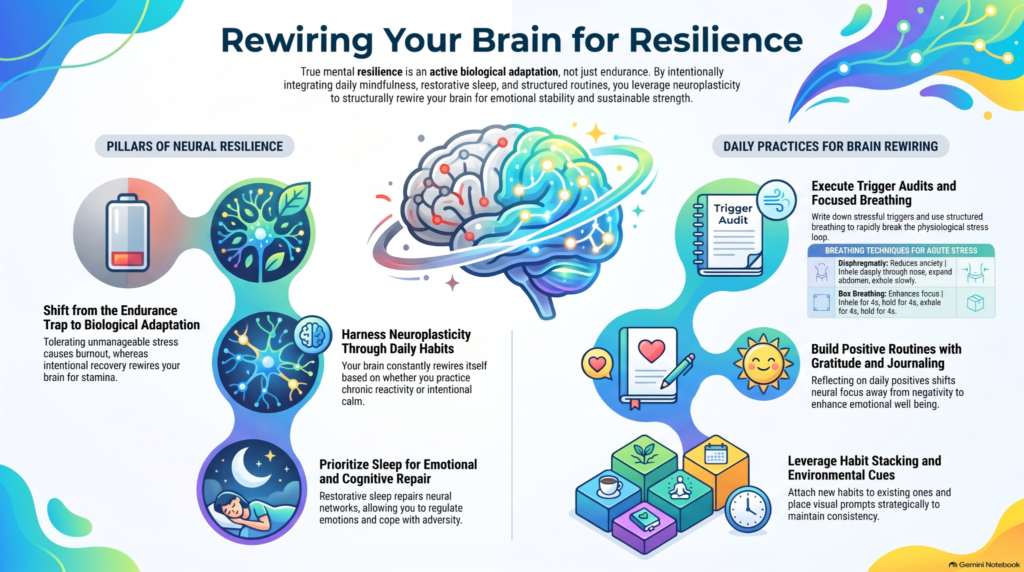
Years ago, when I was consulting for high-output corporate teams, I watched countless high performers hit a wall because they completely misunderstood what resilience actually meant. They operated under the toxic myth that resilience is about sheer grit: gritting your teeth, absorbing unmanageable stress, and powering through exhaustion with forced optimism. In performance coaching, we called this the “endurance trap.” Real resilience isn’t a badge of honor for tolerating mistreatment from your schedule; it’s an active biological adaptation.
When we talk about neuroplasticity—the brain’s capacity to structurally rewire itself—we have to realize that this rewiring happens whether you are intentional about it or not. If you subject your nervous system to constant high-stress reactivity and chronically shortchange your recovery, your neural pathways adapt to keep you hypervigilant, anxious, and cognitively drained. You become exceptionally efficient at staying burned out.
Sustainable strength requires dismantling that self-punishing mindset. You don’t rebuild mental stamina by forcing yourself to become immune to stress; you build it by systematically altering the daily conditions of your brain. By viewing daily mindfulness, restorative sleep, and intentional behavioral routines as practical operational upgrades rather than soft self-care indulgences, you take control of how your neural architecture responds under pressure.
To rewire your brain for resilience, embrace mindfulness practices that anchor you in the present, reducing anxiety and enhancing emotional control. Prioritize quality sleep to rejuvenate your brain, improving your ability to cope with stress. Cultivate positive habits, like gratitude and reflective journaling, which reinforce emotional well-being. Together, these strategies create a strong foundation for resilience, allowing you to navigate challenges more effectively. Discover even more actionable insights to strengthen your resilience further.
KEY TAKEAWAYS
- Practice mindfulness techniques like meditation and breathing exercises to enhance emotional regulation and reduce anxiety, fostering resilience.
- Prioritize quality sleep to rejuvenate the brain, improving cognitive function and emotional stability essential for coping with challenges.
- Establish positive routines that provide stability while allowing flexibility for life’s demands, promoting resilience through consistent habits.
- Incorporate gratitude practices into your daily life to shift focus from negativity to positivity, reinforcing emotional well-being and resilience.
- Utilize environmental cues, such as placing reminders or journals strategically, to prompt healthy behaviors and maintain commitment to resilience-building efforts.
OVERCOMING DAILY STRESSORS: HOW RESILIENCE CAN HELP
As you navigate the challenges of daily life, resilience acts as an essential buffer against stressors that can easily overwhelm you. By cultivating resilience, you equip yourself with the tools for effective stress management and emotional regulation.
Research shows that resilient individuals tend to view setbacks as temporary and manageable, which greatly reduces feelings of anxiety and helplessness.
You can develop this mental strength through practices like reframing negative thoughts and embracing problem-solving strategies. Engaging in regular physical activity and fostering supportive relationships also enhances your resilience, while developing the fitness mindset can help you stay consistent with healthy movement and exercise.
These approaches not only help you bounce back from adversity but also foster a proactive mindset that empowers you to face daily stressors head-on.
In essence, resilience isn’t just about surviving; it’s about thriving. By embracing resilience, you reclaim your freedom to navigate life’s ups and downs with confidence and clarity.
How Mindfulness Can Boost Your Mental Strength?
Building resilience equips you to manage stress effectively, but integrating mindfulness into your routine can amplify that mental strength. By practicing mindful awareness, you train your brain to focus on the present moment, reducing anxiety about the past or future. This shift enhances your emotional regulation, allowing you to respond to challenges with clarity rather than reactivity.
Research shows that individuals who engage in mindfulness techniques report lower stress levels and improved overall well-being.
When you cultivate a habit of mindfulness, you become more attuned to your thoughts and feelings, enabling you to navigate life’s ups and downs with greater ease. You learn to recognize negative patterns and replace them with constructive behaviors.
This not only fosters resilience but also empowers you to embrace freedom from emotional turmoil. Ultimately, mindfulness becomes a powerful tool in your mental strength arsenal, helping you thrive in the face of adversity.
Boosting Resilience Through Quality Sleep
At the core of resilience is the brain’s ability to adapt: to regulate emotions, sustain focus, and recover after stress. Neuroscience gives us a window into how mindfulness supports exactly these capacities through a phenomenon called neuroplasticity, the brain’s ability to reorganize itself by forming new neural connections throughout life.
How can quality sleep enhance your resilience? When you prioritize restorative sleep, your brain repairs and rejuvenates, strengthening your ability to cope with stress.
Sleep deprivation disrupts your sleep cycles, leading to impaired cognitive function and emotional instability, making challenges seem insurmountable. By focusing on sleep hygiene—creating a calming sleep environment and establishing consistent sleep patterns—you can greatly improve your sleep quality.
Simple sleep rituals, like reading or meditating before bed, signal your body that it’s time to unwind. This not only enhances your ability to recuperate but also fosters a mindset of resilience, helping you face daily hurdles with a clearer perspective.
Investing in quality sleep isn’t just about rest; it’s about empowering yourself to handle life’s ups and downs with grace and strength. So, take charge of your sleep habits, and watch how your resilience flourishes.
Practical Habits to Enhance Emotional Well-Being
Resilience is the ability to adapt and recover from adversity, and it’s a powerful trait that plays a critical role in mental health. What’s fascinating is that resilience isn’t just a personality trait—it’s deeply rooted in the brain’s natural ability to change and adapt, a process known as neuroplasticity. This connection between resilience and neuroplasticity offers hope and evidence that anyone can strengthen their emotional and psychological resilience with the right tools and mindset.
To enhance your emotional well-being, integrating daily mindfulness practices, establishing quality sleep habits, and building positive routines can be transformative.
Research shows that these habits not only reduce stress but also foster a greater sense of control and happiness in your life.
Daily Mindfulness Practices
While life’s challenges can feel overwhelming at times, integrating daily mindfulness practices into your routine can greatly enhance your emotional well-being.
One effective method is mindful journaling; set aside a few minutes each day to reflect on your thoughts and feelings. This process promotes self-awareness and helps you understand emotional patterns.
Additionally, consider incorporating gratitude practices into your daily life. By jotting down three things you’re grateful for each day, you shift your focus from negativity to positivity, fostering resilience.
Research shows that these practices reduce stress and improve overall mood, empowering you to navigate difficulties with a clearer mindset.
Embrace these habits, and you’ll cultivate a sense of freedom and emotional strength amidst life’s uncertainties.
Quality Sleep Habits
Integrating quality sleep habits into your daily routine can greatly bolster your emotional well-being, complementing the mindfulness practices you’ve already adopted.
Prioritizing sleep hygiene, such as maintaining a consistent sleep schedule and creating a calming bedtime environment, helps signal your body that it’s time to rest. Limit screen time before bed to reduce blue light exposure, which can disrupt your circadian rhythm.
Additionally, consider incorporating restorative naps into your day as a self care activity. Research shows that even short naps can enhance mood and cognitive function, offering a much-needed reset.
Building Positive Routines
Establishing positive routines can greatly enhance your emotional well-being, as research shows that consistent habits foster stability and reduce stress.
To create a routine that works for you, consider incorporating elements of positive reinforcement and routine flexibility. This way, you can adapt as needed while still enjoying the benefits of a structured approach.
- Start each day with a brief mindfulness meditation.
- Schedule regular physical activity that you enjoy.
- Set aside time for hobbies or creative pursuits.
- Maintain a gratitude journal to reflect on daily positives.
- Allow for flexibility to adjust your routine when life demands it.

MINDFULNESS TECHNIQUES TO PRACTICE EVERY DAY
In my own life, and across my organizational coaching work, the turning point has never come from sudden, sweeping lifestyle overhauls. Real mindset shifts happen in micro-decisions—specifically through reflective journaling and deliberate physical de-escalation.
I see many people treat self-discipline like an internal drill sergeant: when anxiety spikes or a habit slips, they beat themselves up. That’s counterproductive neurobiology. When you’re in self-attack mode, your amygdala stays lit up like a switchboard, locking you into survival mode. What actually rewires an automatic trigger into cognitive flexibility is honest, non-judgmental observation. Whenever I feel that familiar tightening in my chest before a massive project or high-stakes decision, I don’t slap a layer of positive affirmations over it. I treat the feeling as data.
I open my notebook and execute what I call a “trigger audit.” I write down the exact situation, the automatic story my brain invented (“This has to be perfect, or everything fails”), and the physical sensation I’m experiencing. From there, I deliberately reframe the failure into neutral feedback. Pairing that cognitive audit with four seconds of box breathing immediately recalibrates autonomic tone and breaks the stress loop. You aren’t ignoring reality; you’re creating just enough space between the stimulus and your reaction to make a conscious, grounded choice.
Resilience isn’t just about bouncing back from adversity—it’s about rewiring the brain for sustainable strength. Neuroscience has revealed that resilience is deeply connected to neural pathways, emotional regulation, and cognitive adaptability. By leveraging Neuro-Linguistic Programming (NLP), individuals can actively reshape thought patterns, anchor positivity, and cultivate a resilient mindset.
Incorporating daily meditation practices and breathing exercises can greatly enhance your resilience.
Research shows that these mindfulness techniques not only reduce stress but also improve emotional regulation and cognitive flexibility.
Daily Meditation Practices
While you might feel overwhelmed by daily stressors, adopting simple meditation practices can greatly enhance your resilience. Integrating these daily techniques can foster mindfulness and promote emotional well-being:
- Mindful Journaling: Spend a few minutes each day reflecting on your thoughts and feelings.
- Gratitude Practice: List three things you’re grateful for to shift your focus positively.
- Guided Meditation: Use apps or online resources to explore different meditation styles.
- Body Scan: Dedicate time to notice physical sensations and release tension.
- Visualization: Imagine a peaceful scene to cultivate calmness and clarity.
These practices can empower you to navigate challenges more effectively, allowing you to reclaim a sense of freedom and control amidst life’s uncertainties.
Breathing Exercises Benefits
Integrating breathing exercises into your daily routine can markedly enhance your mindfulness practice and overall resilience. Breathing techniques are powerful tools for stress reduction, enabling you to reclaim a sense of calm and control in your life. Research shows that focused breathing can lower cortisol levels, improve emotional regulation, and foster a greater sense of well-being.
| Breathing Technique | Benefits | How to Practice |
| Diaphragmatic | Reduces anxiety | Inhale deeply through your nose, expanding your abdomen. Exhale slowly. |
| Box Breathing | Enhances focus | Inhale for 4 seconds, hold for 4, exhale for 4, hold for 4. Repeat. |
| 4-7-8 Breathing | Promotes relaxation | Inhale for 4, hold for 7, exhale for 8. |
Embrace these techniques daily for a more resilient you.
Maximizing Sleep for Better Resilience
Sleep isn’t just a luxury; it’s an essential component of building resilience. Prioritizing quality sleep can greatly enhance your ability to cope with stress and bounce back from adversity.
To maximize sleep for better resilience, consider the following strategies:
- Establish a consistent sleep schedule to regulate your body’s internal clock.
- Create a sleep-friendly environment by minimizing light and noise.
- Practice good sleep hygiene by avoiding screens before bedtime and limiting caffeine intake.
- Incorporate restorative naps into your day to rejuvenate your mind and body, but keep them short.
- Engage in relaxation techniques like meditation or deep breathing before sleep to calm your mind.
Building Lasting Daily Routines for Resilience
Quality sleep lays a strong foundation for resilience, but it’s only one piece of the puzzle. To build lasting daily routines, start with habit stacking—pairing new habits with established ones. This creates positive momentum.
Embrace routine flexibility; life’s unpredictability demands it. Schedule intentional breaks to recharge your energy and prevent burnout. Reflective journaling can deepen your self-awareness, helping you track progress and celebrate small victories.
Use environmental cues to prompt healthy behaviors, like placing your journal near your bed. Effective time management is essential for balancing responsibilities and self-care. Set clear goals to give your routines purpose, and practice self-compassion when things don’t go as planned.
Consider involving accountability partners to maintain your commitment. Finally, be open to mindset shifts; understanding neuroplasticity and mindset change can help you adapt your perspective and strengthen resilience over time. By blending these strategies, you’ll forge a more resilient you, ready to face life’s challenges.

RELATED STUDIES ABOUT REWIRING THE BRAIN FOR RESILIENCE
So, while you’re busy juggling life’s stressors like a circus clown on a unicycle, don’t forget the secret sauce: mindfulness, sleep, and positive habits. Sure, you could keep spinning those plates until they shatter, or you could embrace resilience and actually enjoy life. Remember, the world isn’t waiting for you to catch your breath, but with a little effort, you can rewire your brain to handle it all—without turning into a frazzled mess. Choose wisely!
Single-cell multiregion epigenomic rewiring in Alzheimer’s disease progression and cognitive resilience
This study provides a multiregion, single-cell epigenomic and transcriptomic atlas of Alzheimer’s disease (AD) progression and cognitive resilience (CR) across postmortem human brains.
Study Overview & Methodology:
- Multimodal Cohort Profiling: Analyzed 3.5 million nuclei from 384 postmortem brain tissue samples across 111 age-matched participants (57 nonAD, 33 earlyAD, 21 lateAD) enrolled in the Religious Orders Study and Rush Memory and Aging Project (ROSMAP).
- Comprehensive Multiregion Coverage: Profiled six brain regions characterized by differential vulnerability: entorhinal cortex (EC), hippocampus (HC), anterior thalamus (TH), angular gyrus (AG), midtemporal cortex (MTC), and prefrontal cortex (PFC).
- Data Integration & Regulatory Annotation: Integrated single-nucleus ATAC-seq (1,217,165 nuclei), single-nucleus RNA-seq (2,263,395 nuclei), and paired snMultiome data (288,480 nuclei). Identified 1,010,153 candidate cis-regulatory elements (cCREs) partitioned into 123 distinct regulatory modules across 7 major cell classes and 67 high-resolution subtypes.
- Spatial & Information Modeling: Quantified large-scale genomic compartments (100-kb resolution) using hidden Markov models alongside single-cell epigenomic information scores—measured as the proportional allocation of chromatin accessibility inside functional regulatory elements versus background genomic regions.
Key Findings:
- Compromised Compartmentalization & Epigenomic Relaxation: AD progression is marked by global epigenomic erosion, characterized by the aberrant activation of repressive heterochromatin regions (specifically lamina-associated domains [LADs] and A/T-rich peripheral chromosomes like chr18 and chr4) alongside the silencing of active, euchromatic regulatory regions (such as speckle-associated domains [SPADs] and chr19).
- Regional & Neuronal Vulnerabilities: Epigenomic information loss was most severe in the earliest sites of AD pathology—the EC and HC. Selective vulnerability was concentrated in EC-specific excitatory neurons (e.g., RELN- and TOX3-expressing subtypes), hippocampal dentate gyrus granule cells, CA1 pyramidal cells, and cortical upper-layer excitatory neurons. Epigenomic erosion in these subsets directly correlated with their selective cell-type depletion in advanced AD.
- Biphasic Glial Activation & Exhaustion: Microglia and astrocytes exhibited a biphasic trajectory during disease progression. Glial cells initially gained epigenomic information during early reactive transitions to mount a homeostatic defense; however, persistent activation culminated in terminally activated, exhausted states marked by collapsed epigenomic stability, identity loss, and cell depletion. Single-cell GWAS enrichment revealed that AD genetic risk variants were heavily concentrated in activated microglia with peak epigenomic information.
- Epigenomic Preservation in Cognitive Resilience: In contrast to lateAD erosion, cognitively resilient individuals (those sustaining preserved cognition despite high AD neuropathology) maintained elevated epigenomic information and preserved cellular fractions across vulnerable neuronal and glial populations. Epigenomic stability strongly correlated with better global cognition, slower cognitive decline, and reduced pathology burdens (including amyloid plaque scores and Braak neurofibrillary tangle stages).
- Underlying Molecular Regulators: Genes associated with epigenomic erosion were enriched for Polycomb repressive complexes (PRC1/PRC2, EZH2, SUZ12, H3K27me3), heterochromatin organizers (TRIM28/KAP1, SETDB1), and the cohesin complex (SA1, SMC3), whereas genes linked to preserved stability were governed by nuclear structural integrity, telomere maintenance, and DNA repair pathways. Known AD-GWAS risk genes such as APOE, CLU, and CTSB were upregulated in epigenomically eroded cells.
Translational & Scientific Implications:
- Redefining Pathological Drivers: The study demonstrates that large-scale epigenomic relaxation and loss of chromatin compartmentalization represent key molecular mechanisms driving selective neuronal vulnerability and glial exhaustion in AD.
- Epigenetic Targets for Cognitive Resilience: Preventing heterochromatin erosion, sustaining Polycomb-mediated repression, and reinforcing nuclear architectural stability offer novel therapeutic avenues to mimic cognitive resilience and preserve memory function in neurodegenerative disease.
| REFERENCE: Zunpeng Liu, Shanshan Zhang, Benjamin T. James, Kyriaki Galani, Riley J. Mangan, Stuart Benjamin Fass, Chuqian Liang, Manoj M. Wagle, Carles A. Boix, Yosuke Tanigawa, Sukwon Yun, Yena Sung, Xushen Xiong, Na Sun, Lei Hou, Martin Wohlwend, Mufan Qiu, Xikun Han, Lei Xiong, Efthalia Preka, Lei Huang, William F. Li, Li-Lun Ho, Amy Grayson, Julio Mantero, Alexey Kozlenkov, Hansruedi Mathys, Tianlong Chen, Stella Dracheva, David A. Bennett, Li-Huei Tsai, Manolis Kellis, Single-cell multiregion epigenomic rewiring in Alzheimer’s disease progression and cognitive resilience, Cell, Volume 188, Issue 18, 2025, Pages 4980-5002.e29, ISSN 0092-8674, https://doi.org/10.1016/j.cell.2025.06.031. (https://www.sciencedirect.com/science/article/pii/S0092867425007330) |
Mind-body exercise as epigenetic modulators: Rewiring neural circuits for stress resilience and cognitive aging
This review explores how mind-body exercises (MBEs)—such as Tai Chi, yoga, and meditation—act as epigenetic modulators to rewire neural circuits, mitigate stress-related dysfunction, and counteract age-related cognitive decline.
Study Overview & Conceptual Framework:
- Scope & Objective: Synthesizes empirical evidence across neuroscience, molecular epigenetics, and behavioral science to explain how mind-body interventions induce multi-systemic physiological and cognitive benefits.
- Conceptual Epigenetic-Neural Circuit Model: Proposes an integrative framework where MBEs function as environmental enrichment strategies that drive epigenetic modifications (DNA methylation, histone alterations, non-coding RNAs). These molecular adaptations regulate neuroendocrine stress systems, enhance synaptic plasticity, and remodel large-scale functional brain networks.
Key Mechanistic Pathways:
- Epigenetic Regulation of Stress Response Systems:
- Glucocorticoid Receptor Recalibration: Chronic stress and aging hypermethylate the NR3C1 promoter, reducing glucocorticoid receptor (GR) expression and impairing negative feedback inhibition of the hypothalamic-pituitary-adrenal (HPA) axis. MBE interventions reverse this pattern, decreasing NR3C1 promoter methylation and reducing intronic FKBP5 methylation to restore GR sensitivity and normalize cortisol circadian rhythms.
- Autonomic-Endocrine Integration: Controlled breathing and mindful awareness enhance vagal parasympathetic tone while suppressing sympathetic hyperactivation, facilitating faster physiological recovery from acute stressors.
- Neuroplasticity & BDNF Signaling Cascades:
- Chromatin Remodeling at BDNF Promoters: MBE practice reduces DNA methylation at BDNF promoter IV and increases histone H3/H4 acetylation, directly stimulating BDNF gene transcription.
- Downstream Synaptic Plasticity: Upregulated BDNF binds to TrkB receptors, activating MAPK/ERK, PI3K/Akt, and PLC-gamma pathways that promote long-term potentiation (LTP), dendritic spine formation, and hippocampal adult neurogenesis.
- Anti-Inflammatory & Antioxidant Epigenetic Programs:
- Suppressing Pro-Inflammatory Signatures: Mind-body practices downregulate pro-inflammatory cascades (NF-kB, IL-6, TNF-alpha) via repressive promoter methylation and histone deacetylation.
- Bolstering Cellular Defenses: Epigenetic remodeling enhances chromatin accessibility at antioxidant genes (SOD, CAT, GPx) through Nrf2 activation, protecting vulnerable prefrontal and hippocampal tissues from oxidative stress.
- Structural & Functional Neural Circuit Reorganization:
- Top-Down Prefrontal-Limbic Control: Neuroimaging demonstrates increased gray matter volume and cortical thickness in the prefrontal cortex (PFC), anterior cingulate cortex (ACC), and hippocampus, strengthening top-down inhibitory control over the amygdala.
- Large-Scale Network Optimization: Longitudinal practice improves functional coupling and flexibility among the default mode network (DMN), central executive network (CEN), and salience network (SN), suppressing maladaptive rumination and supporting executive function and cognitive flexibility.
Clinical & Implementation Considerations:
- Evidence-Based Dosing Guidelines: Meta-analytic data indicate a minimum effective dose of 45 to 60 minutes per session, conducted 2 to 3 times weekly for at least 12 weeks to achieve sustainable cognitive and neurobiological adaptations.
- Precision Mind-Body Medicine: High inter-individual variability underscores the need for personalized interventions tailored to baseline epigenetic profiles, age-related epigenetic drift, and sex-specific hormonal interactions (e.g., estrogen-glucocorticoid crosstalk).
- Current Research Limitations: Existing literature is heavily constrained by cross-sectional designs, small sample cohorts, and a lack of direct mechanistic validation linking peripheral epigenetic biomarkers to central neural changes. Future studies require large-scale, longitudinal randomized controlled trials (RCTs) integrating multi-omics with functional neuroimaging and digital wearable biosensors.
| REFERENCE: Mengbi Gu, Jiliang Kang, Yi Zhou, Lin Lin, Chunyan Li, Mengzi Wu, Qiaochu Fan, Min Tang, Mind-body exercise as epigenetic modulators: Rewiring neural circuits for stress resilience and cognitive aging, IBRO Neuroscience Reports, Volume 20, 2026, Pages 673-687, ISSN 2667-2421, https://doi.org/10.1016/j.ibneur.2026.04.010. (https://www.sciencedirect.com/science/article/pii/S2667242126000606) |
Mitochondria and brain aging: From cell-specific dysfunction to intercellular cooperation
This review examines the role of mitochondria as central integrators and amplifiers of brain aging, synthesizing evidence across brain regions, diverse neural cell types, intercellular mitochondrial transfer (IMT), and emerging mitochondria-targeted clinical interventions.
Scope & Conceptual Framework:
- The Central Bioenergetic Bottleneck: Accounting for roughly 2% of body weight, the human brain consumes 20% to 25% of resting energy, relying heavily on mitochondrial oxidative phosphorylation (OxPhos). Brain aging leads to a progressive hypometabolic state driven by electron transport chain (ETC) complex I/IV decline, decreased mitochondrial membrane potential (MMP), accumulation of clonal mitochondrial DNA (mtDNA) deletions, shifted fusion-fission dynamics toward fragmentation, stalled or insufficient mitophagy, and cytosolic mtDNA-driven cGAS-STING sterile neuroinflammation.
- Beyond Neuronal Paradigms: Brain function depends on cooperative metabolism among neurons, astrocytes, oligodendrocytes, microglia, and blood-brain barrier (BBB) endothelial cells. Rather than uniform organelle decay, brain aging manifests as cell-specific and compartment-specific failures.
Regional Vulnerability Mosaic:
- Substantia Nigra Pars Compacta (SNpc): Exhibits severe intrinsic redox vulnerability and basal oxidative damage (~2-fold higher than the cortex) from dopamine auto-oxidation and monoamine oxidase activity. Aged SNpc neurons accumulate extensive clonal mtDNA deletions (>43% heteroplasmy) linked to complex I deficiency and COX-negative status, with damaged organelles sequestered into neuromelanin granules rather than undergoing lysosomal degradation. In contrast, the adjacent caudate and putamen remain largely spared (<3% mtDNA deletions).
- Frontal & Parietal Cortices: Evolutionarily neotenous regions show age-dependent loss of aerobic glycolysis and impaired pyruvate-to-lactate conversion, along with glutathione (GSH) depletion, whereas the cerebellum and primary sensory cortices preserve metabolic topography and antioxidant capacity.
- Hippocampus: Vulnerability is driven by neurovascular breakdown initiated in CA1 and the dentate gyrus, marked by pericyte detachment (elevated CSF sPDGFRβ) and decreased antioxidant enzyme defenses (SOD, catalase, GSH reductase).
Cell-Specific Mechanisms of Mitochondrial Aging:
- Neurons: In human directly reprogrammed neurons (iNs), nucleocytoplasmic transport disruption (downregulation of RanBP17 and nuclear pore leakiness) impairs nuclear-encoded OxPhos gene expression, collapsing MMP and ATP output. Subcellularly, somatic atrophy contrasts with adaptive elongation in dentate gyrus dendritic mitochondria, while synaptic mitochondria undergo premature failure driven by cyclophilin D-dependent calcium hypersensitivity and angiogenin-mediated tRNA-Glu cleavage that disrupts cristae architecture.
- Astrocytes: Senescent astrocytes display process atrophy, fragmented networks, impaired mitophagy, and a maladaptive metabolic switch from glycolysis to OxPhos, compromising the astrocyte-neuron lactate shuttle required to fuel active neurons. Depletion of calreticulin in perisynaptic endfeet further impairs local calcium buffering, predisposing circuits to excitotoxicity.
- Oligodendrocyte Progenitor Cells (OPCs): Fail to execute the transient mitochondrial network expansion and dynamic reorganization required for maturation, retaining an energy-deficient state (reversible in rodents via AMPK activation by metformin) that impedes remyelination in aging white matter.
- Microglia: Experience an immunometabolic shift from OxPhos toward PFKFB3-driven glycolysis. Downregulation of TFAM and elevated PGE2-EP2 signaling cause cytosolic mtDNA leakage, triggering cGAS-STING-mediated chronic neuroinflammation and cognitive decline.
- Blood-Brain Barrier (BBB) Endothelium: Microvessels exhibit collapsed ATP generation, GLUT1 downregulation, impaired mitophagy, and an abnormal switch to fatty acid oxidation (FAO), accumulating lipid droplets and inducing STING-IL-6 signaling that disrupts claudin-5/occludin tight junctions.
Intercellular Cooperation & Mitochondrial Therapeutics:
- Intercellular Mitochondrial Transfer (IMT): Under physiological conditions, astrocytes donate healthy mitochondria to stressed neurons or accept damaged axonal mitochondria for degradation (transmitophagy). In early aging, astrocytic transfer to endothelial cells via extracellular vesicles transiently increases as a compensatory rescue. In late senescence, downregulation of astrocytic mitofusin 2 (Mfn2) reduces transfer efficiency, while aged astrocytes export bioenergetically compromised organelles that may spread metabolic stress.
- Mitochondrial Transplantation (MT): Delivering isolated young mitochondria (systemically or intra-hippocampally) in aged rodent models restores complex I–IV activities, raises ATP, reduces ROS, and enhances Morris water maze performance. Transplanted organelles are preferentially taken up by Nestin-positive neural stem cells in the dentate gyrus, stimulating Wnt signaling and adult neurogenesis, and may also act as signaling entities activating host mitophagy-dependent repair.
Clinical Horizons:
- Pharmacological & Metabolic Candidates: Active clinical trials are investigating mitochondria-targeted antioxidants (MitoQ in the Mito-Frail trial), peptide stabilizers (Elamipretide), NAD+ boosters (NMN, NMNH), mitophagy inducers (Urolithin A), and biogenesis enhancers (PQQ) to preserve cognitive and physical resilience in older adults. Complementary approaches including ketogenic interventions, the Mediterranean diet, and aerobic exercise support alternative substrate utilization (e.g., β-hydroxybutyrate, lactate) to circumvent age-related cerebral glucose hypometabolism.
| REFERENCE: Amandine Grimm, Undine Lang, Anne Eckert, Mitochondria and brain aging: From cell-specific dysfunction to intercellular cooperation, Neuron, Volume 114, Issue 15, 2026, Pages 2674-2690, ISSN 0896-6273, https://doi.org/10.1016/j.neuron.2026.04.048. (https://www.sciencedirect.com/science/article/pii/S0896627326003715) |
CONCLUSION
Looking at the molecular and clinical research—whether it’s epigenomic stabilization or cellular mitochondrial integrity—it becomes undeniable that mental resilience is built from the cellular level up. But science aside, the daily execution belongs entirely to your personal boundaries. You cannot meditate your way out of chronic sleep deprivation, and you cannot out-journal an unsustainable work architecture that demands twenty-four-hour availability.
Building lasting resilience requires stepping away from performative productivity and embracing self-discipline without self-punishment. If you miss a meditation session or sleep terribly one night, do not turn it into a failure narrative. Treat it as system feedback. What environmental cue failed? Where did a boundary leak?
Start small. Protect your bedtime like you would a high-stakes client commitment, put your notebook where you can see it, and schedule quiet recovery windows before your body forces you to take them. Resilience isn’t an exotic state reserved for people without real-world pressures. It is the steady, quiet accumulation of intentional habits that give you clarity, agency, and self-trust when the world gets loud. Decide today which small mental boundary you will hold, and let the rewiring take care of itself.