

In behavioral psychology, we often study how high-performing individuals manage cognitive overload, and time after time, the conversation circles back to “self-care”. Yet, in mainstream culture, self-care is frequently marketed as an aesthetic indulgence—a spa morning, a luxury candle, or an afternoon off. In systems thinking, that is not self-care; that is emergency maintenance on an overheating engine.
When I look at human behavior through a design framework, real self-care is not an escape from life; it is the deliberate construction of healthy coping mechanisms that keep you functional, grounded, and emotionally stable under load. Coping isn’t a passive reaction or an unconscious defense. It is an intentional, voluntary system of behavioral upgrades designed to absorb mechanical shocks—whether those shocks come from professional pressure, financial volatility, or interpersonal friction.
Too often, we wait until our mental reserves are depleted before asking what went wrong, attempting to brute-force our way through chronic stress. True resilience doesn’t require burnout or relentless grit; it requires clarity, sustainable pacing, and self-compassion. When you view your emotional health not as a volatile mood to fix, but as a dynamic operating system to support, the objective changes. You stop looking for quick fixes and begin building scalable, low-friction habits that preserve your psychological reserves for the long haul.
Self-care is crucial for better mental health, as it helps you manage stressors like workplace pressure and relationship issues. By incorporating mindfulness techniques and regular physical activity, you can enhance your emotional resilience and improve your overall well-being. Creating supportive relationships further bolsters your mental health, while recognizing warning signs can prompt timely action. When self-care isn’t enough, professional help becomes essential for recovery. Explore more about effective coping mechanisms and how they can transform your mental health.
KEY TAKEAWAYS
- Practicing mindfulness techniques, such as mindful breathing and guided meditation, enhances emotional clarity and reduces anxiety.
- Engaging in regular physical activity releases endorphins, improving mood and fostering emotional resilience.
- Building supportive relationships provides emotional validation and helps navigate life’s challenges more effectively.
- Journaling encourages reflection and emotional release, promoting self-awareness and mental clarity.
- Recognizing warning signs of mental distress, such as persistent sadness or difficulty concentrating, is crucial for seeking timely professional help.
WHY SELF-CARE IS ESSENTIAL FOR MENTAL HEALTH IN TODAY’S WORLD
Coping is defined as the thoughts and behaviors mobilized to manage internal and external stressful situations. It is a term used distinctively for conscious and voluntary mobilization of acts, different from ‘defense mechanisms’ that are subconscious or unconscious adaptive responses, both of which aim to reduce or tolerate stress.
In a world where stress and anxiety seem ever-present, understanding why self-care is essential for your mental health becomes crucial. Engaging in self-compassion practices allows you to cultivate a gentler relationship with yourself, reducing negative self-talk and promoting emotional resilience. Recognizing your struggles and treating yourself with kindness creates a safe space for healing.
Moreover, implementing digital detox strategies can greatly enhance your mental well-being. By disconnecting from social media and constant notifications, you free up mental space, allowing for reflection and mindfulness. Research shows that reducing screen time correlates with lower anxiety levels and improved mood.
Prioritizing self-care isn’t just a luxury; it’s a necessity for maintaining your mental health in today’s fast-paced world. When you actively embrace these practices, you’ll notice a shift towards greater emotional stability and a renewed sense of freedom in your daily life.
Common Stressors That Impact Mental Well-Being
While life offers numerous joys, various stressors can greatly impact your mental well-being. Workplace stress, for instance, can lead to burnout, diminishing your sense of purpose and satisfaction.
Financial anxiety might keep you awake at night, creating a cycle of worry that affects your daily life. Relationship issues can erode your emotional support system, while health concerns can heighten feelings of vulnerability and uncertainty.
Social isolation, particularly during significant life changes, can exacerbate feelings of loneliness, making it harder to cope.
Academic pressure often weighs heavily, especially for students aiming for success in competitive environments. Environmental factors, like noise or pollution, can also contribute to chronic stress.
Recognizing these stressors is vital; understanding their impact empowers you to seek healthier coping mechanisms, fostering resilience and enhancing your overall mental health.
Mindfulness Techniques for Stress Relief
Recognizing the impact of stressors on your mental well-being opens the door to effective coping strategies. Mindfulness techniques, like mindful breathing and body scanning, can greatly reduce stress and enhance your emotional resilience. By focusing on your breath, you anchor yourself in the present moment, allowing stress to dissipate.
| Mindfulness Technique | Benefits |
| Mindful Breathing | Reduces anxiety and promotes relaxation |
| Body Scanning | Increases body awareness and identifies tension |
| Guided Meditation | Enhances focus and emotional clarity |
| Grounding Exercises | Connects you to the present, reducing overwhelming feelings |
| Journaling | Encourages reflection and emotional release |
Incorporating these techniques into your daily routine not only empowers you to manage stress but also fosters a sense of freedom and control over your mental health. Embrace these practices, and you’ll discover a more balanced, peaceful state of mind.
The Role of Physical Activity in Coping With Stress
Engaging in regular physical activity can greatly bolster your ability to cope with stress. Exercise benefits extend beyond just physical health; it enhances mental clarity and promotes emotional resilience.
Whether you choose outdoor activities or structured fitness routines, the key lies in finding what motivates you to stay active. Group classes can offer a sense of community that boosts workout motivation, while solo workouts provide a chance for introspection and stress reduction.
The endorphin release during exercise acts as a natural mood lifter, helping you manage anxiety and depressive symptoms. By committing to an active lifestyle, you cultivate not only a healthier body but also a more balanced mind.
Each workout serves as a powerful tool in your stress management arsenal, enabling you to face life’s challenges with greater confidence. So, lace up those sneakers and embrace the transformative power of movement in your self-care journey.
How Supportive Relationships Boost Mental Health
A coping mechanism is a strategy or a technique someone might use to navigate stressors. To put it simply, coping helps us deal with difficulties. Coping mechanisms work because they allow us to be responsive to stress, rather than to just experience the stress with no defense.
Supportive relationships play a vital role in enhancing your mental health by providing emotional support networks that help you navigate life’s challenges.
When you share experiences with others, you not only foster deeper connections but also reinforce a sense of belonging that can combat feelings of isolation.
Additionally, being surrounded by positive influences can motivate you to adopt healthier behaviors, creating a ripple effect that benefits your overall well-being.
Emotional Support Networks
Have you ever noticed how a simple conversation with a friend can lighten your mood? Emotional support networks play an essential role in building your emotional resilience.
When you engage in supportive communication, you share experiences and feelings that help you process challenges. Research shows that having strong, empathetic relationships can reduce stress and improve your mental health.
This isn’t just about having someone to vent to; it’s about fostering connections that promote understanding and validation. These networks encourage you to express your emotions freely, reinforcing your ability to cope with life’s ups and downs.
Shared Experiences and Connection
How do shared experiences shape our mental health? When you engage in community bonding and share stories, you create a powerful support system.
These connections enhance your well-being through several mechanisms, helping you build personal development goals while gaining new perspectives and strengthening resilience.
- Validation: Hearing others’ experiences helps you feel understood and less isolated.
- Empathy: Sharing your struggles fosters compassion and deepens relationships.
- Resilience: Supportive relationships provide the strength needed to cope with challenges.
- Growth: Learning from others’ journeys can inspire personal development and new perspectives.
Positive Influence on Behavior
Shared experiences not only foster connection but also create a fertile ground for positive behavioral changes. When you’re surrounded by supportive relationships, you often find that your behavioral patterns shift toward healthier choices.
This is due to the power of positive reinforcement; encouragement from friends or family can motivate you to adopt new habits and let go of negative ones. Research shows that individuals with strong social networks tend to experience lower levels of stress and anxiety, leading to improved mental health.

USING CREATIVE ACTIVITIES TO ENHANCE SELF-CARE
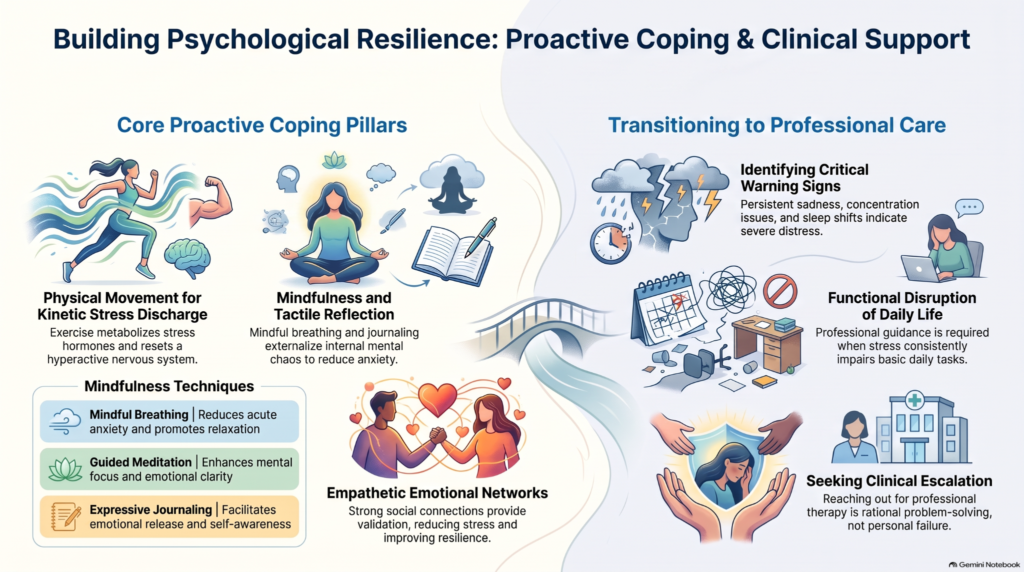
Whenever I take on a long-distance cycling route or sit down with a fountain pen to journal through a dense behavioral problem, I am reminded of an essential psychological truth: cognitive stress rarely resolves within purely cognitive loops. As a community member pointed out on Reddit, our coping activities often need to match the sheer physical or emotional intensity of what we are experiencing. When your sympathetic nervous system is locked into a fight-or-flight cycle, sitting quietly trying to “think yourself calm” can feel like trying to rewrite software while the server is actively burning down.
You have to discharge that kinetic energy. Physical movement—whether it is a strenuous uphill ride, a fast-paced walk, or lifting weights—serves as an active biological reset that metabolizes cortisol, releases mood-regulating endorphins, and breaks ruminative thought patterns.
The same mechanics apply to tactile expression, such as journaling or creative arts. When you write unedited thoughts onto paper or step outside for a brisk walk, you externalize internal chaos. You reduce friction in your cognitive system by giving emotional tension a structured, physical exit route. You do not need an elaborate routine to make this work; you simply need low-threshold practices that honor your biological wiring and allow your nervous system to regain equilibrium.
Engaging in creative activities can support personal growth initiative psychology by encouraging self-reflection, confidence, and a willingness to develop new skills.
When you immerse yourself in creativity, you tap into a powerful tool for self-discovery and healing. Here are four effective ways to incorporate creative activities into your life:
- Art Therapy: Use painting or drawing to express feelings you might find hard to verbalize.
- Creative Writing: Journaling or storytelling can help you process thoughts and emotions.
- Music Therapy: Listen to or create music, which can elevate your mood and relieve stress.
- Dance Movement: Dancing allows for physical expression, releasing pent-up emotions and enhancing joy.
Whether it’s crafting projects, photography journaling, nature sketches, or digital art, these self care activity invite you to explore your inner self, ultimately promoting mental health and resilience.
When to Seek Professional Help for Mental Health Challenges?
Coping skills are strategies used to manage stress and maintain emotional health. They can be problem-focused, addressing the source of stress, or emotion-focused, aimed at managing feelings when change is not possible. Adopting healthy coping mechanisms, such as relaxation techniques and regular exercise, supports long-term mental well-being.
Recognizing warning signs in your mental health is essential for knowing when to seek professional help.
If symptoms persist and start impacting your daily life, it’s a clear indicator that you shouldn’t hesitate to reach out.
Recognizing Warning Signs
How can you tell when it’s time to seek professional help for mental health challenges? Recognizing warning signs is essential for your well-being.
If you notice any of the following emotional triggers, it’s wise to reach out for support:
- Persistent feelings of sadness or hopelessness.
- Significant changes in appetite or sleep patterns.
- Difficulty concentrating or making decisions.
- Engaging in self-destructive behaviors or thoughts.
These signs can indicate that you’re facing challenges beyond what self-care can address.
Seeking professional help isn’t a weakness; it’s a courageous step towards reclaiming your mental health.
Impact on Daily Life
The impact of mental health challenges on daily life can be profound and far-reaching. You may find that your daily routines become disrupted, making it difficult to maintain a sense of normalcy.
Tasks that once felt effortless might now seem overwhelming, affecting your productivity and relationships. This struggle can diminish your emotional resilience, leaving you feeling fatigued and less equipped to handle stress.
Recognizing when these challenges begin to hinder your ability to function is essential. If you notice persistent difficulties in managing daily activities or experience intense emotional pain, it might be time to seek professional help.
Prioritizing your mental health is a significant step toward reclaiming your freedom and enhancing your overall well-being.
Duration of Symptoms
When mental health symptoms persist beyond a few weeks, it’s essential to evaluate their impact on your life. Understanding symptom duration can help you decide when to seek professional help.
Consider reaching out if you notice:
- Symptoms are affecting your relationships, work, or daily activities.
- You’ve tried self-care strategies, but they aren’t providing relief.
- You experience an increase in the intensity or frequency of symptoms.
- You feel hopeless or unable to cope with daily challenges.
Effective symptom management is key to regaining your freedom and well-being.

RELATED STUDIES ABOUT HEALTHY COPING MECHANISMS PSYCHOLOGY
In the garden of your mind, nurturing self-care is like watering delicate flowers; it fosters resilience and growth. By embracing healthy coping mechanisms, you cultivate a rich landscape for mental health. Remember, just as every plant needs sunlight, you too require supportive relationships and mindfulness to thrive. When the storms of life become overwhelming, don’t hesitate to seek professional help—like a gardener calling in an expert to guarantee your oasis flourishes amidst adversity.
Definition and conceptual framework of the psychological domain of intrinsic capacity in healthy ageing: outcomes from the MOSAIC International Working Group
This article reports the consensus outcomes of the MOSAIC International Working Group (IWG), convened to establish an operational definition, conceptual framework, and candidate attributes for the psychological domain of intrinsic capacity within the World Health Organization (WHO) healthy ageing model.
Study Background & Methodology:
- The Gap in Healthy Ageing Measurement: Under the WHO framework, healthy ageing is defined as maintaining functional ability—the product of intrinsic capacity (physical and mental reserves) and environmental interactions. While intrinsic domains like locomotion, sensory, vitality, and cognition have established measurement models, psychological capacity has historically lacked a unified definition and valid measurement tools. Most prior studies relied on deficit-based proxies (e.g., depression or poor sleep), which fail to align with a capacity- and asset-oriented model.
- International Working Group Panels: In late 2025, 24 multidisciplinary experts from all six WHO regions (spanning geriatrics, psychiatry, psychology, social work, and measurement science) participated in two structured virtual consensus panels informed by an initial rapid scoping review. Data and meeting transcripts were analyzed using qualitative descriptive techniques in NVivo-15.
Working Definition & Core Theoretical Conceptualization:
- Formal Definition: “Psychological capacity describes all the psychological attributes that contribute to an individual’s functional ability. It comprises intrinsic psychological characteristics, assets and skills that enable the individual to respond to internal stressors and contextual demands. These capacities are expressed as flexible attributes that enable cognitive appraisal, affect and emotional regulation, adaptability, coping, social competence, and personal agency”.
- Separation from Outcomes: The working group established that psychological capacity represents underlying intrinsic psychological processes and reserves, rather than everyday functional outcomes (such as well-being, life satisfaction, or loneliness) or psychiatric diagnostic categories (such as depressive disorders).
- Stability vs. Modifiability: The construct includes relatively stable traits (e.g., personality elements) while emphasizing dynamic, flexible attributes that are modifiable through lifestyle, behavioral, or psychosocial interventions across the lifespan.
The Five Sub-Domains of Psychological Capacity:
- Cognitive Appraisal: The internal capacity to interpret, evaluate, and assign meaning to life situations in relation to personal values and resources, promoting challenge-oriented rather than threat-oriented responses (e.g., hope, optimism, purpose).
- Affect and Emotional Regulation: The ability to recognize, understand, and regulate emotional experiences across changing circumstances, functioning independently of whether an affective disorder is present.
- Personal Agency: Beliefs, expectations, and capabilities that enable older adults to make self-directed choices, maintain perceived control, and pursue meaningful goals.
- Adaptability and Coping: The behavioral and psychological competence to adjust to novel constraints, uncertainty, and age-related functional changes (incorporating resilience and selection, optimization, and compensation mechanisms).
- Social Competence: Individual-level intrinsic social assets—such as social cognition, empathy, and interpersonal skills—that enable effective, comfortable community interaction without conflating capacity with external network size.
Attribute Selection & Measurement Development:
- Inclusion Criteria for Attributes: Evaluated attributes must be: (1) individual-level, (2) stable yet flexible, (3) distinct from outcomes/manifestations, (4) unique from other intrinsic domains (e.g., pure cognition), (5) contributors to functional ability, and (6) situated at the level of psychological processes rather than biological mechanisms.
- The 42-Attribute Matrix: The group delineated 42 distinct candidate attributes to advance to a formal modified Delphi consensus process, while excluding overlapping cognitive-performance tasks (such as memory recall, perception, and executive planning). Sleep and personality traits were identified as areas of ongoing debate to be re-evaluated in subsequent consensus rounds.
Measurement Challenges & Global Implications:
- Avoiding Circularity and Confounding: Developing valid scales requires avoiding items tied to functional impairment (e.g., activities of daily living) to prevent circular reasoning when using psychological capacity to predict functional ability.
- Preventing Ceiling Effects: Measurement tools must balance positive psychological assets with coping under adversity to prevent ceiling effects in relatively healthy cohorts while remaining sensitive to clinical change.
- Cross-Cultural and Practical Applicability: The working group highlighted that instruments must remain brief and easily administrable by non-specialists, while accommodating cultural differences in autonomy, interdependence, and collectivist values across global populations.
| REFERENCE: Neta Hagani, Alice Windle, Candice Oster, Sonia Hines, Jyoti Khadka, Vivian Isaac, Definition and conceptual framework of the psychological domain of intrinsic capacity in healthy ageing: outcomes from the MOSAIC International Working Group, The Journal of nutrition, health and aging, Volume 30, Issue 11, 2026, 100969, ISSN 1279-7707, https://doi.org/10.1016/j.jnha.2026.100969. (https://www.sciencedirect.com/science/article/pii/S1279770726002022) |
An Adapted Intuitive Eating Intervention for Children attending a Healthy Lifestyle Summer Camp: A Quality Improvement Project
This quality improvement (QI) pilot study examines the feasibility and acceptability of an adapted, single-session intuitive eating intervention for children aged 10 to 13 attending a hospital-affiliated healthy lifestyle summer camp.
Study Overview & Methodology:
- Participants & Setting: Included 36 children (53% female, aged 10 to 13 years) enrolled in a weeklong overnight healthy lifestyle summer camp affiliated with an outpatient clinic at a Midwestern children’s hospital. Eligible attendees had visited the clinic within the prior four months for multidisciplinary weight management (overweight/obesity, BMI at or above the 85th percentile).
- Intervention Design: Children participated in a continuous 1.5-hour workshop delivered mid-week by licensed child psychology and pediatric weight-inclusive specialists. The session adapted exercises from established intuitive eating workbooks into two 30-minute modules: (1) Mindfulness-Based Eating (identifying internal hunger/fullness signals and managing eating distractions), and (2) Body Positivity (exploring emotional eating triggers, coping without food, and reframing body language from negative to neutral/positive).
- Assessment & Evaluation: Participants completed the Body Appreciation Scale-2 for Children (BAS-2) and the Intuitive Eating Scale-2 for Early Adolescents (IES-2-EA) prior to the lesson. Primary feasibility outcomes were assessed via protocol completion rates, while acceptability was evaluated using post-intervention ratings and open-ended feedback.
Key Findings:
- High Intervention Feasibility: All 36 children completed the baseline assessments and attended the full session. Thirty-three children completed the concluding satisfaction survey, yielding an overall protocol completion rate of 91.7%.
- Strong Content Acceptability: Over 80% of children reported positive experiences with the curriculum; 88% reported enjoying the mindfulness activities and body appreciation exercises, over 85% would recommend them to peers, and over 81% endorsed including the session in future camps. Qualitative comments highlighted appreciation for learning about bodily cues (such as “getting to know my body” and “helped me better understand myself”).
- Baseline Intuitive Eating and Body Image Profiles: Mean baseline body appreciation was 3.9 out of 5 (SD = 0.99), and mean intuitive eating was 3.3 out of 5 (SD = 0.46). Baseline body appreciation correlated positively and significantly with intuitive eating scores (r = 0.56, p < 0.001). Among subscales, Unconditional Permission to Eat scored the lowest (mean = 2.8, SD = 0.73), reflecting exposure to restrictive diet culture and external feeding rules common among youth in larger bodies.
- Duration and Sedentary Fatigue Concerns: A key challenge identified was session length; 78% of children noted the mindfulness segment took too much time, and 84% reported the body appreciation section was too long. Qualitative remarks frequently criticized prolonged sitting (such as “having to sit down all of the presentation” and “took too long”).
Implications for Clinical Practice & Program Refinement:
- Structural Iteration for Pediatric Audiences: While single-session delivery avoids the attrition common in multi-week youth programs, a continuous 90-minute format induces cognitive and physical fatigue in this age group. Future implementations should condense material into 45 to 60 minutes or incorporate structured movement breaks (such as brief physical warm-ups between modules).
- Complementing Multidisciplinary Care: Integrating non-diet, weight-neutral intuitive eating principles into pediatric lifestyle interventions provides psychological support against emotional and disordered eating without undermining clinical nutrition or activity guidelines.
- Future Research Directions: Larger controlled trials collecting demographic data are required to evaluate whether adapted intuitive eating modules yield sustained improvements in pediatric glycemic control, insulin resistance, and eating behaviors, including for youth prescribed appetite-altering medications such as GLP-1 receptor agonists.
| REFERENCE: Carolina M. Bejarano, Mary Keenan-Pfeiffer, Francesca A. St Pe, Sanita Ley, Rachel C. Gonzalez-Louis, Aditi N. Tarkar, An Adapted Intuitive Eating Intervention for Children attending a Healthy Lifestyle Summer Camp: A Quality Improvement Project, JAND Global Reports, 2026, 100029, ISSN 3050-7189, https://doi.org/10.1016/j.jaglob.2026.100029. (https://www.sciencedirect.com/science/article/pii/S3050718926000176) |
Navigating Parenthood in the Shadow of Cancer: A Scoping Review of Healthy Parents’ Experiences
This scoping review examines the experiences of healthy parents raising children and young adults (ages 0 to 28) in families where the other parent is diagnosed with cancer, synthesizing evidence across qualitative and mixed-methods research.
Study Overview & Methodology:
- Research Objective & Framework: Mapped existing knowledge regarding healthy parents’ parenting roles, coping mechanisms, and threats to parenting capacity across the full cancer trajectory. The review adhered to the Joanna Briggs Institute (JBI) framework and PRISMA-ScR guidelines.
- Search Scope & Included Literature: Searched MEDLINE, Embase, CINAHL, and PsycINFO without year restrictions, screening 3,652 unique records. A total of 21 studies met inclusion criteria: 19 qualitative articles, 1 mixed-methods study, and 1 qualitative doctoral dissertation, representing 254 healthy parents and 448 children primarily across Western nations.
- Synthesis Strategy: Thematic synthesis was conducted following Braun and Clarke’s methodology, combined with a collaborative sub-analysis by three patient and relative representatives to ensure grounding in lived family experiences.
Key Thematic Findings:
- Family Dynamics and Relationships: Parental cancer forces a major shift in household functioning, positioning the healthy parent as the primary anchor managing childcare, domestic routines, caregiving for the ill partner, and employment. Parents characterized this experience as a continuous “war of adaptation” or “living in a state of emergency” to shield children from upheaval. Strains frequently manifested as illness-related conflicts, including disagreements over the timing and extent of diagnostic disclosure to children, feelings of single parenthood, and competing needs between the patient and offspring.
- Emotional Impact on the Healthy Parent: Healthy parents face a heavy “dual burden” of emotional and caregiving labor, experiencing pervasive fatigue, anticipatory grief, and feelings of inadequacy. To maintain family stability, they routinely deprioritize or suppress their own psychological and physical needs. Constant uncertainty about the future, fear of partner mortality, and anxiety over long-term psychological fallout for their children (e.g., emotional withdrawal or unmonitored online searching) exacerbated chronic stress.
- Coping Strategies and Illness Adaptation: Preserving pre-diagnosis family routines (such as shared meals, homework schedules, bedtime habits, and family traditions) served as a primary coping mechanism to maintain a sense of normalcy and control. Parents coped by setting small daily goals, balancing hope with realism, and actively seeking clinical information to better navigate the oncology care system.
- Support Systems and Everyday Challenges: Informal support networks—particularly grandparents and extended family—provided essential practical assistance with childcare and household chores, allowing healthy parents to attend medical visits or maintain work. However, formal healthcare systems were reported as overwhelmingly patient-centric, frequently leaving healthy co-parents feeling sidelined as mere bystanders without direct emotional guidance. Families also faced significant financial strain resulting from reduced work hours, increased treatment-related expenses, and the disruption of dual-income stability.
Threats to Parenting Capacity:
- Role Overload & Burnout: The compounding demands of simultaneous caregiving, full-time single parenting, and financial provision create severe physical and mental exhaustion, restricting parents’ emotional availability for their children.
- Emotional Support Disconnect: While practical assistance from communities was often accessible, structured psychological and emotional support for the healthy parent was critically lacking.
- Communication Barriers: Ambivalence and insecurity regarding how to discuss prognosis, disease progression, or impending death without inflicting psychological trauma served as a central source of distress.
Implications for Oncology & Nursing Practice:
- Implementation of Family-Centered Care: Clinical oncology teams must expand their scope beyond the individual patient to engage the family unit, systematically identifying healthy co-parents and assessing their caregiving loads.
- Targeted Communication Support: Clinicians should provide healthy parents with proactive, stage-specific guidance and resources on communicating cancer diagnoses and end-of-life realities to children across different developmental stages.
- Accessible, Flexible Resources: Support services must account for the logistical constraints of working parents with dependent children, offering flexible scheduling, virtual consultations, and direct psychosocial care to safeguard parental resilience and prevent adverse developmental outcomes for children.
| REFERENCE: Maiken Langhoff Kidholm-Laursen, Karin Brochstedt Dieperink, Dorte Ejg Jarbøl, Janni Jensen, Karsten Andersen, Silja Louise Jensen, Helene Vasegaard, Jens Søndergaard, Dorte Toudal Viftrup, Navigating Parenthood in the Shadow of Cancer: A Scoping Review of Healthy Parents’ Experiences, Seminars in Oncology Nursing, Volume 42, Issue 2, 2026, 152175, ISSN 0749-2081, https://doi.org/10.1016/j.soncn.2026.152175. (https://www.sciencedirect.com/science/article/pii/S0749208126000550) |
CONCLUSION
One of the most important takeaways from behavioral science—and one reinforced by recent consensus work from the MOSAIC International Working Group on intrinsic capacity—is that our psychological reserves are not static traits set in stone. Emotional regulation, adaptability, and cognitive agency are flexible capacities that can be systematically strengthened through everyday practices and supportive connections.
However, good systems engineering also recognizes design limits. Self-care is an essential baseline protocol, but it was never intended to be a substitute for comprehensive repairs when internal components are failing. A reader in an online forum recently described falling into a state of chronic withdrawal, feeling trapped in isolation while trying to cope with mounting depression and executive dysfunction. If your routines have collapsed, if basic functioning feels impossible, or if you find yourself withdrawing from life entirely, that is not a personal failure of willpower or routine. It is a diagnostic indicator that the load has exceeded individual capacity.
Knowing when to transition from personal self-care to clinical, professional support is the ultimate expression of self-compassion and rational problem-solving. Sustainable growth never demands that you suffer in silence or solve systemic distress completely on your own. Build your daily habits with patience, lean on your human support systems, and step forward into professional guidance when the challenge calls for it.