

When I worked in corporate project management, every systemic failure was treated as an execution problem. If a delivery milestone slipped, leadership assumed we simply needed stricter tracking, tighter sprints, or higher pressure. We brought that exact mindset home, treating our personal lives like corporate roadmaps. We assume that when a habit collapses, our willpower is defective. But after years of studying organizational behavior and restructuring my own life from the ground up, I’ve realized that sheer force of will is an unsustainable resource.
Sustainable behavior change isn’t an engineering feat of brute discipline; it is an exercise in cognitive alignment. Early on, whenever I tried adopting ambitious new habits, I fell into the trap of over-optimizing: complicated habit trackers, strict 5:00 AM alarms, and relentless self-monitoring. It looked disciplined on paper, but internally, it felt like running an endless audit against myself.
True personal evolution only began when I stopped treating self-improvement as a performance metric and started examining the underlying cognitive patterns driving my actions. The thoughts and interpretations we attach to our daily friction determine whether an action takes root or falls apart. When we reshape how we interpret effort, change stops feeling like a grueling test of stamina and becomes a natural expression of what truly matters to us.
To strengthen motivation, discipline, and well-being during behavior change, focus on clear, attainable goals that resonate with your personal values. Cultivating intrinsic motivation is essential, as it fosters resilience and emotional regulation. Implementing consistent routines helps form automatic habits, while visualization techniques can enhance your commitment. Surrounding yourself with a supportive community further encourages accountability. By regularly monitoring your progress, you can adapt strategies that keep you on track for lasting transformation. There’s more valuable insight to explore.
KEY TAKEAWAYS
- Cultivate intrinsic motivation by aligning goals with personal values, enhancing commitment and resilience in behavior change.
- Develop consistent routines that reinforce discipline and create automatic habits over time, supporting long-term adherence.
- Utilize visualization techniques to create vivid mental images of success, boosting motivation and focus on achieving goals.
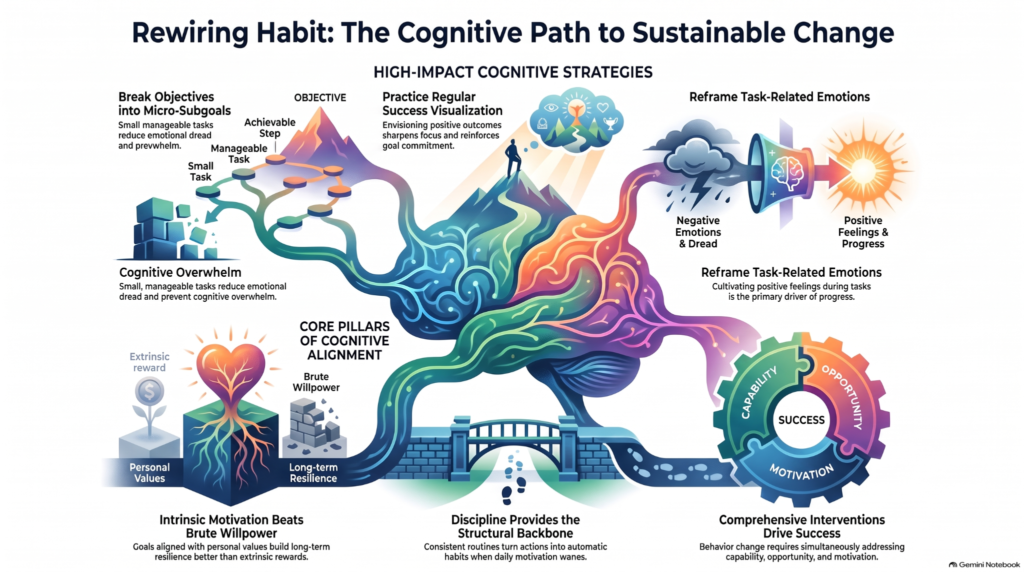
- Break larger goals into smaller, manageable tasks to prevent overwhelm, ensuring clarity and fostering a sense of accomplishment.
- Integrate well-being practices to create a positive emotional state, enhancing decision-making, motivation, and overall capacity for behavior change.
WHY MOTIVATION IS KEY TO LASTING BEHAVIOR CHANGE
Cognitive behavioral therapy, or CBT, is a common form of talk therapy. Unlike some other therapies, CBT is typically intended as a short-term treatment, taking anywhere from a few weeks to a few months to see results.
While many factors influence behavior change, motivation stands out as a crucial element that drives lasting transformation. You’ll find that intrinsic motivation, fueled by personal values and passions, often leads to deeper, more sustainable change than extrinsic rewards.
To foster this, focus on behavior triggers that align with your goals. Cultivating psychological resilience allows you to bounce back from setbacks, while emotional regulation helps you manage challenges effectively.
Utilize self-reflection to assess your progress and adjust your strategies accordingly. Social support can be a powerful catalyst, providing encouragement and accountability. Incorporating positive reinforcement strengthens your commitment by celebrating achievements, no matter how small.
Finally, embrace mindset shifts, recognizing that change is a journey. With these strategies, you’re not just changing behavior; you’re transforming your life towards greater freedom and fulfillment.
How Discipline Fuels Sustainable Habit Formation
Discipline acts as the backbone of sustainable habit formation, ensuring that you remain consistent even when motivation wanes. By developing discipline, you create a framework that supports habit reinforcement, making it easier to stick to your goals.
Here’s how discipline plays an essential role:
- Consistency: Regular practice helps solidify habits, making them automatic over time.
- Resilience: You learn to push through challenges, maintaining your commitment despite setbacks.
- Focus: Discipline sharpens your concentration, allowing you to prioritize important tasks over distractions.
- Empowerment: As you develop discipline, you gain a sense of control, fostering a deeper connection to your goals.
Ultimately, understanding the interplay between discipline development and sustainable habits can free you from the rollercoaster of motivation, leading to enduring change and enhanced well-being.
Embrace discipline, and watch your habits flourish.
What Strategies Help Maintain Motivation?
Cognitive behavioral therapy works through specific, teachable techniques rather than open-ended talk. CBT interventions fall into two families: cognitive techniques, which change unhelpful thinking (cognitive restructuring, defusion, problem-solving), and behavioral techniques, which change unhelpful action patterns (exposure, activity scheduling, skills training). This guide walks through the major CBT techniques with examples of how each works.
Maintaining motivation over the long term can often feel like an uphill battle, but several effective strategies can help you stay on course.
First, harness intrinsic motivation by connecting your goals to personal values and passions. When you genuinely care about what you’re doing, the drive to persist becomes stronger.
Next, consider incorporating extrinsic rewards as a supplementary boost. Setting up small, achievable milestones and rewarding yourself upon reaching them can reinforce your commitment.
Additionally, regularly revisiting your goals helps maintain focus and clarity. Reflect on your progress, and adjust your strategies as necessary to keep things fresh.
Lastly, surround yourself with a supportive community that shares similar aspirations. Engaging with like-minded individuals can provide encouragement and accountability, which are essential for sustaining motivation.
Practical Techniques to Strengthen Your Self-Discipline
Cognitive behavioral therapy (CBT) is a goal-focused talk therapy. It teaches you practical ways to manage stress, unhelpful thoughts and emotions. It may help manage mental health conditions like anxiety, depression and PTSD. It can also support physical health issues and life transitions.
To strengthen your self-discipline, start by setting clear, achievable goals that provide direction.
Consistently developing routines around these goals helps create habits that reinforce your commitment.
Additionally, monitoring your progress regularly allows you to adjust strategies and stay accountable to yourself.
Set Clear Goals
Setting clear goals is essential for strengthening self-discipline, as it provides a concrete framework for your efforts. Effective goal setting helps you focus, measure progress, and maintain motivation.
To enhance your self-discipline, consider these practical techniques:
- Define specific, measurable objectives that reflect your aspirations.
- Break larger goals into smaller, manageable tasks to avoid overwhelm.
- Set realistic deadlines to create a sense of urgency.
- Regularly review and adjust your goals based on progress and circumstances.
Develop Routines Consistently
When you consistently develop routines, you create a structured environment that fosters self-discipline and enhances your ability to achieve your goals. Routine building is essential for establishing consistency habits that pave the way for personal freedom. To start, identify key activities that align with your goals. Schedule them daily, and stick to the plan.
| Activity | Time |
| Morning Exercise | 7:00 AM – 8:00 AM |
| Focused Work Session | 9:00 AM – 11:00 AM |
| Evening Reflection | 8:00 PM – 8:30 PM |
Monitor Progress Regularly
Monitoring your progress regularly is essential for maintaining self-discipline and ensuring you’re on track to achieve your goals.
Effective progress tracking creates feedback loops that enhance your motivation and commitment. Here are some practical techniques to implement:
- Set specific, measurable milestones to evaluate your progress.
- Use journals or digital apps to document your daily achievements.
- Schedule regular reviews to reflect on what’s working and what needs adjustment.
- Celebrate small wins to reinforce positive behavior.

THE CONNECTION BETWEEN WELL-BEING AND BEHAVIOR CHANGE
In my woodworking shop, there is a fundamental rule: you cannot force a dull chisel through dense hardwood without tearing the grain. If a cut requires extreme, muscle-straining force, your tool is blunt, your angle is wrong, or you are working against the natural fiber of the timber. I view discipline and cognitive restructuring through that exact lens. When a new habit requires heroic, exhausting willpower every single day, the friction isn’t proof of your resilience—it’s an indicator of structural resistance.
In my own life, the shift came from adopting slow morning routines and analog note-taking rather than relying on high-friction digital habit trackers that constantly demanded my attention. Taking ten quiet minutes with a notebook to unpack why a particular commitment feels aversive does more for my consistency than twenty smartphone reminders ever could. Cognitive strategies like task reframing, cognitive restructuring, and emotional acceptance aren’t theoretical psychobabble; they are the hand tools that smooth out internal friction.
When you break down a complex task until the emotional dread evaporates, you aren’t lowering your standards—you are sharpening your chisel. By learning to accept uncomfortable emotional cues without letting them dictate our behavior, we stop turning daily habits into exhausting mental battles and allow discipline to become a steady, quiet rhythm.
Understanding the intricate relationship between well-being and behavior change is essential for anyone seeking to improve their life. Well-being practices, such as mindfulness, exercise, and social connections, greatly enhance your capacity to change behavior. Incorporating a simple self care activity into your daily routine can also support emotional balance and make it easier to maintain positive habits.
Behavior insights reveal that positive emotional states can lead to more effective decision-making and increased motivation. For instance, when you feel good about yourself, you’re more likely to take proactive steps toward change.
Conversely, negative emotions can hinder your progress, highlighting the need for a balanced approach. By integrating well-being practices into your routine, you create an environment conducive to lasting behavior change.
This symbiotic relationship underscores that improving your well-being not only enriches your life but also empowers you to enact meaningful changes, granting you greater freedom to pursue your goals.
Strategies to Overcome Challenges in Behavior Change
Although you may encounter various challenges when trying to change behaviors, employing targeted strategies can greatly enhance your chances of success.
To navigate behavioral obstacles, consider implementing these practical approaches:
- Identify specific triggers: Recognize situations that prompt undesired behaviors and develop plans to address them.
- Cultivate a growth mindset: Embrace setbacks as opportunities for learning and growth, while applying healthy coping mechanisms psychology to manage stress and maintain emotional balance during challenging periods.
- Set realistic goals: Break down your objectives into manageable steps, making them less intimidating and more achievable.
- Seek support: Surround yourself with like-minded individuals who encourage your journey and provide accountability.
Boost Your Motivation With Cognitive Strategies
To boost your motivation, start by setting clear, attainable goals that guide your behavior change efforts. Understanding the neuroscience of self improvement habits can also help you recognize how consistent actions and mental strategies influence motivation and long-term behavior.
Regularly visualizing your success reinforces these goals, making them feel more achievable and real.
Set Clear Goals
Setting clear goals is a fundamental step in boosting your motivation and driving behavior change. By establishing specific targets, you create goal clarity that aligns your actions with your aspirations.
Here’s how to set effective goals:
- Define specific outcomes**: Know exactly what you want to achieve.
- Make them measurable**: Quantify your goals to track progress.
- Ensure they’re attainable**: Set realistic objectives to maintain your motivation.
- Align with your values: Choose goals that resonate with your personal beliefs for greater commitment.
When your goals are clear and aligned with your values, you’ll experience a surge in motivation.
This clarity not only focuses your energy but also empowers you to take actionable steps toward lasting behavior change.
Visualize Success Regularly
Once you’ve established clear goals, the next step is to enhance your motivation through regular visualization of success.
Visualization techniques empower you to create a vivid mental image of achieving your objectives. This practice cultivates a success mindset, reinforcing your belief in your capabilities.
Take a few minutes daily to close your eyes and envision the steps you’ll take and the rewards you’ll reap. Picture the feelings of accomplishment and satisfaction that come with reaching your goals.
Regularly engaging in this mental rehearsal not only boosts your motivation but also sharpens your focus, making you more disciplined in your actions.

RELATED STUDIES ABOUT COGNITIVE STRATEGIES FOR BEHAVIOR CHANGE
In your journey toward lasting behavior change, remember that motivation and discipline are two sides of the same coin. As you implement cognitive strategies, you may find that small victories boost your confidence and reinforce your commitment. Life’s challenges might seem intimidating, but with a practical approach, you can navigate them effectively. By prioritizing your well-being, you’ll not only transform habits but also cultivate a more fulfilling life. Embrace the process; your future self will thank you.
Effectiveness of psychosocial and lifestyle interventions in promoting behaviour change and improving cognitive outcomes in older people with memory concerns: A systematic review
This systematic review evaluates the effectiveness of non-pharmacological psychosocial and lifestyle interventions in promoting behavior change and improving cognitive outcomes among older adults with memory concerns (mild cognitive impairment [MCI] or subjective cognitive decline [SCD]), analyzing underlying behavioral mechanisms through the Capability, Opportunity, Motivation–Behavior (COM-B) model.
Study Overview & Methodology:
- Scope & Framework: Examined randomized controlled trials (RCTs) testing non-pharmacological interventions (duration of at least 4 months) targeting modifiable dementia risk factors. Mechanisms were mapped using the COM-B model and the Behavior Change Wheel (BCW) to determine how interventions operationalized capability, opportunity, and motivation.
- Search & Study Cohort: Searched five electronic databases (PubMed, Embase, PsycINFO, Web of Science, Scopus) through June 2026. Synthesized 26 articles representing 23 RCTs (14 multidomain and 9 single-domain; median duration 6 months; median sample size 100) across Asia, North America, Europe, and Australasia.
- Primary & Secondary Outcomes: Primary outcomes were behavioral change across lifestyle (physical activity, diet) or psychosocial/social domains. Secondary outcomes were dementia-related cognitive endpoints. Risk of bias (ROB) was appraised via Cochrane RoB 2 (12 low, 7 some concerns, 7 high), and evidence certainty was evaluated via GRADE criteria.
Key Behavioral Mechanisms & Intervention Effectiveness:
- The COM-B Triad Drives Behavior Change: Interventions that successfully achieved significant behavior change consistently targeted all three COM-B components simultaneously—enhancing physical and psychological capability (e.g., educational lectures, skill training), fostering physical and social opportunity (e.g., group formats, peer support, equipment provision), and stimulating reflective and automatic motivation (e.g., individualized goal setting, feedback, action planning). Interventions addressing only one or two components (e.g., education alone) largely failed to change behavior.
- Dietary Behavior Modification: Moderate-certainty evidence demonstrated that interventions combining nutritional education with personalized counseling over 6 to 18 months in a socially supportive context (such as group classes or dietitian check-ins) significantly improved dietary quality (e.g., adherence to Mediterranean or MIND dietary patterns). Conversely, home-based interventions relying exclusively on information booklets or web-based nutritional education without active counseling produced no behavioral changes (low-certainty evidence).
- Physical Activity Modification: Physical activity increased most reliably in programs integrating education, structured supervised exercise training, and enablement strategies (e.g., tailored regimens matching baseline fitness, pedometers, action-planning workbooks, and self-monitoring homework). Moderate-certainty evidence indicated that very low-intensity or purely web-based/tablet interventions produced little to no effect on physical activity levels.
- Evidence Linking Behavior Change to Cognition: The overall certainty of evidence that intervention-induced behavior change directly improved cognitive outcomes was low. While several multidomain and exercise trials demonstrated parallel cognitive gains (e.g., executive function, memory recall), none evaluated the statistical modifying or mediating role of actual behavioral change on cognitive trajectory.
Health Equity & Underserved Populations:
- Underreporting of Social Determinants: Only 13% of included studies recorded participant ethnicity, and only 9% documented socioeconomic status (SES).
- Lack of Subgroup Analyses: Zero studies explored whether socioeconomic deprivation or ethnic background moderated intervention engagement or effectiveness, despite these minoritized populations experiencing a disproportionate burden of dementia and lifestyle-related risk factors.
Clinical & Research Implications:
- Theory-Informed Implementation: Prescribing lifestyle changes without structured behavioral scaffolding is insufficient; dementia prevention programs must incorporate formal behavior change techniques (e.g., BCW-guided design) to help older adults feel capable, equipped, and socially supported.
- Longitudinal Sustainability: Most trials ceased outcome assessments immediately at intervention termination, leaving long-term habit retention and sustained cognitive risk reduction unverified. Future studies require extended post-intervention follow-ups.
- Inclusive Dementia Prevention: Research must intentionally recruit and design interventions tailored to socioeconomically disadvantaged and racially minoritized groups, shifting beyond individual educational advice to address structural and environmental barriers to healthy living.
| REFERENCE: Hannah Chapman, Claudia Cooper, Rosario Isabel Espinoza Jeraldo, Yolanda Lau, Harriet Demnitz-King, Effectiveness of psychosocial and lifestyle interventions in promoting behaviour change and improving cognitive outcomes in older people with memory concerns: A systematic review, Ageing Research Reviews, Volume 121, 2026, 103298, ISSN 1568-1637, https://doi.org/10.1016/j.arr.2026.103298. (https://www.sciencedirect.com/science/article/pii/S1568163726002904) |
Explainable human-cognitive AI as a habit-based behavior change emerging technology for system engineering: A two-round Delphi study with human experts in development life cycle
This empirical systems engineering study develops a quality assurance methodology and an explainable AI framework for a habit-based behavior change support system (HBCSS) targeting individuals at risk of cardiovascular disease, integrating human healthcare expertise into the development life cycle.
Study Overview & Methodology:
- Research Objective & Clinical Context: Seeks to mitigate AI “black-box” opacity, reduce clinician cognitive load, and optimize shared clinical decision-making by developing a transparent Human-Cognitive-AI habit tracking and risk classification platform (“Habit AI”).
- Co-Design Delphi Panels: Conducted a two-round Delphi study with healthcare professionals (doctors, nurses, pharmacists, and medical staff) at a university wellness center, alongside software engineers and health informaticians. Round I engaged 20 medical staff; Round II engaged 26 medical staff across iterative 90-minute workshop sessions.
- Theoretical & Modeling Foundations: Grounded in systems thinking, Model-Based Systems Engineering (MBSE), Fogg’s Behavior Model, Bandura’s self-efficacy theory, Lazarus’s Cognitive Appraisal Theory, and the Two-Factor Theory of Emotion.
- Data Synthesis: Applied thematic analysis, PowerBI dashboard analytics, and hierarchical agglomerative clustering to evaluate user needs, digital literacy, and persuasive feature priorities.
Key Architectural & Methodological Frameworks:
- Human Cognitive-AI V-Model of Behavior Change: Adapts traditional V-model systems engineering into a dual-branch cycle aligning development phases (requirements, modeling, design, specification, identification) with human-AI cognitive adaptation stages (breaking bad habits, formation, adoption, change, and validation).
- Habit-Change Colony Shared Decision-Making Framework: Bridges mobile patient tracking (habits regarding diet, exercise, sleep, stress, and wearable sensor streams such as ECG and SpO2) with web-based hospital clinical portals, structuring interactions through mutual feedback and trend analytics.
- The “Low-Hanging Fruit” AI Risk Architecture: Identifies critical systemic vulnerabilities—including data privacy risks, security attacks, misinformation, algorithmic bias, and regulatory barriers (e.g., GDPR, HIPAA)—and addresses them through transparent design, cryptographic protections, and human-in-the-loop oversight.
- Specialized Human-AI Digital Literacy Tool (HAI 11-EMTLit): Delineates 11 core competencies required for effective platform engagement, including digital tech skills, IoMT sensor operation, information seeking, communication, learning readiness, adherence, numeracy, decision-making/inference, problem solving, confidence, and habit literacy.
Empirical Findings from Delphi Consensus:
- Demographics & Habit Determinants: Younger demographics reported higher tendencies toward junk food consumption, stress, and smoking, whereas older participants placed greater value on emotional expression features and medical literacy.
- Priority Persuasive & Emotional Features: Experts prioritized automated calorie counters, visual trend analytics, vital sign tracking (heart rate, SpO2, ECG), goal-setting reminders, and gamified reward mechanisms. For emotional engagement, participants recommended cognitive appraisal tools (e.g., DASS stress scoring), mood tracking via emojis, motivational messaging, and family support group integration.
- Emergency & Anomaly Safeguards: Consensus supported embedding automated “emergency alarms” triggered not only by acute physiological crises, but also by prolonged behavioral plateaus or absence of habit change.
Core Dimensions of Explainable AI (XAI) in System Engineering:
The framework establishes five sub-categories of explainability required throughout the system development life cycle to ensure clinical validity and quality assurance:
- Fairness: Mitigating cognitive bias and ensuring balanced, equitable algorithmic recommendations across demographic cohorts.
- Transparency: Providing interpretable data processing pipelines, traceable feature selections, and open model mechanics to eliminate black-box decision uncertainty.
- Interoperability: Seamlessly harmonizing multimodal wearable streams (IoT/IoMT devices, smartwatches, smartphones) with electronic healthcare records while maintaining emotional and ethical safety.
- Performance: Ensuring high algorithmic accuracy, sensitivity, and reusability across machine learning classifiers (SVM, Random Forest, KNN, CNNs).
- Trustworthiness: Establishing verifiable robustness, system-level security, and privacy compliance to foster user and clinician trust during shared decision-making.
| REFERENCE: Pantea Keikhosrokiani, Explainable human-cognitive AI as a habit-based behavior change emerging technology for system engineering: A two-round Delphi study with human experts in development life cycle, Results in Engineering, Volume 32, 2026, 111664, ISSN 2590-1230, https://doi.org/10.1016/j.rineng.2026.111664. (https://www.sciencedirect.com/science/article/pii/S2590123026026873) |
Processes of change in cognitive-behavioral psychotherapy for procrastination: moderation and longitudinal mediation analyses of randomized controlled trial data
This secondary analysis of pooled randomized controlled trial (RCT) data investigates the treatment moderators and longitudinal mechanisms of change in cognitive-behavioral therapy (CBT) for academic procrastination, framing the findings within a newly developed Integrative Cognitive-Behavioral Model of Procrastination (ICB-P).
Study Overview & Conceptual Framework:
- The ICB-P Model: Synthesizes Temporal Motivation Theory (TMT), the Temporal Decision Model (TDM), and short-term mood repair theory. It conceptualizes procrastination as a learned, maladaptive self-regulatory coping behavior where task avoidance is negatively reinforced via immediate relief from aversive emotions and positively reinforced by engaging in pleasurable alternative tasks. CBT aims to interrupt these cycles and establish positive reinforcement loops for goal-directed action.
- Design & Participants: Analyzed pooled data from two consecutive RCTs (N=459; mean age 22.4 years; 73% female) comparing a 5-week manualized online group CBT intervention (incorporating psychoeducation, cognitive restructuring, and behavioral modules: realistic planning/timely beginning or working time restriction) against a wait-list control group.
- Assessment Strategy: Evaluated primary procrastination outcomes (Aitken Procrastination Inventory-Revised, API-R) and a comprehensive battery of candidate mechanisms across three measurement waves: baseline (T0), mid-intervention (T1), and post-intervention (T2).
- Analytical Approach: Applied linear mixed-effects models (LMM) for moderation and 3-wave longitudinal structural equation modeling (SEM) to estimate both contemporaneous (within-wave) and lagged (cross-wave, T1 to T2) indirect mediation pathways.
Key Findings on Treatment Moderators:
- Broad Generalizability: Treatment effects were robust across diverse clinical and demographic profiles. Age, gender, prior psychotherapy experience, and baseline symptoms of depression (PHQ-9), generalized anxiety (GAD-7), and ADHD (ASRS) did not moderate treatment outcomes.
- Heightened Benefit for Emotion Regulation Difficulties: Participants with higher baseline difficulties engaging in goal-directed behavior under negative affect (p=0.012) and greater non-acceptance of emotional distress (p=0.041) experienced significantly larger treatment gains.
- Cluster B Personality Beliefs Attenuate Efficacy: Stronger baseline dysfunctional beliefs associated with narcissistic (p=0.018), histrionic (p=0.022), and antisocial (p=0.024) personality dimensions predicted significantly smaller reductions in procrastination, likely due to difficulties with treatment adherence, therapeutic alliance, or externalization of responsibility in short-term group formats.
- Baseline Procrastination: Exhibited a marginal trend (p=0.066) toward larger intervention benefits among participants with higher initial procrastination severity.
Key Findings on Mechanisms of Change:
- Primary Role of Task-Related Affect: Changes in task-related emotional valence emerged as the single largest mediator of treatment outcomes:
- Increased positive task-related affect accounted for 31.7% of the total treatment effect in contemporaneous mediation models.
- Decreased negative task-related affect accounted for 17.3% of the total effect.
- Robust Contemporaneous & Lagged Mediation:
- Perceived Task Value (MDT): Significantly mediated reductions in procrastination in both contemporaneous (8.1% of total effect) and prospective lagged models (3.1% of total effect), demonstrating that enhancing the personal meaningfulness and enjoyment of tasks directly drives subsequent behavioral improvement.
- Proactive Control (NAS-50): Planning, scheduling, and preparatory cognitive control mediated outcomes both contemporaneously (6.1% of total effect) and across time lags (2.7% of total effect).
- Additional Concurrent Mediators:
- Improved perseverance (SUPPS-P; 5.2% mediated).
- Enhanced emotional clarity (DERS-SF; 3.2% mediated).
- Increased internal attribution of success (MMCS; 3.1% mediated), reflecting greater internalized personal agency over positive outcomes.
- Non-Mediating Candidate Variables: While CBT successfully improved success expectancy, delay discounting, premeditation, and fear of failure, these constructs did not statistically mediate the reduction in procrastination, indicating they may change in parallel rather than driving primary therapeutic progress.
Clinical & Scientific Implications:
- Clinical Applicability: Brief group CBT protocols are broadly suitable for academic populations even when mild-to-moderate psychiatric comorbidities are present. Individuals presenting with pronounced Cluster B personality beliefs may require individualized adaptations focusing on therapeutic alliance and homework compliance.
- Target Affect and Self-Regulation: Treatment protocols should prioritize strategies that directly lower task aversiveness and cultivate positive achievement affect (e.g., graduated exposure, breaking projects into micro-subgoals, celebrating incremental wins) alongside structured executive planning (stimulus control, scheduled routines).
- Nature of Therapeutic Change: The predominance of contemporaneous over lagged mediation suggests that behavioral task engagement and cognitive-affective shifts operate circularly and interdependently during therapy, reinforcing each other throughout the treatment cycle.
| REFERENCE: Magdalena Pietruch, Joachim Kowalski, Weronika Maria Browarczyk, Jarosław M. Michałowski, Marek Wypych, Processes of change in cognitive-behavioral psychotherapy for procrastination: moderation and longitudinal mediation analyses of randomized controlled trial data, Behaviour Research and Therapy, Volume 204, 2026, 105106, ISSN 0005-7967, https://doi.org/10.1016/j.brat.2026.105106. (https://www.sciencedirect.com/science/article/pii/S0005796726001592) |
CONCLUSION
Looking back across major career transitions, personal setbacks, and the ongoing work of starting over, I have come to believe that real growth is rarely about adding new identities, complex routines, or heavier burdens to our daily lives. More often, it is an intentional process of removal. Lasting change happens when we pare away the unhelpful mental scripts, the impossible expectations, and the external definitions of success that no longer fit the person we are becoming.
When you approach cognitive behavior change from this perspective, discipline and well-being cease to be opposing forces. You don’t have to punish yourself into consistency, nor do you need to wait for a fleeting wave of emotional motivation to take action. By applying intentional cognitive strategies—pausing to question automatic assumptions, grounding your daily actions in genuine intrinsic values, and giving yourself room to navigate setbacks without shame—you build a framework that can endure.
Transformation doesn’t require an overnight reinvention of your entire life. It simply asks that you make honest, deliberate adjustments to the mental models running behind the scenes. Strip away the excess performance, honor your internal pace, and let your daily habits reflect who you actually are.