

Whenever I sit down with coaching clients who feel drained, disconnected, or stuck in a personal rut, one of the first questions I ask is deceptively simple: “When was the last time you gave something away without expecting a single thing in return?” In my coaching practice, we spend a lot of time talking about self-appreciation and learning how to reward our own efforts, but true personal growth operates on a two-way street. You cannot pour from an empty cup, but you also cannot experience the full reservoir of joy if you only keep the water to yourself.
Years ago, during a particularly chaotic season of writing and coaching deadlines, I caught myself feeling profoundly burnt out. On a quiet Sunday evening, instead of spiraling into work anxiety, I decided to pour a batch of hand-poured lavender and cedarwood candles. Rather than saving them or cataloging them, I wrapped three of them in simple brown paper and dropped them off on my neighbors’ porches with brief handwritten notes of appreciation.
That small gesture shifted my entire physiology. My chest felt lighter, the background static of my stress melted away, and a warm, grounded energy returned. That is the lived reality of the behavioral science we explore here: generosity isn’t self-sacrifice; it is an active, vital channel for emotional renewal.
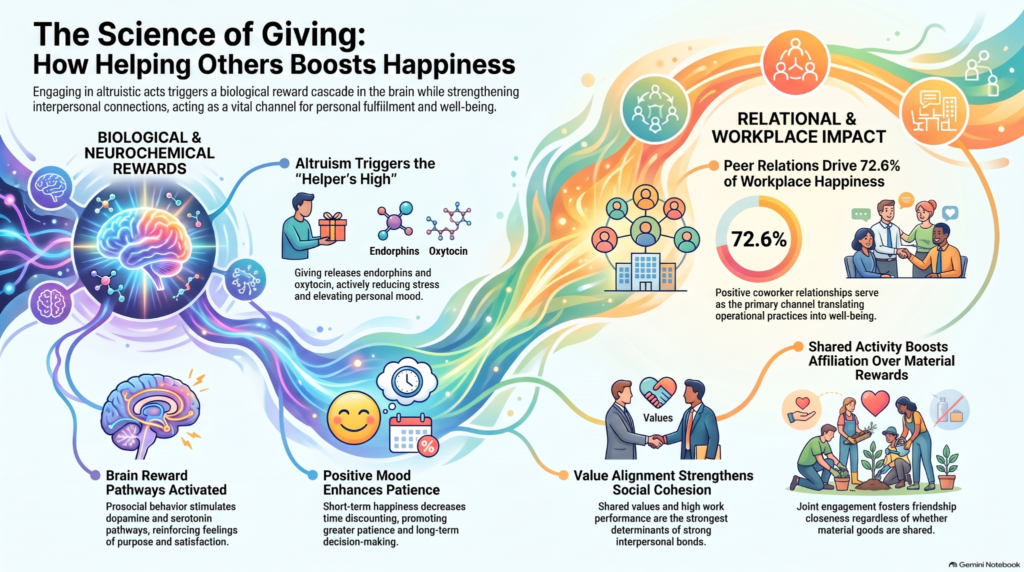
Helping others can greatly boost your happiness by triggering emotional rewards. Research shows that altruism releases endorphins, leading to what’s known as the “helper’s high.” When you give, whether through acts of kindness or gift-giving, you’re not just enhancing someone else’s life; you’re also elevating your own mood and sense of purpose. This reciprocal relationship between helping and feeling good suggests deeper motivations behind altruism. Explore further to uncover more insights into the power of kindness.
KEY TAKEAWAYS
- Altruistic behavior releases endorphins, creating a “helper’s high” that boosts personal happiness and emotional well-being.
- Gift-giving fosters emotional connections, elevating mood and reinforcing joy for both the giver and receiver.
- Acts of kindness enhance self-worth and sense of belonging, contributing positively to overall emotional health.
- Community engagement through kindness inspires collective participation, amplifying the impact of altruism on individuals and the community.
- Sharing experiences of generosity motivates others, highlighting the emotional rewards of helping and cultivating a culture of kindness.
THE SCIENCE OF HAPPINESS: UNDERSTANDING ALTRUISM
The paradox is that you have to be helping because you sincerely want to help. If you are only helping out of a sense of obligation or to reap selfish gain, it may not lead to similar benefits. We don’t have good evidence of this, but my hunch is that even the types of altruistic acts we benefit from most can differ for different people. Some people find it maximally rewarding to help in so-called “effective” ways, where they know that their time or money is doing the most possible good. But this kind of helping is by necessity impersonal and abstract. So many people find it more rewarding to help in more concrete, local ways where you really see the tangible good you are doing, and where you can form connections with others who are helping — and with those being helped.
When you engage in acts of altruism, you tap into a well-documented phenomenon where helping others can greatly enhance your own happiness. Research consistently shows a strong happiness correlation between altruistic behavior and emotional well-being. The act of giving not only uplifts those you help but also triggers a release of endorphins in your brain, often referred to as the “helper’s high.”
This physiological response reinforces the idea that when you prioritize others’ needs, you’re also nurturing your own mental health.
Moreover, altruism fosters social connections, creating a sense of belonging and community. These interactions further amplify your happiness, as positive relationships are fundamental to a fulfilling life.
How Helping Others Enhances Personal Well-Being
When you help others, you create emotional connections that can greatly enhance your own well-being.
Engaging in altruistic acts often leads to a sense of personal fulfillment, as research shows that giving back boosts your mood and self-esteem.
This reciprocal relationship between helping and feeling good highlights the profound impact of altruism on your life satisfaction.
Emotional Connection Through Giving
The gift of time is often more valuable to the receiver and more satisfying for the giver than the gift of money. We don’t all have the same amount of money, but we all do have time on our hands, and can give some of this time to help others—whether that means we devote our lifetimes to service, or just give a few hours each day or a few days a year.
While many people often seek happiness through personal achievements, research shows that emotional connections formed through helping others can greatly enhance your well-being.
When you engage in acts of kindness, you create a bond through emotional reciprocity. This connection not only fosters a sense of belonging but also reinforces your own happiness.
Shared experiences, whether volunteering or simply offering support, amplify these connections, leading to deeper relationships and a more profound sense of purpose.
You’ll notice that the joy from giving often returns to you, as others appreciate your efforts.
Altruism and Personal Fulfillment
Helping others doesn’t just strengthen emotional bonds; it also promotes personal fulfillment through altruistic behavior. When you engage in acts of kindness, you reap selflessness benefits that enhance your well-being.
Studies show that these altruistic acts trigger the brain’s reward system, releasing endorphins and boosting your mood. Studies on prosocial behavior brain reward system dopamine serotonin explain how helping others can activate the brain’s reward pathways, boost positive emotions, and reinforce the desire to continue performing acts of kindness. This phenomenon, often referred to as the “helper’s high,” underscores how giving can lead to a deeper sense of purpose and satisfaction.
Additionally, fulfillment through altruism fosters a sense of community, connecting you with others who share similar values. By prioritizing the needs of others, you cultivate a more meaningful existence, reinforcing your own happiness and sense of freedom.
Ultimately, your willingness to help transforms not just others’ lives, but yours as well.
The Joy of Gift-Giving: Emotional Benefits Explained
The Mental Health Foundation reports that engaging in kind and altruistic behavior—whether volunteering, helping a friend, or even small everyday gestures—can reduce symptoms of depression and anxiety. By shifting focus from personal struggles to helping others, kindness creates a sense of purpose and fulfillment.
When you give a gift, you create an emotional connection that can enhance both your well-being and that of the recipient.
Research shows that the act of gifting triggers the release of happiness hormones, elevating your mood considerably.
This simple exchange not only fosters relationships but also reinforces your own sense of joy and fulfillment.
Emotional Connection Through Giving
Although you may often associate happiness with personal achievements or material possessions, the act of giving—particularly through gift-giving—can forge profound emotional connections that enhance your overall well-being. This connection creation stems from emotional reciprocity, where both the giver and receiver experience joy and fulfillment. When you give a gift, you’re not just offering an object; you’re sharing a part of yourself, fostering relationships that deepen over time.
| Aspect | Gift-Giving Benefits | Emotional Impact |
| Connection Creation | Strengthens bonds | Increases happiness |
| Emotional Reciprocity | Creates shared joy | Fosters empathy |
| Personal Growth | Builds generosity | Enhances self-worth |
Embrace the power of giving to enrich your life and those around you.
BOOSTING HAPPINESS HORMONES
In behavioral coaching, we frequently examine the subtle difference between transactional interactions and transformational gestures. When you look at the neurochemical cascade triggered by gift-giving—the surges of dopamine and oxytocin that knit people closer together—you realize that our nervous systems are practically hardwired for kindness. But there is an essential coaching nuance here that I always emphasize: generosity does not require grand, bank-breaking statements. In fact, some of the most potent emotional rewards come from small, deeply intentional moments.
Consider how we relate to presence and material offerings. In my own life, when a friend is navigating a turbulent transition, I don’t necessarily send an elaborate care package. Instead, I might spend an afternoon in my kitchen preparing a thoughtful, slow-simmered meal, packaging it up, and sitting across from them just to listen. That investment of personal care does something profound: it pulls our attention away from the constant, grasping narrative of our own needs and anchors us in communal warmth.
When you give thoughtfully—whether it’s sharing a nourishing meal, gifting a colleague a quiet word of praise, or passing along a favorite book—you reinforce your own innate abundance. You remind your subconscious mind that you have enough to give, which fundamentally elevates your confidence, self-worth, and capacity to thrive.
Gift-giving not only strengthens emotional ties but also triggers a biochemical response that can elevate your mood. When you give a gift, your brain releases happiness hormones like oxytocin and endorphins, creating a sense of joy and fulfillment.
This endorphin release is linked to reduced stress and an overall enhancement in well-being. When you give a gift or help someone in need, oxytocin release during altruistic behavior can help strengthen emotional bonds, promote trust, and enhance the sense of connection between you and others.
- You experience a boost in mood and emotional satisfaction.
- The act of giving fosters a sense of community and belonging.
- Generosity can lead to long-term happiness and fulfillment.
Understanding these emotional benefits helps you appreciate the freedom that comes with giving.
What Drives Us to Be Altruistic?
While many people instinctively feel compelled to help others, the underlying motivations for altruism are complex and multifaceted. At the core lies innate empathy—the ability to resonate with another’s feelings and experiences. This emotional connection often drives you to lend a hand, as you recognize shared humanity.
Additionally, social bonding plays an essential role; helping others nurtures relationships and strengthens community ties. You might find that acts of kindness not only enhance your sense of belonging but also elevate your self-worth. These connections create a feedback loop, reinforcing your altruistic behavior.
The desire for freedom can also influence your actions; by helping others, you assert your values and agency, contributing to a larger narrative of compassion and support. Understanding these motivations allows you to appreciate the deeper emotional rewards of giving, fostering a more profound sense of fulfillment in your life.
Real-Life Examples of Happiness Through Giving
Experiencing the joy of giving can be illustrated through numerous real-life examples that highlight the profound impact of altruism on personal happiness.
When you engage in charitable acts, you not only uplift others but also enrich your own life. Here are a few instances that showcase this connection:
- Volunteer Work: When you join a local shelter, the bonds you form with those you help often lead to a heightened sense of purpose and fulfillment.
- Community Fundraisers: Participating in events that raise money for a cause can create a shared sense of accomplishment, enhancing your emotional well-being.
- Simple Acts of Kindness: Whether it’s helping a neighbor or donating to a food drive, these small gestures foster community engagement, leaving you with a lasting sense of joy.
Simple Ways to Incorporate Kindness Into Your Life
Incorporating kindness into your daily routine doesn’t require grand gestures; even small acts can make a significant impact. You can start with random acts of kindness, like paying for someone’s coffee or leaving an encouraging note for a colleague. Engaging in acts of kindness not only enhances your sense of belonging but also makes helping others a meaningful self care activity that supports emotional well-being and strengthens your connection with the community.
Consider joining kindness challenges to inspire daily acts of goodwill. Engaging in community service not only helps others but also enriches your own life.
Keep a gratitude journal to remind yourself of the positive aspects of your day, which can enhance your overall perspective on kindness. Look for volunteer opportunities that resonate with your passions, or participate in kindness campaigns that align with your values.
Even supportive gestures, like listening to a friend or offering mentorship in your area of expertise, can transform interactions into meaningful connections.
How Can Your Kindness Inspire a Community?
When you choose to practice kindness, you not only uplift individuals but also create a ripple effect that can transform your entire community. Your actions foster community engagement, inspiring others to participate in collective impact initiatives. By demonstrating kindness, you set a powerful example that encourages others to join in.
- Start small: Simple acts, like helping a neighbor, can inspire others to do the same.
- Share your story: Talk about your experiences with kindness to motivate peers and spark conversations.
- Create events: Organizing community gatherings focused on kindness can unite people and amplify your impact.
As these acts accumulate, they cultivate a culture of generosity and support, reinforcing the idea that every individual can make a difference.
Ultimately, your small gestures can lead to monumental changes, creating an empowered community that thrives on compassion and cooperation.
RELATED STUDIES ABOUT HAPPINESS BOOST FROM HELPING OTHERS BEHAVIORAL SCIENCE
To sum up, embracing kindness isn’t just a nice gesture; it’s a powerful catalyst for personal happiness that can transform your life into a symphony of joy. By helping others, you’re not merely giving—you’re igniting a chain reaction of positivity that echoes through your community. So, as you spread kindness, remember that each small act can feel like launching a thousand stars into the night sky, illuminating not just your world, but the lives of everyone around you.
How does happiness relate to economic behaviour? A review of the literature
This review synthesizes experimental and non-experimental evidence examining the bidirectional relationships between happiness (subjective well-being; SWB) and economic behavior, categorizing behaviors into interpersonal interactions (selfishness and generosity, trust, reciprocity and punishment) and individual decision-making traits (risk and time preferences).
Conceptual Framework & Methodological Landscape
- Disciplinary Interface: The literature unites behavioural economics—which studies departures from neoclassical utility maximization—with happiness economics, evaluating whether behavioral tendencies systematically drive well-being and whether emotional states govern economic choices.
- Temporal Stratification: The survey explicitly differentiates between short-term happiness (transient affect/mood elicited before or after an acute task) and long-term happiness (enduring subjective well-being and life satisfaction).
- Methodological Methodologies & Challenges:
- Observational Surveys: Cross-sectional and panel datasets (e.g., Gallup World Poll, World Values Survey, European Social Survey) capture broad associations but face endogeneity, requiring natural experiments (e.g., German reunification), lagged variables, or instrumental variables to identify causal paths.
- Experimental Mood Induction: Laboratory protocols exogenously manipulate short-term mood via film clips, music, or autobiographical recall to observe effects on incentivized economic games.
- Self-Selection vs. Compelled Choice: Measuring pre-to-post-task affective changes introduces self-selection bias, whereas randomly assigning subjects to selfish or prosocial actions risks attenuating the authentic intrinsic utility of autonomous choice.
- Clinical Analogues: Several studies evaluate clinically depressed cohorts as an archetype for severe long-term unhappiness, though findings from clinical populations may not reliably generalize to mentally healthy individuals.
Interpersonal Economic Behavior
- Selfishness & Generosity:
- Negative Correlation: Substantial evidence from global surveys demonstrates that selfish behavior correlates negatively with SWB; donating to charity, volunteering time, organizational citizenship, and environmentally responsible behaviors strongly correlate with higher happiness.
- Generosity as a Driver of Happiness: Experimental interventions show a robust causal effect running from generous spending to elevated short-term and long-term happiness across diverse cultural contexts and age groups (including young children). Dictator games reveal that choosing selfish allocations increases negative affect, shame, and cortisol stress levels. Forced choice experiments demonstrate that having to actively choose between selfishness and generosity imposes a distinct hedonic burden.
- Causal Effect of Happiness on Generosity: Laboratory findings are mixed: in simple dictator games, induced positive moods occasionally increase selfish allocations, whereas in multi-agent environments (gift-exchange, public goods, auction games), positive affect consistently promotes cooperative and generous contributions. Long-term happiness and broad psychological well-being show a moderate positive causal association with generosity.
- Trust & Generalized Beliefs:
- Positive Correlation: General social survey data universally confirm that individuals with higher long-term SWB exhibit greater generalized trust toward strangers and societal institutions (police, judiciary, governance).
- Causal Asymmetry: Stronger evidence indicates that trusting behavior causes happiness rather than the reverse. In experimental trust games, first movers who extend trust achieve short-term mood improvements or avoid mood deterioration compared to non-trustors, irrespective of payoff differentials.
- Effect of Mood on Trust: Inducing short-term positive affect yields modest increases in trust (primarily when stakes are low), while long-term subjective well-being appears to reflect shared underlying psychological resilience rather than directly driving trusting decisions.
- Reciprocity & Punishment:
- Negative Reciprocity: Mood-induction studies demonstrate a consistent pattern: short-term unhappiness (sadness, negative affect) makes responders significantly more likely to reject unfair offers in ultimatum games and inflict costly punishment in public goods games. Neuroimaging links this tendency in sad individuals to heightened activation within the anterior insula and anterior cingulate cortex (aversive and conflict processing), and reduced ventral striatal reward recruitment.
- Hedonic Value of Retribution: Exercising costly punishment provides an immediate hedonic boost, activating reward centers in the dorsal striatum when an unfair actor is materially sanctioned. This dynamic establishes a negative feedback loop: unhappiness promotes costly punishment, which subsequently mitigates distress and elevates short-term SWB.
- Positive Reciprocity: Findings regarding positive reciprocity remain sparse and divergent; while short-term positive mood weakly promotes reward responsiveness in gift-exchange settings, clinical depression studies paradoxically observe elevated positive reciprocity, suggesting distinct mechanisms across clinical versus healthy populations.
Individual Economic Behavior
- Risk Preferences:
- Theoretical Conflict: Research on short-term affect and risk tolerance remains contradictory, centered on two competing hypotheses:
- Affect Infusion Model (AIM): Contends that positive mood promotes optimistic probability weighting and overconfidence, increasing risk-seeking behaviors.
- Mood Maintenance Hypothesis (MMH): Posits that happy individuals become more risk-averse to protect and sustain their favorable affective state from potential losses.
- Incentivized vs. Hypothetical Paradigms: While hypothetical studies and weather-based field metrics offer mixed evidence, newer materially incentivized laboratory experiments lean slightly toward supporting the Affect Infusion Model.
- Net Effect Size: Across the broader literature, positive moods reliably induce cognitive overconfidence regarding favorable outcomes, but this is frequently neutralized by concurrent loss aversion. Consequently, the aggregate effect of short-term happiness on risk tolerance is modest and statistically fragile.
- Long-Term Ambiguity: Evidence on long-term happiness and risk-taking is predominantly correlational, showing divergent domain-specific associations (e.g., happier individuals are more risk-averse in financial portfolios but more risk-tolerant in purchasing insurance).
- Theoretical Conflict: Research on short-term affect and risk tolerance remains contradictory, centered on two competing hypotheses:
- Time Preferences & Consistency:
- Patience & Discounting: Substantial empirical evidence demonstrates that short-term positive mood decreases time discounting, promoting greater patience and a willingness to delay gratification for larger-later monetary payoffs. This effect is cognitively mediated by future temporal horizons becoming more salient under positive affect.
- Time Inconsistency: Acute negative affect (specifically sadness) amplifies present-biased time inconsistency.
- Long-Term Implications: While the direct effect of baseline time discounting on happiness remains unexamined, indirect evidence indicates that self-control failures and time-inconsistent consumption (e.g., compulsive television viewing, smoking, overeating) significantly degrade long-term subjective well-being.
Theoretical & Policy Implications
- Prosociality as an Evolutionary Mechanism: Across interpersonal dimensions, prosocial actions (generosity, trust, and cooperative enforcement) consistently enhance subjective well-being. This aligns with evolutionary perspectives viewing subjective well-being as a proximate psychological mechanism that reinforces socially cohesive, adaptive behaviors.
- Policy Levers: Interventions aimed at promoting public well-being can highlight the intrinsic hedonic rewards of prosociality and civic engagement to align individual utility with collective welfare.
- Research Roadmap: Prioritize meta-analytic synthesis of the happiness-risk literature, resolve inconsistencies between short-term affect and long-term dispositions, and experimentally explore the causal impact of risk-taking and temporal consistency on subjective well-being.
| REFERENCE: Tom Lane, How does happiness relate to economic behaviour? A review of the literature, Journal of Behavioral and Experimental Economics, Volume 68, 2017, Pages 62-78, ISSN 2214-8043, https://doi.org/10.1016/j.socec.2017.04.001. (https://www.sciencedirect.com/science/article/pii/S221480431730037X) |
Collaboration fails to promote sharing behavior but both collaborative and parallel play boost friendship in young children aged 4 to 6
This empirical study investigates how joint collaboration, sex, dyad sex composition, and peer friendship influence spontaneous sharing behavior and subsequent perceptions of friendship among children aged 4 to 6 years following an unequal reward distribution.
Study Overview & Experimental Design
- Research Scope & Theoretical Rationales: While prior research demonstrates that collaborative tasks can foster fairness and equitable resource division in young children, earlier paradigms often relied on decontextualized tasks, adult-imposed normative prompting, or visible rewards present from the outset. This study examines whether collaboration spontaneously promotes sharing under minimal instruction, while also evaluating how engaging in collaborative versus parallel play shapes perceived friendship from both advantaged (“lucky”) and disadvantaged (“unlucky”) positions.
- Participants & Dyadic Matching: Recruited 96 children (48 girls, 48 boys; mean age = 5.1 ± 0.7 years) enrolled in public primary schools in Geneva, Switzerland. Participants were paired into 48 dyads: 24 same-sex dyads (12 female, 12 male) and 24 cross-sex dyads.
- Cheese Board Game Paradigm:
- Dyads were randomly allocated to either a collaborative play condition (two children coordinated movements by each manipulating one string on a single board to guide a ball past 16 holes to a target) or a parallel play condition (each child operated their own board independently using both hands).
- All children were supported to finish successfully so they exited the game satisfied.
- Induced Advantageous Inequity & Spontaneous Sharing Window:
- Post-task, children were seated face-to-face in front of two inverted cups concealing rewards (organic, vegan candies).
- One child received three candies (“lucky child”) while the partner received one candy (“unlucky child”).
- Children were told they could lift the cups to reveal their treats, after which experimenters exited the room for 60 seconds without giving instructions regarding fairness or sharing. Sharing behavior during this unmonitored window was coded covertly.
- Visual Friendship Assessment Scale: Friendship was assessed independently before and after the game using a 5-point pictorial emoticon scale ranging from 1 (“not a friend at all”, red/sad) to 5 (“best friend”, green/joyful).
- Analytical Modeling: Tested sharing predictors via hierarchical binary logistic regression, post-hoc chi-squared tests, and Mann–Whitney U tests. Changes in friendship ratings were analyzed via mixed-design ANOVAs (Time Condition Dyad Composition Sex) separately for lucky and unlucky children, supplemented by Wilcoxon signed-rank tests and Spearman rank dyadic correlations.
Key Empirical Findings
- Low Incidence of Sharing & Null Effect of Collaboration:
- Spontaneous sharing was relatively rare: only 13 out of 48 lucky children (27.1%) shared candy with their partner, while 35 children (72.9%) kept all three candies. None of the unlucky children gave away their single candy.
- Sharing rates were essentially equivalent across conditions: 7 of 24 lucky children (14.6% of the total cohort; 29.2% of condition) shared in the collaborative condition, compared to 6 of 24 (12.5% of total; 25.0% of condition) in the parallel condition.
- Hierarchical logistic regression confirmed that the experimental condition was not a significant predictor of sharing (Exp(B)=1.24, 95% CI [0.35, 4.43], p=0.746).
- Null Associations for Sex, Dyad Composition, and Friendship:
- Step 2 of the regression model showed that dyad sex composition (Exp(B)=1.34, p=0.673), sex of the lucky child (Exp(B)=0.89, p=0.862), and baseline friendship rating (Exp(B)=1.09, p=0.754) failed to predict sharing behavior (RNagelkerke2=0.01).
- Post-hoc tests corroborated that sharing did not differ between same-sex (6/24) and cross-sex (7/24) dyads (2(1)=0.105,p=0.745), nor between boys and girls (2(1)=0.022,p=0.882).
- Baseline friendship ratings did not differ between children who shared (M=3.851.21) and those who did not (M=3.801.28; U=231.5,p=0.922).
- Activity-Induced Boost in Perceived Friendship Across Both Conditions:
- Both lucky and unlucky children exhibited statistically significant increases in friendship ratings from pre- to post-game:
- Lucky Children: Mean ratings increased from 3.81.2 to 4.11.2 (main effect of Time: F(1,40)=4.348,p=0.043,p2=0.098; Wilcoxon Z=1.97,p=0.048).
- Unlucky Children: Mean ratings increased from 3.41.3 to 3.81.3 (main effect of Time: F(1,40)=5.740,p=0.021,p2=0.125; Wilcoxon Z=2.29,p=0.022).
- Although the ANOVA for lucky children indicated a Time Condition interaction (F=4.834,p=0.034,p2=0.108) with larger gains in the collaborative group, non-parametric analysis on change scores did not reach significance (U=357.5,p=0.107). Thus, playing in parallel elevated friendship just as reliably as active collaboration.
- Both lucky and unlucky children exhibited statistically significant increases in friendship ratings from pre- to post-game:
- Resource Transfer Did Not Drive Friendship Gains:
- Unlucky children who received shared candy displayed no difference in friendship rating change scores compared to unlucky children who received nothing (U=270.50,Z=1.08,p=0.279). The relational boost was driven by shared engagement in the activity rather than material compensation.
- Dyad Composition & Mutual Alignment:
- Lucky children reported significantly higher friendship ratings for same-sex partners (M=4.30.2) than cross-sex partners (M=3.60.2; F=4.818,p=0.034,p2=0.107), reflecting established early childhood sex-segregation preferences.
- Within-dyad correlation of friendship ratings was non-significant before the game (=0.192,p=0.192) but reached modest significance after play (=0.299,p=0.039), indicating a slight post-task convergence in mutual peer perception.
Mechanistic & Contextual Interpretations
- Ownership Cues and Institutional Norms vs. Collaborative Obligation:
- The divergence from earlier studies (which observed robust collaboration-driven sharing) stems from methodological differences in reward presentation and perceived ownership.
- Prior paradigms displayed prizes openly during joint effort, activating a sense of collective entitlement. In this study, candies were hidden during gameplay and presented in individualized, opaque cups, reinforcing personal entitlement.
- Furthermore, testing older children (ages 4–6) within formal primary school classrooms may have introduced adult authority compliance: children viewed an item allocated into their personal cup by an adult experimenter as private property not intended for redistribution.
- Shared Activity, Social Gaze, and Affective Bonding:
- The observation that parallel play bolstered friendship ratings to the same degree as collaborative play suggests that joint physical co-presence, shared focus on an identical novel game, social observation, and mutual positive affect are sufficient to strengthen affiliative peer bonds without requiring direct coordination.
Educational & Methodological Implications
- Contextual Nuance in Prosocial Interventions: Collaboration does not automatically trigger generalized sharing; prosocial transfer is highly sensitive to subtle environmental cues, including resource visibility, ownership framing, and classroom authority structures.
- Promoting Peer Inclusion: Because both parallel and collaborative games foster peer closeness regardless of reward inequality or sharing outcomes, integrating structured, low-stress shared activities into early childhood classrooms can serve as an effective tool to enhance peer affiliation and social cohesion.
| REFERENCE: Fleur Lejeune, Sylvie Richard, Edouard Gentaz, Collaboration fails to promote sharing behavior but both collaborative and parallel play boost friendship in young children aged 4 to 6, Journal of Experimental Child Psychology, Volume 273, 2027, 106628, ISSN 0022-0965, https://doi.org/10.1016/j.jecp.2026.106628. (https://www.sciencedirect.com/science/article/pii/S0022096526001803) |
Factors affecting employee social relations and happiness: SM-PLUS approach
This empirical study investigates the organizational and individual factors that determine employee-to-employee workplace relationships and evaluates how these social dynamics subsequently shape employee happiness within private sector institutions.
Study Overview & Conceptual Framework
- Research Problem & Context: In increasingly competitive and knowledge-intensive business environments, organizational productivity, talent retention, and operational continuity rely heavily on workforce well-being. While human resource management research frequently examines top-down supervisory dynamics and physical working conditions, the lateral relational architecture among coworkers remains underexplored.
- The Proposed Structural Model: The authors introduce a structural model examining seven antecedent dimensions that drive lateral workplace relationships:
- Employee Engagement: Affective and behavioral commitment to organizational tasks.
- Employee Emotions: Affective states and emotional balance experienced in the workplace.
- Shared Values: Congruence between personal and organizational core values.
- Employee Knowledge: Task competence, domain skills, and intellectual contributions.
- Employee Rewards: Extrinsic and intrinsic recognition systems.
- Employee Empowerment: Decision-making autonomy and absence of micromanagement.
- Quality of Work Performance: Timeliness, accuracy, and professional rigor.
- Core Hypothesis: These seven dimensions positively predict coworker social relationships, which in turn directly drives overall employee happiness.
Methodology & Measurement Validation
- Target Population & Sampling: Survey data were collected between December 2019 and January 2020 across private institutions in Jordan. A self-administered questionnaire was distributed to 580 employees, yielding 392 returned surveys (67% response rate) and 376 valid responses for structural equation modeling.
- Demographic Profile: The sample was predominantly young and professionally educated; 76% held a bachelor’s degree, 67% were between 25 and 30 years of age, and organizational tenure ranged between 2 and 8 years.
- Instrument Architecture: Evaluated using 5-point Likert scales, measuring nine distinct latent constructs across 27 items (3 items per construct) adapted from established organizational literature (e.g., Vroom, Ashmos, Bock et al., Fornell & Larcker).
- Statistical Modeling & Quality Criteria:
- Evaluated via Partial Least Squares Structural Equation Modeling (PLS-SEM) using SmartPLS with maximum likelihood estimation.
- Convergent Validity: Factor loadings ranged from 0.705 to 0.950, composite reliability (CR) exceeded recommended thresholds (0.711 to 0.914), Cronbach’s alpha ranged between 0.720 and 0.914, and Average Variance Extracted (AVE) ranged from 0.503 to 0.797.
- Discriminant Validity: Satisfied both the Fornell–Larcker criterion (square roots of AVE exceeded inter-construct correlations) and Heterotrait-Monotrait ratio (HTMT) criteria.
- Global Goodness of Fit (GoF): Reached 0.704, substantially exceeding the 0.36 threshold for large model effect size and confirming strong global explanatory validity.
Key Empirical Findings & Structural Path Analysis
- Substantial Explanatory Power:
- The model accounted for 83.2% of the variance in employee relationships (R2=0.832).
- Employee relationships subsequently accounted for 72.6% of the variance in employee happiness (R2=0.726).
- Direct Drivers of Employee Workplace Relationships: All seven hypothesized antecedent paths demonstrated statistically significant, positive relationships with coworker relations:
- Shared Values (Strongest Predictor): Exerted the largest positive impact on workplace relationships (=0.859,t=29.664,p=0.002), indicating that shared beliefs, ethical alignment, and organizational culture form the primary bedrock of coworker cohesion.
- Quality of Work Performance: Emerged as the second most dominant determinant (=0.769,t=12.817,p<0.001), demonstrating that individual execution accuracy and dependability establish interpersonal trust and peer respect.
- Employee Knowledge: Strongly reinforced workplace relationships (=0.687,t=5.836,p=0.013), as highly skilled colleagues are viewed as valuable collaborative assets.
- Employee Engagement: Positively associated with relationship quality (=0.220,t=4.204,p=0.015).
- Employee Empowerment: Significantly enhanced coworker collaboration and initiative (=0.216,t=6.120,p=0.010).
- Employee Emotions: Positively associated with interpersonal dynamics (=0.119,t=7.666,p=0.006).
- Employee Rewards: Showed a modest but significant positive path (=0.109,t=2.369,p=0.025).
- Downstream Influence on Happiness:
- Employee relationships exhibited a strong, direct, positive effect on employee happiness (=0.556,t=19.005,p<0.001), supporting Hypothesis 8. Harmonious lateral relationships serve as an essential psychological channel through which operational practices translate into workplace well-being.
Theoretical & Practical Implications
- Relational Mediation of Well-Being: The findings confirm that employee happiness cannot be cultivated solely through top-down compensation or administrative oversight. Instead, lateral social relationships function as the primary conduit bridging operational factors (shared values, task competence, performance quality) with organizational well-being.
- Prioritizing Value Alignment and Competence Scaffolding: Because shared values (=0.859), performance quality (=0.769), and knowledge (=0.687) far outweighed extrinsic rewards (=0.109), leadership teams should prioritize cultural alignment during onboarding and invest in continuous professional skill-building. Competent, culturally aligned employees naturally foster high-trust peer dynamics.
- Fostering Autonomous and Relational Climates: Organizations should minimize micromanagement, grant task discretion, and deliberately design social platforms (e.g., cross-functional committees, collaborative problem-solving hubs, sports and social clubs) to reinforce the informal social fabric of the enterprise.
Limitations & Research Directions
- Cross-Sectional Sampling Window: Data collection occurred within a single time slice (December 2019 to January 2020) immediately preceding the COVID-19 pandemic, restricting insight into longitudinal stability or shifts under remote/hybrid work arrangements.
- Sectoral & Geographic Boundary: Restricted to private-sector service institutions in Jordan, warranting cross-cultural validation across public enterprises, diverse geographic regions, and manufacturing sectors.
- Scope Expansion: Future studies should test additional mediators and outcome constructs, including employee open innovation, intrapreneurship, and turnover intentions.
| REFERENCE: Muhammad Turki Alshurideh, Barween Al Kurdi, Haitham M. Alzoubi, Iman Akour, Zaid Mohammad Obeidat, Samer Hamadneh, Factors affecting employee social relations and happiness: SM-PLUS approach, Journal of Open Innovation: Technology, Market, and Complexity, Volume 9, Issue 2, 2023, 100033, ISSN 2199-8531, https://doi.org/10.1016/j.joitmc.2023.100033. (https://www.sciencedirect.com/science/article/pii/S219985312300135X) |
CONCLUSION
As a coach who champions self-gifts and celebrating personal milestones, I want to leave you with an empowering realization: honoring yourself and lifting up others are not opposing forces. They are twin pillars of a well-lived life. When you treat yourself with compassion and celebrate your small daily wins, you build the internal resilience required to step out into your community and offer genuine generosity without exhaustion or resentment. Altruism becomes an authentic extension of your inner strength rather than an obligation.
The next time you find your energy dipping, or notice self-doubt creeping into your mindset, try turning your gaze outward. You don’t need an elaborate occasion to act as an agent of kindness. Pay for the coffee of the tired person behind you in line, write a heartfelt message to an old mentor, or bring a batch of homemade goods into your workplace.
When you take that first step, you instantly disrupt negativity and set off a chain reaction of genuine well-being. Life is inherently collaborative; by daring to be generous with your time, your talents, and your heart, you will invariably find that the greatest gift you give is the joy that returns straight to your own spirit.