

Whenever a new client walks into my facility, they usually arrive with standard physical targets: adding ten pounds to their squat, shedding body fat, or moving without hip pain. During my time studying sports science at Boston University, much of our work focused on joint angles, force vectors, and energy systems. Over the last decade of coaching everyone from varsity athletes to desk-bound beginners, my fundamental perspective on physical training has evolved. We aren’t simply conditioning skeletal muscle or fine-tuning movement patterns; we are directly rewiring the nervous system.
When people struggle with chronic stress, brain fog, or low mood, exercise is often dismissed as a basic distraction or a way to burn off steam. The real biological mechanism runs far deeper. Every time your muscles contract under load or your heart rate rises during an aerobic interval, your body secretes a cascade of chemical messengers that cross directly into the central nervous system.
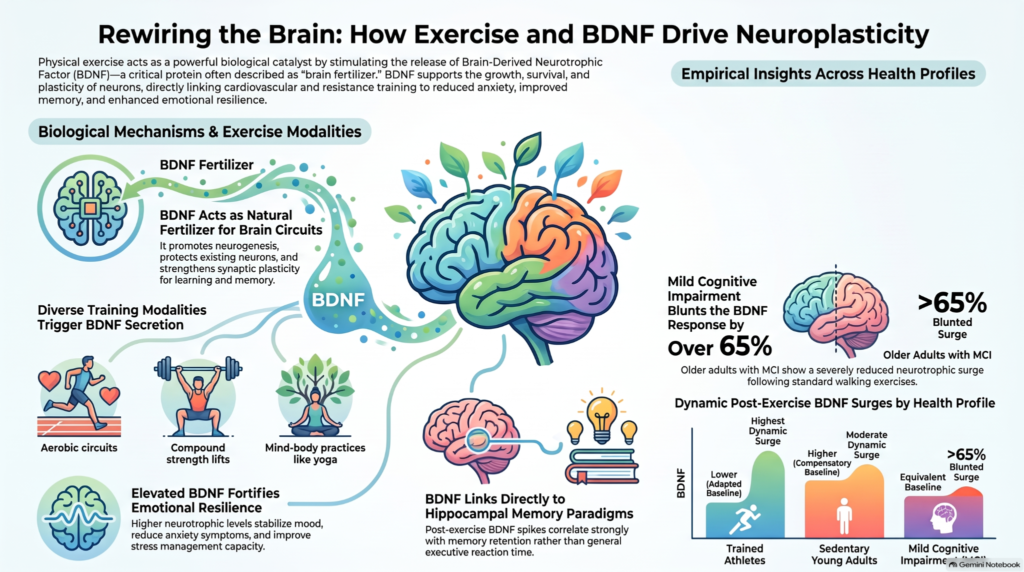
Chief among these is Brain-Derived Neurotrophic Factor (BDNF), an essential protein that behaves like natural fertilizer for your neural circuitry. Understanding this mind-body connection transforms how we approach exercise. Moving your body shifts from an aesthetic chore into a proactive method for building cognitive stamina, emotional control, and a resilient brain.
Exercise greatly boosts Brain-Derived Neurotrophic Factor (BDNF) levels, which is vital for neuroplasticity and mental health. Increased BDNF promotes neuron growth and survival, enhancing cognitive flexibility and emotional resilience. Regular physical activity, such as aerobic exercise or strength training, stimulates BDNF production, improving mood and reducing anxiety. This powerful relationship between exercise, BDNF, and mental well-being is fundamental for overall brain function. There’s more to explore about how specific exercises can further enhance these benefits.
KEY TAKEAWAYS
- BDNF supports neuroplasticity, enabling the brain to adapt and reorganize, which is vital for learning and memory.
- Regular exercise, especially aerobic and strength training, significantly increases BDNF levels, enhancing brain function and mood.
- Elevated BDNF levels improve emotional resilience by reducing anxiety and promoting cognitive flexibility, aiding stress coping mechanisms.
- Mind-body practices like yoga and mindfulness meditation also stimulate BDNF production, further supporting mental health.
- Personalized exercise protocols targeting BDNF can optimize mental health outcomes, considering genetic influences and individual responses to exercise.
WHAT IS BDNF AND WHY DOES IT MATTER?
Brain Derived Neurotrophic Factor (BDNF) has been referred to as a fertilizer for your brain. It is a substance that is found in your brain and helps to maintain the life of your brain cells, as well as grow new ones.
Brain-Derived Neurotrophic Factor (BDNF) plays an essential role in brain health and function. It serves as a significant protein that supports the survival of existing neurons while promoting the growth of new ones.
Understanding BDNF functions is important because it directly influences neuroplasticity—the brain’s ability to adapt and reorganize itself. Elevated BDNF levels enhance cognitive performance, mood regulation, and memory formation. Conversely, reduced BDNF levels are linked to various neurological disorders, including depression and Alzheimer’s disease, highlighting BDNF significance in mental health.
You can see that fostering an environment conducive to BDNF production may empower you to improve overall brain function. By recognizing the importance of BDNF, you can take proactive steps to support its activity, ultimately enhancing your cognitive abilities and emotional resilience.
Awareness of BDNF’s role equips you with the knowledge to cultivate a healthier brain, offering greater freedom to navigate the complexities of life.
How Exercise Increases BDNF Production
While many factors influence BDNF production, exercise stands out as one of the most effective stimulants. Engaging in regular physical activity activates several physiological processes that enhance the synthesis of neurotrophic factors, particularly BDNF. Understanding sedentary lifestyle risks epidemiology highlights the importance of regular physical activity, as prolonged inactivity may contribute to poorer mental health and reduced cognitive well-being, reinforcing the value of exercise for supporting brain function.
During exercise, increased blood flow elevates oxygen and nutrient delivery to the brain, which is vital for peak function. Moreover, the mechanical stress placed on muscles and joints stimulates the release of molecular signals that promote BDNF production.
Different types of exercise, such as aerobic and resistance training, can vary in their impact on BDNF levels, but both contribute positively to exercise physiology.
As you consistently challenge your body, you’re fundamentally encouraging your brain to adapt and grow, fostering neuroplasticity. This intricate relationship between physical activity and BDNF underscores the importance of exercise in enhancing cognitive health and resilience, ultimately liberating you from mental constraints.
How BDNF Boosts Emotional Resilience Through Exercise
Brain-derived neurotrophic factor (BDNF) is vital for the survival, maintenance, and regeneration of specific neuronal populations in the adult central nervous system. Its role is critical in supporting neuronal health and facilitating neuroplasticity. Secreted by neurons and glial cells, brain-derived neurotrophic factor (BDNF) primarily facilitates neuronal survival, supports synaptic plasticity, and encourages neurogenesis. BDNF plays a significant role in various brain functions, such as memory, learning, and emotional regulation. Furthermore, it has been linked to the protection and recovery of the nervous system following injury or in the context of neurodegenerative diseases
As you engage in regular exercise, BDNF plays an essential role in enhancing your emotional resilience. This neurotrophic factor fosters neuroplasticity, helping your brain adapt to stressors and challenges effectively.
By boosting BDNF levels, you’re not just improving physical fitness; you’re also fortifying your emotional well-being. Here are some ways BDNF supports your resilience:
- Facilitates the growth of new neurons, enhancing cognitive flexibility.
- Regulates mood and reduces anxiety, promoting a stable emotional state.
- Strengthens synaptic connections, improving your capacity to cope with stress.
- Enhances the effectiveness of stress management strategies, empowering you to tackle life’s challenges.
Through these mechanisms, BDNF contributes to a robust emotional foundation.
Best Exercises for Increasing BDNF and Supporting Mental Health
Brain-derived neurotrophic factor (BDNF) is a member of the neurotrophic family of proteins found in the peripheral and central nervous systems known to play important roles in neuronal development, plasticity, differentiation, and survival. Neurotrophic factor, an important factor in the formation of long-term reinforcement, which significantly influences memory and learning processes, protects brain from neurodegeneration and neuronal damage that causes Alzheimer’s disease. There is growing evidence that it is linked to protection. Besides, it has been suggested that aerobic exercise may enhance synaptic plasticity by inducing the expression of BDNF throughout the central nervous system.
To effectively increase BDNF levels and enhance mental health, incorporating a variety of exercises is essential.
Aerobic activities, strength training, and mind-body practices each offer unique benefits that contribute to BDNF production.
Understanding how these exercise modalities interact with your body can help you optimize your mental well-being.
Aerobic Exercise Benefits
Aerobic exercise offers significant benefits for increasing brain-derived neurotrophic factor (BDNF), an essential protein linked to cognitive function and mental health.
Engaging in consistent aerobic activities can enhance your brain’s resilience and promote neuroplasticity.
Here are some key mental benefits you can gain:
- Improved mood regulation
- Enhanced memory and learning capabilities
- Increased focus and cognitive flexibility
- Reduced symptoms of anxiety and depression
Strength Training Advantages
While aerobic exercise often receives the spotlight for its mental health benefits, strength training also plays an essential role in boosting BDNF levels and enhancing cognitive function.
Engaging in resistance training not only fosters muscle growth but also stimulates the release of neurotrophic factors. These factors promote neuroplasticity, enabling your brain to adapt and thrive.
The strength training benefits extend beyond physical improvements; they include reduced anxiety and improved mood regulation.
Compound exercises, such as squats and deadlifts, are particularly effective in elevating BDNF levels due to their intensity and muscle engagement.
Mind-Body Practices
Incorporating mind-body practices into your exercise regimen can greatly enhance BDNF levels and support mental health.
These practices foster a deeper connection between your mind and body, promoting neuroplasticity. Here are some effective mind-body exercises to reflect upon:
- Mindfulness meditation: Engaging in regular mindfulness meditation can greatly boost BDNF production while reducing stress and anxiety.
- Yoga practices: Incorporating yoga into your routine enhances flexibility and strength while also cultivating mental clarity and emotional resilience.
- Tai Chi: This gentle martial art merges movement with mindfulness, increasing focus and promoting emotional balance.
- Breathwork: Focusing on your breath can regulate your nervous system, supporting relaxation and enhancing overall mental well-being.
Incorporating yoga or tai chi into your routine can be an effective self care activity that promotes mental clarity, reduces stress, and supports emotional resilience through regular mind-body movement.

HOW TO CHOOSE EXERCISES THAT BOOST BDNF AND MENTAL HEALTH?
From a strength and conditioning perspective, people often get trapped asking what single exercise reigns supreme for brain health. The answer lies in how different training stimuli interact with your physiology. In the weight room, heavy compound lifts like deadlifts and squats create significant mechanical tension and neuromuscular recruitment, triggering systemic growth signals that demand absolute mental focus. On the other hand, sustained cardiovascular conditioning—whether I am grinding through a steep climb on my road bike or running functional circuit intervals—pumps oxygenated blood to the brain and creates a distinct surge in circulating BDNF.
The science demonstrates that your training background changes how your body responds to exercise. Trained athletes show a sharp, responsive surge in neurotrophic factors during high-intensity intervals, but even individuals starting from a completely sedentary baseline experience a measurable neurochemical boost from moderate movement. That is why I tell my clients not to overcomplicate the protocol.
I love mixing fast-paced drumming sessions into cardio conditioning circuits or taking athletes onto outdoor climbing routes because cognitive engagement matters just as much as physical output. Whether you choose bodyweight circuits, high-intensity intervals, or outdoor trail cycling, matching biomechanical variety with genuine enjoyment is what ensures the consistency needed to reshape your brain architecture.
Choosing the right exercises to boost BDNF levels and enhance mental health involves understanding the specific activities that stimulate neuroplasticity and promote overall well-being.
Focus on high-intensity aerobic exercises, such as running or cycling, which effectively increase BDNF production. Additionally, consider incorporating yoga into your routine; the yoga benefits extend beyond physical flexibility, enhancing mental clarity and emotional resilience.
Outdoor activities, like hiking or team sports, also contribute considerably to BDNF levels while allowing you to connect with nature. The combination of physical exertion and fresh air amplifies mood-enhancing effects, supporting mental health.
Engaging in a variety of these exercises not only keeps your routine interesting but also guarantees a thorough approach to boosting BDNF.
Ultimately, selecting exercises that resonate with you’ll empower your journey towards improved mental health and cognitive function, fostering a sense of freedom and fulfillment in your daily life.
Incorporating Exercise for Better Mental Health
Exercise plays a pivotal role in enhancing mental health by triggering a cascade of physiological and psychological benefits.
By incorporating mindful movement and outdoor activities into your routine, you can greatly boost your well-being. Regular physical activity supports fitness and brain health neuroplasticity by encouraging the brain to form and strengthen neural connections, improving cognitive flexibility, and promoting emotional resilience.
Consider these approaches to effectively integrate exercise for better mental health:
- Engage in mindful movement: Focus on your body’s sensations during activities like yoga or tai chi to foster mental clarity.
- Explore outdoor activities: Nature has a calming effect; hiking or cycling can enhance your mood and reduce stress.
- Establish a consistent schedule: Regular exercise provides structure, promoting stability in your mental health.
- Join a community group: Exercising with others fosters social connections, reducing feelings of isolation.
Future Research Directions on BDNF and Mental Health Interventions
As you explore future research directions on BDNF and mental health interventions, consider the potential of innovative measurement techniques to provide more accurate assessments of BDNF levels.
Targeted exercise protocols could be tailored to maximize BDNF release, enhancing therapeutic outcomes.
Additionally, understanding genetic influences on BDNF may reveal personalized approaches to mental health treatment.
Innovative BDNF Measurement Techniques
While traditional methods of measuring Brain-Derived Neurotrophic Factor (BDNF) levels often rely on blood samples, innovative techniques are emerging that promise to enhance our understanding of its role in mental health interventions.
These novel bdnf testing methods and neuroimaging techniques enable researchers to gain deeper insights into BDNF’s effects. Consider the following advancements:
- Salivary BDNF testing: Non-invasive and easy to administer.
- Cerebrospinal fluid analysis: Offers direct insight into central nervous system BDNF levels.
- Functional MRI: Maps brain activity correlated with BDNF fluctuations.
- Electrophysiological measures: Assess neural activity in relation to BDNF signaling.
Adopting these innovative techniques can greatly improve the research landscape, fostering targeted interventions that can better support mental health outcomes.
Targeted Exercise Protocols
To enhance mental health interventions through BDNF modulation, researchers must explore targeted exercise protocols that specifically stimulate BDNF production.
By identifying targeted workouts tailored to individual needs, you can maximize the benefits of various exercise modalities. High-intensity interval training (HIIT) and resistance training are particularly promising, as they may elevate BDNF levels more effectively than low-intensity activities.
Additionally, combining aerobic exercises with strength training could yield synergistic effects, further enhancing neuroplasticity. Future studies should investigate the ideal duration, frequency, and intensity of these targeted workouts to maximize BDNF responses.
Genetic Influences on BDNF
Understanding the genetic influences on BDNF can greatly enhance the development of mental health interventions. Genetic variants play an essential role in determining BDNF levels and responses to environmental factors. By exploring these influences, you can better tailor interventions to individual needs.
Here are key aspects to reflect on:
- Genetic variants: Specific alleles, like Val66Met, can affect BDNF signaling.
- Environmental factors: Lifestyle choices, stress, and nutrition can interact with genetic predispositions.
- Gene-environment interactions: Understanding how genetics and environment coalesce is imperative for personalized treatment.
- Future research: Investigating these dynamics could lead to innovative strategies for optimizing mental health outcomes.
RELATED STUDIES ABOUT BRAIN-DERIVED NEUROTROPHIC FACTOR BDNF EXERCISE
Incorporating exercise into your routine isn’t just about physical fitness; it’s a powerful way to elevate your mental health through increased BDNF levels. As you move, you’re not just strengthening your body, but also sculpting a resilient mind. So why wait? Embrace the rhythm of movement and unleash the transformative potential of neuroplasticity. With every step, you’re investing in your emotional well-being, paving the way for a healthier, happier you. The journey begins now.
The effect of aerobic exercise on serum brain-derived neurotrophic factor (BDNF) and executive function in college students
This quasi-experimental, repeated-measures study investigates the effects of a single 30-minute session of acute-moderate aerobic exercise on circulating serum brain-derived neurotrophic factor (BDNF) levels and inhibitory control performance among college students stratified across three distinct habitual physical activity profiles: athletes, regular fitness practitioners, and sedentary individuals.
Conceptual Framework & Rationale
- Neurotrophins and Executive Function: Brain-derived neurotrophic factor (BDNF) is a pivotal neurotrophin abundantly expressed in the hippocampus and cerebral cortex, playing an essential role in synaptic plasticity, neuronal survival, learning, and executive function. Peripheral BDNF crosses the blood-brain barrier bidirectionally and is considered a primary biochemical mediator linking cardiovascular exercise to enhanced cognitive processing in the prefrontal cortex.
- Controversies in Acute Exercise Responses: While moderate-to-vigorous exercise is widely documented to increase circulating BDNF, empirical findings regarding baseline concentrations, magnitude of acute release, and downstream cognitive enhancement remain contradictory. Furthermore, whether an individual’s chronic physical activity status moderates the acute release of BDNF and its subsequent impact on inhibitory control remains unresolved.
- Core Objective: Determine whether baseline physical activity levels (athletes vs. regular exercisers vs. sedentary individuals) influence changes in serum BDNF concentrations and inhibitory control (measured via the Victoria Stroop Test) following a single 30-minute bout of functional aerobic circuit exercise.
Methodology & Experimental Architecture
- Participant Screening & Stratification: From an initial cohort of 143 evaluated college students, 62 young adults (mean age 20.191.41 years; 48.4% male [n=30], 51.6% female [n=32]) were selected after screening to exclude individuals with non-verbal IQ <80 (TONI-2), elevated depressive symptoms (BDI-II 14), anxiety (BAI 8), musculoskeletal injuries, or academic probation.
- Activity-Level Grouping (IPAQ & Fitness Verification): Participants were classified into three groups using the International Physical Activity Questionnaire (IPAQ) and verified via a 6-minute submaximal cardiovascular rope-skipping recovery test:
- Athletes (n=20): Active members of competitive university athletic teams (1,500–3,000 MET-minutes/week; mean METs 4,849.303,274.63).
- Regular Fitness (n=19): Engaged in continuous, structured campus sports or gym activities for 1 semester (mean METs 3,326.081,787.98).
- Sedentary (n=23): Physically inactive inside and outside the university (IPAQ category low/inactive; mean METs 1,445.981,406.21).
- Pre-Experimental Standardization: Participants abstained from alcohol, tobacco, and analgesics/cold medications for 24 hours, obtained 8 hours of sleep, and refrained from caffeine and psychoactive substances for at least 12 hours prior to morning testing (conducted between 7:00 AM and 11:00 AM).
- Acute Exercise Protocol: A 30-minute functional aerobic circuit comprising 15 minutes of warm-up followed by 9 full-body functional stations (agility ladder skips, rope jumping, step-up/bodyweight squat, cone agility shuttles, push-ups, lateral box sidesteps, jump squats, dumbbell step-ups, and carioca lateral shuffles). Stations were performed for 30 seconds of maximal effort followed by 30 seconds of passive recovery at a target cardiovascular intensity of 70%–80% of maximal heart rate, monitored via continuous telemetry (Polar RS100) and Borg CR-10 perceived exertion ratings.
- Outcome Measures:
- Serum BDNF Quantification: Venous blood samples were collected into Vacutainer SST tubes immediately before exercise and immediately following the final station. Clotted blood was centrifuged at 1,000 g for 10 minutes, and serum was stored at $-80^\circ\text{C}$ until analysis via commercial sandwich ELISA (Sigma-Aldrich RAB0026; 1:100 working dilution, read at 450 nm).
- Inhibitory Control: Assessed pre- and post-exercise using the computerized Victoria Stroop Test (VST) from the Psychology Experiment Building Language (PEBL) battery, extracting completion time (VSTTime) and total error frequency (VSTResp) during the incongruent color-word interference condition.
- Statistical Analysis: Analyzed using STATA (version 14.0). Group differences and time effects were evaluated using two-way repeated-measures ANOVA (Group Time), Kruskal-Wallis tests, and paired t-tests with Bonferroni corrections for pairwise comparisons (=0.05).
Key Empirical Findings
- Cardiovascular Manipulation Check: The exercise circuit elicited robust physiological exertion across all cohorts, with mean heart rate increasing significantly from pre- to post-exercise:
- Regular Fitness: 72.1010.26 to 161.6322.35bpm (55% increase).
- Athletes: 63.059.74 to 160.6316.30bpm (61% increase).
- Sedentary: 73.4715.15 to 162.0027.62bpm (54% increase).
- Baseline (Resting) Serum BDNF Disparities:
- Baseline serum BDNF concentrations differed significantly across groups (p=0.025).
- Sedentary college students exhibited the highest baseline serum BDNF levels (1,339.30174.66ng/mL), which were significantly higher than those of regular fitness participants (1,228.17175.34ng/mL,p=0.031) and athletes (1,198.98221.72ng/mL,p=0.030). Baseline BDNF concentrations did not differ between athletes and regular fitness participants (p>0.999).
- Acute Exercise-Induced BDNF Elevation (Group Time Interaction):
- Repeated-measures ANOVA revealed a statistically significant Group Time interaction for circulating serum BDNF (F(3,60)=5.27,p=0.008), indicating that habitual activity level moderated neurotrophic responsiveness.
- Intra-group analyses demonstrated that all three groups experienced significant elevations in serum BDNF post-exercise, but with divergent effect magnitudes:
- Athletes: Exhibited the largest absolute and relative surge (+287.26208.55ng/mL, rising to 1,486.2673.64ng/mL;t=7.61,p<0.001, large effect size ES=1.95).
- Regular Fitness: Displayed an intermediate surge (+200.62108.48ng/mL, rising to 1,428.80180.26ng/mL;t=5.18,p<0.001,ES=1.13).
- Sedentary Group: Showed the smallest increase (+119.75171.11ng/mL, rising to 1,459.07109.45ng/mL;t=3.40,p=0.004,ES=0.84).
- Immediately post-exercise, absolute BDNF concentrations were statistically equivalent across groups (p=0.543) due to the larger dynamic rise in the more active cohorts closing the baseline gap.
- Biological sex did not influence baseline BDNF or the magnitude of exercise-induced BDNF release.
- Inhibitory Control Performance (Victoria Stroop Test):
- Across all three groups, neither completion time in the color-word interference condition (VSTTime) nor interference error rates (VSTResp) showed statistically significant improvements from pre- to post-exercise (p>0.05).
- Pre-exercise VSTTime: Regular Fitness 1.190.21s, Athletes 1.070.25s, Sedentary 1.180.20s (p=0.133).
- Post-exercise VSTTime: Regular Fitness 1.180.28s, Athletes 1.110.79s, Sedentary 1.220.37s (p=0.791).
- Pre- and post-exercise error counts remained low across all groups (median 1.00–1.04 errors; p>0.06).
Biological & Physiological Interpretations
- Training Adaptation and Downregulated Baseline BDNF: Lower resting peripheral BDNF in athletes and regular fitness participants reflects a chronic physiological adaptation to exercise training. This downregulation may stem from enhanced receptor sensitivity (BDNF-TrkB signaling efficiency), more rapid peripheral clearance, or accelerated central uptake across the blood-brain barrier. Conversely, elevated baseline BDNF in sedentary individuals may represent a compensatory mechanism to maintain neural homeostasis in the absence of exercise-induced muscle contraction.
- Heightened Neurotrophic Sensitivity in Trained Muscle: The greater post-exercise surge observed in athletes (ES=1.95) demonstrates that chronic athletic conditioning preserves heightened sensitivity of skeletal muscle and neural tissue to synthesize and secrete neurotrophic factors upon mechanical contraction.
- Mechanisms Underlying Null Cognitive Effects: A single 30-minute moderate functional circuit was insufficient to induce immediate improvements in prefrontal inhibitory control. The authors hypothesize that:
- The circuit intensity may not have reached the metabolic threshold required to trigger muscular PGC-1 activation and subsequent circulating irisin release, an essential pathway driving BDNF synthesis in the prefrontal cortex.
- The exercise was not strenuous enough to elicit the central catecholamine threshold (noradrenaline release via the locus coeruleus-nucleus tractus solitarius axis) necessary to transiently boost prefrontal executive processing speed.
- Standardized computerized Stroop testing in high-functioning, non-depressed university students may be subject to ceiling effects, making acute behavioral gains difficult to detect.
Practical Implications & Limitations
- Habitual Activity as a Biomarker Moderator: Chronic physical activity status must be treated as a key confounding or moderating variable in clinical trials measuring peripheral neurotrophic biomarkers. Baseline differences between sedentary and athletic populations indicate that unstratified cohorts can mask true intervention effects.
- Prescribing for Sedentary Populations: Although sedentary young adults showed lower BDNF reactivity than athletes, a single acute session still produced a statistically significant increase (ES=0.84), confirming that even untrained individuals gain acute neurotrophic stimulation from accessible functional exercise.
- Methodological Limitations:
- The study relied on a relatively modest sample size (n=62) and assessed executive function using a single abbreviated neuropsychological test (Victoria Stroop Test), which captures response inhibition but omits other core executive domains such as working memory updating or cognitive flexibility.
- The investigation lacked an inactive, non-exercise control group assessed across an identical 30-minute rest interval to control for potential re-testing effects on the Stroop task.
- Inter-individual genetic variations (such as the BDNF Val66Met polymorphism) and hormonal stress markers (cortisol, catecholamines) were not assayed, leaving potential biochemical and genetic mediators unexamined.
| REFERENCE: Beatriz Muñoz Ospina, Natalia Cadavid-Ruiz, The effect of aerobic exercise on serum brain-derived neurotrophic factor (BDNF) and executive function in college students, Mental Health and Physical Activity, Volume 26, 2024, 100578, ISSN 1755-2966, https://doi.org/10.1016/j.mhpa.2024.100578. (https://www.sciencedirect.com/science/article/pii/S1755296624000036) |
Brain-derived neurotrophic factor (BDNF) as a potential mechanism of the effects of acute exercise on cognitive performance
This review examines brain-derived neurotrophic factor (BDNF) as a candidate biological mediator of post-exercise cognitive improvements, synthesizing preclinical foundations, human exercise trials, peripheral measurement challenges, and recommendations for causal modeling.
Conceptual Framework & Rationale
- Acute Exercise and Cognitive Enhancement: Meta-analyses demonstrate that single bouts of acute physical exercise induce small but statistically robust improvements in cognitive functioning (effect sizes ES=0.11to0.20).
- Mechanistic Knowledge Void: While extensive research addresses transient cognitive changes during exercise (e.g., via the reticular-activating hypofrontality model and catecholaminergic arousal pathways), the physiological mechanisms driving cognitive gains following exercise cessation remain poorly understood. Elucidating these biological pathways is necessary to establish targeted, evidence-based exercise prescriptions for neurocognitive health.
- BDNF as a Candidate Biological Mechanism: BDNF is a key growth factor supporting neurogenesis, synaptic plasticity, dendritic branching, and long-term potentiation (LTP). The hippocampus exhibits high baseline BDNF expression and plays an essential role in learning and memory processing. Because BDNF crosses the blood-brain barrier bidirectionally and circulates in peripheral blood, peripheral concentrations (pBDNF) offer an accessible biomarker to assess central neuroplastic adaptations.
Preclinical Foundations and Observational Evidence
- Causal Preclinical Models: Rodent experiments establish a direct causal role for hippocampal BDNF in spatial learning and memory retrieval (assessed via the Morris water maze). Depriving rodents of endogenous hippocampal BDNF via neutralizing antibody microinjections impairs spatial learning, whereas direct intrahippocampal infusions of exogenous BDNF enhance spatial performance.
- Human Correlational & Clinical Evidence: In older human adults, reduced circulating pBDNF correlates with smaller bilateral hippocampal volumes and lower spatial memory scores. Furthermore, marked pBDNF reductions appear in patients with Alzheimer’s disease compared to neurotypical controls, supporting the utility of pBDNF as an indicator of neural integrity and cognitive function.
- Dose-Response to Acute Physical Exertion: Human exercise trials consistently indicate that acute physical exertion elicits a transient, intensity-dependent surge in pBDNF, with maximal graded tests and high-intensity protocols generating the largest post-exercise elevations. These circulating surges are temporary, typically returning to baseline concentrations within 10 to 60 minutes post-exercise.
Methodological & Biological Challenges in Assessing pBDNF
- Biological Matrix Divergence (Serum vs. Plasma): Peripheral BDNF concentrations are up to 200 times higher in blood serum than in blood plasma. Plasma reflects free-circulating BDNF, whereas serum reflects BDNF released from activated platelets and immune cells during blood clotting. Comparing concentrations across different blood fractions introduces confounding variations in protein source and biological meaning.
- Plasma Volume Shifts: Acute physical exercise alters fluid balance and contracts intravascular plasma volume. Without mathematical adjustments for hemoconcentration, apparent post-exercise elevations in pBDNF concentration can reflect fluid shifts rather than increased de novo synthesis or release.
- The “Yin-Yang” Opposing Roles of BDNF Isoforms:
- ProBDNF vs. Mature BDNF (mBDNF): BDNF is initially translated as an immature precursor (proBDNF) before enzymatic cleavage yields mature BDNF (mBDNF).
- Divergent Receptor Signaling: Mature BDNF binds high-affinity TrkB receptors to facilitate neurogenesis, dendritic spine formation, and long-term potentiation (LTP). Conversely, uncleaved proBDNF binds low-affinity p75NTR receptors, promoting apoptosis, neurite retraction, and long-term depression (LTD).
- Assay Limitations: Most commercial ELISA kits do not differentiate between isoforms or exhibit cross-reactivity, masking changes in the mature-to-proBDNF ratio. Western blot studies reveal that acute exercise selectively modulates peripheral blood mononuclear cell isoform proportions across submaximal and maximal workloads even when total ELISA-measured pBDNF concentrations appear unchanged.
Empirical Human Studies: Acute Exercise, pBDNF, and Cognition
The authors reviewed seven human trials evaluating acute exercise, pBDNF, and post-exercise cognitive outcomes:
- Studies Assessing Memory (Positive Associations):
- Winter et al. (2007): Compared 40 minutes of moderate running, two 3-minute high-intensity sprints, and resting control on novel language acquisition and long-term retention. High-intensity sprinting accelerated vocabulary learning speed, accompanied by stronger pBDNF shifts whose post-exercise maintenance correlated positively with learning performance.
- Lee et al. (2014): Examined 75 minutes of treadmill running at 70% VO2peak with and without neck cooling. In the uncooled condition (higher thermal stress), exercise-induced pBDNF increases correlated strongly with short-term digit-span memory improvements (r2=0.81).
- Skriver et al. (2014): Assessed 20 minutes of high-intensity cycling on a computerized visuomotor tracking task (motor memory). Although total plasma pBDNF elevations were non-significant, immediate post-exercise pBDNF concentrations correlated positively with motor skill retention at 1 hour and 7 days post-intervention.
- Studies Assessing Executive and Attentional Domains (Null Associations):
- Ferris et al. (2007): Compared cycling intensities (graded test vs. 20% below vs. 10% above ventilatory threshold) on Stroop Task interference. While high-intensity exercise increased serum pBDNF and improved executive performance, within-subject changes in pBDNF were not statistically correlated with cognitive changes.
- Tsai et al. (2014): Tested a 30-minute moderate run on visuospatial attention and electrophysiological markers (P3, contingent negative variation) across high- and low-fitness young adults. Serum pBDNF rose significantly post-exercise, but pBDNF concentrations showed no correlation with behavioral reaction times or neuroelectric signal amplitudes.
- Griffin et al. (2011) & Tonoli et al. (2014): Both confirmed post-exercise pBDNF elevations alongside cognitive gains (face-name relational memory in Griffin; Stroop and spatial memory in Tonoli), but neither performed direct correlational or mediational analyses linking pBDNF changes to cognitive performance.
- The Domain-Specific Pattern: Across the available evidence, significant associations between exercise-induced pBDNF shifts and cognitive improvements emerged exclusively in studies employing hippocampal-dependent memory paradigms. Studies targeting frontally mediated non-memory domains (e.g., Stroop executive control, visuospatial reaction time) failed to detect significant pBDNF-cognition relationships.
Critical Gaps and Strategic Recommendations
- Prioritize Hippocampal-Dependent Memory Assessments: Because BDNF is most densely concentrated and synthesized within the hippocampus, cognitive testing should emphasize hippocampal-dependent memory functions (e.g., relational, spatial, and long-term consolidation paradigms) rather than broad frontal-executive batteries.
- Incorporate Fine-Grained Isoform Assays: Future exercise trials should employ Western blot analyses or isoform-specific ELISAs to quantify the balance between proBDNF and mBDNF. Measuring total undifferentiated BDNF obscures whether acute exercise stimulates neuroprotective TrkB growth signaling or pro-apoptotic p75NTR pathway activation.
- Transition from Correlation to Formal Mediation Modeling: Prior human studies rely almost exclusively on simple bivariate correlations between delta pBDNF and delta cognitive scores, which cannot establish causality. Investigators must employ rigorous causal mediation models—incorporating non-exercise control arms, adjusting for plasma volume shifts, and using non-parametric bootstrapping of indirect effects (ab pathways)—to establish whether peripheral BDNF changes truly mediate acute exercise-induced cognitive gains.
| REFERENCE: Aaron T. Piepmeier, Jennifer L. Etnier, Brain-derived neurotrophic factor (BDNF) as a potential mechanism of the effects of acute exercise on cognitive performance, Journal of Sport and Health Science, Volume 4, Issue 1, 2015, Pages 14-23, ISSN 2095-2546, https://doi.org/10.1016/j.jshs.2014.11.001. (https://www.sciencedirect.com/science/article/pii/S2095254614001161) |
Suppressed brain-derived neurotrophic factor response to 6 min walking exercise in mild cognitive impairment
This cross-sectional, repeated-measures interventional study investigates whether older adults with mild cognitive impairment (MCI) exhibit distinct plasma myokine and cytokine responses to an acute, functional bout of physical exercise—specifically the 6-Minute Walk Test (6MWT)—compared to cognitively unimpaired peers, evaluating whether alterations in muscle-brain endocrine crosstalk track with cognitive performance and metabolic indicators.
Conceptual Framework & Rationale
- Epidemiological Context of Cognitive Aging: Mild cognitive impairment impacts over 15% of community-dwelling adults aged 50 and older worldwide. Approximately 10% to 15% of individuals with MCI transition to Alzheimer’s disease or related dementias annually, and up to 60% develop dementia over their lifetimes, underscoring an urgent need to identify early modifiable physiological pathways.
- The Muscle-Brain Endocrine Axis: Skeletal muscle functions as an active endocrine organ that secretes signaling peptides—termed myokines—in response to contraction. Myokines modulate metabolism, mitochondrial oxidative capacity, neuroinflammation, hippocampal neurogenesis, and synaptic plasticity.
- Brain-Derived Neurotrophic Factor (BDNF) Signaling: BDNF is a key neurotrophin/myokine regulating neuronal survival, dendritic arborization, and synaptic plasticity via high-affinity tropomyosin receptor kinase B (TrkB) receptors. Resting peripheral BDNF concentrations are often blunted in established Alzheimer’s disease, but the dynamic responsiveness of circulating BDNF to acute, low-barrier functional exercise in older adults with MCI remains largely uncharacterized.
- Core Research Objectives:
- Determine whether a single, standardized 6-minute walking challenge elicits differential plasma myokine and cytokine responses in older adults with MCI relative to non-MCI controls.
- Evaluate whether blunted myokine responses correlate with domain-specific cognitive deficits, advancing age, functional endurance, body composition, or habitual lifestyle factors.
Methodology & Experimental Architecture
- Study Cohort & Stratification: Enrolled 146 community-dwelling older adults categorized by Montreal Cognitive Assessment (MoCA) scores:
- Non-MCI Group (n=55): MoCA score 26 (mean age 75.237.69 years; 34.5% male [n=19], 65.5% female [n=36]; mean MoCA 27.601.27).
- MCI Group (n=91): MoCA score <26 (mean age 79.158.27 years; 59.3% male [n=54], 40.7% female [n=37]; mean MoCA 22.412.55).
- Exclusion Criteria: Active malignancy, untreated renal or metabolic disorders, recent systemic corticosteroid or antibiotic use, and involuntary weight fluctuations ($>5\%$ across the prior 3 months).
- Anthropometric, Body Composition, & Functional Assessments:
- Body composition, lean soft tissue mass, appendicular lean mass, and visceral adipose tissue (VAT) were determined using dual-energy X-ray absorptiometry (DXA; Hologic ADR 4500).
- Functional physical endurance was evaluated via the total distance covered during a standardized 6-Minute Walk Test (6MWT).
- Peripheral muscle performance was quantified through digital handgrip dynamometry, isokinetic knee extension peak torque dynamometry, and 4-meter gait speed.
- Comprehensive Cognitive & Lifestyle Testing Battery:
- Evaluated across two clinic visits using the Trail Making Test Parts A and B (psychomotor speed and cognitive flexibility), Stroop Color and Word Test (SCWT; response inhibition and interference), phonemic/semantic verbal fluency, Digit Span Forward/Backward (working memory), and the Rey Auditory Verbal Learning Test (RAVLT; learning rate and delayed memory retention).
- Lifestyle variables were captured via the Physical Activity Scale for the Elderly (PASE), 3-day dietary recalls, the Hospital Anxiety and Depression Scale (HADS), Profile of Mood States (POMS), and the Charlson Comorbidity Index (CCI).
- Blood Sampling & Multiplex Assays:
- Venous blood samples were collected into lithium heparin tubes immediately following a 2-hour resting baseline and immediately following the 6MWT.
- Plasma was immediately isolated (centrifuged at $4^\circ\text{C}$, 3,120g for 5 minutes) and stored at $-80^\circ\text{C}$.
- Analyzed using Luminex 200 and MagPix platforms via the MILLIPLEX Human Myokine Magnetic Bead Panel (HMYOMAG-56K; quantifying apelin, fractalkine/CX3CL1, BDNF, erythropoietin [EPO], osteonectin, leukemia inhibitory factor [LIF], IL-15, myostatin, heart-type fatty acid-binding protein [FABP-3], irisin, follistatin-like 1 [FSTL-1], oncostatin M, IL-6, FGF-21, and osteocrin/musclin) and the 38-plex Human Cytokine/Chemokine/Growth Factor Panel A (HCYTA-60K-PXBK38).
- Statistical Modeling:
- Baseline differences were evaluated using Generalized Linear Models (GLM; gamma family with log link, adjusting for sex and age).
- Acute pre-to-post 6MWT myokine and cytokine concentration shifts were tested using Generalized Linear Mixed Models (GLMM; subject ID as random intercept; sample time, MCI status, time MCI interaction, sex, age, and 6MWT distance as fixed effects; Gaussian family with log link) supported by Tukey-adjusted post-hoc comparisons.
- Non-parametric Spearman rank correlations within the MCI cohort explored associations between delta () myokine surges and clinical/cognitive parameters.
Key Empirical Findings
- Baseline Phenotypic Equivalence in Body Composition and Muscle Strength:
- Despite older age in the MCI group (79.15 vs. 75.23 years, P=0.005), the non-MCI and MCI cohorts were statistically indistinguishable in BMI (28.43 vs. 28.79kg/m2, P=0.696), total lean mass (49.10 vs. 47.99kg, P=0.418), appendicular lean mass (19.60 vs. 19.13kg, P=0.526), visceral fat mass (814.6 vs. 813.1g, P=0.981), handgrip strength (198.1 vs. 195.2N, P=0.720), knee extension peak torque (79.79 vs. 84.56Nm, P=0.341), and habitual physical activity scores (P=0.830).
- A non-significant trend toward shorter 6MWT walking distance emerged in MCI (428.3 vs. 461.9m, P=0.067).
- The MCI cohort demonstrated marked, multi-domain cognitive impairments, including worse TMT-B completion times (P=0.002), greater SCWT interference (P<0.001), lower phonemic/semantic fluency (P<0.030), lower backward digit span (P=0.009), and poorer delayed memory on the RAVLT (P<0.001).
- Suppressed BDNF Response in Mild Cognitive Impairment:
- Baseline resting plasma BDNF concentrations did not significantly differ between non-MCI and MCI participants (46.5 vs. 72.5pg/mL).
- A single 6-minute bout of walking exercise stimulated a robust systemic surge in BDNF across the full sample (~83% overall elevation), demonstrating that brief functional walking is sufficient to trigger neurotrophic secretion.
- However, GLMM modeling revealed a highly significant group time interaction (P<0.001): the exercise-induced increase in BDNF was markedly blunted by more than 65% in the MCI group (=36.4pg/mL, 95% CI: 25.4–47.5) compared to the non-MCI group (=104.3pg/mL, 95% CI: 75.0–133.5; group difference P<0.001).
- This blunted neurotrophic surge persisted after controlling for biological sex, chronological age, lean body mass, and total distance walked during the 6MWT (P<0.003).
- Divergent Responses Across Secondary Myokines and Cytokines:
- Suppressed Metabolic & Endurance Myokines in MCI: Post-exercise increases in Heart-type Fatty Acid-Binding Protein (FABP-3; =102.1 vs. 438.0pg/mL, P<0.001) and Osteocrin/musclin (=7.1 vs. 16.9pg/mL, P=0.002) were significantly reduced in MCI participants.
- Compensatory Surges in Neuroprotective Cytokines in MCI: Conversely, individuals with MCI displayed significantly larger post-exercise increases in Erythropoietin (EPO; =159.8 vs. 50.1pg/mL, P<0.001) and Leukemia Inhibitory Factor (LIF; =10.6 vs. 1.3pg/mL, P=0.008), alongside selective exercise-induced increases in Irisin (P<0.001).
- Pro-Inflammatory Chemokine Hyperreactivity: While resting baseline cytokines were equivalent (except for lower resting GM-CSF in MCI, P=0.008), the MCI group demonstrated significantly larger acute inflammatory chemokine surges following exercise, including elevated IP-10, MIG, MIP-1, MIP-1, TNF-, and VEGF (P<0.020).
- Correlates of Blunted BDNF Release in the MCI Group:
- Within the MCI cohort, smaller exercise-induced BDNF increases ( BDNF) correlated significantly with advancing age (r=-0.22,P=0.040) and lower global MoCA scores (r=0.23,P=0.030).
- Lower BDNF and lower LIF were correlated with worse executive function and inhibitory control (higher SCWT interference scores; r=-0.23,P=0.034 and r=-0.22,P=0.049, respectively).
- Acute myokine changes were not correlated with habitual physical activity (PASE scores), daily protein intake, dietary caloric intake, or lean muscle volume, indicating that impaired neuroendocrine signaling reflects neuropathological processes rather than disuse or nutritional deficit.
Biological & Pathophysiological Implications
- Dynamic Signaling vs. Resting Biomarkers: Resting baseline BDNF concentrations failed to differentiate non-MCI from MCI participants. In contrast, the dynamic neurotrophic response to an acute physiological challenge revealed underlying endocrine deficits, establishing acute exercise testing as a more sensitive probe of neurobiological health than static blood sampling.
- Disruption of the TrkB/BDNF Positive Feedback Loop: Because lean muscle mass, peripheral muscle strength, and exercise intensity (hemodynamics, perceived exertion) were comparable between groups, the failure to mount a normal BDNF response is unlikely to stem from muscular atrophy. Instead, it points to central neurodegenerative signaling blockades: in preclinical models of early Alzheimer’s disease, loss of TrkB receptor density and impaired CREB/AP-1 transcriptional autoregulation disrupt activity-dependent positive feedback loops, preventing sustained BDNF synthesis.
- Compensatory Counter-Regulation (EPO and LIF): The exaggerated release of EPO and LIF in MCI may represent an endogenous neuroprotective counter-response attempting to buffer against neuroinflammation and ischemic vulnerability.
- Mitochondrial Fatty Acid Oxidation and Subclinical Frailty: Suppressed post-exercise releases of FABP-3 (mediating fatty acid transport to mitochondria) and osteocrin (a mediator of oxidative phosphorylation and muscle endurance) in MCI suggest early subclinical mitochondrial bioenergetic dysfunction, contributing to declining exercise tolerance before overt sarcopenia manifests.
Methodological Considerations & Limitations
- Cross-Sectional, Acute Design: The study evaluated physiological responses to a single acute exercise bout; whether the blunted acute myokine surge directly causes long-term cognitive deterioration or can be rescued through chronic aerobic exercise training remains unestablished.
- Subtype Granularity: Participants were classified via MoCA cutoffs without formal clinical subtyping into amnestic versus non-amnestic MCI, which may obscure distinct neurodegenerative etiologies (e.g., Alzheimer’s pathology vs. vascular cognitive impairment).
- Batch Analytics & Multiplex Variability: Plasma samples were processed across two analytical assay batches rather than a single uninterrupted run, which may introduce minor analytical noise into absolute cytokine concentrations.
- Absence of Central Neuroimaging Correlates: The study quantified peripheral venous plasma biomarkers without concurrent functional neuroimaging (e.g., fMRI connectivity or PET amyloid/tau tracking) to directly visualize central TrkB receptor occupancy or hippocampal perfusion.
| REFERENCE: Minchae C. Kang, Sofie De Wandel, Carolina N. Perez, Nicolaas E.P. Deutz, Mariëlle P.K.J. Engelen, Suppressed brain-derived neurotrophic factor response to 6 min walking exercise in mild cognitive impairment, Brain, Behavior, and Immunity, Volume 136, 2026, 106561, ISSN 0889-1591, https://doi.org/10.1016/j.bbi.2026.106561. (https://www.sciencedirect.com/science/article/pii/S0889159126003090) |
CONCLUSION
Looking across the latest research on exercise physiology, our understanding of the brain-muscle axis is advancing rapidly. We now know that skeletal muscle acts as an endocrine organ, releasing protective myokines that communicate directly with cognitive centers like the hippocampus. When you look at clinical studies evaluating older adults or individuals facing cognitive decline, the dynamic ability to release BDNF during simple physical challenges often reveals neurological shifts long before overt physical symptoms appear.
To me, this evidence is deeply empowering. Physical fitness is not an exclusive club reserved for elite competitors; it is accessible preventative medicine for human cognition. When you step onto the gym floor, pick up a kettlebell, or head out for a 20-minute brisk walk, you are taking active control over your mental and neurological health.
You are supplying your neurons with the exact stimulus needed to repair, adapt, and build synaptic resilience against daily stress. As a coach, my goal is always to build durable humans from the inside out. Treat your movement sessions as an essential investment in your brain’s future, lace up your shoes, and let your body’s biology take care of the rest.