

In my coaching work with creatives and knowledge workers, one of the most persistent confessions I hear goes something like this: “Alina, I know I should work out, but I simply do not have the bandwidth after staring at a screen for nine hours.” It is an understandable reaction. In our culture, we tend to treat movement as an isolated chore to be crammed into an already overcrowded schedule, rather than an essential physiological input for sustainable cognition.
I have watched brilliant, high-performing clients run themselves into mental fog simply because they fell into the trap of sedentary overwork. The human body was engineered for continuous, gentle dynamics, not prolonged paralysis punctuated by inbox notifications. When we cut out physical movement to buy more time at the desk, we make an unprofitable exchange: we gain an hour of low-grade, distracted screen time while forfeiting the baseline energy and mental sharpness required to produce meaningful work.
Movement is not an extracurricular activity that steals time from your career; it is the foundation that keeps your cognitive reservoir full. When you honor that rhythm, sustained output follows without the emotional cost of burnout.
Exercise and workplace productivity go hand in hand for long-term success because regular physical activity boosts your energy levels, enhances focus, and improves mood. This connection fosters mental clarity, sharpens decision-making, and cultivates creative thinking. By incorporating exercise into your daily routine, you can effectively reduce stress and increase your cognitive resilience. Embracing wellness initiatives at work further supports your health and productivity. Discover more strategies to seamlessly integrate exercise into your workday and maximize your performance.
KEY TAKEAWAYS
- Regular exercise boosts energy levels and enhances focus, leading to improved overall work performance and productivity.
- Physical activity increases blood flow to the brain, sharpening decision-making and cognitive clarity essential for workplace success.
- Exercise serves as an effective stress management tool, promoting relaxation and a positive mood, which enhances productivity during work hours.
- Engaging in physical activity fosters creative thinking by improving cognitive flexibility and inspiring new perspectives on problem-solving.
- Implementing wellness initiatives, like structured exercise breaks, encourages employee engagement and cultivates a healthier workplace culture.
UNDERSTANDING THE CONNECTION BETWEEN EXERCISE AND PRODUCTIVITY
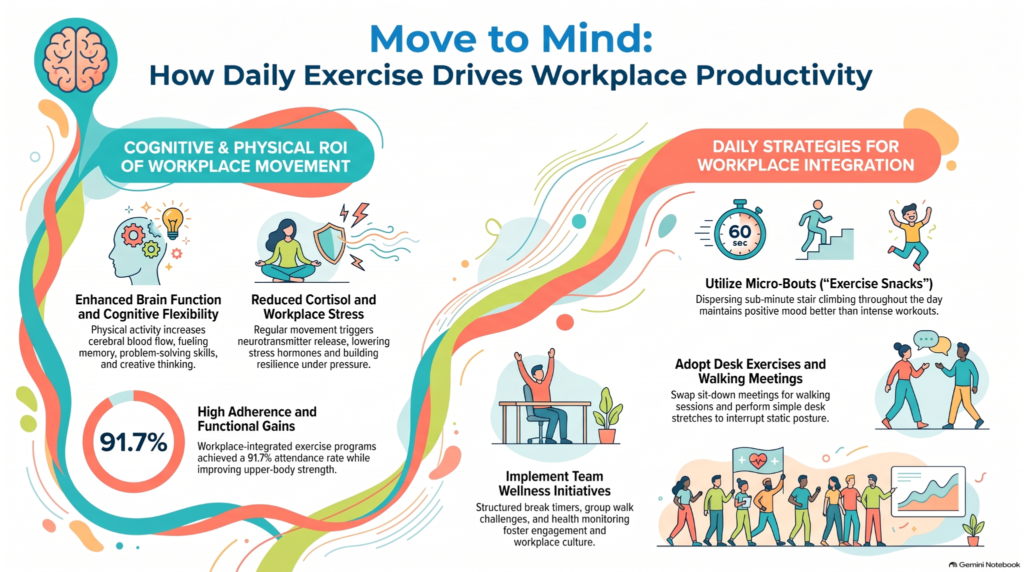
Exercise increases blood flow to the brain, improving focus, memory, and problem-solving. Regular movement reduces stress hormones like cortisol, helping employees stay calm under pressure. It also boosts energy levels, reducing fatigue and absenteeism.
When you incorporate regular exercise into your routine, you’re not just improving your physical health; you’re also boosting your workplace productivity.
Different exercise types, like aerobic activities, strength training, and flexibility exercises, can greatly impact your performance at work.
Studies show that individuals who engage in physical activity report higher energy levels and improved focus, leading to better productivity metrics.
Enhancing Mental Clarity Through Physical Activity
To enhance your mental clarity, engaging in physical activity can be a game-changer. Regular exercise boosts blood flow to your brain, improving your focus and decision-making skills.
By incorporating mindfulness techniques into your routine, you can better understand the meditation effects on task performance, particularly when it comes to maintaining focus and managing workplace stress. For example, tuning into your breath while jogging not only keeps you present but also clears mental clutter.
Physical activity fosters cognitive resilience, helping you adapt better to challenges and stressors. Studies show that even short bursts of movement can enhance your mood and cognitive functions, paving the way for clearer thinking.
The Impact of Exercise on Reducing Workplace Stress
Exercise not only boosts your physical health but can also greatly reduce workplace stress. Engaging in regular physical activity serves as an effective stress management tool, helping you to feel more relaxed and focused throughout your workday. Incorporating short exercise breaks can enhance your mood and productivity.
Here’s a quick look at some effective exercise-related relaxation techniques:
| Technique | Benefits | Suggested Activities |
| Deep Breathing | Lowers heart rate, calms mind | Focused breathing exercises |
| Stretching | Relieves tension, increases flexibility | Simple desk stretches |
| Walking | Boosts endorphins, clears mind | Short walks outside or around the office |
| Yoga | Enhances relaxation, improves focus | Quick yoga poses |
| Aerobic Exercise | Increases energy, reduces anxiety | Jogging, cycling, or dancing |
How Exercise Sparks Creative Thinking
Ever notice how a good workout leads to a great night’s sleep? It’s not just a coincidence — it’s science! Physical exercise can help people sleep better, according to the Mayo Clinic. Regular exercise can help regulate your sleep patterns, making it easier to fall asleep and improving the quality of your shut-eye. All so you can wake up feeling refreshed and ready to take on the day.When you exercise, you’re not just improving your physical health; you’re also enhancing your brain function.
Research shows that regular physical activity boosts your problem-solving skills and encourages creative thinking.
Enhanced Brain Function
Although you mightn’t think of moving your body as a way to boost your brainpower, engaging in physical activity can actually ignite creative thinking.
Exercise enhances cognitive function and promotes neuroplasticity benefits, allowing your brain to adapt and grow. Here’s how it works:
- Increased Blood Flow: Exercise pumps oxygen and nutrients to your brain, fueling cognitive enhancement.
- Release of Neurotransmitters: Physical activity triggers the release of endorphins, which can elevate mood and inspire creativity.
- Mind-Body Connection: Engaging in movement allows you to break free from routine, fostering new perspectives and innovative ideas.
Boosted Problem-Solving Skills
Engaging in physical activity doesn’t just enhance brain function; it also greatly boosts your problem-solving skills.
When you exercise, your brain experiences increased blood flow, which enhances cognitive flexibility—the ability to adapt your thinking to new situations. This flexibility allows you to explore various problem-solving techniques more effectively.
Regular physical activity can lead to improved creativity, making it easier for you to approach challenges from different angles. As you cultivate this mental agility, you’ll find that solutions come more naturally, empowering you to tackle workplace obstacles with confidence.
IMPLEMENTING EFFECTIVE WELLNESS INITIATIVES AT WORK
Whenever I review wellness programs across organizations, I notice an all-or-nothing mindset that consistently sets people up to fail. We often tell ourselves that unless we commit to an aggressive, sixty-minute gym session at dawn, it doesn’t count. Yet in behavioral psychology, we see that rigid standards almost always breed guilt, avoidance, and emotional exhaustion.
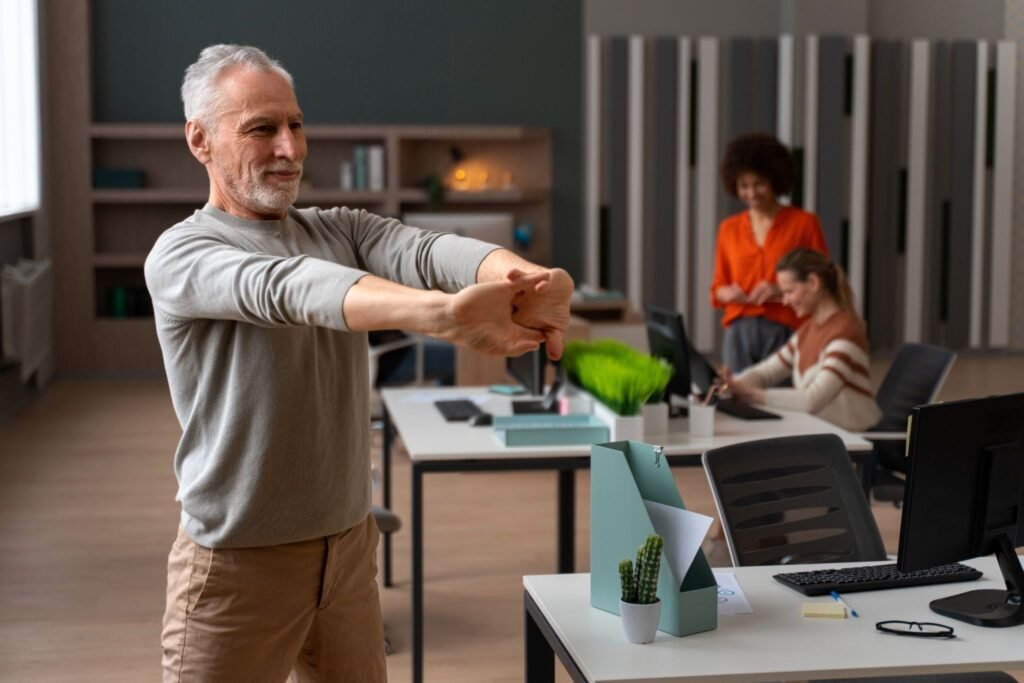
The clients I coach who maintain the highest levels of sustained creative focus do not run marathons every afternoon. Instead, they treat movement as intentional micro-rest throughout the workday. A five-minute walk around the block between demanding meetings or simple desk stretches do not just relieve muscular tension; they create psychological boundaries. These micro-habits invite the parasympathetic nervous system to step in, interrupt the steady drip of cortisol, and give your subconscious mind space to untangle complex problems.
If you feel resistance toward fitness during busy seasons, scale down your expectations. Swap the idea of an intense workout for the gentle practice of somatic check-ins—taking three flights of stairs or practicing mindful breathing at your workstation. You are seeking energy renewal, not physical perfection.
Physical exercise – such as walking or cycling into work – can help get the creative juices flowing, though, just by introducing you to new environments and letting your mind run free. Physical exercise also speeds up the growth of brain cells in the hippocampus region of the brain, and there is research to suggest this area is linked to creative thinking.
To boost workplace productivity, you can implement effective wellness initiatives that promote physical activity breaks and regular wellness challenges.
Encouraging short exercise bursts during the day not only refreshes your mind but also enhances focus and creativity.
Promote Physical Activity Breaks
Incorporating physical activity breaks into your workday can substantially boost productivity and overall well-being. Taking short breaks for stretching, walking, or deep breathing can serve as a simple self care activity that helps you recharge and stay focused throughout the workday.
By implementing structured break schedules, you’ll not only enhance your focus but also improve your mood.
Here are three effective ways to promote physical activity during the day:
- Set a Timer: Schedule short breaks every hour to stretch or take a brisk walk.
- Group Activities: Encourage team walks or quick workout sessions to build camaraderie and energize everyone.
- Desk Exercises: Introduce simple exercises you can do right at your desk, like seated leg raises or desk push-ups.
Offer Wellness Challenges Regularly
Regularly offering wellness challenges can greatly enhance employee engagement and promote a healthier workplace culture. By introducing wellness incentives, you encourage your team to participate actively in their well-being.
These challenges can take various forms, such as fitness competitions or mindfulness initiatives, fostering camaraderie and motivation. Team competitions not only spark a spirit of friendly rivalry but also help build stronger relationships among coworkers.
When employees feel supported in their health journeys, they’re more likely to stay committed and productive. Incorporating regular wellness challenges also signals to your team that you value their health, creating a positive work environment.
Ultimately, this investment in their well-being pays dividends in productivity and overall job satisfaction.
Strategies for Integrating Exercise Into Your Workday
Although the demands of a busy workday can make it challenging to prioritize fitness, integrating exercise into your routine is both feasible and beneficial. Here are three easy strategies you can adopt:
- Desk Exercises: Incorporate simple stretches or strength-building moves at your desk. Try seated leg lifts or desk push-ups to keep your body active without leaving your workspace.
- Walking Meetings: Swap traditional sit-down meetings for walking meetings. This not only gets you moving but can also spark creativity and enhance collaboration.
- Scheduled Breaks: Set aside short breaks every hour to stand up and move around. Use a timer to remind yourself to take a quick walk or do a few jumping jacks.
Measuring the Benefits of Exercise on Employee Performance
Integrating exercise into your workday can lead to measurable improvements in employee performance. Studies show that regular physical activity boosts employee engagement and productivity, creating a more vibrant workplace. Just as exercise supports focus and energy, understanding sleep quality and workplace productivity can help employees recognize the importance of proper rest for maintaining consistent performance. By tracking performance metrics, you can see the positive impact exercise has on both individual and team outcomes.
For instance, companies that encourage movement report a significant increase in creativity and problem-solving skills. You might notice improved focus and lower stress levels, leading to higher job satisfaction.
It’s essential to implement tools like surveys and performance assessments to quantify these benefits effectively. Taking breaks for physical activity can enhance morale and foster a sense of community among employees.
When you prioritize fitness, you’re not just improving health; you’re cultivating an environment where everyone thrives. Embracing exercise isn’t just a trend—it’s a strategic move towards long-term success.

RELATED STUDIES ABOUT EXERCISE AND WORKPLACE PRODUCTIVITY
So, if you think lounging at your desk all day will boost your productivity, think again! Embracing exercise isn’t just about fitting into your favorite jeans; it’s a secret weapon for skyrocketing your workplace performance. By integrating movement into your routine, you’ll not only fend off stress but also release your brain’s creative potential. So, why not trade those snacks for a quick walk? Your productivity—and maybe even your boss—will thank you for it!
The impact of a workplace virtual reality-delivered exercise program on central hemodynamics in people with developmental disability living in Australia: A pilot randomised waitlist-controlled study
This pilot randomized waitlist-controlled study examines the impact of an eight-week, workplace-integrated virtual reality-delivered exercise (VR-E) program on central hemodynamic indices (CHI), muscular strength, and mobility among employees with developmental disabilities at an Australian disability employment service.
Study Overview & Methodology:
- Background & Clinical Objective: Individuals with developmental disabilities face substantial cardiovascular health disparities and high rates of physical inactivity, often resulting in unfavorable CHI, which are established independent predictors of cardiovascular events and all-cause mortality. The trial evaluated whether integrating low-cost commercial VR exercise into supported employment could improve CHI and functional fitness.
- Participants & Setting: Recruited 17 adults with developmental disabilities employed at Bedford Group in Adelaide, South Australia. Participants were randomized (stratified by age and sex) into an immediate VR-E group (n = 8) or a waitlist-control group (n = 9). Following the initial 8-week comparative period, waitlist-control participants crossed over to receive the VR-E program, yielding complete pre-to-post CHI datasets for 21 individuals (VR-E, n = 13; waitlist-control, n = 8).
- Intervention Protocol: The VR-E program consisted of supervised 1-hour sessions conducted three times weekly for eight weeks at the workplace. Each session included 10 minutes of equipment setup/game selection and 50 minutes of active gameplay tailored to participant choice (using games such as Beat Saber, BoxVR, Dance Central, The Thrill of the Fight, and Fruit Ninja). Exercise intensity was monitored using the Borg 0–10 Rating of Perceived Exertion (RPE) scale.
- Outcome Measures: Primary CHI endpoints—augmentation index normalized to 75 bpm (AIx75), forward pressure wave (Pfw), and backward pressure wave (Pbw)—were measured non-invasively under fasting, supine resting conditions via cuff oscillometry with pulse wave analysis using the SphygmoCor Xcel device. Secondary outcomes assessed functional mobility using the Timed Up and Go (TUG) test, upper body strength via the 30-second bicep curl test, and lower body strength via the 30-second sit-to-stand (30s STS) test.
- Statistical Analysis: Conducted a per-protocol analysis utilizing two-way analysis of covariance (ANCOVA), adjusting for baseline values, with within-group effect sizes calculated using Cohen’s d and between-group effects via partial eta squared.
Key Findings:
- Program Feasibility, Safety, & Adherence: Participants achieved a 91.7% attendance rate across prescribed VR-E sessions, with zero intervention-related physical injuries reported. The average self-selected exertion corresponded to an RPE of 4 (“somewhat hard”), meeting moderate-intensity exercise thresholds (greater than 150 minutes weekly).
- Central Hemodynamic Outcomes: Between-group differences in CHI changes from pre- to post-8-week period did not reach statistical significance (AIx75, p = 0.7; Pfw, p = 0.6; Pbw, p = 0.7). However, the VR-E group demonstrated small within-group improvements in arterial load:
- AIx75 decreased by -4 ± 11% (Cohen’s d = 0.23), compared to a negligible shift of -1 ± 19% (Cohen’s d = 0.06) in controls.
- Pfw decreased by -1.5 ± 8 mmHg (Cohen’s d = 0.18), compared to 0.5 ± 4 mmHg (Cohen’s d < 0.01) in controls.
- Pbw decreased by -0.7 ± 5 mmHg (Cohen’s d = 0.25), compared to <0.01 ± 4 mmHg (Cohen’s d < 0.01) in controls.
- Muscular Strength & Functional Mobility:
- Upper Body Strength: VR-E produced a large, noticeable within-group increase in right-arm bicep curl repetitions (+3 ± 2 reps, Cohen’s d = 1.0) compared to a smaller improvement in the control group (+2 ± 3 reps, Cohen’s d = 0.28), though between-group ANCOVA did not reach significance (p = 0.10).
- Mobility: VR-E participants achieved a small reduction in TUG completion time (-0.6 ± 2 seconds, Cohen’s d = 0.34) versus a slight increase in controls (0.2 ± 1.8 seconds, Cohen’s d = 0.09; between-group p = 0.25).
- Lower Body Strength: The 30s STS test showed negligible change in the VR-E cohort (0 ± 2 reps, Cohen’s d < 0.01) but a large within-group gain in controls (+1 ± 3 reps, Cohen’s d = 0.78; between-group p = 0.51).
Practical & Clinical Implications:
- Workplace Health Promotion: Demonstrates that embedding commercial VR gaming directly into disability employment facilities provides a motivating, highly adherent exercise format that helps adults with developmental disabilities achieve recommended cardiovascular activity targets during the workday.
- Functional Alignment with Job Demands: The substantial upper body strength improvements align directly with manual vocational tasks typical in supported employment environments (e.g., packaging, handling materials), potentially supporting work endurance and productivity longevity.
- Methodological Considerations for Future Trials: The absence of statistically significant between-group differences was primarily driven by small sample sizes and limited statistical power inherent to pilot designs. Definitive, larger-scale multi-center randomized controlled trials are needed to verify whether workplace VR exercise produces long-term reductions in cardiovascular events, absenteeism, and all-cause mortality in this population.
| REFERENCE: Joyce S. Ramos, June Alexander, Lance C. Dalleck, Claire Drummond, Alline Beleigoli, Belinda Lange, Caroline Ellison, The impact of a workplace virtual reality-delivered exercise program on central hemodynamics in people with developmental disability living in Australia: A pilot randomised waitlist-controlled study, Preventive Medicine Reports, Volume 59, 2025, 103256, ISSN 2211-3355, https://doi.org/10.1016/j.pmedr.2025.103256. (https://www.sciencedirect.com/science/article/pii/S2211335525002955) |
Exercise in the workplace: examining the receptivity of practical and time-efficient stair-climbing “exercise snacks”
This crossover pilot study investigates the psychological receptivity, affective valence, perceived exertion, and subsequent free-living activity patterns associated with workplace stair-climbing “exercise snacks” compared to traditional stair-climbing high-intensity interval training (HIIT) among university desk workers.
Study Overview & Methodology:
- Objective & Setting: Evaluated the feasibility and psychological acceptability of integrating brief, practical stair-climbing protocols into natural office workdays to reduce sedentary exposure, comparing sporadic exercise snacks against single-session interval training. The study was conducted across five campus buildings at the University of British Columbia Okanagan during COVID-19 safety protocols.
- Participants: Enrolled 14 office employees (12 women, 2 men; mean age 38.9 +/- 10.2 years) who worked on site at least 3 days per week (minimum 6 hours daily) in buildings equipped with stairwells. Participants spent an average of 7.4 hours seated per day at baseline.
- Experimental Design: A randomized, counterbalanced crossover trial comprising two phases:
- Phase 1 (Supervised In-Office Trials): Participants completed both exercise modalities on separate days (separated by at least 24 hours). Stair-climbing “Snacks” consisted of three isolated ascents of 53–60 steps (approximately 4–5 flights, lasting under 1 minute each) spaced evenly across the workday (morning, midday, afternoon). Stair-climbing “HIIT” consisted of the same total mechanical work (three ascents of 53–60 steps) completed in a single continuous session separated by 2 minutes of passive recovery (lasting 5–6 minutes total).
- Phase 2 (Unsupervised Free-Living Follow-Up): Participants were tracked for 7 days during their normal workweek using a thigh-worn triaxial inclinometer/accelerometer (activPAL4) alongside self-reported exercise logs, choosing when and how often to perform Snacks or HIIT at their own discretion.
- Psychological & Behavioral Metrics: Assessed Borg CR-10 Rating of Perceived Exertion (RPE), Hardy and Rejeski’s Feeling Scale (FS, -5 to +5) for in-task affective valence, Physical Activity Enjoyment Scale (PACES), Bandura-guided physical and scheduling self-efficacy (0–100%), and modality preference. Objective sitting time, sit-to-stand transitions, steps, and moderate-to-vigorous physical activity (MVPA) were derived via activPAL.
Key Findings:
- Lower Perceived Exertion and Superior Affect: While both protocols reached vigorous exertion levels across work bouts (mean RPE = 6.1 for Snacks vs. 6.6 for HIIT), repeated measures ANOVA revealed a significantly lower rise in RPE across successive bouts during Snacks compared to HIIT (condition-by-time interaction: p = 0.010, partial eta squared = 0.298). Similarly, affective valence remained more positive during Snacks than HIIT across all work and rest intervals (main effect of condition: p = 0.048, partial eta squared = 0.268; interaction: p = 0.030, partial eta squared = 0.213).
- High Post-Exercise Enjoyment & Self-Efficacy: Post-exercise enjoyment was high for both modalities with no significant differences (Snacks = 103.4 +/- 15.8 vs. HIIT = 98.6 +/- 18.5 on PACES, p = 0.126). Physical ability and scheduling self-efficacy were comparable immediately post-trial. Following the 1-week free-living period, participants showed a trend toward higher confidence in their physical ability to maintain Snacks compared to HIIT (p = 0.075, r = 0.336) and a trend toward decreasing scheduling confidence for HIIT (p = 0.086, r = 0.326).
- Modality Preference: Following the supervised trials, 71% of participants (10 of 14) preferred Snacks over HIIT. After 1 week of free-living practice, 64% maintained a preference for Snacks, and participant liking tended to favor Snacks over HIIT (6.00 +/- 0.74 vs. 4.83 +/- 2.17, p = 0.062).
- Free-Living Adherence & Delivery Mode: During the unsupervised week, Snacks were completed 31 times (mean = 2.2 +/- 1.7 workdays) and HIIT was completed 20 times (mean = 1.4 +/- 1.4 workdays). Four participants performed Snacks only, four performed HIIT only, and six engaged in both.
- Positive Shifts in Workplace Sedentary and Activity Metrics: On days when employees chose to perform either stair-climbing protocol compared to non-exercise days:
- Sit-to-stand transitions increased significantly from 48.3 +/- 8.7 to 52.8 +/- 7.8 per 24 hours (p = 0.032, Hedges’ g = 0.730), demonstrating successful disruption of prolonged static posture.
- Daily time spent in MVPA showed a notable positive trend, increasing from 21.9 +/- 18.2 minutes to 38.1 +/- 22.1 minutes (p = 0.067, Hedges’ g = 0.603).
- Daily step counts trended upward by an average of 2,706 steps (9,990 vs. 7,284 steps, p = 0.126, Hedges’ g = 0.487).
Practical & Workplace Health Implications:
- Overcoming Traditional Barriers: Stair-climbing exercise snacks require no specialized fitness attire, zero dedicated gym equipment, and less than 1 minute per bout, eliminating common workplace barriers like lack of time, facility travel, or complicated work-rest timing.
- Favorable Affective Architecture: Because exercise snacks disperse physical effort across the day, the longer rest intervals mitigate cumulative cardiovascular fatigue, preserving positive affect and reducing perceived exertion compared to consolidated interval training. This positive affective profile is critical, as in-task pleasure strongly predicts long-term exercise adherence.
- Disruption of Sedentary Behavior: Incorporating micro-bouts of vigorous stair climbing effectively elevates daily posture changes and boosts accumulated daily MVPA without requiring employees to block out extended breaks from administrative workflows.
- Application to Hybrid and Remote Work: The simple vertical ascent structure (3–5 flights) translates directly to traditional multistory corporate facilities, public infrastructure, and residential settings, providing an accessible public health strategy for modern hybrid office environments.
| REFERENCE: Matthew J. Stork, Alexis Marcotte-Chénard, Mary E. Jung, Jonathan P. Little, Exercise in the workplace: examining the receptivity of practical and time-efficient stair-climbing “exercise snacks”, Applied Physiology Nutrition and Metabolism, Volume 49, Issue 1, 2023, Pages 30-40, ISSN 1715-5312, https://doi.org/10.1139/apnm-2023-0128. (https://www.sciencedirect.com/science/article/pii/S1715531223001321) |
The influence of regular monitoring and exercise on employee health: A study at Cicendo Eye Hospital measuring differences between clinical and non-clinical staff
This retrospective cohort study evaluates the longitudinal biometric outcomes of a mandatory institutional workplace health screening and exercise program implemented among clinical and non-clinical personnel at Cicendo Eye Hospital, a national eye center under the Indonesian Ministry of Health in Bandung, Indonesia.
Study Overview & Methodology:
- Background & Context: In January 2025, the Indonesian Ministry of Health mandated quarterly health checkups and wellness initiatives across Ministry hospitals to enhance workforce productivity and mitigate cardiometabolic risk factors. The program targeted four national priority health metrics: blood pressure, blood glucose, lipid profiles, and anthropometric indices (BMI and waist circumference).
- Population & Inclusion Criteria: Evaluated 362 full-time employees (out of 416 total hospital staff; 87% completion rate) who completed all three screening assessments across six months (January to July 2025). The cohort was stratified across three professional roles: physicians (n = 33; 69.7% female), nurses (n = 145; 73.8% female), and non-physician/non-nurse staff (n = 190; 54.7% female).
- Intervention Architecture: The institutional program comprised three core components: (1) educational sessions on nutrition and lifestyle delivered post-baseline; (2) monthly group morning walks combined with dance-based aerobic exercise held on the third Friday of each month; and (3) mandatory quarterly on-site biometric screenings.
- Data Collection & Analytics: Biometric measures were collected retrospectively at baseline (January 2025), 3 months (April 2025), and 6 months (July 2025). Longitudinal changes within subjects and across occupational groups were analyzed using repeated-measures ANOVA for normally distributed variables and Friedman tests for non-parametric distributions, with statistical significance set at p < 0.05.
Key Biometric Findings:
- High Baseline Cardiometabolic Burden: Baseline obesity rates at the institution were substantially higher than Indonesian national (14.4%) and West Java provincial (14.1%) averages: 68.8% among physicians, 60.6% among nurses, and 59.3% among non-physician/non-nurse personnel. Over 50% of participants presented with hypercholesterolemia (mean total cholesterol = 201.43 mg/dL).
- Reductions in Body Weight, BMI, and Adiposity:
- Across the entire cohort, body weight decreased significantly from 66.87 kg at baseline to 65.88 kg at 3 months and 66.23 kg at 6 months (p < 0.001).
- The proportion of individuals categorized as obese decreased from 60.6% (n = 220) to 57.0% (n = 207, p < 0.001), representing a modest absolute reduction of 13 individuals.
- Waist circumference decreased significantly across the overall cohort from 87.69 cm to 86.13 cm (p < 0.001). Occupational stratification revealed significant waist circumference reductions in nurses (86.48 cm to 84.99 cm, p < 0.001) and non-clinical staff (88.79 cm to 86.99 cm, p < 0.001), whereas physician waist circumference showed no statistically significant change (86.64 cm to 85.75 cm, p = 0.260).
- Pronounced Reductions in Total Cholesterol: Mean total cholesterol declined progressively across the six months from 201.43 mg/dL to 198.10 mg/dL and 178.15 mg/dL (p < 0.001). The proportion of participants with high cholesterol (200 mg/dL or greater) dropped from 53.7% to 31.1% (p < 0.001), with significant improvements observed within every occupational group.
- Non-Significant Blood Pressure Trajectory: Overall blood pressure categories showed no statistically significant change over the 6-month period (p = 0.062). While hypertension prevalence trended downward (26.4% at baseline to 15.7% at 6 months), the proportion of employees in the pre-hypertension category increased (31.4% to 41.9%), driven primarily by nurses and non-clinical personnel.
- Paradoxical Increase in Abnormal Random Blood Glucose: The proportion of individuals with random blood glucose under 140 mg/dL decreased from 96.1% to 90.4%, while borderline elevated levels (140 to 199 mg/dL) increased from 1.9% to 7.7% (p < 0.001). This increase was statistically significant among nurses (p = 0.010) and non-clinical staff (p = 0.005), but remained unchanged in physicians (p = 0.368).
Methodological Considerations:
- The single-arm, observational design without an unexposed comparator group prevents direct causal attribution.
- Biometric tracking was mandatory, but individual participation intensity and adherence to voluntary exercise and education sessions were unmeasured.
- Blood glucose was captured via random non-fasting samples rather than fasting plasma glucose or HbA1c, leaving readings vulnerable to short-term dietary variance, shift-work stress, or concurrent pharmacotherapies (such as statin-induced glycemic shifts).
Practical & Workplace Health Implications:
- Group-Differentiated Health Programming: The divergent findings between physicians, nurses, and non-clinical staff indicate that generic workplace wellness policies are suboptimal. Interventions must be adapted to address group-specific shift demands, nocturnal work schedules, and occupational stressors, particularly for nursing staff experiencing blood pressure and glycemic vulnerabilities.
- Upgrading Diagnostic Biomarkers: Institutional workplace screening programs should replace random fingerstick glucose tests with standardized fasting glucose or HbA1c testing, while incorporating concurrent dietary, medication, and shift-schedule tracking to avoid misinterpreting transient metabolic fluctuations.
- Long-Term Structural Support: While quarterly biometric accountability generated positive short-term shifts in weight and lipid profiles, reversing high baseline obesity and mitigating pre-hypertension requires multi-year institutional strategies, sustained exercise opportunities, and targeted clinical follow-up.
| REFERENCE: Antonia Kartika, Aaron Tigor Sihombing, Mayasari Wahyu, Elfa Ali Idrus, Hartono, Nana, The influence of regular monitoring and exercise on employee health: A study at Cicendo Eye Hospital measuring differences between clinical and non-clinical staff, Public Health in Practice, Volume 11, 2026, 100762, ISSN 2666-5352, https://doi.org/10.1016/j.puhip.2026.100762. (https://www.sciencedirect.com/science/article/pii/S2666535226000418) |
CONCLUSION
At the end of a demanding week, the measure of professional success should never be how completely you managed to deplete yourself. Long-term productivity is not an endurance test of how long you can remain seated under stress; it is about cultivating resilience so you can do your work with clarity and joy.
When you make regular, compassionate movement part of your daily routine, you are setting a clear boundary: your well-being matters as much as your output. You do not need an elaborate routine or intense regimens to notice a meaningful shift. Start wherever you are today.
Take a brief ten-minute walk before opening your morning email, stretch your spine before your next client call, or step away from your monitors to simply breathe and reconnect with your body. Sustainable ambition begins when we stop treating our physical bodies as instruments of labor and start listening to them as partners in our creative and professional lives.